
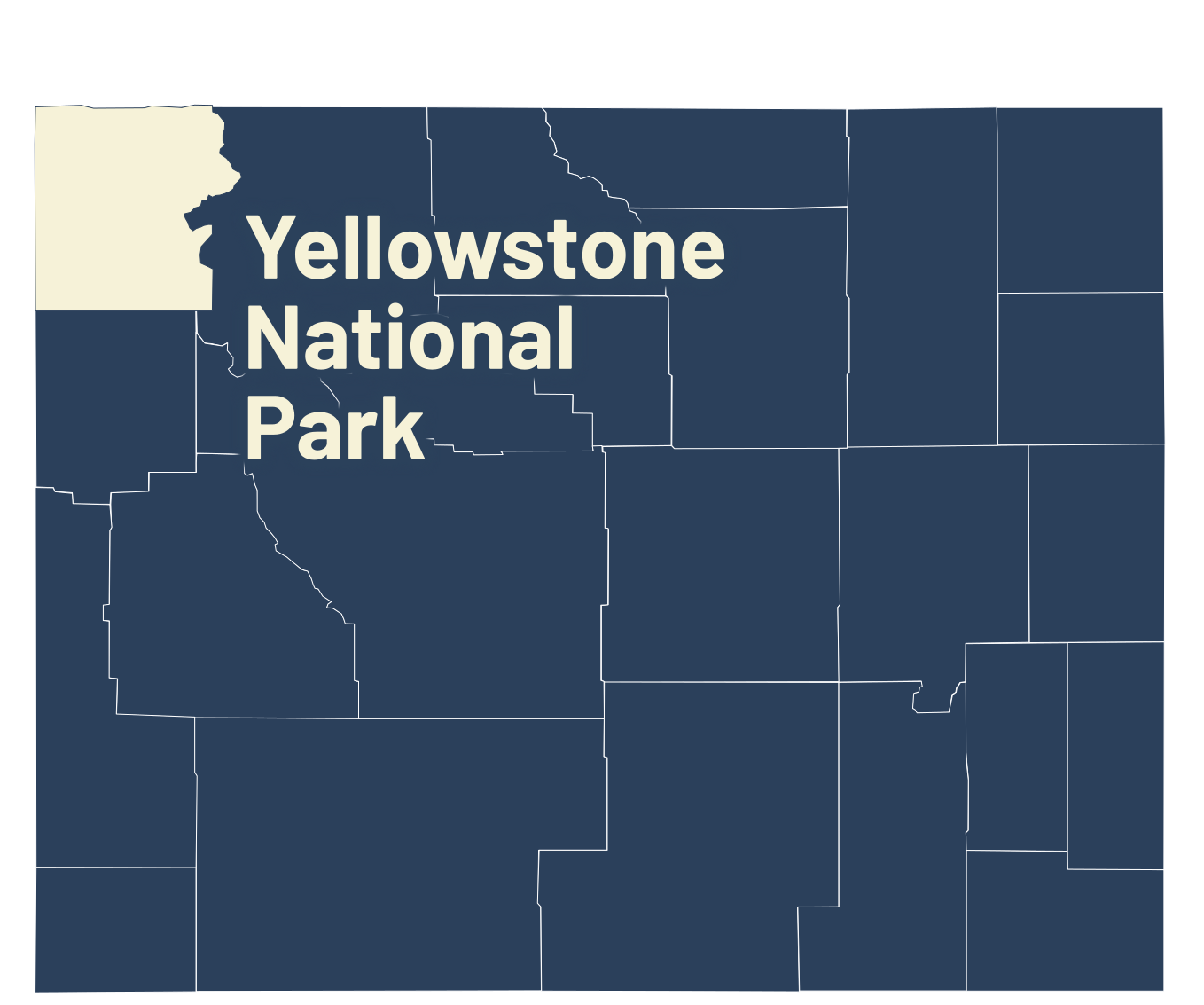
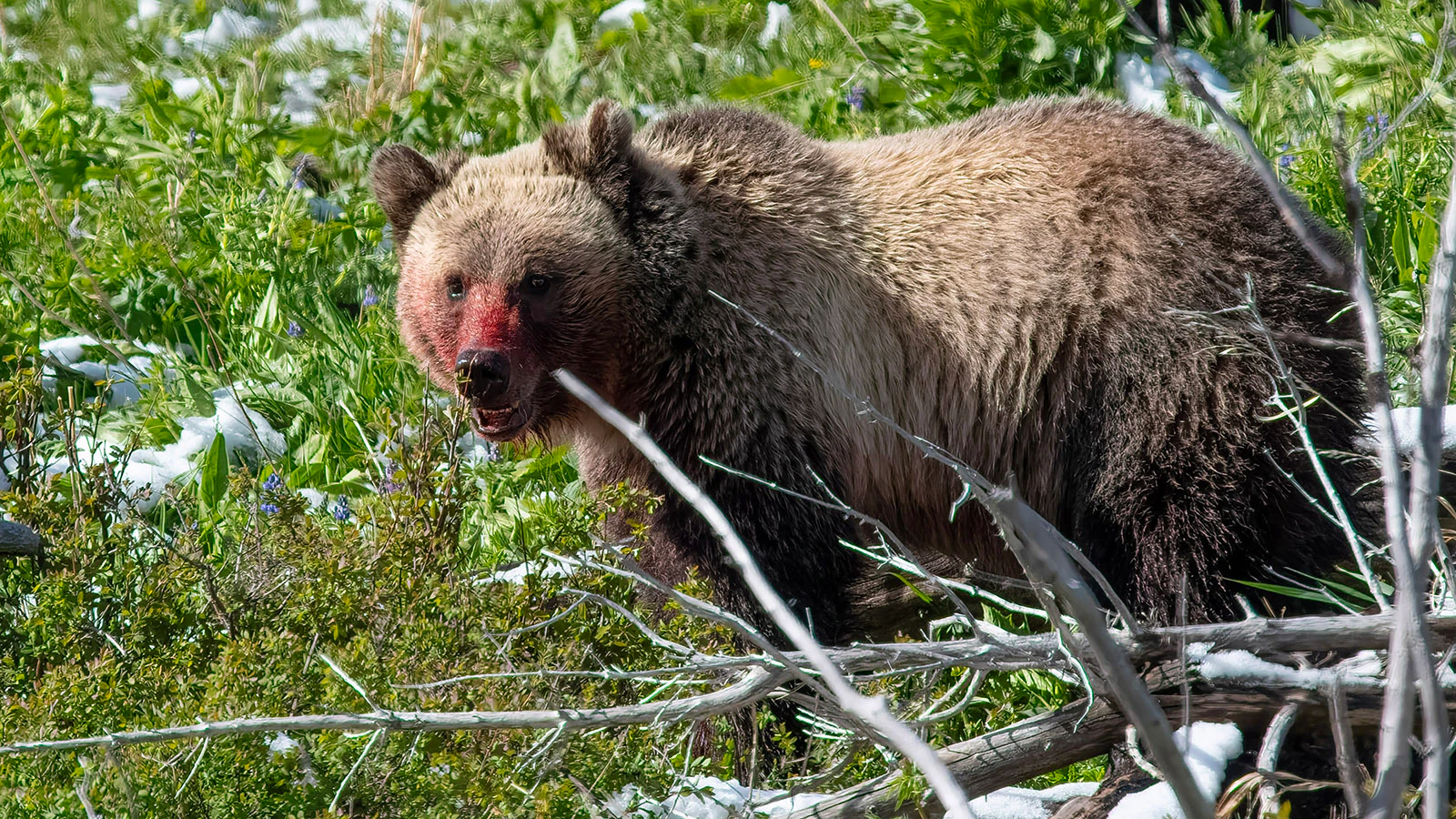
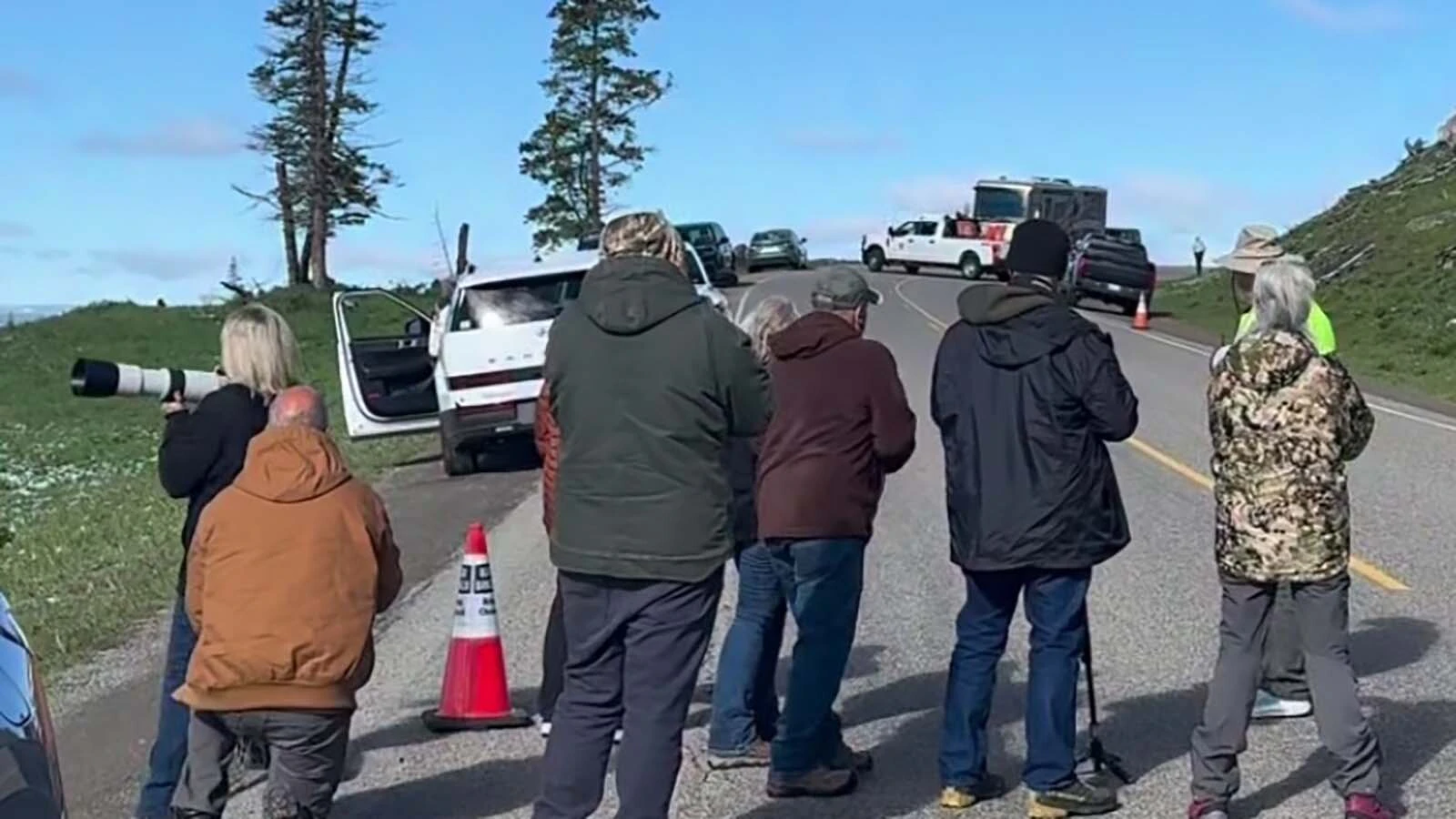
A few weeks ago, tourists chuckled as a young grizzly named Storm was chased off by an angry sandhill crane, but nobody was laughing Thursday when Storm devoured an elk calf alive in front of about 100 people.
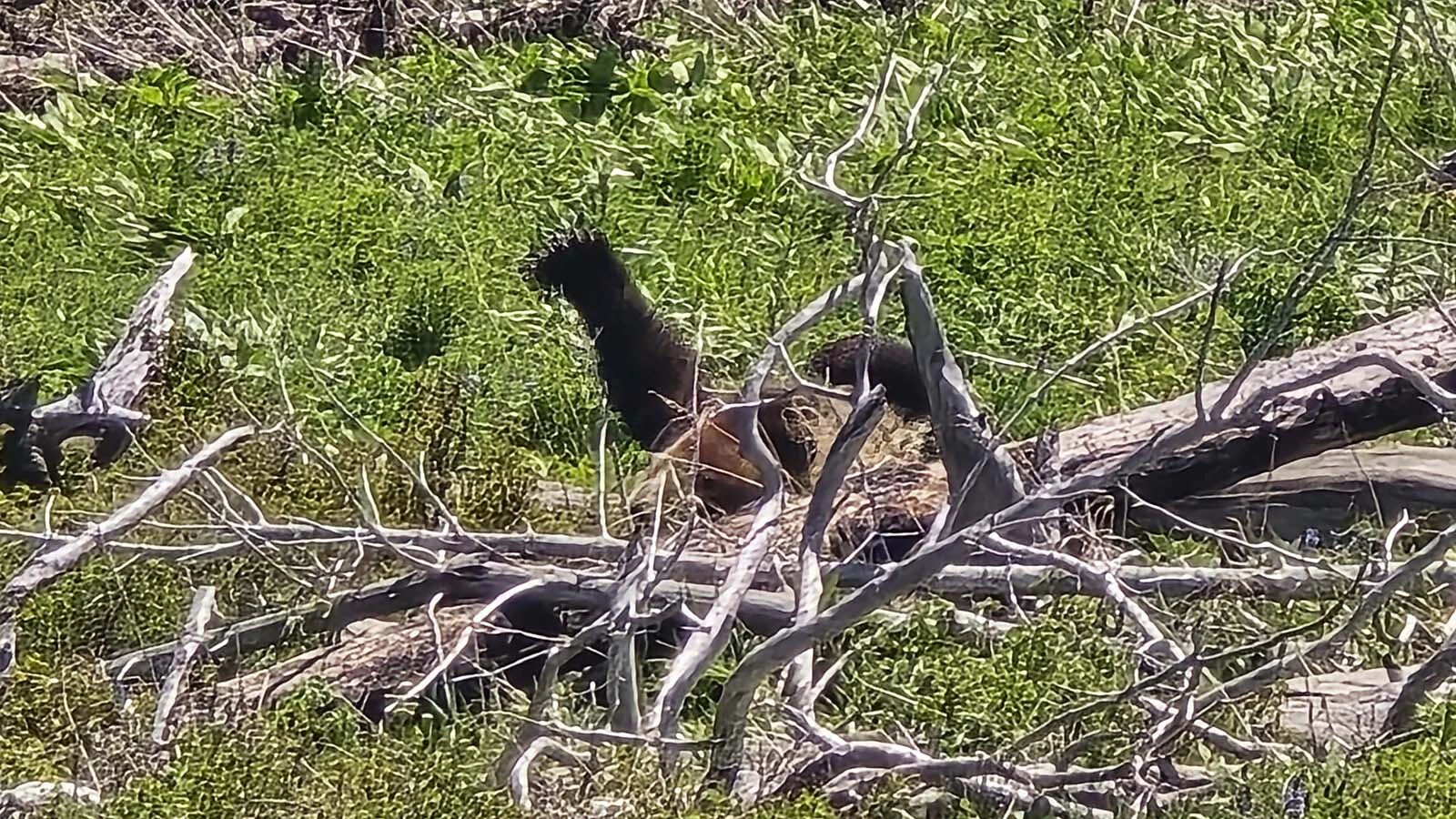
The calf was alive for roughly 15 minutes as it was being eaten by the 3-year-old female, wildlife researcher John Winnie Jr. told Cowboy State Daily.
Winnie was there with students from his Yellowstone National Park wildlife ecology field class.
“We were kind of awed at watching a bear take prey," said Winnie, an associate teaching professor in the Department of Ecology at Montana State University.
“But we were shocked and surprised at a calf staying alive that long,” he added.
“There were mixed comments from the crowd,” as the scene unfolded near the shore of Yellowstone Lake, Cody resident Vince Vanata told Cowboy State Daily.
“Some people had empathy for the elk calf, and some people were thinking it was just nature taking its course,” he said.
A Good Find For A Bear
Similar to deer fawns, elk calves have little to no natural scent, Winnie said.
And for about the first two weeks of their lives, the calves can’t walk well enough to keep up with their mothers, he added.
So, their mothers will stash them in hiding places and then leave to go feed, occasionally returning to nurse the calves.
Unfortunately for the calves, that trick doesn’t always work, Winnie said. Sometimes, the mother’s lingering scent from a nursing session will be enough to tip off a bear, wolf, or coyote.
And other times, a calf might move at just the wrong moment (or, from the predator’s perspective, just the right moment).
That might have been the case with Storm on Thursday, Winnie said.
He wasn’t there when the grizzly first found that calf, but said one of his students witnessed the moment. The bear’s head suddenly snapped in the calf’s direction right before she moved in and found the helpless young elk.
That probably means Storm heard the calf rustling in the grass, or caught a glimpse of it moving, Winnie said.
Once Storm started eating, it was hard to watch, he said.
The calf cried out as it was being devoured, but no other elk heard it.
“The nearest cow elk we saw were probably out of earshot, 400 to 500 yards away,” Winnie said.
Vanata said he thinks Storm had earlier been hazed by park rangers from another location.
“I think that if the rangers hadn’t had moved the bear, it wouldn’t have been there to find that calf,” Vanata said.
Bears Take A Heavy Toll
The elk calf’s gruesome fate was a common one, Winnie said. Elk calves suffer high mortality rates, and predation is one of the main causes.
And most of the predation comes from bears, both grizzlies and black bears, he said.
“I don’t think a lot of people grasp just how high elk calf mortality is,” Winnie said.
It’s thought that as many as 90% of cow elk are pregnant going into spring, “and most of them carry their calves to term,” he said.
So, there might be as many as 80 calves per 100 cow elk when the birthing season starts, usually in early June.
However, “by the time the first of the next year rolls around in the Greater Yellowstone Ecosystem, we’re down to around 20 to 25 calves per 100 cows. And most of the calves that were lost were lost to predation,” Winnie said.
Wolves have the advantage of hunting in packs, so calves aren’t worth their effort, Winnie said. They tend to concentrate on adult elk.
Coyotes will take quite a few elk calves and deer fawns, but bears take the most by far.
As lone hunters, bears have slim odds of taking down adult elk, so they focus on calves during the spring.
And because they can’t count on finding the calves by scent, they’ll scour the ground hoping to find a meal, Winnie said.
He said he’s seen bears apparently “working a grid pattern” in areas where they think calves or fawns might be.
And it’s not uncommon for calves or fawns to be eaten alive, Winnie said.
“I’ve seen it twice before, both times with black bears,” he said.
When taking down larger prey, predators rely on “killing bites,” Winnie said. That’s because they can’t risk injury from an adult prey animal fighting back.
But with calves and fawns, bears can just use their “overbearing weight” to pin down the hapless prey and eat at leisure, Winnie said.
Sometimes mother deer or elk will try to distract the bears away from their young, but usually to no avail, he said.
“I saw once where a white-tailed deer got right in front of the bear, raised her tail and jumped, but the bear didn’t even notice her” as it focused on the fawn, he said.
Previously Scared By A Crane
A sandhill crane recently had better luck scaring Storm away from its young.
When Storm got too close to the crane’s nest, the bird came at the young bear, standing tall with its wings spread. That was enough to scare away Storm.
Storm belongs to famous Yellowstone grizzly lineage. She’s the daughter of Snow, one of the park’s most visible bears.
And Snow in turn is the daughter of Raspberry, likely Yellowstone’s most famous living grizzly.
Raspberry has been missing for about a year and is feared by many of her fans to have died.
Mark Heinz can be reached at mark@cowboystatedaily.com.


