Sound surveillance technology has gone largely unnoticed and un-debated in Wyoming while residents clash over video-surveillance license plate reader cameras, like Flock.
But some Wyoming law enforcement agencies use microphone surveillance systems in Cheyenne to detect gunshots, authorities have confirmed.
Gunshot detection sensors are acoustic detection systems built to alert authorities to gunfire and help them locate it.
ShotSpotter, a prevalent system brand, relies on an artificial intelligence algorithm and network of microphones to identify gunshots.
Laramie County Sheriff Brian Kozak said his office uses that tech in just one place: the local courthouse.
The Cheyenne Police Department has used shot detection technology and “the microphones can be deployed on our mobile observation platforms at large community events, or in hot spots for crime,” said agency spokeswoman Alexandra Farkas in a Friday text message.
The surveillance video cameras have been far more controversial so far, as Wyoming law enforcement agencies use license plate cameras in at least Cheyenne, Jackson, and around Fremont County.
In the audio surveillance world, the prominent brand Flock is now transitioning to train its high-powered microphones to listen for ambiguous sounds like screaming and human distress rather than just gunshots, according to State of Surveillance.
State of Surveillance calls that expansion “mission creep.”
Kozak said he hadn’t heard of microphones doing that yet.
Kozak in his Friday phone interview said that when he was chief of police for Cheyenne, the agency used the microphones at the huge Cheyenne Frontier Days Rodeo to locate any gunfire on site quickly.
As for Kozak’s newer role as sheriff, the courthouse is the only place he uses the sound technology, he said.
“(If there are) any shots within the building, it alerts deputies what part of the building,” he said.
The Vroom
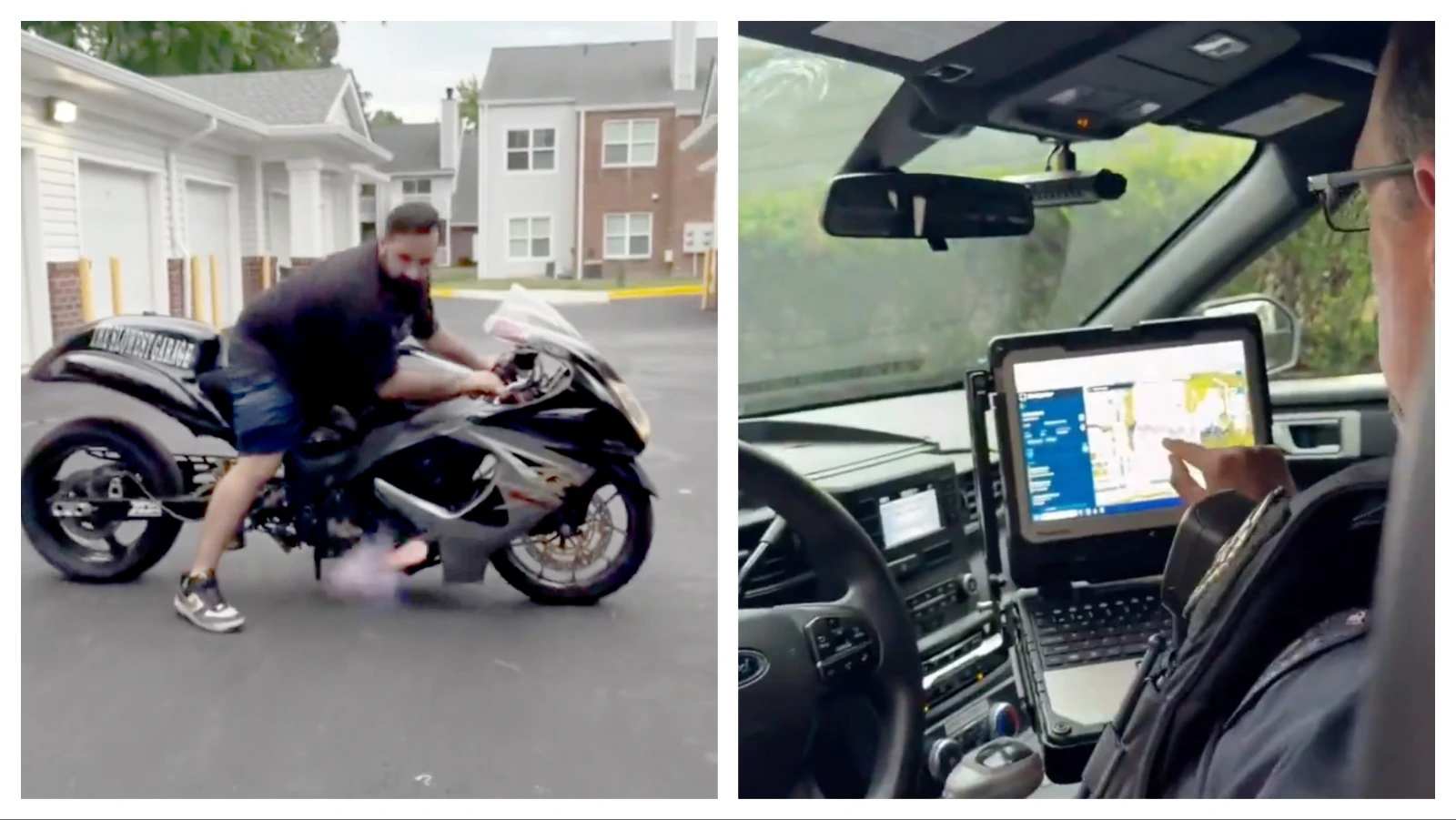
A viral video circulated this week on X.com shows a man revving his motorcycle until it pops, prompting a visit from a police officer who said the noise sensors “triangulated” the sound.
Cowboy State Daily has not yet confirmed whether the video depicts a real police encounter.
But for New York City, vehicle exhausts and other loud noises aren’t false positives: they’re targets.
That’s according to a New York Post story saying the city’s hidden “noise cameras” led to $1.7 million in fines in recent years for things like motorcycle roars, honking horns and blasting music.
Full Scale In Bigger Cities
Gunshot detection sensors are more prevalent in bigger cities, where police not only have a dispatch center but a real crime center for tracking immediate threats and incidents as well, Kozak said.
The sheriff said he recently visited Mesa, Arizona, where he worked prior to 2006, and watched that city’s real crime center track incidents through city cameras.
“If it’s a high-risk call like a shooting or drive-by, something like that, they’ll dispatch drones,” said Kozak. “They’ll push a button, the drone goes up, responds to the call” and captures images of whoever is leaving or in that area.
“The future is kind of crazy: what’s coming for policing,” said Kozak.
Campbell County Sheriff Scott Matheny and Fremont County Undersheriff Mike Hutchison both said their agencies don’t use the microphones.
Teton County Sheriff Matt Carr, whose office oversees an area already populated with camera surveillance, did not respond by publication to a Friday voicemail.
The Flock Critic
Rep. Daniel Singh, R-Cheyenne, who has been a vocal critic of the many Flock-brand surveillance cameras in Cheyenne, told Cowboy State Daily that the microphones aren’t as offensive since they’re narrowly focused on picking up the sound of gunfire rather than tracking individuals’ movements.
But policymakers should still be proactive about putting safeguards around any new surveillance technology people, he said.
Singh co-chairs the Legislature’s Select Committee on Blockchain, Financial Technology and Digital Innovation Technology. He said the committee is scheduled to consider digital surveillance privacy policies at its next meeting, set tentatively for July.
“The difference with the Flock camera is the information is identifiable, right? So you have your specific license plate or specific vehicle or what-have-you,” said Singh. “But the microphone, it’s de-identified. … You just know something loud is over there.”
On the topic of mission creep and policy, Singh said, “Well unfortunately, usually policy is reactive, but that “we should try to take a proactive approach to figure out where your rights ought to be protected, instead of learning from trial and error.”
Singh noted how pervasive the government’s surveillance efforts have grown already.
“Should the government be able to hear you in your own home?” asked Singh. “The government has already allowed itself to listen in on this conversation between you and me, if they decide I’m a threat to national security. But in the privacy of your own home, is that the direction you want to let it slide? I don’t think so.”
Ensure They Don’t Make Us Less Free
Robert Frommer, senior attorney at the Institute for Justice and one of the attorneys urging stronger Fourth Amendment protections with respect to surveillance video cameras, told Cowboy State Daily that his organization hasn’t been as concerned with the microphones because their role is more limited — so far.
But they’re not without issues, he added, noting that he’s heard of false positives and wrongful arrests. Mission creep is another concern, he said
The city of Chicago announced in 2024 it was ending its contract with SoundThinking, which is ShotSpotter’s parent company. That was after the systems were criticized for inaccuracy, racial bias and law enforcement misuse.
“Technologies like Shot Spotter are sold as keeping us safe,” said Frommer. “But it’s the job of courts and legislatures to ensure that they don’t make us less free.”
Clair McFarland can be reached at clair@cowboystatedaily.com.