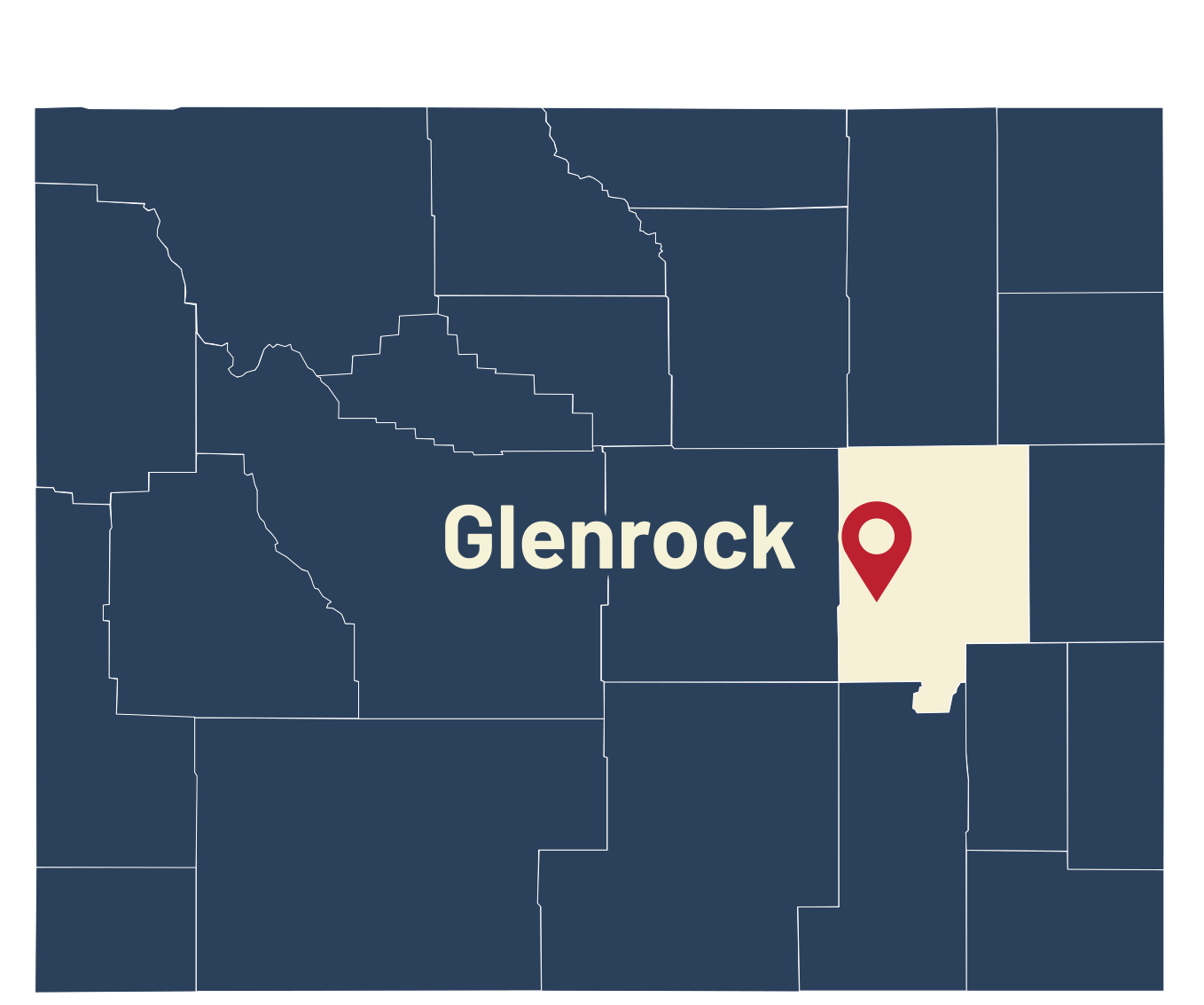
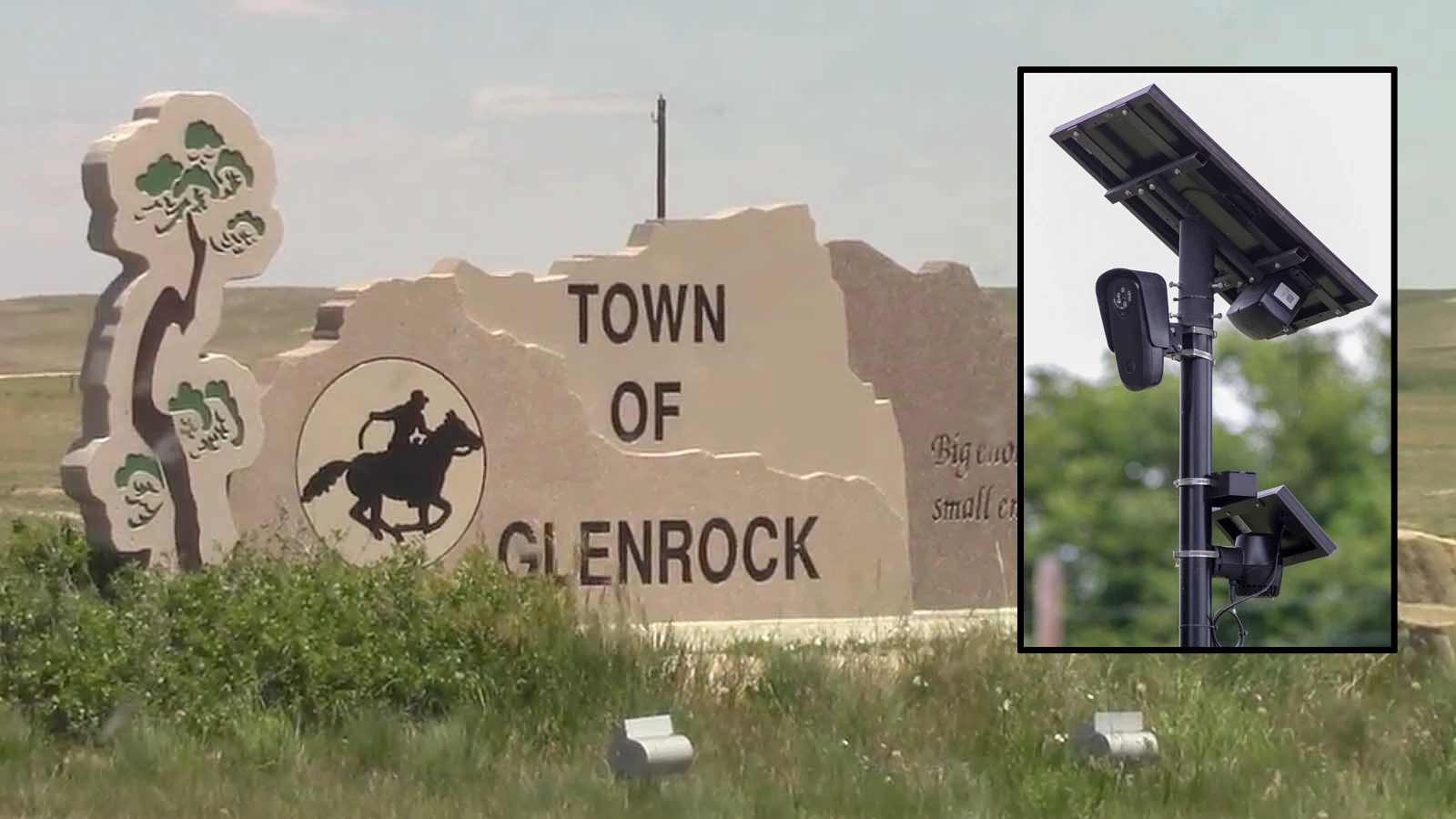
A group of Glenrock residents showed up at Monday’s Town Council meeting with questions about the four Flock cameras that have been operating around the community for roughly two years.
They wanted to know more about who authorized the license-plate-reading cameras, where they are located, why the town needed them and who controls the information they collect.
They didn’t get many answers Monday.
Police Chief Colter Felton, who has overseen the cameras, was absent because of a family emergency, said Mayor Bruce Roumell. The Town Council told residents it would hold a work session on the issue within the next couple of weeks.
“All I want to see is transparency,” Glenrock resident Eric Farrington told Cowboy State Daily after the meeting.
Flock cameras use automated license-plate recognition technology to record passing vehicles and can provide law enforcement with information that can help identify vehicles involved in investigations.
The cameras have become a growing subject of debate in Glenrock, with residents raising questions on social media about the technology, its location and who has access to the data.
Cameras’ Location Questioned
According to public records, Felton obtained a permit from the Wyoming Department of Transportation to install the cameras on state highway rights-of-way near the edges of Glenrock.
Felton previously told Cowboy State Daily the department has cameras at every entrance to town.
The cameras were purchased and installed in 2024 after the police department included them in its budget and the council approved their purchase, installation and use, Roumell said in a phone interview with Cowboy State Daily.
There was little public controversy at the time, according to Felton.
“We put out information about it and talked about it in council meetings,” he said. “We really didn’t get a ton of, I guess, people showing up to talk about it, or with any sort of issue.”
Felton said the primary purpose of the cameras is public safety, including helping investigate crimes such as bank robberies and kidnappings.
Agencies seeking to place equipment on state highway rights-of-way must obtain permission from WYDOT.
Some residents have questioned whether Glenrock’s Flock cameras are actually inside town limits because of their placement along highways.
Roumell said Monday that annexations have expanded Glenrock’s boundaries over the years, meaning the cameras are technically within the town limits despite the perception they are outside town.
That distinction has not settled the questions for residents.
Farrington said he attended Monday’s meeting hoping the council would address concerns about the cameras, but the council deferred to the police chief.
“All of a sudden there are some people that are upset about it,” Roumell said.
‘Why Was It Necessary?’
Farrington, who has lived in Glenrock for more than two decades, said he understands the argument that cameras can help law enforcement solve crimes.
But he questioned whether the technology is necessary in a small community with relatively little crime.
“We’re used to policing ourselves,” Farrington said.
That led to a basic question for him:
“Why was it necessary to put them up?”
Farrington said he is especially interested in understanding how the system works and what safeguards are in place for the information collected.
“I want transparency,” he said. “I want to have questions answered.”
He said residents deserve to understand how technology that can record their movements is being used by their local government.
“I want the council to be an open book to the community you serve, especially with the national attention on the Flock cameras now,” Farrington said.
Farrington said one of his concerns is that residents might not have realized the cameras were there when they were installed.
“Again, nobody knew anything, why they were there,” he said.
A Timely Privacy Debate
The questions come as law enforcement’s use of technology to track people’s movements is receiving renewed national scrutiny.
In June, the U.S. Supreme Court’s high-profile ruling on digital privacy sparked widespread legal debate over whether the constitutional logic used against mass cell-phone tracking could eventually apply to automated license plate readers like Flock.
Farrington said the national discussion about digital surveillance has made him more interested in understanding Glenrock’s own system.
He also draws a distinction between information people voluntarily put online and information collected by government-operated surveillance equipment.
An 85-year-old man approached Farrington after Monday’s meeting and questioned why Farrington was concerned about the cameras when people voluntarily share so much information on social media.
Farrington said the difference is choice.
“I don’t have to post on Facebook,” he said. “The Flock cameras were not my choice.”
Council To Hold Work Session
The Flock cameras were not listed as an agenda item for Monday’s Town Council meeting, and no new or old business was listed.
The meeting lasted less than 30 minutes.
The public-comment portion also experienced a technical problem: The microphone was not turned on, meaning comments could be heard by people in the room but were not audible to people participating online.
With Felton absent, the council did not attempt to resolve residents’ questions Monday.
No date for the work session has been publicly announced, though resident Alisha Hodge told Cowboy State Daily the group opposing the cameras has asked for another meeting to be scheduled before elections.
“That remains to be seen,” she said.
According to the Pacific Legal Foundation, a nonprofit public interest law firm, an estimated 120,000 cameras along American roads log data into a nationwide, searchable database accumulating billions of records every month.
Kate Meadows can be reached at kate@cowboystatedaily.com.