
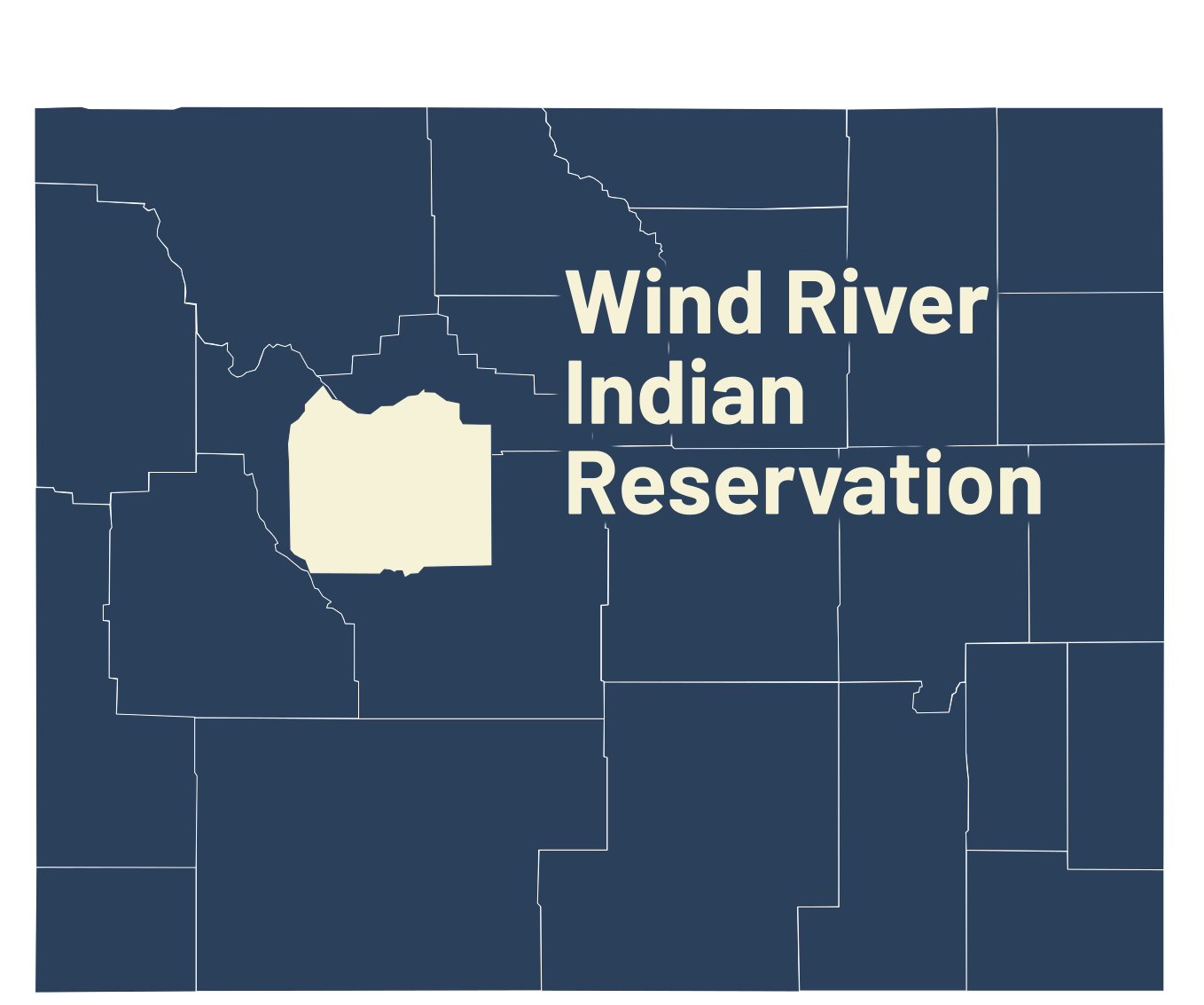
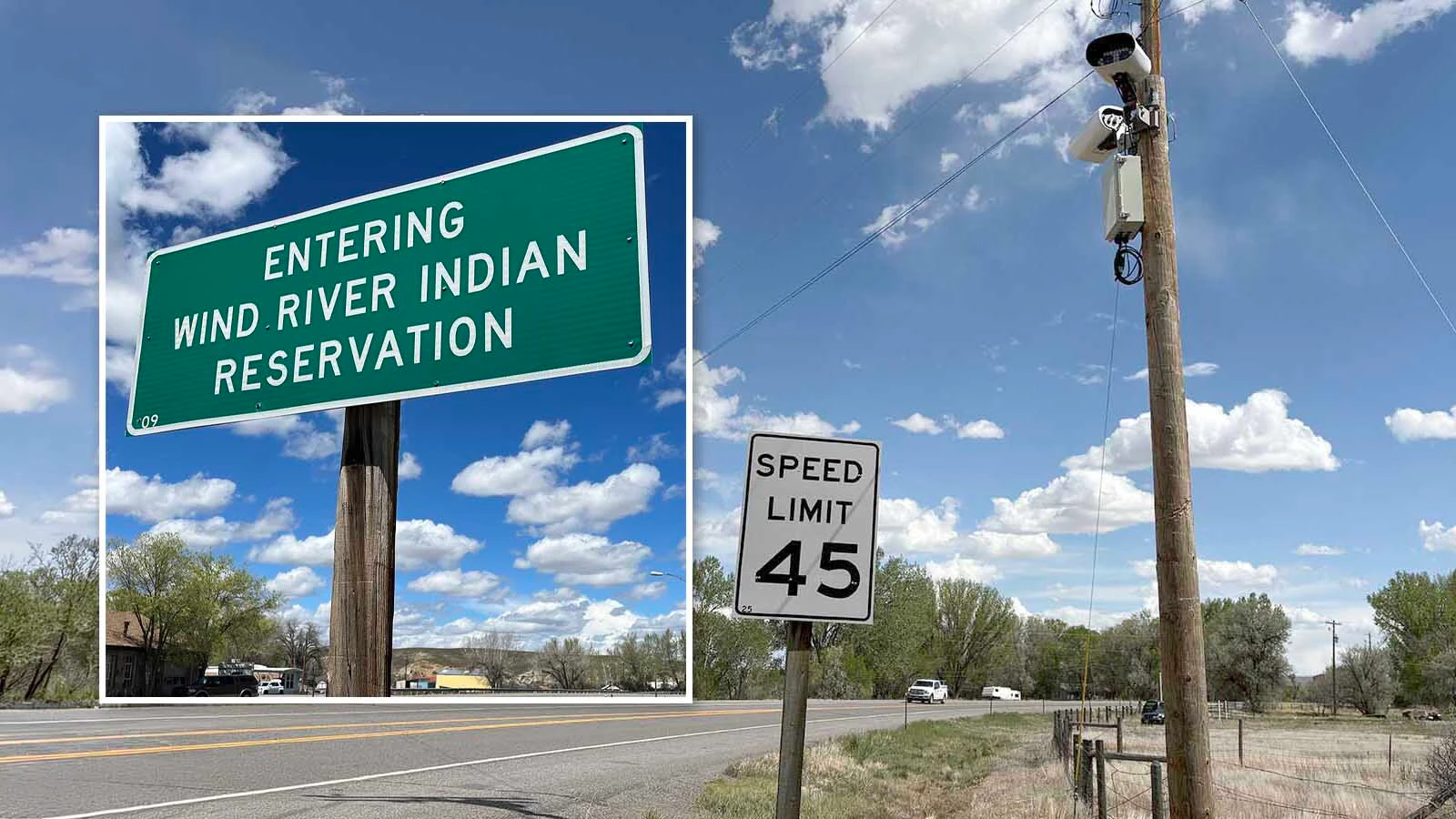
A federal agency has an agreement with Wyoming's two tribes to run license plate reader cameras on the reservation, authorities confirmed Thursday.
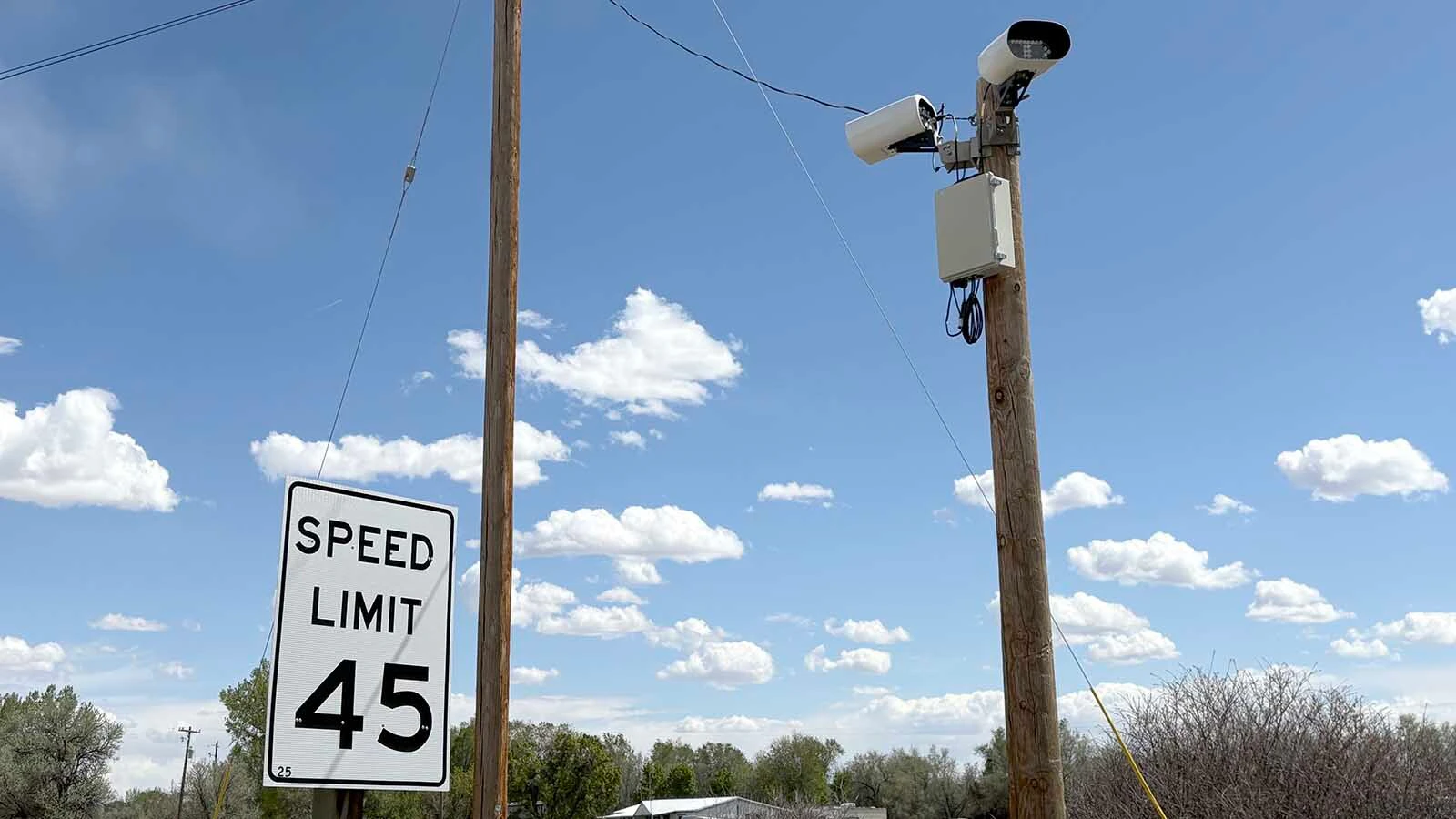
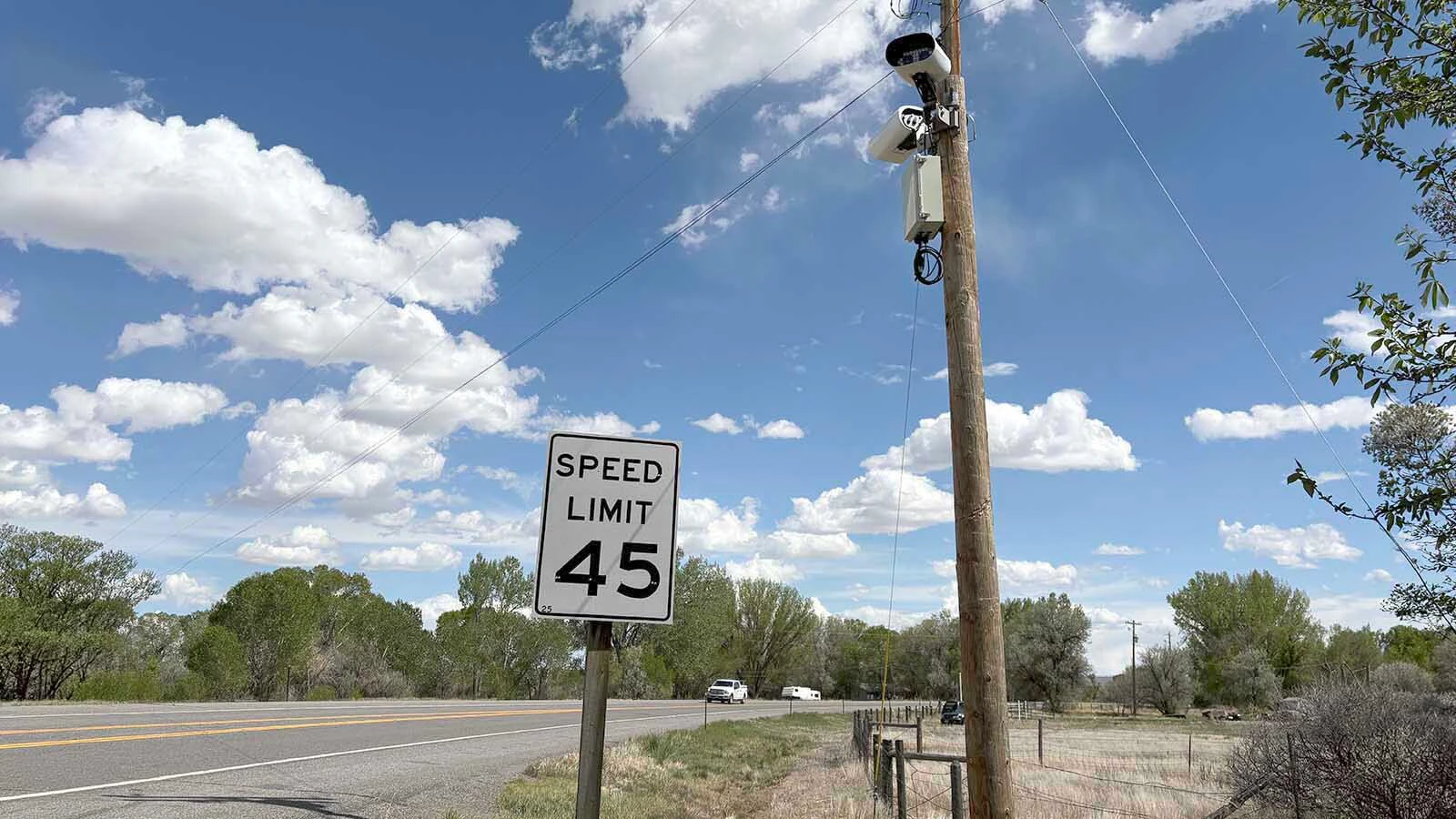
Cowboy State Daily has observed license plate reader cameras already installed on roadside posts at the north entrance to the reservation abutting Riverton, and the south entrance from the Lander side.
"The license plate readers are put up by DEA (the U.S. Drug Enforcement Administration) through an agreement with the tribe, said U.S. Bureau of Indian Affairs spokesman Joshua Barnett in a Thursday email. Barnett added that the BIA is "not part of that agreement."
Wyoming Highway Patrol (WHP) Lt. Col. Karl Germain told lawmakers during a Tuesday committee meeting that the WHP was working with the BIA to put up the cameras.
But Germain clarified in a Thursday phone call, saying he misspoke and was trying to highlight the cameras can be a good tool in crisis situations.
"Highway Patrol doesn’t have any LPRs," said Germain. "We have no mechanism to purchase those or put them up." But the patrol's umbrella agency, the Wyoming Highway Patrol, manages the highway right-of-way and is responsible for authorizing camera installations, he said.
The Select Committee on Tribal Relations, which is a state legislative panel, met Tuesday to discuss how state law interacts with the two tribal governments of Wyoming: the Northern Arapaho and Eastern Shoshone tribes.
There, Germain said, “Those (cameras) are obviously helpful for a number of reasons, and you know I fully recognize some of the privacy concerns of with that." For missing person cases or Amber alerts, those cameras “can be invaluable to help recover that person in a timely manner,” said German. “There aren’t a lot of cameras in Wyoming right now. If the reservation is able to put those up, it’s just another tool at the disposal of law enforcement.”
Committee Co-Chair Sen. Cale Case, R-Lander, voiced concern, calling the cameras a facet of “big surveillance.”
“It’s a big step in our surveillance society,” said Case. “Not quite as far as England where they have facial recognition all the way through London but … it feels that way a little bit.”
Germain said he recognizes the controversy surrounding the cameras.
License plate readers are cameras, generally facing roadways, that capture images of vehicles and license plates and log dates and times for those images. The devices can also capture images of drivers and occupants of vehicles and passersby.
Case amplified his comments in a Thursday interview, saying the license plate readers, government-accessible DNA databases, facial recognition technology and other government surveillance measures now in play would have been "appalling" to the Founding Fathers.
"All this stuff is somewhat '1984'-ish," said Case, referring to George Orwell's dystopian novel about an authoritarian surveillance state.
This Drug Trafficking
The cameras have been posted for "months" Wyoming Department of Transportation public relations specialist Cody Beers told Cowboy State Daily.
An advocate of the license plate readers, Nicole Wagon touted them as useful and important during a Jan. 27 meeting of the Tribal Relations Committee.
Wagon, who lost one daughter to murder and another to hypothermia amid suspicious circumstances, is an advocate for better safety measures for indigenous people.
“It’s a component to stop the violence. It’s a component to make it safe for all the community members,” said Wagon of the cameras, referencing a Montana installation she touted.
She said the Wind River Intertribal Council, which comprises executive-branch governments of both tribes, signed a resolution in 2024 to work with license plate reader efforts on the reservation.
Neither the Eastern Shoshone Business Council nor the Northern Arapaho Business Council responded to Cowboy State Daily’s prior requests for comment, however the ESBC’s spokeswoman requested more information on the topic, which was sent.
Cowboy State Daily inquired of the BIA at that time, and the agency said on Feb. 3 that it “does not have license plate readers on the Wind River Indian Reservation” and to check with the U.S. Drug Enforcement Administration (DEA).
The agency’s spokesman Joshua Barnett said Thursday in a follow-up exchange that the DEA puts up the license plate readers “through an agreement with the tribe,” of which BIA is not a part.
While he did not confirm the cameras’ presence or use, DEA Public Affairs Officer Stephan Tubbs wrote in a Jan. 28 email that, “The key trafficking routes for the Mexican Cartels across our Rocky Mountain Field Division are the I-25, I-70, and I-80 corridors in Colorado and Wyoming.”
“These highways are arteries for the cartels to bring their poison — namely fentanyl, methamphetamine, and cocaine — into and across our nation,” Tubbs said, adding that targeting cartel routes is “vital.”
“Any and all tools available need to be utilized to save American lives from the continuing deadly impact the cartels and their dangerous drugs inflict on our communities,” said Tubbs. He referred back to that statement when Cowboy State Daily sent a follow-up inquiry in May.
The FBI, which also performs law enforcement functions and investigations on the reservation, declined in a Feb. 2 email from FBI public affairs officer Vikki Migoya to comment “about investigative techniques or law enforcement tools we might or might not use.”
Criminals Or 'Complete Morons'
Erick Blackburn, former chief of the Wind River’s BIA outpost, discussed the cameras on a public Facebook exchange last month.
An anonymous account had posted a deflock.org map showing two of the cameras stationed at the reservation’s Riverton entrance.
“They’re not Flock cameras, they’re license plate readers,” wrote Blackburn in a comment, referring to AI-powered license plate technology used by several Wyoming municipalities.
“Law enforcement can search specific license plates for ATL — attempt to locate — for Amber alerts and vehicles reported to be trafficking narcotics,” Blackburn continued. "Everyone against them is criminal themselves or complete morons!!”
Blackburn said in another comment that was the BIA chief who “oversaw the project in an attempt to apprehend the narcotics coming into Fremont County and the reservation.”
He said both tribes are “heavy in favor” of the technology and “we had to have their full approval.”
“They were sick and tired of their people senselessly dying,” Blackburn added.
Blackburn, who later confirmed he’s now retired, said the cameras are working and fentanyl overdoses have declined.
“Now, unless you’re a drug dealing POS, or snatching children and trying to drive away with them, you have nothing to worry about,” Blackburn wrote.
Blackburn did not immediately respond to a message request for further comment.
Barnett said Thursday that he was told a former BIA chief may have helped the tribe with the project, on the tribal side, but the project is still a DEA and tribal venture.
Obey The Constitution
Robert Frommer, senior attorney at the Institute for Justice and one of the attorneys urging stronger Fourth Amendment protections in this area, told Cowboy State Daily he’s not in favor of eradicating the cameras.
But they should be subject to the same Fourth Amendment restraints as other law enforcement tools, he said in a Thursday phone interview.
The Fourth Amendment generally bars entry into a person’s home without a warrant, for example, but has exceptions for “exigent circumstances” like indications that someone is being harmed inside the home.
On hearing about the cameras stationed at the reservation’s entrances, Frommer said that’s a common method across the nation so that law enforcement can track who enters and leaves a given region.
When he reviewed Cowboy State Daily’s photographs, he said they’re not Flock brand cameras, but some other brand.
“It’s hard to feel secure and to go about your daily life when you’re always knowing that the government is looking over your shoulder,” he said. “And that’s what these ALPRs (automatic license plate readers) allow. This, kind of, pervasive monitoring of individuals.”
The Institute for Justice’s recommended legislation on this issue would require officers to get a warrant before accessing a person’s historical location information, unless an emergency makes getting a warrant impractical.
It would restrict the data gatherers’ conveyance of people’s historical location information to third parties.
It would require that a record is created every time someone’s historical location information is accessed, and it would require training for officers accessing that historical information.
The proposed legislation would specify that authorities can’t use unlawfully obtained camera data to prosecute someone, but they also can face civil consequences for violating someone’s rights.
The technology can be easy to abuse, said Frommer.
“Without any kind of warrant requirement or even internal procedures, it often means that the person deciding whether to search or not is just the bored officer in the patrol car,” said Frommer. “We’ve seen abuses where police have been stalking former romantic partners, wives, ex-boyfriends; other situations where it’s been used to keep tabs on people who are engaged in political activity.”
This spreads to the immigration debate, he said.
Frommer and his co-counsel in an April 15 lawsuit complaint against the city of San Jose, California, wrote that that city’s massive AI-enhanced surveillance camera system has cameras near immigration lawyers’ offices and health care facilities.
As for the Wind River, Frommer said that, “I understand there might be drug problems in Wyoming and the reservation. There are drug problems all over the country.
“But you can’t let the worries of the day blind you to the long-term constitutional problems of what you’re doing.”
He added, “We want people to obey the law. And if we want people to obey the law then we have to, with just as much vigor, want our officers and government officials to obey the Constitution.”
Clair McFarland can be reached at clair@cowboystatedaily.com.


