
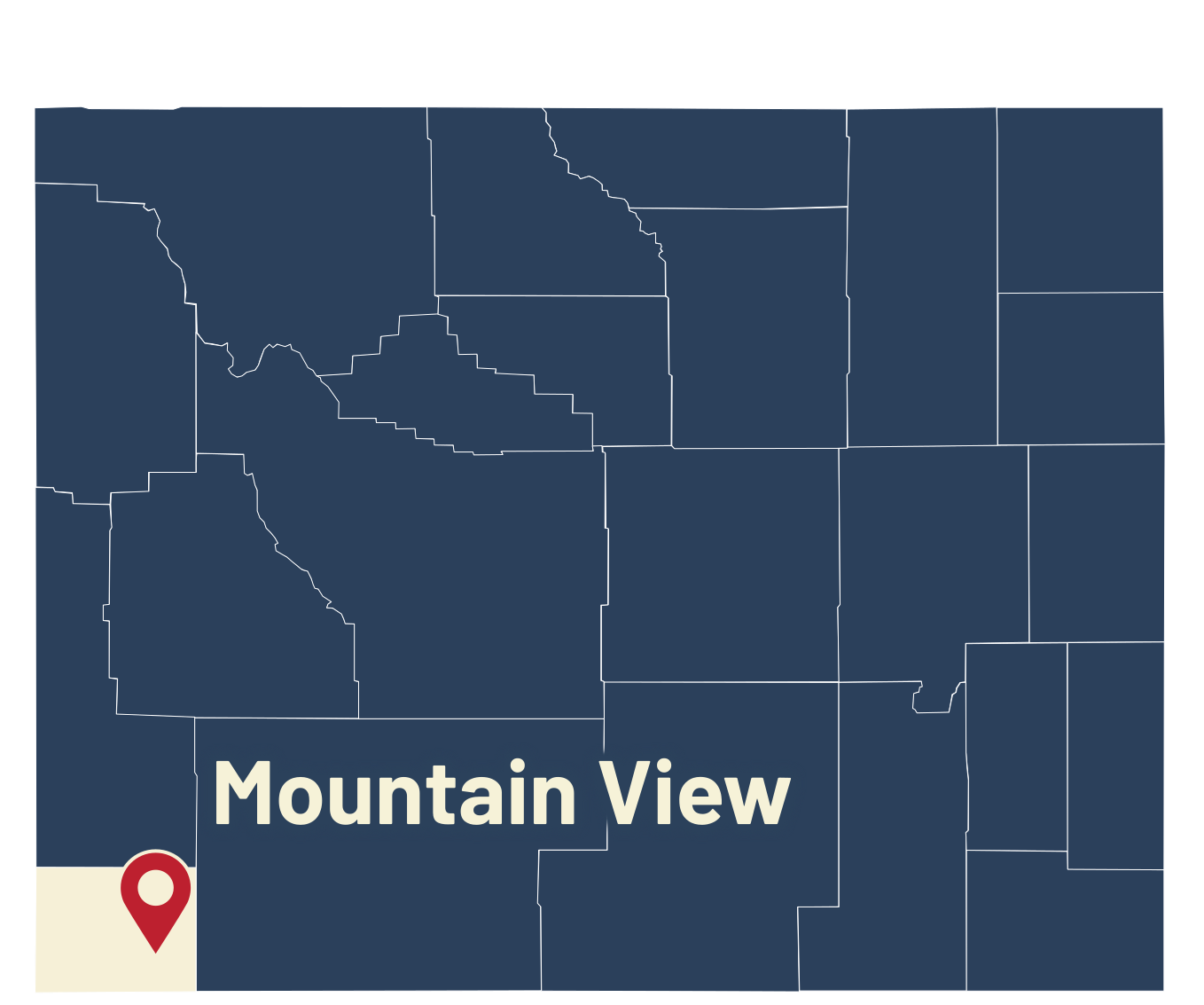
Angie Pitts of Mountain View has a problem. A big bird-spotting problem.
Pitts has a lean-to on her property in southwest Wyoming where she keeps her vehicles. For the last 19 years, she hasn’t had any problems sharing the space with the local wildlife.
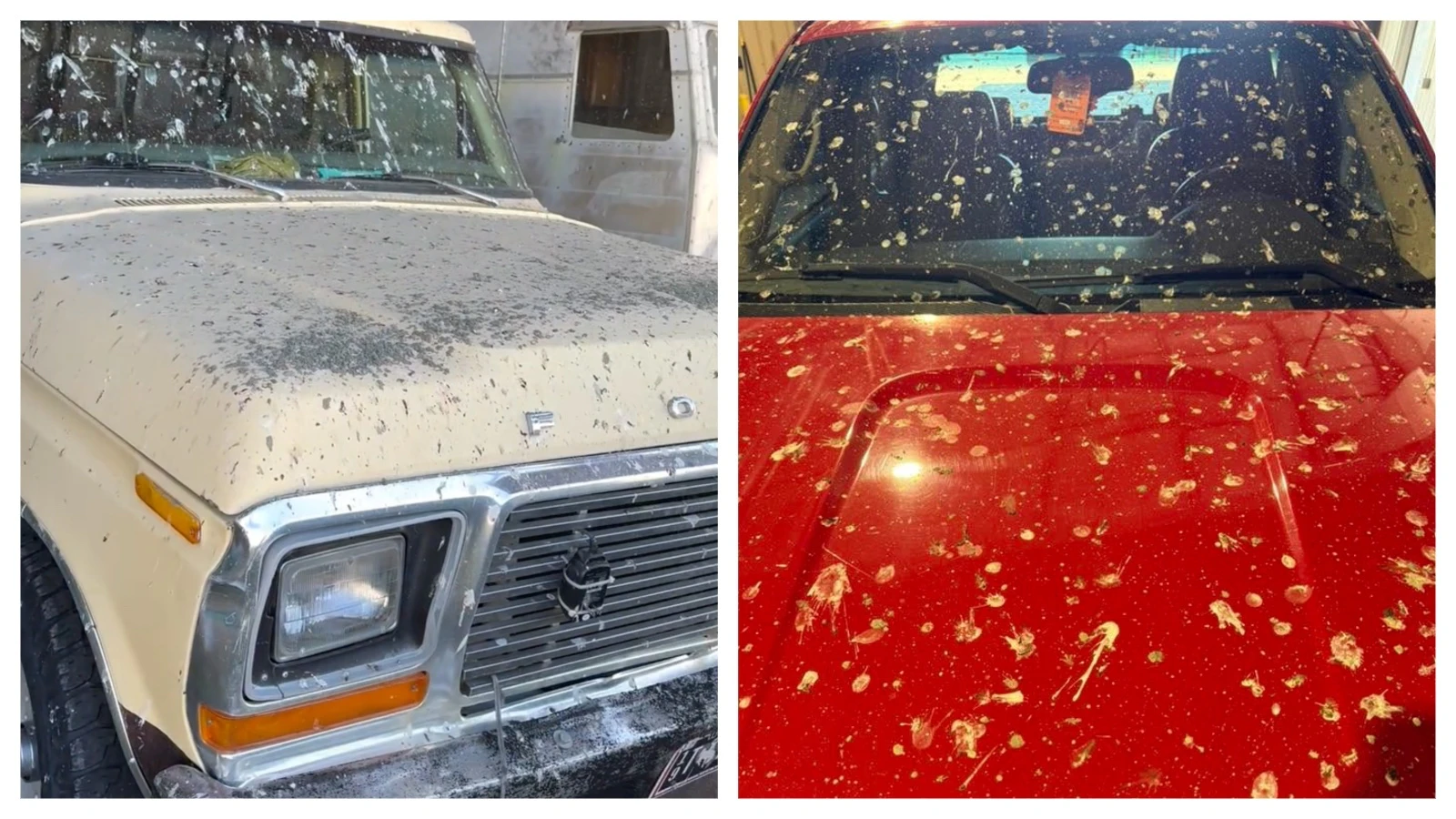
This year, swarms of swallows have moved into the lean-to and made themselves right at home. One need look no further than their open-air bathroom.
“There’s bird poop everywhere,” Pitts said. “On my vehicles, on the concrete, everywhere.”
Pitts has spent the last two weeks trying to find a solution to her swallow problem.
“I don’t want to kill them, but I want them gone,” she said. "It's just gross."
No. 2 Problem
According to the U.S. Fish and Wildlife Service, there are seven species of swallow known to breed in Wyoming. Pitts isn’t sure which has taken up residence in her lean-to, but there are a lot of them.
“There are tons of birds,” she said. “When you drive up, or you're outside my house, they’re flying everywhere. I didn't have a problem with them until I went and looked at my vehicles.”
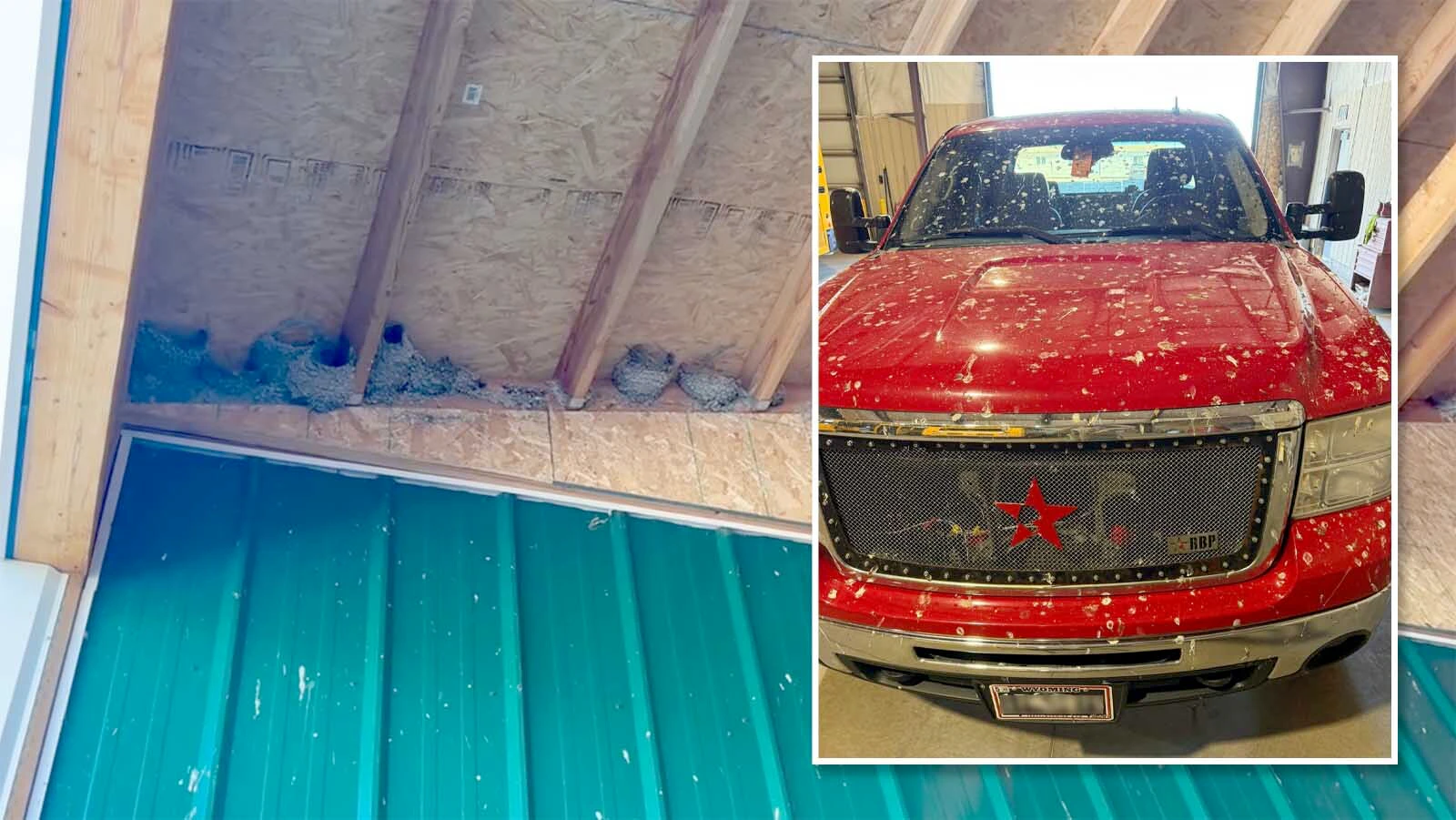
When Pitts pulled out her GMC pickup, she was “disgusted” by the number of bird droppings. Her red truck was so thoroughly covered, from hood to tailgate, that it looked as if she had painted it with white polka dots.
“Everything came off with soap, water and a pressure washer, but I don’t want to deal with any paint issues,” she said.
That’s just the start of it. Pitts still has two other trucks and three campers parked under the same lean-to. She hasn’t moved them yet, so they’re getting continually covered with swallow droppings.
Furthermore, everything on Pitts’ truck accumulated in just two weeks.
“I have no idea what’s different this year,” she said. “We’ve been here 19 years, and it’s never been like this.”
Stubborn Swallows
Where there’s one swallow, there’s bound to be a lot of swallows, and they can be particularly annoying to deal with.
Cliff and barn swallows nest in colonies and tend to choose spots close to human habitations. That would explain why so many are spotting Pitts’s vehicles.
Pitts options are limited now that the swallows have built their nests and are either sitting on eggs or raising their young.
“The only thing we’ve done, so far, is put up owls,” she said. “That hasn’t worked.”
“Frightening” can be an effective way to deter birds from nesting or congregating in certain areas. According to the Critter Control website, that isn’t effective when it comes to swallows.
In addition to being a “gross" eyesore, swallow droppings can cause mechanical issues with machinery, including vehicles, damage painted and metal surfaces, and can even carry pathogens that make people sick.
One way to deter swallows from nesting is to remove any overhanging eaves. That’s not a solution for Pitts. Furthermore, no repellents or toxicants are proven to work for swallows.
Don’t Grab The .22
After sharing her anguish on social media, Pitts has received a lot of feedback on possible swallow solutions. Many people have suggested a classic Wyoming approach: that the best defense is a good offense.
“A lot of people told me to get my .22, but I don't want to kill them,” she said. “I also don’t want to be putting holes in the roof of my shop.”
Pitts was wise to ignore that solution. It’s illegal.
While swallows aren’t an endangered species, all of Wyoming’s eight species are state and federally protected under the Migratory Bird Treaty Act of 1918.
According to the U.S. Fish and Wildlife Service, it is illegal for any person to take, possess, transport, sell, or purchase swallows or their feathers, nest or eggs without a permit.
The only exceptions are when swallows and their nesting colonies pose a significant threat to human health and property. Covered cars might not be compelling enough for Pitts to get approved for a permit to deal with the swallows.
In short, Pitts has to swallow it. For now, at least.
Not Swallowing It
While there are long-term solutions to swarming swallows, Pitts is seeking effective short-term ones. Her current strategy involves the cutting-edge of 1990s technology.
“I saw one suggestion that I should put old CDs up there,” she said. “Apparently, when they turn, and the sun hits them, the birds don't like that. That’s my next course of action.
Even if they don’t like it, the swallows will probably stomach the CDs, and Pitt will have to keep swallowing her swallow situation.
While swallows are known to abandon their nests and hatchlings under certain conditions, there’s no indication that Pitts’ swallows are going anywhere.
“I'm sure there are babies up in those nests,” she said.
Swallows typically produce two clutches of three to five eggs every year. Eggs incubate between 13 and 17 days, and the chicks fledge after 18 to 24 days, although they linger around their nests for several weeks.
Doing anything to disturb an active swallow nest would violate the Migratory Bird Treaty Act. However, the U.S. Fish and Wildlife Service allows inactive nests to be removed without a permit.
Since swallows reuse their nests year after year, destroying their nests between breeding seasons can send the swallows elsewhere. If the nests remain intact, they will most likely return.
That’s the best course of action for the future, but it doesn’t make Pitts' present any less crappy. For now, she'll have to tolerate the swallows and cover her vehicles with tarps.
“I hope there's hope on the horizon,” she said. “I want them gone.”
Andrew Rossi can be reached at arossi@cowboystatedaily.com.


