

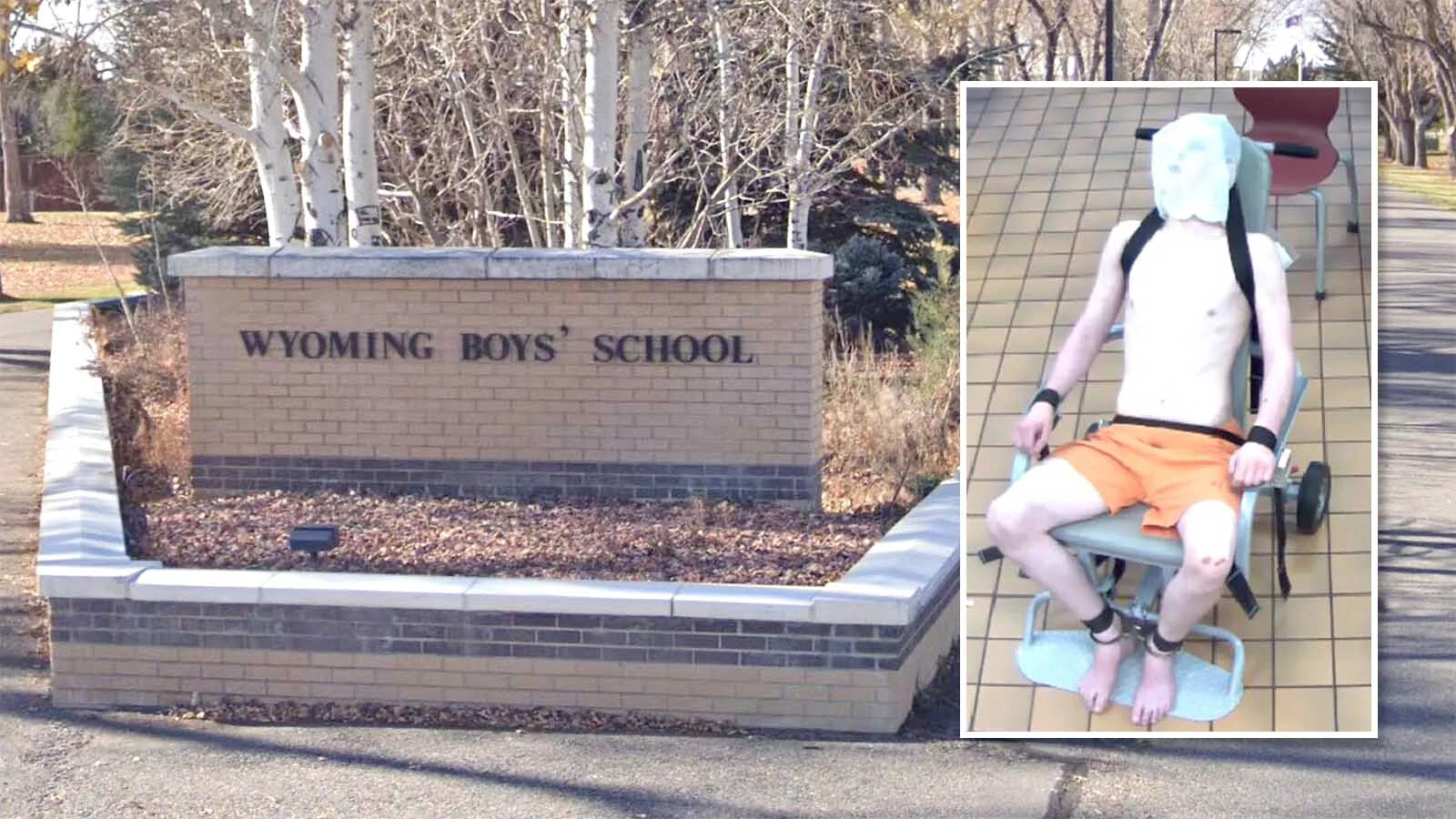
After the state of Wyoming and a group of young men suing the Wyoming Boys' School sifted through several hours of testimony, video, and evidence, it now falls to a federal court judge to decide whether school staffers violated multiple boys’ rights.
They’re accused of restraining, confining, and using force on them — or if the staffers’ actions are protected by qualified immunity and other safeguards in the law.
Three men — Blaise Chivers-King, Charles “Rees” Karn, and Dylan Tolar — sued the Wyoming Department of Family Services, the Wyoming Boys’ School in Worland, and 10 former and current employees in 2024.
The school is a facility to which courts send boys judged delinquent in Wyoming.
The plaintiffs, all boys who had been committed to the school in 2018 and afterward, alleged that school staffers confined, beat, humiliated and abused them. More plaintiffs joined the case later that year: Haiden Willis, Koby Cranford, and a minor identified by the initials “DH.”
In the months that followed, parties on both sides of the case sifted through several hours of depositions and other evidence.
After that, the boys decided against continuing to sue two of the staffers: Margaret Dahlke and Clark Les Urbin.
U.S. District Court Judge Scott Skavdahl dismissed Dahlke and Urbin from the case on April 8 of this year, at the plaintiffs’ request.
Karn is serving a life sentence in the Wyoming Department of Corrections for killing his girlfriend.
End This, State Says
The government agencies and boys’ school staffers argued in a May 14 brief that Skavdahl should judge the case early in their favor.
The brief largely blames the boys’ behavior for the aggressive interactions between boys and staffers, and for the time some of the boys spent in restraint chairs, solitary confinement, or other disciplinary statuses.
It invokes qualified immunity, which is a legal principle shielding government officials who act reasonably and in good faith from being sued.
The brief also says two of the defendants, Karn and DH, didn’t do enough to plead their grievances with school authorities before resorting to civil litigation, and that that nullifies their claims.
D.H. has failed to show he suffered physical injury, and the boys haven’t proved they suffered excessive force, deliberate indifference to their medical needs, undue punishment or discrimination based on certain disabilities, the state’s brief alleges.
The former inmates fired back in their own filing Friday, urging the judge to send the case to trial rather than judge it early in favor of the state and staffers.
Their response filing leads with an allegation that school security guard Thad Shaffer said, “The best part of the chair is watching the kids cry and scream like a f***ing child … that’s what makes it worth it.”
The exhibit from which this quote reportedly stems is not yet open to public viewing, the case file says.
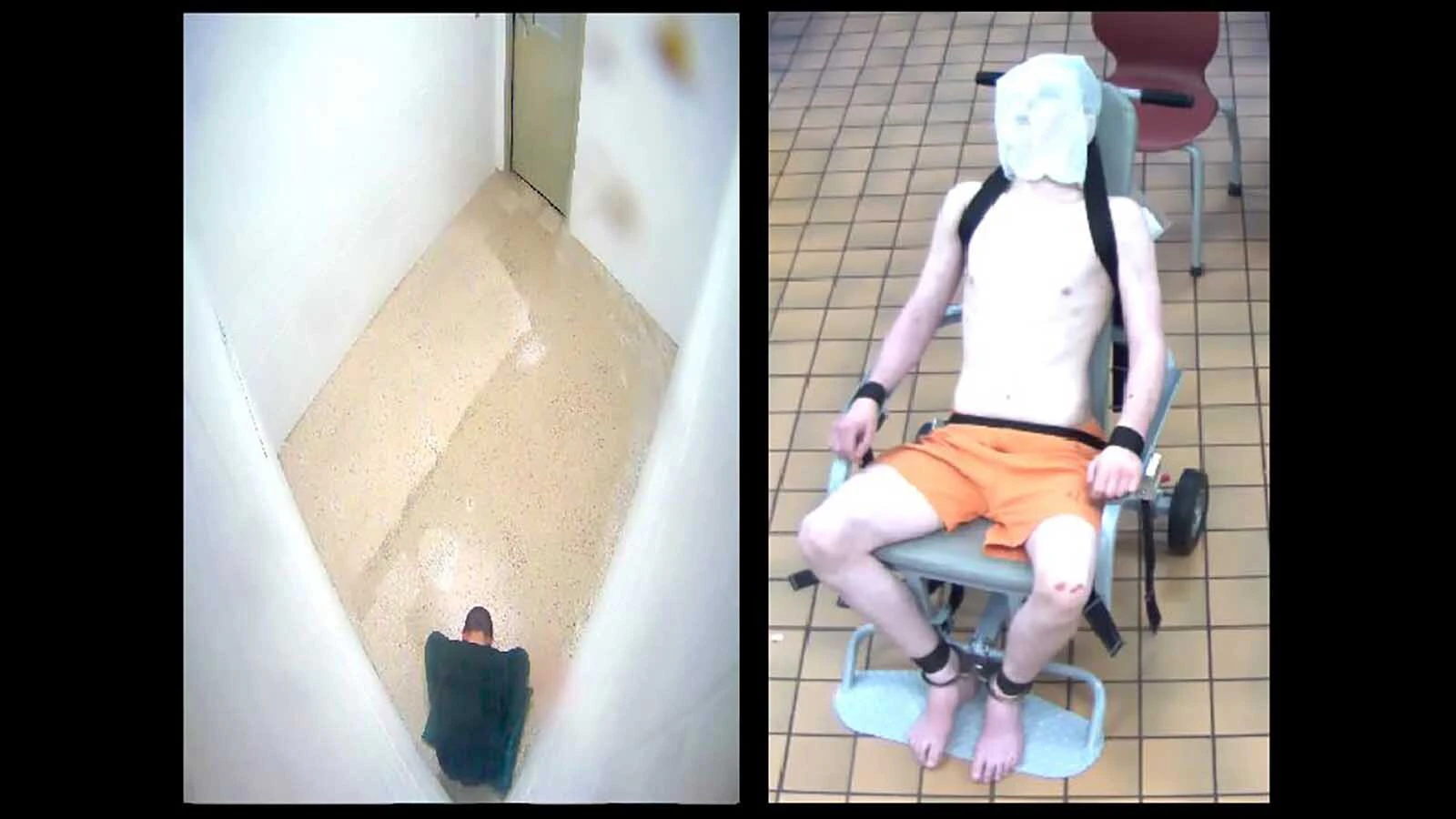
However, the Friday filing includes a photo that claims to show one of the plaintiffs lashed to a chair with a mask over his head and a caption that says he would be placed in the restraint chair “for up to 8 hours a day."
The boys’ counter-argument casts doubt on the records the boys’ school is using to make its case.
“The (staffers’) logbooks had large gaps in documentation, inaccurate entries, uncertain authorship, and no verification mechanism,” the filing says. “For example, the Dorm 3 detention logbook has no entries between Apr. 7, 2024, and May 9, 2024, despite DH being in solitary confinement during that time.”
The document asserts that, "Additionally, incident reports were regularly falsified."
Karn and DH did fulfill the grievance requirements, as their parents submitted complaints on their behalf, the filing argues. Also, the school didn’t provide the boys methods to file grievances once they were no loner housed there, says the document.
The boys’ filing calls the state’s claims for qualified immunity inadequate. It says, “Defendants’ legal analysis on these four claims consists entirely of one short paragraph per claim.”
All These Differences
The state’s brief in favor of early judgment and the boys’ counter-brief tell different stories.
Karn was placed at WBS in 2018.
He was placed on detention status numerous times, including for throwing personal items, breaking glasses, disclosing thoughts of hurting others, the state’s brief says.
He was detained for seven days in December 2018 after assaulting a student with a shower head. Court documents dispute whether staffer John Schwalbe shoved Karn’s face into broken glass at that time.
Schwalbe testified that he did not; while the boys’ argument says Schwalbe did restrain Karn on broken glass, and that Schwalbe said, “if you’re going to break shit, then this is pretty much what you’re going to get.”
Karn was restrained numerous times for hitting things in his room, harming himself, hurting others, being disruptive and damaging property, says the state’s brief.
During a second stay at the facility Karn was placed on detention for misbehaviors including acts of violence, pretending to shoot people, damaging property, trying to run away, threatening staff and making terroristic bomb threats on Facebook, says the document.
He was restrained during the second stay, allegedly after punching a staffer, trying to flip or throw a desk, “spinning around to face staff when they entered to clean the detention room camera,” damaging cameras, smearing feces on the detention room, and other misbehaviors.

‘Deny’
The plaintiffs deny many of these characterizations.
The brief points to staffers’ deposition testimonies, in saying that the facility didn’t have safeguards in place to ensure the accuracy of incident reports.
The boys’ brief admits that Karn was placed in solitary confinement after making threats on Facebook, but adds, “(We) Deny that 13 days in solitary confinement for alleged threats was appropriate or that he received meaningful social stimuli, exercise, or education.”
In response to the boys’ school claim that Rees was restrained for trying to harm himself with a sock, the boys’ counter-argument says, “The video shows Rees playing with a sock, not tying it around his neck or refusing staff instructions. Indeed, one sock appears on his foot the entire time.”
To another claim that Karn was moved to a vacant dorm after threatening to assault staff and hitting a camera, the response parries that, “The video does not show Rees hitting the camera or threatening to assault staff.”
While the state alleges Karn was restrained in April 2021 after tearing a pillow apart and trying to hit staffers who entered to retrieve the pieces, the boys’ argument counters that a staffer initiated force “without provocation because Rees withheld a piece of pillow stuffing.”
Where the state asserts that Chivers-King was placed on detention status in May of 2020 for threatening and cursing at staff, throwing a chair, kicking his door and punching his window and lights — the boys’ response says Chivers-King toppled, rather than threw a chair.
The boys’ response denies that Chivers-King continued to escalate, and says there was no reason for a staffer to use force on him, “as the video depicts Blaise (Chivers-King) standing with arms crossed when WBS staff forced him to the ground.”
Where the state asserts that DH continuously refused to follow instructions or engage in programming, the boys’ response says, “The behaviors for which DH was punished were obvious symptoms of his disabilities.”
When DH was in solitary confinement, says the boys’ brief, it was “lonely, depressing, and I had a few bugs for company.”
The state had asserted, conversely, that staffers gave DH “highly individualized attention” during that time to get him on track with the programming.
The Clash Continues
Disagreements between what prompted restraints and other punishments pervade the state’s argument and the boys’ counterargument.
In the segment pertaining to how staffers treated DH, the boys’ argument relates from another staffer’s deposition that Coronado called DH a “retard” nearly every day.
The boys’ argument contends that they had known disabilities and staffers didn’t accommodate them, while the state’s argument says of the boys, they “did not request any accommodations for any mental health diagnoses or physical conditions, nor was it obvious (they) needed any.”
Here the state’s argument says, There’s no “evidence plaintiffs were discriminated against ‘by reason of’ their disabilities; rather, the record shows WBS staff’s actions were based on Plaintiffs’ conduct.”
The Ask
Plaintiffs are asking the court to send these claims to trial:
• Excessive force claims that staffers used excessive force by confining Karn and Willis in a restraint chair “for long stretches” when not necessary for people’s safety.
• Excessive force claims that staffers unnecessarily tackled, shoved, slammed and attacked boys who were not resisting, who were already subdued, or whose conduct didn’t merit such force.
• A deliberate indifference claim, asserting staffers were deliberately indifferent to some boys’ risks and serious medical needs.
• A claim that two staffers deprived the boys of due process, by denying them meaningful and periodic reviews of their solitary confinement, and meaningful notice of what they could do to earn release.
• A claim that staffers discriminated against and failed to accommodate the boys due to their various disabilities.
Clair McFarland can be reached at clair@cowboystatedaily.com.


