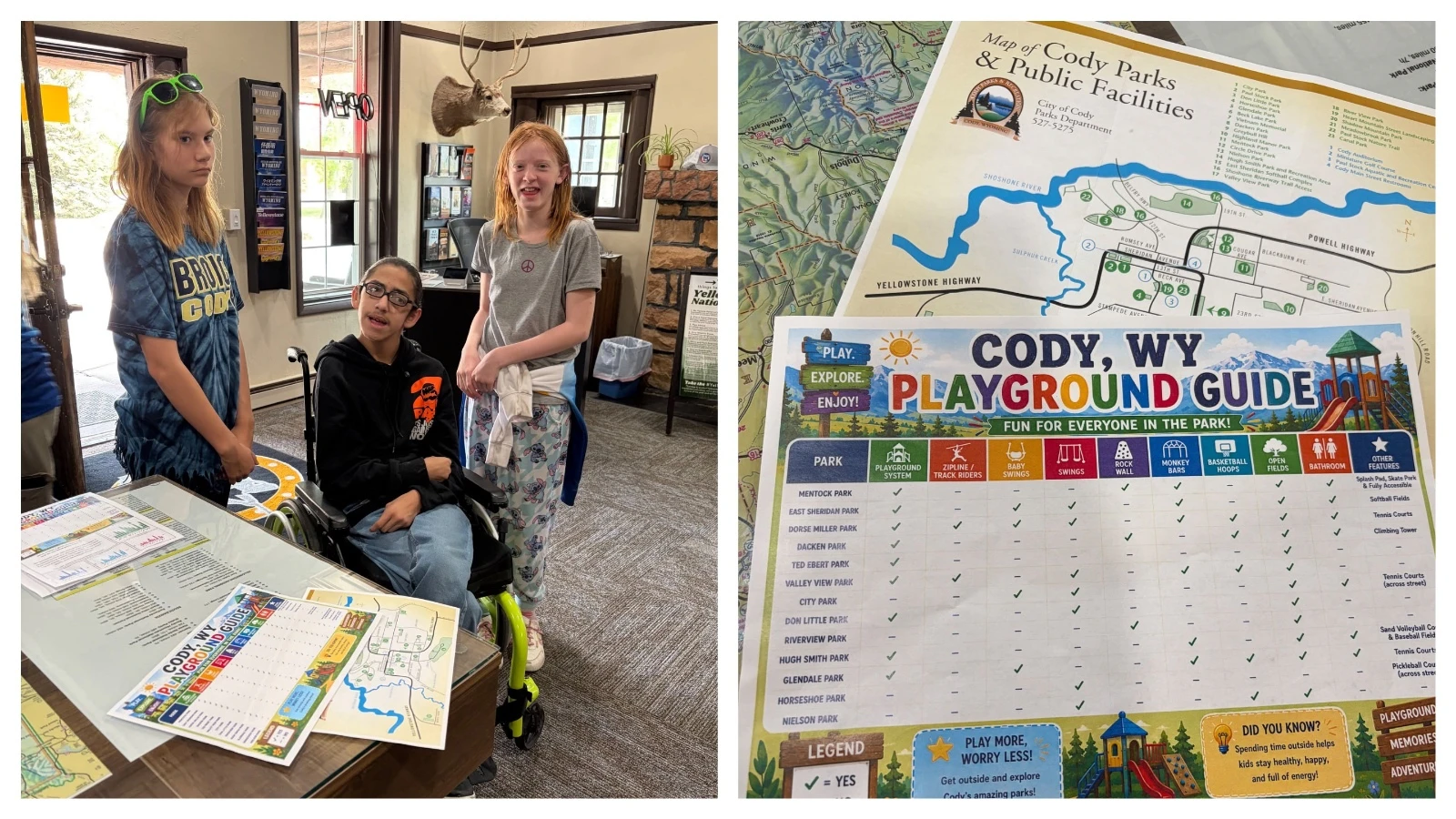
Special education students at Cody Middle School turned a school project into a unique community resource now available at the Cody Country Chamber of Commerce.
The students spent two months using a variety of academic subjects to create a Cody playground guide. The one-page handout breaks down every playground in the community by what they have for kids to enjoy.
Theresa Fitti, the life skills special education teacher at Cody Middle School, said the student-led project was intended to give kids an outside-the-box experience to enhance their personal and academic skills.
The unexpected opportunity to get their playground guide to the Cody chamber gave her students a chance to “learn without realizing they were learning.”
“They were doing a lot of skills that they don't enjoy doing and having fun with it,” she told Cowboy State Daily. “This was something they wanted to do, and seeing them learn and take ownership of their work was the most rewarding part for me.”
What And Where
Fitti’s special education class consisted of three students who were “trialing” a new way of teaching a resource class.
The idea for a playground guide came from Fitti’s own experience as a parent in Cody.
“I met up with my friends and their kids at a playground one day, and realized there were no swings there,” she said. “So we started asking ourselves, ‘Which parks in town have swings? How many parks do we have?’ We realized this was an issue, and I brought it to my students.”
Fitti had already finished a similar Cody-based project with her students that focused on reading, math, English, and functional community skills. When she presented this playground problem to her students, they embraced the idea of pursuing it as their next project.
“They were ready to jump right into it, because they had really a fun time with the first unit,” she said. “It was a very student-led process while bouncing ideas off of teachers and the other staff in the room to come up with solutions.”
Their solution would require a lot of thought and effort, which would, unknowingly, encourage students to push against their own boundaries and limitations and have fun in the process.
All Work For Play
First, the class made a list of important playground features that kids and families would care about. They soon assembled a list of nearly 50 playground features, which they realized was too many to focus on.
“The students decided they wanted to focus on what they thought was important to kids,” Fitti said. “We talked about the difference between opinion and fact, they determined this was an opinion, and discussed how we can get a lot of opinions.”
The class then developed surveys that were distributed to Cody’s kindergarteners, second graders, and fifth graders.
The surveys had the different-aged students rank their favorite playground features while Fitti’s students compiled the data.
“We made bar graphs from that information, touching on some math skills along the way,” Fitti said. “From that, we were able to determine the top six features that kids in our area want to see in playgrounds.”
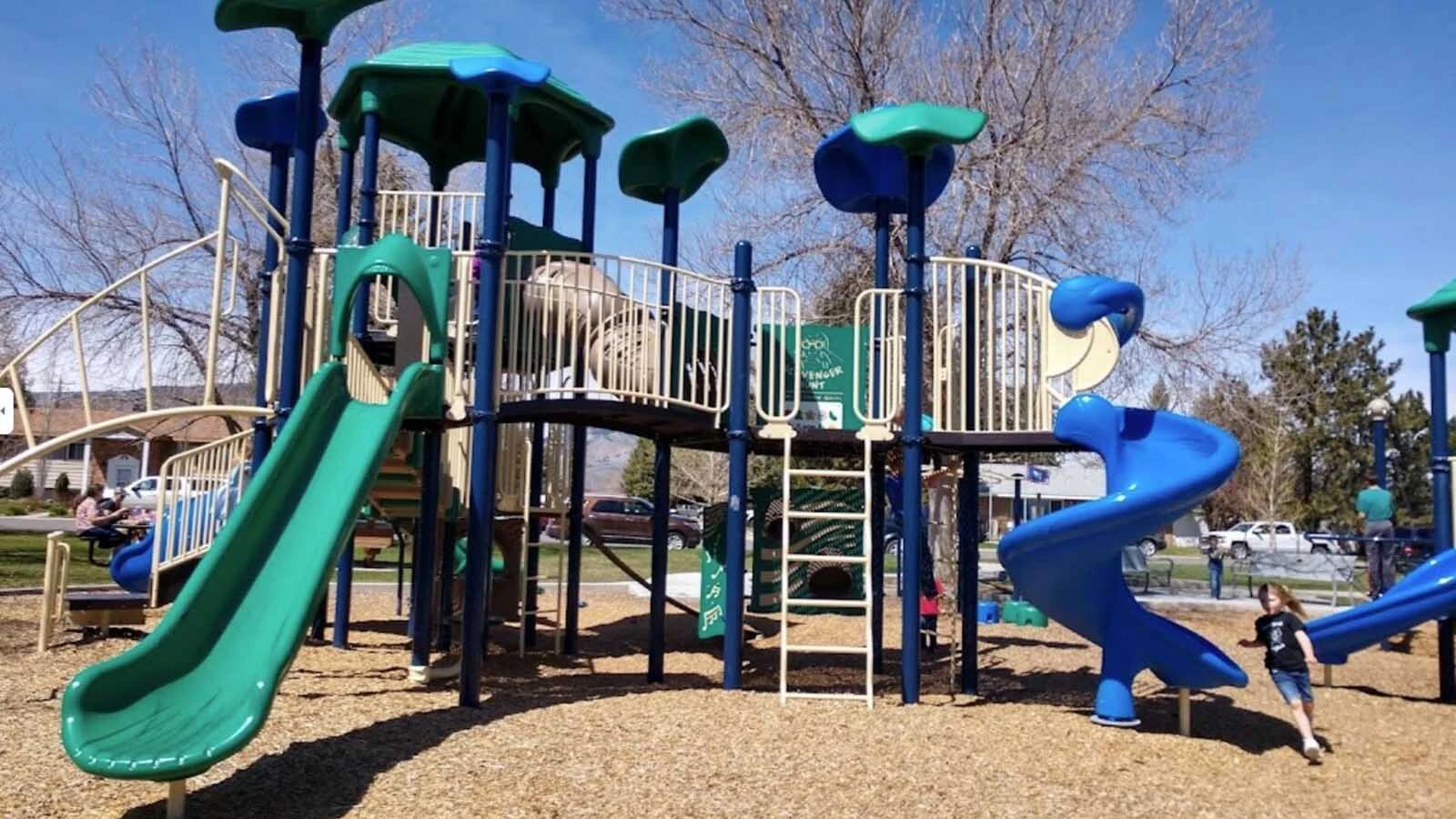
After surveying and interviewing over 200 students, Fitti’s class had a list of six core playground features: playground systems, zipline and track riders, swings, baby swings, rock walls, and monkey bars.
Three additional features – bathrooms, basketball hoops, and open fields - were also added.
To verify which playground has which features, Fitti’s class visited Cody’s 13 parks. According to Fitti, it was important that her students use their own observations to complete checklists based on their surveys.
“We found an online resource on the different parks, but when we looked at each park, not every feature was listed, and some of the information was outdated,” she said. “That’s why they decided that they needed to do their own observations.”
Finally, the class decided to create an informational checklist listing every park in Cody and the nine core playground features. Each park got a checkmark for the features it had, based on the feedback Fitti’s class received from Cody’s kids.
“We made a list of action verbs of everything these kids did,” she said. “They drafted emails. They designed spreadsheets.
"They did a lot of different things that tied into our state standards and the power standards the school’s working on across all grade levels. They did really well.”
Play More, Worry Less
While the goal of the student-led class project was always to produce something useful, Fitti didn’t contemplate how useful it was until the last week of the school year.
“We were thinking about what we could do with it,” she said. “At first, we were thinking of posting it on community bulletin boards and asking restaurant and business owners if we could hang it there. One of the classroom staff members suggested we get our guide to the Cody Country Chamber of Commerce.”
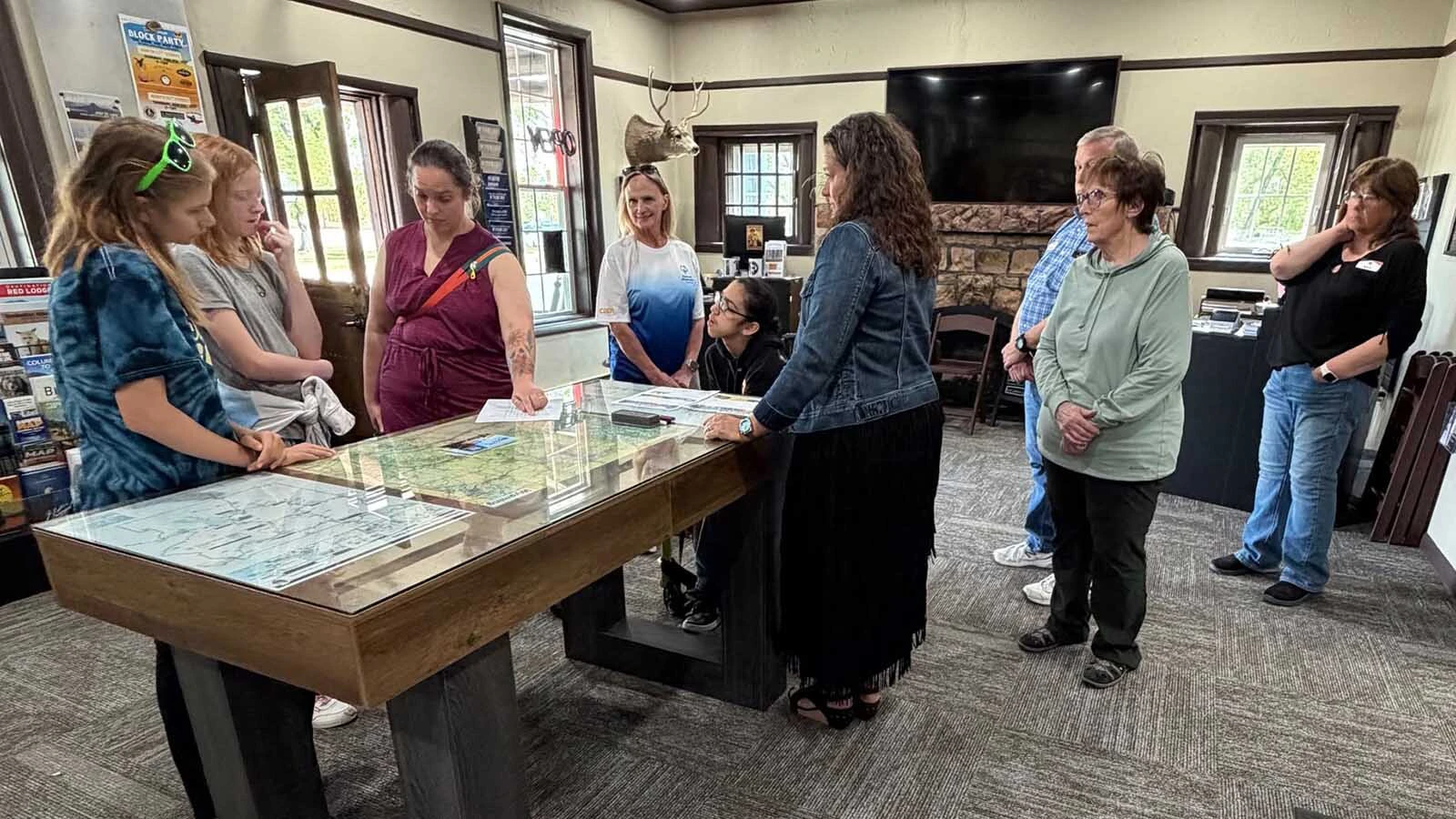
Fitti met with Jennifer Thona, executive director of the Cody Country Chamber of Commerce. Thoma “loved their project so much” that she asked Fitti for copies to give out to chamber visitors.
When Fitti presented the idea to her class, they were “impressed and super excited.” They immediately agreed to get their playground guide to the chamber.
But it wasn’t going to be that easy. Fitti decided to turn the new partnership into another opportunity to put her students “on the spot” for their benefit.
“I got them in the school vehicle and told them we’re going to the chamber,” she said. “It was a last-minute opportunity for them to work on their public speaking.”
Most people panic when it comes to public speaking, let alone when it’s extemporaneous and on the spot. Nevertheless, Fitti believed they could and should, and her students proved her faith was well-founded.
“We talked about communication and presentation skills, eye contact, standing up, and sharing your ideas clearly, and they rose to the occasion,” she said. “It was a last-minute thing, and I was proud of my students for that. They did really well.”
Their Product
The Cody playground guide is now available to locals and tourists at the Cody Country Chamber of Commerce. Thoma plans to include the handout in the stack of maps and other resources they hand out to tour groups.
“The kids are super excited that other people are going to see their work and find it useful,” Fitti said.
For Fitti, the playground guide was a vindication of the project-based learning unit she’s been trialing at Cody Middle School.
She hopes it will serve as a model that other schools and programs can adopt to improve the educational experience for special-ed students.
“We're still working on academics and on functional skills, but putting them into a fun, student-led format,” she said. “I spent this year seeing if I could do a full class period of it for the full school year. I'm still playing around with what other projects we can do to keep expanding this and what other students we can reach.”
Fitti admits that her still-developing model works best for smaller classes. The educational implementation of the playground guide was designed to meet the individual needs of each student, allowing each student to take ownership of different aspects that addressed skills they needed to work on.
Still, the end goal was to create something useful. Now, Fitti and the entire Cody community can benefit from her students' hard work.
“I’m a parent who had these questions about parks and playgrounds,” she said. “I imagine a lot of other parents, in town and just visiting, have similar questions. Now, they have this resource available to them.”
That resource was created through the initiative, enthusiasm, and hard work of her special-ed students, and she couldn’t be prouder of them.
“I had an idea of where I wanted this project to go, and sometimes it went a slightly different way because that's what they wanted,” she said. “This is their product, and seeing them take ownership of that has been amazing.”
Andrew Rossi can be reached at arossi@cowboystatedaily.com.