CHEYENNE — Two years ago, Ranch Eats food truck owner Troy Strand thought he’d finally solved his hiring problems. He decided to offer his food-service workers not just health insurance, but a 401(k) retirement benefit with a 4% match on top of that.
Wages at Ranch Eats start around $18 an hour and can climb to $40, plus gratuities and tips.
“For the health insurance, we cover the costs for the employee 100%, and then they have the option to add on their family,” he said. “And if they want dental and vision, they have the option to add that on as well.”
Strand has been layering on more perks to keep workers, recently starting an employee of the quarter program, which includes a special outing with a limo ride and a $250 bonus.
Those measures have helped Strand with retention, but haven’t solved his hiring crunch.
“I keep banging my head against the wall,” he said. “I think we’re at about 24 employees right now, but we could easily hire another six full-time, and they’re just not there.”
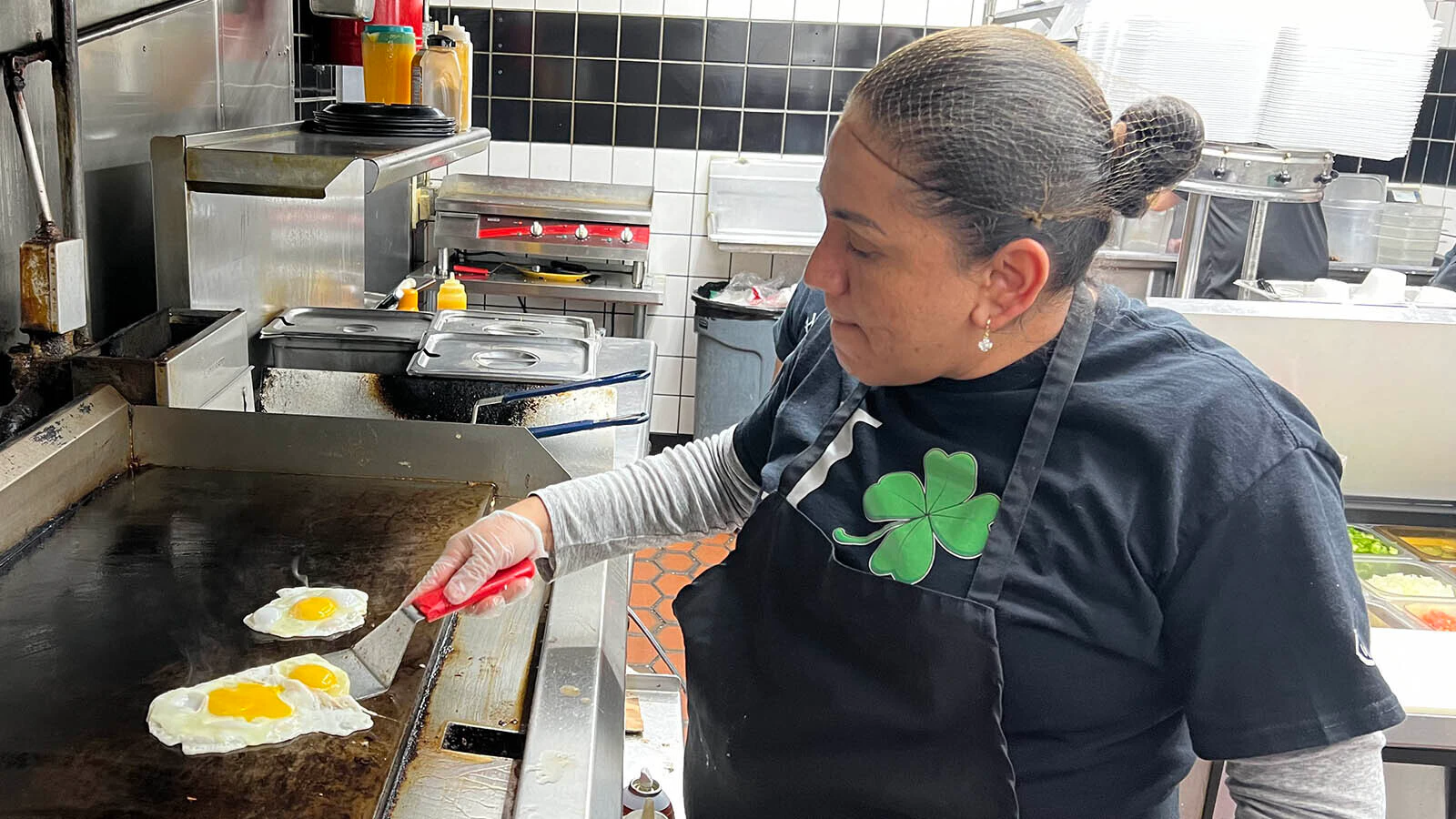
Jobs range from cashiers to caterers with cooks and prep cooks in between. Experience isn’t required.
“We have a really good management team to teach everyone what they need to know,” he said. “We tell everyone we live by three principles, and we can teach the rest.
"Like, we don’t expect people to have cooking experience or know how to drive a food truck or any of that. We tell them if you can be honest, if you can be on time, and a person of your word, and don’t lie or steal, if you can just do that, we’ll teach you everything else.”
Even that isn’t enough. In the last month, Strand hired roughly a dozen people.
Just one is still there.
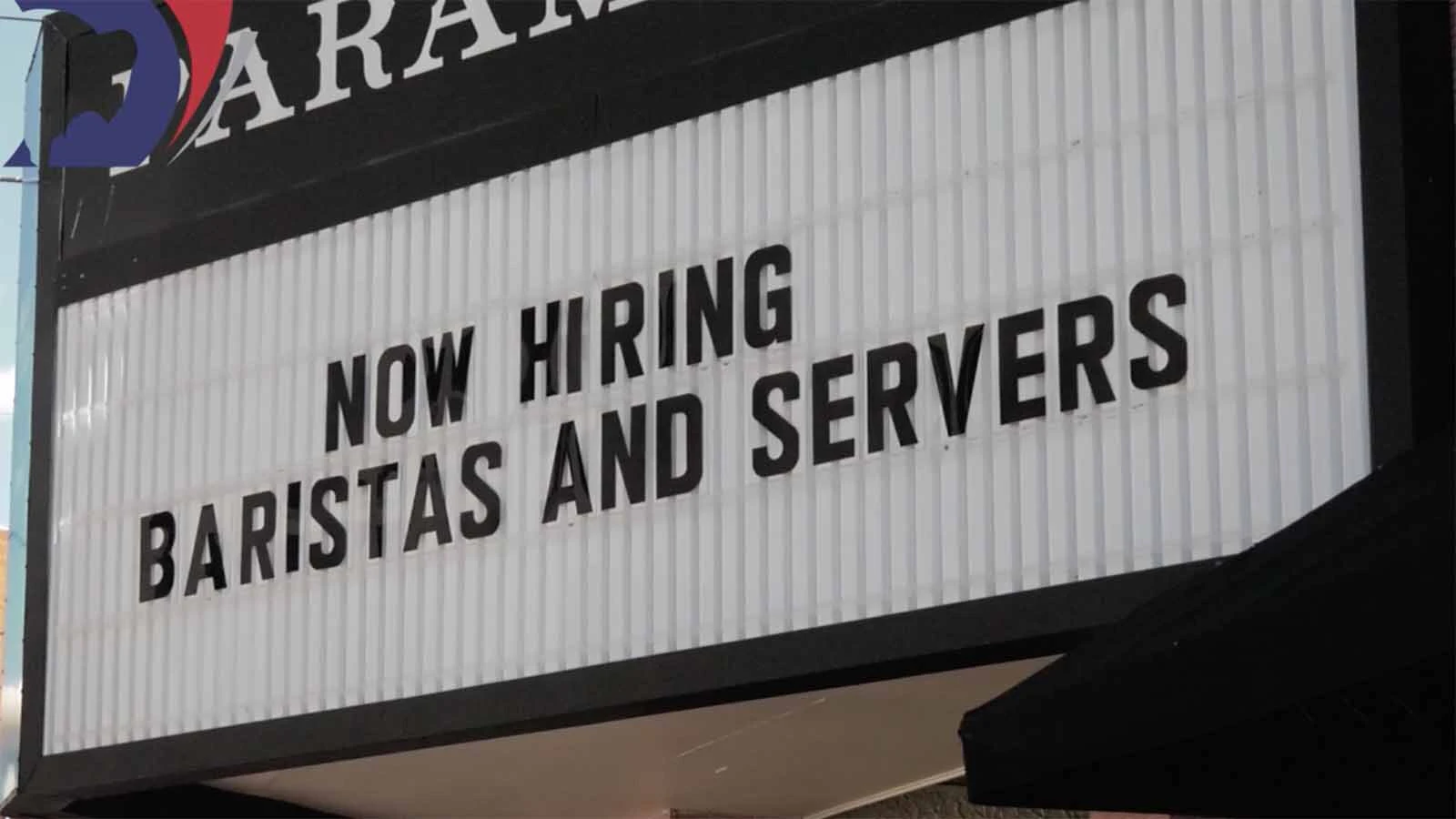
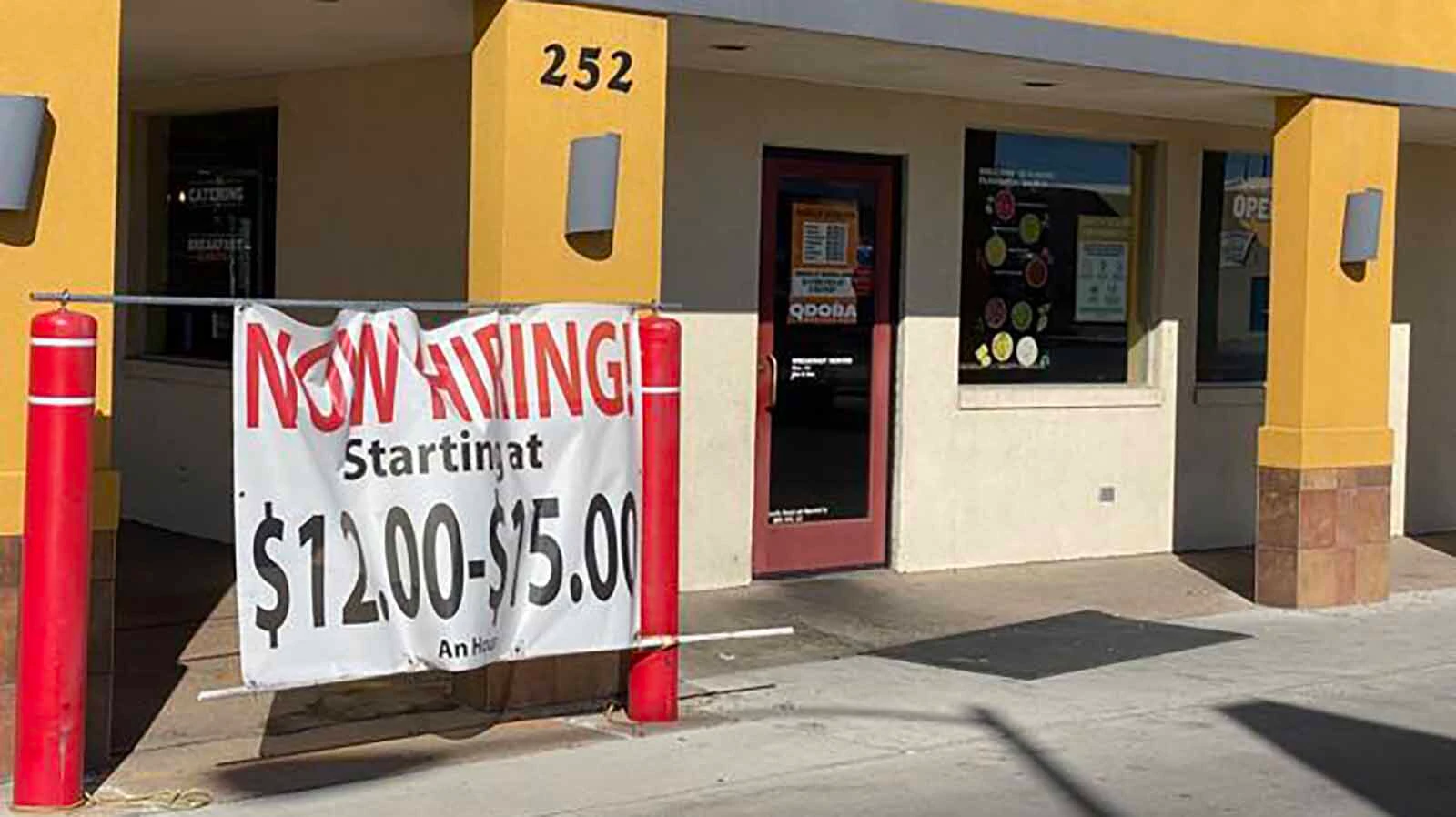
Strand isn’t alone. Across Wyoming, windows and billboards are sending out the same message — “We’re hiring” — for everything from cafés on up to medical clinics.
With too few workers to go around, businesses have been quietly curtailing their hours on what seem like odd days — Tuesday and Wednesday — and billing that as “new summer hours.”
That structure lets them focus on high-traffic days while trying to avoid burning out the limited staff they do have.
Hiring Crunch Takes A Personal Toll
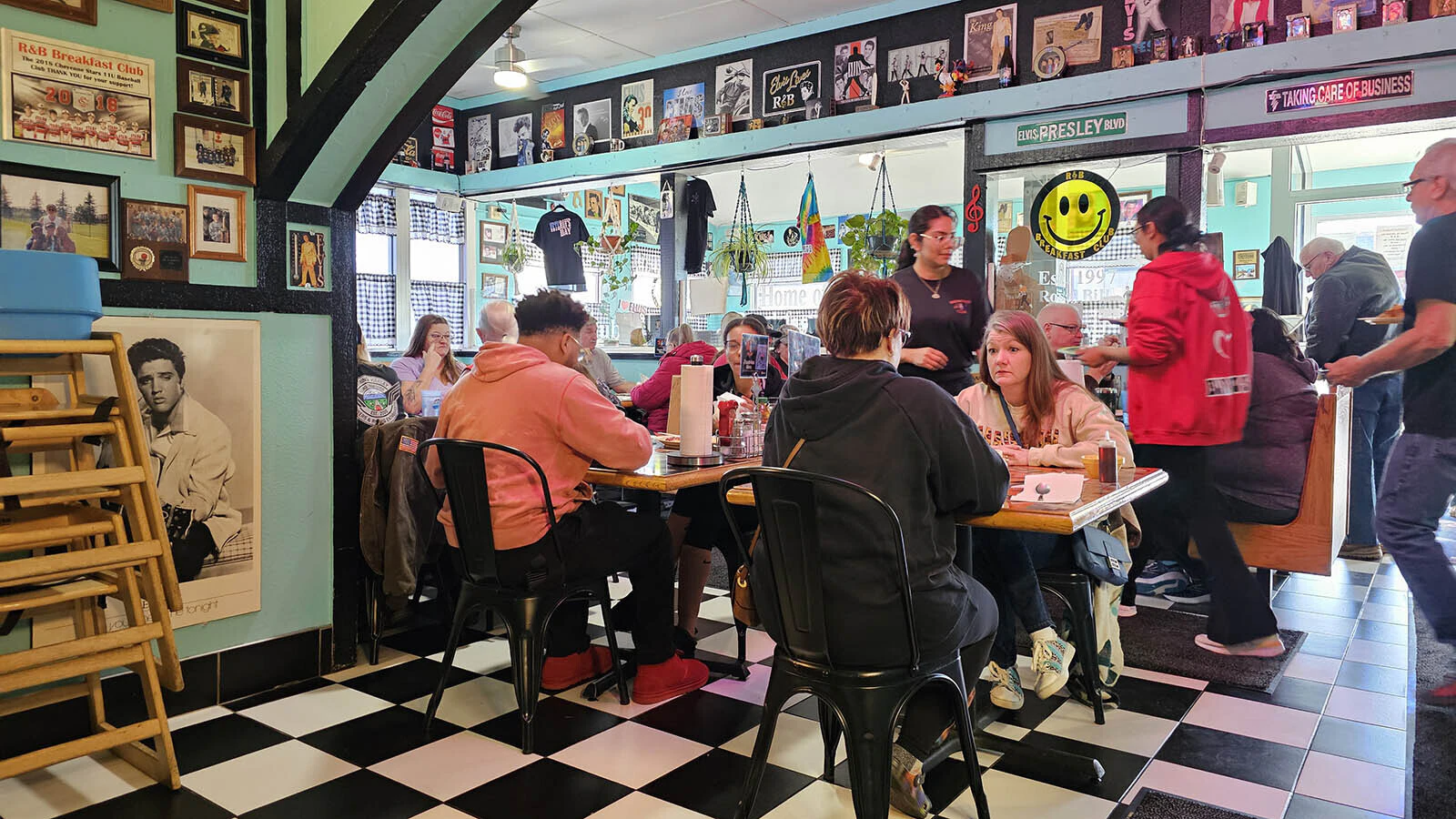
In downtown Laramie, 2nd Street Deli co-owner Chrissy Matthews has watched the hiring crunch hollow out her schedule board.
Her deli needs about 15 people to comfortably cover roughly 20 shifts. But the applicants she’s been able to hire, who are mostly young, college-age workers, want to keep their shifts on one or two very specific days.
“We’ll have four people on vacation at once,” she said. “And then I’m scrambling, because everyone only wants two shifts, at best.”
That’s forced her to cut back hours. The deli used to stay open from 11 a.m. to 7 p.m., but now it adjusts hours to match what her patchwork staff can handle.
Back-of-the-house applications, meanwhile, have been even more difficult to fill. She hasn’t seen an application for that in more than a year, even though that’s really where 2nd Street Deli has the biggest need.
The staffing crunch turned personal a couple of months ago when her father died. There was no one she could rely upon to pick up the slack while she was trying to manage arrangements and take the time to grieve.
“We were only able to take two days off,” she said. “It was very heartbreaking.”
Even Six-Figure Jobs Are A Struggle
If restaurants and food trucks struggle to hire people at $18 an hour, it might be tempting to think the solution is just a matter of paying people more.
But Wyoming’s hiring crunch doesn’t disappear at higher income levels.
Kyle Brost, chief executive officer for Gottsche Rehabilitation and Wellness, leads eight clinics across rural Wyoming. He would hire 10 people yesterday if he could, positions that range from paying $60,000 to $120,000 per year.
“We could have mental and behavioral health in every single one of our clinics,” he told Cowboy State Daily. “We have it in one clinic. Speech and language, we can have in every clinic.
"Right now we have no speech and language therapists, and we’re understaffed in really three clinics in terms of occupational therapy, physical therapy.”
Despite offering above-median pay, hiring medical professionals to Wyoming has been challenging for the past 20 years, Brost added, but the pandemic seemed to make things significantly worse.
“A lot of people in the industry switched over to being travelers,” he said, referencing transient contract workers. “Travelers, while I appreciate them, they’re not joining the community. They’re not getting infused into our towns and contributing to where the town is going and what the lifestyle and the community engagement is.”
Brost hopes that will soon turn a corner, but said other challenges remain.
“Spending six to eight years to get a degree in physical or occupational therapy is expensive,” he said. “And then the Department of Education reclassified quite a few professions as not professional degrees, which limits the amount of student loans people can get.
"There’s just a lot of more broad macro-level things, like people leaving rural communities and not coming back.”
Housing Challenges A Factor
One of the hidden barriers to hiring and recruiting comes down to housing, Brost said.
In places like Thermopolis, for example, it’s easy to sell prospective employees on the job. Thermopolis has a lot going for it in terms of quality of life with Hot Springs State Park in its back yard, as well as world-class fishing and plenty of outdoor adventures in the Wind River Range.
But when those applicants start looking for housing, they have trouble finding something suitable.
“There’s just not enough inventory on the market for people to have,” he said. “We’ve got a new hire starting July 1 who is married, starting a family.
"A two-bedroom, one-bathroom place probably isn’t going to be the right fit for them, but there’s not a lot on the market that is a three-bedroom or above.”
Most of what is available, meanwhile, is older.
“If you’re not interested in rehabbing it a bit yourself, it’s probably not going to feel like a great home for you,” he said. “I was just talking to somebody yesterday about this. One of the resident doctors who is just coming in this fall for the hospital said, ‘You’re buying a house that needs a lot of work to it, and you’re also paying a lot for the house in order to do the work yourself.'”
When other areas are offering better housing stock for more affordable prices, that makes Brost’s pitch for Wyoming tougher. Even when he offers sign-on bonuses and help with moving expenses, those incentives can’t create housing that doesn’t exist.
“Your home is where you spend a lot of time outside of work,” Brost said. “So, if you can’t find a place that you love and appreciate and value, it’s an easy decision point to be like, ‘Well then, I’m going to choose this other spot.’”

Costs Of Living Have Outpaced Wages
Economically, Wyoming Business Council Chief Strategy Officer Sarah Fitz-Gerald sees the labor crunch as part of a bigger economic squeeze.
The cost of living is rising faster than household incomes, which is pushing many working-age people to leave Wyoming at one of the highest rates in the nation.
“(It’s) just killing our economy,” she said. “We really think that Wyoming should be a place where, when people work hard, they should be able to get ahead.”
It was true for a long time, she added, but inflation has dramatically changed the dynamic.
“Right now, we’re seeing costs rise immensely, whether it’s groceries or gas or housing,” she said. “Those things have grown over 50% in the last five years, whereas our median household income has only grown about 6%. We’re just not keeping up.”
The struggle to close the hiring gap makes it harder for existing businesses to expand in ways that would create the better jobs that could attract young people to stay in Wyoming.
“If you’re one of those people who’s trying to work hard and get ahead and trying to make ends meet, a lot of time you’re going to move somewhere else,” she said. “By the time people are in their 30s, 70% of people who were born in Wyoming have left because of this kind of squeeze.
"So yeah, it is having a big effect on the economy.”
Housing isn’t the only challenge, she added. Families of working age are struggling to find essential services, too, such as childcare.
“People are coming together and trying to figure out how to solve those big problems,” she said. “I really see that there’s a path forward by kind of solving these problems one by one when we talk about housing, when we talk about childcare, which will make it easier for Wyoming employers to compete in this really tight labor market.”
Shrinking Workforce A National Problem
The numbers are worrisome, Wyoming Chamber of Commerce CEO Dale Steenbergen told Cowboy State Daily.
He has been tracking workforce trends statewide and points to studies showing that Wyoming has lost more jobs per capita over the past five years than any other state, even as its unemployment rate continues to remain low.
“We can’t afford to export any of our kids, and we’re exporting a bunch of them,” he said. “And we’re trading them for political refugees who are retired. When you’re running an economy, that’s not very good math.”
Meanwhile, those retirees will need more services — but the current workforce has little slack left to provide them.
Eventually, Steenbergen expects wages to increase, which may entice some retirees to return to the workforce, helping the situation at least some.
But the retirement cliff that’s adding to this dynamic is just getting started.
Wave after wave of Baby Boomers are exiting the workforce. An estimated 11,200 Americans will turn 65 every day through at least 2027.
By 2030, every Boomer will be 65 or older, and they’re all leaving both a labor and knowledge gap behind them as they exit the workforce.
“This is not just a Wyoming problem,” Steenbergen said. “It’s a nationwide problem. I see that Chipotle in Missouri, they’ll pay just as much as a Chipotle in Cheyenne.
"So that’s really the problem we have … there’s hardly a state in the union that doesn’t say, ‘We have workforce problems, and we have to be able to find workforce.’”
Money Left On The Table
Back at Ranch Eats, Strand’s struggles to turn a dozen new hires into a handful of long-term employees has a similar bottom line as the medical clinics struggling to hire.
They’re both leaving money and opportunity on the table simply because they can’t hire enough people to serve the existing demand.
For Ranch Eats, that’s meant taking fewer catering jobs than the business otherwise might, while at 2nd Street Deli it’s meant reduced hours and unexpected closures. For Gotsch clinics, it’s fewer services, even as demand for health care is rising.
All of which to say, those “We’re hiring” signs aren’t going anywhere any time soon in Wyoming.
Making them disappear is a lot more complicated than simply raising wages. It’s a complicated puzzle that includes unwieldy puzzle pieces like inflation, housing, and child care.
Solutions for all three have to fit together to reverse the ever-dwindling workforce trend.
Renée Jean can be reached at renee@cowboystatedaily.com.