
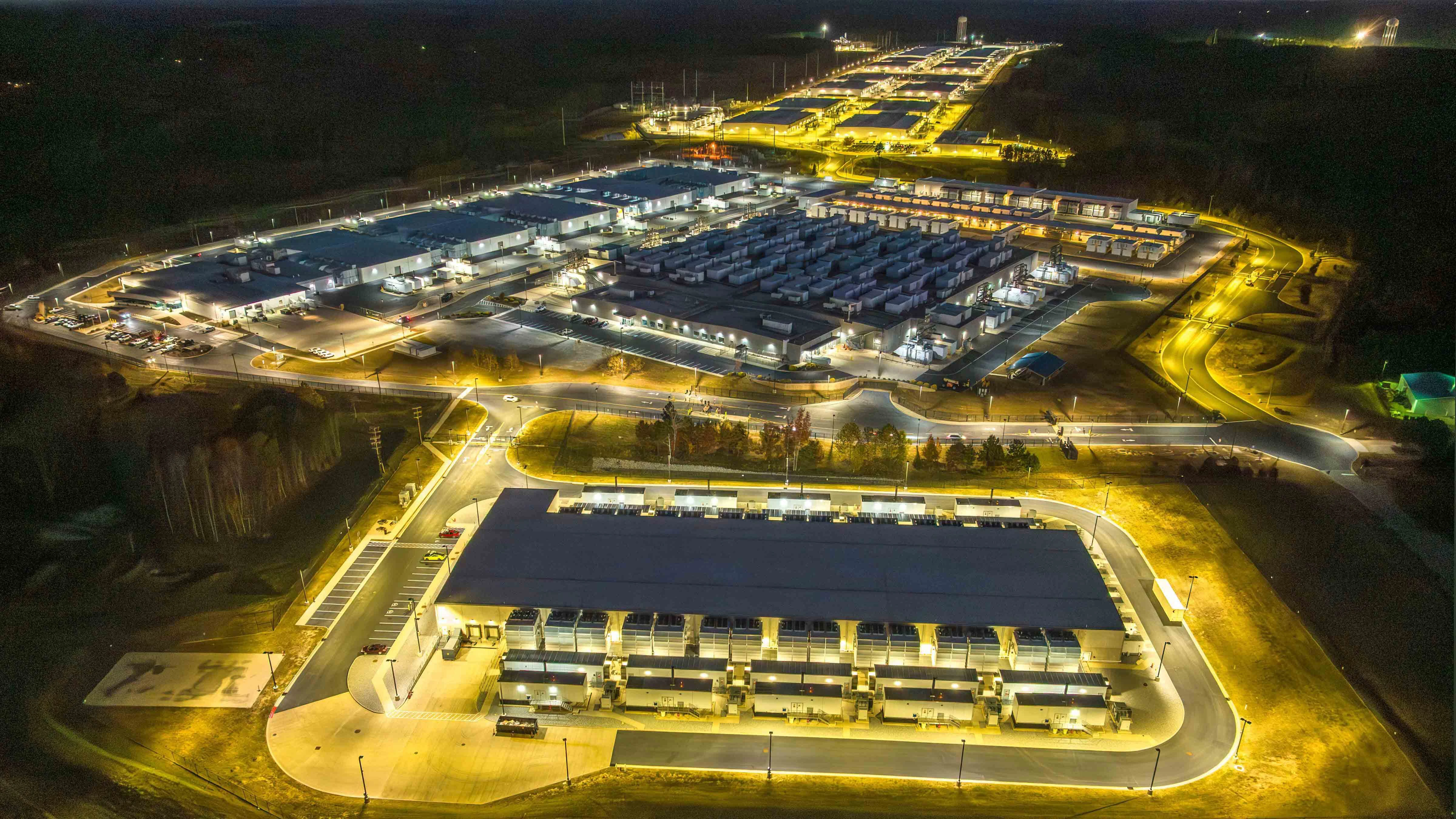
Wyoming doesn’t charge sales taxes on large data center equipment purchases because lawmakers in 2010 wanted to compete with Texas to attract a major tech company’s project, legislative debates show.
Eleven years and potentially hundreds of millions of dollars in unrealized sales tax revenues later in 2021, a Republican state representative from Rock Springs, Clark Stith, tried to undo the state’s sales tax exemption.
Advocates of the energy, steel and tech industries opposed Stith. So did many of his Republican colleagues, Cheyenne-area local government leaders, and economic development groups.
The exemption remains today.
Many data center companies over the years have ignored the Wyoming Department of Revenue’s requests to report how much they’ve saved in sales taxes. The ones that have reported have logged more than $166 million in tax savings.
But sales tax exemptions aren’t the whole revenue picture:
Advocates of the exemption have argued for nearly two decades that the law incentivizes data centers to build in Wyoming; and those facilities then pay significant property and electricity taxes, generate jobs, and boost the economy.
Winners And Losers
The clashing philosophies of the Feb. 17, 2010, debate in the Wyoming House of Representatives have echoed into 2026.
Some lawmakers wanted to craft business incentives in state law to attract companies and jobs to Wyoming and compete with other states.
Others said it’s not right for the government to be selective about business and “pick the winners and losers.”
The economic development proponents won the data centers argument in 2010.
Then-Rep. Peter Illoway, R-Cheyenne, proposed House Bill 67 to exempt data centers that buy or rent more than $2 million in computing equipment in a year from paying sales taxes for that year. The centers hoping to qualify for that exemption were also required to:
• Have a physical location in Wyoming.
• Spend at least $5 million in capital costs on their facility.
• Receive certification from the Wyoming Business Council — which is the state’s economic development agency — that they’d create an “appropriate” number of jobs in Wyoming.
• Keep adequate documentation of these proofs.
Then-Rep. James Byrd, D-Cheyenne, cosponsored the bill. He also proposed the “appropriate” jobs requirement as an amendment, and the House majority approved.
Byrd is now campaigning in the Democratic primary election to become a U.S. senator for Wyoming. His campaign team did not respond to a Thursday voicemail request for comment.
Illoway told Cowboy State Daily in a Thursday phone interview that as he recalls it, Wyoming was only courting one data center at the time. The economic development group Cheyenne LEADS was pushing for the sales tax exemption law. The governor’s office was also involved, he recalled.
Into The Fray
Illoway told his House colleagues during the Feb. 17, 2010, debate that Texas was vying for a data center, and “my understanding is, Wyoming and Texas are in competition,” according to the audio file.
Rep. Jack Landon, R-Sheridan, derided the bill as government intrusion and criticized its favor toward larger projects over smaller ones.
“I know I must be a minority voice in opposing these,” he said, “but I think it’s important that the people of Wyoming know that we all don’t think alike. And there is a way to have a government that is more even-handed, and that we don’t have to come down here and pick the winners and losers.”
Both Landon and Illoway had leadership status, as they were both committee chairs at that time.
Rep. Michael Madden, R-Buffalo, had cosponsored the bill. But he ultimately voted against it and voiced disappointment that the House wouldn’t put a sunset, or expiration date, on the exemption.
“You’re really making a stab in the dark,” said Madden. “The people that sponsor this say they don’t want a sunset date. Well I don’t like to have a gun held to my head.”
Illoway countered, saying businesses like to have stable policy environments.
“Generally the power rates are provided for over 20 years,” Illoway said, adding that the data center hoped to build an “enormous building, very expensive.”
He said he doubted whether the business would want to settle in Wyoming when facing a sunset date on the sales tax exemption.
Byrd agreed. He pointed to Wyoming’s reliable power sourcing and other data-center-friendly attributes.
Landon seized on the notion. He rattled off features like Wyoming’s low taxes, low crime rates, ready supply of electricity, livable communities and lack of income tax.
“If we can’t attract businesses with those types of assets, I just can’t imagine why we’d want to add this to it,” he said.
Madden and Landon were part of a tiny minority. Only one more House lawmaker, Gillette-based Republican Rep. Sue Wallis, voted against the exemption.
On the Senate side, the bill garnered 23 aye-votes and seven all-Republican nay-votes.
Two of those nays remain in the chamber today: Sens. Cale Case, of Lander, and Dan Dockstader, of Afton.
Gov. Dave Freudenthal signed the bill into law March 5, 2010.
As the administration shifted from Freudenthal, a Democrat, to his Republican successor Gov. Matt Mead, the industry momentum continued. The Legislature in 2011 expanded the exemption to include uninterrupted power, heating, cooling, and air quality equipment as well.
Mead signed that expansion into law Feb. 18, 2011.
Whoa, Now
By 2021, Stith and the rest of the Legislature faced looming budget cuts and the COVID-19 policy whirlwind.
Gov. Mark Gordon had proposed both likely and worst-case scenario budget cut choices to the Legislature. The latter category included a potential $2.7 million cut of the public funds marked to help pay for home care for elderly people, Stith noted.
By then, data centers had saved at least $124.3 million in sales taxes from the exemption, according to the state’s data.
That figure appears significantly underreported: the Wyoming Department of Revenue requested tax savings numbers from 10 data centers in early 2021, and only heard back from three of those, the department’s report says.
Stith presented his bill to repeal the sales tax exemption to the House Revenue Committee on Feb. 23, 2021.
He called it unfair that small businesses pay sales taxes when they replace their computers, but huge data centers don’t.
“I don’t see that there’s a reason, really, that we should discriminate against small businesses, in favor of large businesses,” he said. “The biggest beneficiaries of the sales tax exemption tend to be … very, very large companies.”
Roughly the same arguments legislators bandied in 2010 recurred in that committee meeting.
Independent Rep. Jim Roscoe, of Wilson, noted that data centers benefitted from Wyoming’s low-tax environment already. Rep. Tim Hallinan, R-Gillette, noted that by settling in Wyoming, they’re paying significant property taxes into local government coffers.
Stith rebutted the idea that the sales tax exemption incentivizes the companies to settle in Wyoming.
California had several data centers but lacked that exemption, he noted.
Taxfoundation.org has found a correlation between friendly policy environments and data center establishment across states.
On the other hand, Wyoming’s cooler weather and ample energy product offer non-policy-related incentives to the centers, for which internal cooling and power available are vital.
Stith had few allies in that meeting.
Cheyenne’s new Mayor Patrick Collins opposed the repeal. So did Laramie County Commission Chair Gunnar Malm, economic development group Cheyenne LEADS, and the state’s economic development agency: the Wyoming Business Council.
Energy, tech, and raw materials sector advocates also opposed Stith.
His one ally in the public comment segment of that meeting was an environmental group, the Powder River Basin Resource Council.
Wyoming hosted around four data centers at that time.
DataCenterMap.com says Wyoming now hosts 31 data centers, including 27 in the Cheyenne area.
Cheyenne LEADS disputes the figure, listing 24 in the Cheyenne area, including those in construction and planning phases.
Wyoming Business Council CEO Josh Dorrell did not respond by publication to an email requesting the exact number of data centers in the state.
Rep. Chuck Gray, R-Casper, proposed an amendment at the 2021 meeting to shift any tax revenues from Stith’s exemption repeal into a safety net fund for shortfalls in K-12 education. His amendment failed.
Then, Gray and Hallinan voted with three other Republicans and the committee’s lone Democrat, Rep. Mike Yin of Jackson, to kill the bill and keep the sales tax exemption on the books.
Roscoe and two Republicans — Committee Chair Steve Harshman (Casper) and Rep. Mark Baker, (Rock Springs) — voted on the losing side in favor of Stith’s repeal.
Stith later lost his reelection bid in the 2024 Republican primary to now-Rep. Darin McCann. Earlier this year, Gov. Mark Gordon appointed Stith as a judge, of the Sweetwater County District Court.
But Then, Artificial Intelligence
Gray, who became Secretary of State in 2023 and is now campaigning for U.S. House, now vocally opposes data centers.
But, he said in a Thursday text message, “In 2021, no one had any idea where the AI (artificial intelligence) revolution was heading or the massive demands it would place on our power grid and water resources.”
Wyoming families are “right to be concerned about the real impacts on our infrastructure, our way of life, and our rural communities,” he said.
Gray also criticized one of his nine opponents in the race for the Republican nomination, Reid Rasner, for Rasner’s pro-data center stance, which he called "totally reckless."
Rasner told Cowboy State Daily on Wednesday that he’s “100% pro-business” and believes local governments, not federal decisionmakers, should decide whether to accept data centers.
Data center policy is a wedge in the Republican party.
President Donald Trump is calling for data center construction to help feed AI development and beat China in the technology race.
Some Republicans in Wyoming are calling, conversely, for a slow-down or moratorium on data center approvals. They’re in the strange company of Congressional delegates like Democratic Rep. Alexandria Ocasio-Cortez of New York and Independent Sen. Bernie Sanders of Vermont.
Cheyenne LEADS reports that data centers paid $10.37 million to the Laramie County community in property taxes from 2012-2015. They've also contributed $111.8 million in other sales and use taxes overall, including an estimated $27 million in sales tax on power from 2018-2024.
Research And Wind
Seth Carson, who had cosponsored the tax exemption bill in 2010 when he served as a Democratic state House representative, voiced mild surprise Thursday at how much the issue, and the industry, have exploded.
“To be completely honest with you, I wonder if I’d do the same thing now, knowing what’s happened,” he said.
In 2010, every voting Democrat in the Wyoming Legislature voted in favor of the sales tax exemption.
“My big focus was to make sure we were thoughtful about wind energy development,” Carson recalled. Also, he added, “We were thinking about the supercomputing thing the University of Wyoming signed on to.”
In partnership with the University of Wyoming, the National Center for Atmospheric Research Wyoming Supercomputing Center opened its doors in Cheyenne in 2012.
It helped pave the way for the subsequent Microsoft datacenter — a development then-Gov. Matt Mead sought and lauded as badly-needed diversity in the state’s economy.
The state had offered nearly $11 million in incentives to Microsoft, Mead told reporters in 2012.
Today, Trump and other leading Republicans see data centers as part of a huge coal-mining revival.
That wasn’t Carson’s intent, he said.
“I’d much rather we were powering a data center with wind energy than firing up a coal mine … if we’re all going to need computers, which we do,” he said.
Why We Don’t Get Reports Lately
The Wyoming Business Council still has a role in certifying data centers that seek tax exemption.
Wyoming had a law on the books for roughly a decade directing its Department of Revenue to compile reports on the unrealized sales taxes data centers would have paid without the exemption.
But the law didn’t have “teeth” punishing data centers that didn’t respond to the department’s inquiries, Department of Revenue Director Brett Fanning said in a Friday phone interview.
Numerous data centers did not respond to the department’s inquiries and didn’t report their tax savings.
The Legislature repealed the ineffective reporting requirement, and the department issued its last report on the figures in 2023.
But lawmakers voiced a thought process at the time that they’d enact a tougher reporting requirement in place of the ineffective law, Fanning recalled.
“And to be fair,” said Fanning, “when this was a growing industry, and there were only a handful of data centers, folks said, ‘We were nervous about reporting to you, because if we were the only ones, everyone would know that’s us.’”
Competing companies could scrutinize their foes’ expenditures that way, Fanning related from the data centers’ voiced concerns at the time.
That’s become less of an issue as the sector has grown, and the department could now aggregate that data, Fanning said.
He said members of the Joint Revenue Committee have voiced an interest in studying the tax reporting issue this year at the committee's August meeting.
Clair McFarland can be reached at clair@cowboystatedaily.com.


