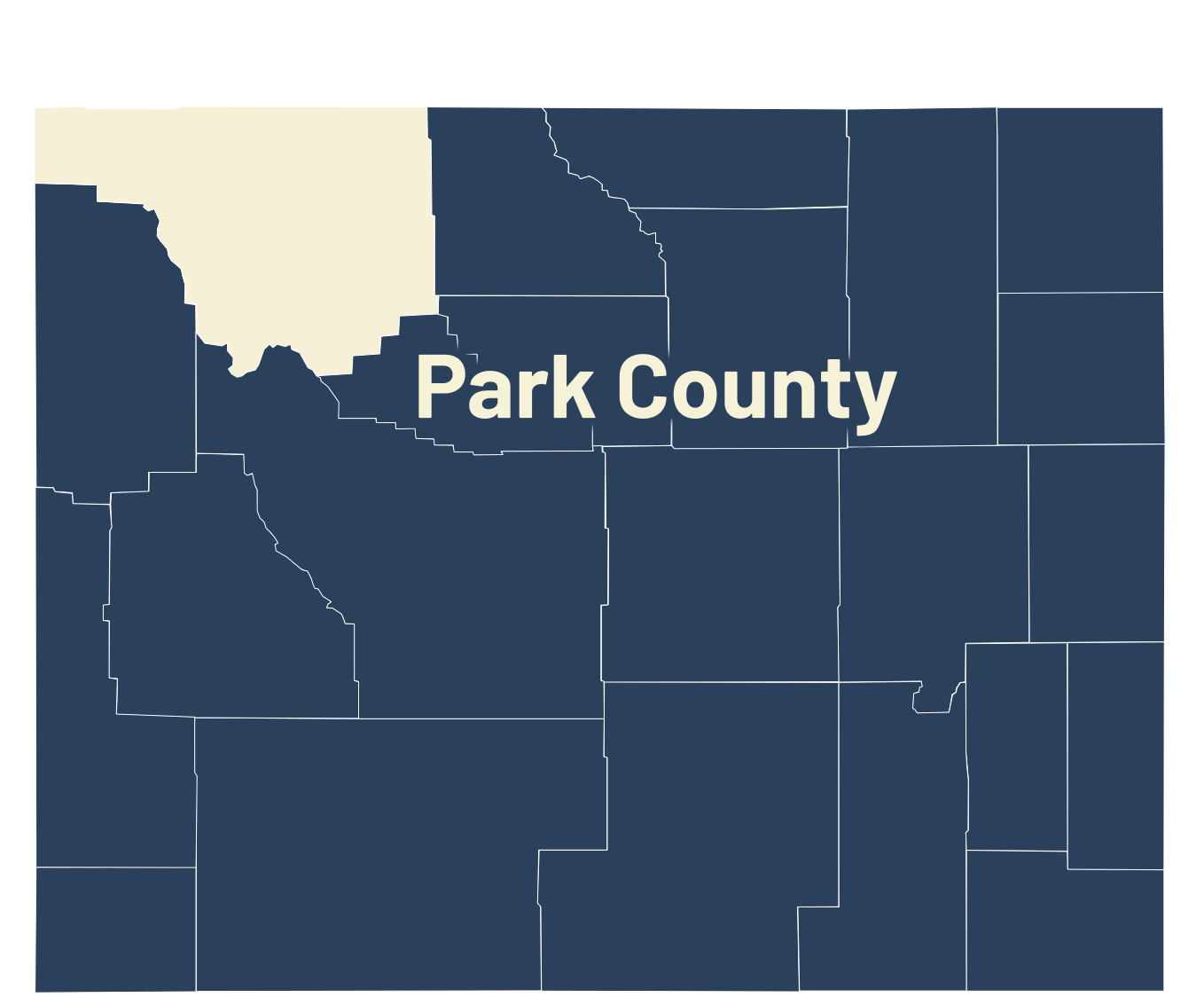
A Cody river guide said that his raft was nearly sunk by an electric fence wire strung too low across a river in Park County, while he was out on a float with his girlfriend and her young son on Sunday.
“It was sketchy,” Ryan Anue told Cowboy State Daily on Monday. “It was definitely a situation that could have gone bad fast.”
As he sees it, the manner in which the wire was strung over the river was hazardous and possibly illegal. He said that he reported it to the Park County Sheriff’s Office.
Park County Sheriff’s Office spokesman Monte McClain confirmed that the incident had been reported, and deputies were looking into it.
“There’s no law violation, so far, that we were able to find,” he told Cowboy State Daily.
McClain and Anue said that the owners of one ranch in the area told them the fence wire wasn’t theirs, but belonged to neighboring ranch.
McClain said that as of Monday, deputies hadn’t been able to make contact with the owners of that ranch. Cowboy State Daily was also unable to contact the ranch owners.
‘We Yelled At Him To Duck’
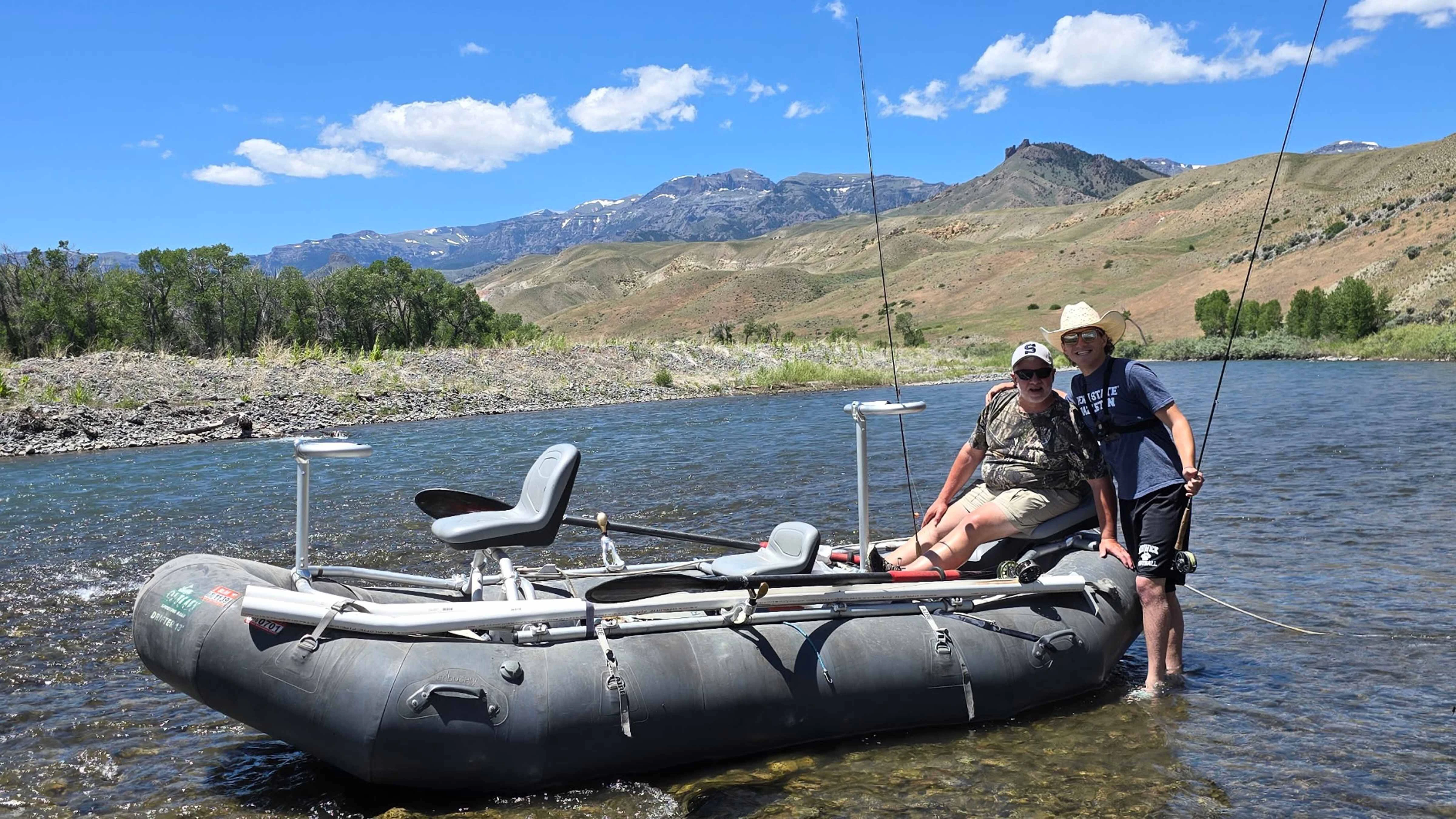
Anue owns Wyoming Wings & Waters guide service, but said that he was floating the South Fork of the Shoshone River, above Buffalo Bill Reservoir, purely for fun on Sunday with his girlfriend and her 9-year-old son.
They were in his 13-foot inflatable fishing raft.
“That water was high and off-color,” and so, not good for fishing, Anue said.
But they still had a great time.
“The current was ripping. It was just a really fun float, there’s some rapids in there,” Aune said.
About two miles above the take-out point, he spotted some wire strung across the river.
There was no way around it, so he decided to take the raft underneath it.
“The 9-year-old was sitting in the front and we yelled at him to duck,” and then the adults did likewise, he said.
They cleared the wire, which was high enough for the raft’s metal thigh brace bars to pass underneath it, he said.
Second Wire, And Chaos
“We popped our heads back up, and suddenly we see, there’s another wire right there,” Anue said.
“The first wire was head-high. The second wire was neck-level on river right and river left. Down the middle, the wire was bowed, it was probably boat-level, probably two feet off the river,” he said.
“We chose river right,” he added.
That time, they didn’t clear the wire. It caught on the raft’s rear thigh bar, and chaos ensued, Anue said.
“The boat was literally going under. We were being dragged under,” he said.
Anue said he started trying to fling the wire off the bar.
“I’m pretty sure the wire was hot (electrically charged). My shirt got fried and cut open but I didn’t get zapped,” he said.
Finally, the wire apparently came loose from one of its shore connections and “in all the chaos and adrenaline,” Anue said he managed to get it off the thigh bar and the raft floated free.
“Nobody’s hurt and the boat is fine,” he said.
Typical of a child that might not realize the gravity of such a situation, “the kid thought it was kind of funny,” Anue added.
What Does The Law Say?
Whether it’s legal to put fences or other barriers across rivers in Wyoming remains somewhat contentious.
Landowners may not block passage on navigable waters. But that leaves open for interpretation what actual blockage and “navigable water” mean.
Tensions over the matter recently flared up over a landowner allegedly blocking a natural water channel connecting Pine Creek and the New Fork River near Pinedale.
A squabble between a Wyoming landowner and a floater in the late 1950s ended up going all the way to the Wyoming Supreme Court in the 1961 case, Day v. Armstrong.
At the heart of the case was whether landowners have the right to deliberately block passage along floatable waters passing through their property.
The court ruled that landowners can’t do that — because waterways are essentially a public right-of way.
However, landowners can claim ownership of the river or streambed underneath the water.
That means that jumping out of a watercraft to wade, or anchoring a boat to a private streambed amounts to trespassing.
The exception the court made in its Day v. Armstrong decision is when floaters must exit their craft to go through, over or around shallow spots in streams, or barriers across them.
Fencing may also be placed across a waterway, so long as it isn’t blocking the passage in such a manner that floaters can’t easily go under or around it.
Some have suggested that using, “floater-friendly fences," with dangling vertical safety strings, could help ease tensions between landowners and floaters.
Mark Heinz can be reached at mark@cowboystatedaily.com.