
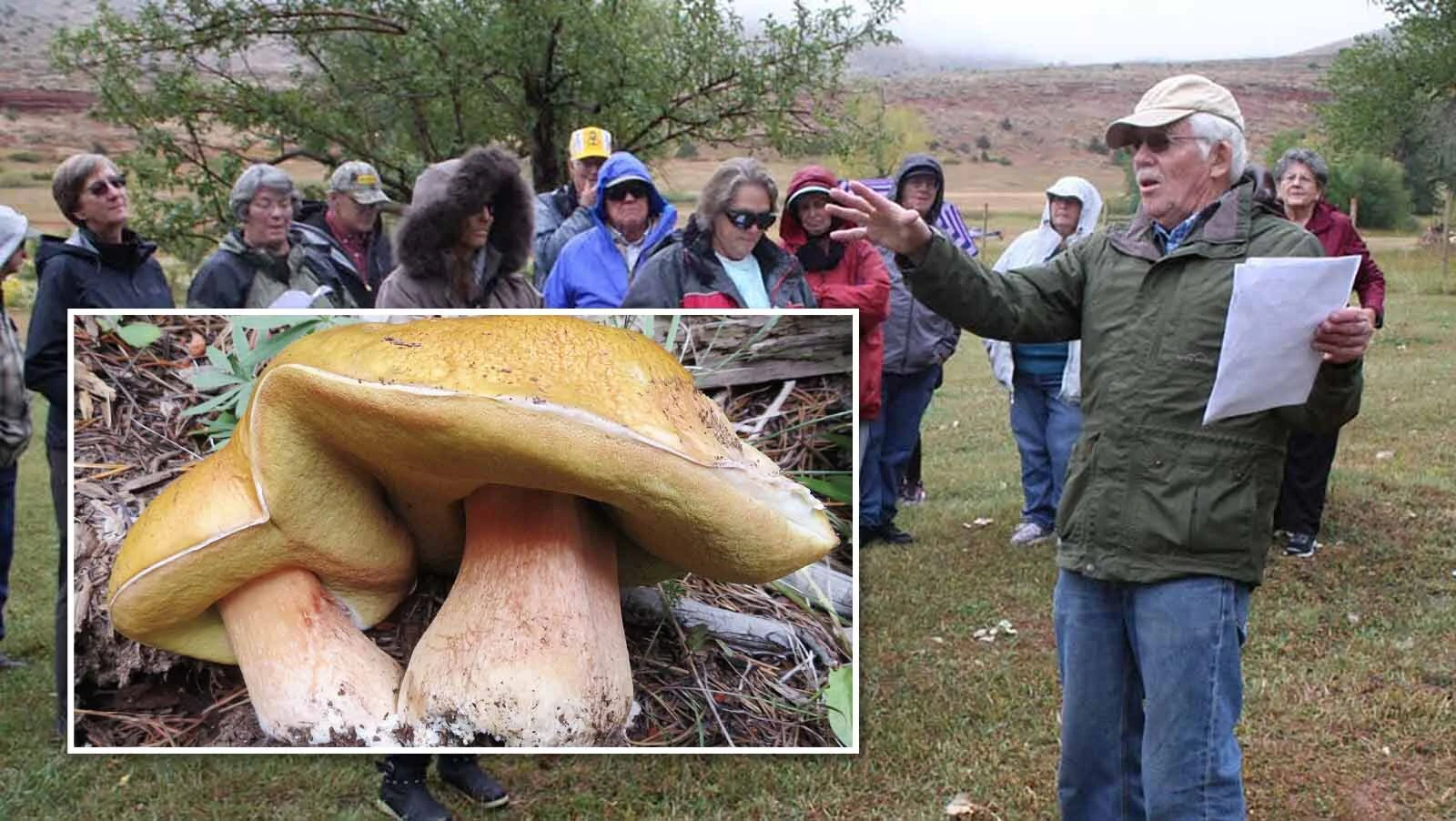
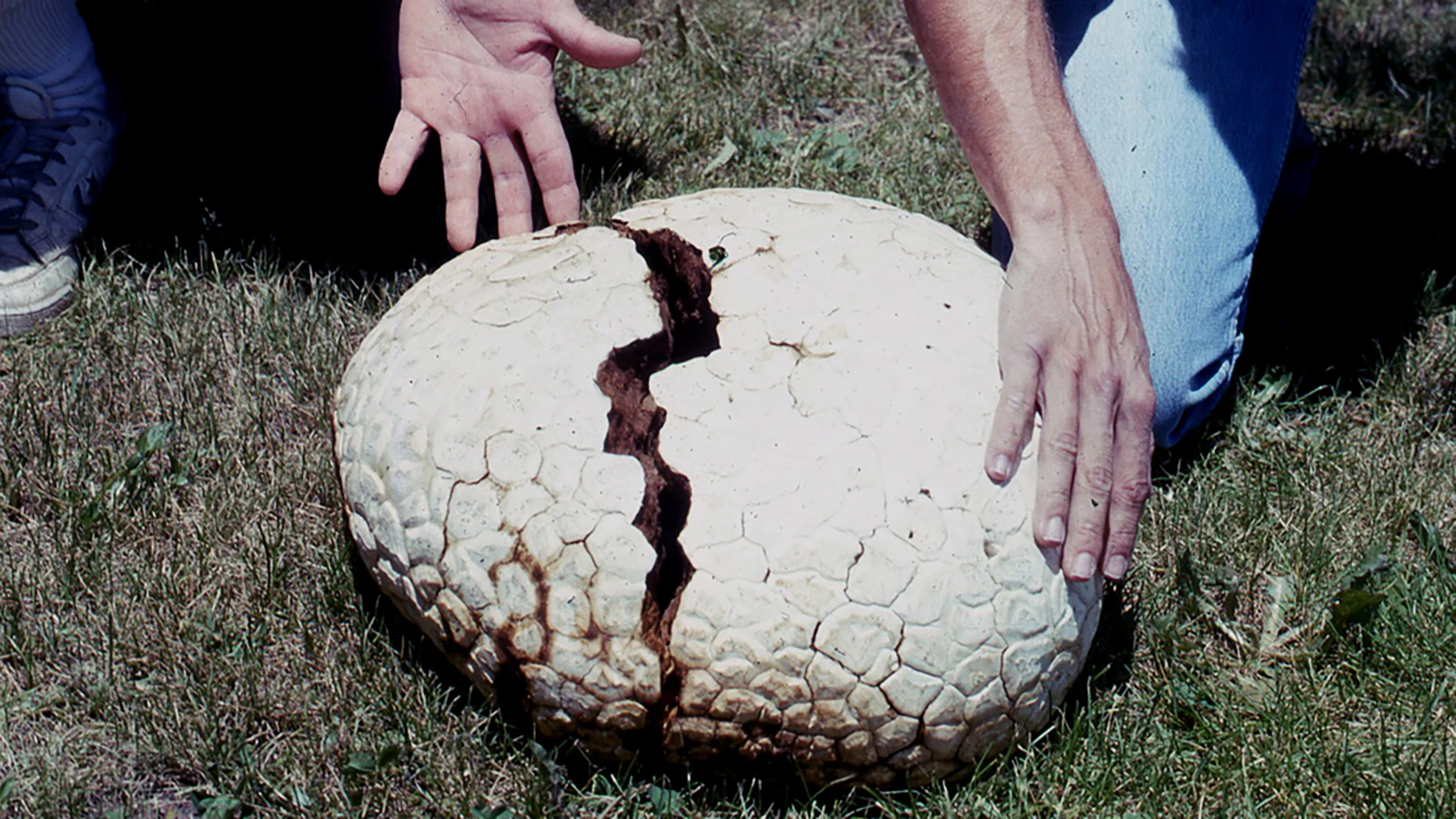
Growing up, the only mushrooms retired mycologist Jack States ever really noticed were puffballs. They were great targets for kicking down the street.
But eating them? Forget about it. That was the last thing on States’ mind.
Years later as a young graduate student, he had his heart set on being a plant ecologist.
Still, mushrooms didn’t figure in his plans at all.
Then one semester he found himself enrolled in a class with internationally acclaimed mycologist and microbial ecologist, the late Dr. Martha Christensen.
“She was one of the best instructors I think they ever had at the University of Wyoming,” States told Cowboy State Daily. “And she had me do a project on isolating molds from soil, which I thought was kind of ridiculous, but I thought I would be interested in knowing what kind of molds grew on herbivore dung.”
That led to a capstone field project collecting molds from elk, moose, deer, and rabbit droppings.
Even though he thought at the time it was “ridiculous” to sift through rabbit dung to see what would grow, he had soon found a species of mold no one had ever documented.
It was a discovery that would attract pharmaceutical money and pull him into a lifetime of chasing fungi from Wyoming to the far corners of the world.
Along the way, he would identify a dozen new truffle species, reshape forest management in the Southwest United States, and change how scientists think about wildlife diseases and even the Red Desert’s shifting sands.
All of it started with the “ridiculous” student project and a legendary University of Wyoming mycologist pushing him into the strange, hidden world of fungi.
The mold he’d discovered would go on to produce not only a new moth insecticide, but also lysergic acid compounds used in LSD-related research.
Aspergillus leporis, as the mold would be named, is now famous in international mycology and pharmaceutical circles.
At the time, what it meant for States was a research assistantship under Eli Lilly pharmaceutical company that supported his entire master’s program.
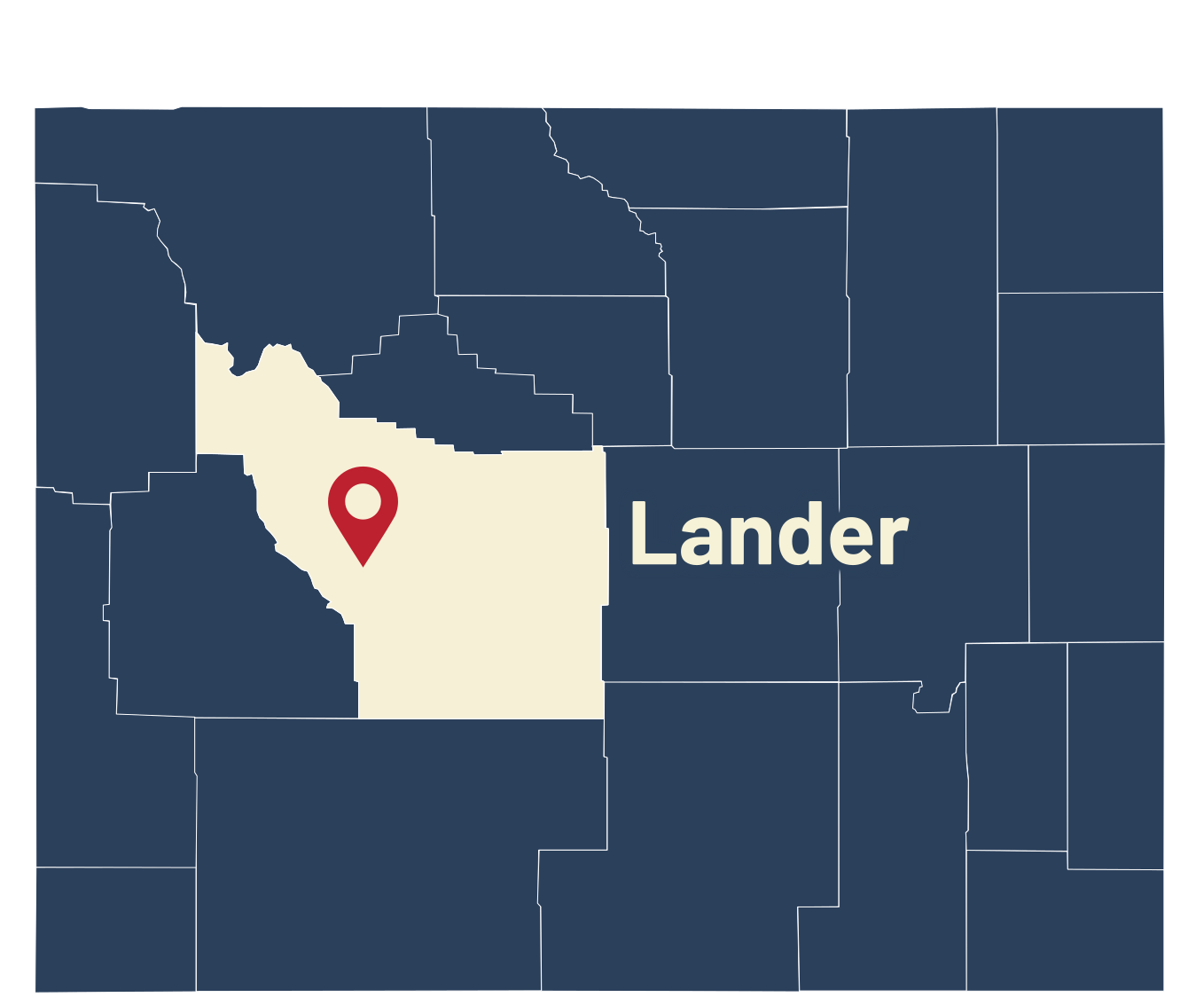
“Money was scarce in those days, and I wasn’t getting any offers from any other place,” said States, who’s now known as Lander’s Mushroom Man. “So that’s what I ended up doing. I isolated and worked on that new species of mold.”
A Plant Ecologist Goes Underground
Despite discovering an internationally famous mold, States wasn’t completely abandoning his first love — plants. Fungi just gave him a different perspective on plants.
“It turns out that the fungi are the major decomposer, we call them associates for plants,” he said. “That is, they cause most of the plant diseases, rather than bacteria, which causes the most diseases in animals.
"Because of their strong relationship to plants, I just parlayed that into plant ecology.”
The underground world of plants — the mycorrhizal partnerships between tree roots and fungi — is still a vast and understudied universe.
Diving into that allowed States to break lots of new ground over his career, including the discovery of 12 new species of truffles.
It’s also given him what he affectionately describes as the world’s largest collection of squirrel poop.
“All that craziness out there on the highway has paid off,” he said. “And I think (new discoveries) are what makes the career of a scientist so rewarding.”
A Mushroom That Almost Got Him Arrested
Many of States’ discoveries have involved adventures to other countries with his wife, who studies both plants and birds.
One of the most humorous adventures, though, didn’t happen in a remote jungle. It started in an ordinary university mailroom.
“Mushrooms were so popular then — even more so than today,” States said. “And in the Southwest, people automatically assumed I knew everything there was to know about mushrooms, and I didn’t.”
That led to occasional packages of mushrooms mailed to him for identification, including a particularly malodorous specimen called stinkhorn.
“Stinkhorns, when they produce their mature spore mass, the odor is like a rotting cadaver,” States said.
The smell was so bad that a couple of people from the campus post office delivered the package to States in person — along with a request.
“Whatever is in this package, don’t ever have anybody send it to you again,” he was told. “We’ve had to fumigate our entire post office.”
States counted himself lucky that the police didn’t show up to ask why people were mailing him dead bodies.
“So, I decided to write a book to protect myself,” he said. “I thought I’d write a book so they will read that and not send me anything else like that again.”
Lessons In Root Beer
Stinkhorns weren’t the only mycological misadventure in States’ career.
To feed his students’ huge and curious appetite — and to attract more students to his program — States looked for creative lesson plans that would draw people in.
At first, he settled on growing some psychedelic mushrooms. He was mindful that such mushrooms were only legally problematic at maturity, so he focused his lesson plans on immature mushrooms. But someone still broke into the building to clean out his entire growth chamber.
He needed a new lesson plan after that, so he switched to fermenting root beer in class using a special, French yeast. It was a big hit, but the students loved the root beer a little too much. They drank it down to the last drop — including the yeast sediment.
“It created almost instant diarrhea,” States recalled. “We had to put warning labels on the bottles after that. Just don’t drink the whole thing. Leave the sediment in the bottom.”
A Strange, Unpredictable World
States himself had to learn the hard way that mushrooms are a strange world, with dangers that are not always completely predictable.
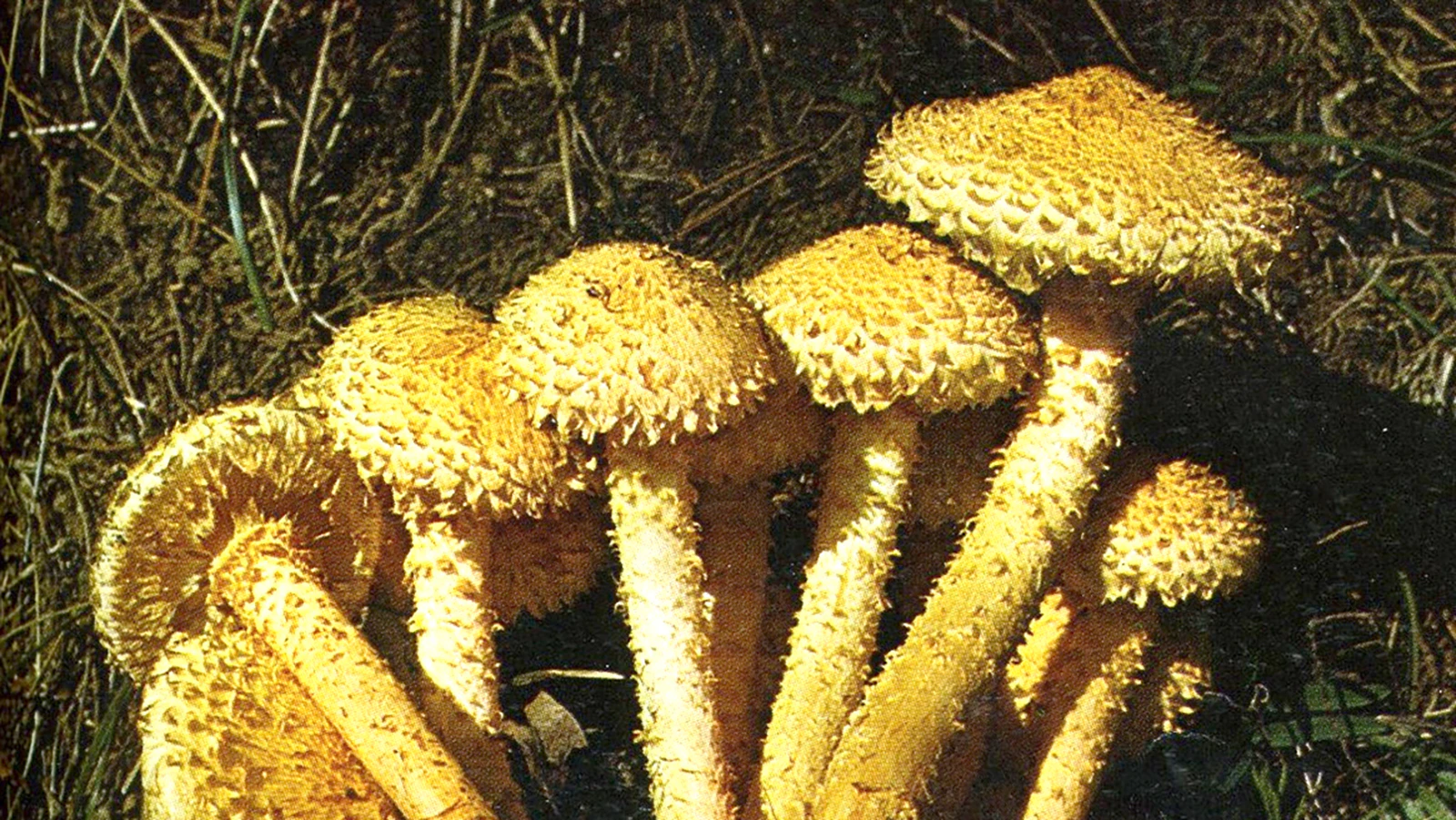
“There’s a mushroom that grows in Ponderosa pine forests in Arizona and New Mexico associated with Aspen trees,” he said. “And it produces a mushroom with very strong garlic flavor, which sheep herders in those areas have used for decades to flavor their dishes.”
One year, that was about the only mushroom he could find, so he decided to try it for himself and see if it really did taste like garlic.
“I had heard that some people have an allergic reaction to it, sort of like poisoning,” he said. “But since it just causes gastric upset, and obeying my rules — if you eat a mushroom for the first time, don’t eat more than a teaspoonful — I tried it.”
An hour later, States was doubled over in pain and violently vomiting, forcing him to go to the emergency room — even though his wife, who had also eaten some of the mushroom, had no reaction at all.
He was given painkillers to deaden muscle contractions and kept overnight for observation.
“I was laying there and had one last vomit,” he said. “Out came just a little, tiny piece of that mushroom. Once that came out, there were no more symptoms and I felt really great.”
States realized he must have had an allergic reaction to the mushroom, since his wife was not affected.
“Then the night nurse came in and asked me how I was feeling,” States said. “I said I was feeling great, because I’d gotten rid of that last piece of that mushroom.”
The nurse asked if it was one of those “wild” mushrooms and States admitted it was.
“Then she said, ‘You know, maybe you should leave the mushroom eating to the experts,’” States said with a chuckle.
She had no idea States had literally written the book on mushrooms.

World-Changing Squirrel Scat
States’ research hasn’t just expanded the catalog of weird fungi. It’s also changed how forests in the American Southwest are managed, and changed the understanding of certain wildlife diseases in Wyoming.
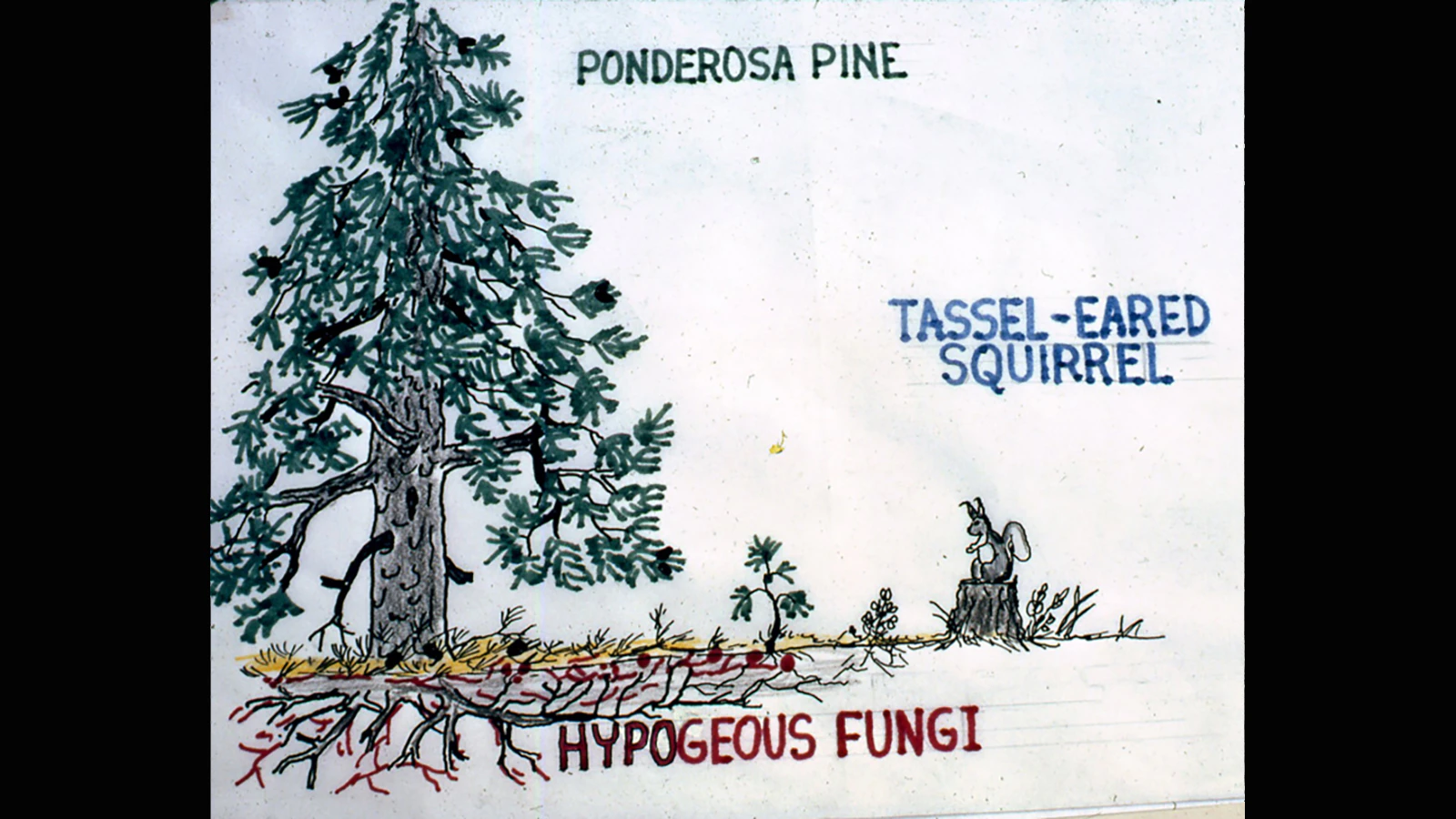
The work he’s proudest of is identifying a three-way symbiosis between truffle-producing fungi, squirrels, and ponderosa pine forests.
The truffle-producing fungi help roots absorb nutrients, while squirrels use the truffles as food, and help spread more fungal spores with their droppings.
Cut too many trees, States found, and that disrupts squirrel populations, chokes off truffle dispersal, and even knocks down northern goshawk numbers, since the raptors overwinter in pine forests and depend on squirrels for food.
Ultimately, that becomes a negative feedback loop for the health of the forest itself.
As a result of States’ research, the U.S. Forest Service changed its timber harvest practices in Southwestern forests.
His work with molds in soil, meanwhile, was part of a breakthrough discovery about the connections between soil microbes, heavy metals and fighting off wildlife diseases in Wyoming.
“Selenium causes what they call alkali poisoning, where animals eat vegetation of certain plants that have accumulated selenium, and then it causes all kinds of diseases,” States said. “It was happening up there in the elk herd in Jackson Hole.”
With a grant for research in Grand Teton National Park, States was able to show that certain molds in soils could change selenium from a solid salt to a gas, helping reduce concentrations of the metal in soil, making it so it was no longer toxic.
“That was a project we parlayed into studies about Bighorn sheep herds at Whiskey Mountain,” he said. “And that parlayed all the way from elk in Jackson Hole up to the sheep herd in Dubois.”
He also studied biological soil crusts in Wyoming’s Red Desert and discovered the sands are actually held together by delicate communities of fungi, algae and tiny plants, which help keep the sands from simply blowing away.
Energy exploration and truck or ATV traffic break down such crusts, speeding erosion and dune movement. The finding caught the attention of Pulitzer Prize-winning author Annie Proulx, who invited States to contribute a chapter for her anthology, “Red Desert: History of a Place.”
Staying Curious
These days, States is technically retired from academic life and formal study of mushrooms, but that world still calls to him.
“I’ll never leave mycology,” he said. “I can’t walk anywhere in this world without seeing them and their involvement in all kinds of biological interactions.”
Lately, he’s bumping into a lot of do-it-yourselfers cultivating, cloning, and growing mushrooms at home — and he can’t resist helping them out.
“The people who want to make hard cider with yeast fermentation, Farmstead Cider in Jackson Hole, I’ve been helping them out,” States said. “Those guys started out with some of my apples for their fermentation.”
He’s also been helping a mushroom growing business called Uncle Sassy.
For States, it’s all about staying curious.
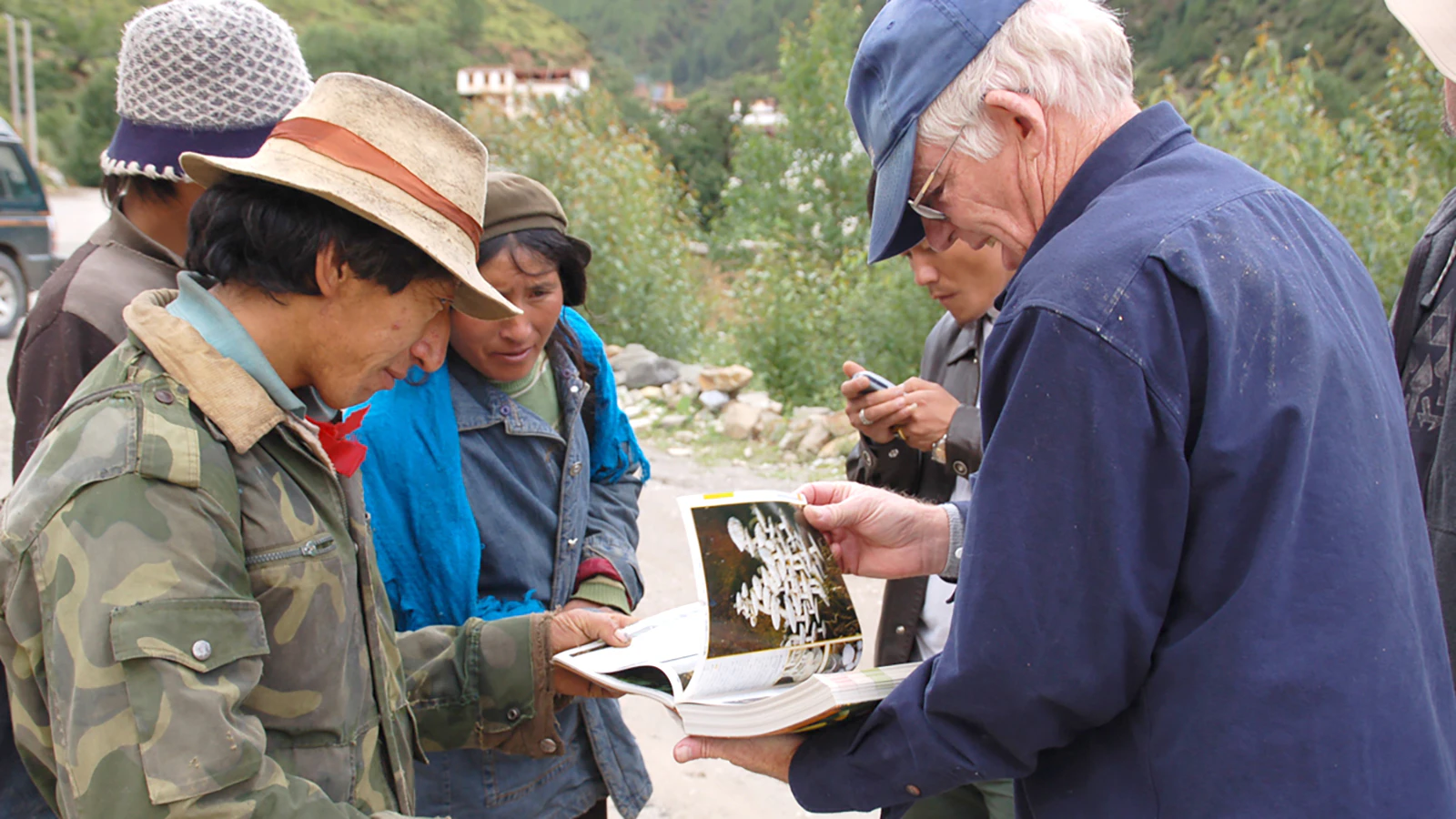
Because you never know — whether you’re somewhere exotic like the Tibetan forest or Mexico’s Copper Canyon, or just studying some old squirrel scat or rabbit droppings along a Wyoming highway— exactly what you might find.
“If you just have a little bit of curiosity,” he said. “And if you ask the right questions, it can lead you to wonderful discoveries.”
Renée Jean can be reached at renee@cowboystatedaily.com.


