
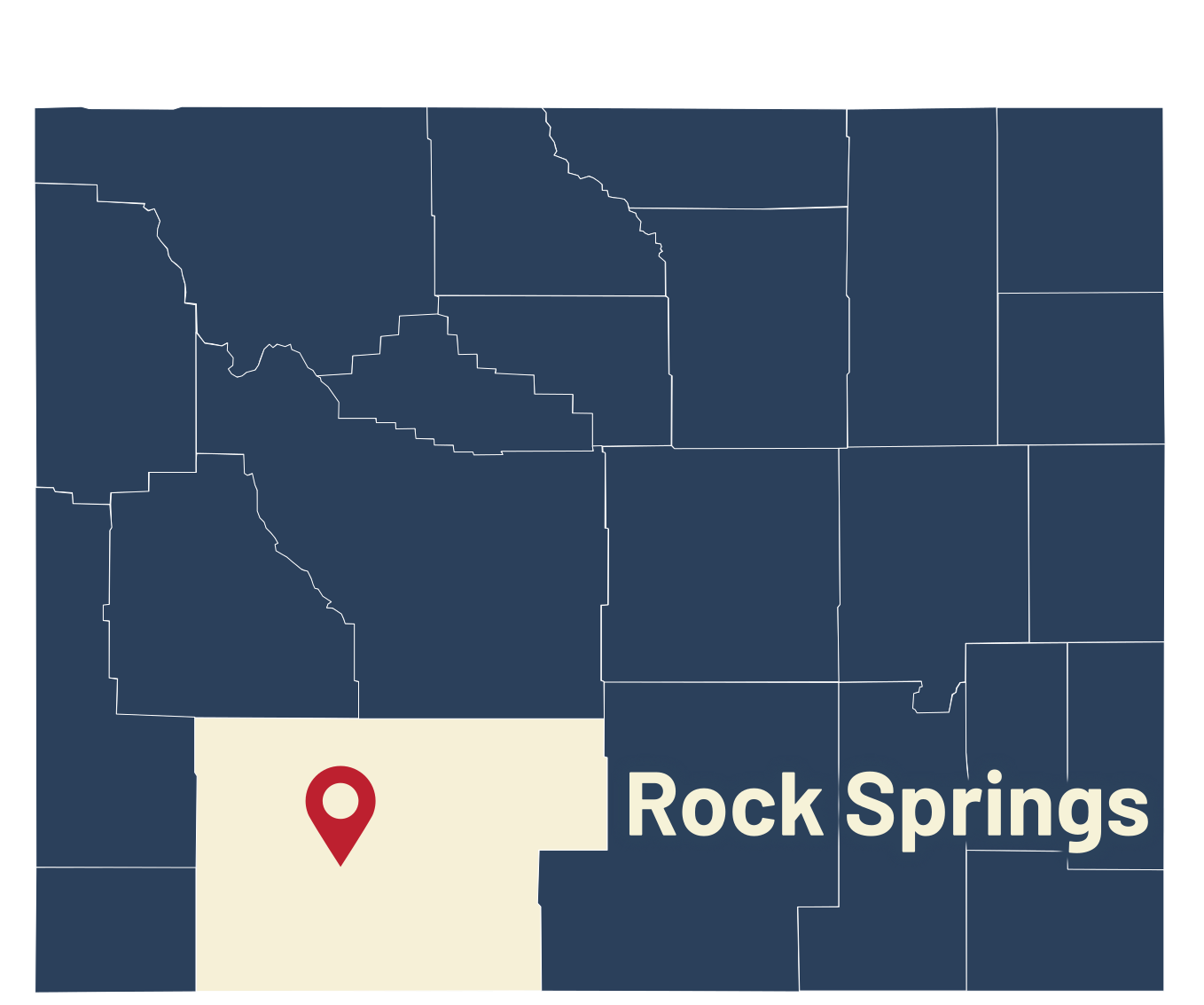
As a young girl, Debbie Rude wondered if she had imagined it.
Growing up in a tiny rental house on Walnut Street in Rock Springs during the 1950s, some of her earliest memories are of standing at the fence line beside her family’s yard and staring up at what looked to her like something pulled from the pages of a storybook.
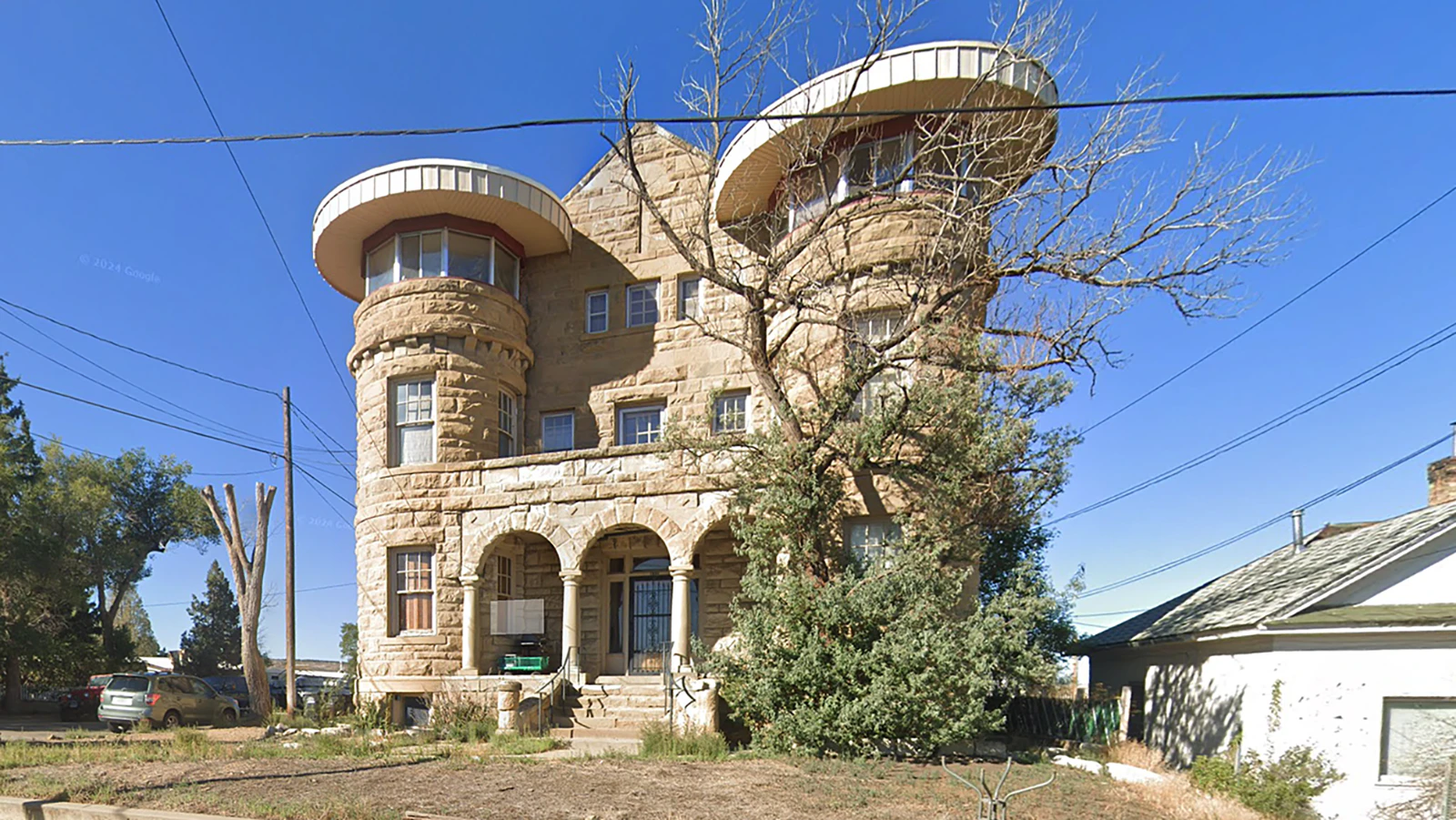
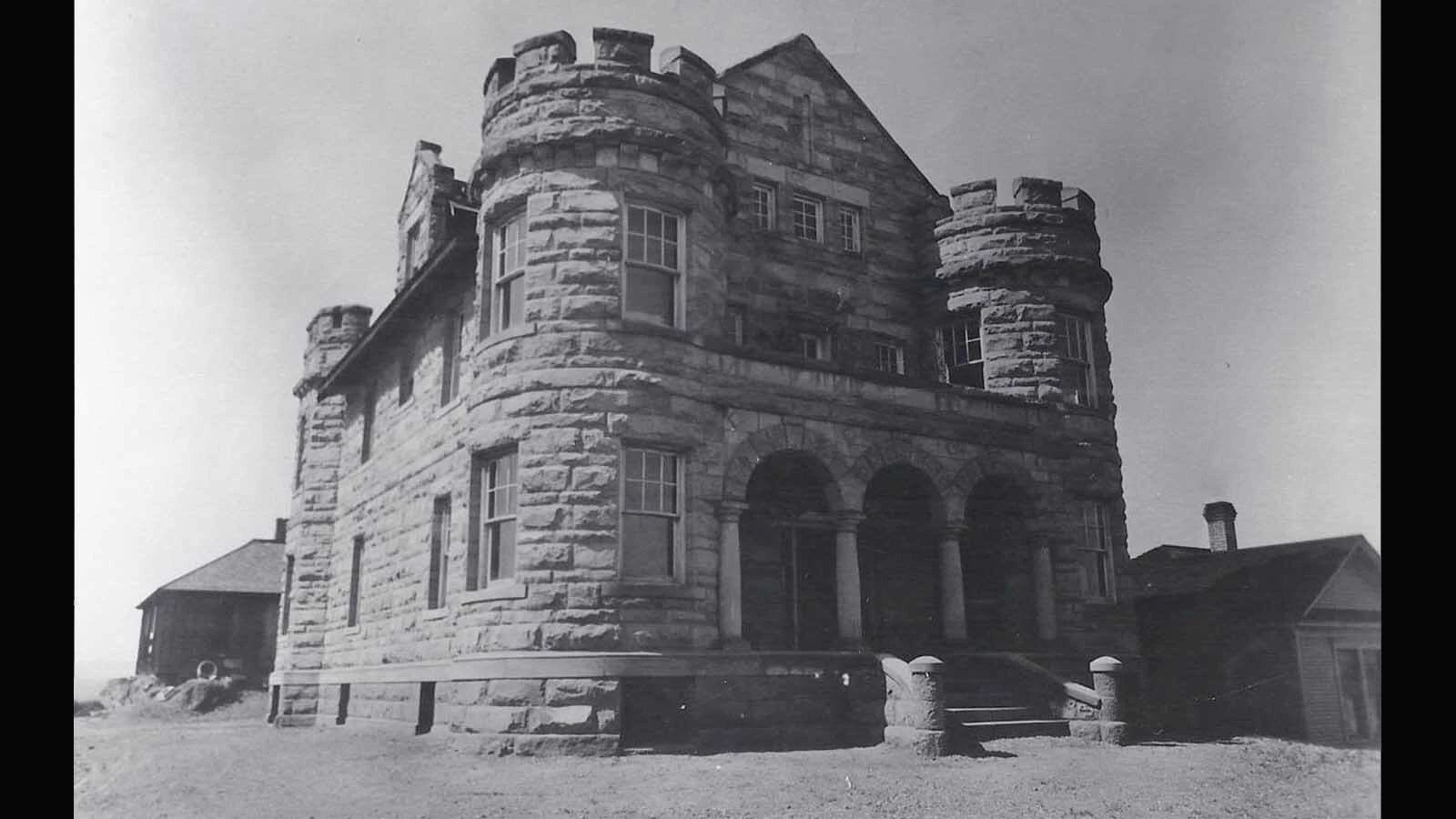
The building towering beside her family’s modest home was Schlacter Castle — a hulking stone fortress with rounded turrets, battlemented towers and thick, gray masonry that seems better suited for Germany's Rhine Valley than the windswept coal country of southwest Wyoming.
Its heavy arches and castle walls rise above the hillside with a dreamlike absurdity, as though a medieval stronghold had somehow wandered into Rock Springs and decided to stay.
The fence separating the properties made it feel, Rude said, “as though I lived in two separate worlds.”
On her side sat a hard-packed dirt yard scattered with toys and lined with a clothesline fluttering with work shirts and bedsheets in the Wyoming wind.
Beyond it rose another world entirely — emerald grass trimmed neat beneath the shadow of stone turrets, flower beds bursting with color around a castle that seemed impossibly elegant against the coal-dust grit of Rock Springs.
“I’d dream of going inside and of living in that castle, like a real princess,” Rude said.
More than a century after German immigrant John Schlacter finished building the castle in 1914, the strange stone fortress still clings to the hillside above Rock Springs, keeping a medieval eye on the city below while generations drift through its halls and the city changes around it.
A Castle In Coal Country
Nobody seems entirely sure why Schlacter decided to build a literal castle on a hill overlooking Rock Springs.
That mystery is part of what has kept the building embedded in local imagination for generations.
Born in Germany on Feb. 23, 1866, Schlacter came to the United States in 1886 and eventually married Viola Van Kaiser in Pittsburgh, Pennsylvania, in 1890.
The couple raised several children before moving West, first to Diamondville in 1899 and later to Rock Springs in 1907.
By then, Schlacter had already established himself as a master stonecutter.
Historical accounts credit him with helping build the Carnegie libraries in Rock Springs and Green River, along with foundations, homes and churches throughout southwest Wyoming.
With their grand stone facades, towering arched windows and stately symmetry, the libraries Schlacter helped build carried an almost cathedral-like permanence onto the Wyoming frontier — monuments to knowledge and ambition rising from dusty mining roads.
He also built portions of the local Episcopal Church, stone foundations on D Street and C Street, and homes across the city alongside fellow stoneworkers.
According to local historian Helene B. Novotny’s self-published history “The Days After Abraham Lincoln 1943-1949,” Schlacter once bid unsuccessfully on the stately Taliaferro home on Cedar Street.
One local theory suggests Schlacter responded by buying property across from it on Walnut Street and building an even grander stone residence to prove “what an excellent stonecutter he was.”
Tall and imposing on the hill, it certainly accomplished that.
Construction on the castle began in 1909 and took roughly five years to complete.
The stone reportedly came from the same local quarry used to build the old Rock Springs City Hall, now home to the Rock Springs Historical Museum, though the quarry itself has since been lost to time.
Schlacter hauled much of the stone himself using two horses and a wagon, according to the Rock Springs Historical Museum.
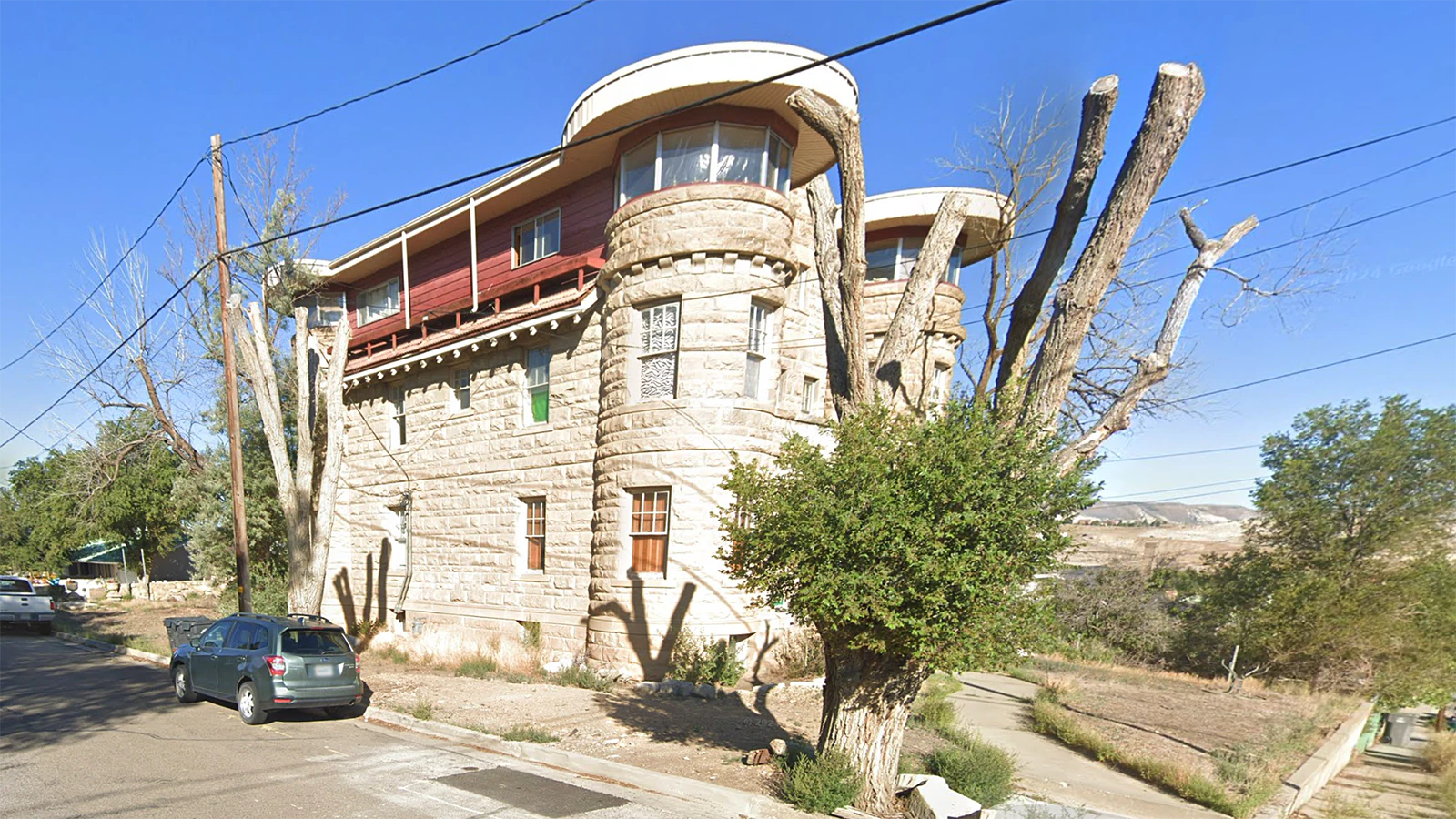
About 112 years after it was completed in 1914, the Schlater Castle still looms over Rock Springs from atop a hill in a now-residential area. (Google) 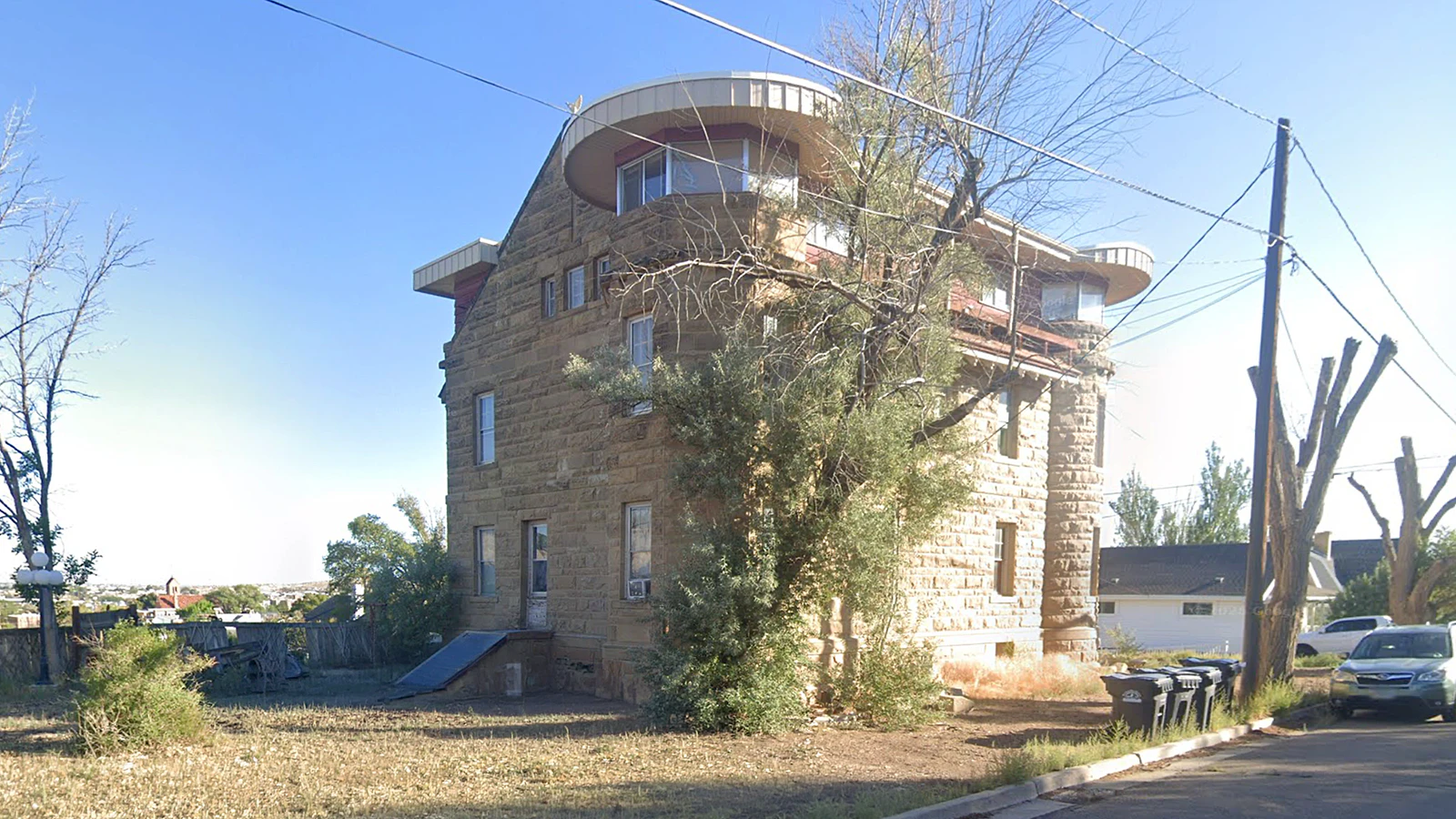
About 112 years after it was completed in 1914, the Schlater Castle still looms over Rock Springs from atop a hill in a now-residential area. (Google)
'My Baba Had To Pull Me Along'
Rude only lived beside the castle until age 5, but the building left a permanent imprint on her memory.
Her family’s roots run deep in Rock Springs’ immigrant coal-mining community. Her father, Pete Mirich, attended Rock Springs High School before leaving to fight in World War II.
Her grandfather, Sam Mirich, came from Montenegro and worked in the coal mines while helping raise seven children.
Like many immigrant families in Rock Springs at the time, they lived modestly.
That made the castle next door feel even more surreal.
“My Montenegrin Baba would often take me for walks to the town cemetery to visit my grandpa’s grave, and she would always have to tug on my hand to get me moving when we walked past the castle,” Rude said.
Part of the fascination, she believes, came from the mystery surrounding the place.
“I don’t ever recall seeing a person go in or out of the house,” she said. “That may actually have made it easier for me to create my own fantasies about it.”
Her parents sometimes had to call her inside because she spent so much time staring at the building.
“Others would laugh and say it was just a little girl’s flight of fancy,” she said. “In fact, there was a period of time when I wondered, myself, if I had simply imagined it was there.
"After all, how could there be a real castle in Rock Springs, Wyoming?”
Friends and neighbors later described the Schlacters as intensely private people, which only deepened the mystery surrounding the looming stone home.
Two of Schlacter’s daughters eventually lived in the castle, including Olga Schlacter, who remained unmarried and reportedly lived there longer than anyone else in the family while working at Parker Brothers Drug Store in Rock Springs.
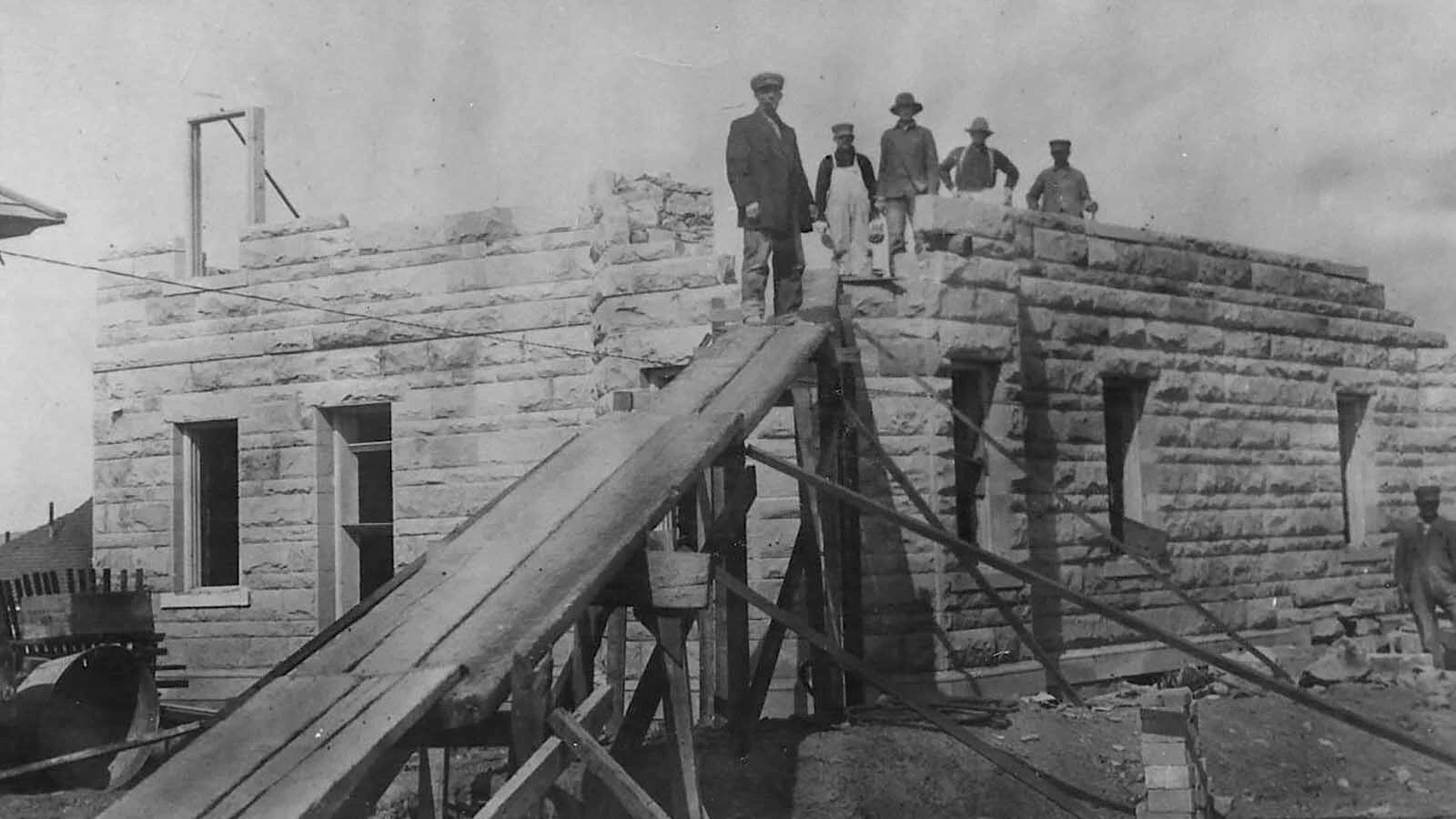
German immigrant and master stonemason John Schlacter spent five years building the castle by hand, hauling locally quarried stone through Rock Springs by horse and wagon before finishing the structure in 1914. (Courtesy Rock Springs Historical Museum) 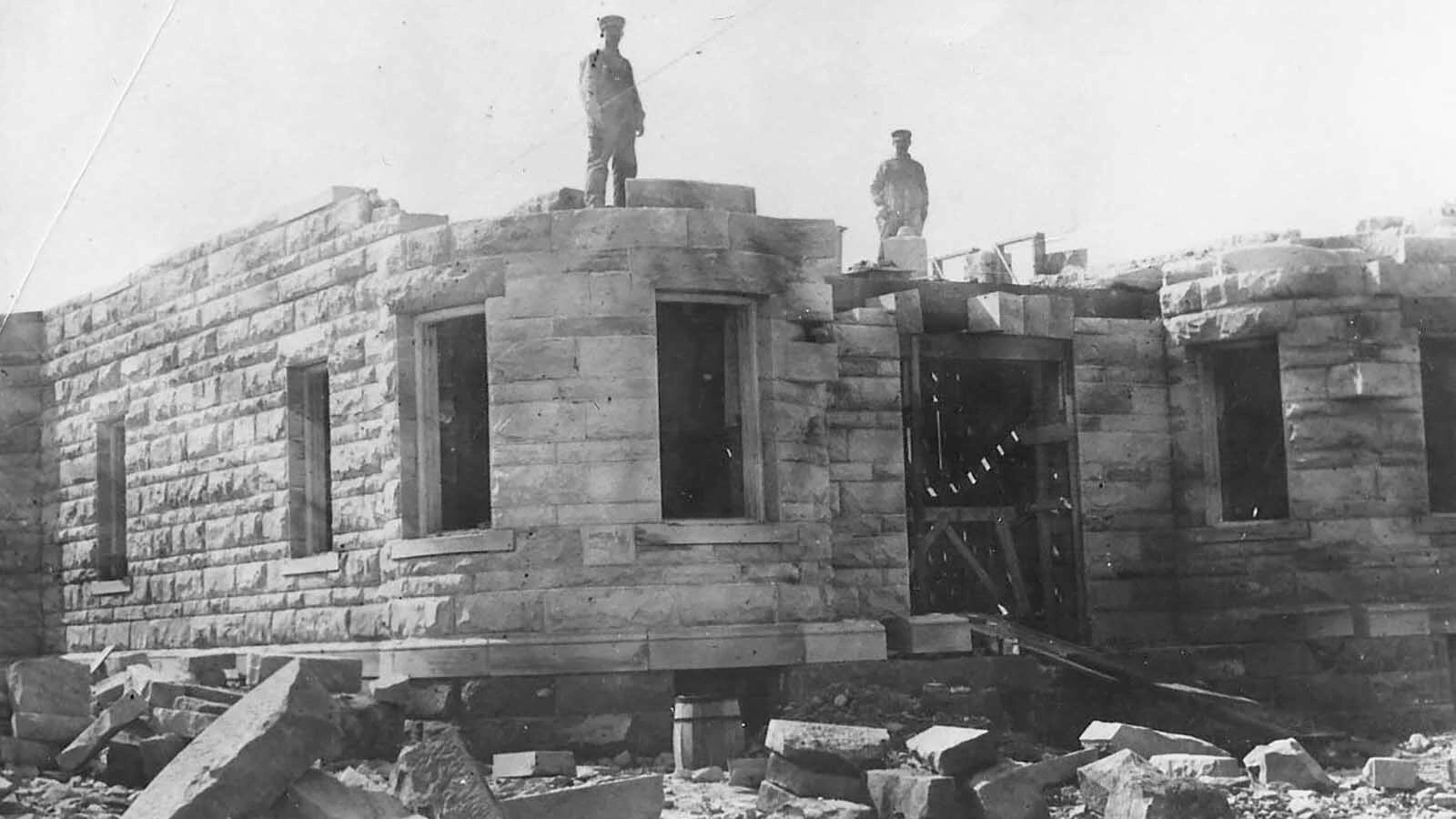
German immigrant and master stonemason John Schlacter spent five years building the castle by hand, hauling locally quarried stone through Rock Springs by horse and wagon before finishing the structure in 1914. (Courtesy Rock Springs Historical Museum)
Soldiers, Ghost Stories And Survival
The castle’s history only grew stranger with time.
According to local historical accounts, Schlacter opened the building during World War I to soldiers in the area, allowing it to be used as temporary barracks and providing room and board to military personnel.
Local stories also suggest tragedy followed the family.
One account claims Schlacter and his wife returned to Germany grief-stricken after the reported death of an older son shortly after World War I, leaving much of the remaining family behind in Wyoming.
After World War II, the castle was eventually sold to the Greek family. Residents who visited the home during that era remembered wandering staircases and cavernous interiors.
One former piano student reportedly joked she spent more time staring at the staircase and wondering how horses could ever climb it than practicing music.
Later, the castle sat vacant for years — boarded up, dark and looming over Walnut Street.
That was when the ghost stories began.
For generations of Rock Springs kids, the abandoned stone fortress became the kind of place people dared each other to approach.
Eventually, the Hamm family purchased the building and converted it into apartments. During renovations, portions of the original structure were altered, including removal of the attic roof and modifications to the turrets. Large picture windows were also added overlooking the city below.
Those renovations ultimately prevented the building from qualifying for the National Register of Historic Places.
Still, the castle survives.
More than 112 years after its stone walls first rose above Rock Springs, the fortress remains perched on the hillside — weathered by Wyoming winters, softened by time and stubbornly standing watch over the city below.
Today, Rude still makes a point to drive past it whenever she passes through town.
“No trip through town is complete without driving past the castle and the tiny little house that still sits in its shadow,” she said.
Kolby Fedore can be reached at kolby@cowboystatedaily.com.


