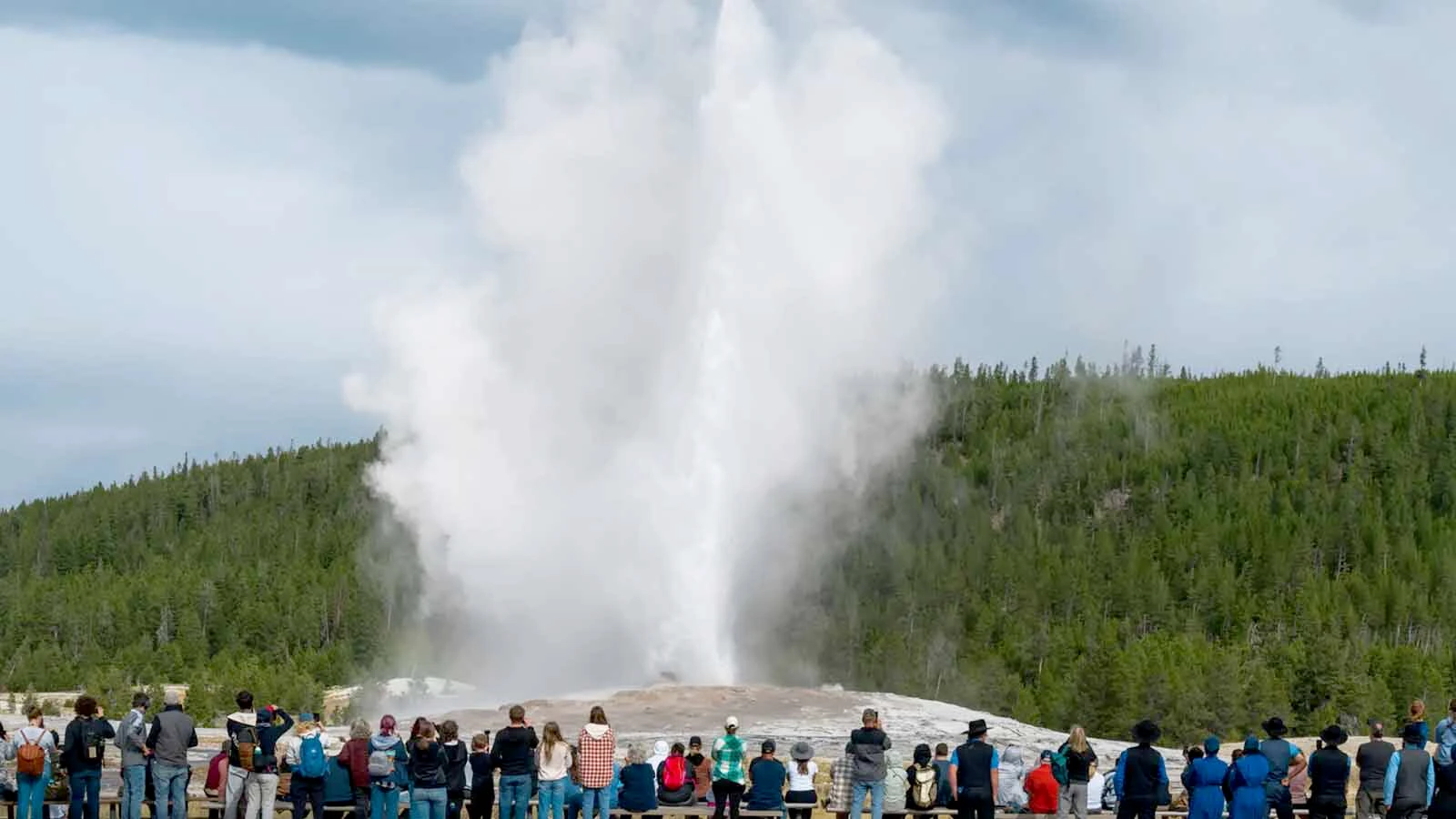
How much water erupts out of Old Faithful in Yellowstone National Park? For the first time, we actually know.
Newly published research has accurately determined the water output of the world’s most famous geyser for the first time. A team of scientists from multiple agencies measured the average volume of water expelled during an Old Faithful eruption.
They determined that Old Faithful’s average discharge is 27.9 cubic meters for every eruption. That’s more than 7,300 gallons of hot, salty water, which is enough to fill 140 standard bathtubs.
By that metric, it would take 90 Old Faithful eruptions to fill a 660,000-gallon Olympic swimming pool.
“It’s mostly faithful, but not completely faithful,” Shaul Hurwitz, a research hydrologist with the U.S. Geological Survey, told Cowboy State Daily about the geyser’s eruption schedule.
Hurwitz was the lead author of the new paper, which is the culmination of 25 years of studying Yellowstone’s geysers while watching and wondering about Old Faithful.
“I was always excited by Old Faithful, and was inspired to do this study for quite a while,” he said.
How’d They Get That?
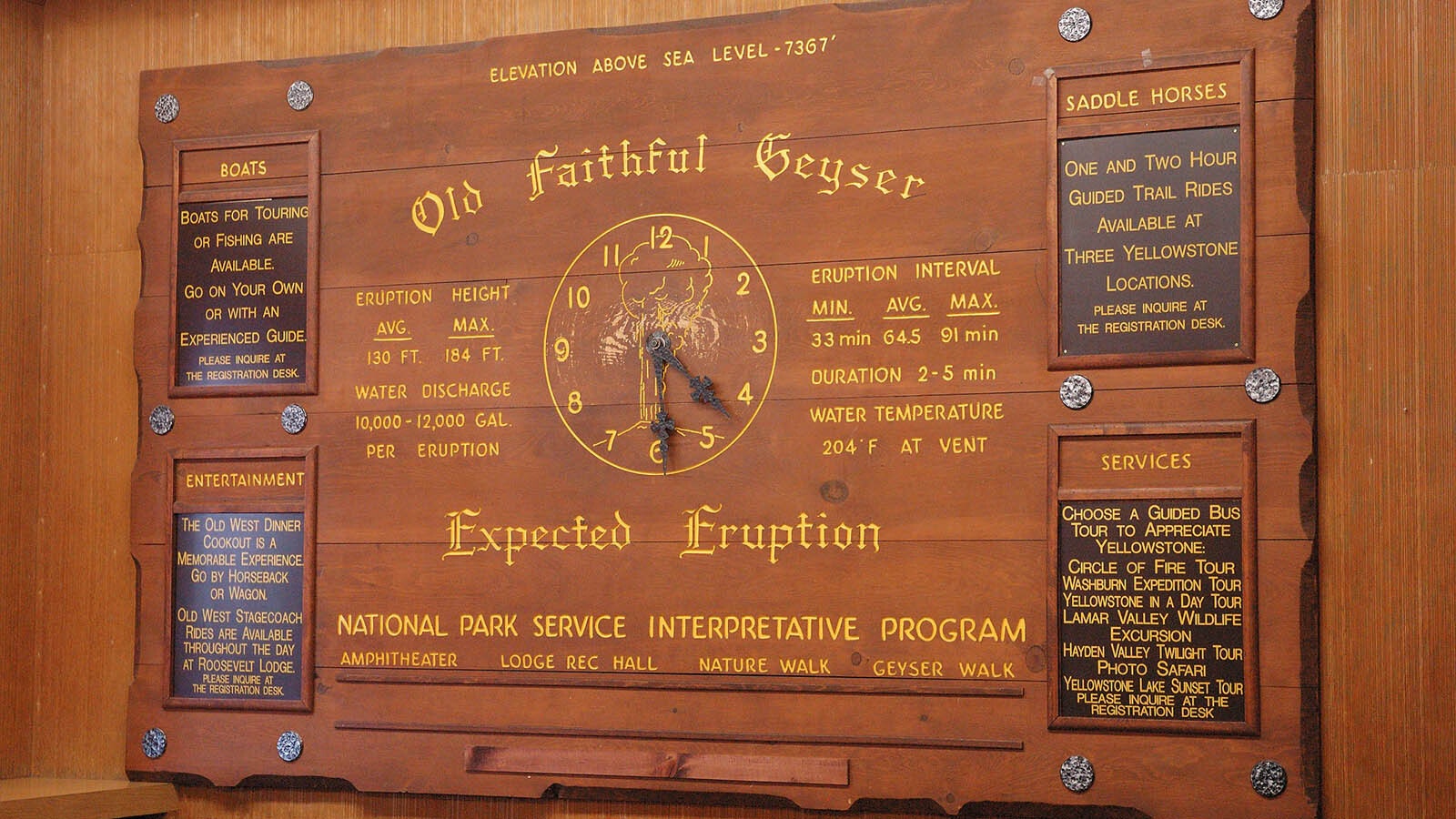
The National Park Service has for decades been telling Yellowstone visitors that Old Faithful expels between 3,000 and 8,400 gallons during each eruption.
That’s the number millions of people have seen on the park’s interpretive signs and scientists have seen in research papers on the park's hydrothermal features.
Hurwitz has been studying Old Faithful’s history and geology for years. While it’s entirely possible that Old Faithful’s water output had been measured before, he couldn’t find any documentation of when or how those numbers had been determined.
“I knew that number was incorrect,” he said. “If it were correct, it would be a coincidence.”
That was enough for Hurwitz and his colleagues to develop an experiment that would accurately measure the volume of water erupted by Old Faithful.
“It would be more than an extrapolation from one measurement with no documentation,” he said.

Flow And Flume
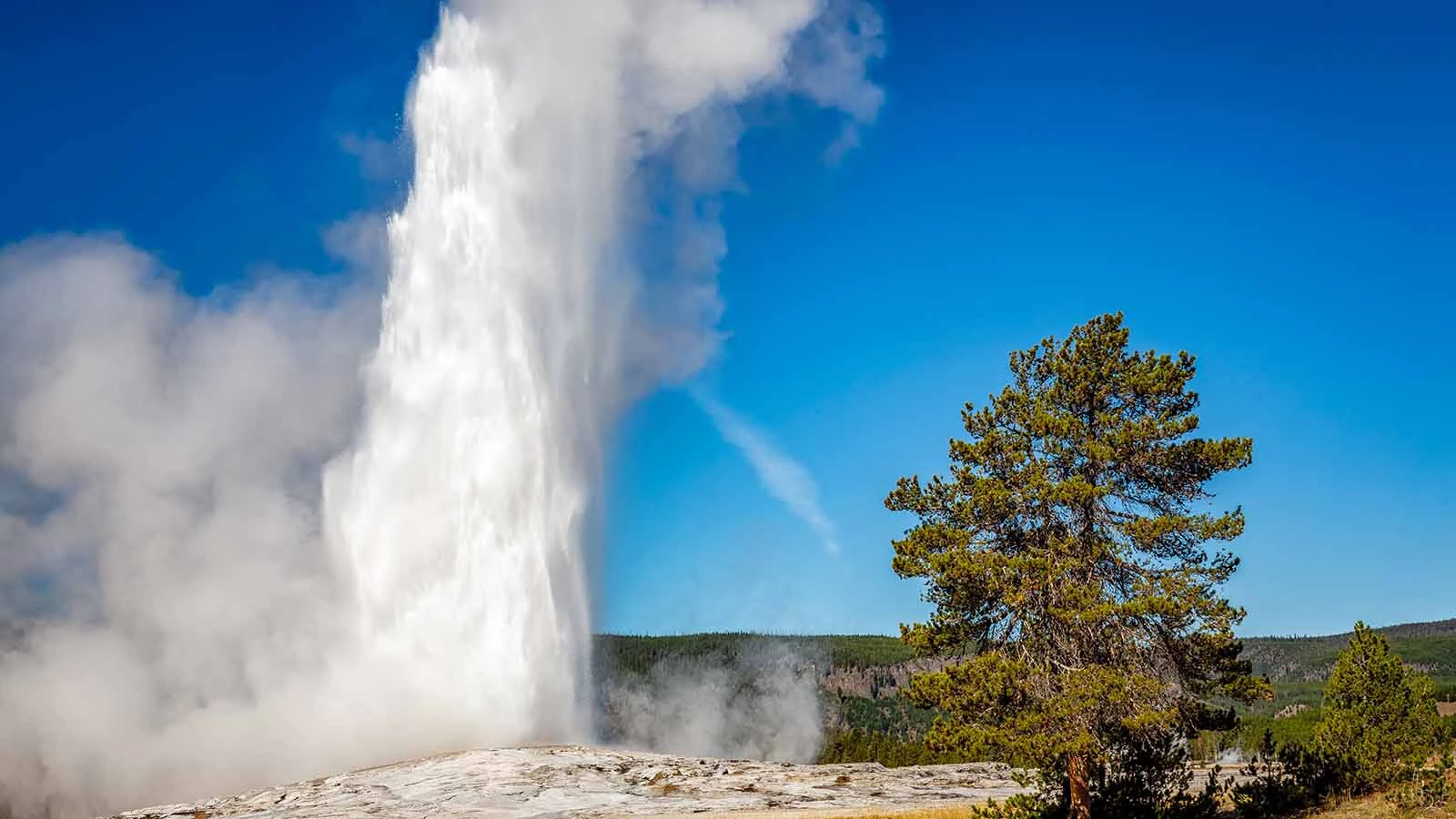
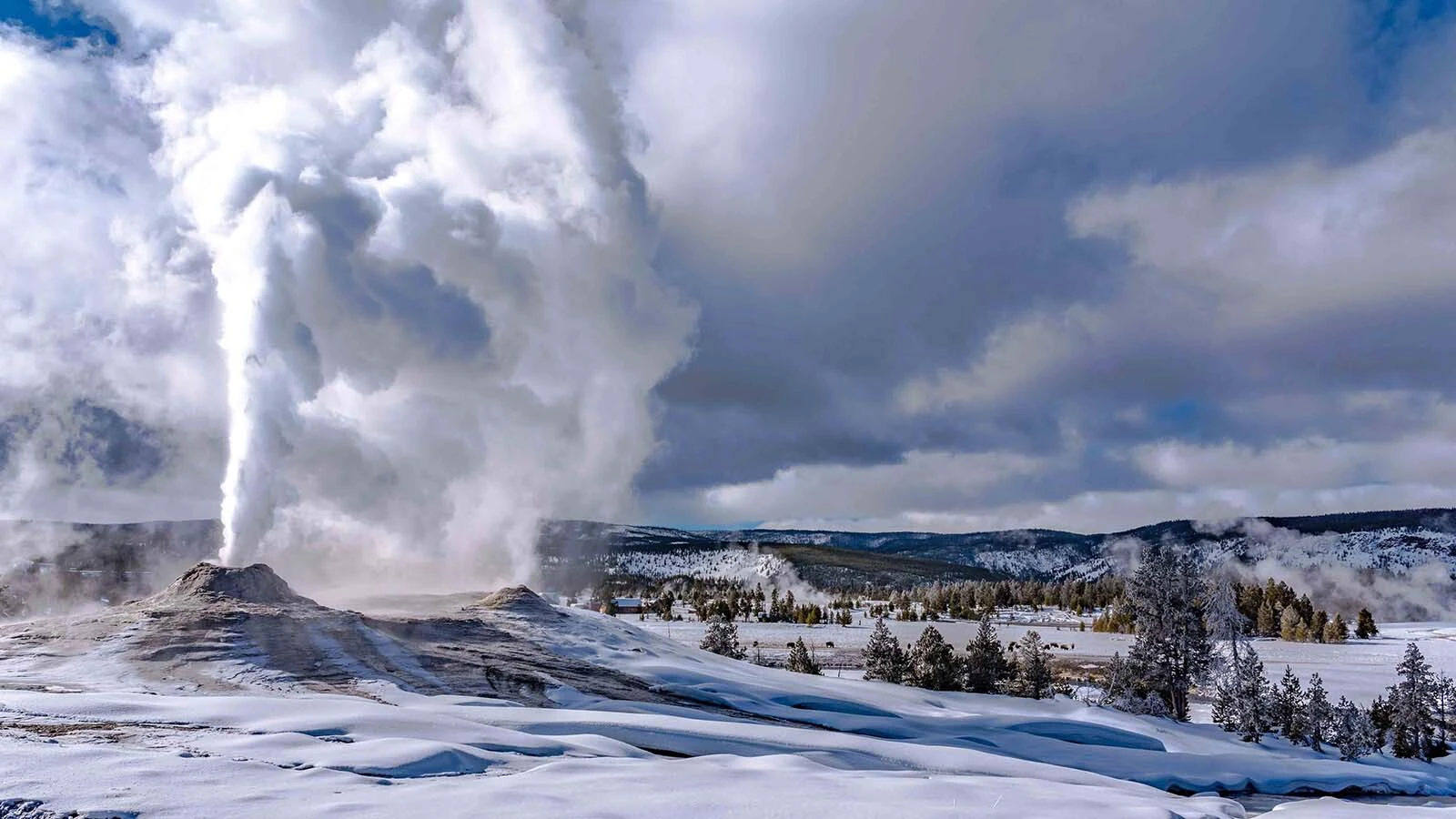
When Old Faithful blows, it sends water and steam up to 184 feet into the air. Most of that water flows into the geyser’s six outflow channels, although the amount can vary based on the wind direction during an eruption.
Hurwitz’s team wanted to measure the total water volume, both liquid and steam. To determine the volume of liquid water, they developed a portable flume that was placed in the geyser’s primary outflow channel.
“With a calibrated flume, we know how much water passes through based on the height of the water,” he said. “Then, we set up a pressure transducer to continuously measure how much water was flowing through that flume.”
Continuous measurements of all six outflow channels were taken during 45 eruptions over four days in April 2025.
The team used sandbags to funnel the water in the primary channel through the portable flume, ensuring they got all the water. They set up a high-speed camera to capture each eruption and determine the volume of steam.
Another important tool was specific conductance, a method of determining the mineral composition of water.
Hurwitz said the scientists used the freshwater of the Firehole River “to their advantage” to get another measurement of Old Faithful’s water volume.
“The water from Old Faithful has plenty of salts in it,” Hurwitz said. “By putting sensors above and below the spot where the outflow reaches the Firehole River, we could see a slug of high salinity water and estimate how much water had to bring that much salinity into the freshwater.”
To measure the steam, they used thermodynamic models to determine the heat of the steam clouds emanating from Old Faithful.
By measuring the heat, they could determine the amount of liquid water needed to produce the steam and add it to the total liquid volume.
“We can convert the steam into liquid using models,” Hurwitz said. “Although the steam looks a lot, it's a lot by volume, but not a lot by mass.”
Put all those measurements together, and you get the average water volume of an Old Faithful eruption.
Not Completely Faithful
The average volume of water of the 45 Old Faithful eruptions measured and monitored by Hurwitz and his colleagues was 27.9 cubic meters, or 7,370 gallons. The actual volume of water varied with each eruption.
The total liquid water volume of individual eruptions ranged from 3,223 to 11,703 gallons.
Hurwitz said that wasn’t surprising. Old Faithful is known to have shorter and longer eruptions, from 2.5 to 5 minutes, and higher water volumes correspond to longer eruptions.
“The volumes varied quite a bit,” he said. “There was quite a bit of variability between the ones that had the least amount and the ones that had the largest amount of water erupted. It wasn’t uniform.”
The timing of the eruptions was consistent, however — every 94 minutes, more or less. That’s how Old Faithful got its name during the Washburn-Langford-Doane expedition of 1870.
Even so, Old Faithful was erupting every 60 minutes as recently as the 1950s. Even Old Faithful's clock isn’t always right on time.
“They called it Old Faithful because they saw how regular the eruptions were,” Hurwitz said. “What I know from the long record is that it’s more faithful than most other geysers, but it's not always faithful.”
Seven Tons Of Sinter
Mike Poland, scientist-in-charge of the Yellowstone Volcano Observatory, said the new research is intriguing. What struck him was how Old Faithful’s output had been accepted by everyone for so long without any verification.
“I think it's interesting that we didn't have a really good handle on it,” he said. “It’s one of the more common questions that is asked at Old Faithful, but it's a lot tougher question to answer than people might think it is.
"There’s not an easy way to measure that, so I was impressed by the approach they took.”
Poland was interested in how Hurwitz and his team provided more insight into how Old Faithful works as a hydrothermal feature.
Geyser cones are composed of sinter, a mineral deposit formed from dissolved silica in volcanic rhyolite.
For Poland, a particular point of interest in the new research was how Old Faithful’s eruptions deposit about 7 tons of silica on its geyser cone every year.
“That’s a pretty staggering number,” he said. “It's not a huge amount, because rock is heavy, but it's still a staggering number when you think about how much is deposited in 10 years or 100 years, all from dissolved solids that are in the water.”
Poland believes this experiment has provided an excellent idea of how much dissolved solids are moving through Yellowstone’s hydrothermal systems and where and how those solids are being deposited.
“It gives us an insight into the chemistry of the water and how this hot water is circulating and dissolving minerals beneath the surface, bringing them up to the surface, and dropping them there,” he said.
Change Through Time
Now that we know the average water output of an Old Faithful eruption, what can people do with that number? Use it to observe and inform change, Hurwitz said.
The Old Faithful study was a result of “following my curiosity,” he said.
Now that it’s published, he believes his research will help the National Park Service make more informed decisions about the preservation of Old Faithful.
“I'm working for a federal agency, so we try to provide information that is of public (interest),” he said. “Part of that is to help the NPS to manage their resources, and Old Faithful is, by far, the major resource of Yellowstone.”
Hurwitz said that any future changes at Old Faithful can be quantified using the same methods his team used to determine Old Faithful’s water output. If the geyser’s behavior changes in a significant way, the NPS can make appropriate changes at the Upper Geyser Basin.
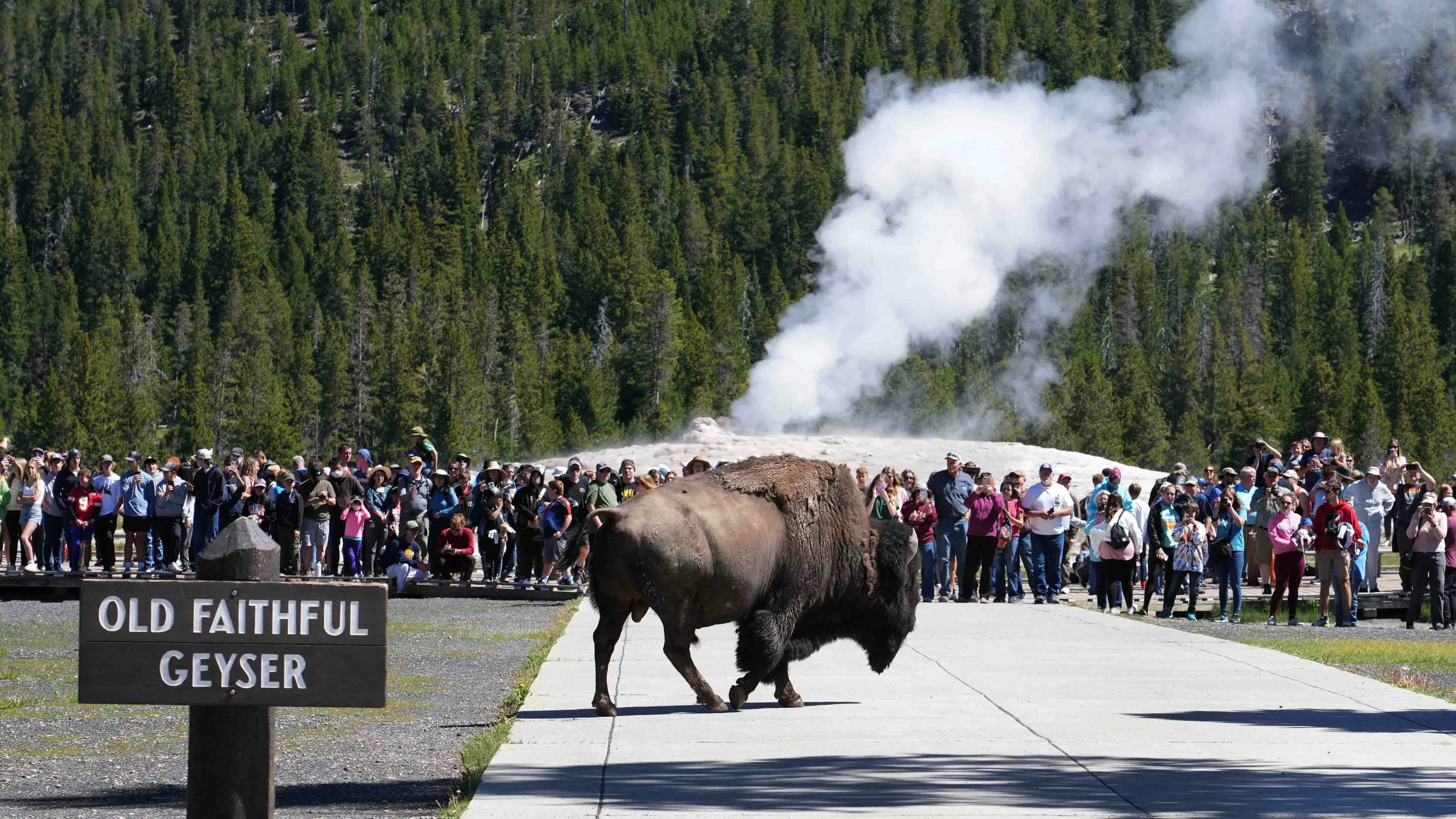
“If eruptions lengthen, or there’s fewer of them, the way the NPS has to manage and navigate crowds is going to be different,” he said. “If more people spend more time at Old Faithful, they might need more parking lots because they might have longer waiting times.”
Poland agreed.
He hopes Hurwitz’s study will be repeated in the near future so officials can have another set of comparable data on Old Faithful.
“If we were to do this experiment again in a couple of years, say we can see whether or not there are changes that may be related to any number of other things that are happening in the park,” he said. “There's a really important aspect of understanding the future, so we can understand how Old Faithful may change in the future.”
It’s a question of past, present, and future. Hurwitz’s previous research revealed that there was a century when Old Faithful was faithfully dormant and wasn’t erupting at all.
“In the 132th century, there was a severe regional drought across the entire Western U.S.,” he said. “Old Faithful probably wasn’t erupting for 100 years because of that extended drought. We know that less water means probably less frequent eruptions, or certainly less water to erupt.”
There’s no indication of any concerning changes at Old Faithful. While it has and will continue to change over time, the world’s most famous geyser is behaving as faithfully as ever.
And now, the world knows how much water — on average — they’re watching erupt from Old Faithful because Hurwitz was curious enough to ask and answer a simple question.
“It’s basic science that helps us understand the world around us and how it works,” he said. “There are a lot of open questions we want to address, and Yellowstone is a unique natural laboratory for asking and answering good questions with good observations and measurements.
"As a geologist, that’s what I enjoy doing.”
Andrew Rossi can be reached at arossi@cowboystatedaily.com.