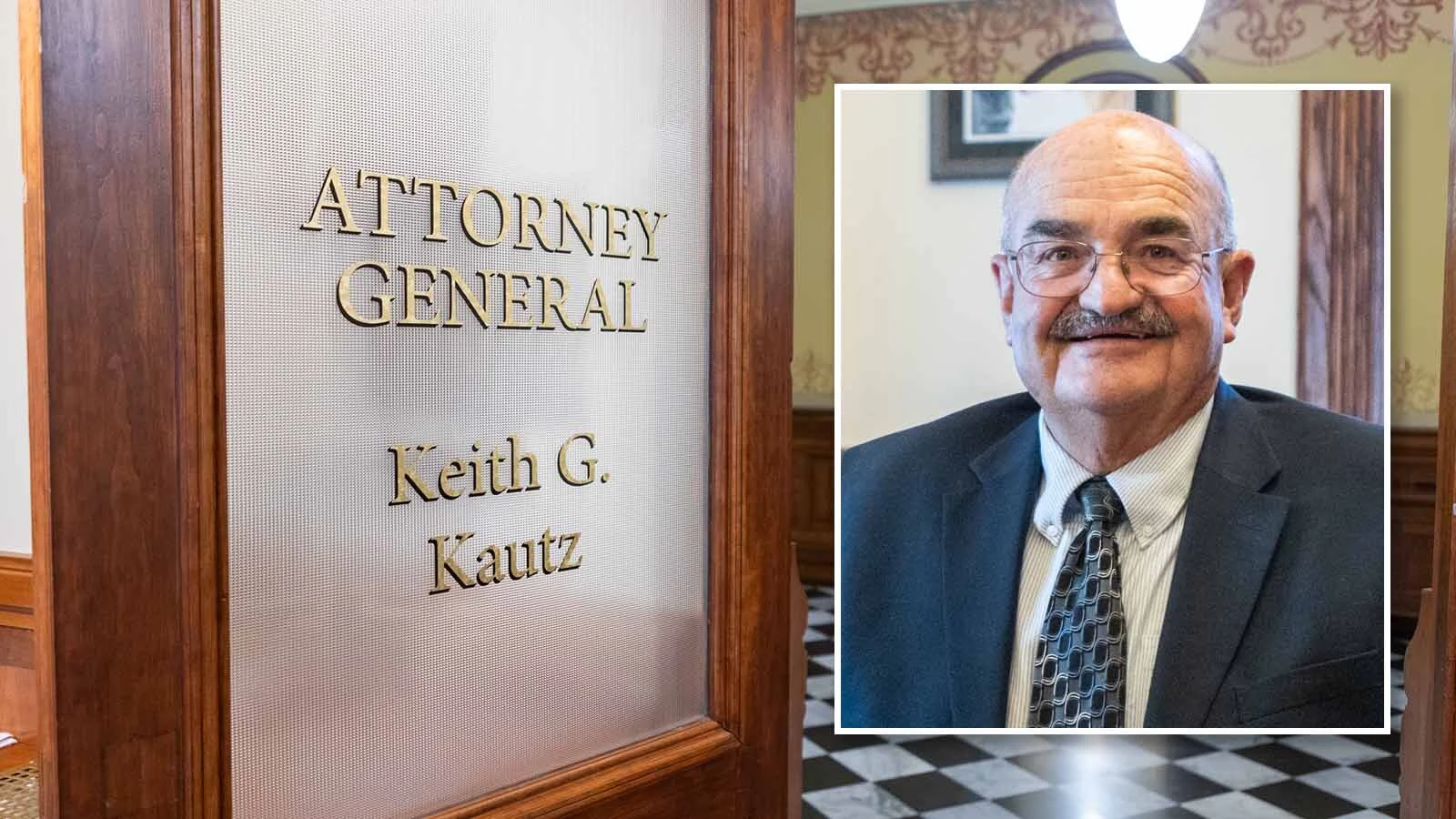
Though state law generally anticipates that Wyoming will match its drug categories to the federal government’s, the Wyoming Attorney General is opposing the Trump administration’s bid to reclassify marijuana as medicinal.
Wyoming Attorney General Keith Kautz’s office objects to the Trump administration’s switch - at least insofar as it applies to Wyoming's enforcement - in a May 27 notice, which also sets a public meeting on the matter.
That meeting is set for 10 a.m. June 18 in the Wyoming State Capitol’s public meeting room W004.
Wyoming, like the federal government had prior to this second Trump administration, lists marijuana as a Schedule I drug — a more highly restrictive category that also contains heroin and LSD.
“The question of whether to remove any type of marijuana from Schedule I of the Wyoming Controlled Substances Act,” the AG’s objection says, “is for the Wyoming Legislature and should not be done through the administrative rule making process.”
The acting U.S. Attorney General signed an order in late April, reclassifying marijuana as a less dangerous drug.
The resulting federal rule puts marijuana or Delta-9 THC-based drugs under the less restrictive Schedule III class, at least insofar as the U.S. Food and Drug Administration (FDA) approves them, or as states permit their sale for medical reasons.
The action could spark new research on medical uses and make the marijuana industry more profitable.
It’s not outright legalization, but it aligns marijuana with drugs that have medical uses, like ketamine and some anabolic steroids. It also redefines marijuana as having moderate to low potential for physical and psychological dependance.
Wyoming Law Says …
When the federal government reorganizes its controlled substances categories, Wyoming has 30 days to align with that change.
That is, unless the state’s drug commissioner, who is also the attorney general, objects to applying the federal change to state law.
A provision of state law says if the state’s drug commissioner objects to mirroring the federal government on drug classes, he shall hold a contested public hearing on his decision. The June 18 meeting is an answer to that requirement.
Certain THC-based medicines that the FDA has approved are already in Wyoming’s Schedule III or Schedule II categories, the AG’s objection says.
No Framework Here
As for the U.S. Department of Justice’s other provision, putting marijuana that states license as a medical product into the more permissive category, Wyoming isn’t ready for that, says the AG’s objection.
The Wyoming Legislature hasn’t approved a medical marijuana regulatory system. It doesn’t issue licenses for medical marijuana.
“Therefore, placing marijuana subject to a state medical marijuana license in Schedule III of the Wyoming Controlled Substances Act is inconsistent with the police powers exercised to date by the Wyoming Legislature,” the AG’s objection says.
People who can’t attend the public hearing may submit comments to ag.webmaster@wyo.gov.
'Ditch Weed'
Days before President Donald Trump sparked the reorganization with an order late last year, the American Journal of Preventive Medicine published a study concluding that commercialization of cannabis sales may disproportionately affect adolescents with psychiatric illnesses or vulnerabilities, increasing psychiatric emergency incidents.
A health article the National Library of Medicine published three years prior asserts that cannabis can trigger acute psychotic symptoms. Young people with preexisting mental health vulnerabilities may be especially prone to that psychosis, the study adds.
State House Speaker Chip Neiman, R-Hulett, referenced accounts like these in an interview last December.
“We’re talking about a product right now that is not ditch weed,” he said. “I just hate to see the door thrown open here, and (us) saying, ‘Hey, go for it.’”
Trump’s order, conversely, says the U.S. Food and Drug Administration (FDA) found “credible scientific support” for using the drug to treat anorexia, nausea and vomiting, and pain.
“However,” says the order, “the lack of appropriate research on medical marijuana and consequent lack of FDA approval leaves American patients and doctors without adequate guidance on appropriate prescribing and utilization.”
Trump’s administration hopes that putting the drug into Schedule III will let researchers vet its long-term health effects in vulnerable populations, like teens and young adults, the order says.
Clair McFarland can be reached at clair@cowboystatedaily.com.