
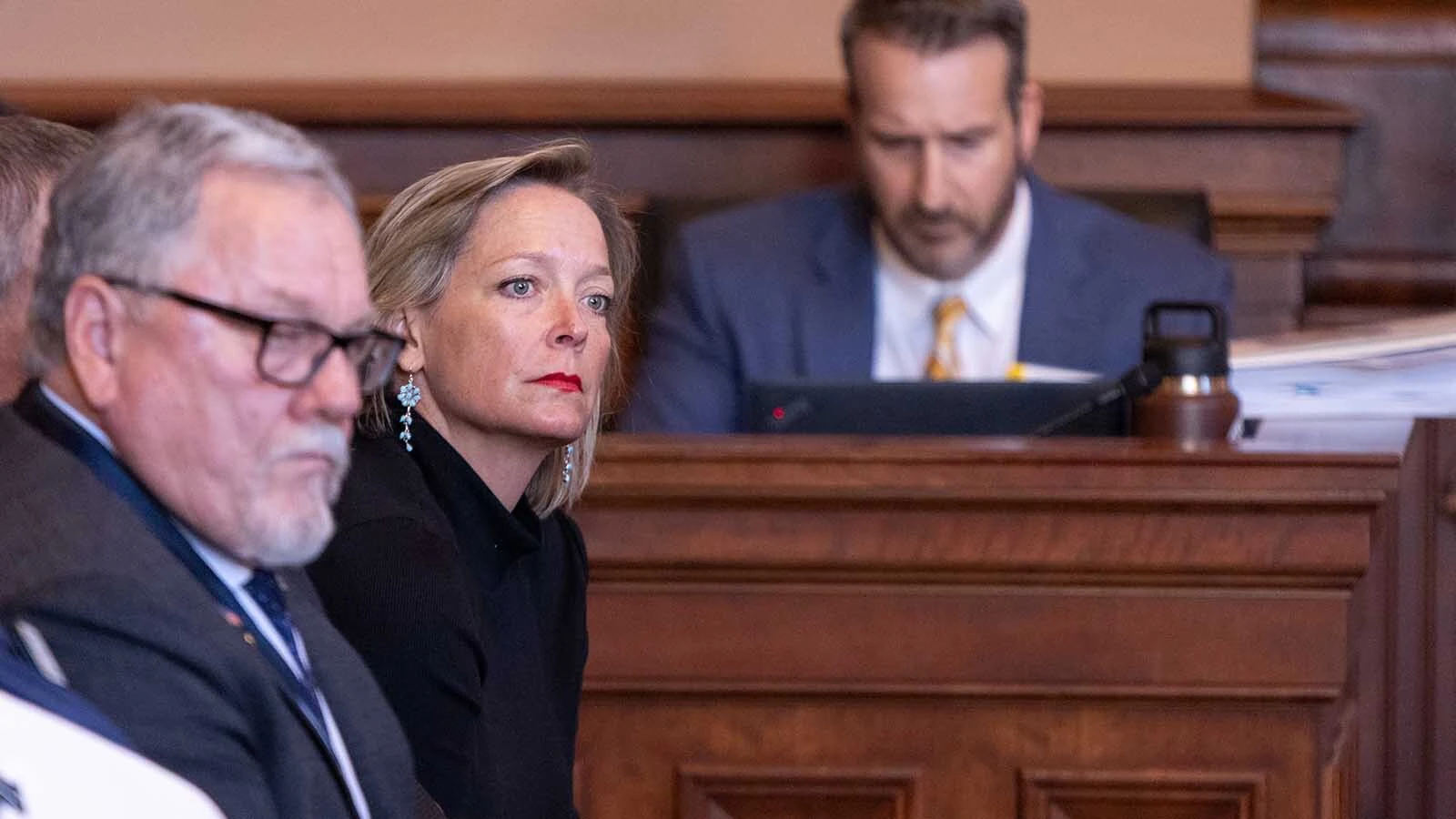
Running Rebecca Bextel as a potential Constitution Party nominee for governor, as well as other candidates for major office, is part of a larger strategy to make Wyoming a three-party state, the Constitution Party chair told Cowboy State Daily.
Wyoming’s registered voter base sits at about 78% Republican, 11% Democrat, and less than 1% each Libertarian and Constitution party affiliated.
But state law defines a major political party as a political organization whose candidate for U.S. House, governor or secretary of state nets more than 10% of the votes cast.
Both the Republican and Democratic parties clear that threshold at each election.
The Constitution Party wants to do it this year.
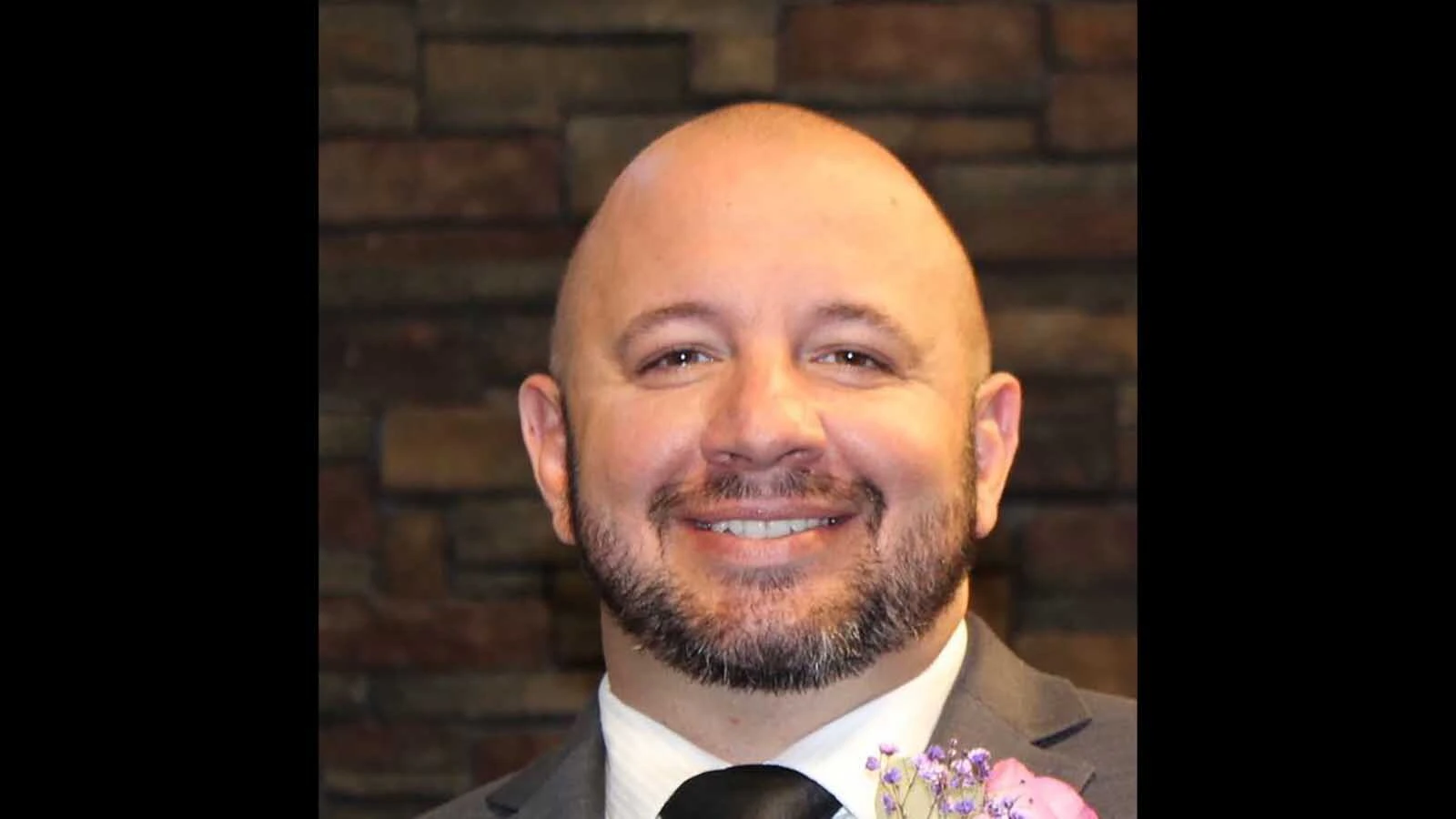
“We are transitioning from a protest party to a legitimate party,” Constitution Party Chair Joshua Shimkus told Cowboy State Daily on Wednesday hours after Jackson-based conservative activist Rebecca Bextel announced she’s seeking the party’s nomination to run for governor.
Shimkus added that he ran on that platform ahead of his September election to party chairman.
The Wyoming Republican Party is split into an old guard and a more populist-leaning faction aligned with the Wyoming Freedom Caucus.
Shimkus said he doesn’t think the Constitution Party’s movement will scoop up one or the other, necessarily.
“I don’t think the Freedom Caucus comes over en bloc. I don’t think the moderates come over en bloc. I think it’s going to be all over the place,” he said.
The Supermajority
Wyoming has a supermajority Republican Legislature.
GOP officials fill Wyoming’s five statewide elected seats and all three congressional seats.
Many Democratic and independent voters register as Republican to influence the state’s most decisive contest: the GOP primary election. It’s slated this year for Aug. 18.
Having a second conservative party compete with the GOP could end that crossover voting practice, Shimkus theorized.
“What we’re going to see as a result of this race and the other races we’ll be announcing,” he said, “is that the liberals in Wyoming are going to have to decide: do they continue to gamble by playing inside the GOP primary, or do they return to their party?”
As it sits right now, Shimkus said the Democratic Party is not a viable opposition party in Wyoming.
“I believe that a second conservative party would be a more viable option … that captures the majority of Wyoming voters, their sentiment, more accurately,” he said. "I do see this as a vehicle to making politics more honest in Wyoming, if you’re catching my drift there."
Democratic Party leadership this year discouraged the practice of crossover voting, encouraging Democratic voters to cultivate their own party instead.
Shimkus said he agrees with that messaging and would apply it across the political spectrum.
Oh, The Hoops
Wyoming law burdens major parties with extensive requirements.
For example, the law requires that the people comprising major parties’ county committees are elected by their neighbors at the partisan primary election.
It requires the party to hold a convention every two years, and tasks it with nominating contenders to fill any vacancies left by incumbents bearing its label.
“We are preparing ourselves (for those legal hoops) right now, and have been for the past few months,” said Shimkus.
Scott Merrifield, executive director of the Wyoming Democratic Party, said he agrees that a third major party would be good for Wyoming. But the undertaking is massive and he doubts the Constitution Party can pull it off soon.
Parties need precinct organizers and county office organizers, he said. They also need to put candidates forward in multiple races.
Winning major party status with one person in a major office “doesn’t create a larger momentum unless there’s a base momentum already there,” Merrifield added.
“Yes, I think it (would be) a great thing for Wyoming; no I don’t think this is creating that,” said Merrifield, referring to Bextel’s run.
As for which faction of the GOP, if any, the Constitution Party could peel away, Merrifield said he sees it as likelier to pick up “just people who are disillusioned with the direction of the Republican Party in Wyoming.”
Under the leadership of Wyoming Republican Party Chair Bryan Miller, the GOP is moving toward asserting its autonomy as a private group and challenging the laws that dictate its membership and other moves.
But it’s a double-edged sword. State law also confers on both major parties the privilege of nominating contenders to fill vacancies in offices held by their nominees.
The state GOP in April updated its bylaws to declare itself independent of state law, and Miller announced the party is going to sue Wyoming in federal court for a judicial pronouncement to that end.
Miller did not respond by publication to a Thursday morning voicemail request for comment.
Merrifield declined Thursday to comment on the GOP’s maneuvers and the effects it could have on the Democratic Party.
The Four-Party Year
Former Sublette County Clerk Mary Lankford, who now works as a consultant for the Wyoming Association of County Clerks, remembers the year both the Constitution and Libertarian parties won major party status.
It was 2014.
Ed Murray had won the GOP nomination in the Secretary of State’s race and took on Libertarian nominee Kit Carson and Constitution Party nominee Jennifer Young in the general election.
Murray won in a landslide with 119, 772 votes.
But Carson and Young both vaulted their parties to major status by crossing the 10% threshold with 16,858 and 18,918, respectively.
So, the 2016 primary election had four major parties in it.
It didn’t last.
“I think they rallied in ’16 and got stuff put together, and then it blew apart because they were just not as organized,” said Lankford.
That was also around the time the Tea Party movement made a major push in Wyoming.
“They were really radically right, but I think they kind of came and went, you know?” said Lankford.
That could be, she added, because now-President Donald Trump galvanized them under the GOP banner.
The county clerks ordered double their usual number of ballots for the 2016 primary election. Expenses in that area rose, Lankford recalled.
“It does create quite a bit of work as far as to service those two other parties on the ballot,” she said.
By 2018, the state was back to a two-party primary election, and it has remained that way since.
The ‘Insurance Policy’
Bextel did not return a Friday-morning voicemail by publication.
But according to her website, her bid for the Constitution Party nomination is “an insurance policy against Eric Barlow.”
That’s a reference to state Sen. Eric Barlow, R-Gillette, who is running in a three-person race for the GOP nomination against Superintendent of Public Instruction Megan Degenfelder and retired Marine Corps Col. Brent Bien.
Bextel’s website theorizes that Degenfelder and Bien will “spoil” each other’s chances of winning, and the more moderate Barlow will win the GOP nomination, whom she says isn’t conservative enough.
The way Bextel put it, the state GOP primary election “tends to favor the Democrat among the candidates.”
“My run for Governor as the Constitution Party candidate aims to allow conservatives two lanes for the same race, just like the Democrats,” the site says.
The Constitution Party convention, where it is slated to consider nominating Bextel, is set for June 19-20 in Cheyenne.
Just A Little On CheckGate
Bextel grabbed headlines starting Feb. 11 because she handed out checks on the floor of the state House of Representatives to at least four representatives two days prior, after the body had adjourned for the day.
She was handing out donations on behalf of a man she characterized as a friend, Teton County conservative philanthropist Don Grasso.
There was at the time no law or rule against the simple act, though a House investigation and law enforcement investigation both followed, to probe for bribery.
The governor, Senate and House all passed rules to ban the act after the incident.
Clair McFarland can be reached at clair@cowboystatedaily.com.


