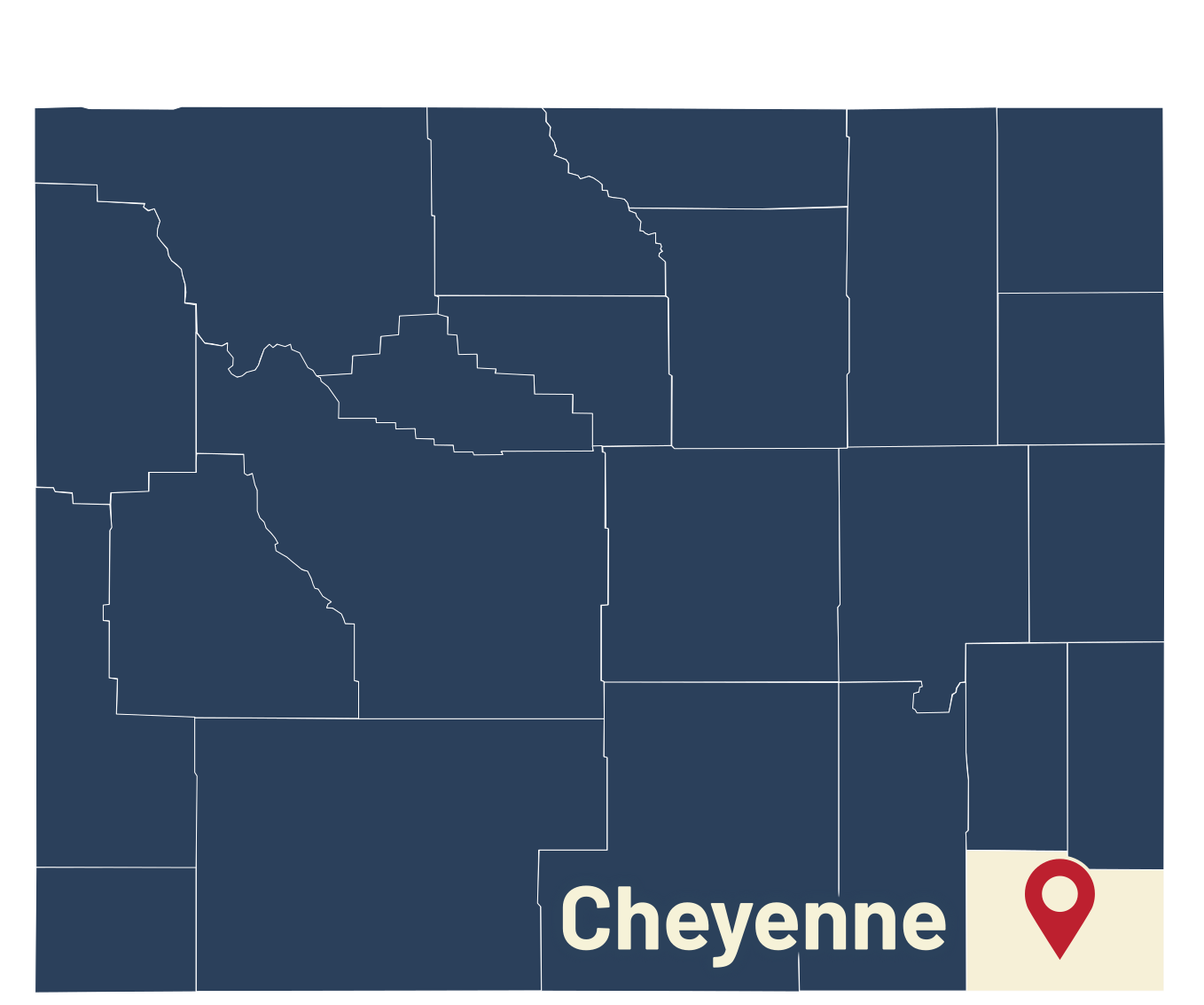
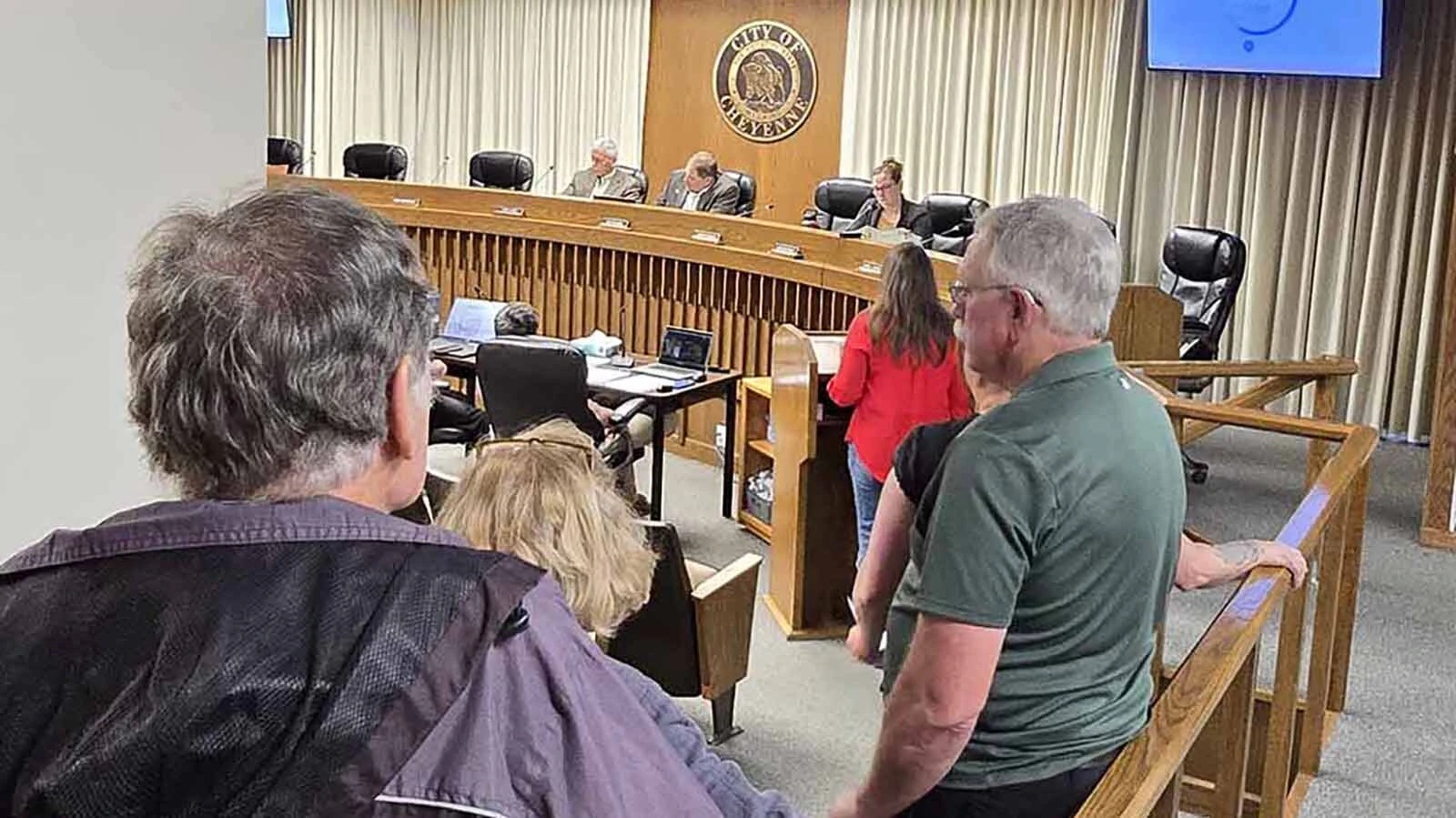
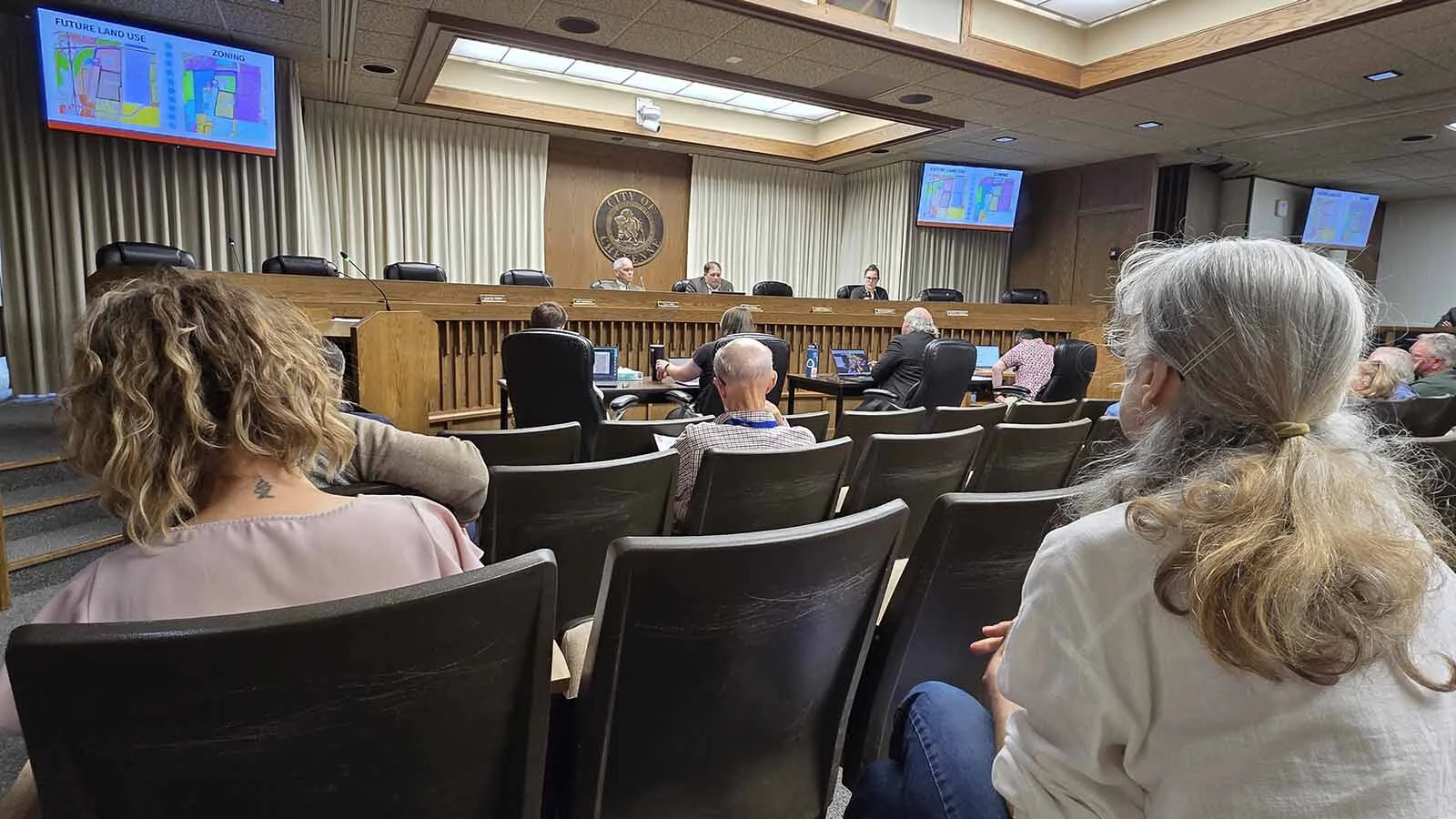
Most of the Cheyenne Planning Commission members backed parts of Microsoft’s sweeping 3,200-acre southside expansion plans Monday night during a marathon five-hour hearing.
But only one part of the plan — assigning agricultural zoning to the 3,050-acre Highlands area if it is annexed — will reach the June 8 City Council meeting with a recommendation to approve.
The remaining items — future land-use and zoning map amendments for two parcels in the vicinity of Laramie Community College — failed to get the four “yes” votes required by state law to give the land-use changes a formal thumbs up from the planners.
With two of seven commissioners absent, and the chair voting only in case of a tie, a single “no” was enough to flip majority support for the Highlands-related measures into a recommendation to deny.
A majority, meanwhile, voted to outright deny changes for the nearby Read Property, which is already inside city limits.
That meant the future land-use map amendment and zoning map amendment for the largest parcel failed — even though three of the five commissioners present voted in favor of them.
They will thus both head to the council with formal recommendations to deny.
Plan Fits Long-Range Vision, Utilities Can Keep Up
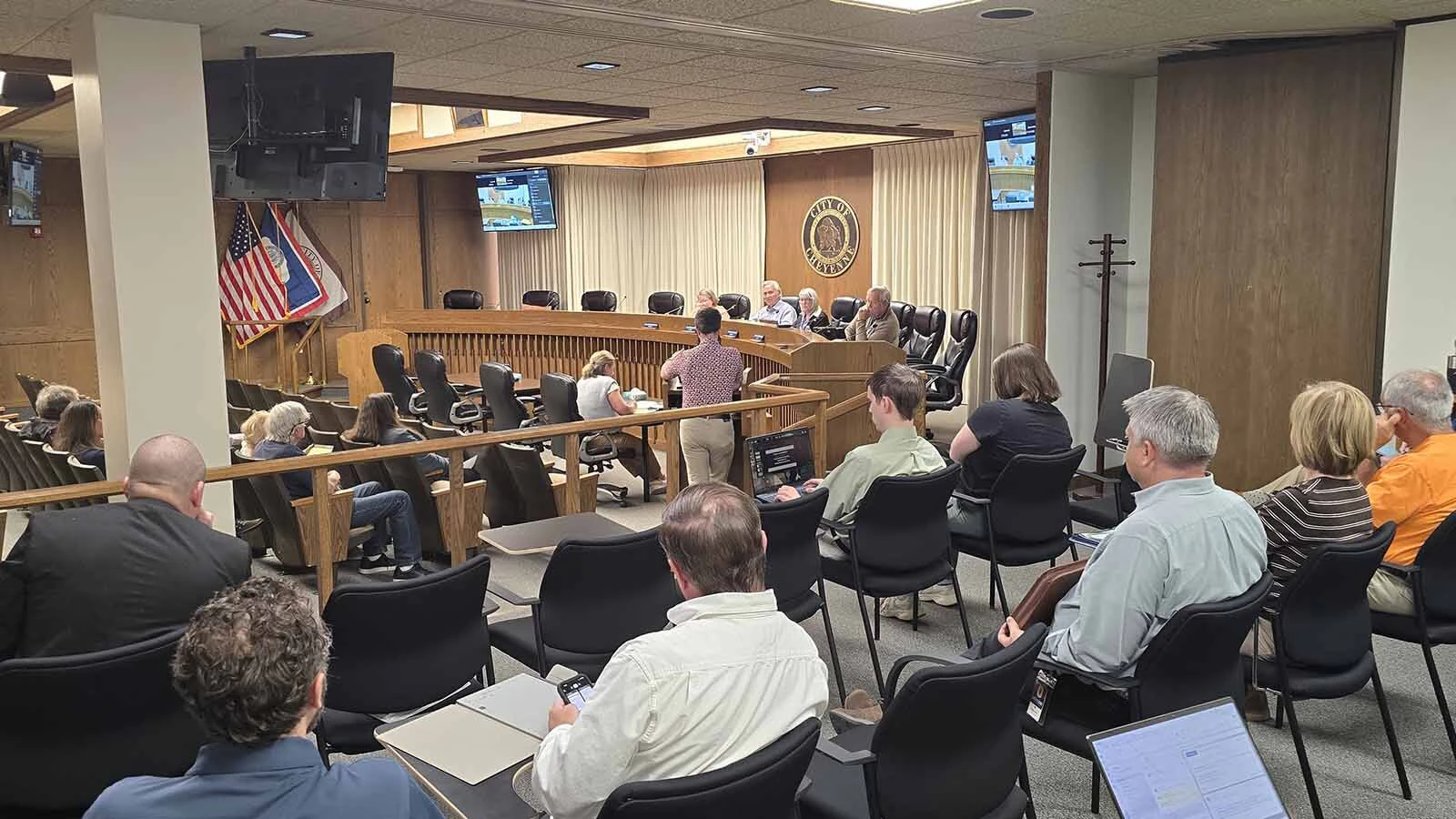
During deliberation of the measures, city staff framed the changes as consistent with long-range planning for Cheyenne’s economic development.
The staff emphasized that these areas could be served by city water and sewer and folded into the urban service boundary with appropriate infrastructure, including possible lift stations and extensions.
“The subject property is suitable for industrial development, noting the impacts of the industrial development will be minimal on the large vacant surrounding properties and the proposed amendment is consistent with the goals and policies within Plan Cheyenne,” Cheyenne Planner Connor White said.
“The transportation network because this wasn’t part of the Urban Service Boundary, there really isn’t a transportation network for this area,” White added. "That would be developed over time.”
The property would eventually connect into Bison Business Park as it develops over time, which would involve subsequent applications that would go before the Planning and Zoning Commission.
Water and sewer lines would have to be extended to the location, which is up for annexation consideration at the June 8 council meeting.
The area’s county zoning already allows some light industrial uses, and there’s already a gravel pit and oil wells in the area, White added.
Commissioner Questions Scale, Impact Of Project
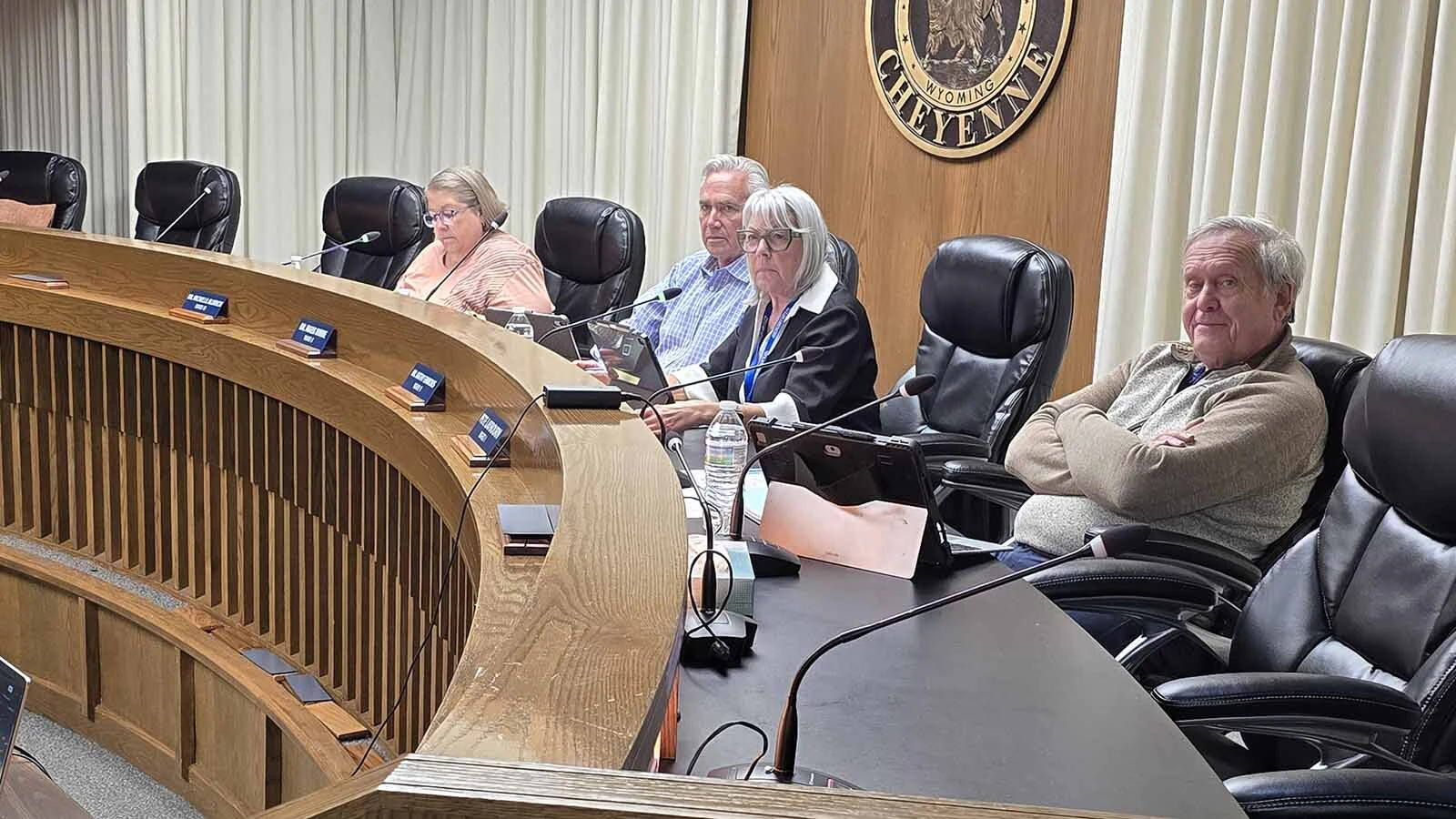
Commissioner Meghan Connor was first to question the project.
“This is about 18% of the city’s current size, nearly one-fifth,” she said. “How in the world can you even begin to understand the impact it’s going to have … when you can’t even fathom the size of this compared to the city? It overtakes the city.”
She wondered how it was concluded that the site is beneficial to the community.
“I’m really failing to understand that,” she said. “How do we know long-term impacts if we don’t even have one going? How can you determine that something one-fifth the size of the current city is going to be an appropriate fit for our community?”
Planning and Zoning Development Director Charles Bloom told Connor that from a long-range planning standpoint a majority of the area in question is already occupied by railroad lines.
“So it may seem artificially inflated,” he said. “There really are only small pieces that are available, excluding a couple of existing industrial parks like Swan Ranch.”
The additions Microsoft has requested, meanwhile, are what the company perceives as a need at this time, Bloom said.
“Really, anything regarding how or why they’re looking at this large area, what their intent would be, I would just refer that to the applicant,” Bloom said.

BOPU Needs To Sell More Water
Connor also asked questions about how the city would know if a data center is polluting an aquifer or the air, or making too much noise.
“That’s a great question,” Bloom said. “One of the safeguards here is that this would be a development that will be located within the city limits. So it will be required to connect to city water and sewer.”
Cheyenne has is able to monitor data centers connected to its systems electronically.
The city is also requiring that the data center not directly connect its closed-loop cooling system to the city’s wastewater treatment system, which means there’s no direct access.
Actual water use by data centers was another topic of discussion. Connor said she’s heard several times the “five households” figure bandied about.
But she and Commissioner Amy Hernandez, both, said they’d like to know the figure in gallons, as well as how much water, overall, Microsoft is proposing to use on that 3,050-acre or so parcel.
Frank Strong, with the Board of Public Utilities, said it’s difficult to say how much overall water will be used, given that Microsoft itself has not yet developed any detailed plans for the parcel. Microsoft is billing the Highlands parcel as part of a long-range, 10-year-plus commitment to doing business in Cheyenne.
An individual household typically uses 80,000 gallons a year, he said. If one guessed that the 3,200 parcel would one day have 40 data centers — a round number Strong selected for ease of calculation — the overall gallons would be 16 million.
“Where we are right now, we have a surplus of 2.7 trillion gallons,” Strong said. “So it’s a very small drop in the bucket of what we have.”
The amount of water all of Cheyenne’s existing data centers are now using, meanwhile, doesn’t equal out to the 2 million gallons of water HollyFrontier used to use for refining petroleum products.
That’s put BOPU actively looking to sell more water, so that the economics continue to support the water system without requiring increased user fees.
“All the data centers that are online right now used about 93 million gallons last year, which is around a little over 2% of our water sales,” Strong said.
Connor also wondered about water use for power generation, questions Strong said he could not answer.
While some power generation methods use significant amounts of water, there are also newer approaches, with closed-loop cooling, that use much less water than power generation of old.
Resident Decries Outdated Maps, Misrepresentation
Residents also pushed back against the developments.
Heather Madrid, who has been circulating a petition that calls for a moratorium on data centers, chastised the city for relying on outdated plans and maps to make sweeping changes, and urged them to “consider the people who live here and have lived here for years over people and developers who do not live here.”
Madrid also questioned bringing the Highlands property into the city with an agricultural zoning, when clearly the intended purpose for the land is not agriculture.
“That seems like a very intentional misrepresentation of the intent,” she said. “And it’s kind of in line with — and worsening — this idea that there is not transparency. And it’s led to panic, quite frankly, and extreme hypervigilance within the public to even be willing to argue for almost two hours over landscaping.
"This is very concerning to me. This isn’t a little bit of land, and the final intended use is actually not even remotely aligned with the future land-use map, which to my understanding is, again, grossly outdated,” Madrid added.
“I don’t know why we continue to rely on that map for these massive annexations and projects,” she continued. “Which are, as someone stated earlier, locking the city in and preventing future growth in a diverse way.”
What About Infrasound?
Charles Miller, meanwhile, agreed with Madrid’s criticism of outdated maps and called the overall approach to the project a massive “deception.”
“We are debating a 3,000-acre industrial expansion, about 18% of the current size of the city of Cheyenne,” he said. “Yet staff is attempting to characterize this as a minor incremental increase in utility demand.
"However, the Board of Public Utilities just admitted that this parcel was never on their master plan and requires significant new infrastructure, including a dedicated lift station to even function,” Miller said. "You cannot reconcile the reality of a 3,000-acre industrial footprint with the claim that it will have a minimal impact on Cheyenne’s utility or water future."
The lack of a detailed design for the campus, meanwhile, means the city would be authorizing a zoning change for something that doesn’t yet exist on paper.
“You have no site plan, no traffic mitigation, no finalized utility plan,” Miller said. “To recommend approval of a ghost project of this magnitude is a total abdication of this commission’s fiduciary duty to Plan Cheyenne.”
Miller also questioned whether the annexation was an attempt to escape review of the project by the Wyoming Industrial Siting Council.
“That state-level process is the only mechanism designed to force developers to fund and mitigate impacts on schools housing, and roads,” he said. “By rezoning to Business park, you are knowingly creating a void that strips this community of its right to state-mandated impact mitigation for infrasound liability.”
Infrasound refers to low-frequency sound waves below 20 hz. While that can’t be heard by human ears, Miller said studies are showing it can still have negative impacts for both humans and wildlife.
“Director Bloom admitted on record that the city currently lacks forensic data to evaluate or regulate low frequency infrasound from these facilities,” he said.
“You’re being asked to recommend a massive industrial expansion for a project known to generate these impacts, while the city openly admits it is still investigating the hazard.”
City, LEADS Have Already Wrestled With Many Of The Questions
Betsey Hale with Cheyenne LEADS told commissioners many of the concerns being raised are things Cheyenne officials have already wrestled with over the last decade or so.
“You have planning commissioners who have been thoughtful about this for 14 years,” she said. “And that’s why these projects are in business parks, because we have conditions, covenants, and restrictions.”
Putting them in business parks and connecting them to the city’s water and sewer system gives the city more enforcement capability, Hale suggested.
As far as providing power, that’s accomplished through Black Hills Energy, which conducted a three-year study of transmission and their ability to provide power through a large-load tariff.
“For 14 years, we have done everything we can to protect the citizens of Cheyenne, the residents of Cheyenne, the ratepayers of Cheyenne, the water resources, the sewer capabilities,” Hale said. “I think we should actually celebrate the fact that in Cheyenne, Wyoming, and Laramie County, we’ve kind of done it right.”
Hale added that she appreciates Madrid and other commenters helping the city better understand their concerns so that they can ensure more of the community’s needs are really being met.
Part Of Microsoft’s Long-Range Plan In Cheyenne
Microsoft’s representative, Rachel Irwing, told the Commission the rezoning is a “critical step in advancing a strategically planned data center campus and are intended to work together to ensure consistency between land use, zoning and long-term planning.”
The property is in the process of being acquired, she added, with a timeframe sometime this summer.
“Given the early stage of this effort, Microsoft has not yet advanced detailed designs for the campus,” Irwing said. “While we may not have all the answers today, regarding a specific design element or timing, we remain committed to being open and transparent with community, as we have been with our other local projects.”
Irwing said the company intends to ensure its projects continue to be consistent with Cheyenne’s “long-term growth vision and land-use planning objectives.”
“This will allow us to move forward in a coordinated way with infrastructure, utilities, and development standards under city jurisdiction,” she said. “Together, the proposed business park zoning, the future land-use amendment, and the eventual annexation into the city provide a cohesive framework to guide development of the site in a way that aligns with the city’s planning goals.”
The planned infrastructure investments Microsoft will make, meanwhile, will support long-term economic development goals for the region.
“We recognize this is just the first step in a broader, multi-phase process that will include detailed engineering and additional opportunities for public review and input,” Irwing said. “We want to emphasize that Microsoft approaches projects like this with a long-term commitment to the communities where we operate.”
Why So Much Land So Far Ahead?
Ultimately, however, all the reassurance didn’t lead to approving recommendations for any of the measures, outside of the recommended agricultural zoning for the large, 3,050-acre Highlands parcel if it’s annexed into the city.
Still, it is the City Council who will make the decision on whether to annex the property and whether to approve the land and zoning use changes. That body has already rejected a moratorium on new data centers, amid rising questions and opposition in the community.
Councilman Larry Wolfe, who was among councilmen who listened in on the entire session, said that for him, his vote will come down to Microsoft providing better answers for why it wants to annex such a large parcel of land into the city right now, if they don’t have development plans for it looking out 10 years or more.
Without that, “they can’t answer any of the important issues: water, energy, even the number of buildings because everything will have changed from a technology standpoint,” Wolfe told Cowboy State Daily.
“What is the benefit to the city if we annex now, unless they are going to do some substantial things for the residents?” he asked. “Making (Sen. Cynthia) Lummis a lot richer is not a compelling reason. They failed to persuade the Planning Commission on the zoning changes.”
Lummis’ family owns the 3,050-acre Highlands parcel that’s part of Microsoft’s future data center expansion plans.
Renée Jean can be reached at renee@cowboystatedaily.com.