She was known as Wyoming’s Copper Queen, though she never lived in a palace.
Sarah Gillespie was a pioneer woman trying to make a life on the edges of nowhere in Western Wyoming.
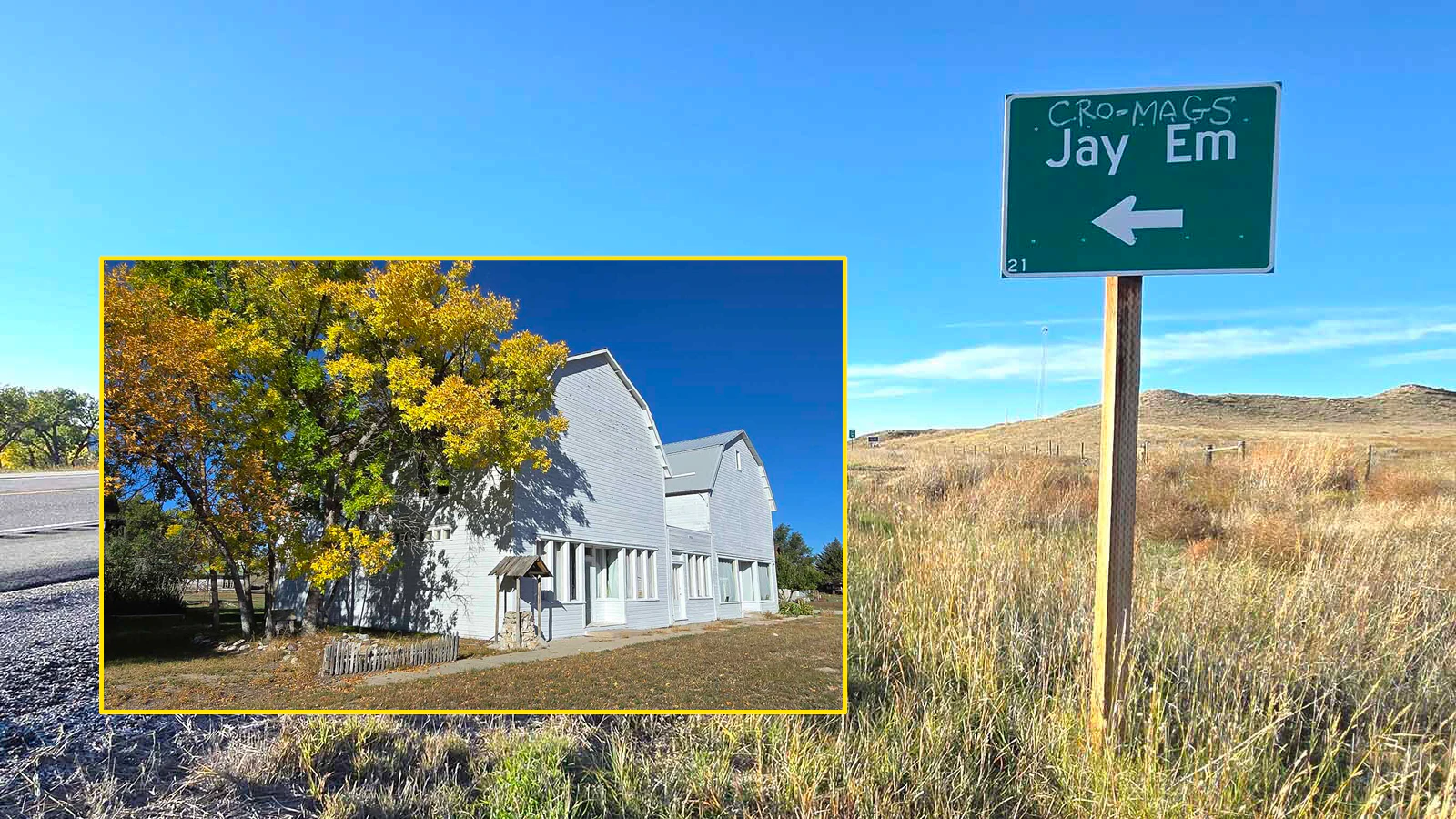
She and her husband came to Wyoming in the early 1900s, settling in the rough-and-tumble country south of South Pass City.
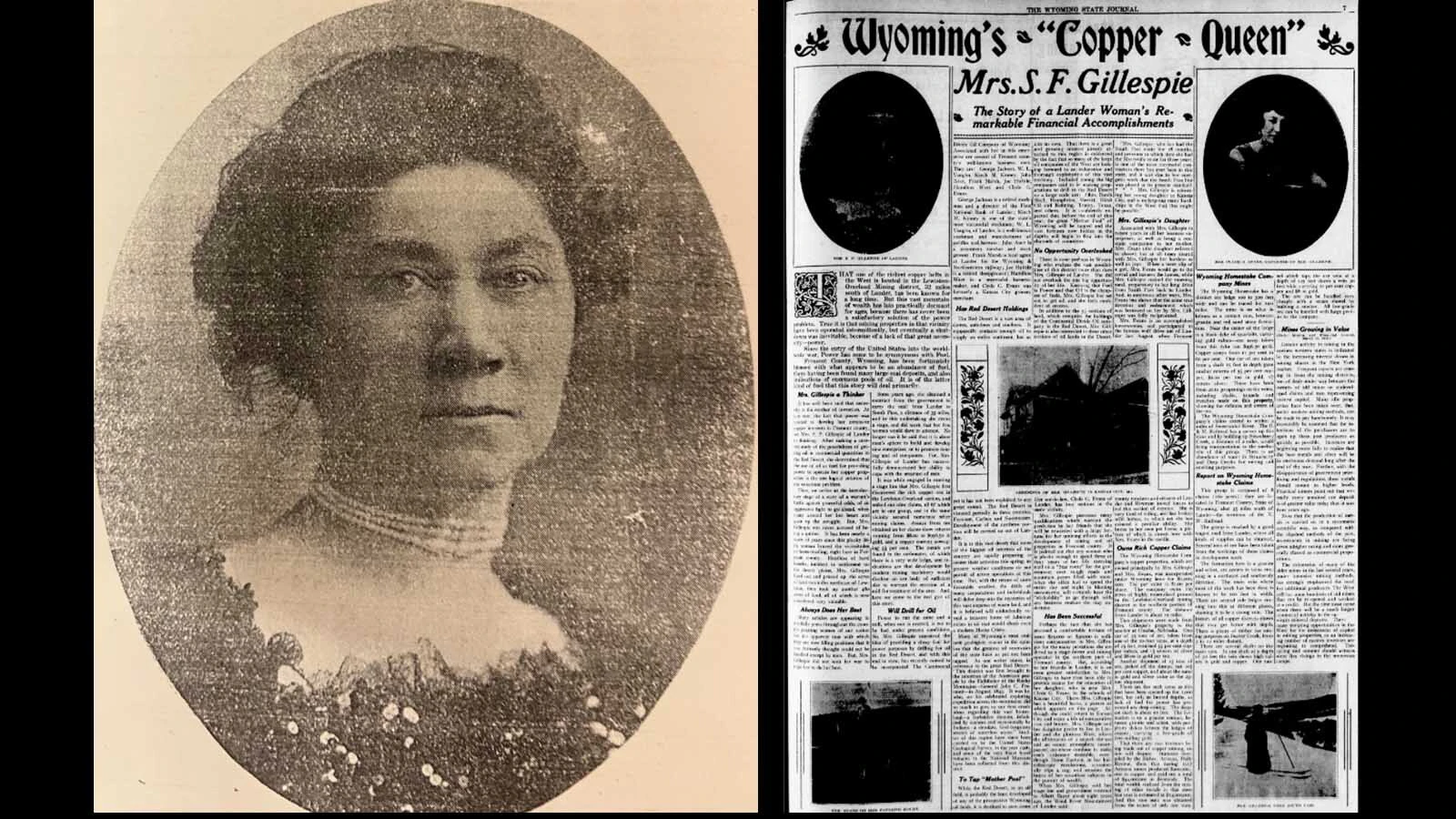
Today, few will remember Gillespie’s name, but in 1918, a full-page article was written about the “plucky little woman” who started the Wyoming Homestake Co. and the Continental Divide Oil Co.
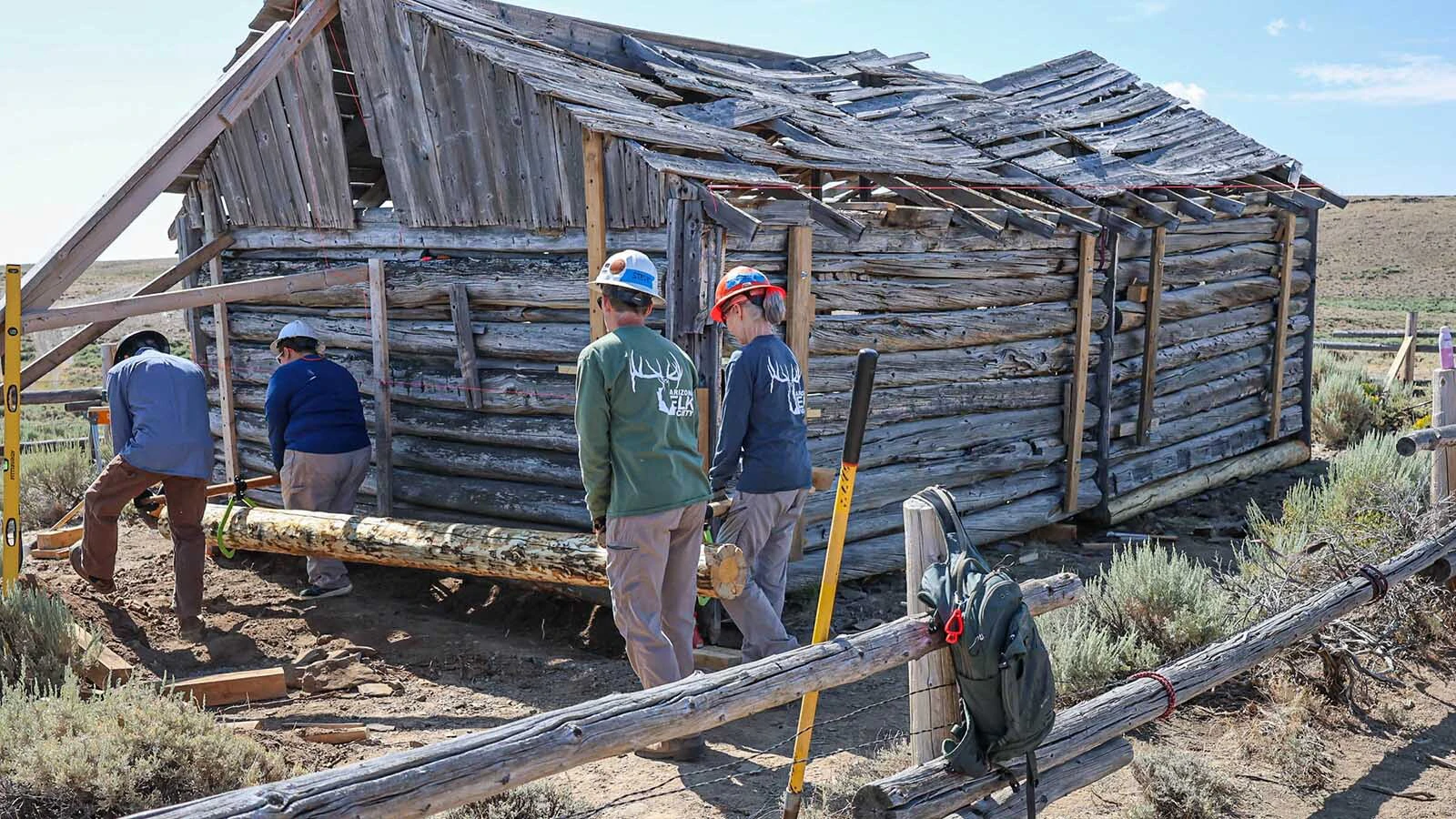
Bureau of Land Management State Office Archaeologist Gina Clingerman has been putting together a history on Wyoming’s lost Copper Queen, even as she’s been organizing a HistoriCorps rescue for Gillespie’s cabin.
Gillespie settled in Wyoming in the early 1900s with her husband.
The couple took over the mail service between a tiny little town called Mysersville, which no longer exists, and South Pass City.
The area, however, proved too tough for her husband, who scooted out the door one day, abandoning his wife.
“He was not a very nice person,” Clingerman said. “And there was some kind of dispute between them, so he just left.”
So, Gillespie did the challenging, 35-mile mail route, through all kinds of weather, all by herself.
“She kept that for a couple of years, and she actually used that money to pay for her daughter’s schooling,” Clingerman said. “She was just such a dig-down-deep kind of woman. Like, ‘I’m going to take care of my family.’”
No matter what.
Saving A Pioneer Cabin
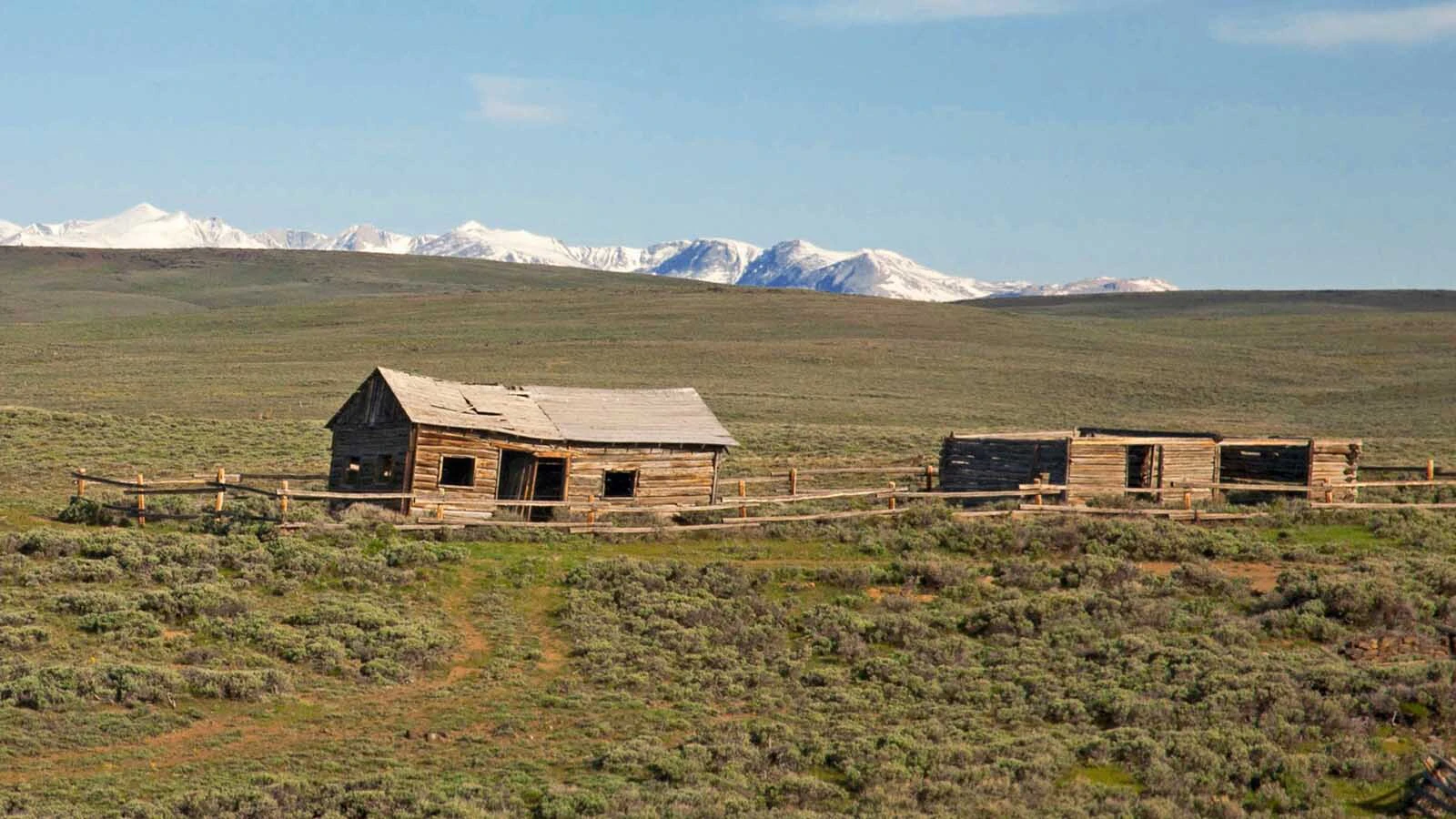
The remaining physical legacy of her impact on the wild, rugged region of Wyoming more than a century ago is Gillespie Place, the cabin and stables she built around 1910, according to the BLM.
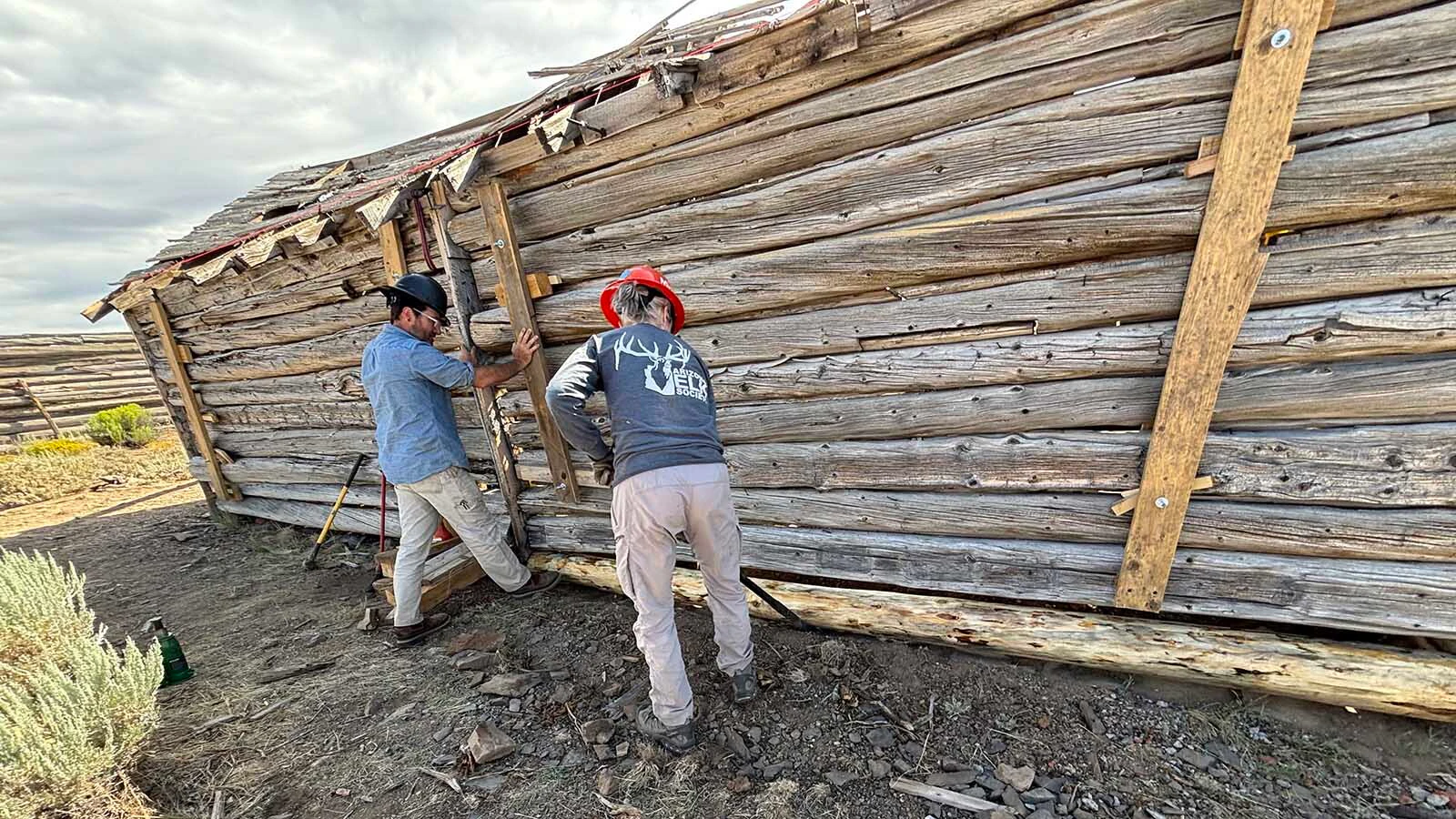
Gillespie took good care of her cabin while she was still alive. But after she died in 1956, it began a long, slow slide, gradually cracking and pulling apart in the middle.
That’s how Clingerman found the cabin in 2010.
She started researching Gillespie then, drawing on materials from South Pass City’s archives.
It was only then she realized the true significance of the place, which is one of the oldest cabins in the Sweetwater Mining District, and one of 13 structures still standing.
“This is a national treasure and a state treasure to Wyoming,” Clingerman said. “Sarah Gillespie is the kind of person who got things done. She was a big personality, and so there were a lot of people who once knew her.”
Articles of the day detail her exploits, and she shows up often in regional history, Clingerman added.
“She’s a person who created and tried to further mining in that community,” she said. “And she was one of the movers and shakers of mining in that Sweetwater Mining District.”
Because of that, the cabin will be eligible for the National Register of Historic Places, once its restoration is complete.
Help From HistoriCorps
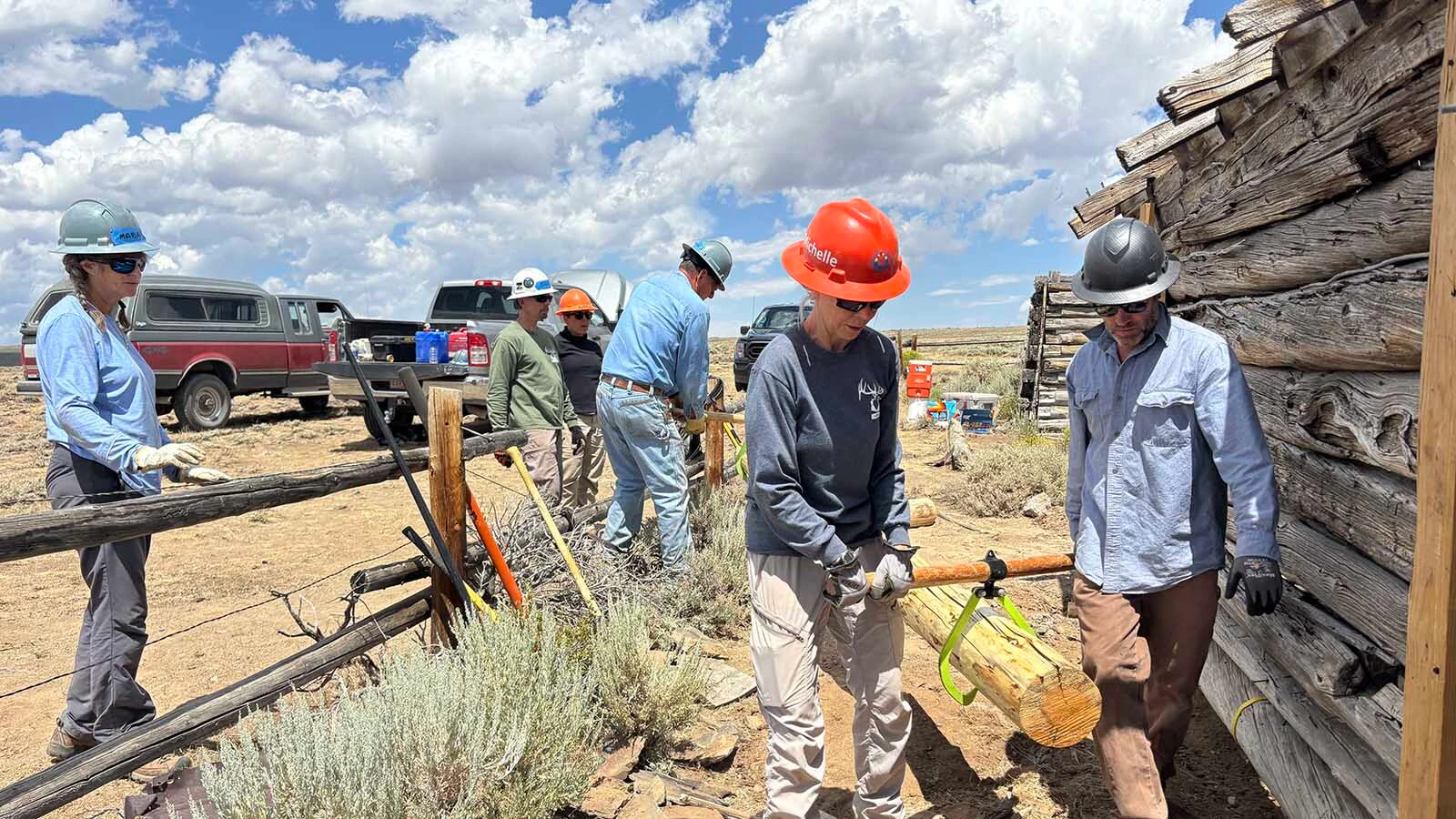
HistoriCorps is coming this summer to finish the restoration of this cabin, and Wyomingites are invited to participate in the work this July, HistoriCorps Missouri Basin Region Program Manager Mardita Murphy told Cowboy State Daily.
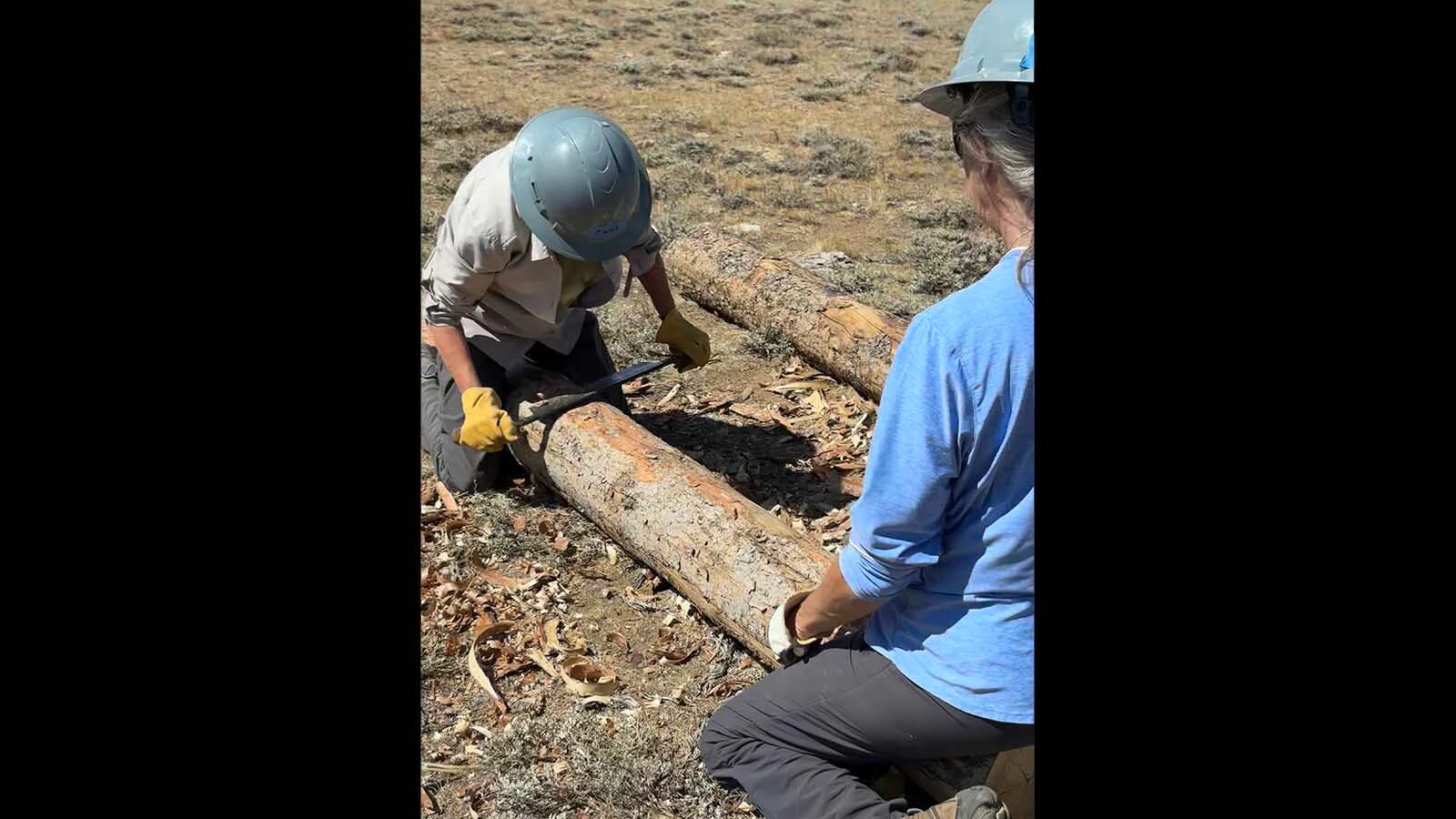
Volunteers will learn the historic techniques it took to build the cabin, so they can match the tool marks and style of the original while restoring it.
To the extent possible, all original materials will be kept, so as to maintain the cabin’s historic integrity.
“We’re replicating the original construction details,” Murphy said. “We’re matching the log species. We’re matching the tooling and the notching on those logs. We’re being as sensitive as possible with the historic fabric.
"We’re prioritizing repair over replacement, and only replacing what is necessary or deteriorated, causing structural concerns for the building.”
Highlighting a figure like Gillespie tells an important national story, Murphy said, and is one of the reasons why HistoriCorps is involved in the project.
“The leadership role she took on as a homesteader, an entrepreneur, and a single parent is exceptional,” Murphy said. “So I think that’s the priority and first value.”
If At First You Don’t Succeed …
Gillespie didn’t just stick with her mining claims and her oil company.
And she didn’t throw up her hands and go home to Kansas City when those claims didn’t pan out. She kept trying to make a living in what was then and is still today very remote country.
“She was always looking for ways to have businesses,” Clingerman said. “She was just an entrepreneurial woman.”
When she found a pair of black foxes on her property, for example, she started working out how to trap them. She saw raising foxes with black fur as a golden opportunity.
The nearby springs, meanwhile, sparked another business idea, this time for a spa.
The springs were named Radium Springs, suggesting there may have been a touch of glow-in-the-dark radioactivity to them.
In fact, Gillespie found chunks of uranium in the Red Desert when she was prospecting for oil.
From 1910 to 1920, the nation was gripped by a radium health craze with what was then marketed as “liquid sunshine.”
It was thought radium-laced liquids could cure all manner of ills at the time, from cancer to arthritis. It was touted as a literal fountain of youth and energy.
The craze was short-lived. Within about 10 years the “Radium Girls,” poor unfortunate souls who were employed painting glow-in-the-dark watch dials, started turning up with fatal radiation poisoning.
Radium, it turned out, had been no panacea after all.
The chemical takes the place of calcium in the body, causing bone to decay and disintegrate. Many of these young women died agonizing deaths due to bone tumors, anemia, and bone marrow failure.
The radium companies, at the time, knew there was a problem, but covered it up, claiming the women just had syphilis.
Their fight for justice ended the radium health craze. It also helped fuel reforms that culminated in tougher labor laws, and, decades later, the creation of the Occupational Safety and Health Administration in 1970.

Creating A Copper City
People who knew Gillespie remembered she always dyed her hair red and wore bright red lipstick.
It was a signal, if any needed it, of her grit and will.
The landscape was harsh and making a living was tough, especially for a young wife abandoned by her husband.
But she was going to make the best of things that she possibly could, and she was tireless in the endeavor.
According to a 1918 article in the Wyoming State Journal, Gillespie learned there was a rich vein of copper in the area while running a stage line and her mail route to South Pass City.
That prompted her to start the Wyoming Homestake Co. and take out eight mining claims.
She envisioned a Copper City springing up in the area, and she all but moved heaven and earth to try and make that happen.
“She was the secretary and treasurer of that, and her son-in-law served as president, because at that time it was hard for women to be presidents,” Clingerman said. “But she created that mining group.”
Her cabin, meanwhile, became a well-known gathering spot for people in the area.
“In 1913, she hosted a six-course Christmas dinner out of her house, which is amazing for the time,” Clingerman said. “And so people came from all over South Pass and the Atlantic City area to Sarah’s house.
"It was considered a stopover for people, and she had a little hotel that she ran there.”
The 1918 article devoted much of its space to Gillespie’s efforts to acquire power for the area so that mining could proceed.
But it also included descriptions of Gillespie, about the kind of woman she was.
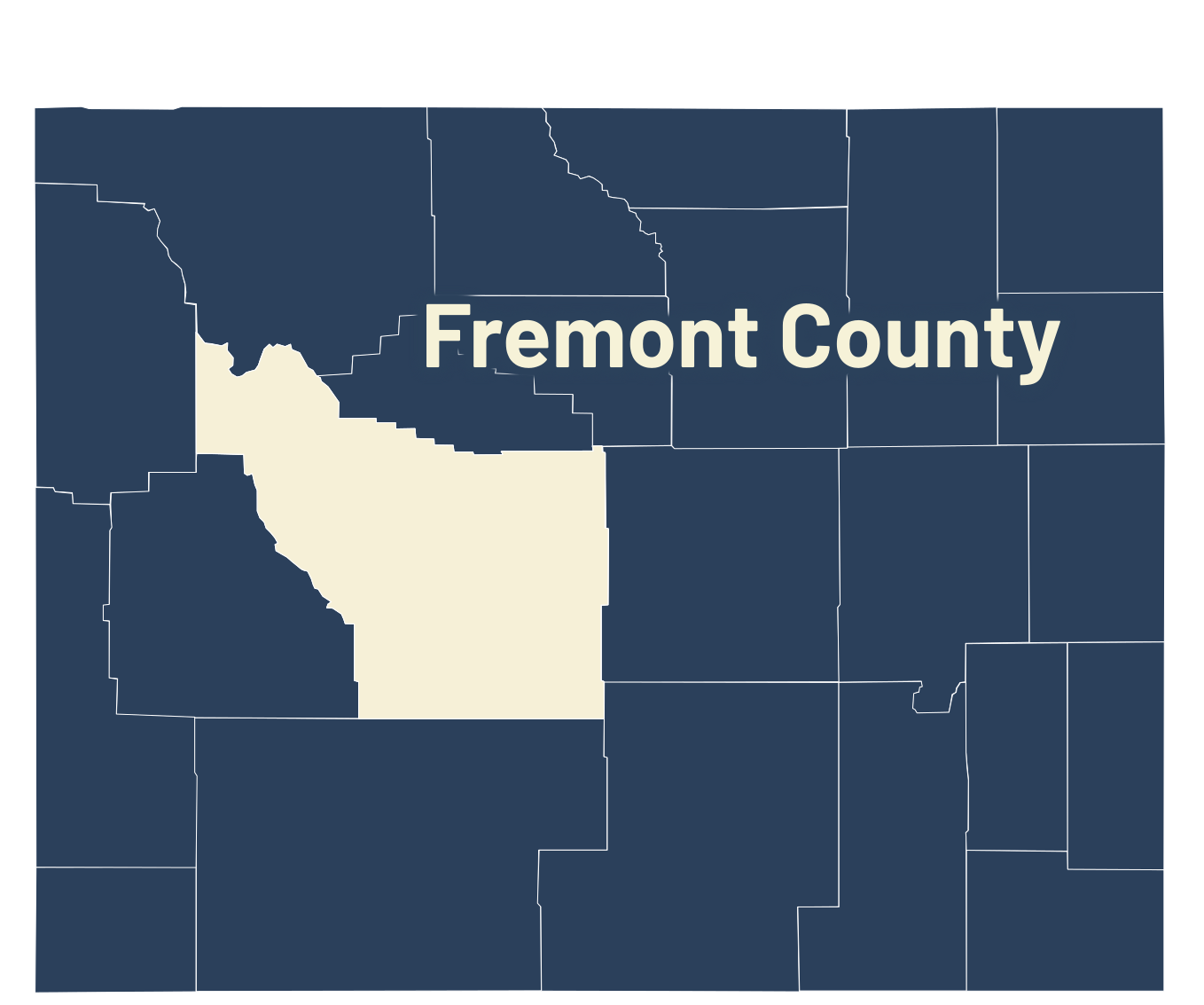
“It has been nearly a score of years since this plucky little woman braved the vicissitudes of homesteading, right here in Fremont County,” the article says of her. “Heedless of hard knocks incident to settlement on the desert plains, Mrs. Gillespie lived out and proved up 160 acres of land 2 miles northeast of Lewiston, then took up another 480 acres of land, all of which is now considered very valuable.”
Not mentioned in the article is the fact Gillespie took assaying courses, so she could evaluate her own mining claims herself.
That was work many male mine owners would simply outsource. But Gillespie wanted to be sure the work was done right, so she did it herself.
Gillespie hoped to find oil to fuel her operation in the Red Desert, the article went on to say, and her oil company had the backing of several well-known, prominent Fremont County businessmen at the time.
“It is pointed out that any woman who is plucky enough to spend three or four years of her life carrying mail on a ‘Star route’ for the government over rough roads and mountain passes filled with snow,” the article continued, “when she often had to spend the entire day and night in blinding snowstorms, will certainly have the ‘stickability’ to go through with any business venture she may undertake.”
A Mining District Fades
The Sweetwater and Lewiston mining districts Gillespie helped establish were latecomers to Wyoming’s gold and copper fever.
South Pass had boomed earlier, starting in the late 1860s and petering out by the early 1900s.
As it gave out, South Pass miners drifted to Lewiston, chasing new veins of valuable metals and longed-for second chances alongside Gillespie.
Most of these mines never panned out.
Gillespie would ship a sizable load of gold ore out in 1928, but ultimately her claim wasn’t rich enough to attract investment in a mill or in electricity or gas lines to Lewiston.
Even the full-page article about how valuable her claim might be did not convince anyone to invest in Lewiston.
People drifted away, cabins slowly collapsed or were carted away. But Gillespie stayed, splitting her time between Lander and her beloved homestead.
A Legacy Of Wyoming Grit
Fortunately, Gillespie decided her radium spring was really too small for what she had in mind, so the Grand Hotel and Spa idea never really got off the ground.
What it demonstrates to Clingerman is how resilient she was, piecing together a life despite hardships, and dusting herself off every time a particular venture didn’t turn out the way she’d hoped.
One elderly man who knew Gillespie before she died recalled that she always wore bright red lipstick and dyed her hair red, refusing to ever let it go iron gray.
It was a bright pop of color in a harsh, unforgiving land, but it was also a signal of indomitable will.
“I just kind of love that about her,” Clingerman said. “She always invested in herself.”
Her stubborn little cabin still sits on the Wyoming prairie because of that mindset. It offers a window onto a time long past, and a rare portrait of a Western woman who refused to accept the narrow life she was “supposed” to have, and never stopped going after more.
The Copper Queen never found enough copper for a palace. But her history is a gold thread in a tapestry of Wyoming’s pioneer history.
Renée Jean can be reached at renee@cowboystatedaily.com.