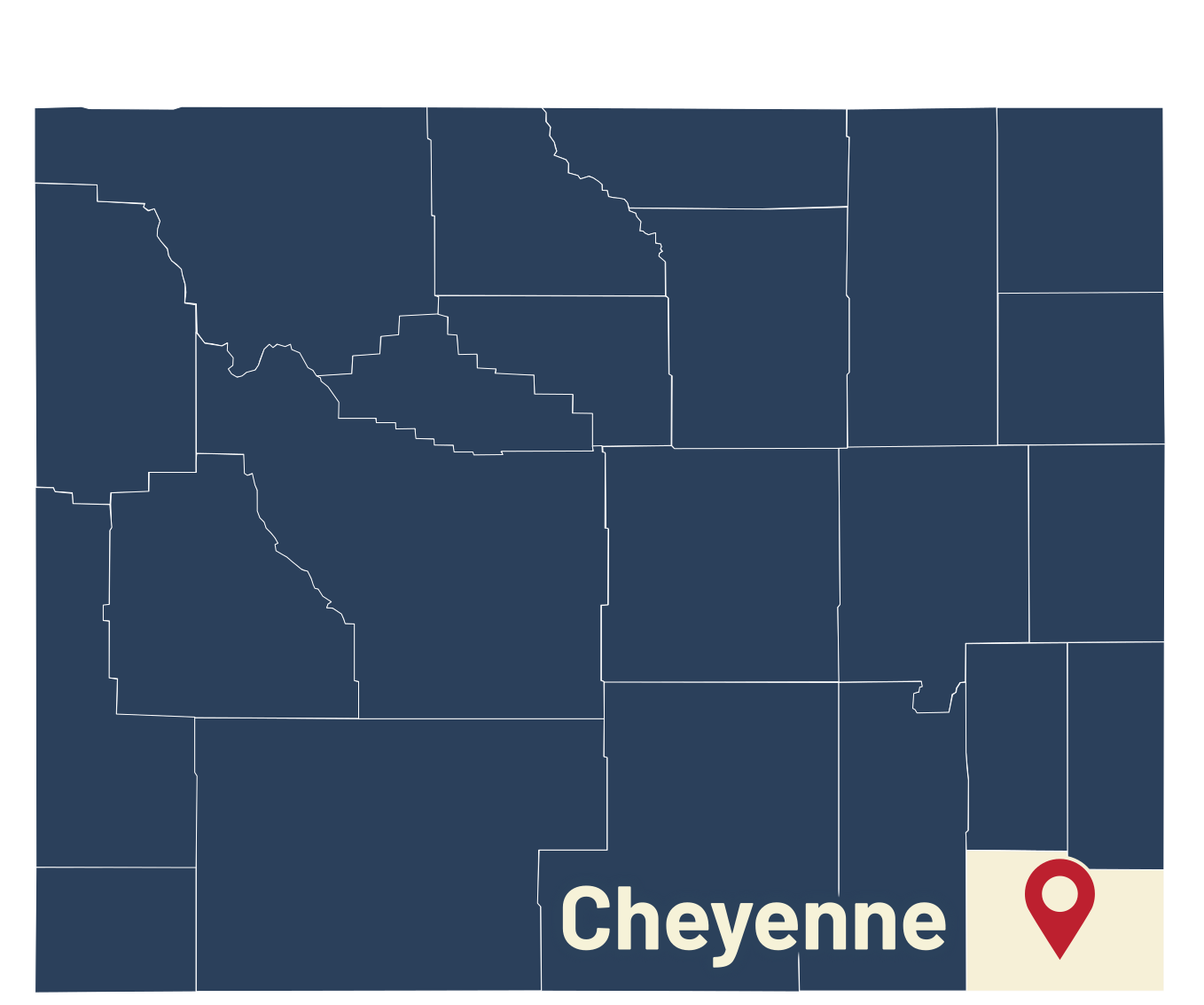
CHEYENNE — “Sometimes it’s difficult in Wyoming to be a deaf individual.”
So said a young man named Cody who’s been deaf since age 3 from an infection.
During a public comment period before the Joint Appropriations Committee May 1, he told how he managed to get through grade school and high school. His ultimate dream is to be a veterinarian.
After graduating from high school, he began to search for part-time jobs, only to be turned down because of his hearing loss.
For example, at Subway he said he learned that he needed a deaf interpreter to do the training prior to getting hired.
The interpreter would bridge the communication gap with other employees by translating between American Sign Language (ASL) or other types of communication, such as writing.
Unfortunately there is a national shortage of these deaf interpreters.
Earlier the Legislature allocated enough money to hire a full time deaf interpreter. The position remains empty months later. The pay is too low. That was the reason offered by state officials to explain the failure to fill the position.
The Joint Appropriation’s Committee’s job is to decide whether the state needs a commission for the deaf and blind, a separate commission for each program, or no commission at all.
Representatives of both programs said separate commissions would be best.
The commission in each case would be a point source of information about the the entire array of services available to visually and hearing impaired residents.
In a memo to the committee, the Department of Family Services noted an unmet need of qualified interpreter services across the state, but particularly in rural areas.
“Unmet needs include a shortage of qualified interpreter services and an elevated demand for interpretive services stemming from the high financial cost of obtaining hearing devices,” the memo reads.
As for the blind, Wyoming is unique in having money available from the Montgomery Trust Fund. It was established by Campbell County rancher Roy Montgomery, who had vision problems and left the money for a home for blind people.
That never developed and the money is used largely to train blind people to be independent so they can continue to live in their own homes. They do this with trained consultants.
Two members of the Wyoming Council for the Blind appeared before the committee, Gary Olsen from Powell and Dr.Cheryl Godley of Casper.
Olsen, who is a lapidarist, said he has been blind since his premature birth as the result of too much oxygen at a time before medicine learned the dangers.
Godley, a psychologist, said she began losing her vision at age 17. She told how it affected every aspect of her life.
As for the commission, Olsen said he and Godley understood that the committee was unlikely to approve two separate commissions.
Rather than just one joint commission, they would prefer keeping the status quo, but want more money to train consultants.
Rep John Bear, R-Gillette, co-chairman of the committee, pointed out that the two groups, blind and deaf, represented only two percent of the population.
He questioned whether there are other active commissions that could take over, instead of creating a new one.
Services for the blind and deaf are scattered through a number of state government agencies, from health to education.
Meanwhile one of the hearing impaired people who testified was a woman who told of being arrested and jailed overnight in a domestic dispute. She was totally unable to communicate with the arresting officers, or apparently anyone else, although she said she tried writing notes.
She spent a night in the county jail, unable unable to communicate with anyone.
It was a sad story and a situation where a deaf interpreter would have been most helpful.
Contact Joan Barron at 307-632-2534 or jmbarron@bresnan.net