Republished with permission from the Bozeman Daily Chronicle
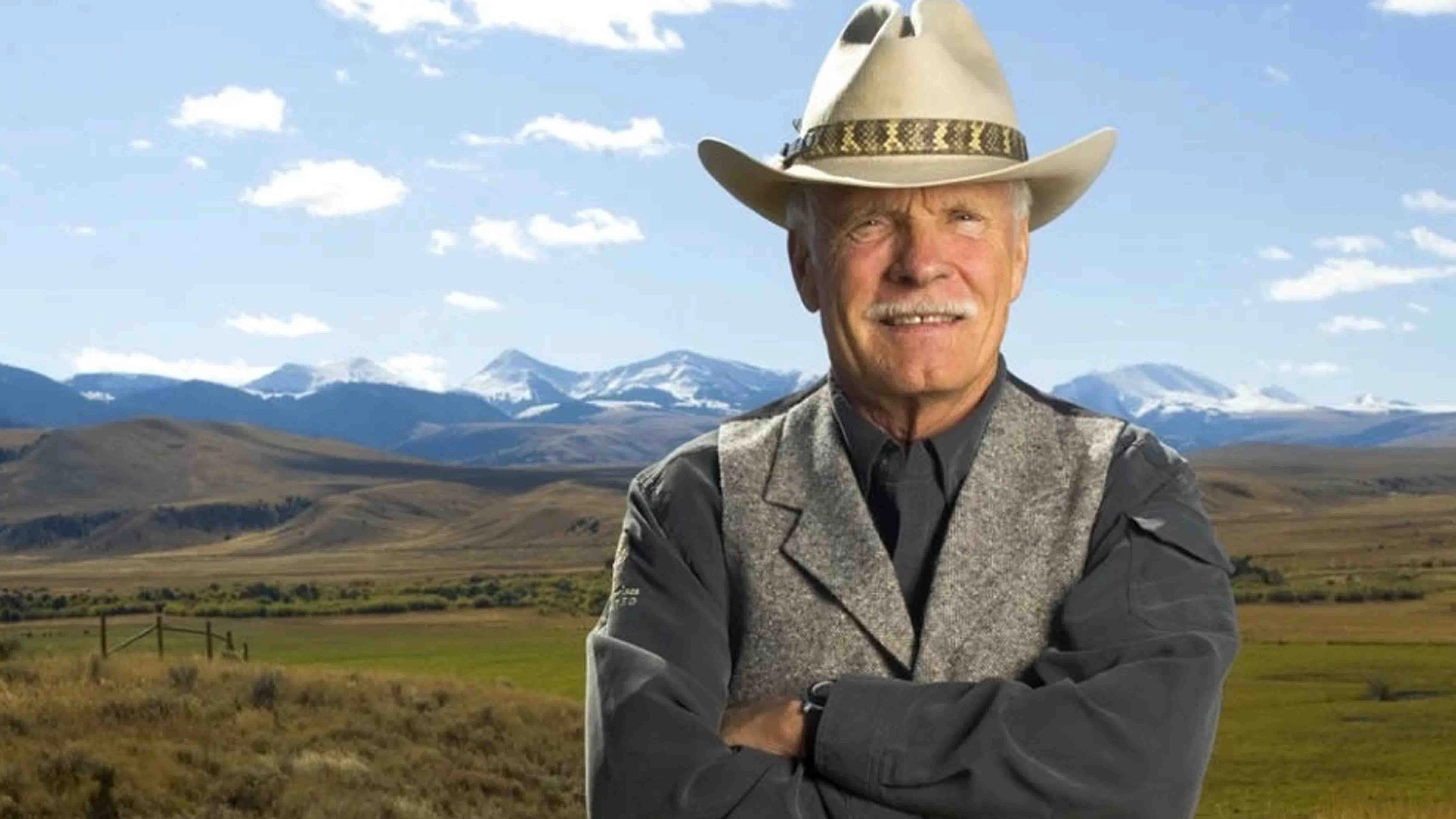
BOZEMAN, Mont. -- As executive director of the Greater Yellowstone Coalition, Mike Clark would often drive to the Flying D Ranch southwest of Bozeman to talk with Ted Turner about conservation at the elegant but modest log ranch home the media mogul co-decorated with Jane Fonda.
Turner, who died Wednesday in Florida at age 87, was renowned — perhaps even notorious — for his meager attention span, impatience and impetuousness. Checking the time, Clark would ease through the gate above Spanish Creek, knowing that as soon as the home came into view he’d inevitably see Turner, typically clad in loose blue jeans and suspenders, leaning against a doorframe peering at his watch.
“I always would roll into the courtyard at exactly the right time,” Clark recalled with a chuckle Wednesday. “He was obsessed about efficient use of time. He would smile, tap his watch and say, ‘Good job, Mike’."
Turner, it has often been said, owned so much land in the West from a fortune amassed building the Turner Broadcasting System and CNN that one could walk from Canada to Mexico without leaving Turner Enterprises acreage.
The Flying D
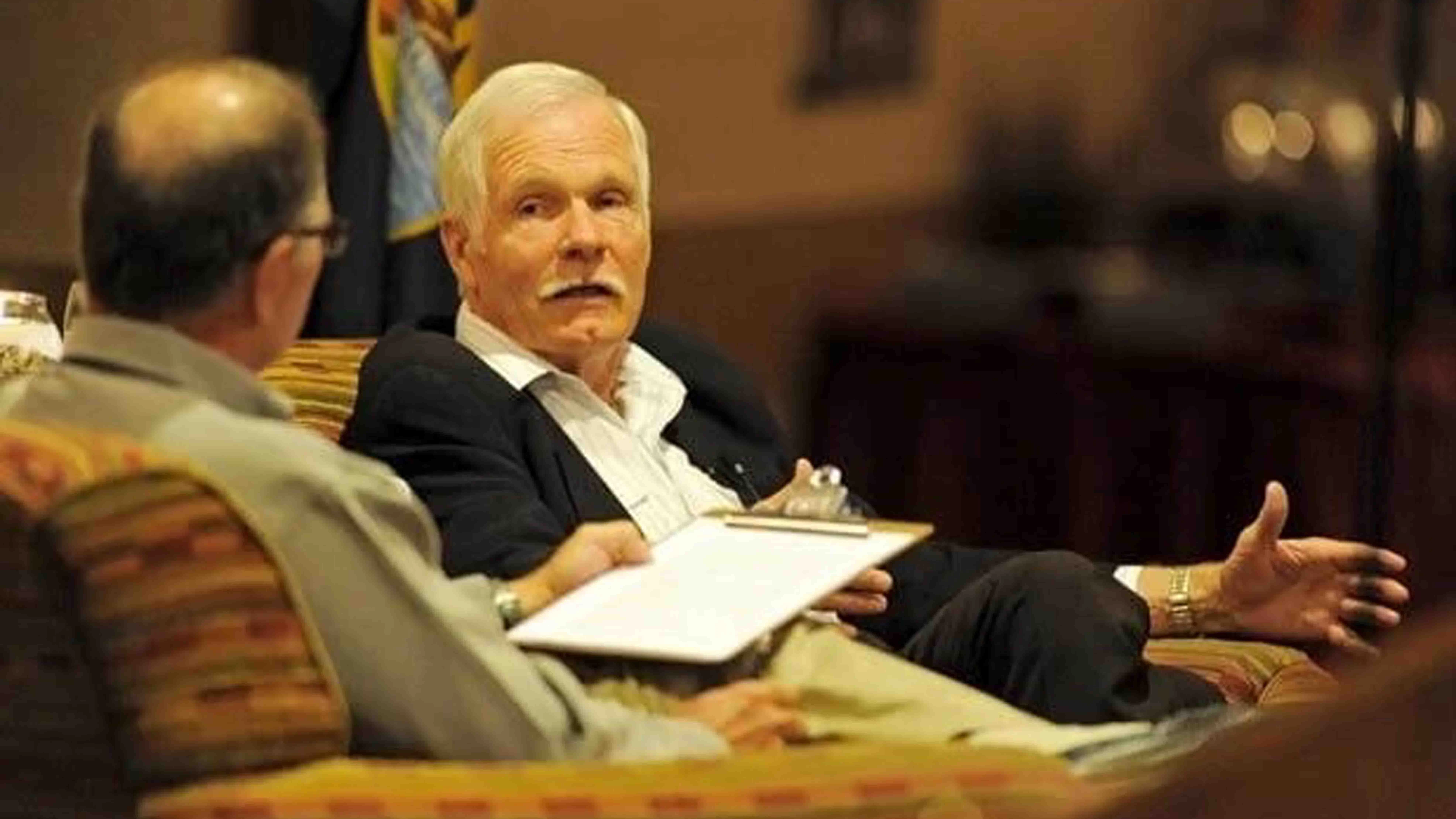
But among all of his ranch properties, the Flying D and its 113,613 acres of wildness, purchased in 1989, ranked among his favorites — a place where he was most at ease in a fast-pace life where his fingerprints touched nuclear disarmament, women’s health issues, United Nations endeavors that included a $1 billion donation, world hunger and, above all, restoring endangered or imperiled species to landscapes, most notably bison.
Former President Jimmy Carter, a longtime friend, fished Cherry Creek with Turner at the Flying D. Ex-UN Secretary-General Kofi Annan visited and so did writer Tony Hiss, son of Alger. Mikhail Gorbachev, president of the Soviet Union when it fell, was a close friend and visitor. Same for former Vice President Al Gore.
Turner thought of the Flying D as a primary residence, and until his health declined in recent years due to a form of dementia it wasn’t uncommon to come across him and a posse of the ranch hands he adored riding mountain bikes on Spanish Creek Road, which bisects the property.
“There has never been a person in the history of the world as we know it who worked across such a vast portfolio of interests, but Ted Turner was at his best when he was in Montana,” Bozeman journalist Todd Wilkinson, author of “Last Stand: Ted Turner’s Quest to Save a Troubled Planet”, told the Chronicle. “He loved Montana. He really believed he could be himself here.”
In the beginning, Turner was routinely at odds with longtime residents of the region, especially ranchers. He was unbridled in his enthusiasm for restoring free-ranging bison and in the process often denigrated cattle, in part because the state required him to treat his herds as livestock and keep them fenced.
Turner quickly put the Flying D into a conservation easement and was also a vocal advocate for grizzly bears and wolves, both of which now roam the vast property between the Gallatin and Madison rivers.
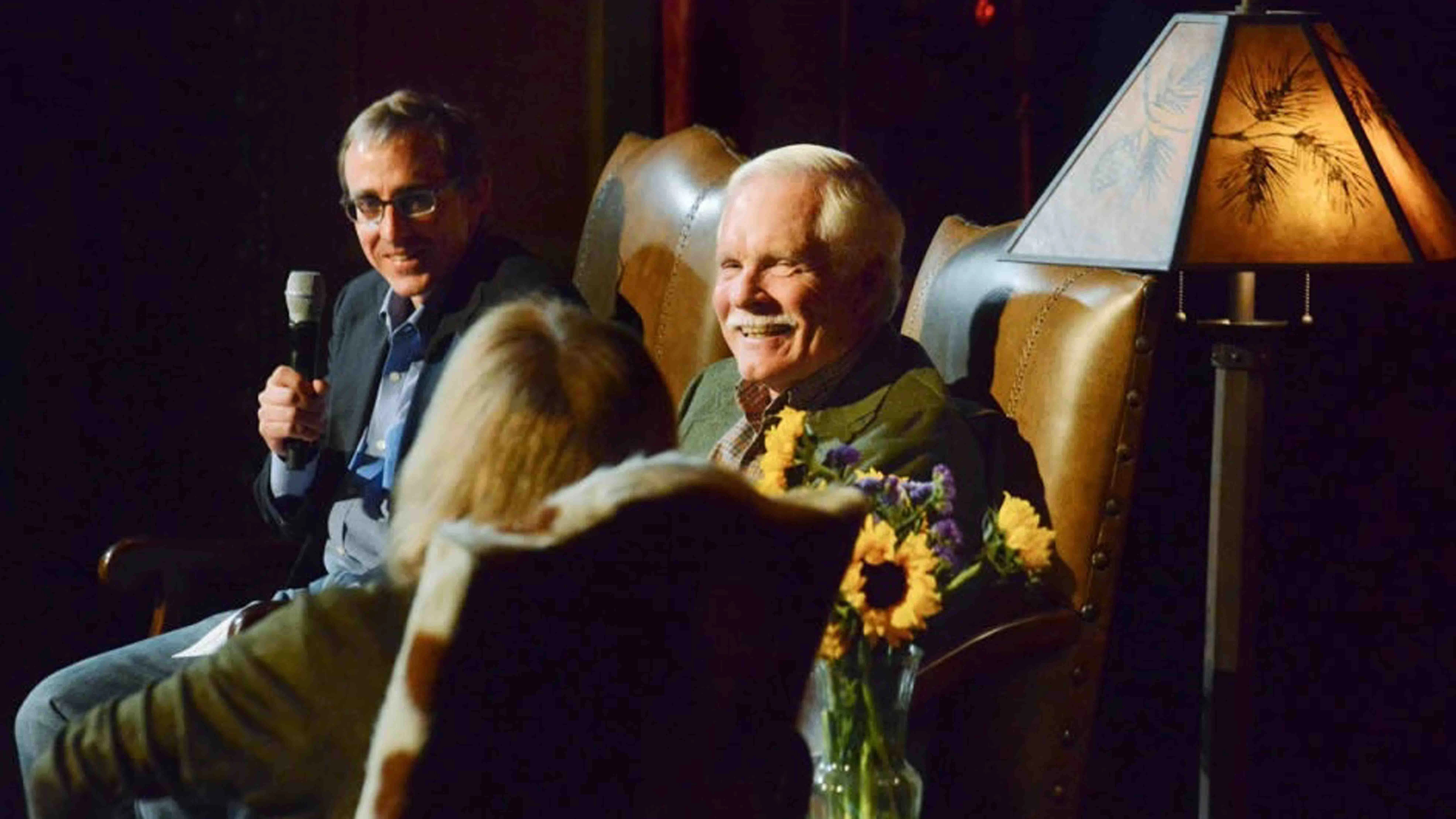
“When he bought the ranch it pissed off every rancher in Montana,” Clark recalled. “He was known for his love of bison and hatred for cattle. I thought he was having fun with that. People didn’t realize he was teasing them. He would get into these squabbles with people that were hilarious.”
"Never Happened"
As such, myths about Turner somehow transcended an already-giant shadow compounded by his 1991-2001 marriage to Fonda, for whom resentment still simmered regionally over her Vietnam War protests.
AM radio in Bozeman circulated rumors that Turner was using helicopters to fly in wolves. Some cackled over an urban legend that Turner and Fonda had been prohibited entry into what was then known as Sir Scott’s Oasis, a steakhouse in Manhattan.
Only one problem: “Never happened,” Wilkinson said.
Fonda, who chose the decor for the Flying D’s main home, often stayed with Turner on the ranch.
“Their romance was fired by their mutual passion for nature,” Wilkinson recalled. “Ted Turner brought Jane Fonda on her first hunts and taught her to fly fish, and Jane Fonda in turn opened Ted’s eyes to the plight of humanity around the world, i.e. women, and it left a permanent impact on him. The relationship between Ted and Jane was really special in its own way.”
Turner was especially passionate about bison, which at one time roamed the Plains in numbers ranging from 30 to 60 million but were reduced to a tiny handful in remote corners of the West, including the Greater Yellowstone Ecosystem.
At one time, he owned the largest bison herd in North America, totaling more than 45,000 spread among his ranches. His local domestic herd is readily visible on either side of the Madison River near the Blacks Ford fishing access site, notably on the former Green Ranch on the west bank of the river.
In 2009, Turner stepped in to rescue quarantined Yellowstone National Park bison that were otherwise destined for slaughter or a return to the park, where they would be susceptible to the disease brucellosis. He became the first private owner of Yellowstone bison when they thundered through a gate on the west side of the Madison and vanished into the hills.
"Dust On The Trail"
At one time, Turner owned four ranches in Montana, including the Snowcrest Ranch near Alder and the Bar None Ranch on the north bank of Sixteen Mile Creek northwest of Bozeman.
Turner savored having guests at the Flying D. Fundraising events for conservation and other nonprofit groups routinely included climbing into a convoy of 4-wheel-drive vehicles, Turner in the lead in an old Land Rover, kicking up dust at high speeds on the few dirt roads criss-crossing the ranch.
Occasionally the groups would stop and Turner would give a brief spiel about bison, wolves, grizzlies, elk, the restoration of native westslope cutthroat trout in Cherry Creek, or protecting landscapes in general.
“We were always in his dust on the trail,” Clark said. “That’s the way he lived his life. He was always stirring up dust.”
You knew you were in Turner’s highest graces if he allowed you to fish Cherry Creek, which springs from the divide and flows clear and clean to the Madison. Clark, friends with Turner for nearly 40 years, never got the chance despite their relationship — and others often laughingly recall similar second-tier status.
“He’d say, ‘No, if you want to fish you have to go buy your own ranch’,” Clark said, chuckling again. “This is for me and my closest friends. Get some money and go buy a ranch.”
To those who knew him, it was classic Turner — brash, unfiltered, abrupt, straight-forward. Turner once half-joked that men shouldn’t be allowed to hold public office for a century and had to apologize to a sitting Polish Pope for telling a joke about Polish people.
But, Wilkinson said, in the right moments “Captain Outrageous” could be introspective and even vulnerable.
Wilkinson spent hours with Turner on “Last Stand” and concedes he could be unpredictable. You could never be sure what you might get, and those who knew him also were keenly aware they had five minutes in most conversations to get his attention or he’d start tapping his fingers and gaze into space.
"Always Straight-Forward"
Wilkinson said his most fertile moments were walks in the still of an early morning, whether in Turner’s hometown of Atlanta, at the Flying D or his ranches in New Mexico, Nebraska, South Dakota and Argentina.
“I’d walk with a tape recorder in hand anywhere I’d rendezvous with him,” Wilkinson remembers. “We would get up really early and take a walk. In that one-on-one stuff he was really focused and not distracted. The time to interview Ted was not on the quail wagon with five other hunters driving across a ranch in New Mexico.
“Behind it all, though, is when he wasn’t in the public eye and there weren’t cameras on him he could be really thoughtful.”
Said Clark: “He could be brash and he could be quick but he was always straight-forward in what he was trying to do. And he would tell you about it in no uncertain terms. He didn’t play games. But he didn’t play power games, which was refreshing and unusual.”
Over time, Wilkinson said, Turner softened on his commentary about cattle, and lamented the way he introduced himself to the region.
“He defied labels,” Wilkinson said. “He was both conservative and liberal. He loved humanity.”
When asked about legacy, both Clark and Wilkinson point to Turner’s championing of what Wilkinson described as “underdog causes”, particularly environmental issues — a passion born from Turner’s days racing yachts at sea and befriending filmmaker Jacques Cousteau. Turner also built a media empire, rebuilt the Atlanta Braves baseball team and opened the Ted’s Montana Grill restaurant chain, but his heart was in preserving wildlife and landscapes across the West and in Montana.
Brian Yablonski, CEO of the Bozeman-based Property and Environmental Research Center (PERC), a market-based conservation group, wrote Wednesday: "When the history of conservation in America is written, there ought to be a chapter dedicated to Ted Turner and how he alone, in essence, created the concept of conservation ranching, using large private landscapes primarily for wildlife habitat and conservation purposes."
Said Clark: “We’ve lost a great mentor and a great friend to the West. He really loved the West.”
Republished with permission from the Bozeman Daily Chronicle
Jeff Welsch can be reached at jeff@cowboystatedaily.com.