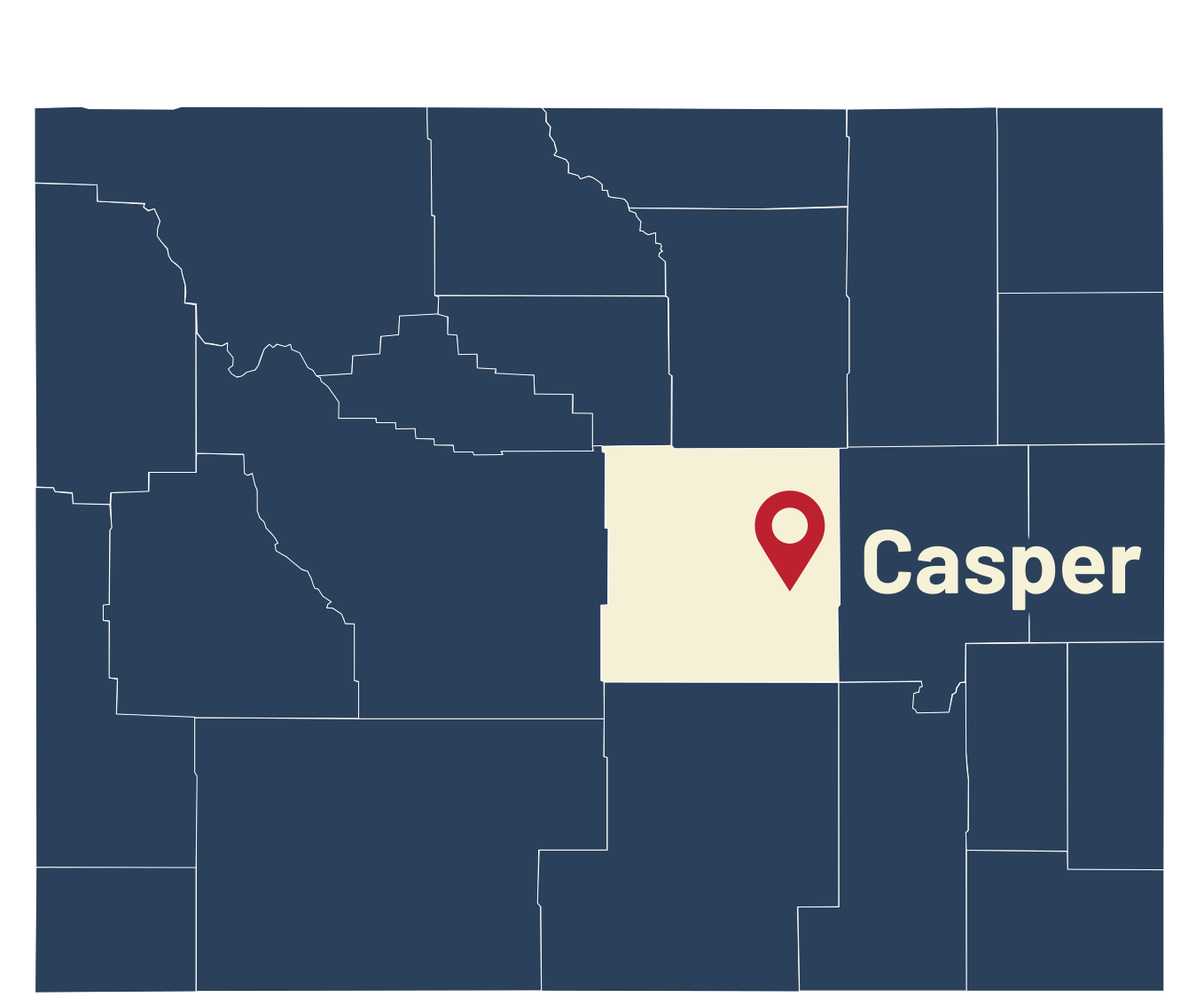
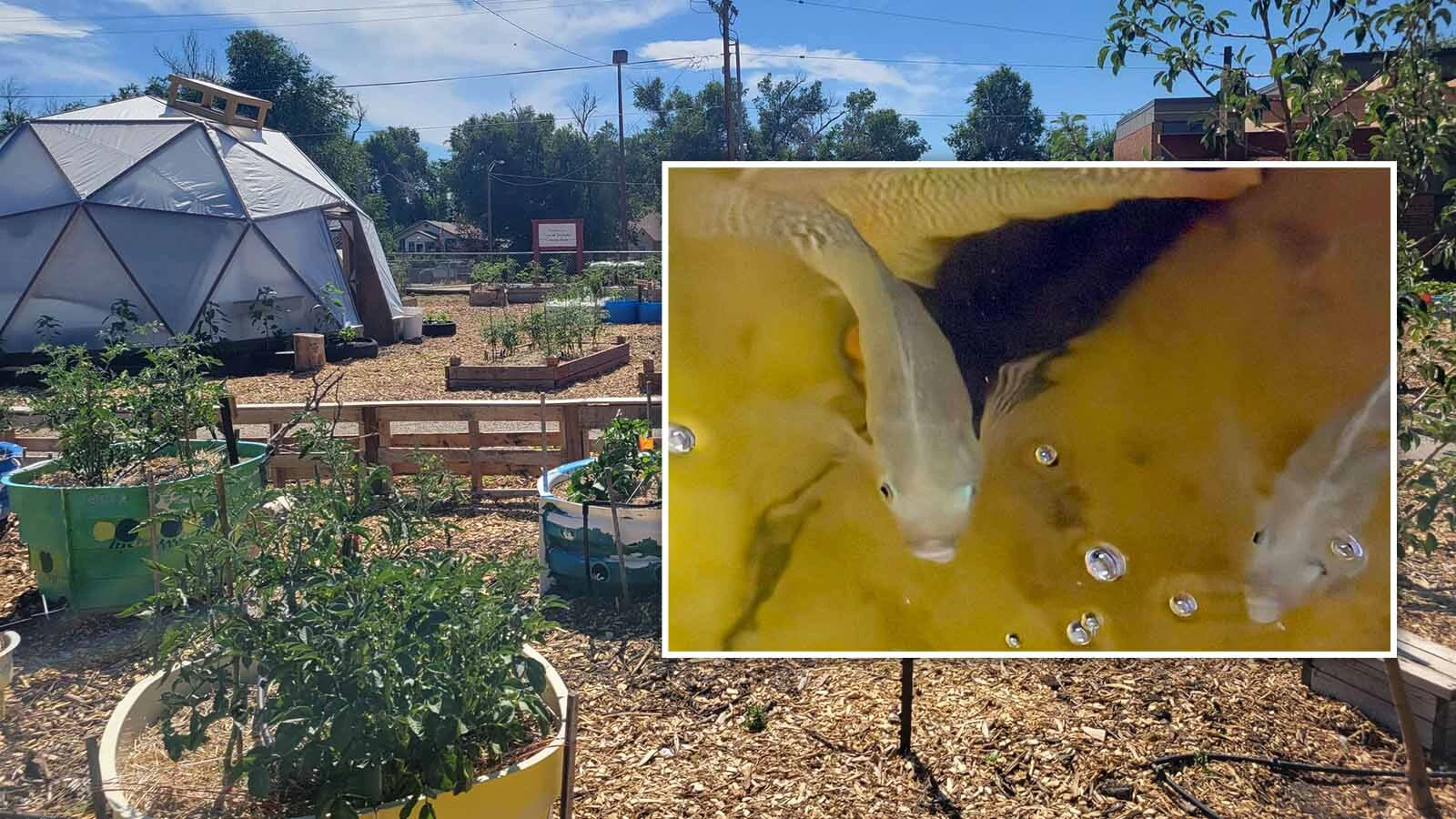
A Casper farm is turning fish poop into food in former elementary school that also operates as a hybrid classroom and gathering space.
Urban Thistle is an urban farm and food hub run through the Casper Housing Authority that doesn’t waste anything — even the waste of its fish.
Inside Urban Thistle's brick walls, program director Jamie Purcell gives a guided tour through the lobby, where the smell of fresh coffee drifts through the entryway.
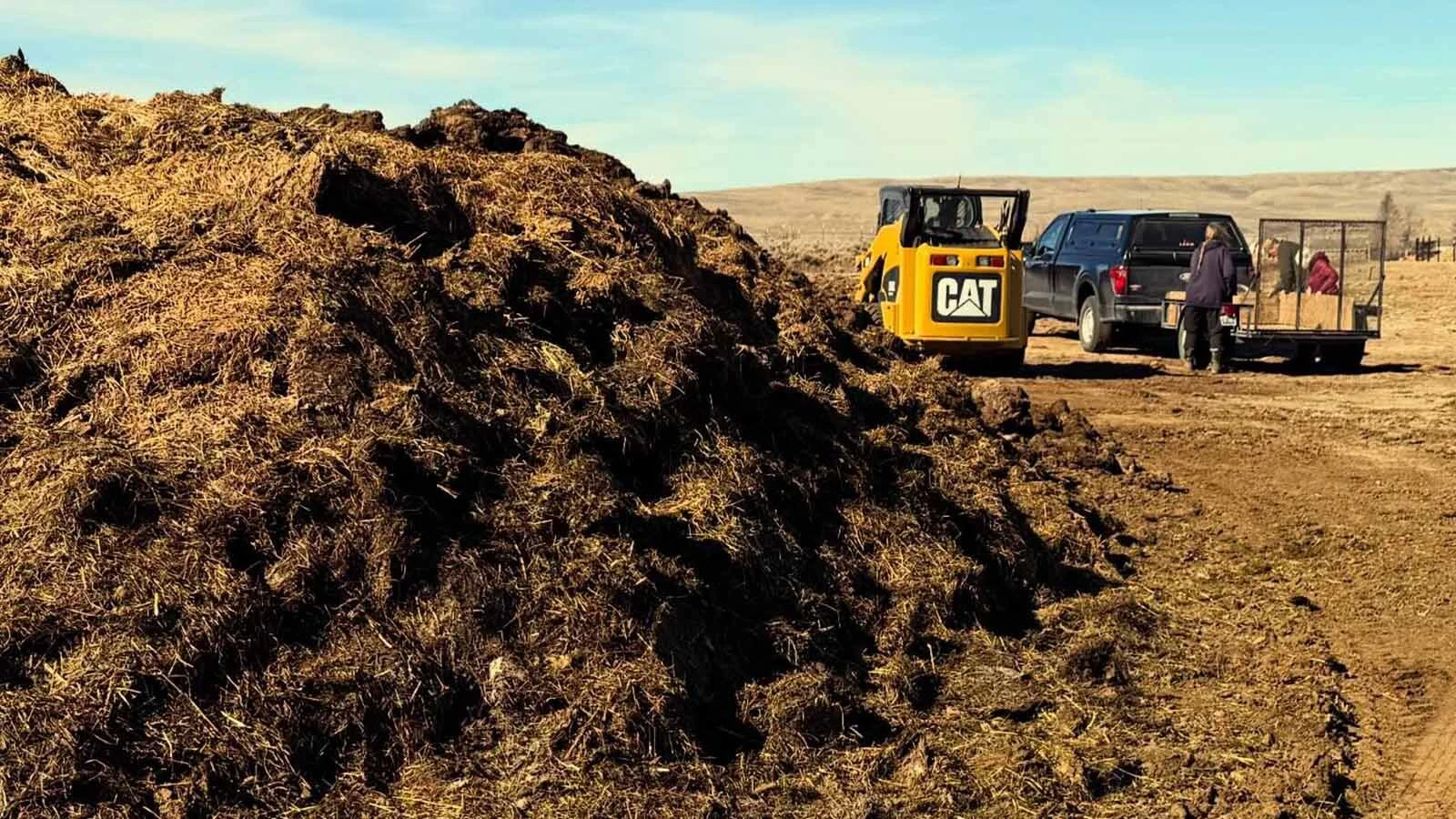
The grounds will go outside with other garden scraps and dumped into a compost pile to be reused later in the growing process.
Nearby, volunteer Diane Edwards carefully transplants tarragon seedlings into larger containers.
She says they won’t go outside until June 1 — a hard rule in Wyoming gardening — even if the recent stretch of warm central Wyoming weather makes it tempting to plant early.
Down the hall, the aquaponics room hums with the steady vibration of water pumps.
Bright green ginger sprouts and stalks of hot pink chard glow under LED grow lights. About a dozen plants sit anchored in gravel beds, hovering above large fish tanks below.
Each morning at Urban Thistle, the day begins with feeding the tilapia that quickly rise to the surface of their tanks expecting breakfast.
From there, staff carefully monitor water temperature, pH, and nutrient levels like ammonia and nitrates to keep the system in balance, troubleshooting anything from clogged filters to failing pumps before moving on with the rest of the day’s farm work.
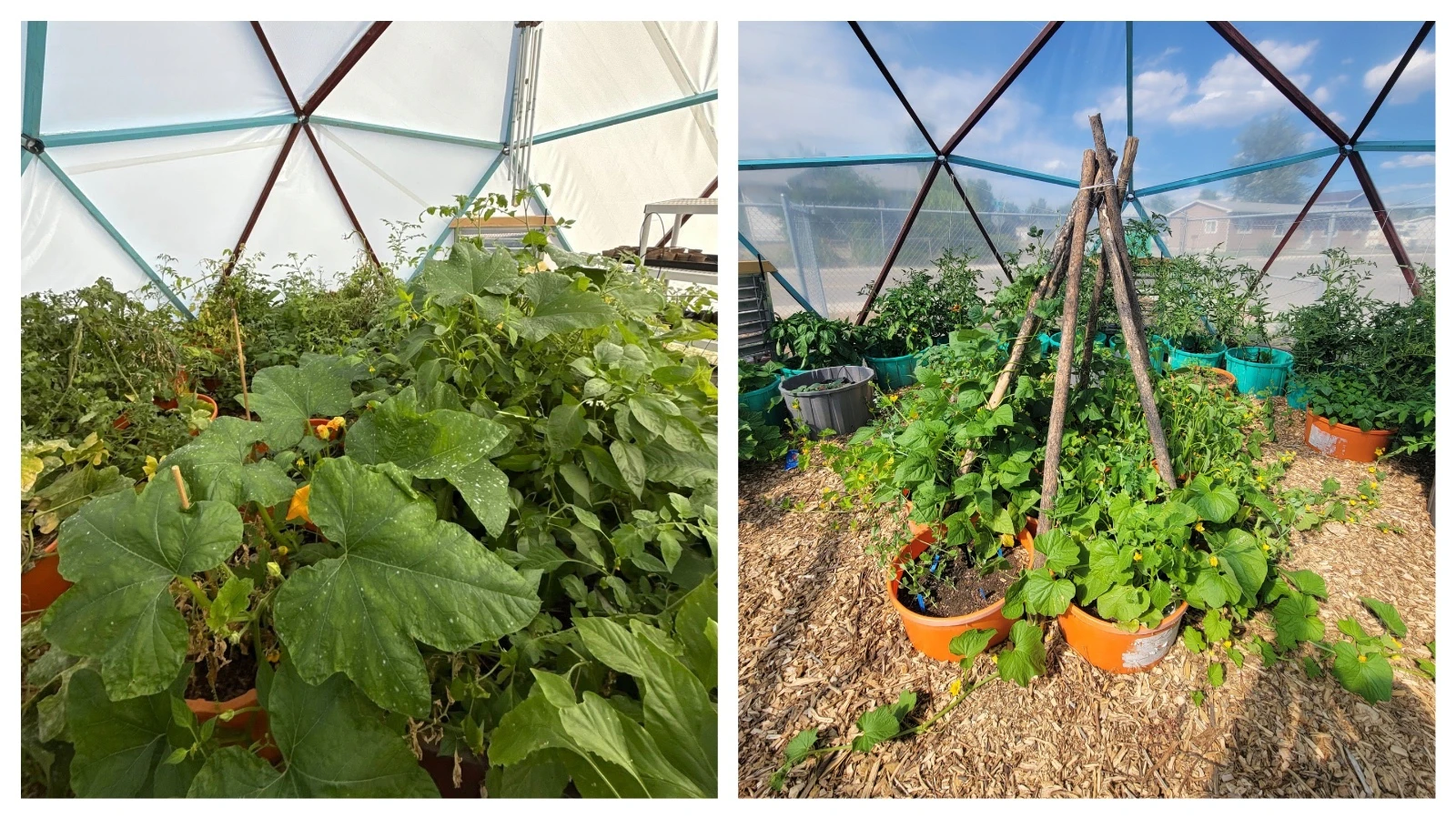
‘Jurasic’ Chard
Urban Thistle acquired the aquaponics systems through a donation, and staff have been learning how to run them ever since.
Purcell said the tilapia swimming below the plants are hardy fish well suited for the setup, and some of the larger ones are nearly ready for harvest.
Alongside tilapia, staff are raising a mix of crops including chard, spider plants, cabbage, Brussels sprouts, ginger and kale, focusing on hardy, low-maintenance plants that can thrive in a balanced aquaponics system.
Because the project is still relatively new, the team says they are learning as they go and experimenting to see what performs best.
One pleasant surprise has been the chard, said Purcell, which has grown to what they jokingly describe as “Jurassic” size — especially welcome during the winter months — while the Brussels plants have produced strong vines but little in the way of actual sprouts so far.
Although the aquaponics system is relatively new and has yet to generate a measurable harvest, the farm's hydroponic towers are filling boxes with nutritious food.
Purcell said staff recently harvested about 80 pounds of greens, which were distributed through the Casper Housing Authority CARES Pantry Program for local tenants, with additional produce donated to the nearby Holy Cross Food Bank.
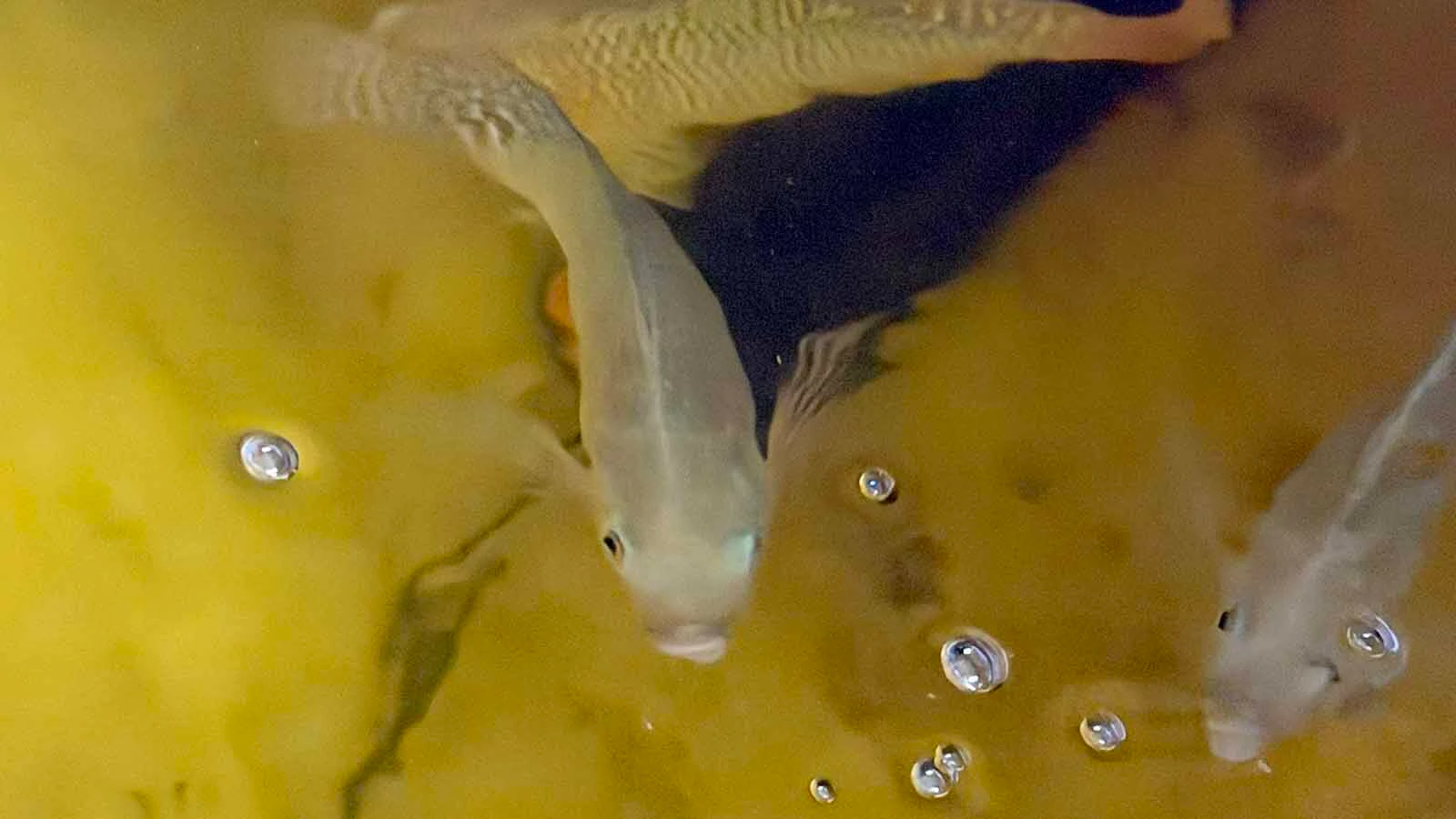
Urban Thistle doesn’t waste anything at its operation in a former north Casper elementary school. That includes the poop from the fish it raises, which becomes fertilizer that’s growing rows of “Jurassic” sized leafy greens. 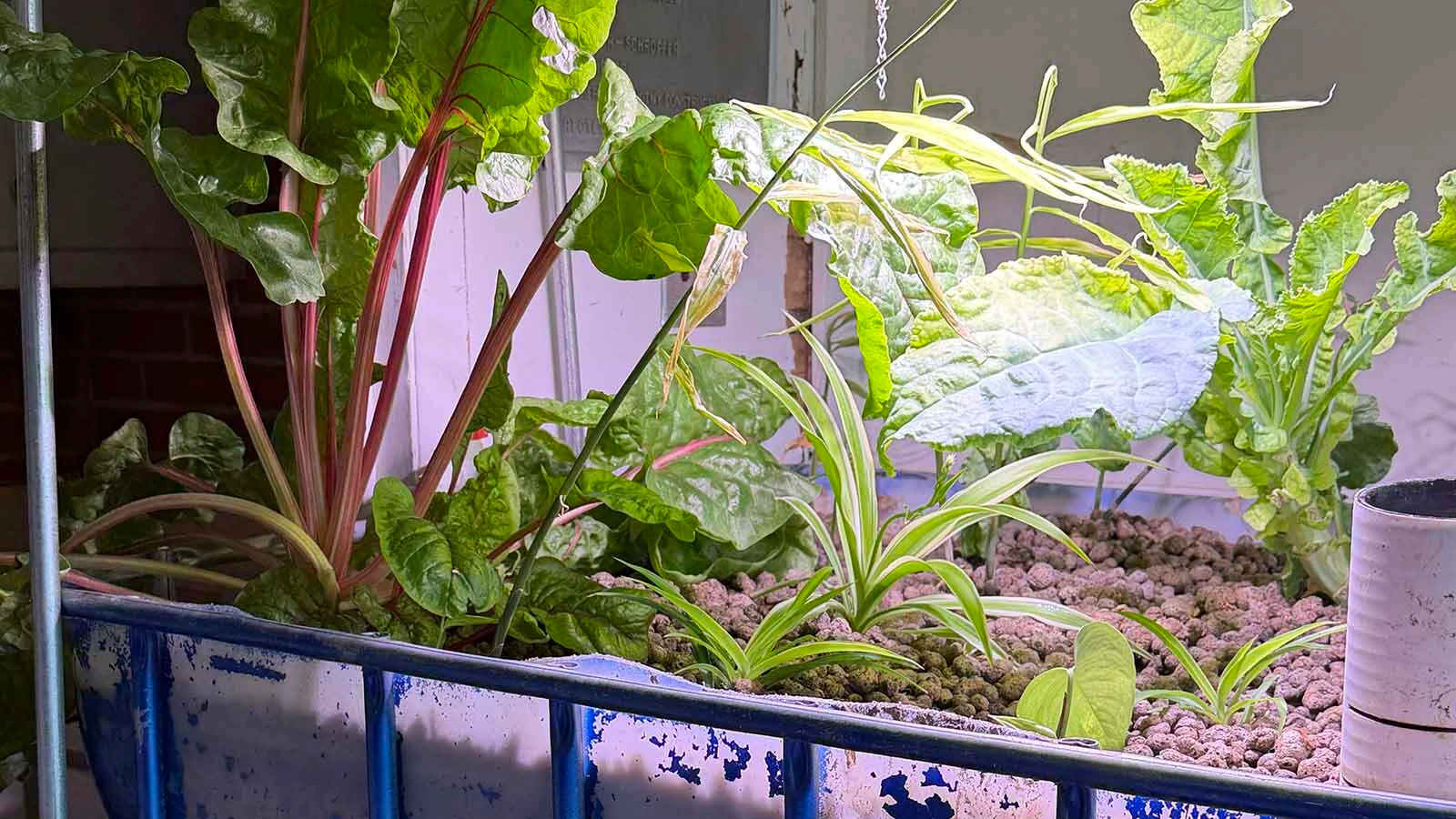
Urban Thistle doesn’t waste anything at its operation in a former north Casper elementary school. That includes the poop from the fish it raises, which becomes fertilizer that’s growing rows of “Jurassic” sized leafy greens. 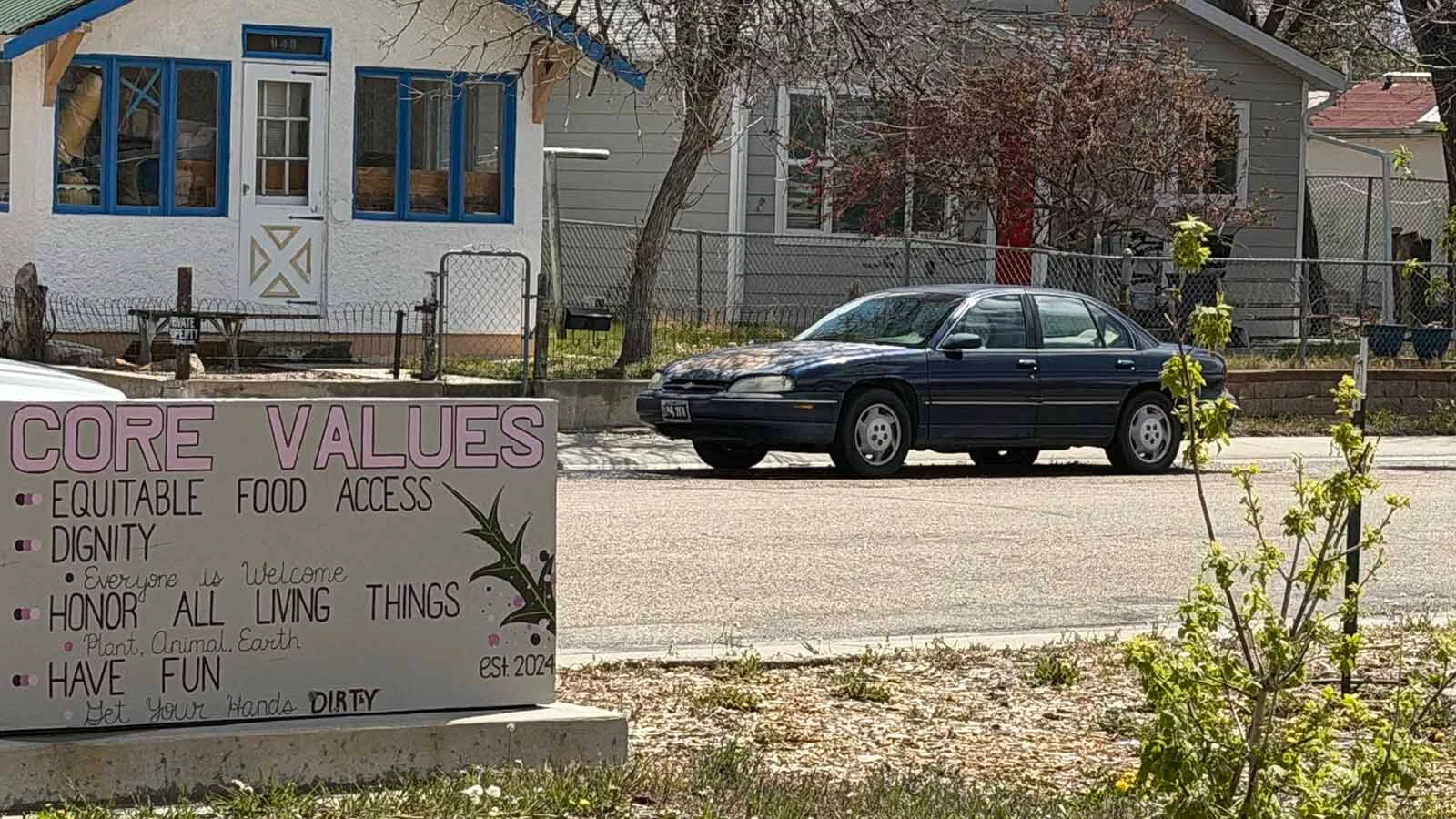
Urban Thistle doesn’t waste anything at its operation in a former north Casper elementary school. That includes the poop from the fish it raises, which becomes fertilizer that’s growing rows of “Jurassic” sized leafy greens.
Fish Poop
Fish poop is the key to the whole operation.
Fish naturally produce nutrient-rich waste that becomes fertilizer while the plants simultaneously filter and clean the water before it cycles back into the tanks.
The result is a soil-free, closed-loop system that can support multiple edible plants in a relatively small footprint.
That efficiency is one of the reasons aquaponics has gained attention among agriculture experts as a potential way to produce affordable food.
By growing both vegetables and protein in the same system while using fewer resources, the method can help stretch food budgets and make local production more sustainable.
Behind the scenes, the real work is done by tiny, naturally occurring bacteria that act as middlemen between fish and plants.
When fish produce waste, it shows up as ammonia, which can be harmful to the fish and isn’t something plants can use right away.
The bacteria step in and break that waste down, converting it into nitrates — a form of nutrients plants can easily absorb to grow leaves and stems.
The process is known as the nitrogen cycle, and it happens naturally in lakes, rivers and healthy soil.
At Urban Thistle, it’s simply being harnessed indoors to keep the system balanced and productive year-round.
Evolving System
The idea for the aquaponics project grew out of a practical challenge: growing food through Wyoming winters can be expensive, especially when traditional soil gardens require large amounts of heat to stay alive.
By shifting to water-based growing systems and stacking plants vertically, the farm can focus energy where it matters most while using existing indoor space that is already climate controlled.
The system is still evolving, and daily operations involve careful monitoring. Each morning begins with feeding the fish, followed by checking water temperature, pH levels and nutrient balance.
Pumps and filters require regular attention, and even small problems — like a clogged line or failing motor — can affect the entire system.
"It was a challenge learning how to manage a bell syphon so it worked properly this is the thing that allows the grow beds to fill up and drain in order to allow the roots to “breathe," said Purcell.
"You have to have the right flow of water to each grow bed and that flow can be affected by the pump’s performance, or the filter, or so many variables that learning how to get everything balanced has been a big learning curve — but today we feel we have mastered the challenge,” she added.
Despite the learning curve, the farm has already started putting food into local hands.
"Kids are always excited to see the system and make a face when you encourage them to try a leaf from one of the plants,” Purcell said. "But once they take a bite and realize the plant isn’t 'fishy' they are excited."
Growing Community
At its core, Purcell says Urban Thistle sees gardening as more than just growing food, it’s about growing community.
Leaders say the farm is designed to be a shared space where neighbors can gather, volunteer, learn practical skills and build connections with one another.
Through hands-on workshops, school visits and volunteer opportunities, the organization hopes to teach people how food is grown and give them the confidence to produce some of their own.
The long-term vision is to create a place of pride for the neighborhood — a welcoming hub where families can wander the gardens, ask questions, share knowledge and work together toward better food access, healthier lifestyles and a stronger sense of community,” Purcell said.
Purcell said the collective work of the Urban Thistle Team is to build a foundation of food access for the north Casper neighborhood.
"We hope that we are doing that work every day and that it continues to build each year, making this farm the community’s,” she said.
Kolby Fedore can be reached at kolby@cowboystatedaily.com.