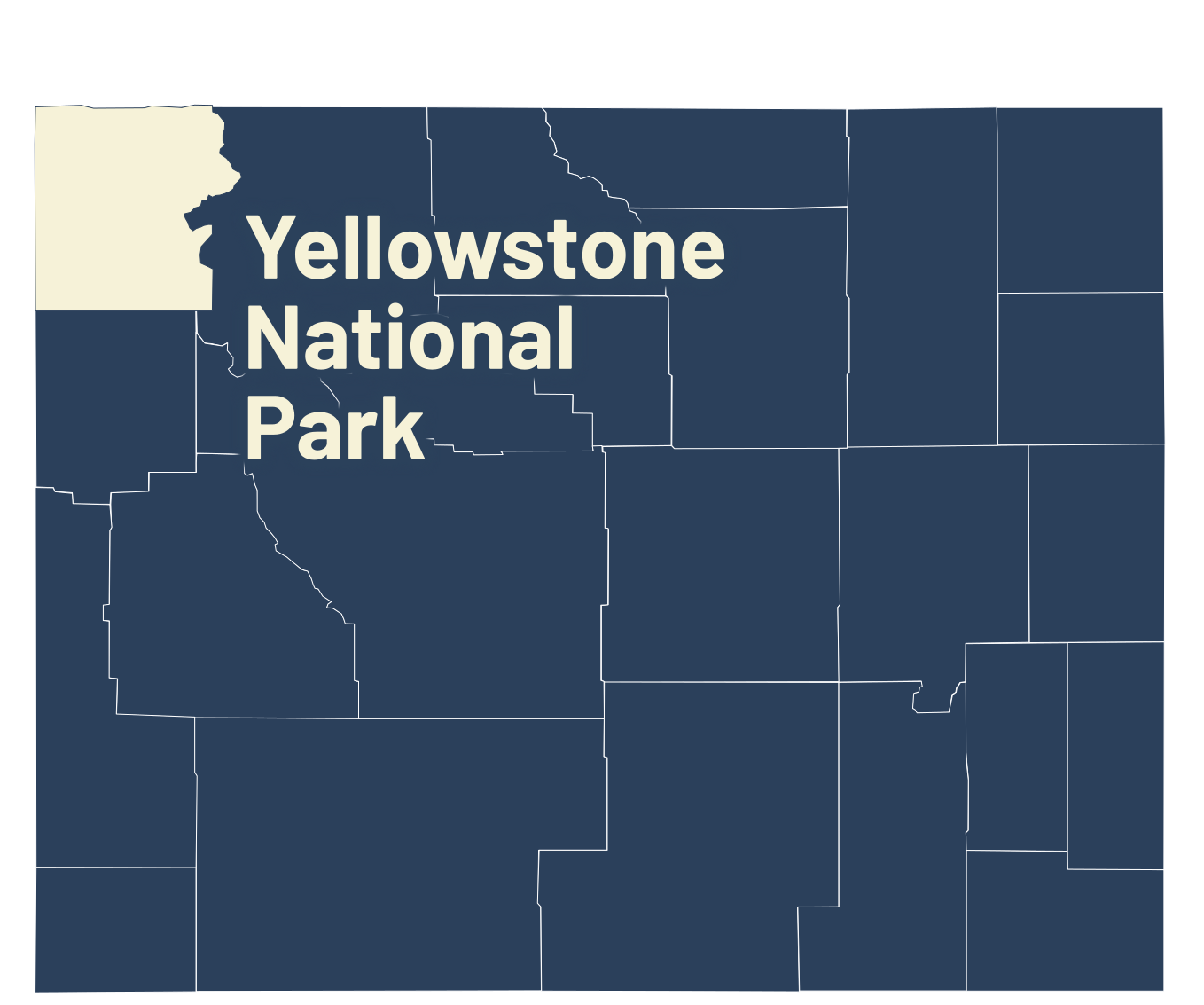
Scientists are still monitoring a Chicago-sized bulge in Yellowstone National Park. The ground across a 19-mile stretch of the northern rim of the volcano’s caldera started rising in July 2025 and continued to grow into 2026.
Now, it appears to be done expanding and hasn’t grown in months, but the bulge is still there.
“The inflation abruptly stopped in January,” said Mike Poland, scientist in charge of the Yellowstone Volcano Observatory. “It's there. It's just not growing.”
This continues the ongoing rise and fall of what’s called the Norris Uplift Anomaly (NUA). It’s not an indication of an imminent, apocalyptic eruption of the Yellowstone supervolcano, but it’s got Poland and other volcanologists excited.
“It's a pretty dynamic feature,” Poland said. “It points to the importance of having a dense monitoring network throughout Yellowstone, because it's not just about the caldera itself. There are other places that can rise and fall.”
Area Of Anomaly
The Norris Uplift Anomaly is a well-documented phenomenon between the Norris Geyser Basin and Gibbon Falls. The same spot has been rising and falling for decades.
Poland said the current bulge is just the latest in a series of NUA events over the last 30 years, and possibly for centuries past. It was first observed and documented during an event that spanned from 1996 to 2004.
“It rose almost 5 inches and then subsided,” he said. “This seems characteristic of this particular feature. Every few years, we have an indication that it's started to uplift, maybe only a centimeter over the course of a few months, and then it stops.”
The next NUA event was observed between 2013 and 2020. The ground in the same area rose about 3 inches before fully subsiding by 2022.
In July 2025, a new uplift was detected by continuous GPS stations. A slow but steady bulge in the earth was accompanied by an increase in earthquakes in the vicinity.
The bulge kept growing until it stopped in January. The total rise remains less than an inch.
“Based on the GPS data, it popped up by a couple of centimeters and then leveled off,” Poland said. “It hasn’t done anything since.”
It Goes Deep
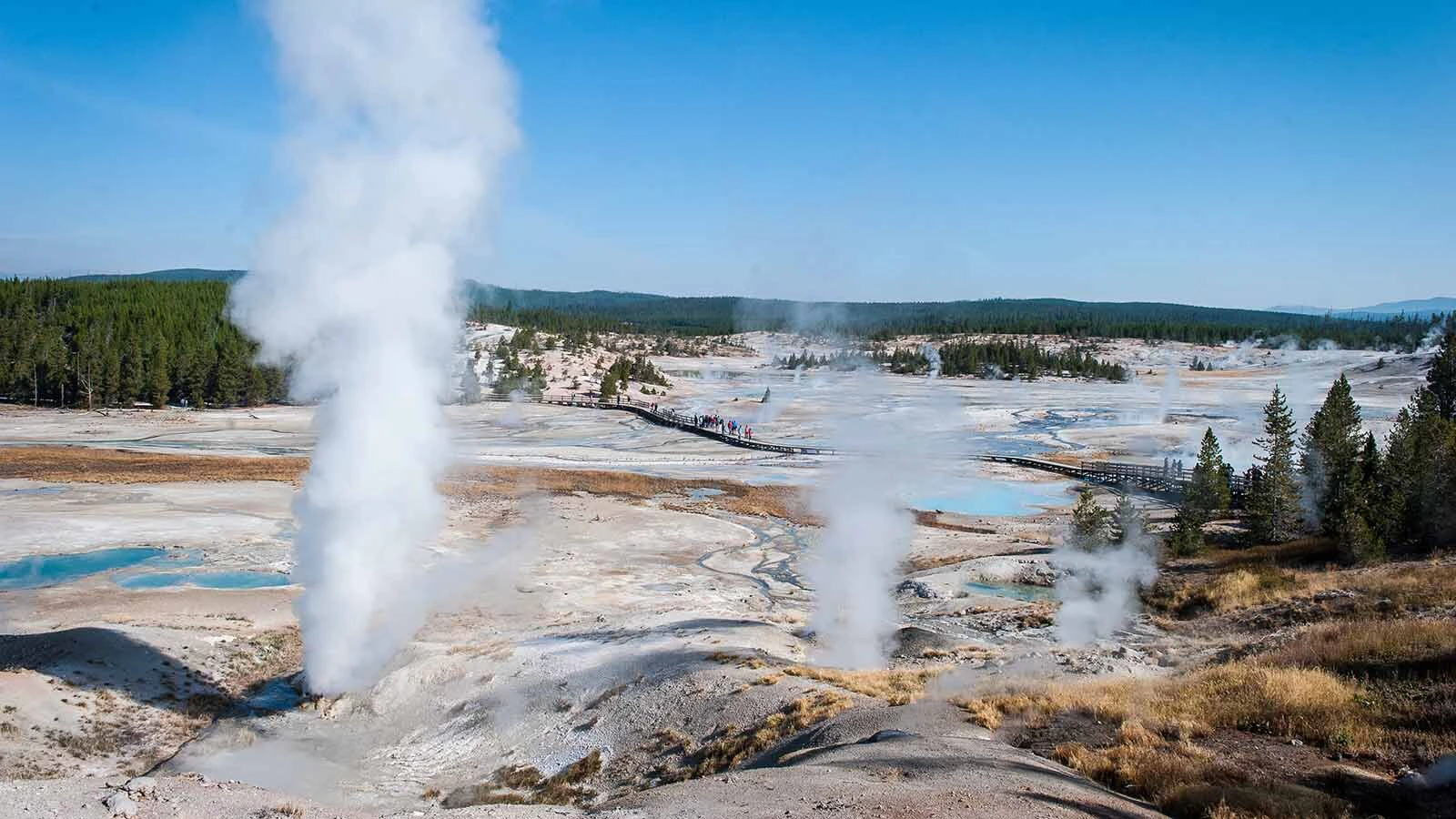
The NUA is a potent reminder that Yellowstone sits atop an active volcanic system. Poland said its source is the movement of fluids deep underground.
“The uplift is reflecting some fairly dynamic processes that are happening 10 miles deep,” he said. “We know fluids are moving back and forth through a lot of mountain-range frontal faults along a pretty active corridor from the NUA all the way up north to Paradise Valley, Montana.”
Poland said the evidence of this active corridor of fluid movement is evident on the landscape.
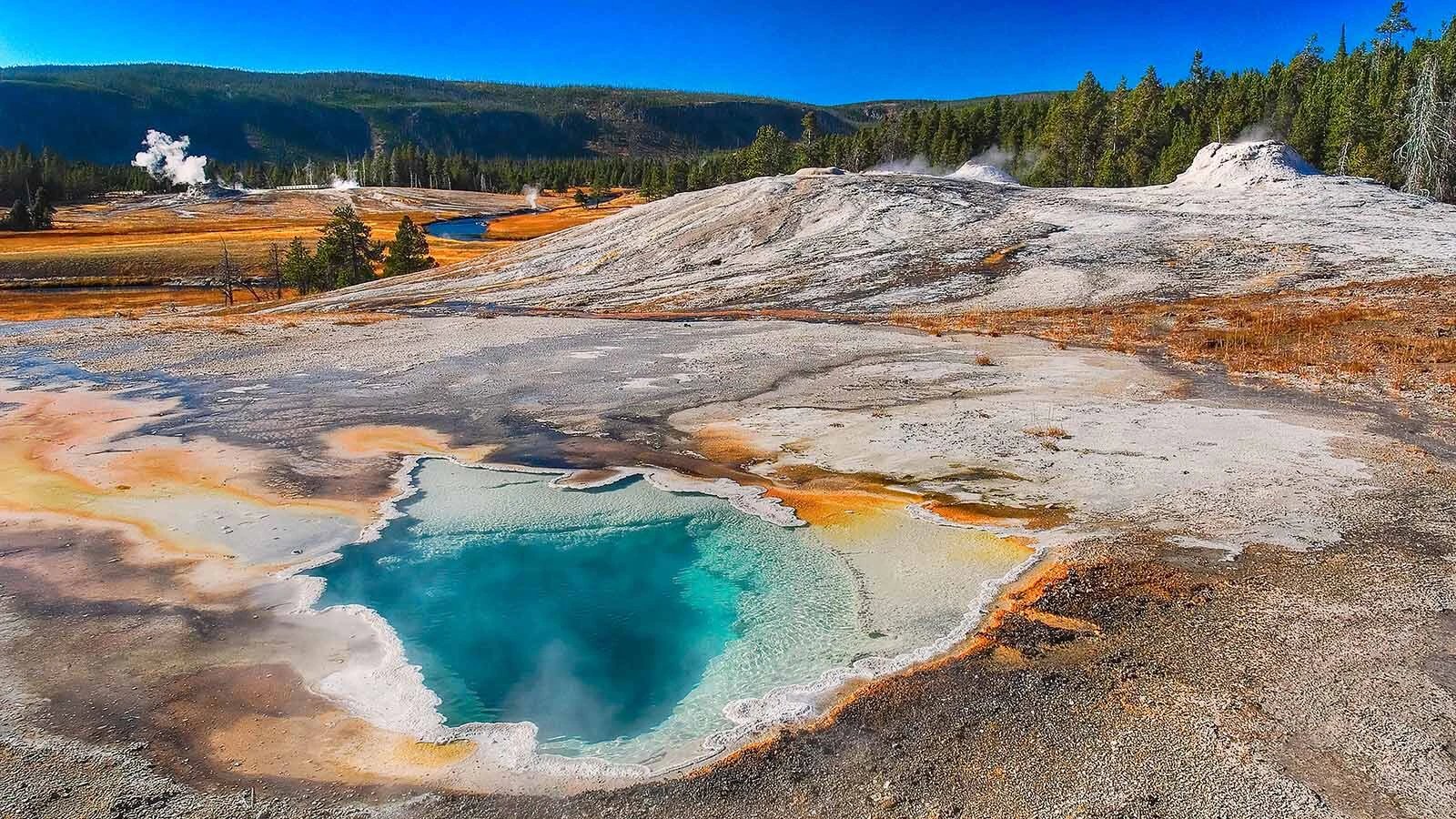
Nearly all the hot springs in the northwest corner of Yellowstone, from Terrace Spring to Mammoth Hot Springs, occur along it.
It’s speculated that the NUA may be caused by fluid transport along the series of faults connecting these thermal features and basins.
Poland said there’s no “strong evidence” that this is the source of the NUA, but given its location and the abundance of faults and hydrothermal activity in northwest Yellowstone, it’s a compelling idea.
“The NUA may be the starting point for this fluid pathway,” he said.
Then there’s the other fluid that might be contributing to the NUA. The hotter, more frightening fluid.
Not That Deep
There are two bodies of magma under Yellowstone. One is within 10 miles of the surface, while the other is within 30 miles.
Considering that the source of the NUA is believed to be around 10 miles deep, the most likely source of the bulge is the movement of magma.
“That’s quite a bit deeper than we might expect the hydrothermal system to be acting, so the accumulation and withdrawal of magma is a likely source,” Poland said.
Where there’s magma, there’s always the potential of a volcanic eruption. However, under Yellowstone, that potential is incredibly low.
A 2025 study determined that Yellowstone’s magma chamber is mostly solid rather than melt. There’s still enough liquid melt to cause a stir, but not enough to breach the surface with explosive energy.
Poland, once again, is reassuring the world that the NUA isn’t an indication of an imminent eruption that could end humanity.
“If there was actually a chance that this was a magmatic system that was about to erupt, the deformation would be much shallower and accompanied by other huge changes,” he said. “We know there's a magma chamber, so it's not surprising that there's stuff moving around down there.”
Let’s Do That Again
Yellowstone’s Chicago-sized bulge hasn’t done anything since January. The HUA doesn’t seem poised to grow into a Tucson or Virginia Beach-sized bulge.
According to Poland, the bulge might already be subsiding. That’s difficult to determine since it would be happening extremely slowly.
“We haven't seen any subsidence in this feature since it stopped rising, and it would take us a while to see that because it's happening so slowly.”
If it is subsiding, that’d be pretty standard for what’s known of the long-term trends of the NUA. In all likelihood, the same thing will happen again in the not-too-distant future.
What makes Poland and his fellow scientists so satisfied is that they’ve been able to observe and study the bulge in real time. That’s a testament to the sophisticated technology that keeps a constant eye on big and small changes in Yellowstone.
“The NUA has been doing this for a very long time,” Poland said. “The difference now is that we have the technology to see it, both from space using radar satellites and from GPS stations sitting on the ground. It allows us to see how these things change over time in really subtle ways.”
In fact, it’s so subtle that it’s nothing for the rest of the world to worry about. Even if the NUA is a result of volcanic processes, it’s not the processes that have resulted in the supervolcanic eruptions in Yellowstone’s past.
“We're not worried about much in the way of eruption because the signs aren't there,” Poland said. “The NUA is big, but the uplift is very, very small, and we can see all these subtle features that might otherwise be missed.”
Andrew Rossi can be reached at arossi@cowboystatedaily.com.