
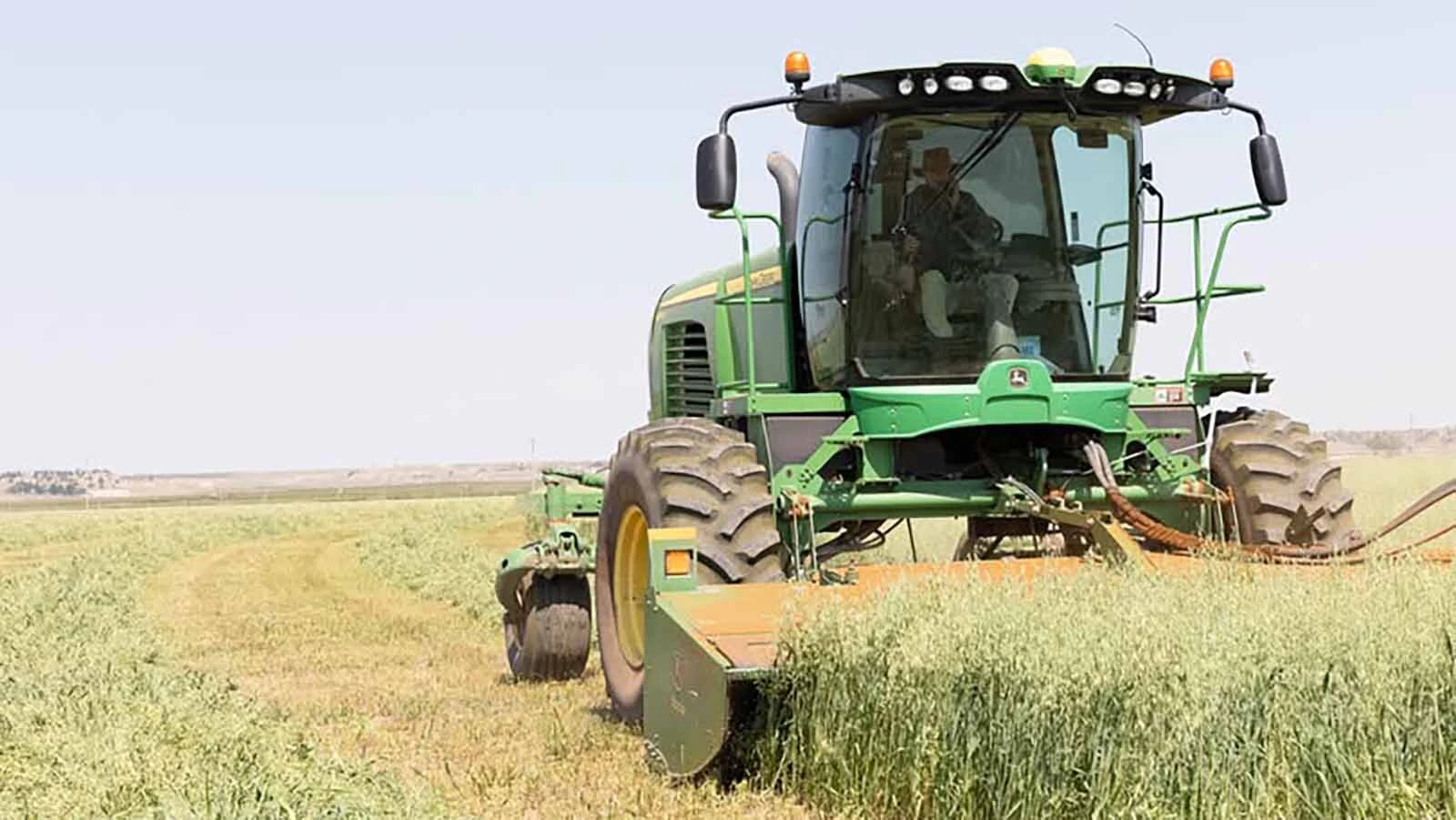
Skyrocketing costs of fertilizer because of supply chain disruptions caused by the closure of the Strait of Hormuz has led Wyoming ranchers and farmers to rethink how they will do business this year.
A recent survey by the American Farm Bureau Federation shows that 70% of respondents reported they can't afford all the fertilizer they need for this year’s operations.
“Fertilizer is so high priced it’s not feasible to put it on,” said Todd Fornstrom, a Laramie County farmer and president of the Wyoming Farm Bureau Federation.
Fornstrom said the cost of fertilizer is so high that it is leading to farmers not only seeing no profit, but losses.
As a result, farmers and ranchers are choosing not to apply fertilizer to their crops this year, he said.
Meanwhile, widespread drought is putting a knot in the spring planting season and causing farmers and ranchers to think hard about where their livestock feed will come from.
Aiden Johnson, the founder of HayWire Ag LLC, a website that tracks weekly hay prices according to USDA auction data, said that “Wyoming is essentially sold out of hay.”
Alfalfa cubes are trading at $375-$380 per ton, he told Cowboy State Daily in an email.
“When a state that normally exports hay runs dry, buyers start pulling from Nebraska, Colorado, and Montana, and you're already seeing prices climb in those markets too,” he said.
A Time to Pivot
Fornstrom runs a farm and cattle and sheep feedlot. He typically grows corn, alfalfa and wheat.
But this year’s double whammy of high fertilizer costs and lack of moisture is causing him to change what he will grow and sell.
Fornstrom said he plans to grow grass and alfalfa, along with oats, barley and millet — what he called “short-season” crops.
“We will change what we’re planting,” he said. “It will be a lot less yield and not as high quality.”
Fertilizer increases yield and quality of crops and is especially crucial in places with marginal soil, like Wyoming, he said.
“We don’t have the deep, black soil like Iowa, Illinois or Indiana,” Fornstrom said. “Our soil really needs the nutrients.”
Cattle ranchers have been enjoying high prices for beef thanks to the lowest cattle supply in 75 years. But, Fornstrom said, ranchers are having to put the money they make on cattle sales into buying feed that this year is especially hard to grow.
“It’s kind of the perfect storm for agriculture,” he said.
Maureen Tescher operates Udder Chaos Farm, a small dairy farm near Casper, and Milk House Farmer’s Market in Mills.
She buys hay locally and said she's thankful that the seller had not increased hay prices — yet.
Tescher said that last year, she spent about $35,000 on hay, which she buys in square bales that weigh 800-900 pounds each.
She said if she were to buy hay from someone else, she would likely pay closer to $50,000.
“A lot of people are trying to keep costs down, so you’re seeing a lot of farms not fertilizing the way they used to,” she said. “They can’t afford it.”
Tescher recycles manure as her main source of fertilizer — a practice she said she is seeing other farmers do more this year. Putting livestock on hayfields adds natural fertilizer.
Johnson said anyone who hasn't secured summer feed supply will be competing for limited inventory at higher prices.
Not Just Fertilizer
Since the closing of the Strait of Hormuz, much of the agriculture industry’s focus has been on high fertilizer costs.
Fornstrom pointed out costs are high with everything.
“It’s diesel, electricity, tires,” he said. “There’s not a lot to like out there for the farming industry right now. It’s going to be a rough, long year.”
Tescher said she has noticed an increase in the cost of filters, filter caps, new lines, inflations, and cleaning supplies over the last few months.
“I stocked up last year on most everything since bulk saves in the long run, but that overstock is running out and I hate to see the bill when I reorder,” she said.
The conflict in the Middle East has also sent fuel prices soaring.
According to the American Farm Bureau Federation, farm diesel prices have gone up 46% since the end of February.
Fuel to run to Gillette for bulk feed costs more for Tescher, and with the cost of feed also being higher, she said she has to increase her prices.
“I know with an increase there will be some customers that cut back or stop getting some products altogether, but running at a loss all the way across the board is worse than losing a few customers,” she said.
Drought
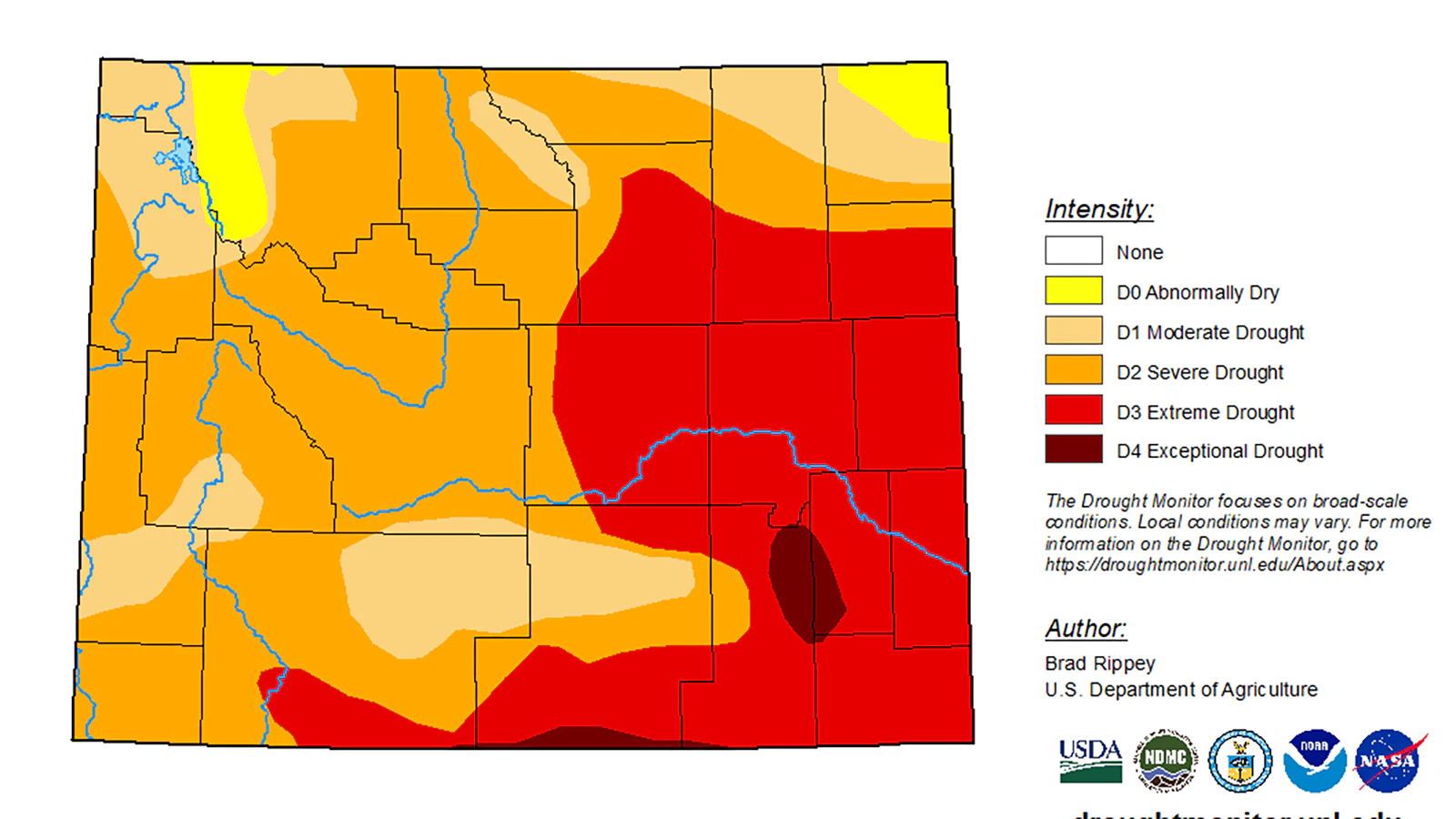
To make matters worse, nearly the entire state of Wyoming is experiencing some form of drought.
Fornstrom said grass is the big issue for farmers and ranchers when it comes to drought in Wyoming.
“That feed is not there,” he said. “The cattle either need feed brought to them or go to places that have feed.”
“Wyoming has gone from being a consistent supplier to having almost nothing available in the span of a few weeks,” added Johnson. "That’s unusual even for a dry year.”
According to the U.S. Drought Monitor Map produced by the University of Nebraska, almost the entire eastern part of Wyoming and a substantial southern portion are in extreme drought, meaning surface water is inadequate for ranching and farming.
In Casper, Tescher said farms and ranches thankfully have no irrigation restrictions, which is keeping hay prices a little lower.
Spikes On Spikes
Fornstrom said the real problem with the data is that all the inputs have spiked – but they spiked from data that was already high.
The price of hay is higher because of this perfect storm, and it is expected to continue its upward trend.
Farming, he said, “is not for the faint of heart.”
Kate Meadows can be reached at kate@cowboystatedaily.com.


