
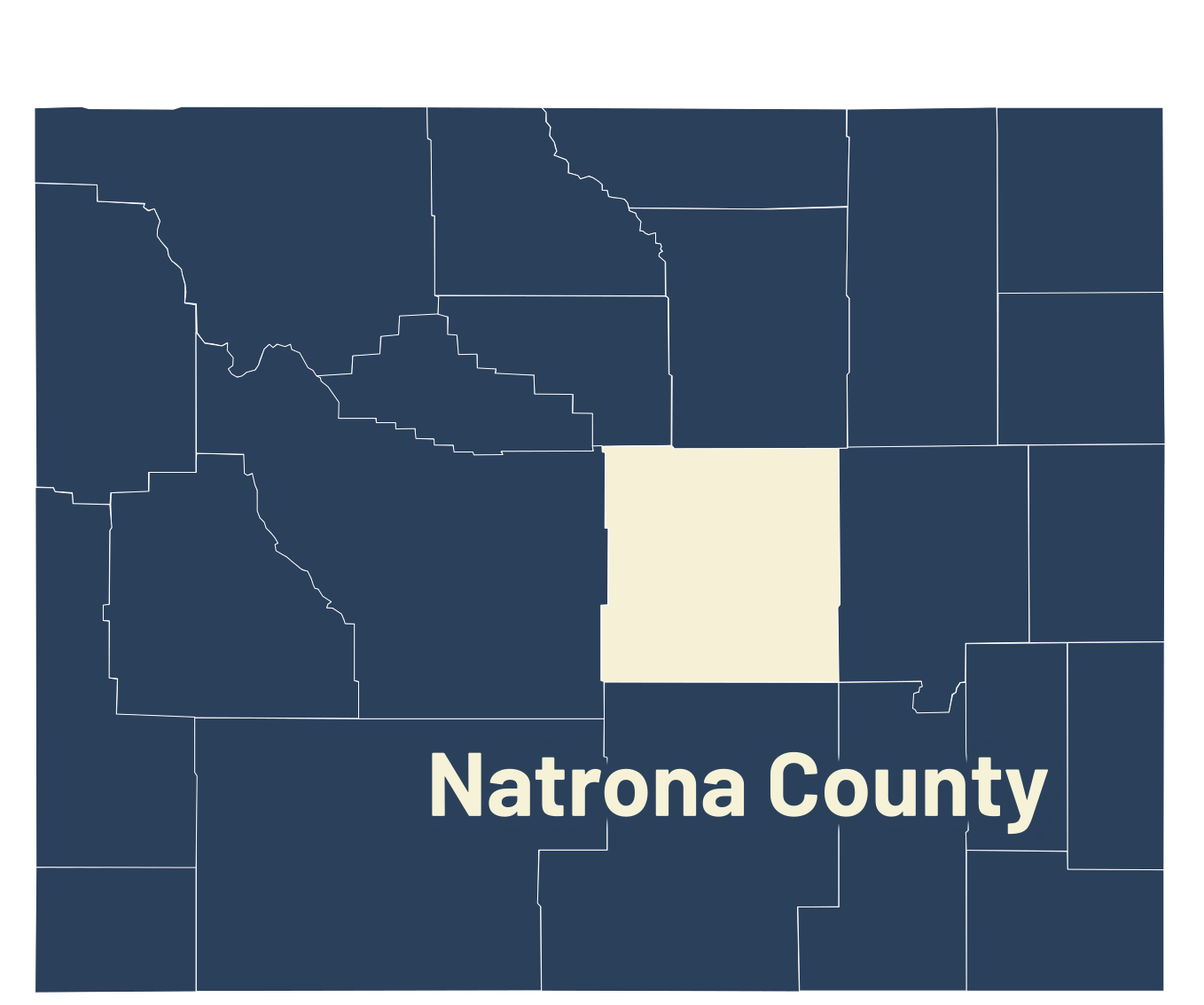
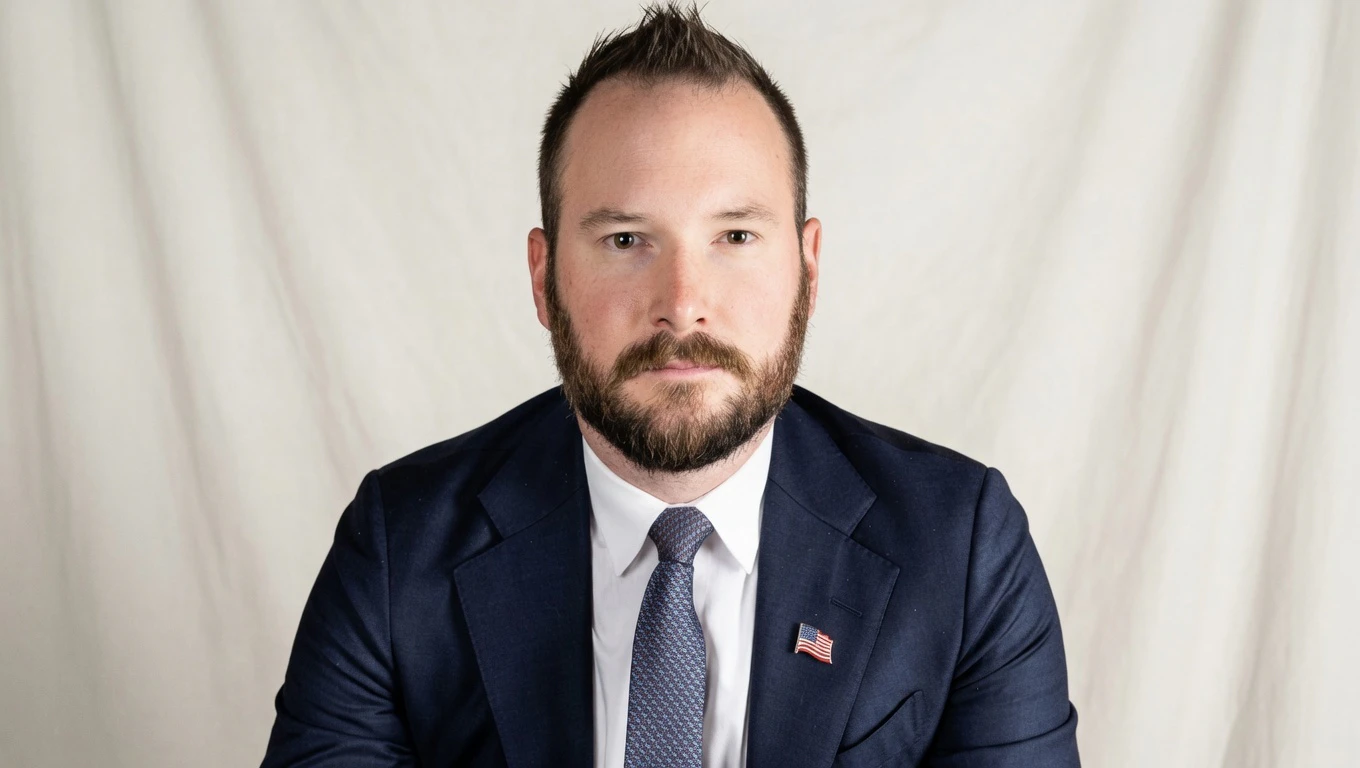
Daniel Forgey is one of four district court judges in Natrona County. He, like all our district court judges, hears civil, criminal, and family law cases covering an eye-watering number of issues. Above all, Judge Forgey is a good man and a beloved member of his family.
No judge, Judge Forgey included, should have to endure threats of violence for applying the law.
It should not need to be said, but Judge Forgey does not deserve to be hanged in the public square or in a dark alley because he applied the Wyoming Constitution in a way with which some vehemently disagree.
In my time practicing law in Wyoming, I have appeared before Judge Forgey countless times. On several occasions, Judge Forgey has ruled against my clients in ways that have weighed on my soul and changed me as a man.
I represented a young man who became like a little brother to me. He did a terrible thing. I asked for leniency for this boy.
Still, Judge Forgey imposed what I believed to be an unconstitutionally harsh sentence.
Never for a second — and, again, it should not need to be said — did I contemplate doing violence to Judge Forgey because of his ruling.
The promise of our singular, beacon-on-the-hill constitutional republic is that our Creator guarantees each person the right to life, liberty, and the pursuit of happiness – free from rogue vigilantism.
In life and in the law, things will not always go one’s way. When we lose or we fail, we have choices.
Those choices, more than any other, define our character. Do we pick ourselves up and find a better path forward? That is, do we learn and grow?
Or do we grovel and complain and lash out at the unfairness of the world and who should pay for our losses? That is, do we regress into the wilderness of our being and cast-off reason and discipline in exchange for rage and violence?
Violence or threats of violence represent the end of reason. The end of deliberation and decision. They serve only to defeat and humiliate an opponent—to shred the ties that bind that opponent to the attacker and, by extension, the community.
The American project, approaching its 250th anniversary, stands or falls with the idea that we solve problems in our community through the exchange of ideas, not gunfire.
We leave our swords outside our tent and resolve our differences with words. Words, not ropes strung hastily from trees. Recall that “We are not enemies, but friends. We must not be enemies. Though passion may have strained, it must not break our bonds of affection.” Divided we will surely fall.
The original sin of Roe v. Wade was not that a group of judges squinted at the Constitution and unearthed a right that did not exist in its text.
The original sin of Roe was that judges removed an intensely personal, spiritual, and moral question from the political process.
Because a muscle atrophies from non-use, our civic muscles to debate, discuss, compromise, and resolve big issues, like abortion, withered to dust because of Roe.
In turn, we traded political discourse for political violence because Roe taught us that all we can do is shout at and villainize each other while judges do the hard work for us.
Post-Roe, we are slowly and haphazardly bumbling our way back towards practicing politics in the real world with real consequences. Real political efforts—the exchange of competing ideas—should be applauded.
To this end, while I disagree strongly with him, I tip my cap to Fred Harrison for continuing to talk about the big issues rather than raise a sword against his opponents.
By overturning Roe, the Supreme Court gifted the nation an opportunity to re-engage one another as companions in the project of democracy.
If we squander this gift, we all lose. Because the alternative is the destruction and deaths of our fellow countrymen through self-inflicted violence.
Like a fire, political violence seeks fuel everywhere and anywhere. While political violence is a stain leaking across the pages of American history, it must be extinguished, not applauded, in every place and in every way.
Maybe Judge Forgey, like any human judge, got some things wrong during his career on the bench. But no one can genuinely say he or any other judge in Wyoming reached a conclusion out of a nefarious scheme to skew the law towards his personal preferences.
As Justice Antonin Scalia once said: “If you’re going to be a good and faithful judge, you have to resign yourself to the fact that you’re not always going to like the conclusions you reach. If you like them all the time, you’re probably doing something wrong.”
Though imperfect, the American justice system surpasses all others because it stands on the bedrock principle that judges do not make the law or warp the law to advance their own personal interests. They apply the law as written, unmoved by partisan interests, public clamor, or fear of criticism.
While losing parties can take only cold comfort from the idea that their judges did not rule against them because these judges succumbed to outside influence, threats, or bribes, the truth is—were our system otherwise—“justice” would only ever arrive for the powerful few.
The strong would do what they can and the weak would suffer what they must. Liberty would be a legacy awarded only to some tribes and their kin; it would not be a promise to all Americans.
I conclude with this. On my drive to the office each day, I pass the Wellspring clinic on 2nd Street in Casper. I see peaceful protesters carrying signs reading: “Pray to end abortion.”
Pray. Not kill to end abortion.
Like those shriveled civic muscles of ours, prayer is an act that takes practice and repetition. Prayer is surely the greatest power we mere mortals possess. I invite us all, as a community, to clasp our hands and close our eyes and pray more.
And pray especially for our perceived enemies. Seek to change their hearts and bring them into the fold. Do not endeavor to destroy or banish them over political differences.
To this end, I am praying for Troy Bray in the hopes that “[t]he mystic chords of memory, stretching from every battlefield and patriot grave to every living heart and hearthstone all over this broad land, will yet swell the chorus of the Union, when again touched, as surely they will be, by the better angels of our nature.”
Ryan Semerad is a trial attorney at Fuller & Semerad, LLC, in Casper.


