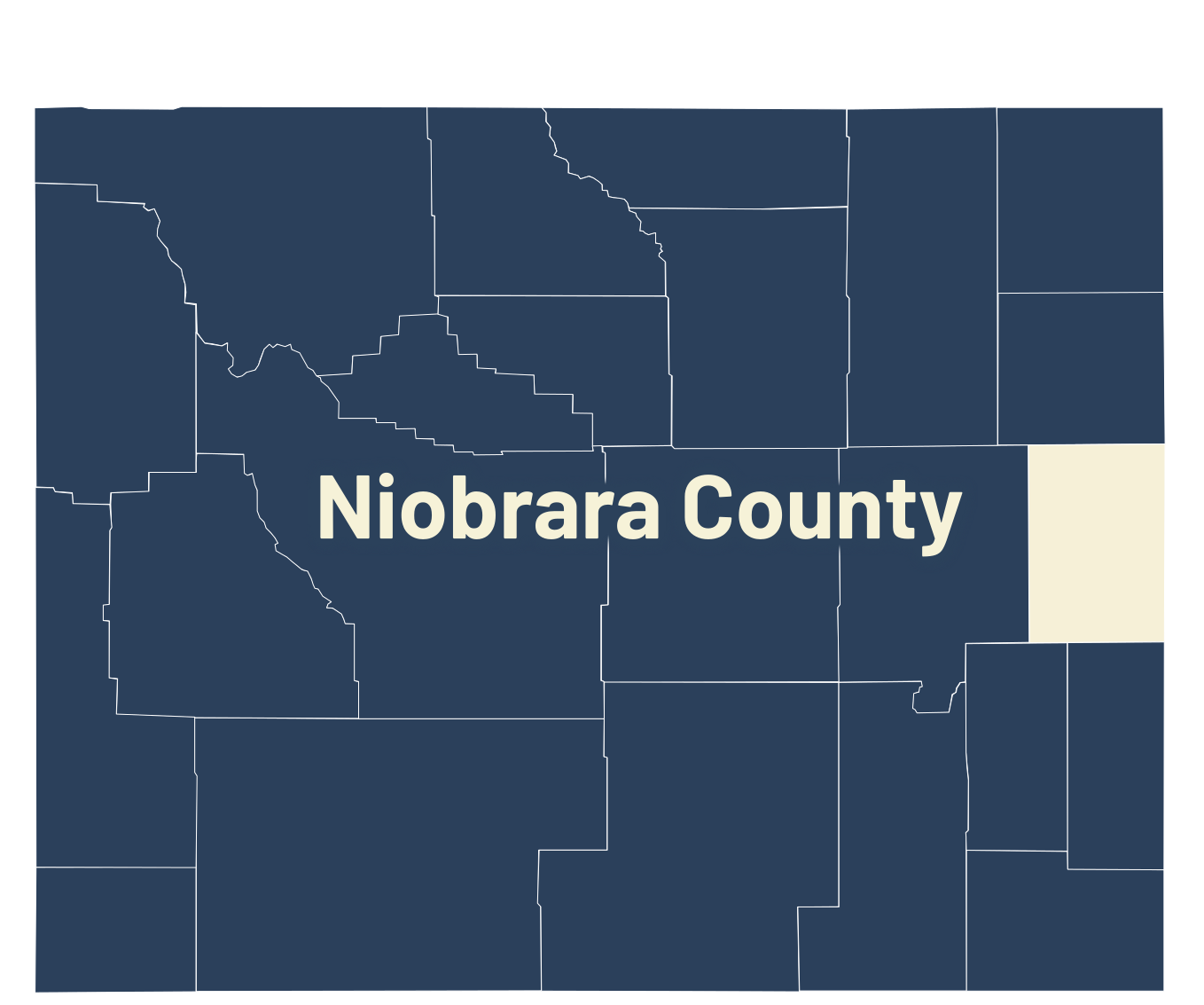
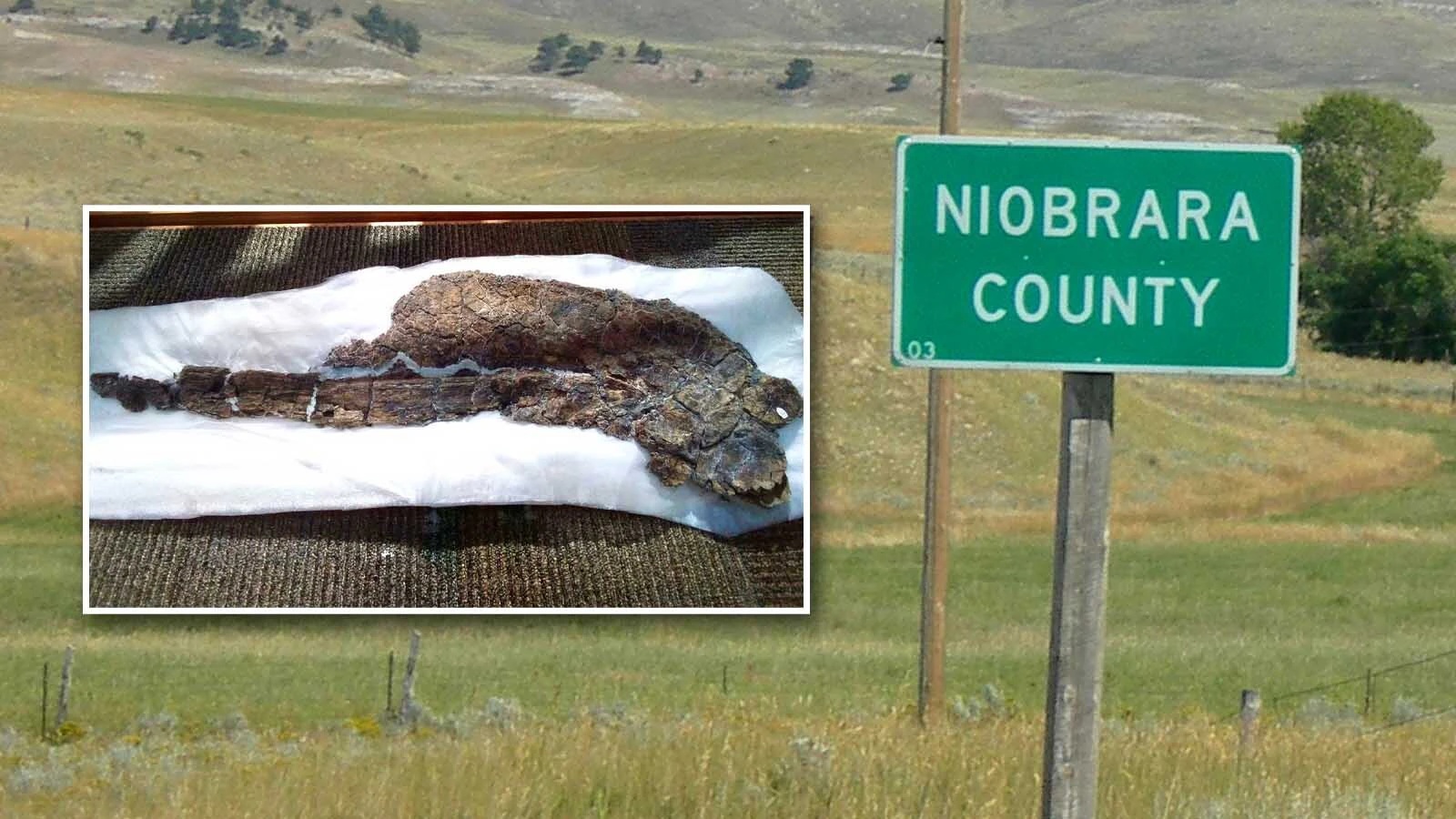
The Tate Geological Museum at Casper College is showcasing a first-of-its-kind fossil from Niobrara County.
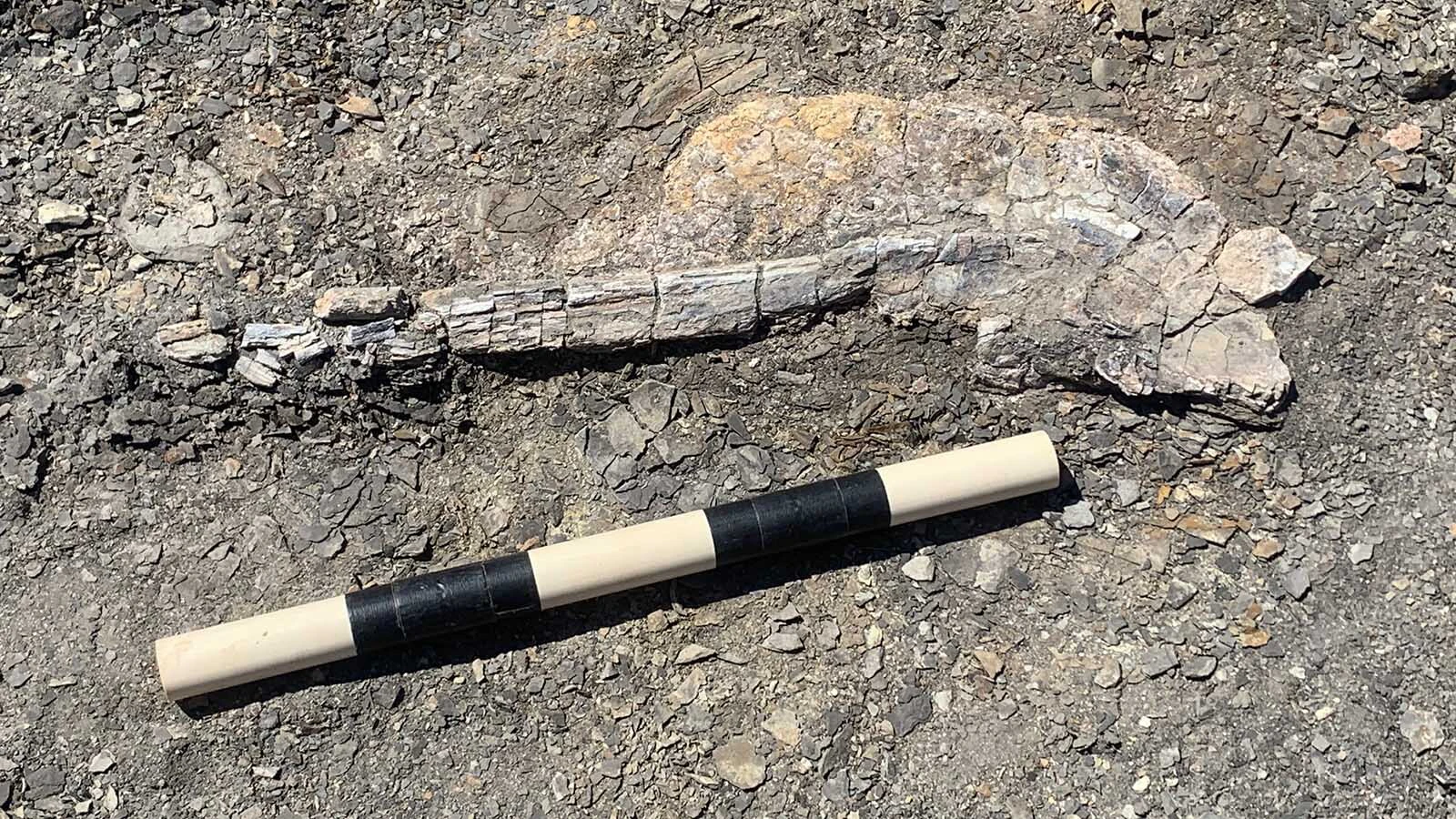
The 2-foot-long bladed structure belonged to one of Wyoming’s extremely elusive giant squids.
According to J.P. Cavigelli, the museum’s collections specialist, this “big chunk of calamari” has tentatively been identified as part of the internal shell of a Niobrarateuthis, a giant squid that lived in Wyoming’s last ocean around 80 million years ago.
“We found it last year,” he said. “If I told you any more, I’d have to kill you and all your readers.”
Cavigelli is very protective of this squid and the spot where it was found because it’s a rare and unique find for Wyoming.
There could be more giant squid and other prehistoric monsters of the deep waiting to be found there.
“It's the last time the ocean was here, according to traditional dogma,” he said.
Monster Of The Not Too Deep
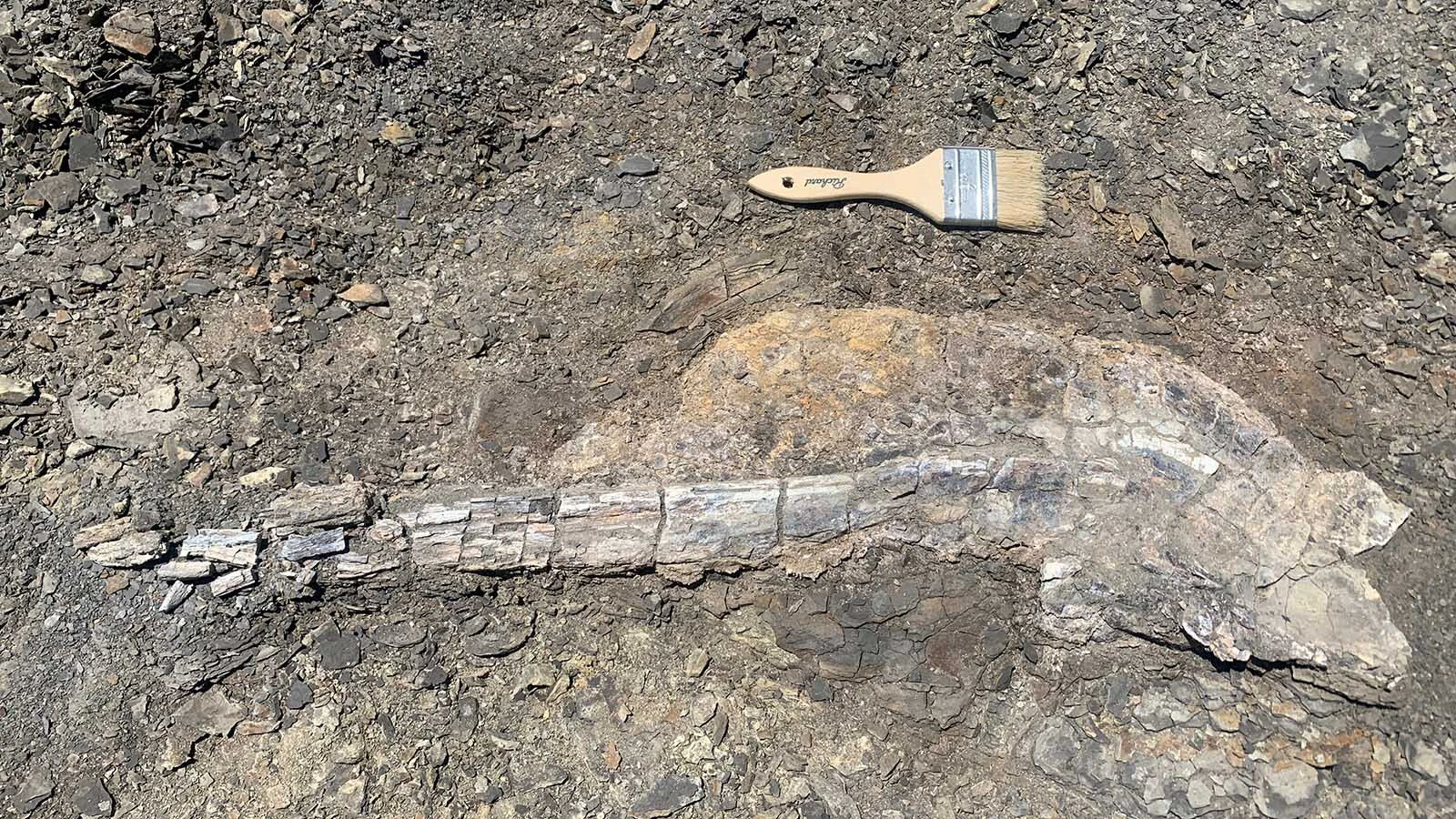
The fossil recovered by the Tate is a partial gladius, the hard bone-like structure inside the otherwise soft bodies of squid.
It’s the same as a cuttlebone in a cuttlefish, itself a modern relative of this prehistoric squid.
“We call it the squid pen,” Cavigelli said. “It’s not bone, but I guess you could call it a skeleton, of some sort.”
Cavigelli said this giant squid was found in the Sharon Springs member of the Pierre Shale, a rock layer from the Late Cretaceous Period.
It preserves the inhabitants of the Western Interior Seaway, an inland sea that stretched from the Gulf of Mexico to the Arctic Ocean.
“It’s a black shale from the bottom of the ocean that split North America in half,” he said. “It wasn’t a very deep ocean but pretty expansive.”
The prehistoric squid pen is incomplete, but still over two feet long. That’s enough to quantify it as a truly giant squid.
“We saw (a squid pen) in a North Dakota museum that was five or six feet long and really thick, which would have been a really big animal,” Cavigelli said. “Ours is large, so still from a big animal, but not that huge.”
How big? It’s hard to say.
Paleontologists believe Niobrarateuthis and contemporaneous cephalopods could grow up to 10 feet long, and possibly much larger depending on the length of their tentacles.
“They could have been long or very short,” he said. “All we know is that it was much bigger than your average squid.”
Secretive Squids
Modern-day scientists are struggling to learn much about today’s giant squids. Paleontologists have an even harder time trying to understand prehistoric giant squids, especially given the rarity of their fossils.
Not much is known about North America’s prehistoric giant squids.
Just like today’s squid and octopuses, most of their bodies were composed of soft tissue rather than hard parts, meaning they usually decomposed before they could be buried and fossilized.
Did Niobrarateuthis have long, terrifying tentacles like the modern-day colossal squid, or several smaller tentacles like today’s cuttlefish and Humboldt squid?
According to Cavigelli, either is possible.
“We don't know enough about it to give it long tentacles,” he said. “I'm sure it had tentacles, because all squids do, but we wouldn't be able to say how long they were, because that's quite variable in squids.”
A squid might not even be the best modern analogy for Niobrarateuthis.
Although they outwardly resembled squids, paleontologists believe the Pierre Shale’s cephalopods are more closely related to modern-day octopuses.
The Tate’s fossilized gladius came from the back end of the giant squid. In life, the gladius was surrounded by a large, fleshy mass containing all the internal organs called the mantle.
A giant, squishy squid would have been appetizing dinner option for many of Wyoming's sea monsters.
It’s What’s For Dinner
From what paleontologists can determine, Niobrarateuthis and the giant squids of the Western Interior Seaway would have had a healthy seafood diet of everything from plants and algae to crabs, fish, and each other.
They would have processed this varied diet with an extremely strong beak, the only other hard part in modern and prehistoric cephalopods.
Meanwhile, even a fully-grown, 10-foot-long giant squid might not have been big enough to stay off the menu of the Western Interior Seaway’s biggest sea monsters.
Giant marine reptiles were at the top of the Pierre Shale’s food chain. One of the largest of these, the mosasaur Tylosaurus, might have grown over 50 feet long, with a 5.6-foot skull.
With such a big head, full of dozens of serrated teeth, a Niobrarateuthis would have made a soft, substantive meal for a fully-grown Tylosaurus. Fortunately, there’s fossilized evidence supporting this predator-prey interaction.
A large squid pen at the Museum of Natural History at the University of Colorado Boulder was found with a huge kink in the middle.
It belonged to Tusoteuthis, another species of giant squid that lived in the Western Interior Seaway.
Multiple grooves found on this Tusoteuthis specimen matched the size and shape of mosasaur teeth. That suggests the giant squid might have survived a failed predation attempt by a large Tylosaurus.
Cephalopods of all sizes were extremely abundant in prehistoric seas.
Smaller squid pens are among the most common fossils found in many marine deposits from the Mesozoic Era and often turn up in the stomachs of marine reptiles.
“I think mosasaurs would have had a great time with them,” Cavigelli said.
Searching for Sea Monsters
Niobrarateuthis and the other denizens of the Pierre Shale went extinct when the Western Interior Seaway disappeared.
The Tate’s Niobrarateuthis gladius was prepared by fossil preparator Bryan Aivazian. It’s currently on display in the museum’s lobby.
Cavigelli said giant squid fossils are an incredible find anywhere in Wyoming.
In addition to their inherent rarity, there aren’t many spots in the state where the Sharon Springs member of the Pierre Shale is exposed and accessible.
“You can find fossils in it, but there aren’t many spots where you’d expect to find these things, and the preservation is typically pretty lousy,” he said.
Other rare specimens from Wyoming’s Pierre Shale exposures include the huge-eyed Unktaheela and the long-snouted Serpentisuchops.
These are both polycotylid plesiosaurs, a family of marine reptiles that probably would have enjoyed feeding on Niobrarateuthis while the giant squid was young and bite-sized.
Notable specimens from the same formation include the 15-foot-long, three-ton sea turtle Archelon, the 34-foot-long plesiosaur Elasmosaurus, 20-foot-long cannibalistic fish, and the famous flying reptile Pteranodon.
The Tate’s squid pen was found during a field trip for participants of the museum’s annual paleontological conference in May 2025.
That’s why Cavigelli will continue to be excited and secretive about the spot where this squid surfaced.
“We collected the squid and the first Cretaceous marine bird bones from Wyoming in about three hours on the same trip,” he said. “I’d say it was a pretty good field trip.”
Andrew Rossi can be reached at arossi@cowboystatedaily.com.