
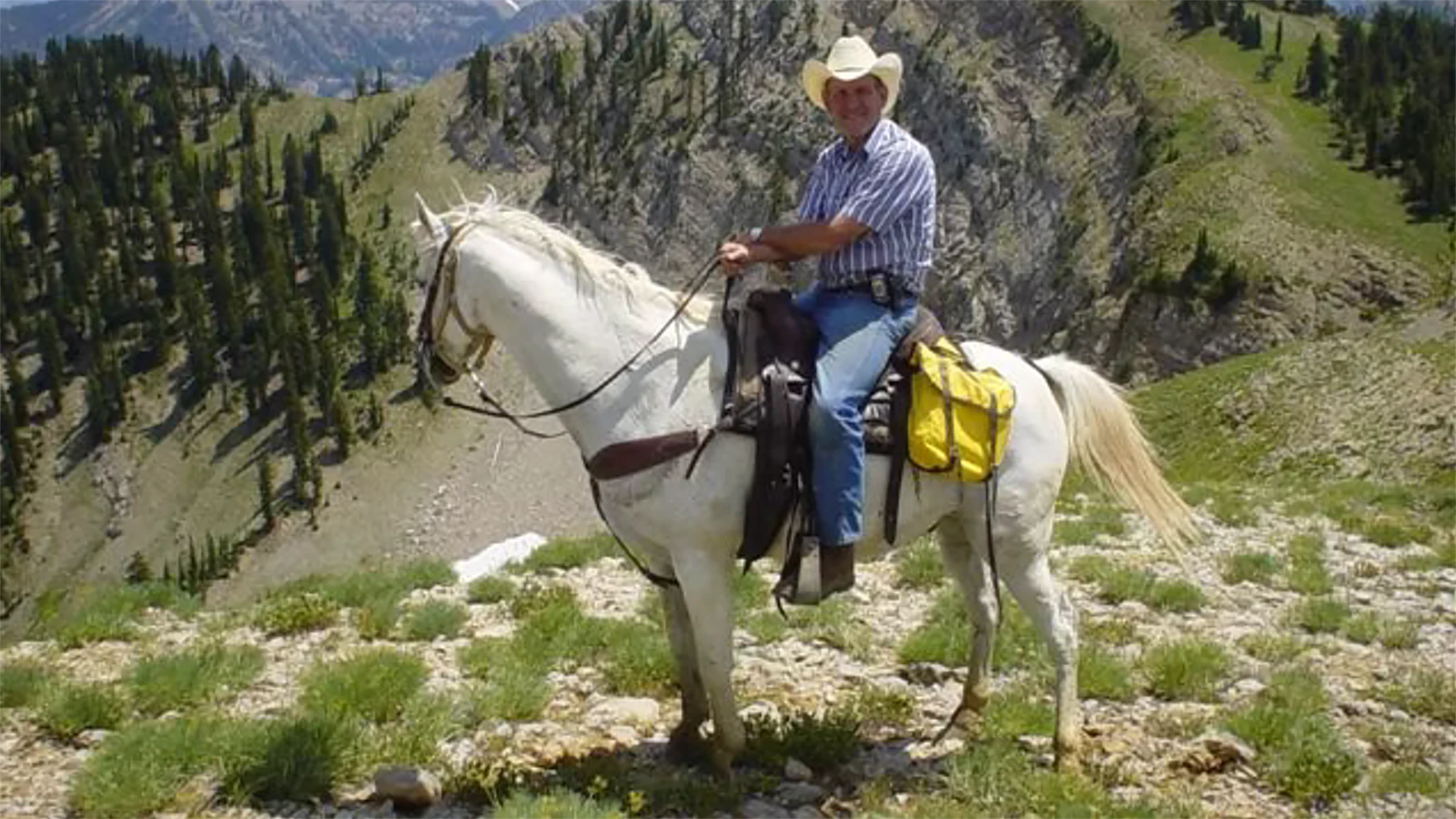
Horses have been a huge part of Maury “Jonesy” Jones’ life as far back as he can remember.
Starting at age 13, he worked at a summer camp in Colorado as a wrangler for 30 horses. He likes to share that “life is always better when viewed from the ears of a horse.”
The owner of a riding stable and outfitter for 30 years in both Wyoming and Colorado recounts how his favorite horse, an Arabian named Shadow, developed arthritis when he turned 22 years old.
“He was my favorite horse guiding hunters,” Jones said. “One day he had to step over a log and he kind of drug his left-hind foot over it.”
After the vet diagnosed the condition, Jones decided that just as “old folks” need a special home for retirement that offers safety, peace and rest, old horses need one as well.
He decided to start a nonprofit to rescue horses.
Jackson Hole Horse Rescue was launched in 2008 in the little unincorporated town of Grover in Star Valley.
Jones soon had a phone call from a man who had two horses, no hay and no job.
That led to more calls, more horses and trying to find horses homes, as well as deal with the financial burden that comes with multiplying horses while a few donations trickled in.
A Sweet Deal
In 2011, Jones was hired to manage the 256-acre Trinity Ranch west of Jackson Hole Airport.
He had a proposal for owner Berne Evans, the founder and CEO of Sun Pacific in Pasadena, California, that produces mandarin oranges, kiwis, and other fruit for the nation.
“We cut a deal where he would provide 40 acres of irrigated pasture for the horse rescue in exchange for me taking his family and friends horseback riding when they come,” Jones said. “It’s a win-win situation.
"We get free pasture and he gets free horseback riding and we have horses coming and going.”
A retiring game warden called Jones last fall and told him he was going to bring three horses to the rescue and let them retire as well.
The nonprofit regularly gets calls from people whose horses have gone lame, have developed chronic conditions where they can’t work, have become too old to climb mountains, or unable to ride.
Meeting Romeo
While Jones said he takes mostly horses from the immediate region, a few years ago he received a call from a woman in Cody who was settling her father’s estate. She found her father owned two horses with bad feet.
Could he help?
“We don’t normally go that far to get a horse. That was 310 miles away,” Jones said. “But that was a hardship case. So, we did.”
In Cody, he picked up Patches and Pico, a little miniature horse. He renamed Pico “Romeo” because he “fell in love with all the mares” and wanted to protect them from the male horses, who were geldings.
Romeo is now being cared for in Dubois by a man who has some other small ponies and fits in well there, Jones said.
Jones said that for the winter months, the rescue keeps the horses in Crowheart, Wyoming, 20 miles east of Dubois because it is typically warmer and the area does not get as much snow as Jackson.
From the end of April through October, the rescue horses are at the Jackson property, and volunteers are welcome to come and help with the job of caring for them, Jones said.
One horse that became part of the rescue is named Cinco; it has five hooves.
“Sometimes they get better and sometimes we just keep them,” Jones said. The rescue has 24 horses in its immediate care and another 10 or 11 that are “fostered out.”
Foster Care And Adoption
To foster a horse means that someone takes a horse to their property, but it belongs to the horse rescue.
The horse rescue offers others the possibility to adopt a horse and take it to their own property and care for it.
If they adopt and need to keep the horse at the Jackson Hole property, the person pays for veterinary bills and winter feeding at about $1,000 per horse and hoof shoeing and trimming, which costs $150 every two months.
People also are encouraged to help sponsor a horse, which involves helping pay for the horse’s keep either at the ranch or while in foster care. Their name is listed as a sponsor for the horse on the nonprofit’s website.
Jones said it costs about $3,000 a year to care for and feed a horse.
A typical day at the rescue involves doctoring some of the horses with special grain or medication, the older ones need extra care.
Horses with foot problems are either seen a the ranch by a vet or taken to the vet. Horses need to be groomed and some of them walked, Jones said.
Jones’ wife Linda helps with the labors and said a typical day may involve eight hours with the horses. They appreciate when volunteers come out to help.
A part of the chores involves shoveling manure out of the paddocks in the pasture and off trails.
They will teach people how to lift horse’s hooves and clean their feet. Fences may need to be fixed and horses need brushing.
“We’ve had children from daycare facilities come out, spend the morning grooming horses, learning how to give them treats, have a great day,” Linda Jones said. “We like to encourage that thing to have interaction with the horses.”
She said they have had volunteers come out who have lost a loved one and the therapy of working with the horses has made a difference in their lives to overcome their loss and grief.
Jones said horses that are rideable kept at the ranch to be used by his boss’ family and friends when they visit. Rides typically occur in the Grand Tetons.
Happy Horses
“It helps keep the horses happy because they get to go out someplace and do something besides standing around the pasture,” Jones said. “And the guests are really happy with it and quite often they donate for the help of the horses.”
Up until five years ago, Jones financed much of the nonprofit out of his own pocket, spending thousands of dollars and hours to care for the horses.
Now the horse rescue receives significant help from Jackson’s Old Bill’s Fun Run fundraiser for the region’s nonprofits.
Jones, 78, and his 77-year-old wife plan to keep caring for their horses as long as they can.
The typical lifespan of a horse is 30 years. Jones’ Shadow died three months shy of his 31st birthday in March 2018.
“We just really love horses. It’s really self-satisfying to go out, brush the horses and do nice things for them,” Jones said. “We just give them a good old folk's home … a nice place and tender care until they go.
Dale Killingbeck can be reached at dale@cowboystatedaily.com.


