
For decades, genetic exchange between bear populations has been a point of contention in debates over how to best manage and conserve grizzlies, and whether they should be delisted from federal endangered species protection.
The first baby steps, or perhaps cub steps, toward that goal were taken this spring.
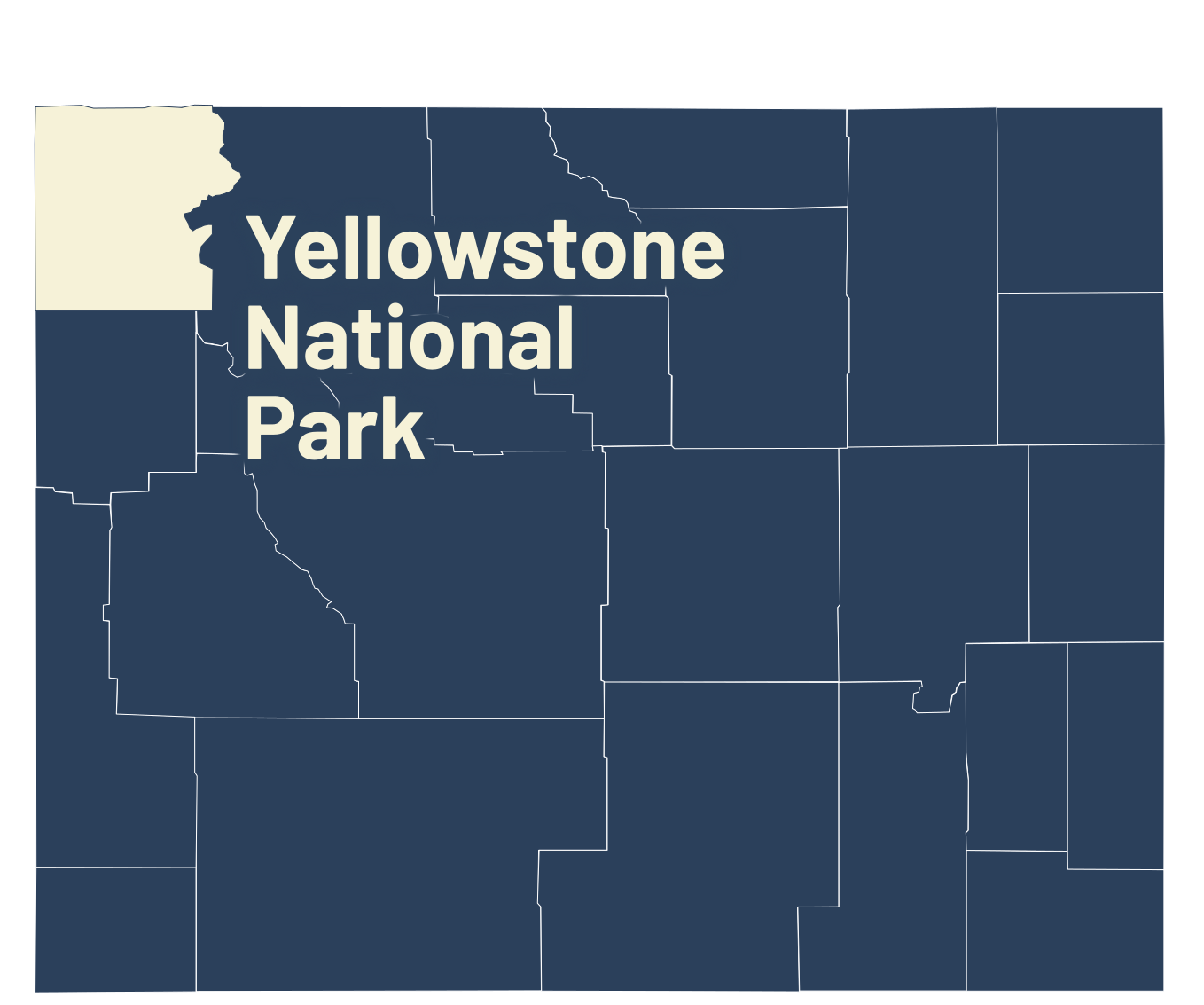
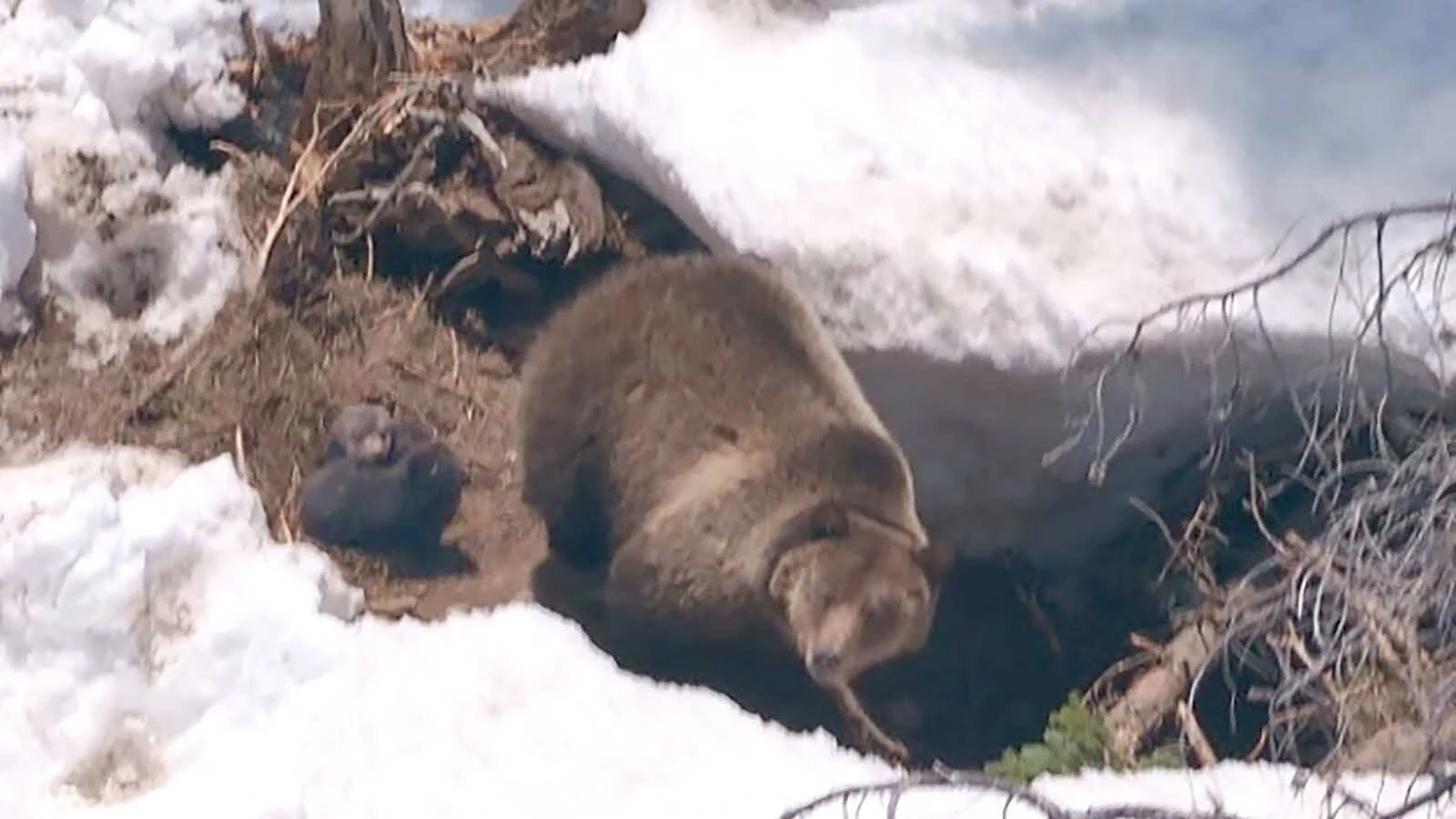
A female grizzly transplanted in 2024 from the Glacier National Park area in Montana to Yellowstone National Park emerged from her winter den with two cubs.
A male bear from the Glacier park area was also transplanted to Yellowstone in 2024. However, it hasn’t been determined whether he’s sired any cubs in Yellowstone, according to a joint statement from Montana Fish Wildlife and Parks and the Wyoming Game and Fish Department.
The Question Of Genetic Exchange
Bear conservationists have long argued that for grizzlies to be truly recovered in the northern Rockies, there must be robust genetic exchange between the two major populations, each with roughly 1,000 bears.
Those include the Greater Yellowstone Ecosystem (GYE) grizzlies and bears of the Northern Continental Divide Ecosystem (NCDE).
Experts don’t think that transferring bears is a magic bullet that will resolve the matter, although it might play a part.
Meanwhile, the leading edges of the GYE and NCDE grizzly have gotten to within 45 miles of each other. That gives officials hope that some natural genetic exchange might start happening.
Cubs Are A First
The NCDE grizzlies connect with grizzly populations to their north in Canada, but the GYE bears are considered an isolated population, with no direct connections to others as of yet, said Matthew Gould, biologist and team leader with the USGS Interagency Grizzly Bear Study Team.
Ensuring the long-term genetic diversity of the GYE population is part of a tri-state memorandum of understanding between Wyoming, Montana and Idaho, he told Cowboy State Daily.
Genetic diversity was brough up as a matter of concern when grizzlies were delisted in 2017, but then re-listed per a federal judge’s court order.
Given the number of bears in the GYE, there isn’t an imminent threat to the population’s gene pool, he said. But over the long haul and across numerous generations of bears, there could be a need for more genetic diversity.
“Our science doesn’t show any immediate concern,” Gould said. "But the connectivity between populations is always welcome."
The birth of the translocated female’s cubs represent the first documented case of full genetic exchange between the two populations since the GYE bears became isolated in the early 20th century, he said.
There aren’t any immediate plans to transplant more bears from the north to Yellowstone, but that remains an option going forward, Gould said.
Getting Together Naturally
Grizzlies have been expanding their range in Wyoming and Montana. That’s put the GYE and NCDE populations within an easy bear’s walking distance of each other.
In southwestern Montana, there’s a roughly 45-mile gap between the northernmost GYE grizzlies and southernmost NCDE bears.
NCDE bears have made it down to the elkhorn area between Butte and Helena, Montana, Gould said. And GYE bears have reached the Northern Madison Range Mountains, southwest of Bozeman.
“That is well within the movement capabilities of grizzly bears, which are usually on the leading edge of that movement,” Gould said.
However, that doesn’t necessarily mean that there will be frequent intermixing between the populations soon, Gould said.
There isn’t any documented evidence of robust exchange between the populations.
“It is possible that natural intermixing or natural genetic exchange might have happened, but we haven’t detected it yet,” he said.
The Tobacco Root Mountains in Montana are one likely area for the population to perhaps start intermixing, he said.
Younger males, perhaps around age 4, are usually the first grizzly pioneers into new areas. A population can’t be established until prime-age males ages 8 to 12 years old, along with females, show up and reproduce, he said.
“The line shifts a little bit at a time,” he said.
There are also roads and other human development to consider as possible barriers to bears traveling between population zones, he said.
Does Transplanting Work?
Transplanting grizzlies might not work as well as it did with reintroducing wolves to new habitats, Grizzly conservationist Louisa Willcox of Montana told Cowboy State Daily.
When wolves were reintroduced in Yellowstone National Park and central Idaho in the mid-1990s, “they trapped packs that had worked together,” she said.
So, the pack dynamics stayed the same as the wolves settled into their new homes.
With grizzlies, it often isn’t that simple, she said.
Grizzlies learn everything they know about surviving in the wild from their mothers, Willcox said.
The mother bears know all the important details of their home habitats, such as where the tastiest, most nutritious grasses and roots will be in springtime, where winterkill big game carcasses are likely to be, which bigger bears to avoid and the like, she said.
When bears are picked up and dropped off in unfamiliar territory, that backlog of generational information isn’t available, so transplanted bears might struggle, Willcox said.
That’s largely been the case in ongoing efforts to conserve the tiny subpopulation of grizzlies in Cabinet-Yaak Grizzly Bear Recovery Zone of extreme northwestern Montana and northeast Idaho, she said.
That subpopulation has been hovering around 55 bears, and many grizzlies transplanted there over the years have struggled to survive and/or haven’t reproduced, Willcox said.
Over the long term, connectively corridors between population and natural genetic exchange are probably the better option, she said.
Even so, she was happy to see the transplanted Yellowstone female emerge with cubs.
“It’s cool. It’s wonderful that she had these cubs,” Wilcox said. “It shows that she’s a successful mom. And may she thrive."
Too Many Bears Dying?
The yearly GYE death toll must also be taken into consideration, Willcox said.
The documented 2025 death toll exceeded 70 bears, making it one of the worst years ever.
Moreover, it’s safe to assume that for every documented grizzly death, there was probably at least one that wasn’t documented, Willcox said.
A death count of roughly 140 bears would represent about 15% of the GYE population, she said.
“Experts say a sustainable yearly mortality rate is about 10%, at most,” she said.
The leading cause of documented deaths was grizzlies being killed by wildlife agents for preying on cattle.
Willcox said she’d like to see an independent panel of experts to investigate what’s driving that and other human-bear conflict trends.
There also should be discussions at the local level in communities with high rates of human-bear conflicts, she added.
“We should look for locally-grown solutions to chronic problems,” she said. “What do we need to do to reduce mortality, so we have more bears that have a greater chance of connecting naturally?”
Mark Heinz can be reached at mark@cowboystatedaily.com.


