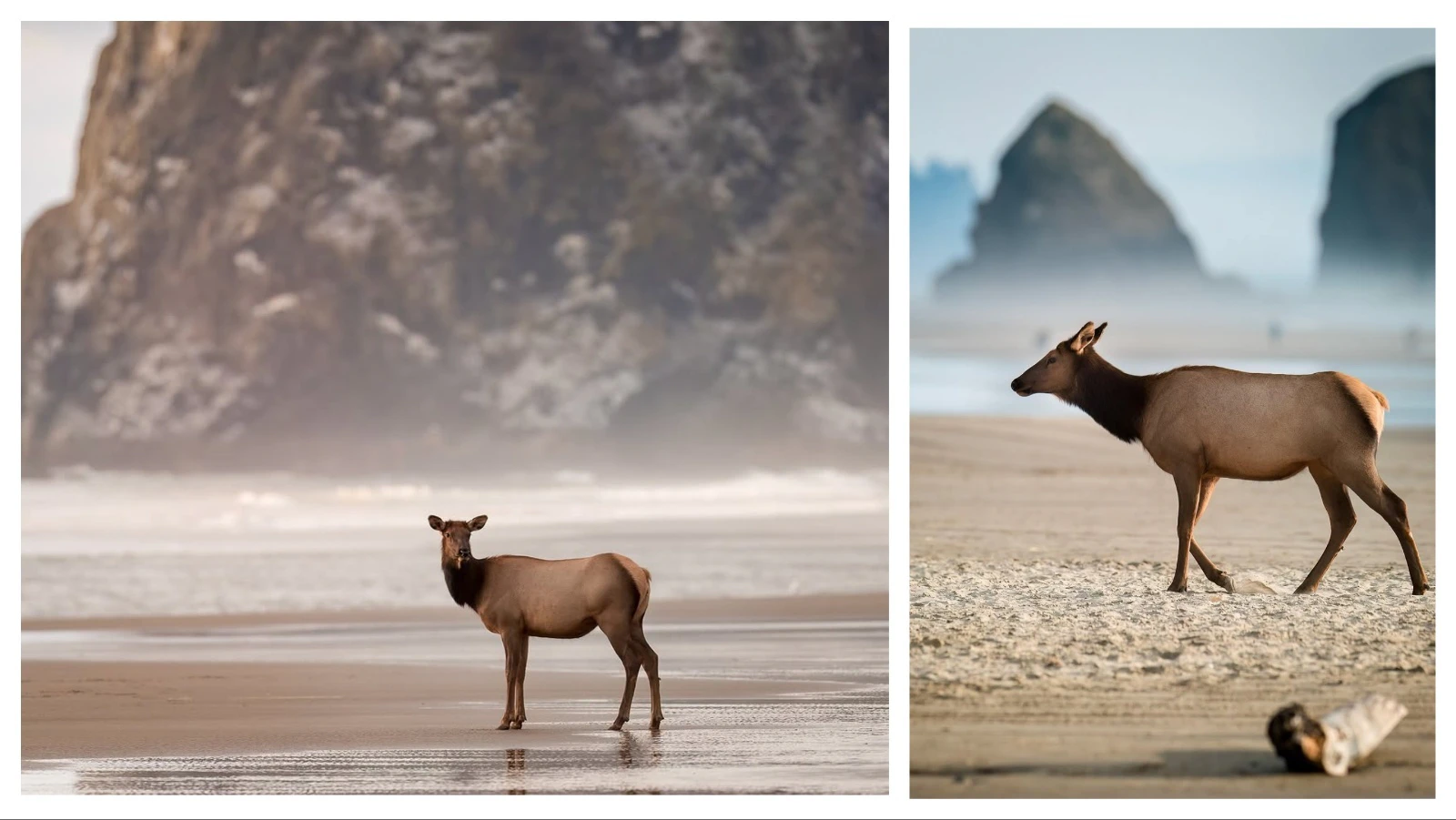
It’s a sight most in Wyoming would consider extremely odd: herds of elk lounging around the beach.
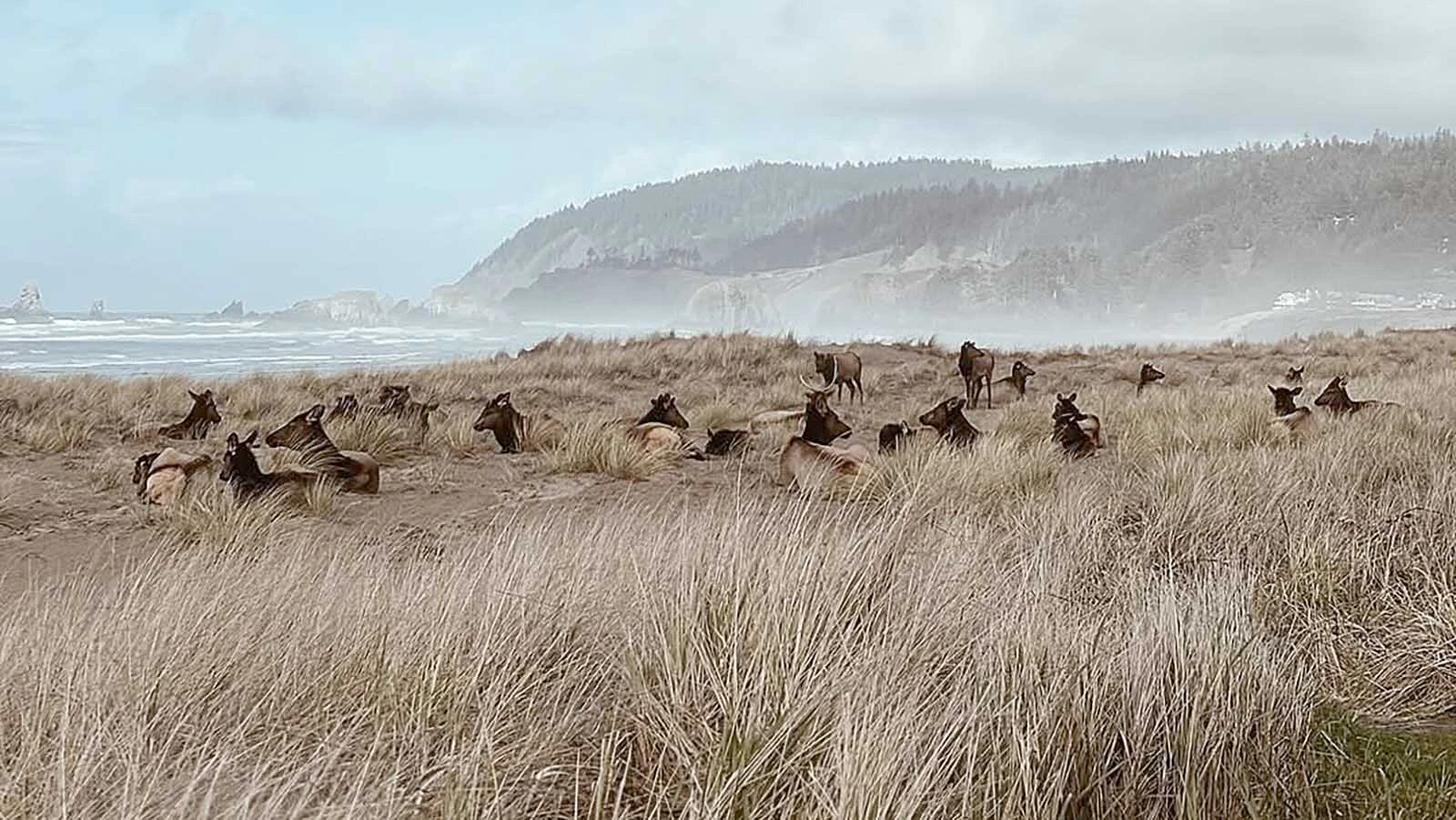
That’s what’s happening in the small Oregon coastal town of Cannon Beach, where elk are taking over the beaches, looking completely out of context in the sand and surf.
And as in Yellowstone National Park, Estes Park, Colorado and other places where people and elk are in close proximity, some people behave stupidly, said James Paino, executive director of the local chamber of commerce.
“We have a lot of visitors who just don't think that it (an elk) is a wild animal,” he said. "I’ve seen people try to put their kids on an elk’s back, or walk up and feed them carrots."
The elk could possibly drawn to the beach seeking saltwater therapy for biting pests.
“It’s not uncommon to see elk going out into saltwater. It’s commonly thought to be therapeutic for external parasites, such as fleas,” said Paul Atwood, a district wildlife biologist for the Oregon Department of Fish and Wildlife.
Atwood started his career with the Wyoming Game and Fish Department in Green River, from 2010 to 2012.
Oregon’s coastal elk herds have grown rapidly over the past 10 to 12 years, he told Cowboy State Daily. That often puts them near people, including on the beach.
“There can be a couple thousand people on the beach on a busy day,” Atwood said.
Cannon Beach has a population of about 1,500, said Paino.
A Different Subspecies
Elk populations are doing well across the country.
Herds have grown from elk transplanted to states such as Kentucky. In Nebraska, elk with Wyoming DNA are steadily reclaiming their historic Great Plains habitat.
Wyoming has Rocky Mountain elk, also sometimes called wapiti.
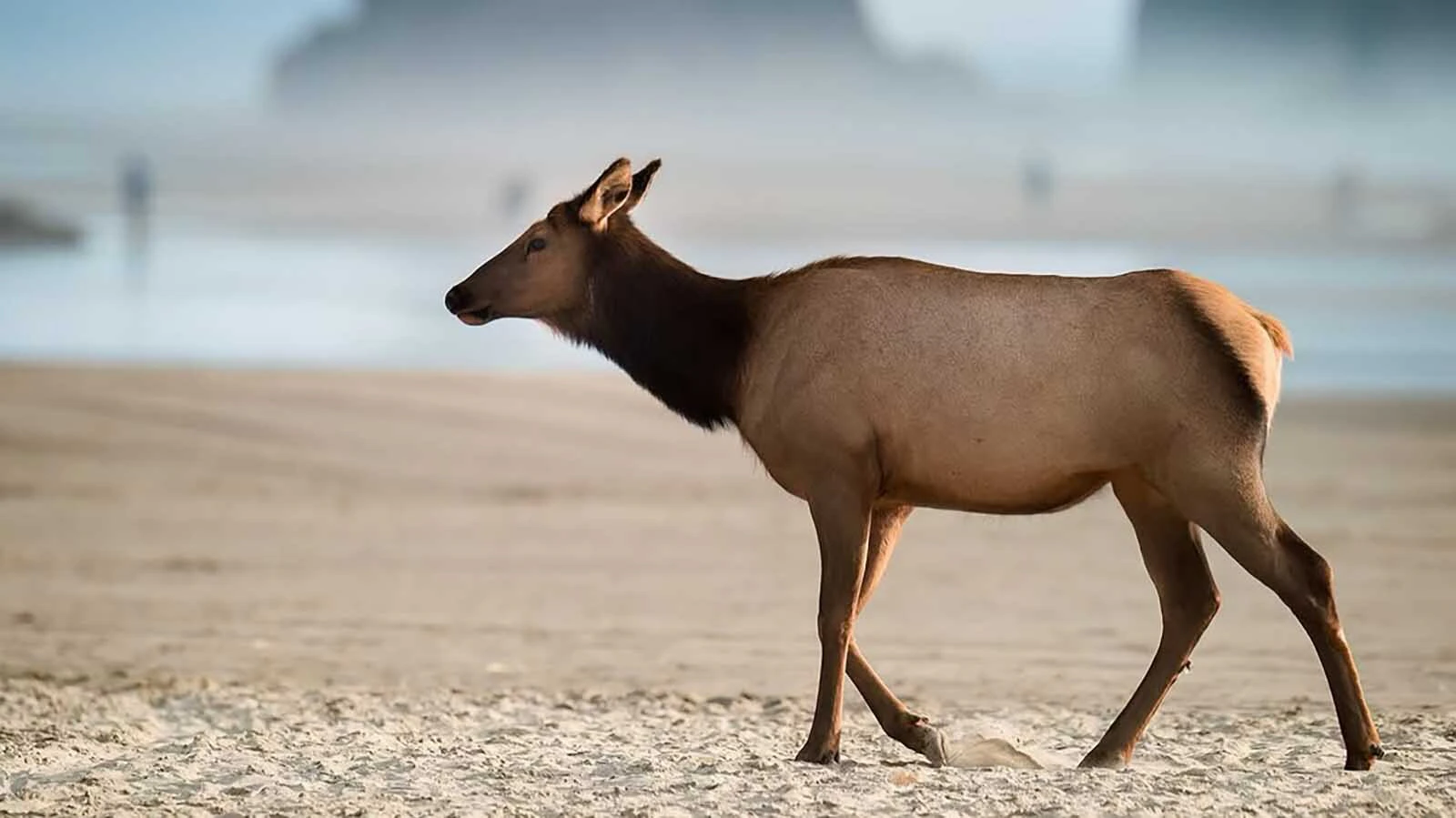
Oregon’s coastal herds are a different subspecies, Roosevelt elk, Atwood said. Roosevelt elk have larger bodies than Rocky Mountain elk, but the bulls’ antler racks are smaller.
Smaller antlers come in handy for elk navigating thick coastal forests, Atwood said.
One doesn’t have to go far from the beaches to find rich forest habitat, where elk spend most of their time, he explained.
Besides therapeutic dips in salt water, some speculate that elk might go out onto the beaches looking for seaweed to munch on.
“I have heard reports of people seeing them eat seaweed,” Atwood said. "The salty taste might be appealing to them. That would be a very minor portion of their diet."
Management Challenges
As the elk herds grow and elk become more acclimated to people in populated areas, elk-human conflicts have multiplied, Atwood said.
“Complaints from the public have increased in the last three to four years,” he said.
Those have included some instances of elk striking at and sometimes hurting people, he said.
In the wild parts of the coastal ecosystem, elk hunting is popular, and the region has a good reputation for hunter success.
However, in and around towns such as Cannon Beach, controlling elk numbers gets more complicated.
“We’re not in the business of authorizing elk hunts inside city limits,” Atwood said.
Many locals also have an aversion toward the “lethal take” of elk, even if it’s done by trained game agents, he added.
Capturing and relocating elk is a limited option.
Any time elk are relocated, there’s a risk of transmitting wildlife maladies such as chronic wasting disease, Atwood said.
Tourist Attraction?
Photos of the beach elk are popular on social media. Paino said that tourists frequently ask about the elk and when to see them on the beach.
The beach elk phenomenon “tries to be” a tourist attraction, he said. However, “You can’t schedule where the elk are going to be. My office manager tells people, ‘They don’t text me their schedule.’”
Atwood said many of the complaints his department gets about elk stem from people trying to get too close to the animals.
Paino agreed and added that visitors’ dogs can also raise a ruckus with elk.
“The elk will go after dogs, and people,” if pet owners let their pooches get too near, he said.
Mark Heinz can be reached at mark@cowboystatedaily.com.