
A third candidate has joined the Republican primary election to become Wyoming’s next public schools chief.
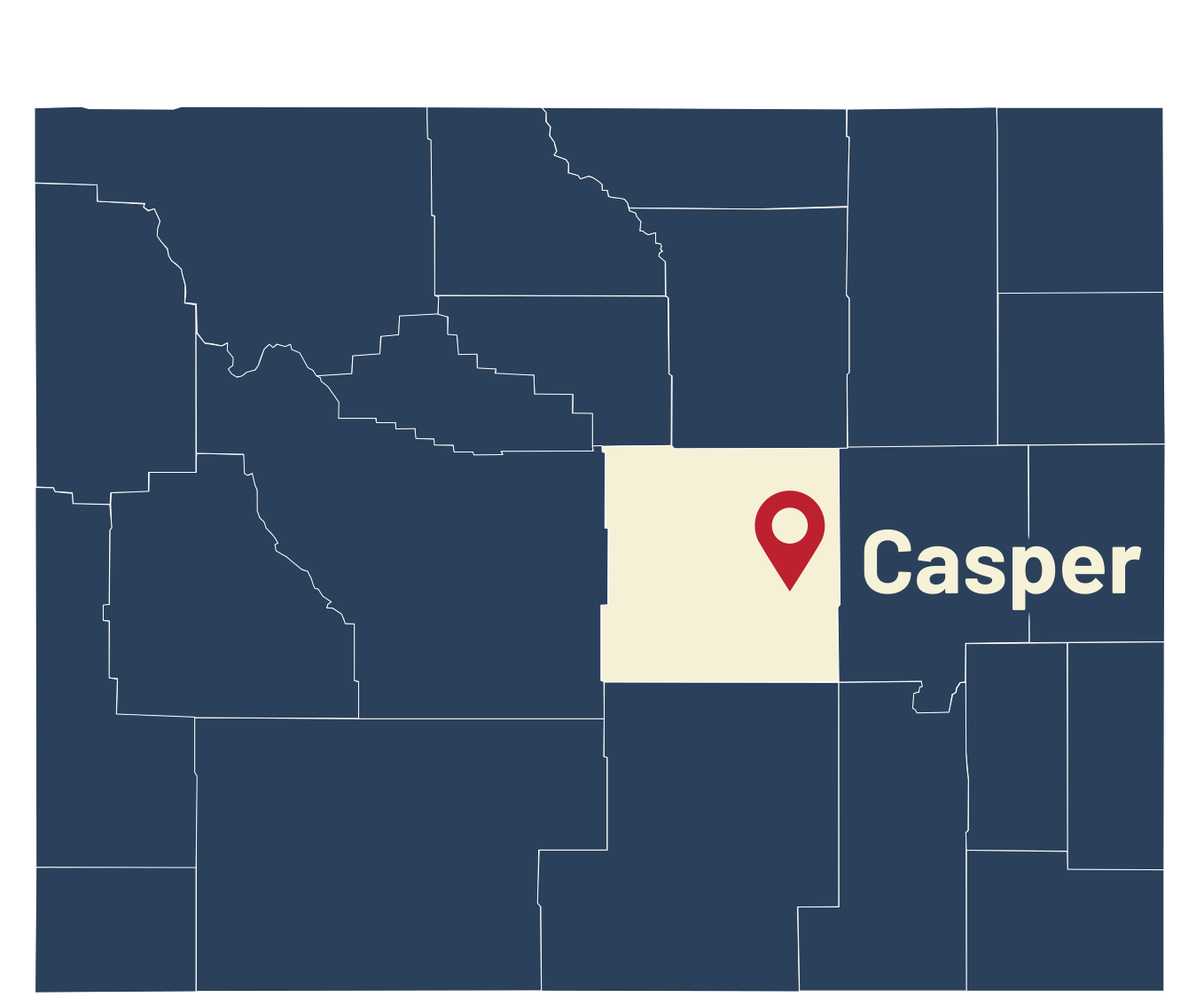
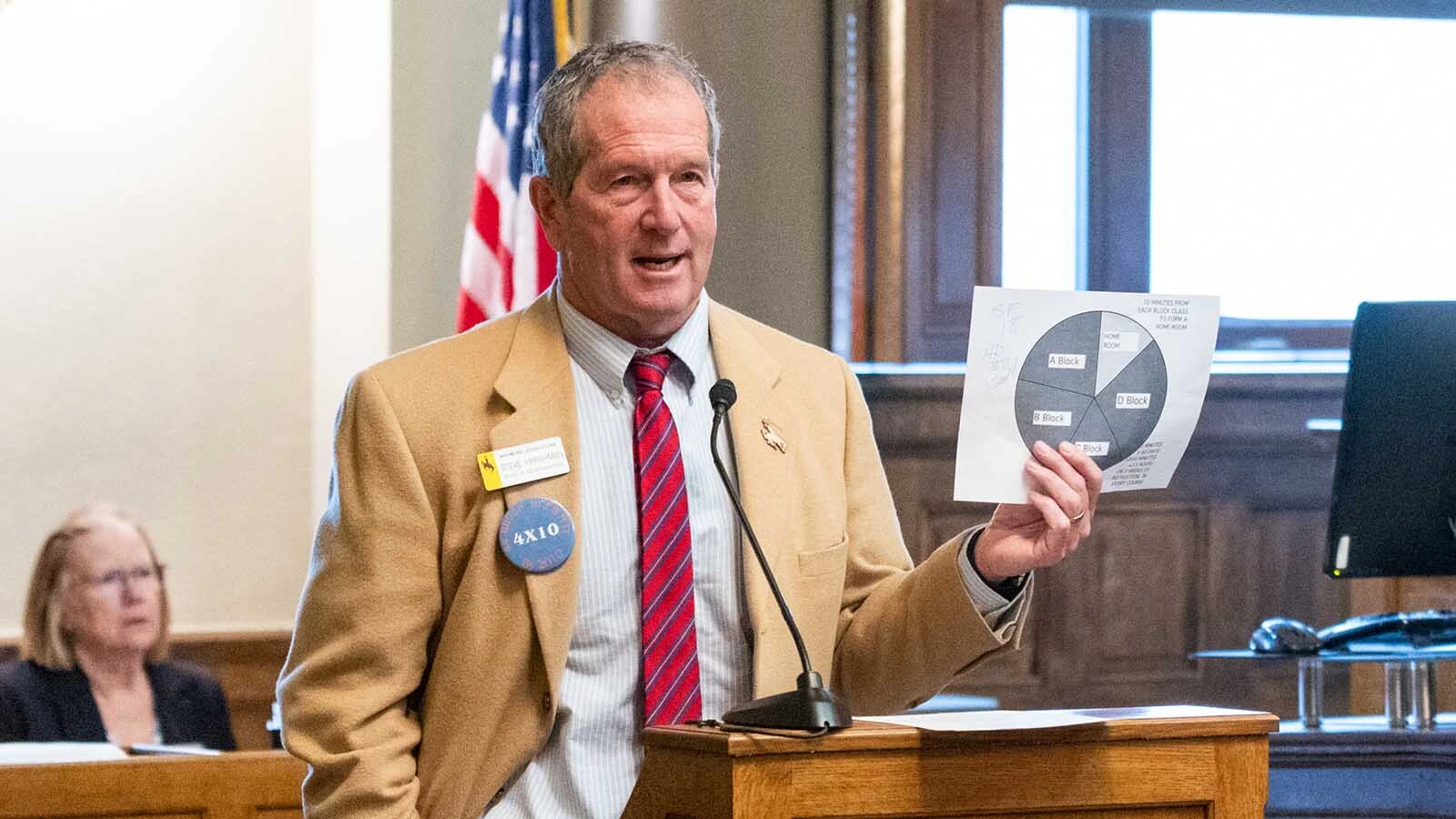
State Rep. Steve Harshman, R-Casper, is a former Speaker of the House of Representatives and the chamber’s longest serving member. He told Cowboy State Daily on Thursday that he is running to become state Superintendent of Public Instruction.
Harshman, 62, vies for the GOP nomination against Rep. Tom Kelly, R-Sheridan, and former gubernatorial policy advisor Chad Auer, who has served in the state’s Department of Education prior.
The primary election is Aug. 18.
Bottom Line Is ...
“Bottom line, I love Wyoming schools and spent all my life in Wyoming schools,” said Harshman in a Thursday phone interview with Cowboy State Daily. “And I think you can do some real good for our kids, parents, grandparents — our teachers — you know. Because they’re the ones that really unlock kids’ potential.”
Harshman was born in Wyoming, raised in the small Natrona County town of Midwest, and has taught and coached for decades in the state’s public schools.
A husband of 39 years and a father to four children, he holds a double major bachelor’s degree from Black Hills State University in Spearfish, South Dakota, and his master’s degree of exercise physiology and exercises science from Western Oregon University, he said.
Whether he’s elected or not, his decision to run for the statewide post would interrupt or end his nearly 24-year tenure in the state House of Representatives.
During House floor debate, while proper nouns are generally disallowed, Harshman’s fellow House members call him “the good coach.”
He said 40 years in teaching and coaching familiarize him with on-the-ground challenges in schools.
He noted that he’s had a major impact on public education in Wyoming. He was the principal author of the Hathaway scholarship and championed its cause after its formation.
He also has served on recalibration committees to reevaluate the cost of education, and chaired the House Appropriations Committee, which oversees Wyoming’s budget provisions, as well as other committees.
Harshman faces qualified contenders in his Republican race, but told Cowboy State Daily a key difference between Auer and Kelly — and himself — is that Harshman was born, raised, and has been a longtime resident in Wyoming.
Auer has Colorado ties and Kelly is from Illinois.
“The little bit I know of these gentlemen, they’re both really nice guys. Good family men, and all that,” said Harshman.
As a product of Wyoming schools, “I have been really blessed to help, really, thousands of kids cross the finish line,” he said, adding with a laugh, “I think I’d be the only candidate who’s docked sheep and worked on workover rigs in the oil patch.”
That comes with knowing “what powers this state and has built our schools,” he said, a reference to the traditional energy sector.
In that vein, Harshman said he’d be eager to serve on the boards overseeing state lands, loans and other projects. Those include the State Loan and Investment Board, State Lands Board and State Building Commission.
The top five statewide executive branch officials serve together on those boards: the governor, treasurer, superintendent of public instruction, secretary of state and auditor.
Recalibration
The Wyoming Legislature this year finalized a “recalibration” package, or new K-12 school funding package.
And it’s been controversial.
Gov. Mark Gordon allowed the plan to pass into law without his signature. His top source of consternation was a provision placing teacher and other instructional funding into a “silo” from which the districts cannot borrow to fund other needs.
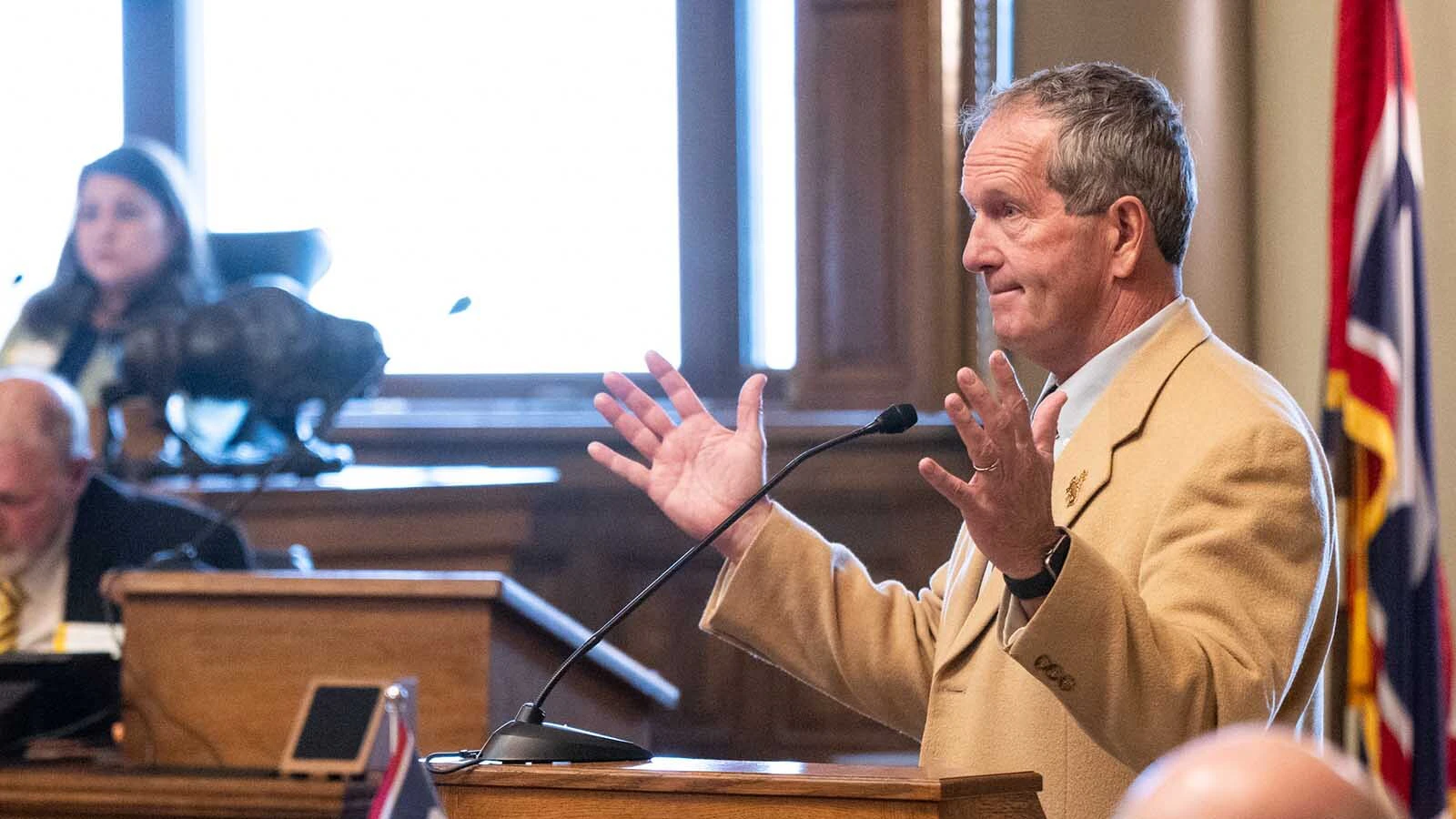
While this was, according to a leading architect of the package, Sen. Chris Rothfuss, D-Laramie, the “lynchpin” on which the long-sought compromise depended, Harshman isn’t fan of it, he said.
He voted in favor of the final recalibration bill because it made needed provisions, he said, but the instructional silo erodes local control in his view.
“We have to have security guard placement in lots of schools, that’s not in the (funding) model,” he said. “So school districts have had the flexibility (in the past) to pay for those. Same thing with (gaps in) the food service.”
The Legislature delayed policymaking to address security needs and nutritional gaps until the next legislative session at least. Those are two of numerous educational needs that a Cheyenne-based judge ordered the legislature to address in a February 2025 ruling.
That order has been paused, however, while the Wyoming Supreme Court considers how vast Wyoming’s constitutional duty to fund education is.
“We haven’t fixed that yet,” said Harshman of the remaining issues. “And I think folks are kind of looking for the department to crunch some numbers, and provide the leadership on this thing.”
The superintendent of public instruction runs the Wyoming Department of Education.
Most Recently
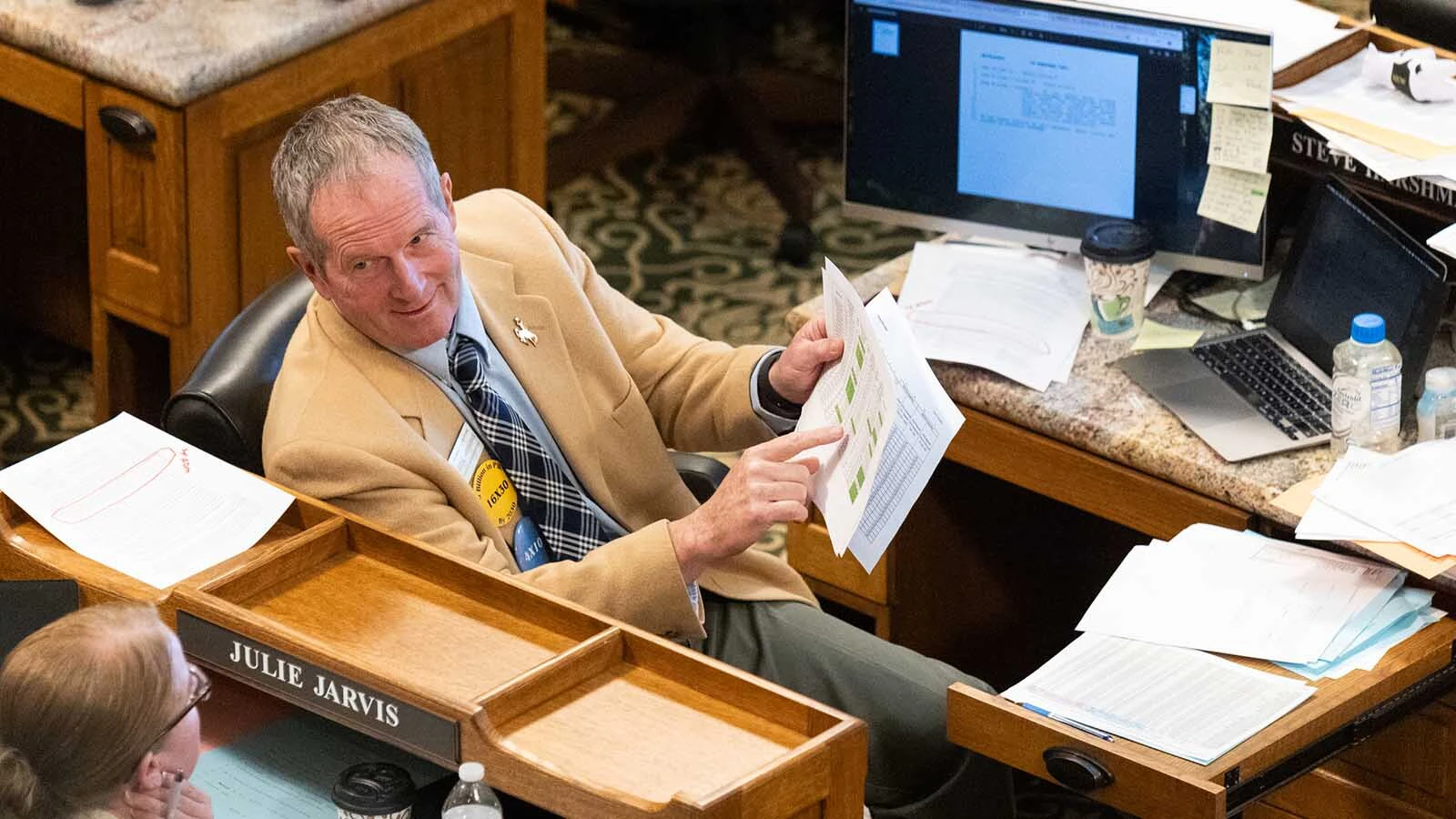
Most recently this session, Harshman was among the most avid defenders of the University of Wyoming, as it faced a proposed $40 million cut in its state funding provision.
That cut failed after the full Legislature grappled with the budget.
But Harshman tried in the meantime to save it by bringing an amendment that would restore the $40 million, but hinge that restoration on UW being able to find $5 million in savings by Dec. 1.
A modified version of his amendment advanced to the governor’s desk, where the governor vetoed it.
The Blockbuster
Faced with soaring post-COVID home prices in 2024, Harshman led a blockbuster proposal to eliminate most property taxes and fill the gap with a 2% sales tax hike.
The bill ultimately failed but was the start of a litany of others like it. Wyoming later passed a 25% cut on the first $1 million home values.
Auer
Auer, 54, served until recently as a policy advisor to the governor.
He served two decades in educational leadership and as a teacher, principal and school improvement administrator before earning his law degree from the University of Wyoming, says Auer’s biography.
He also has a master’s degree in education administration and a bachelor’s degree in biology.
He wrote in his March 24 campaign announcement that he has experience with traditional public schools, charter schools and online programs in rural, inner-city, suburban and Native American communities.
He served previously as the mayor of Firestone, Colorado, and held other community leadership roles.
He has told Cowboy State Daily that he believes Wyoming can improve literacy, expand trades education, implement school choice, modernize its accountability systems and keep safe and orderly classrooms “without falling into the trappings of partisan whiplash.”
He said when announcing that he wants to focus on education, not indoctrination, and “aims to support seamless pathways for students to enter high-demand careers in the Cowboy State’s core and growing industries: energy, agriculture, tourism, healthcare, manufacturing, technology and more.”
During his tenure as the deputy superintendent of the Wyoming Department of Education, he led a statewide school safety tour, convening roundtables with law enforcement, parents, and students, the statement says.
He pledged to prioritize dedicating funding for school resource officers (SROs), mental health support, and strengthening school infrastructure.
Kelly
Kelly, 56, spent 10 years as a public-school teacher, paraprofessional, or mix of the two jobs.
He has six children. Most of those are adults, but one is a special needs child currently in public school, said Kelly in prior interviews with Cowboy State Daily.
He also has a master’s degree in education and a Ph.D. in political science.
Kelly describes himself as a refugee from bad policies, saying he fled the left-leaning state of Illinois for Colorado, until Colorado became “just Illinois with mountains.”
He came to Wyoming in 2019 with his family, but felt that if Wyoming “went” to the political left there was nowhere left to flee.
“So I ended up in public office,” said Kelly.
Kelly served this term on the House Education Committee and the Select Committee on School Finance Recalibration.
He said he believes the instructional silo is a good measure to ensure teachers get the raises for which they’re slated.
Kelly had tried without success in January to remove an unpopular provision of the law’s earlier draft, which would have required school employees to join the state’s insurance plan. Lawmakers removed that provision ultimately during session, and Kelly celebrated that Tuesday.
“I was the only member on the Recalibration team to try to get rid of the mandate,” he said. “I couldn’t even get a second (vote in January). I ended up winning on that one.”
Kelly describes his education policy style as grassroots, saying he’d like to see more district-led, less state-led curriculum.
The winner of the GOP contest may face Libertarian Party hopeful Ryan Schollenberger, who is a Cheyenne-area substitute teacher and Wyoming National Guard field artillery officer.
Schollenberger is expected to race for his party's nomination at its convention next month.
Clair McFarland can be reached at clair@cowboystatedaily.com.


