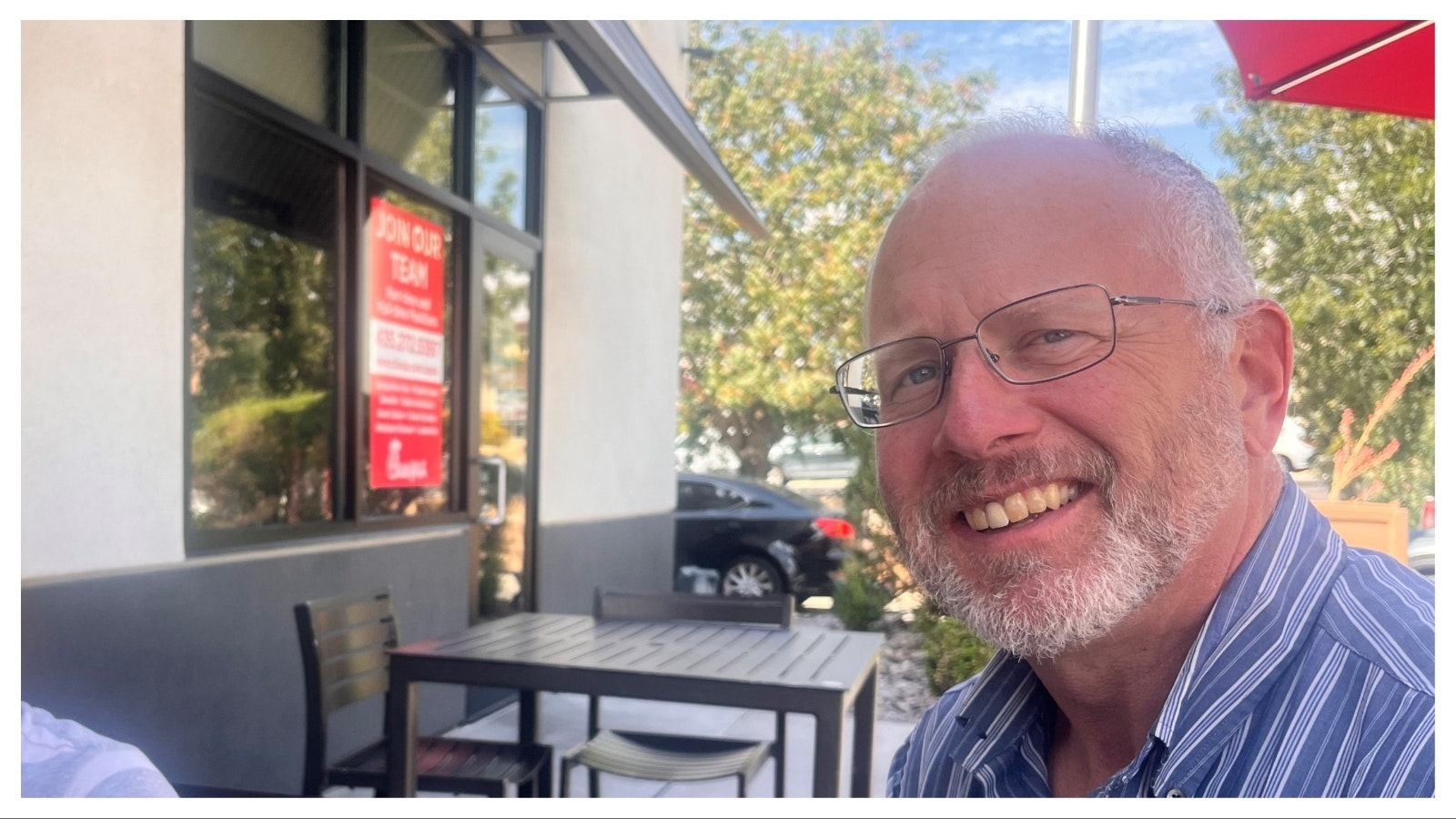
In 2002, I gave away more than 10,000 Snickers bars during my ill-fated race for Wyoming governor. We rebranded them as “Sniffin Bars.”
I remain the only candidate in political history to gain weight during a campaign. We always had a cooler full of candy bars. Plus, we were feeding members of the other campaigns at every political function with treats.
That tells you a little something about running for office in Wyoming. It’s an offbeat place politically.
First, we are essentially a one-party state. That makes the August Republican primary the main event. Unlike most places, the decisive election happens when political attention is often at its lowest.
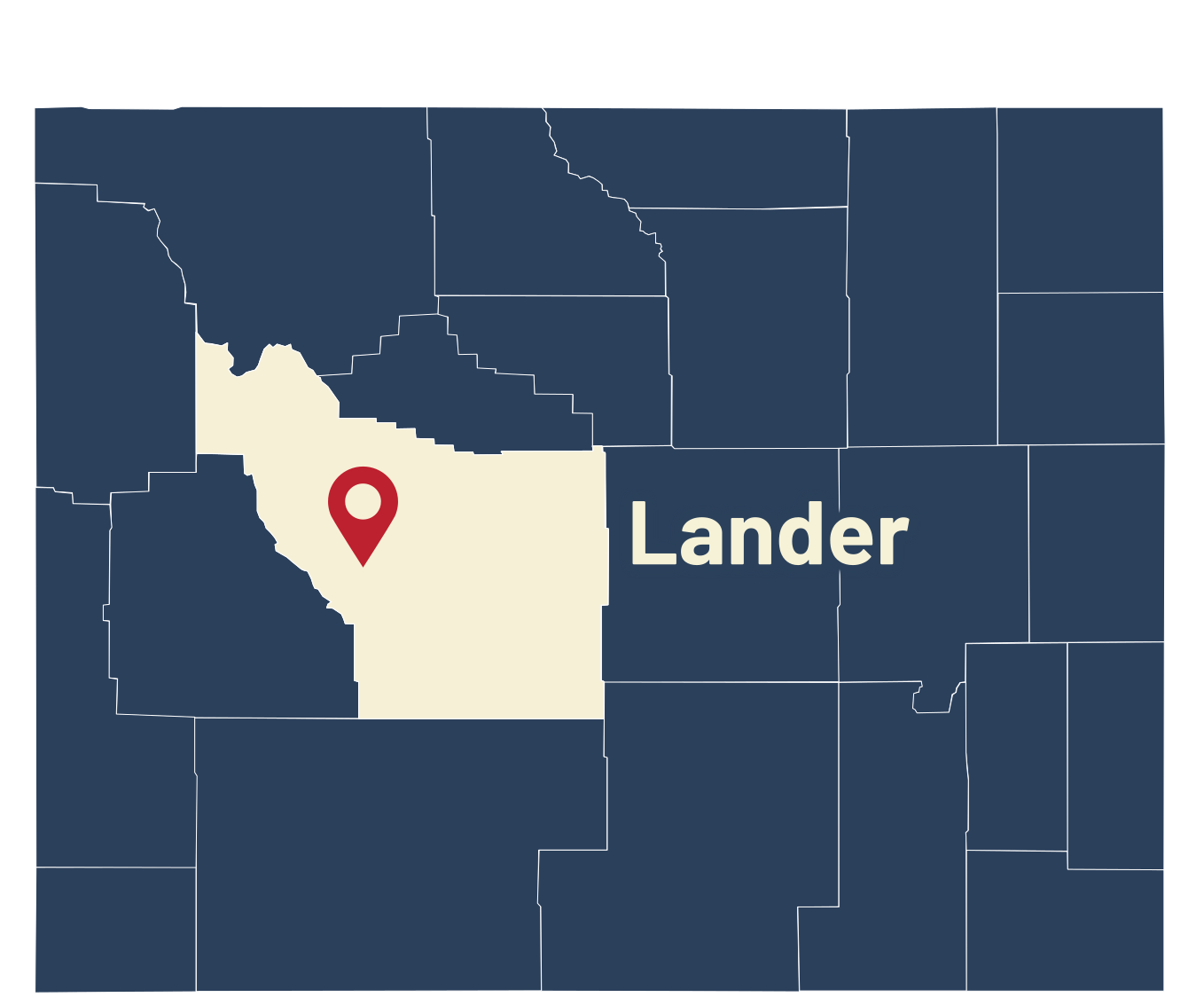
Second, Wyoming is vast, with very few people. We have 580,000 people spread over 97,000 square miles, which is one person for every seven square miles. Campaigning becomes intensely personal. You don’t just advertise, you show up. Everywhere.
I’ve watched statewide campaigns here for 56 years as a journalist and participated in two: my own run in 2002 and another statewide race in 2018. One thing has changed dramatically over the years: the cost.
Cost Per Vote
In 2002, it worked out to about $10 per vote.
Winner Eli Bebout spent roughly $400,000 to get 44,417 votes. Ray Hunkins spent $250,000 for 25,363 votes. I spent $135,000 and received 13,633 votes. Simple math.
Fast forward to 2018, and the cost had exploded to nearly $100 per vote.
I helped Foster Friess in that race. He spent about $2.7 million and received 29,842 votes, or $90 per vote. Mark Gordon spent around $2.4 million and won with 38,951 votes, or $61 per vote. Sam Galeotos spent over $2 million and crossed that $100-per-vote threshold, getting 14,554 votes at $137 per vote.
In just four election cycles, the cost of competing had increased nearly tenfold. That’s not inflation. That’s a different game.
Current U. S. Rep. Harriet Hageman (and candidate for U. S. Senate) also ran in that GOP gubernatorial primary and spent $1 million, getting 25,052 votes and finishing a respectable third place.
Cheney Broke The Scale
Then came 2022.
The Republican primary for Wyoming’s lone U.S. House seat rewrote the record books.
The winning challenger Harriet Hageman raised more than $4 million. Incumbent Liz Cheney raised $13 million and spent about $8 million to receive 49,000 votes—roughly $163 per vote. That record may stand for a long time.
Hageman, backed by Donald Trump, won in a landslide, 113,025 to 49,316. In Wyoming, that was a political earthquake.
Cheney had become the most prominent anti-Trump Republican in the country, co-chairing the Jan. 6 committee and later even campaigning for Democrat Kamala Harris in 2024. She was able to get her dad, the late Dick Cheney, one of Wyoming’s most famous conservative Republicans, to also campaign for Harris. Strange political times.
Back To 2002
So, what is it like to run for governor of a state?
My own campaign started quietly in December 2001. Truth be told, few people noticed. And why should they? I was a political unknown.
We had sold our newspapers two years earlier, and I had planned to spend that time getting acquainted around the state. I always believed journalists shouldn’t be actively involved in politics. One of my mottoes was that “I am not a politician. But I know politics.” So, it was my intention to spend two years becoming very politically involved.
Then life intervened.
Six weeks after the newspaper sales, Nancy was diagnosed with breast cancer. Combined with her multiple sclerosis, it made for a long, difficult stretch. We spent two years dealing with surgery, chemo, and radiation. Because of complications, much of it occurred in Denver.
Finally, when she was in remission, she asked if I still wanted to run. “Sure,” I said, though I had my doubts.
As it turned out, I started as an underdog and finished as an underdog. But it was still one of the great experiences of my life.
The other candidates and I made more than 60 joint appearances. We crisscrossed the state at parades, forums, meet-and-greets. Wyoming is big. You feel every mile of it during a campaign.
I remember visiting with Sen. John Barrasso and his late wife, Bobbi. They told us: “The first half of the campaign you control. The second half controls you.” They were right.
At one point, it felt like we lived in parades. And those Sniffin Bars? They were a hit. People still tell me they’ve saved one as a souvenir.
Money, Money, Money
Back in 2002, I thought fundraising was a major hurdle. Today, those numbers look quaint.
It makes you wonder how an average citizen can afford to run a serious statewide race anymore. And yet, good candidates keep stepping forward.
We’re fortunate for that. With several important races shaping up in 2026, I’m looking forward to watching and writing about them. Stay tuned.
Bill can be reached at bill@cowboystatedaily.com