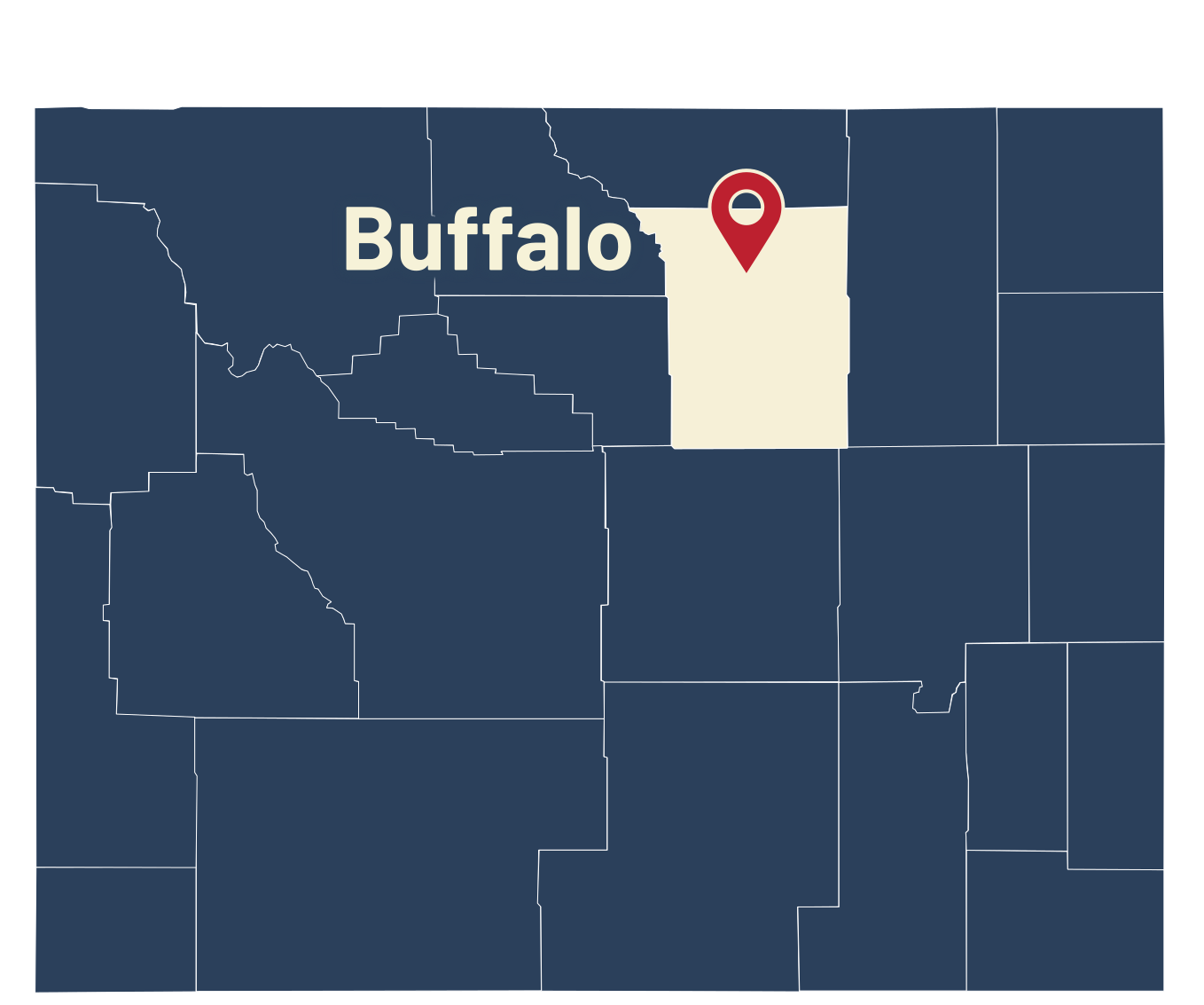
Roxi Turk’s monthly heating bill this winter dropped $130 a month thanks to a heads up from a friend who told her about Buffalo’s Clear Creek Wood Bank.
Her husband, who in years past regularly gathered the family’s primary heating fuel by going up into the Bighorn National Forest to cut wood, died three years ago.
The retiree said buying a $300 cord of wood is out of reach on her fixed income.
Now, Turk can go to the wood bank at mile 97 of U.S. Highway 16 East in Buffalo every Tuesday during the winter season between 2-4 p.m.
There, she gets her weekly supply — one-seventh of a cord of wood. Her home’s gas heater stays idle.
“I have sleds in the back of my truck, and they load it in the sleds,” she said. “When I get home, I put my car ramps on my tailgate and pull the sleds off of there.”
Turk said she enjoys the special warmth the wood stove’s heat radiates, but her toy Australian Shepherd probably enjoys it more.
The dog’s name?
“Chainsaw,” she said. “My husband named him.”
Wood bank board member Kelly Norris, now the Wyoming State Forester, started the wood bank in 2022 with the help of a local logger. She sees it flourishing and meeting needs as well as helping bring the Buffalo community together.
Despite the warmer winter this year, the demand for wood continues strong, she said.
“Our busiest distribution day so far was Jan. 27 with 55 racks,” she said. “On Feb. 3 we had 53 families come through, so we’re still having pretty high numbers overall. I’d say we’re averaging about two families more per week than last year, so there’s still a significant need.”
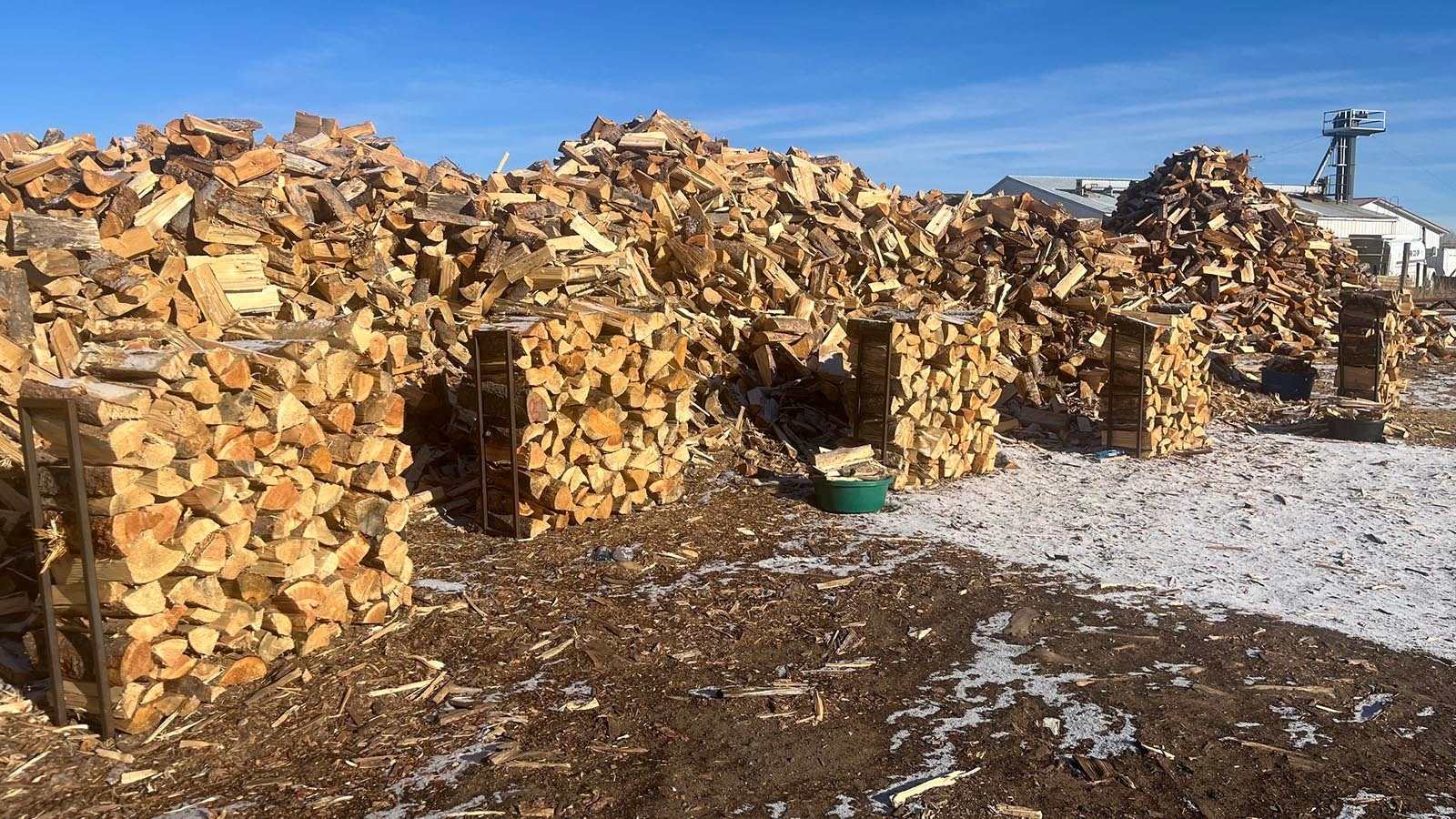
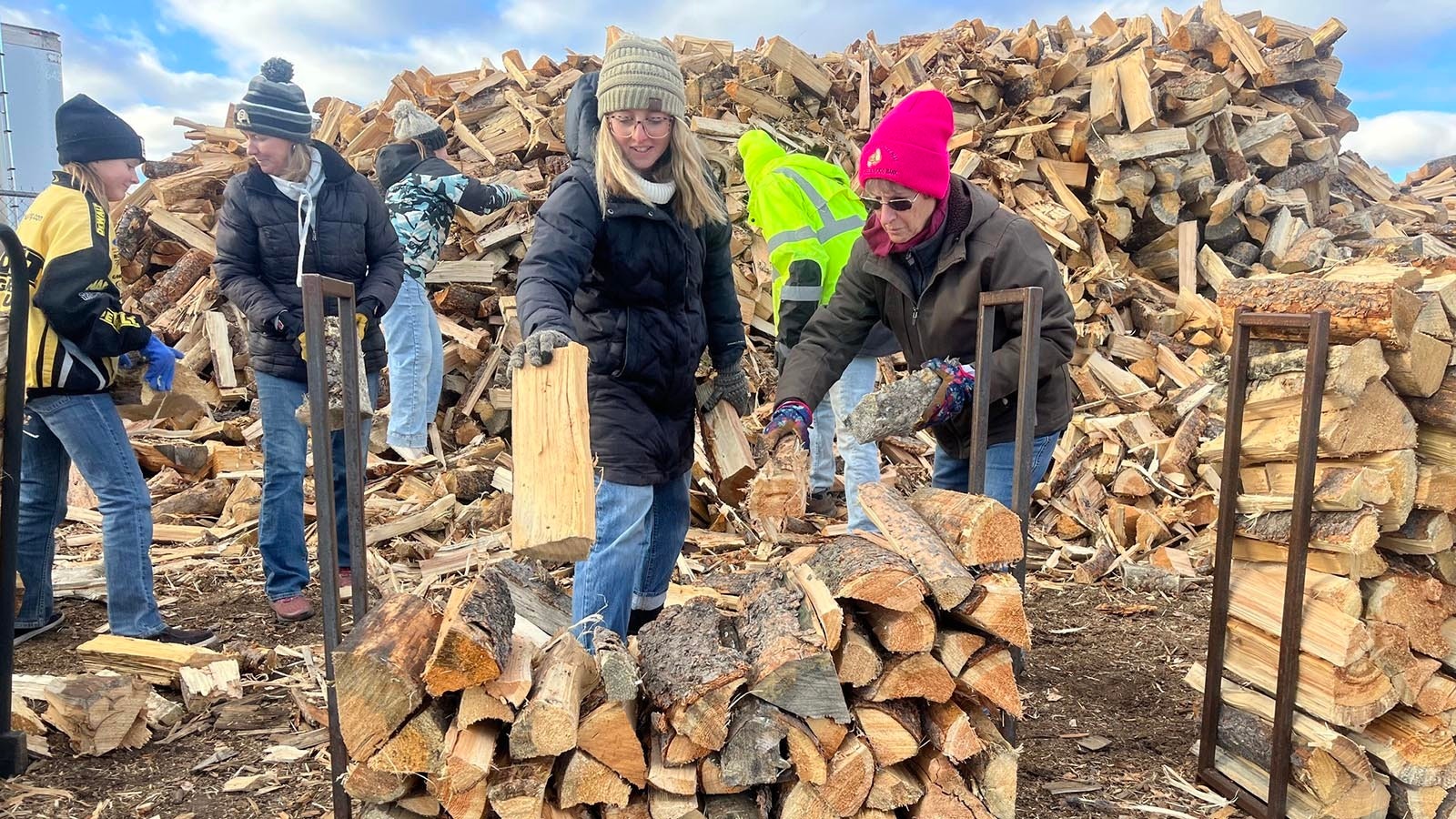
Racks of wood are ready for people to pull in on Tuesdays and be loaded up. (Courtesy Clear Creek Wood Bank) 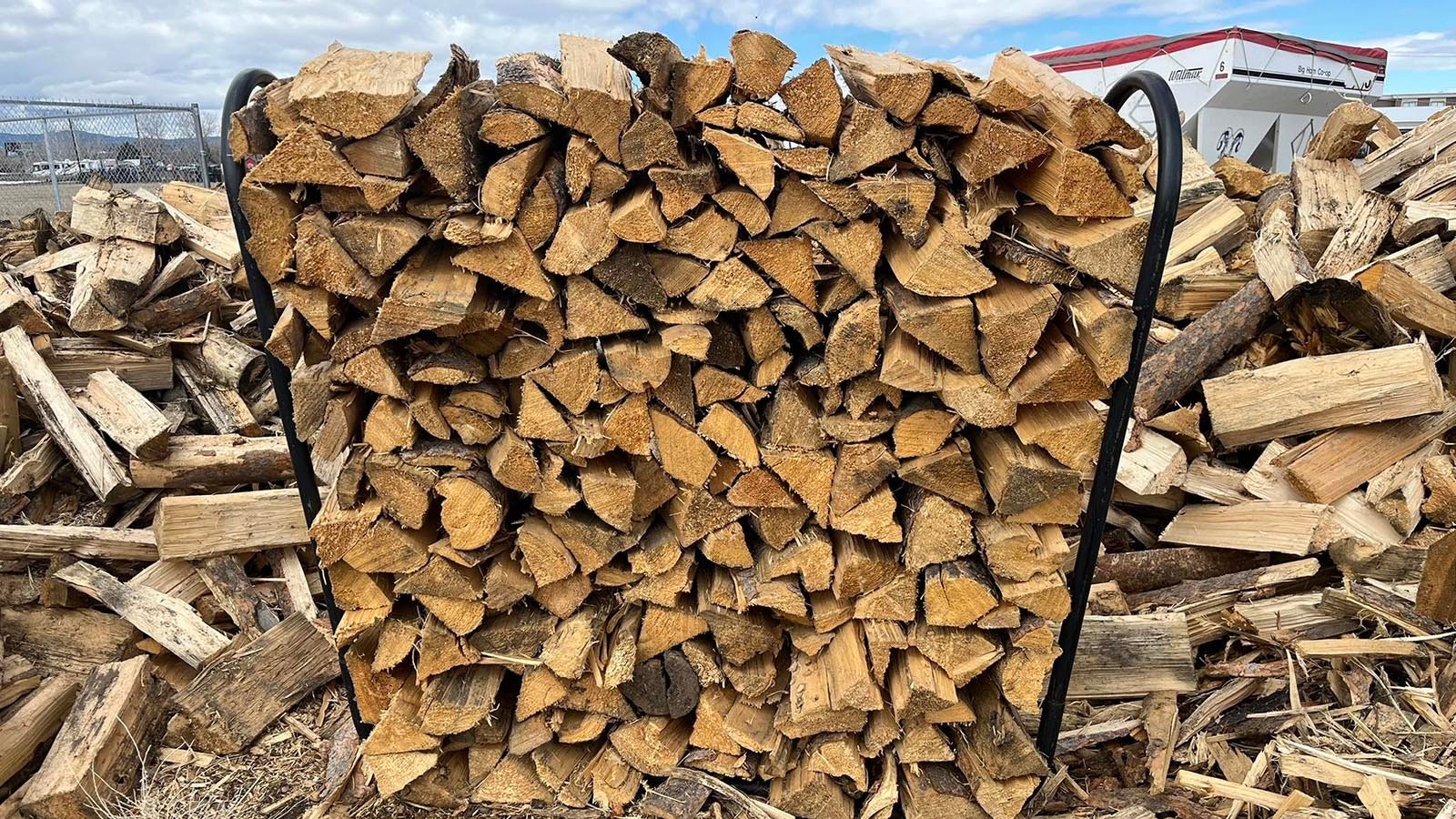
Each family received a rack of wood equal to one-seventh of a cord each week. (Courtesy Clear Creek Wood Bank) 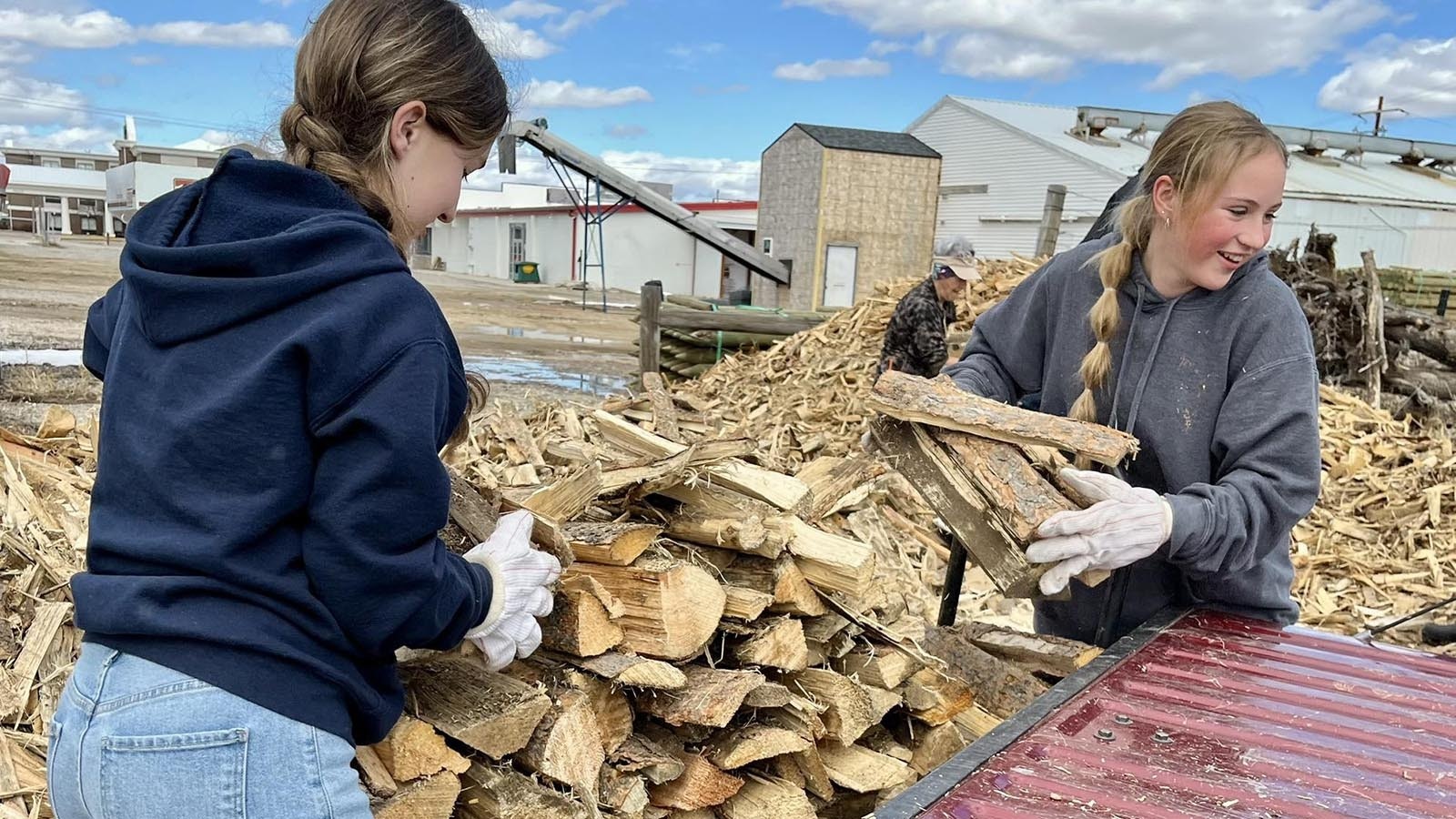
Volunteers load a pickup during one of the wood bank’s Tuesday giveaways. (Courtesy Clear Creek Wood Bank)
$100,000 Worth Of Wood
Norris said the wood bank’s season which runs from Nov. 1 to April 1 last year distributed 128 cords of wood. This year, the project will give away 140 cords.
And by the end of this year, the wood bank will hit $100,000 worth of wood distributed to the community since it started.
“That is a lot of firewood,” Norris said. “That’s a lot of families we’re keeping warm and keeping in their homes.”
For Paul Mumm, a retired banker who oversees weekly wood bank operations and volunteers, the economic impact of the wood bank resonates.
He said since the launch of the wood bank four years ago through the end of February, the free wood giveaway has had a $430,000 economic impact on the region.
He noted that Johnson County is known to have a high percentage of retirees.
The U.S. Census Bureau data from July 1, 2024, estimates 28% of the county’s population is 65 or older.
A major focus of the wood bank is to help those who are retired and on fixed incomes, the disabled, and veterans.
“Basically, what we are saying is that every Tuesday is worth about a $5,300 economic impact in the two hours we give wood out,” he said. “That is really a phenomenal number.”
Lisa Driscoll, who also serves on the wood bank’s board, said year-to-date 77.5% of those who have used the wood bank have been retirees, 41% are disabled and 29.5% are veterans.
While this year 637 Buffalo families have participated, another 166 families have traveled from Arvada, Banner, Clearmont, Gillette, Kaycee, Ranchester, Sheridan, Story and Upton for wood.
“I really enjoy seeing the people come each week and we have a great group of volunteers who have a good time,” she said. “I’m fairly new to the community, I’ve only been here five years, so it’s nice meeting people from our community and being able to help them.”
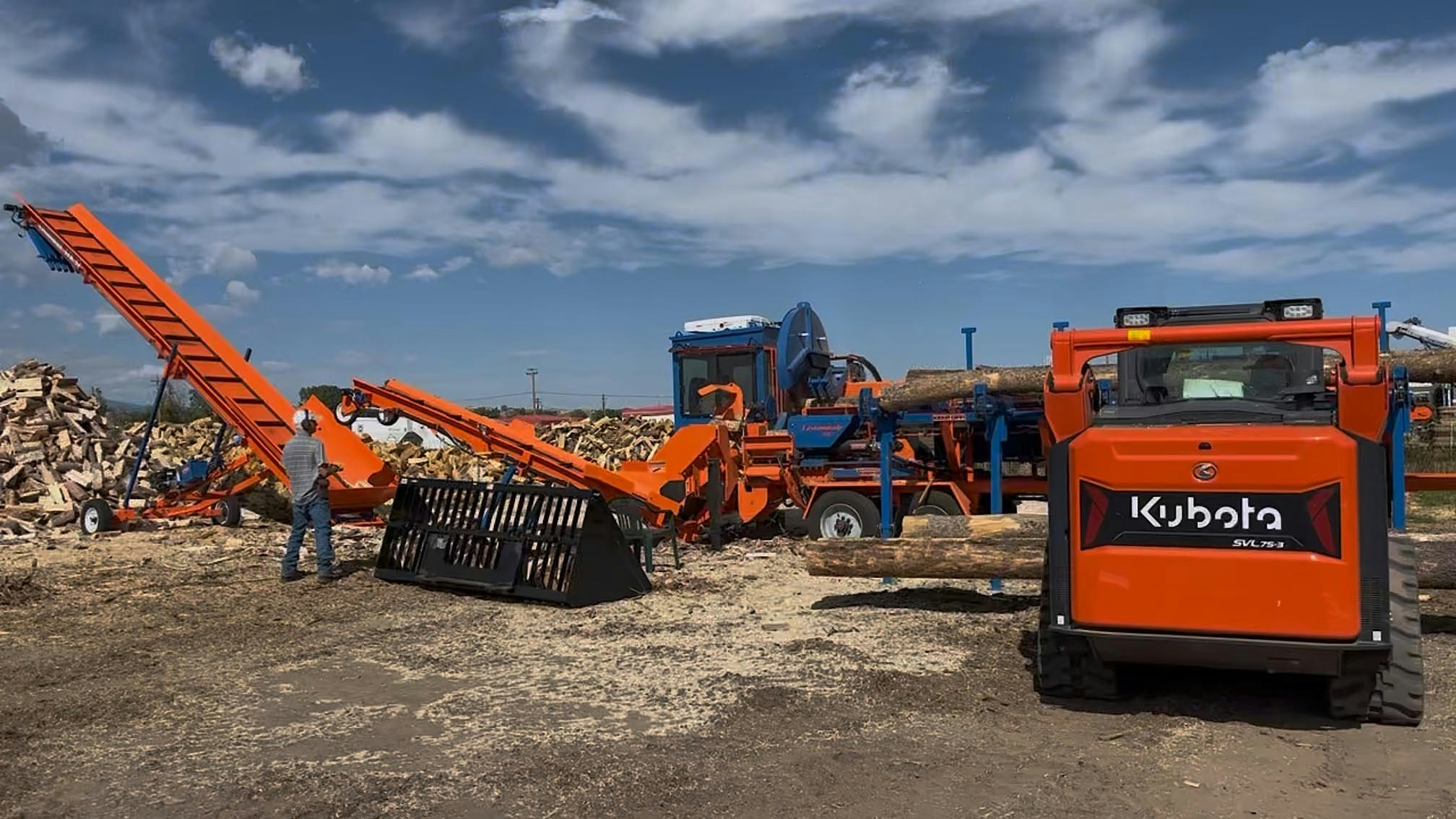
A wood processor takes the logs and turns them into firewood. (Courtesy Clear Creek Wood Bank) 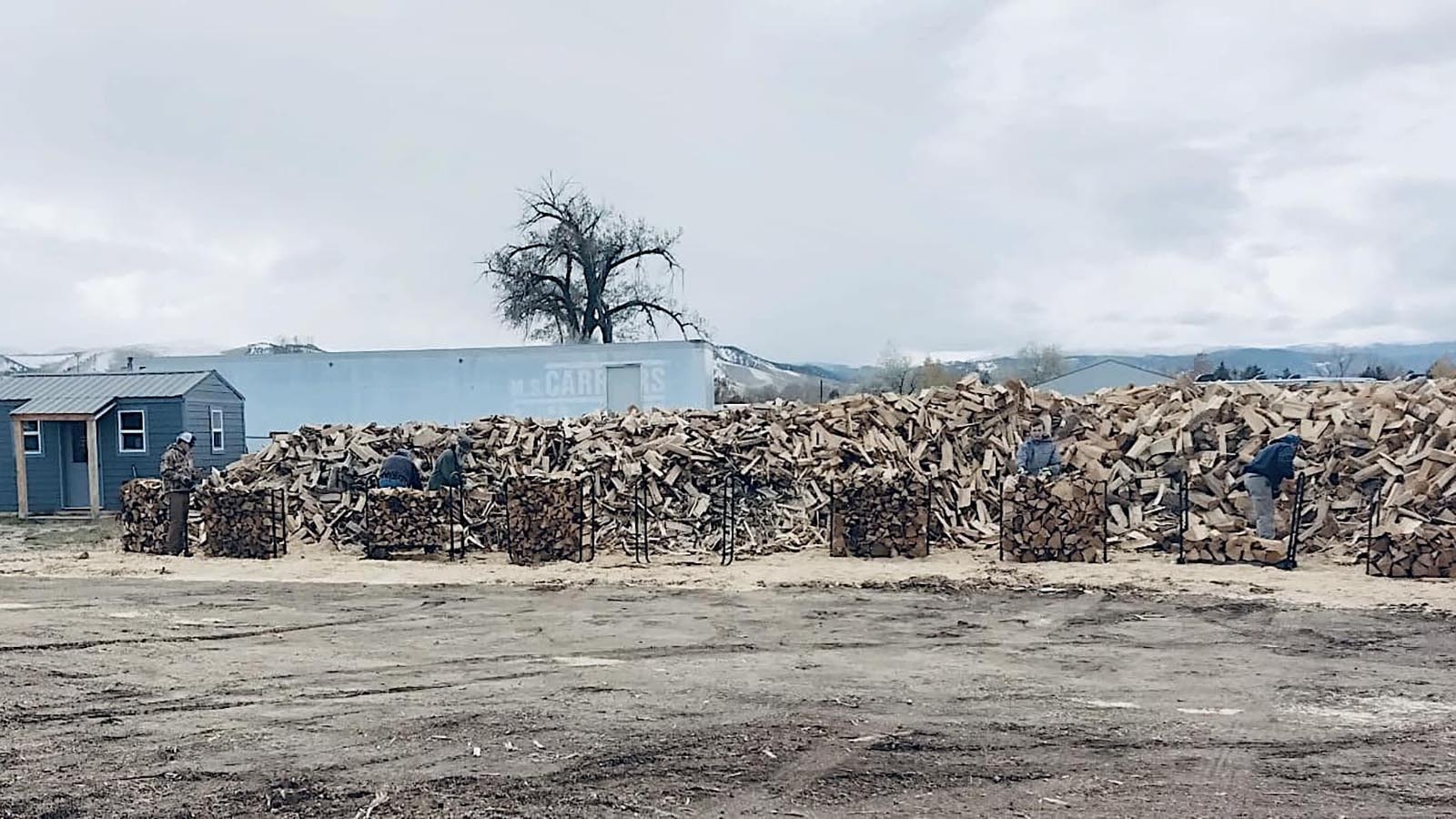
Wood is placed in racks at Clear Creek Wood Bank ready for patrons to arrive. (Courtesy Clear Creek Wood Bank) 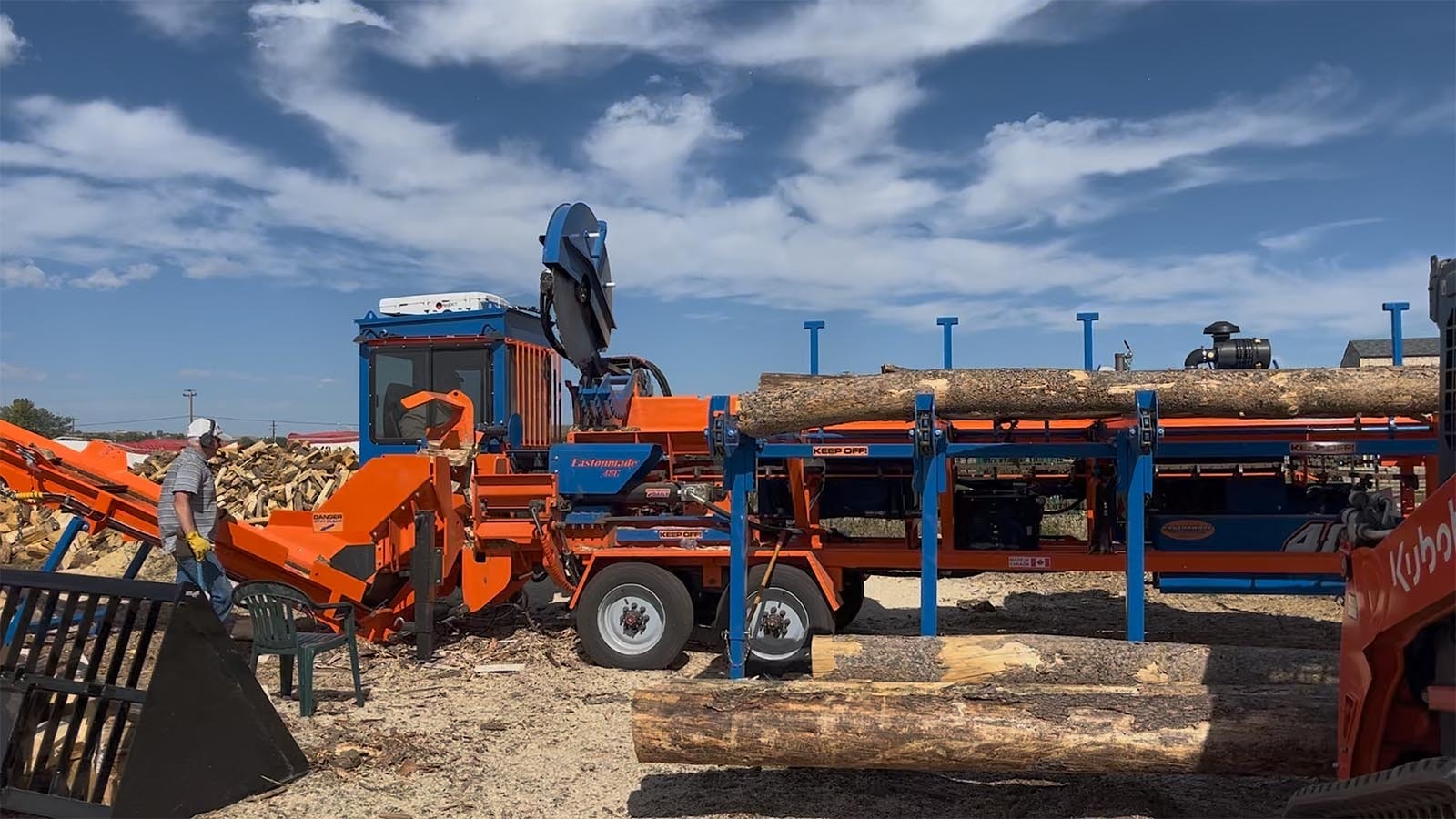
A saw blade cuts the logs into the proper length for firewood. (Courtesy Clear Creek Wood Bank)
Volunteer Hours
Volunteers young and old continue to supply the manpower each Tuesday, Mumm said.
Students from the local Christian school as well as the alternative high school in addition to faithful adult volunteers help stack the firewood in racks and then load vehicles.
Volunteers have contributed a total 1,561 hours this year.
Mumm said he tests the wood each week for moisture content and on March 3, there was less than 3% moisture in wood ensuring it would burn easily.
In addition to the firewood, the saw dust produced by the wood processor that cuts the logs and splits the wood is also providing local gardeners with sawdust to mix in the soil as well as a couple of big chicken farms with chicken bedding, he said.
Processor waste kindling is also gathered and put into bins that are given to people to help start their fires. People return the empty bins each week.
Norris said two grants awarded the wood bank, one from the Alliance for Green Heat and the other from the Wyoming Community Foundation have already been put to use so that the costs of this year’s wood supply and next year’s wood supply are covered financially.
After April 1, the work of processing the wood for the 2026-27 season begins, and a local volunteer who donates a wood processor machine along with other volunteers will start cutting the logs and preparing the wood supply.
As the work of the wood bank becomes more known in the region, it also is getting some national attention.
Norris said she was contacted by a reporter from the New York Times and planned to talk with her for a piece on how wood banks are doing with the cold weather — likely influenced by the mean winter the Midwest and East Coast have experienced.
Wyoming will be an outlier in terms of the temperatures and severity of the season, Norris said.
“It’s been really odd for us. I think wood banks have been a real focal point back East, a lot more than they’ve ever been,” she said. “That’s probably why they reached out to us.”
For the future, the wood bank continues to pursue grants and become more established with the potential of expanding into other Wyoming communities in future years, Norris said.
‘Immense’ Help
Buffalo resident John Goss, also a retiree, joins Turk in being thankful for the service in his community. He has been taking advantage of the weekly opportunity since the wood bank opened in 2022.
Goss said the supply has helped him “immensely.”
Like Turk, he tries to make his wood stove his primary source of heat although he does have a natural gas furnace for backup.
“It’s helped me a lot. It’s cut my heating bill way down,” he said. “With the way the weather has been this year, it lasts me about the entire week until I have to go get it again.”
More information about the wood bank can be found at clearcreekwoodbank.com.
Dale Killingbeck can be reached at dale@cowboystatedaily.com.