
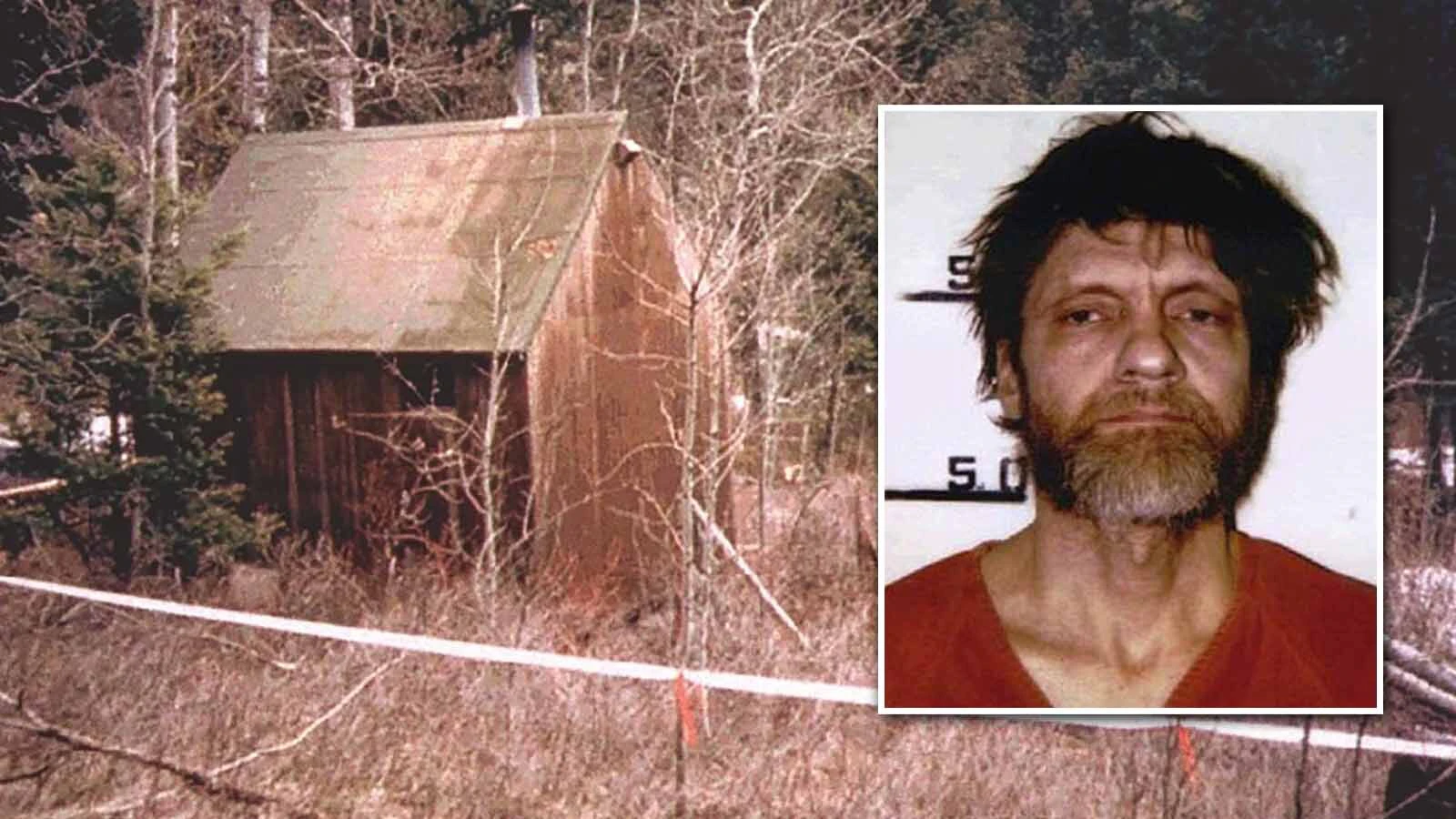
Despite traveling thousands of miles from its original home in Lincoln, Montana, and the benefit of three decades to air out, a tiny cabin at the FBI’s headquarters still bears some tangible reminders of its infamous resident.
“Apparently, it was quite smelly for some time,” Dr. John Fox, who has served as the FBI’s historian for more than 20 years years, said of the small, primitive cabin built by Ted Kaczynski, aka the Unabomber.
“If you really want to stick your nose to the wall, I hear you …” he added, before stopping himself. “Well, you don’t.”
It was inside the walls of this roughly 10-by-12-foot cabin that Kaczynski planned a series of bombings over the course of a 17-year period that killed three people and injured dozens more.
“The cabin itself is such a unique piece of that story,” Fox said. “Here’s where the guy lived and worked and built his bombs, and it’s where he’s arrested.
“It really tells that story in a unique way that nothing else can.”
For about a decade — and despite Kaczynski’s objections in court — the bare-bones cabin was on display to the public at the Newseum in Washington, D.C.
There, it served to illustrate how the American public and news media can assist the FBI with bringing an end to this type of criminal activity, Fox said.
“It provides value in that it’s got a concrete link to our history, our nation’s history and the work that we do that can’t be told in any other way,” Fox said.
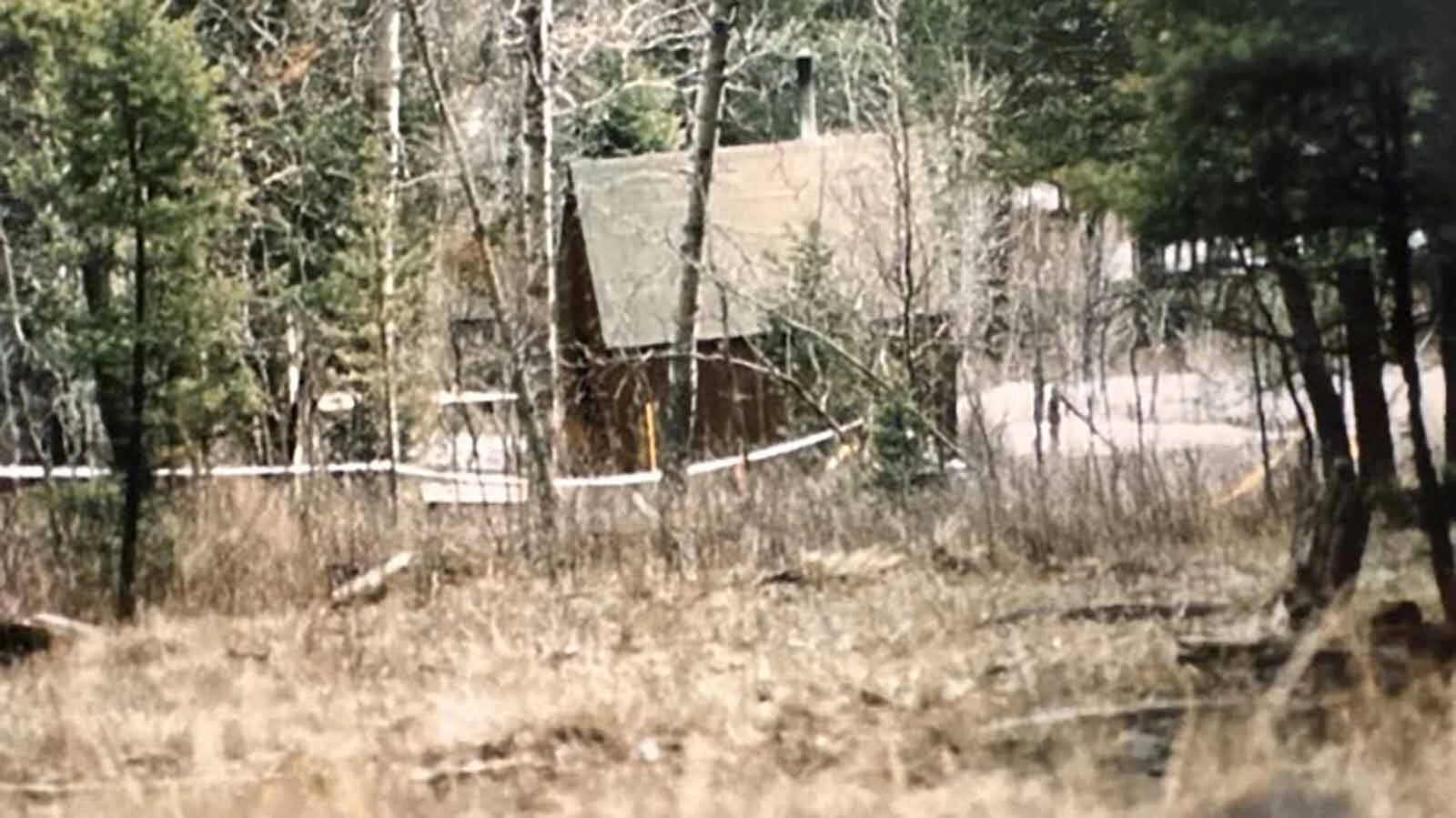
The 10-by-12-foot cabin was removed from Lincoln, Montana following the April 1996 arrest of the Unabomber subject and transported to Malmstrom Air Force Base near Great Falls. From there, it was shipped to Sacramento, California ahead of the federal trial that took place in early 1998. (Courtesy Jamie Gehring) 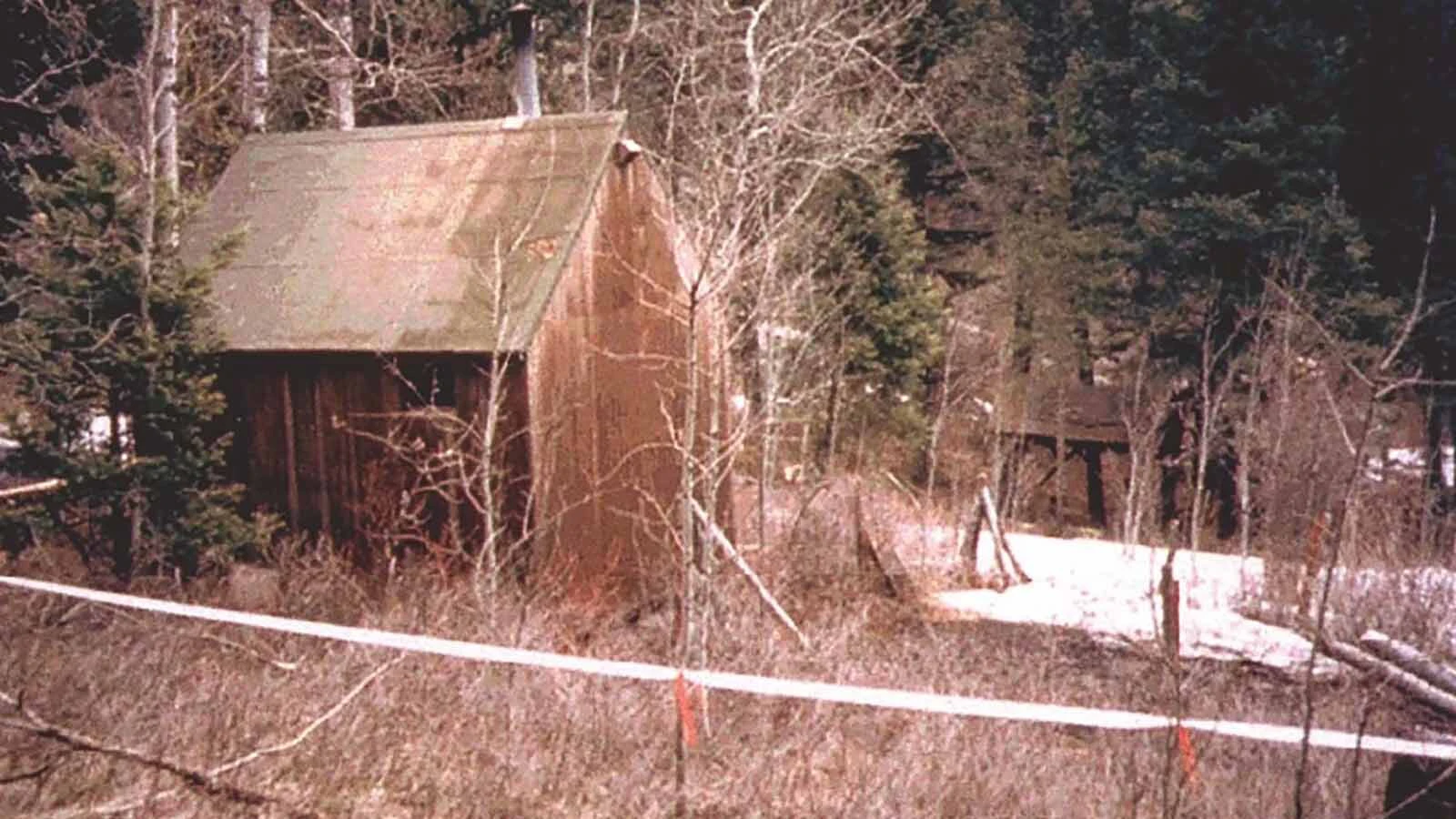
The cabin where Ted Kaczynski lived was on a 1.4-acre parcel of land that he and his brother, David, purchased from Jamie Gehring's grandfather in 1971 next to the property where her family owned a small lumber mill. (Courtesy FBI) 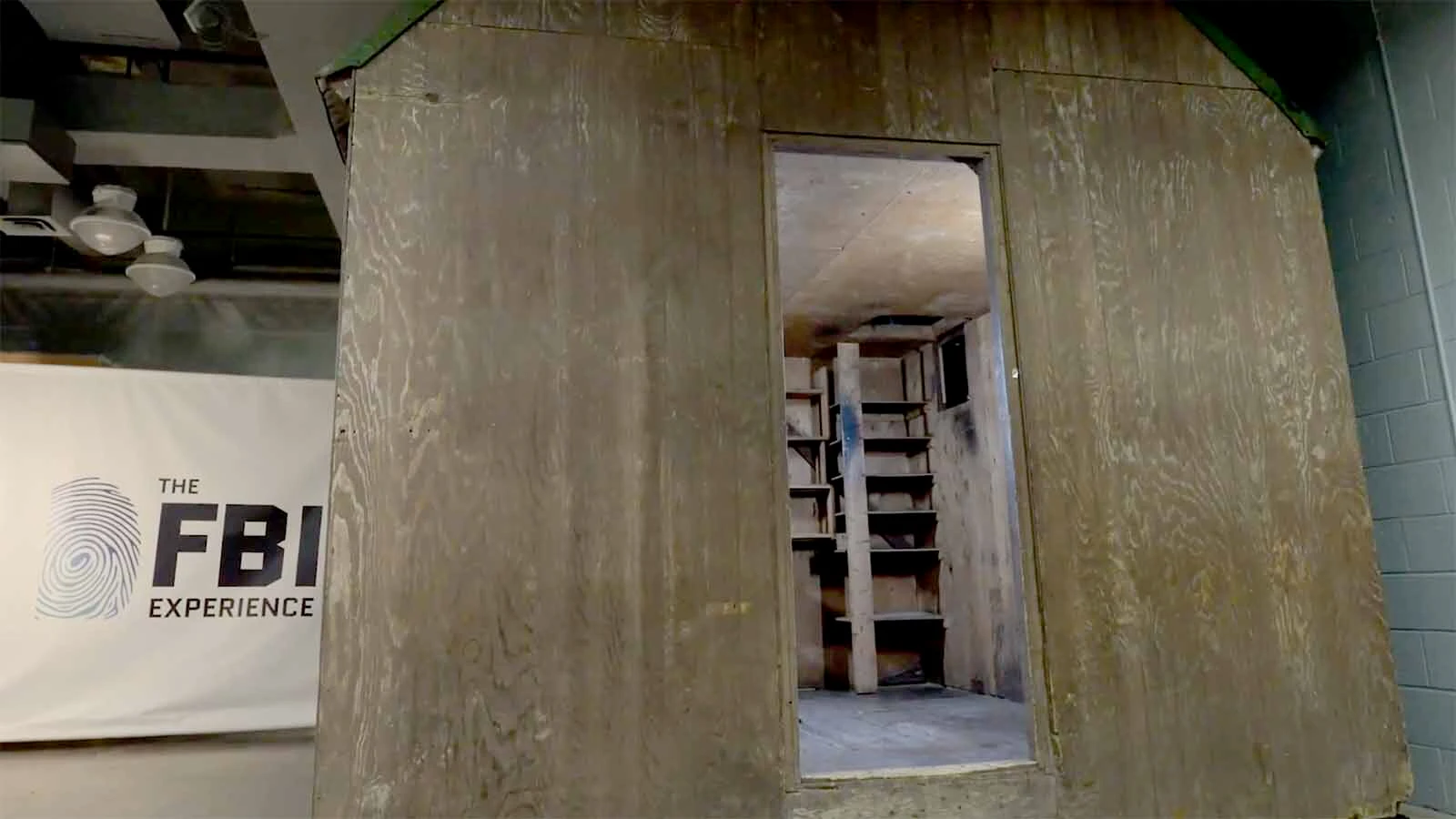
After about a decade on display at the now-shuttered Newseum in Washington, D.C., the cabin returned to the FBI's possession in 2020 and now effectively sits in storage. (courtesy FBI)
The Cabin’s Journey
Some people may be surprised that the cabin wasn’t destroyed long ago.
Following Kaczynski’s April 3, 1996, arrest, the cabin was hauled away intact to Malmstrom Air Force Base about 100 miles northeast near Great Falls, said Fox.
Kaczynski’s legal defense team then requested that it be shipped intact to Sacramento, California, where his federal trial was held so it could be used as evidence of his mental state, he added.
But Kaczynski famously rebelled against his legal team’s push to use insanity as a defense and instead pleaded guilty to all federal charges.
He was convicted Jan. 22, 1998.
After the trial concluded, the cabin sat in storage in the Sacramento area for more than a decade until it was dismantled by a company that specializes in such things and shipped east to the museum in Washington, D.C., said Fox.
When it was returned to the FBI in 2020, the cabin was once again taken apart and reconstructed, though its fragile state means it’s not likely to be on the move again soon.
“We’re not looking to move it anytime until we know where we’re going to put it permanently,” Fox said. “We’ll be very careful about where it goes next.”
‘It Didn’t Seem Like a Big Deal’
For so many years, the cabin didn’t command the sort of fascination it has more recently, particularly as Kaczynski’s case has been the topic of a number of documentaries.
Growing up next door to Kaczynski in Lincoln, Jamie Gehring’s childhood explorations saw her passing by the cabin regularly while she was out hiking or tooling around on a little motorcycle.
Other people in the area were also living off the grid in the 1980s and early 1990s, so Kaczynski’s cabin never struck Gehring as particularly strange or alarming, she told Cowboy State Daily.
“Because he was a neighbor, it didn’t seem like a big deal,” she said. “Of course, now looking at it as an adult, the idea of living in a very small, 10-by-12 cabin with no plumbing and no electricity, it’s strange.”
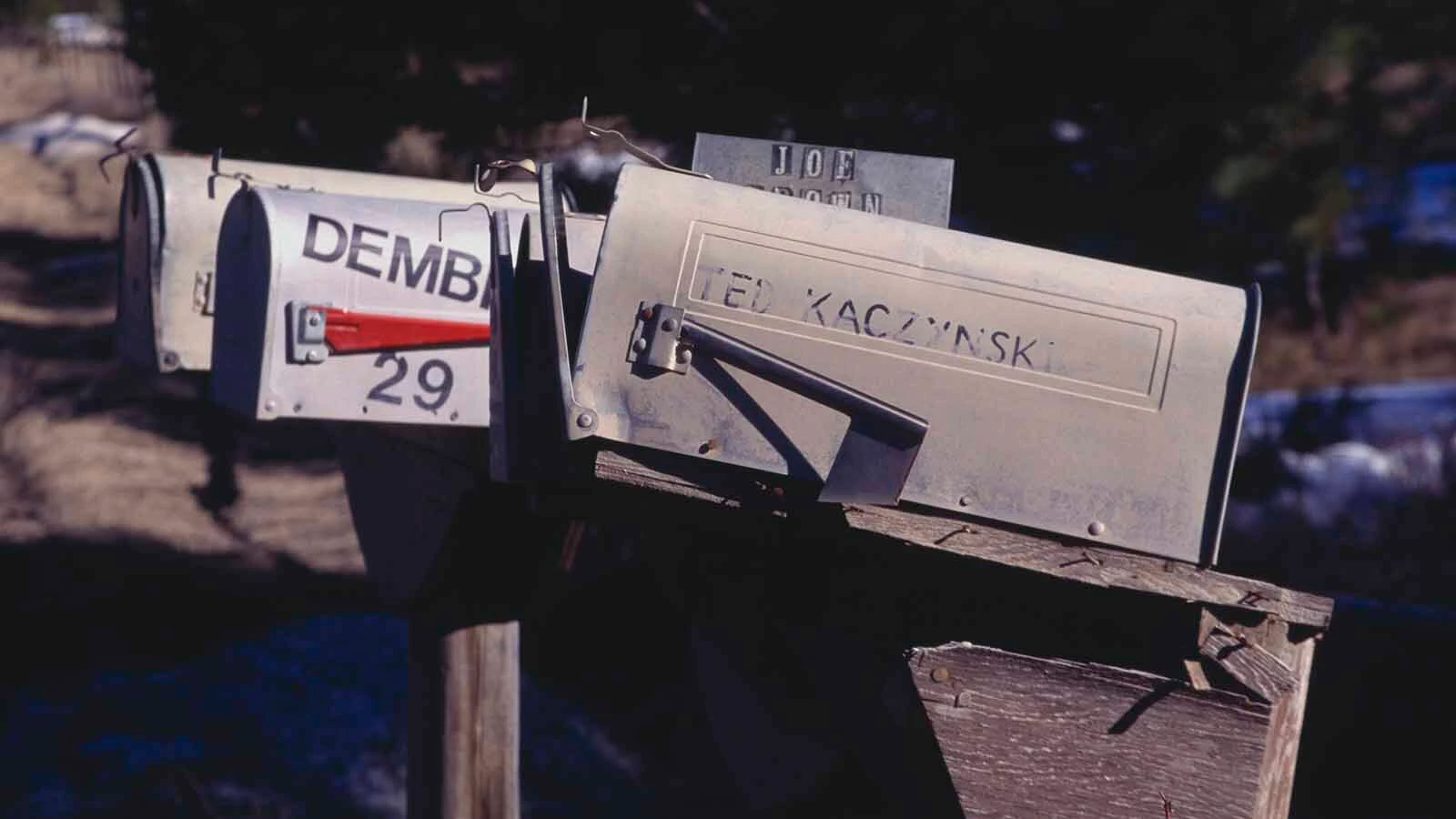
In her 2022 book “Madman in the Woods,” Gehring details her family’s interactions with Kaczynski over a 25-year span that began in 1971 when he and his brother, David, bought a 1.4-acre parcel from her grandfather that abutted the property where she grew up.
Though she never set foot inside the cabin, Gehring said it’s chilling to have learned through her research the details about what her neighbor was up to inside — like the pot-bellied stove where he melted metal fragments for shrapnel to put in his bombs.
“There are so many elements of that cabin, knowing the whole story, that are terrifying now,” she said.
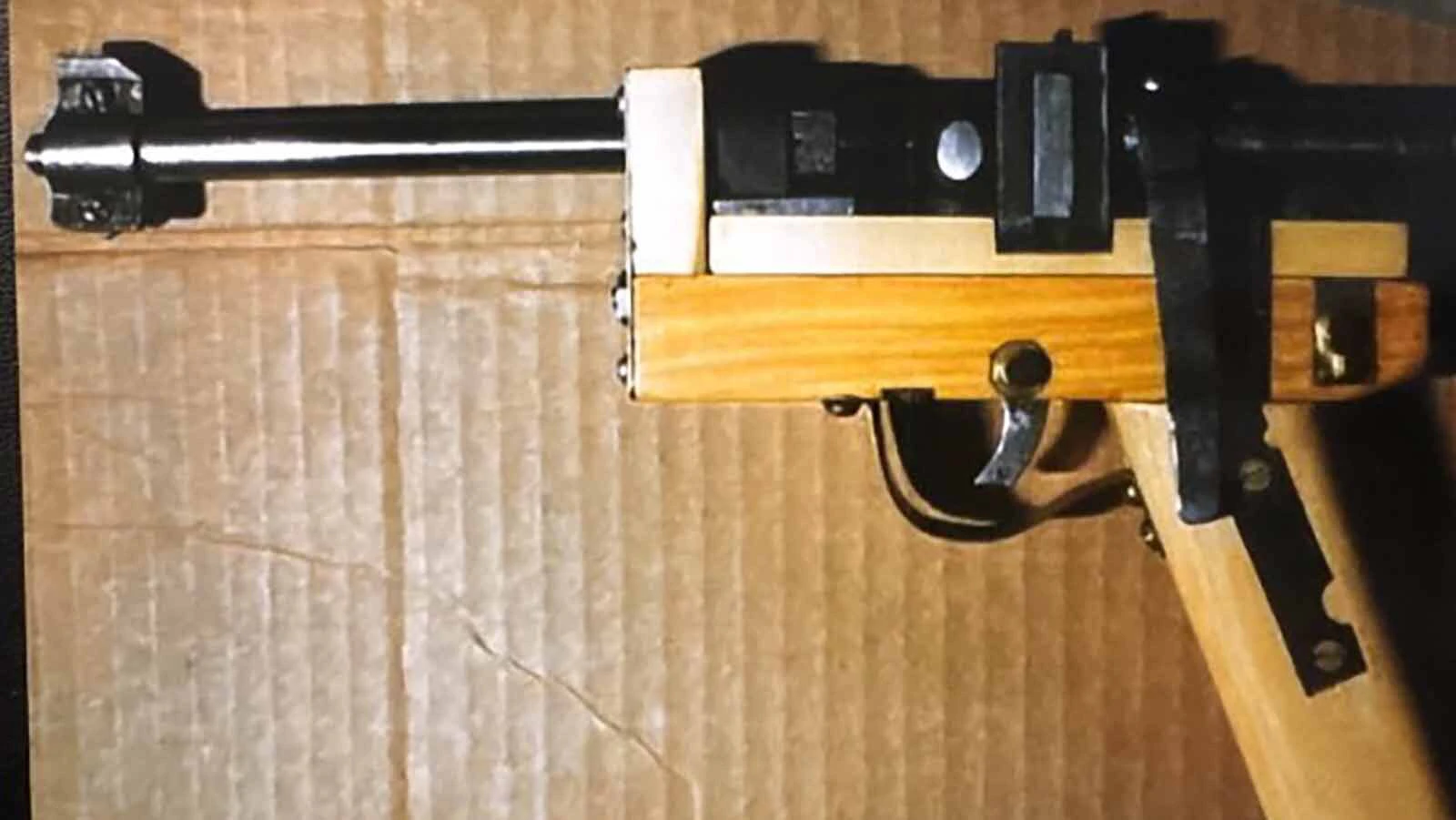
A homemade pistol removed from Ted Kaczynski's cabin in Montana after his arrest 30 years ago. (Courtesy Jamie Gehring) 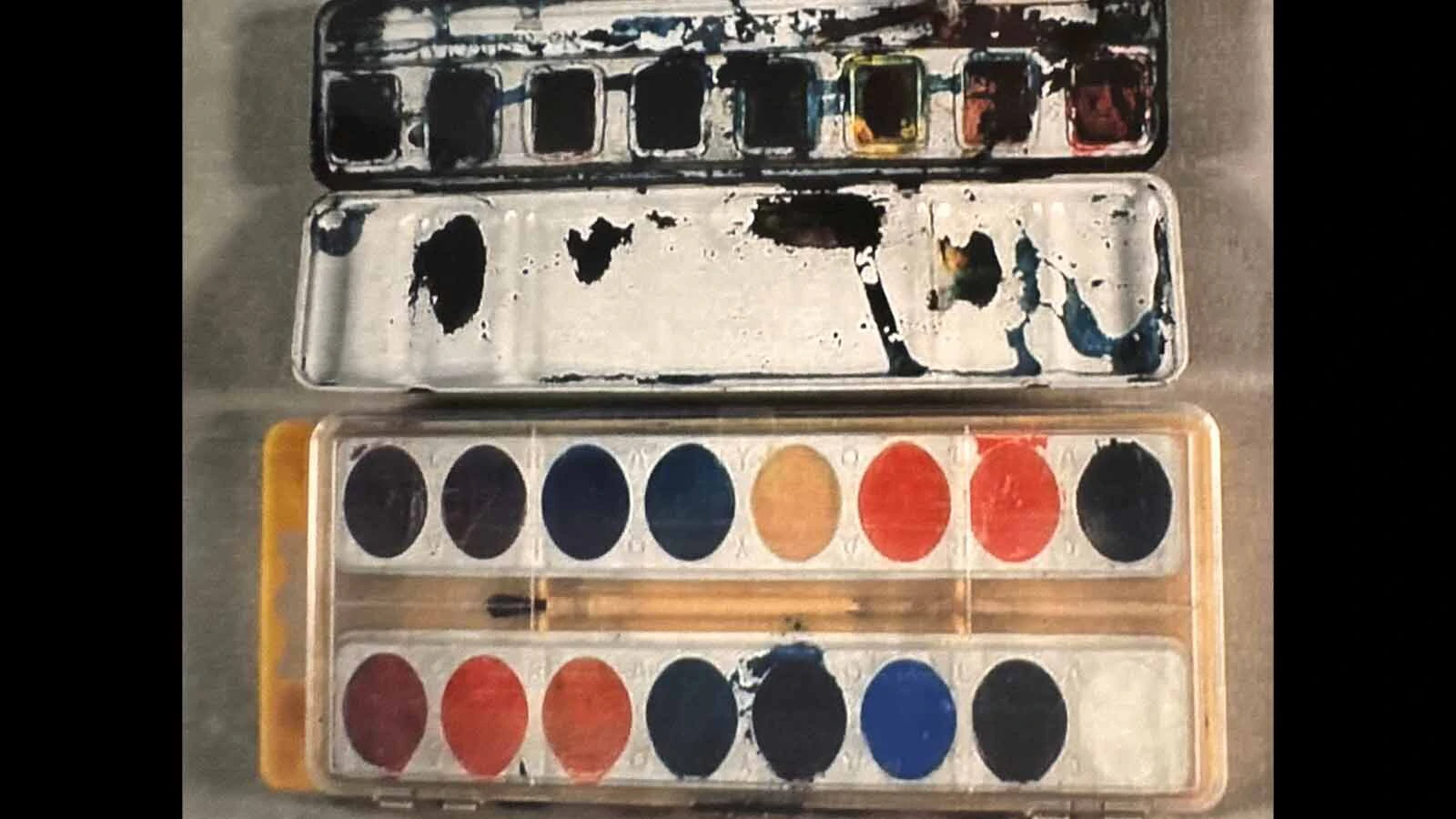
As a young girl, Jamie Gehring recalls her neighbor whom she called Teddy giving her some painted rocks; this paint kit was recoverd from his cabin. (Courtesy Jamie Gehring) 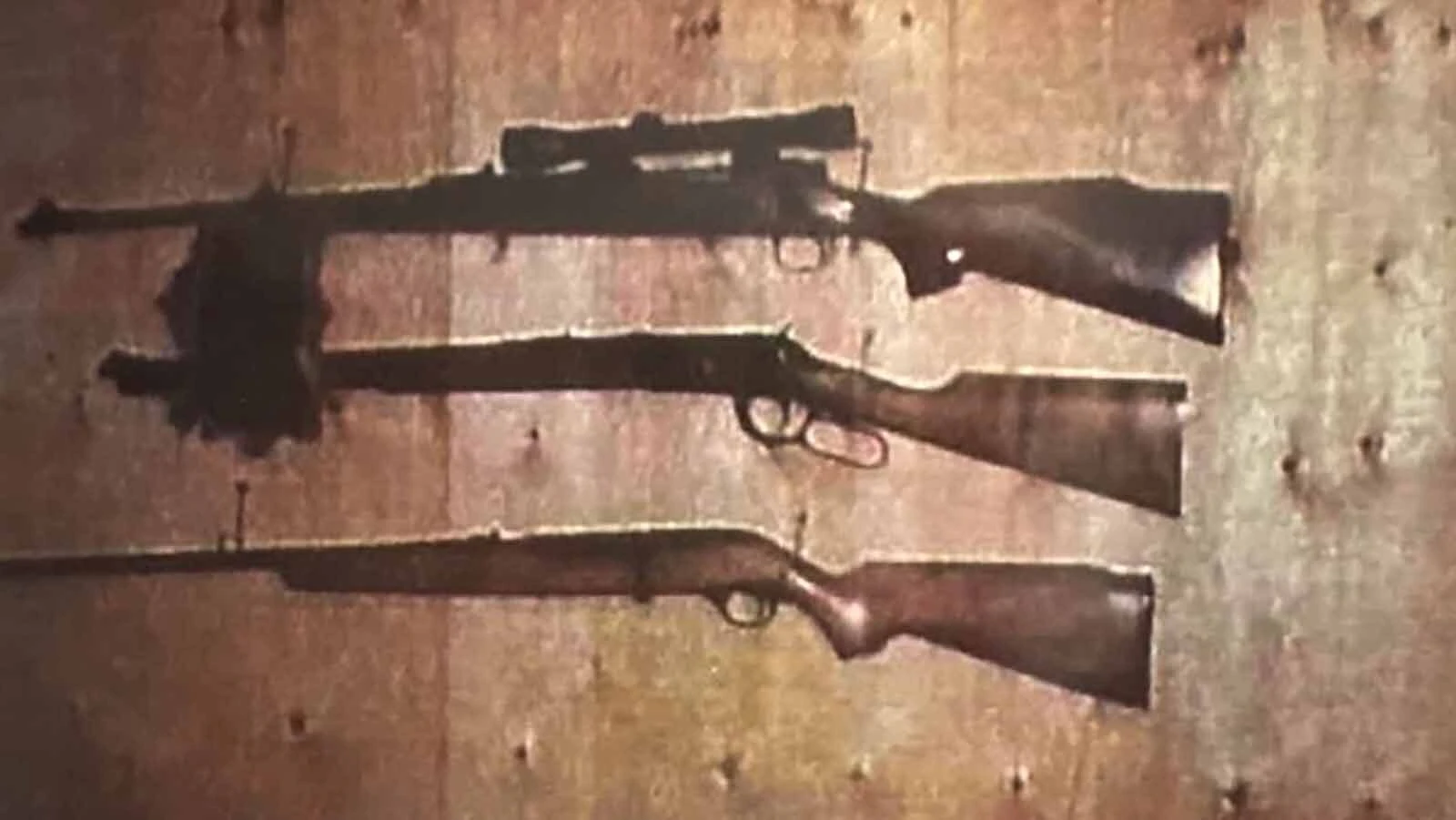
Some of the guns removed from Ted Kaczynski's cabin in Montana after his arrest 30 years ago. (Courtesy Jamie Gehring) 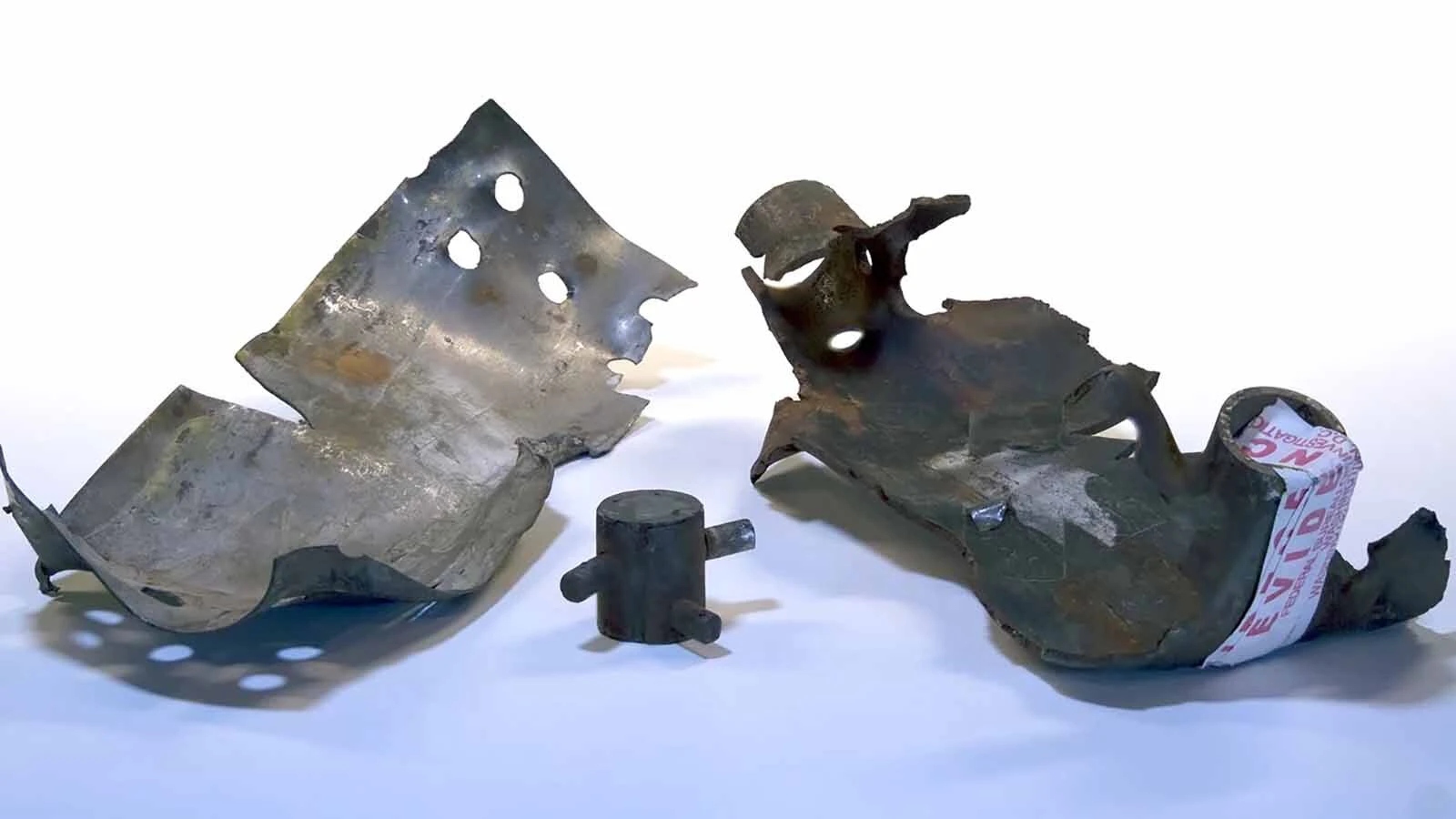
Shrapnel from one of Kaczynski’s bombs. These pieces stem from a February 1987 bombing in Salt Lake City, Utah. (Courtesy FBI) 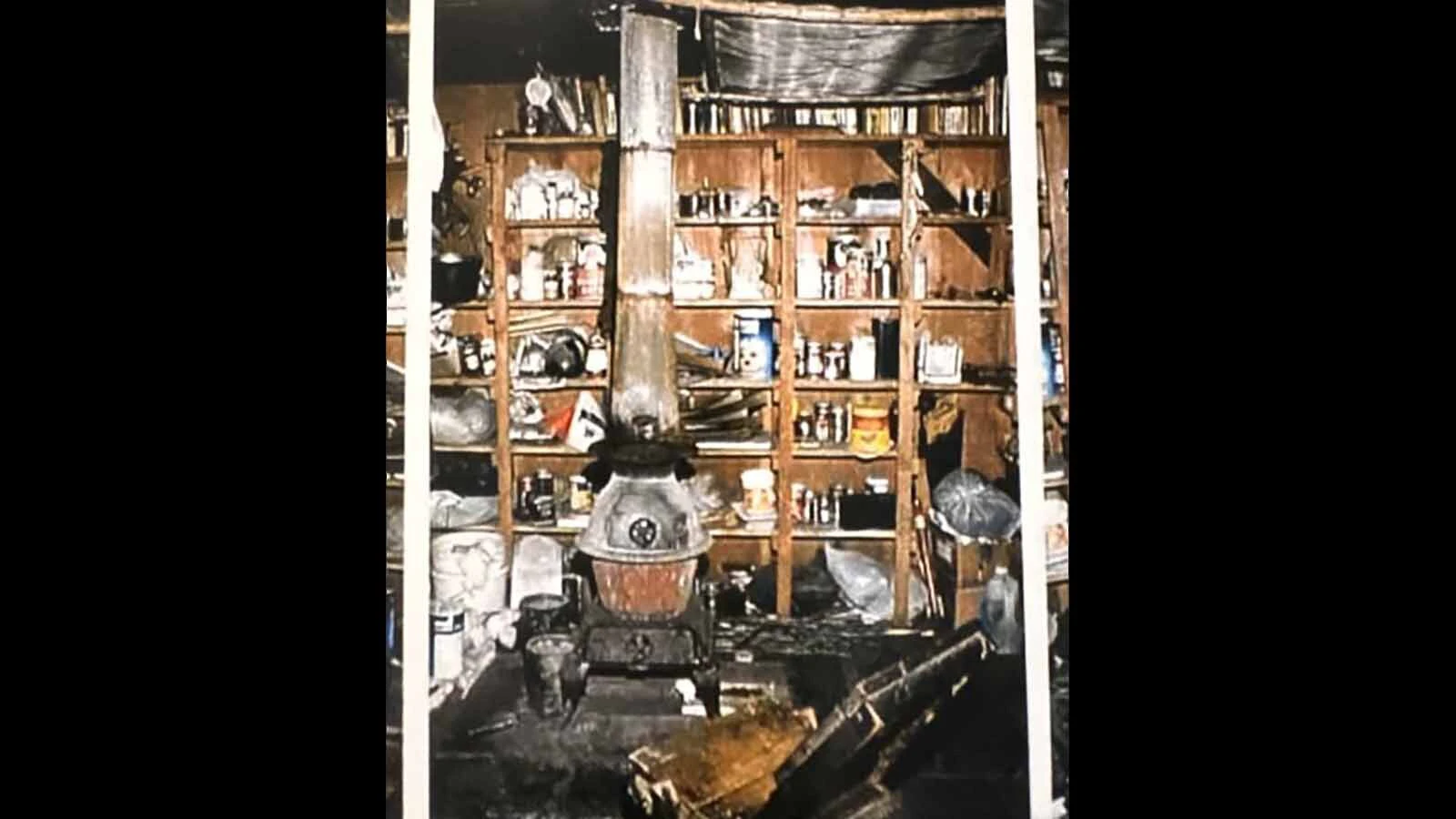
(Courtesy Jamie Gehring)
From Teddy to Terrorist
In the early days of his time in Montana, Gehring’s parents had a cordial relationship with Kaczynski — or “Teddy,” as they called him — and welcomed him into their home for dinner or a game of pinochle.
He held Gehring when she was a baby and painted some rocks he gave to her as a young girl, as she recalls in the book.
But over time, her family’s relationship with Kaczynski soured and various Gehrings had altercations with the man they believed to simply be a reclusive hermit, not a terrorist.
That happened particularly when people got too close to his cabin.
While the Unabomber made national headlines, those stories felt so distant to people like Gehring living in a tiny town where the closest “big cities” are places like Helena or Missoula, some 50 miles or more away.
To this day, the population of Lincoln numbers less than 1,000.
“When we realized Ted’s true identity, it was shocking and surreal and terrifying, all at the same time,” Gehring said.
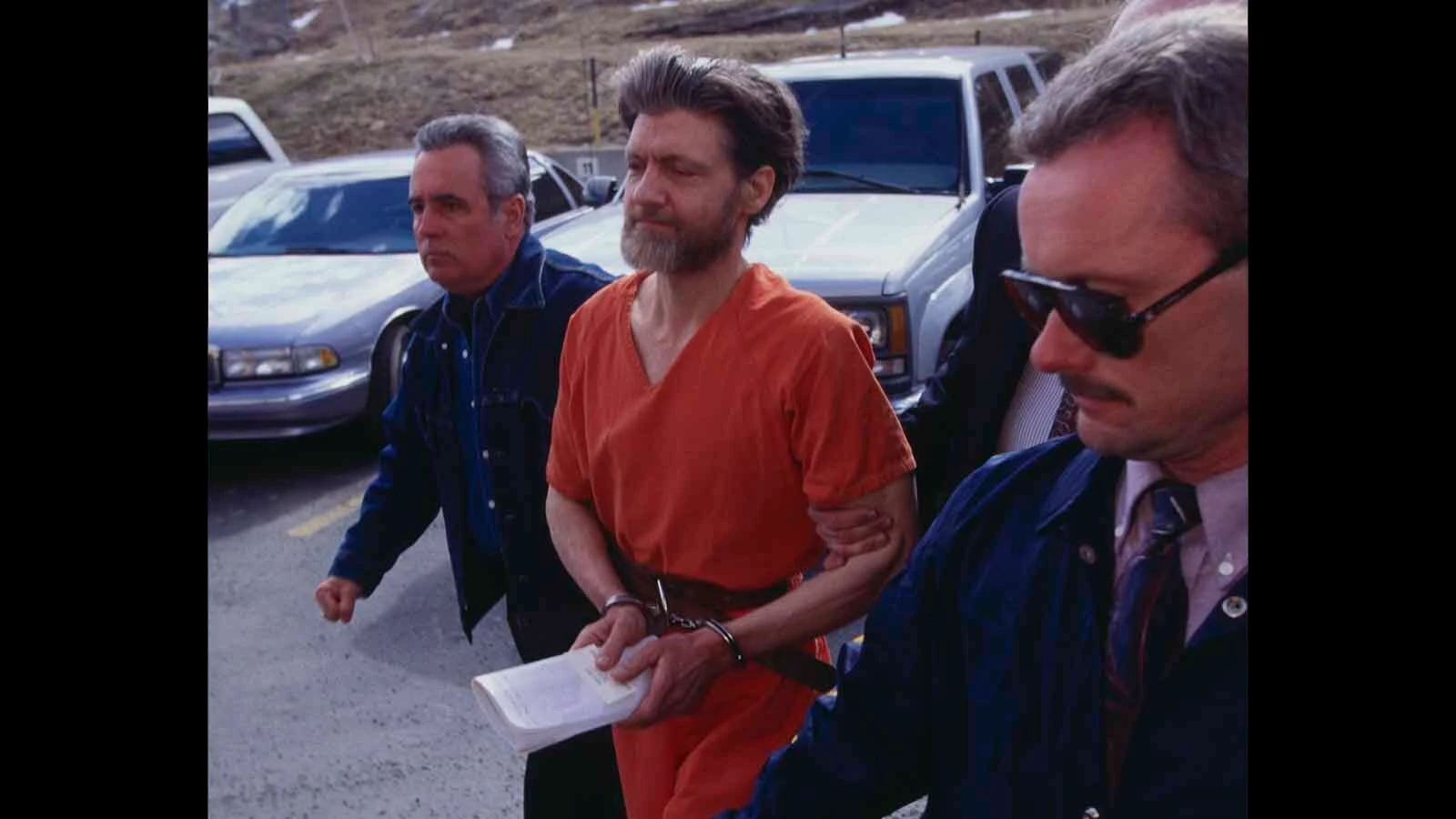
Gehring’s late father Butch proved to be pivotal to the capture of his recluse neighbor after he was first approached on a cold winter day in 1996 by FBI agent Max Noel.
Butch even captured video footage of Kazynski’s property and other details that helped the FBI prepare for the arrest.
Though Gehring wasn't living in Lincoln in April 1996 and her father only shared “bits and pieces” of his involvement with Kazynski’s apprehension, she subsequently learned the full details after meeting with Noel in recent years.
She’s also since seen an old video of the cabin being removed from the parcel of land she knew so well from childhood and, looking at one of the most monumental events in modern history, there was her father.
“It’s crazy,” she said.
Post-Arrest Chaos
The chaos that descended on Lincoln in the days following Kaczynski’s arrest hasn’t been forgotten by some locals who grew weary of all the attention.
The case and long-awaited arrest was also a big deal for the FBI, given how long Kaczynski had evaded capture.
Tom Myers, a retired FBI agent, recalls how about 15 agents in the class of new agents behind his cohort were sent to the San Francisco bureau to work the case.
“We all know about it," Myers said. "It was a big deal.”
In addition to shipping off the cabin on a lowboy truck, Myers said agents would have ensured no items remained on-site as looky-loo types who are fascinated by true crime often descend to collect what’s known as “murderabilia.”
What little possessions Kaczynski did own were subsequently sold in the early 2000s to pay off some of victims who had filed a civil lawsuit against him, said Fox.
That leaves the cabin as one of the final items from the famous case.
‘A Sharp Reminder’
Fox said these days, the only person who enters the cabin is the FBI’s curator, who goes in periodically to clean it and keep any dust or insects at bay.
While the cabin is likely the largest, it’s among a number of other large items in the FBI’s possession, including several vehicles and the boat where one of the assailants involved in the Boston Marathon bombing was found hiding, Fox said.
Though a reporter for The New York Times who typically writes about kitchens was recently granted a visit to mark the 30th anniversary of Kaczynski’s arrest, very few people outside of the FBI can now walk around the cabin and peer in from afar.
So, what’s that experience like?
“Oh, gosh,” Fox said, followed by a long pause. “It strikes you as stark when you see it.”
He went on to describe a “very basic” and rather industrial-looking structure with a couple holes in the walls, a steep, green roof, a hole in the floor that served as a wintertime latrine, and an otherwise dark and dingy interior with shelves stacked against one wall, and the pot-bellied stove.
“He lived as a recluse, basically,” Fox said. “It’s certainly a sharp reminder of who this person was and how he chose to live.”


