The Wyoming House of Representatives is poised to hear a bill that would give half a million dollars to a state-funded study on how data centers and hydrogen projects might sap or impact the state’s water supply.
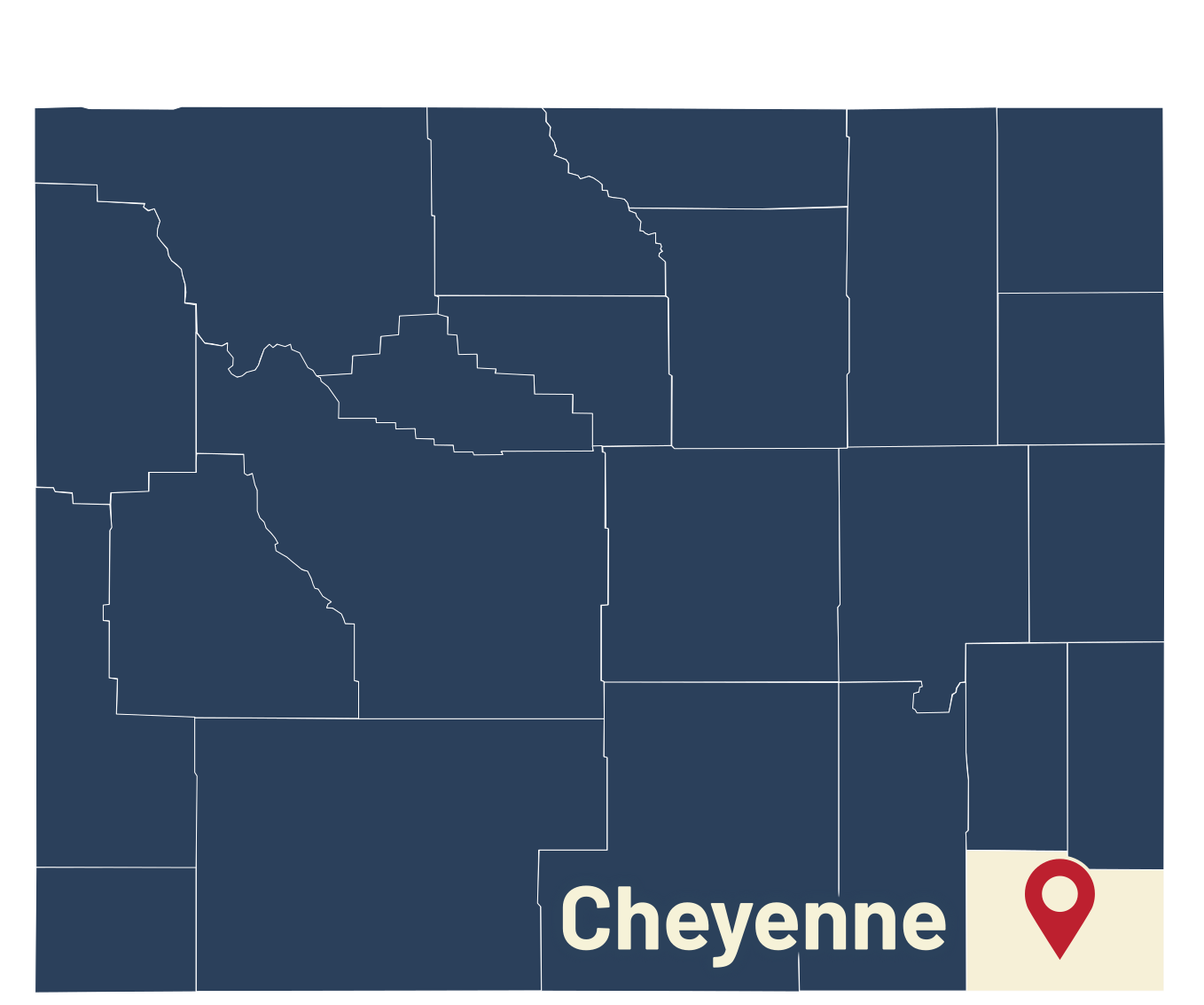
That’s after the House Agriculture, State and Public Lands & Water Resources Committee advanced House Bill 90 by an 8-1 vote Thursday morning in Cheyenne, sending it to the House floor for full debate.
If it becomes law, it would give $500,000 to the Wyoming State Engineer to conduct a study on large-scale industrial water use by data centers, carbon capture, or other large-scale industrial projects.
It would include projects that remove water from the water cycle, and electrolysis, plasma dissociation, thermochemical splitting, chemical dissociation of water into its elemental components, and using water as feedstock for hydrogen fuel production or other chemical compounds.
Not Big Enough
An environmental group that opposed the bill’s imminent passage said it did so not because the study would be too large or expensive - but that it’s not big enough or well-enough funded.
“Members from across the state, especially in Cheyenne, are concerned about data centers coming into communities,” Donna Birkholz, executive director of the Powder River Basin Resource Council, told the committee Thursday.
People are concerned over the “large quantities of water these data centers require and how these impacts would affect water quality,” she added. “They arrive in our communities so rapidly, our members have lots of questions without answers.”
Birkholz asked the committee to lay the bill back for further development over the interim months between winter lawmaking sessions, to make a more complete - and better-funded study.
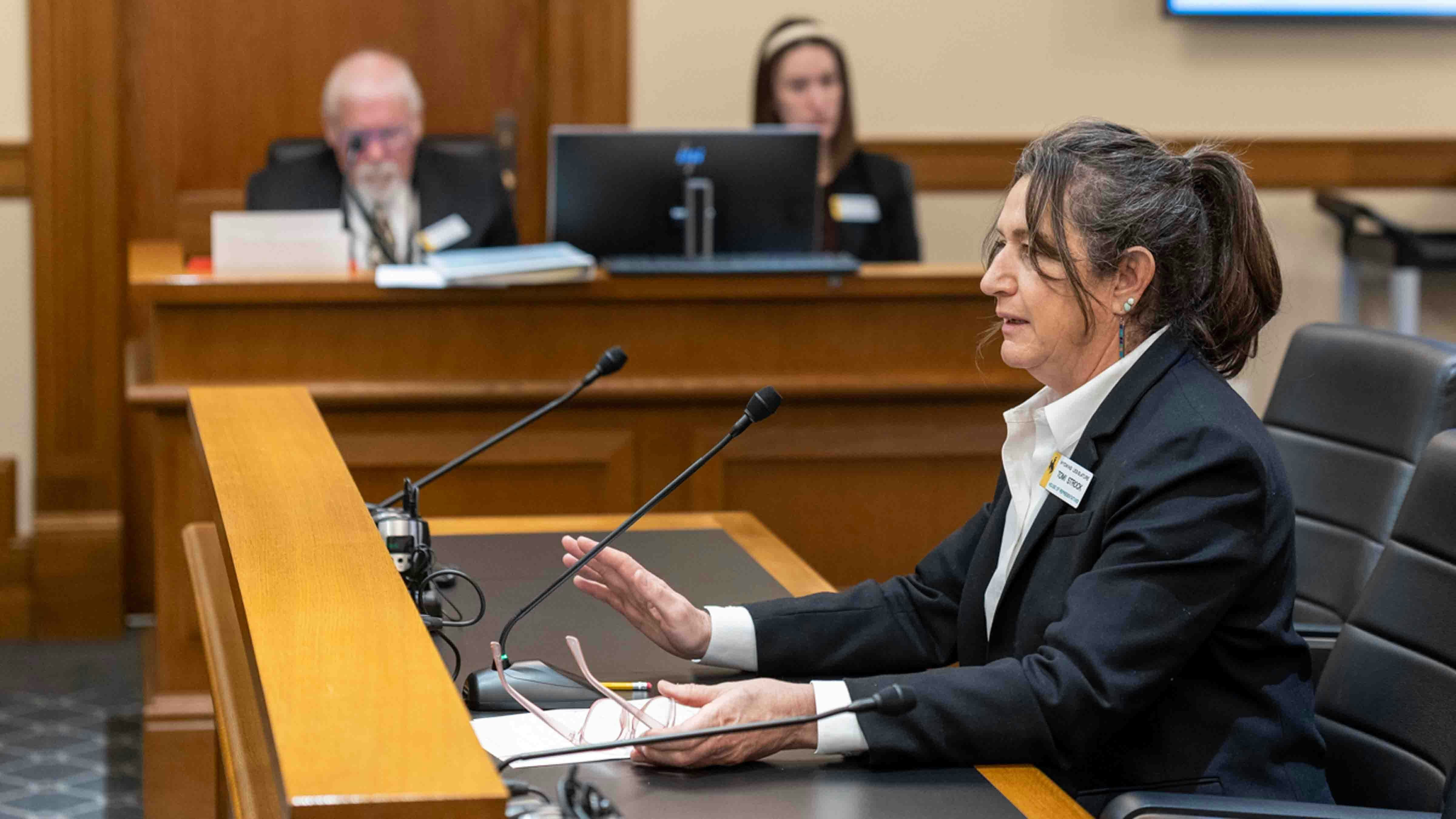
The bill’s sponsor Rep. Tomi Strock, R-Douglas, countered that that would delay the study by at least a year and risk the legislature not mandating it at all, even as “we’ve got a lot of things coming at us” in Wyoming.
“I’d like to know what’s really behind that, and what you would think of that,” said Strock.
Birkholz answered that if the study wasn’t well-designed, then the resulting decisions would hinge upon inadequate data.
“It would be hurrying for the sake of hurrying,” said Birkholz.
Consequential Problem
Rep. Karlee Provenza, D-Laramie, said data centers pose a consequential problem in Wyoming.
The Laramie County Commission last month approved Project Jade, a 2.7-gigawatt facility. That’s almost three times the present power use of the entire state of Wyoming, and almost a gigawatt more than the project had anticipated in August, Cowboy State Daily reported prior.
Provenza asked if the Legislature should amend rather than reject the bill.
“If we don’t do this right now - I mean, what’s our water going to look like in a year, year and a half?” she asked. “When we’re getting no snow, no moisture; and we’re just approving data centers that are going to suck up our electricity and potentially our water.”
Birkholz said her group would be happy to work with people on that. The $500,000 appropriation is too low, and the scope of the project is too small, she said.
She said she didn’t know the ideal appropriation figure, though the Wyoming State Engineer’s office might.
Rep. Steve Johnson, R-Cheyenne, suggested including in the study whether the groundwater the recently-approved Cheyenne project seeks to use has been contaminated from Minuteman missiles.
Wyoming State Engineer Brandon Gebhart said the agency would be happy to perform whichever scope of study the Legislature requires.
House Bill 90’s next stop is a full-body debate on the Wyoming House of Representatives floor, after which it would need to survive two more readings in the House, the same process in the Senate, and the governor’s desk to become law.
Clair McFarland can be reached at clair@cowboystatedaily.com.