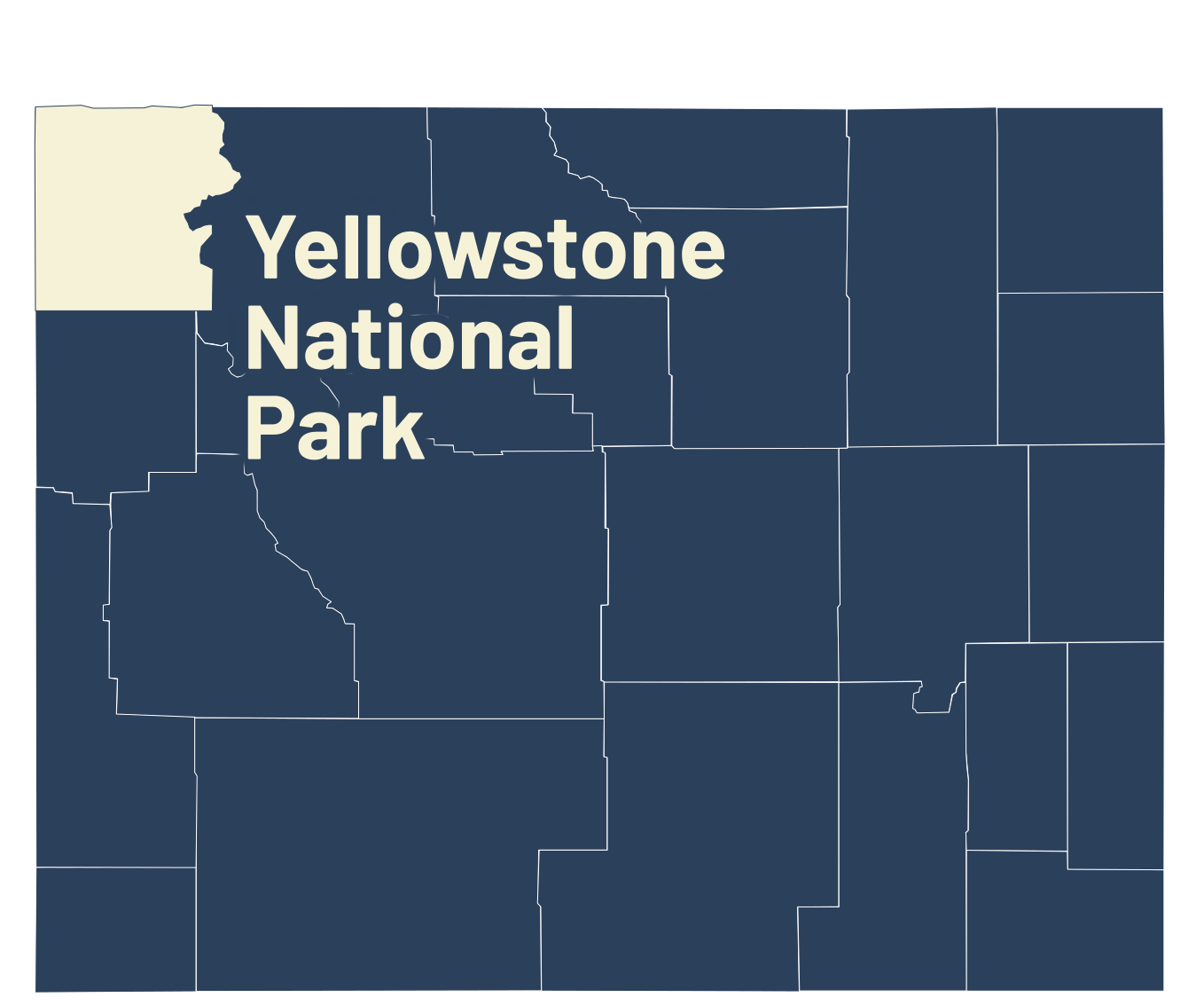

Wolves in the zone around the site of the 1986 Chernobyl nuclear disaster might be mutating to resist cancer, and Yellowstone National Park wolves lent a hand or, rather, a paw, in helping scientists understand how.
Blood samples taken from Yellowstone wolves during the 2010s were used in a genetic database that helped researchers compare wolves continuously exposed to radiation in the Chernobyl exclusion zone in Ukraine with wolves from other populations.
Wolves there are exposed to radiation roughly equivalent to “three or four chest X-rays a day,” Princeton University researcher Cara Love told Cowboy State Daily on Monday.
According to conventional wisdom, long-term radiation exposure can increase the risk of cancer. But researchers are investigating whether some Chernobyl wolves might have genetic characteristics that help them cope with that risk.
Decades of radioactive exposure could be causing genetic mutations that make those wolves less susceptible to tumors, said Love, a postdoctoral research associate in Princeton’s Department of Ecology and Evolutionary Biology.
That could, in turn, have implications for advancements in human health, she said.
And it’s all thanks in part to the database provided by Yellowstone wolves.

Horrific Reactor Explosion
Chernobyl was one of the worst nuclear power plant disasters in history.
On April 26, 1986, a reactor at the Chernobyl Nuclear Power Plant exploded during a safety test, sending radioactive material across the surrounding region.
The disaster resulted in 31 deaths in the first weeks after the accident, including workers who died from acute radiation sickness. Over the years and decades, radiation exposure has been linked to additional cancers and other health effects. Estimates of the eventual death toll vary, depending on which populations and effects are included.
Since the disaster, most people have been evacuated from the Chernobyl exclusion zone, and ordinary residential and economic activity has largely ceased in the roughly 1,000-square-mile Ukrainian zone.
So, wolves and other wildlife have recovered and even thrived with minimal human interference.
That makes it somewhat similar to the protected habitat in Yellowstone, although the park at nearly 3,500 square miles is about twice the size of the Ukraine exclusion zone, Love noted.
The exclusion zone is heavily forested and is home to a surprising array of wildlife, she said.
That includes the wolves, deer, moose and the European bison that are so huge, "You can feel it in your chest when they run,” she said.
When researchers first started trapping, collaring, and taking samples from wolves there in 2014, they preyed primarily on gigantic wild boars.
However, a pathogen jumped from nearby domestic swine farms into the wild boar population and all but wiped them out. As a result, the wolves switched to preying on or scavenging other hoofed animals and bison, not unlike Yellowstone wolves.

Mutations Across Generations
The radioactive particles left in the exclusion zone are found largely in the environment, including soil and vegetation. So, wolves are exposed to radiation directly through the environment and indirectly through the other animals they eat, Love said.
To get a clear picture of how continuous exposure was affecting the wolves, scientists needed control samples from populations elsewhere.
Yellowstone wolves were an obvious choice. They are probably the most studied and best-known wolf population in the world, Love said.
Moreover, there was already a rich genetic database available, built on blood samples taken from Yellowstone wolves from 2011 to 2013, she said.
Blood samples from wolves in Belarus and other populations were also used as control groups.
Researchers noticed genetic and biological differences in the Chernobyl wolves, Love said. Those included changes in genes involved in immune function and the body's response to cancer-related stress.
One hypothesis is that the process could resemble some of the biological responses seen in human cancer patients undergoing radiation therapy.
Wolves have a much shorter lifespan than humans, usually about five years in the wild.
Blood samples from wolves in Belarus and other populations were also used as control groups.
Researchers noticed genetic and biological differences in the Chernobyl wolves, Love said. Those included changes in genes involved in immune function and the body's response to cancer-related stress.
One hypothesis is that the process could resemble some of the biological responses seen in human cancer patients undergoing radiation therapy.
“That’s the question. Can any of this transcribe to humans?” she said.

Value Of Yellowstone Wolves
Their Chernobyl research highlights the scientific value of the Yellowstone wolves, biologist Robert Crabtree told Cowboy State Daily.
Love said that in the thick forests of the Chernobyl exclusion zone it’s difficult to observe wolves, so not that much is known about their pack structure, much less the lives of individual wolves.
Yellowstone’s topography includes wide-open spaces such as the Lamar Valley, where researchers can directly observe wolf behavior for hours, said Crabtree, the founder, chief scientist, and president of the Yellowstone Ecological Research Center.
That’s allowed researchers to trace the history of packs and the lives of individual wolves.
The Yellowstone wolves have given researchers a front-row seat to just how adaptable wolves and other wild canines really are, Crabtree said.
“There’s no other wolf population in the world that has contributed more to the understanding of wild canines than the Yellowstone wolves,” he said.
And, he added, what’s happening with the wolves in Chernobyl could be another example of wolves adapting to thrive in what was initially a disaster zone, with the help of rapid genetic evolution.
Mark Heinz can be reached at mark@cowboystatedaily.com.