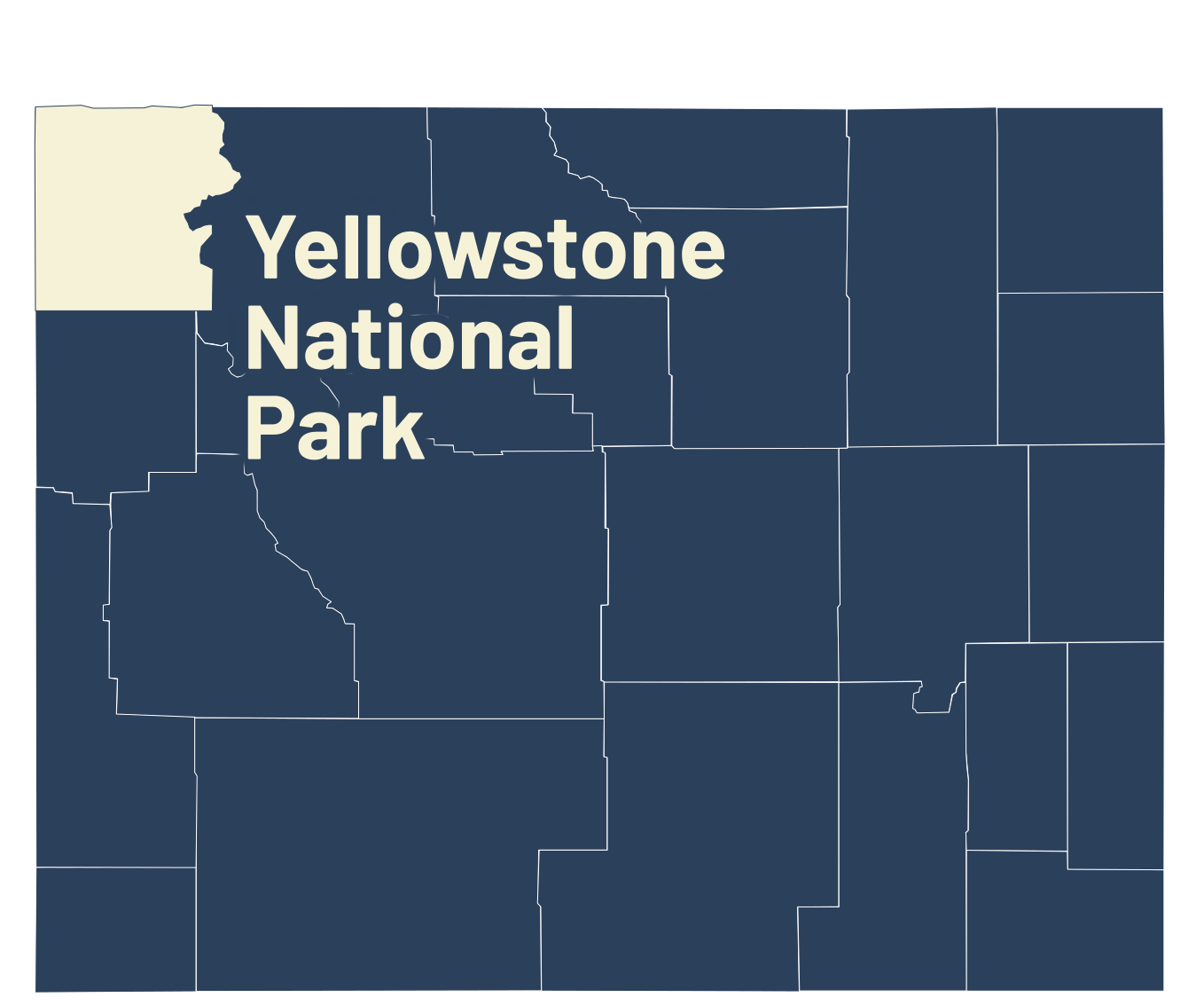

Dogs are permitted in Yellowstone National Park, but that’s not a guarantee they’ll make it out alive.
Dozens of people have been hurt or killed by stepping, falling, or jumping into Yellowstone’s scalding-hot hydrothermal features, but they’ve also claimed the lives of an unknown number of dogs.
Certain hot springs are notorious dog-killers and are marked as such, so tourists can avoid the same tragic fate for their beloved pets.
Nobody wants to watch a dog die. More than one person has endangered their own lives trying to save their beloved pets from a Yellowstone hot spring, only to find themselves in similar — and potentially fatal — danger.
“There are reasons why dogs aren’t allowed off-leash or on the boardwalks,” said Cody resident and self-described “geyser-gazer” Janet Jones. “Yellowstone is not a great place to bring your dog.”'

Dogs Die, People Try
Maiden’s Grave Spring, located in the Lower Geyser Basin’s River Group, got its name from Mattie Culver.
She didn’t die in the hot spring, but was temporarily laid to rest nearby after dying of tuberculosis in March 1889.
In October 2021, Maiden’s Grave Spring almost lived up to its morbid name when 20-year-old Laiha Slayton jumped into the spring trying to save her dog.
Slayton’s sister, Kamilla, said she’d been in Maiden’s Grave Spring for less than 8 seconds when their father pulled her out. She suffered second- and third-degree burns across 91% of her body from the 200-degree water.
Slayton was treated at the Eastern Idaho Medical Center, which required a medically induced coma and cadaver skin grafts, and survived the ordeal.
She walked out of the hospital in February 2022, four months after the incident.
Rusty, the Shih Tzu that Slayton had been attempting to save, didn’t survive.
Slayton's incident was eerily similar to one of the most infamous deaths in Yellowstone’s history, which happened 40 years earlier in the same general area.
‘Like Hell I Won’t’
On July 21, 1981, Ronald Ratliff and David Allen Kirwin parked their truck at the Fountain Paint Pots parking lot, also in the Lower Geyser Basin.
As soon as they stopped, Ratliff’s dog, a mastiff or Great Dane named Moosie, jumped out of the truck and into Celestine Pool.
Moosie immediately started yelping in intense pain from the 202-degree water. Just as immediately, Kirwin resolved to rescue her.
According to Lee Whittlesey’s book “Death in Yellowstone,” Ratliff and another bystander told Kirwin to not go in after the dog.
“Like hell I won’t,” Kirwin told them before diving headfirst into Celestine Pool.
After a few frantic moments, Ratliff and another bystander, Earl Welch, helped Kirwin out of the pool.
Welch said Kirwin’s skin was already starting to peel off, and he immediately knew the young man wouldn’t survive.
“That was a stupid thing I did,” Kirwin said after being guided back to dry land. The scalding water had left him completely blind.
Kirwin suffered third-degree burns on 100% of his body. He was flown to a hospital in Salt Lake City, where he died the next morning.
Kirwin was 24 years old.
Moosie died in Celestine Pool, which actually caused a brief period of eruptive activity.

Not Dog-Friendly
Dogs and hot springs don’t get along.
Park regulations specify that dogs and other pets “must be physically controlled at all times,” either inside a vehicle or crate, or on a leash no longer than 6 feet.
Nevertheless, incidents like what happened to Kirwin and Slayton can still happen.
According to Whittlesey, the death of David Kirwin was the fourth dog-hot spring incident in the summer of 1981.
On Aug. 11, 1983, David Kaye suffered serious burns on the lower half of his body after attempting to rescue a dog from a hot spring in the Midway Geyser Basin.
Kaye survived, but the dog didn’t.
Donald Hansen suffered thermal burns after trying to save his Labrador from a thermal feature near the Firehole River on July 26, 2001. The dog ran out of Hansen’s motorhome and jumped into a 200-degree pool.
Hansen burned his arms and knees trying to get the dog out of the pool, but it died.
These incidents share a similar sequence of events: dogs were off-leash when they escaped from a vehicle and jumped into a nearby hot spring.
Kamilla Slayton said after the incident that Rusty and Chevy, another Shih Tzu, jumped out of the family vehicle and ran toward the Firehole River as soon as one of the doors opened and before they were on their leashes.
“There was a leak from (a nearby) geyser into a stream,” she told East Idaho News in October 2021. “Rusty burned his foot on it and started freaking out.
"Dad tried to get Chevy, and the next thing you know, Rusty is in the geyser, and my dad sees my sister jump in to save him.”
Eyewitnesses to the David Kirwin incident said Moosie escaped from the parked vehicle and ran toward Celestine Pool.
Jones sees this as common dog behavior that could catch an owner by surprise. By the time they realize what’s happening, it could already be too late.
“A dog isn’t going to see a pool of water and know whether it’s hot or cold,” she said. “They're just going to see water and assume it's cold, and there’s a lot of water to see in Yellowstone.”

The Human Element
It might be natural for dogs to jump excitedly into whatever body of water they encounter, but is it natural for humans to risk their lives going after them?
Science has found biological and psychological explanations for such behavior.
The human-dog bond has been found to be more than just a superficial connection for many people.
A 2015 study published in the journal Psychology Research and Behavior Management found that the strong dog-human bonds often involved hormonal changes on both sides.
Psychologists call this a bidirectional attachment bond, similar to the bond between a parent and an infant.
Such bonds aren’t unexpected, especially since dogs have been connected with humans since the first wolves were domesticated around 30,000 years ago.
In that case, hearing and seeing a distressed dog could be just as evocative for a pet owner as it would be for the parent of a distressed child, triggering an instinctual, immediate response.
That would explain why so many Yellowstone visitors have tried to save their dogs, regardless of the danger.
Still, the human-dog bond requires responsibility and mindfulness from dog owners, especially in a place as inherently treacherous as Yellowstone.

For Their Safety
Dog-hot spring incidents are not a new phenomenon in Yellowstone.
Whittlesey found evidence of dogs dying in hot springs dating back to the 1880s.
As Yellowstone’s visitation has increased, so has the number of dogs in the park. Jones knows dogs aren’t allowed on the boardwalks of thermal basins, but she sees plenty of them there.
“They’re there a lot, unfortunately,” she said. “I warn people whenever I see them. Not all dogs are really trained enough to know where they are or aren’t going to be a problem.”
Yellowstone cautions visitors that bringing their dogs to the park will limit their activities, even if kept on a leash or inside a vehicle. Even strollers aren’t considered adequate physical control.
Jones, who used to bring her dogs into Yellowstone, tells first-time visitors that it’s best to leave them at home.
“My former husband and I would alternate going and seeing different sites because one of us would be in the car with the dogs,” she said. “It’s just difficult having dogs, which is why they lose one or two of them a year.”
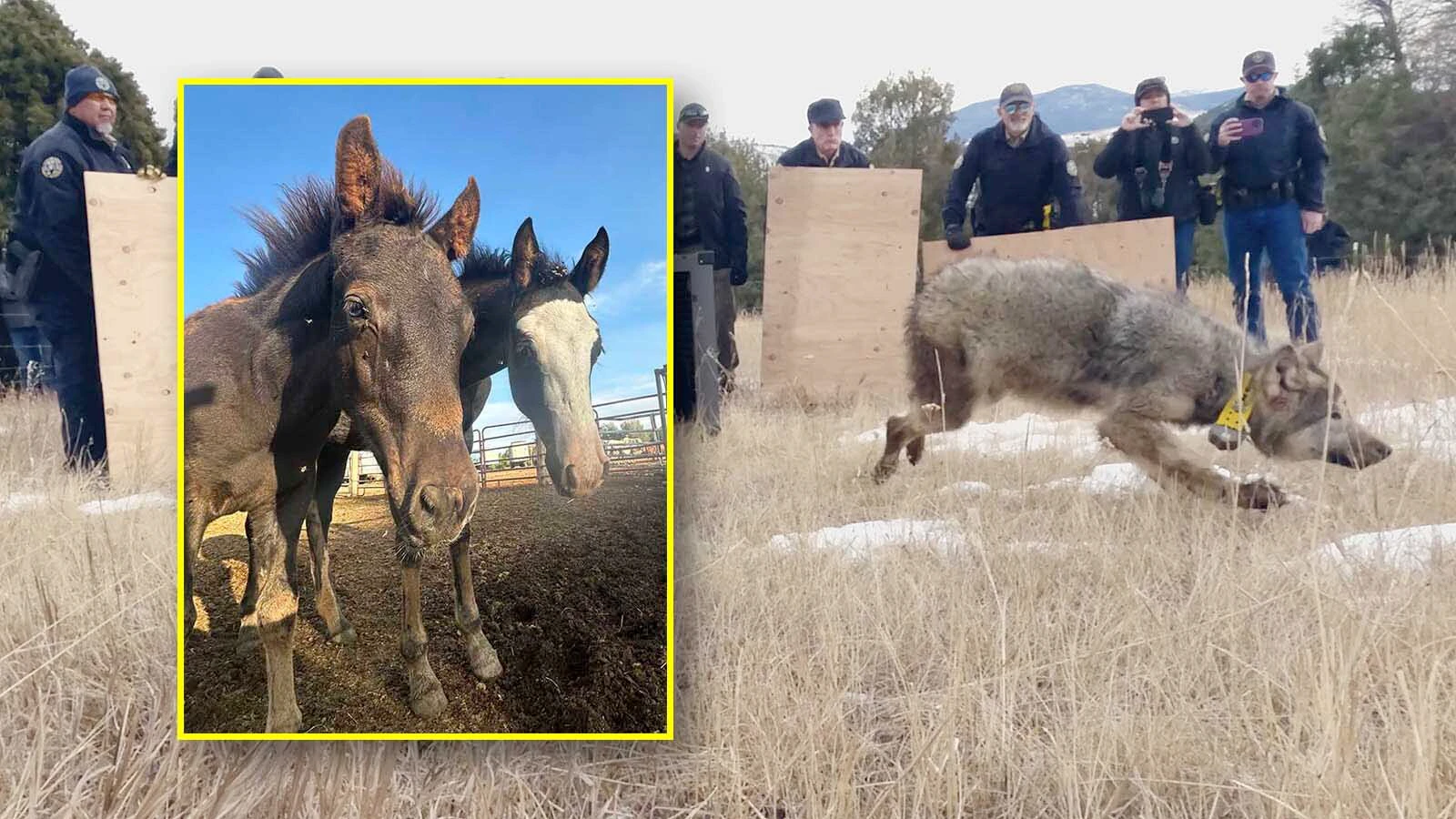
Luna, a Jack Russell terrier, defied the odds earlier this year by surviving 34 days in Yellowstone. She escaped from a cabin near Canyon Village after a housekeeper opened the door.
That’s the exception to the rule, as many dogs have disappeared after escaping into the park. Even when under control, they can still cause serious incidents.
On July 3, 2005, 9-year-old Matthew Hoang got third-degree burns on 40% of his body after falling into a thermal pool near Steamboat Point, along the shores of Yellowstone Lake.
He fell in while playing with the family dog and survived after treatment in a Salt Lake City hospital.
Every Yellowstone visitor receives a flyer warning them of the hazards of Yellowstone’s thermal features, and there’s no shortage of signs reinforcing that point throughout the park.
A wooden fence has been erected around Maiden’s Grave Spring, along with one of Yellowstone's rarer signs: a “No Dogs” sign posted nearby.
When people see a “No Dogs” sign in Yellowstone, it’s all the more important that they heed the warning. There’s probably a sad story behind it.
“It’s just not a dog-friendly place,” Jones said.
Andrew Rossi can be reached at arossi@cowboystatedaily.com.