Ranchers who raise rodeo bucking horses near the Wyoming-Colorado state line said their horses recently started to panic and ram through their pasture fence to escape, something they’d never done before.
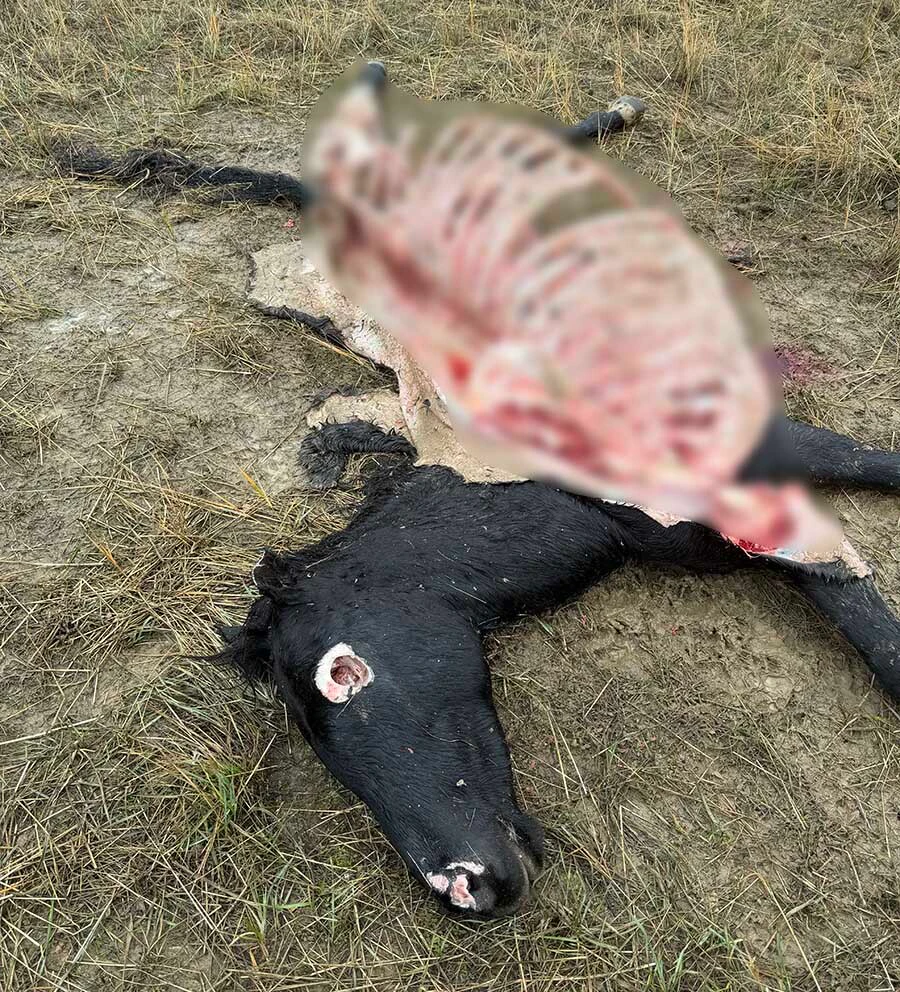
On Monday, the ranchers, Lane and Kaitlynn Hayes Wood, discovered the partially eaten carcass of Sweetpea, a 2-year-old quarter horse-pony cross.
Their ranch is near Hayden, Colorado, south of Baggs, Wyoming, and there have been recent reports of wolves there.
The couple said they think wolves panicked the roughly 60 horses they keep in a 500-acre pasture. They also suspect wolves caught, killed and ate Sweetpea sometime late Sunday or early Monday.
Colorado Parks and Wildlife (CPW) says the case was investigated and was not confirmed as a wolf depredation.
A Colorado veterinarian told Cowboy State Daily she’s convinced the Woods are right, though she declined to be quoted on the record because wolves have become such a contentious topic in that state.
Retired federal trapper Carter Niemeyer of Idaho, who has investigated numerous predator attacks on livestock, told Cowboy State Daily that, at least based on a photo of the carcass, he doesn’t think wolves killed Sweetpea.
Surprisingly Mellow
Bucking horses are famous for giving rodeo cowboys hell and putting on a spectacular show for spectators.
And “they love what they do,” Kaitlynn Hayes Wood told Cowboy State Daily.
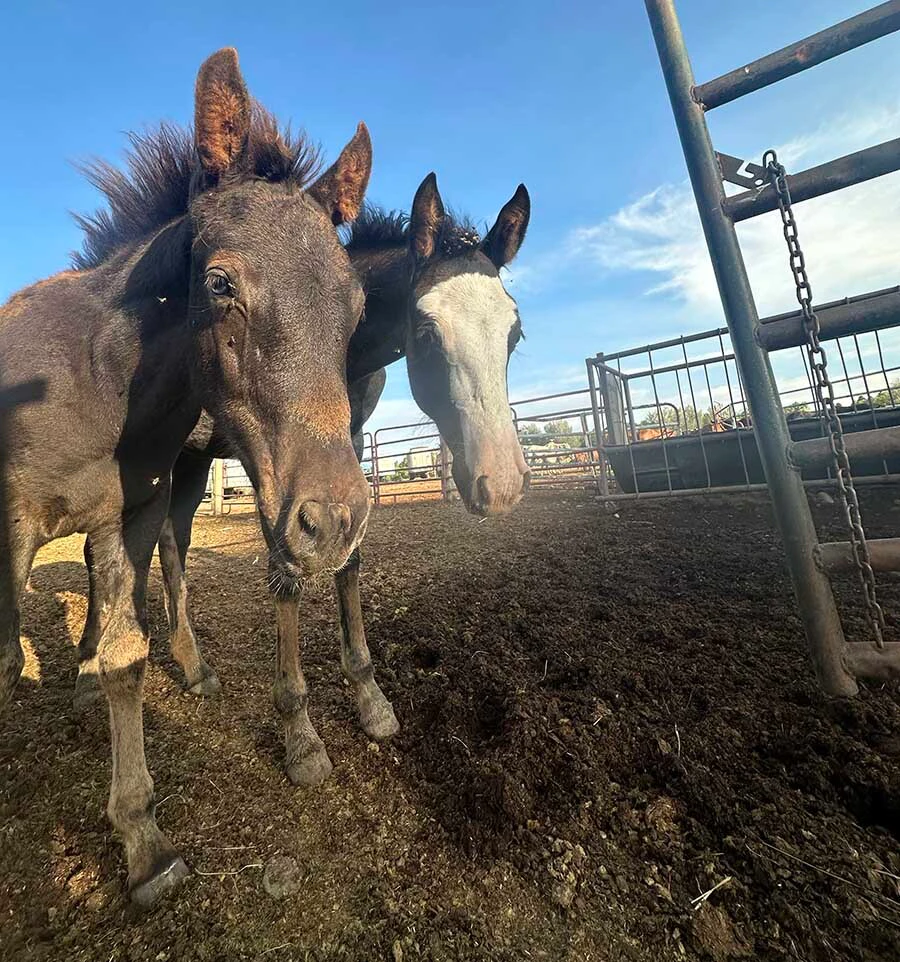
However, they have a surprisingly mild and mellow temperament, she said.
“In the pen, they’re basically like pets,” she said.
She and her husband have about 120 horses of various ages and sizes. There are little ponies, young buckaroos, and full-sized bucking stock for the pro rodeo circuit.
As a cross between a pony and full-sized quarter horse, Sweetpea was somewhere in the middle, about 800 pounds.
Sweetpea was about to turn 3 and ready to start training as a bucking horse, Hayes Wood said.
“It was time for her to go to preschool,” she said.
Why Are The Horses Busting Out?
At any one time, roughly half their stock is kept in the pasture. It’s fenced with barbed wire, with panels at certain points.
Because of the animals’ mellow disposition, it never crossed their mind that their horses would try to escape.
“We’ve never had them (get) out. We’ve never had to worry about them running through fences, jumping fences, or anything like that,” Hayes Wood said.
Just a few days ago, “we got a call from somebody with property bordering ours saying, 'Your horses are out,' which was odd,” she said. “We found evidence that they had run right through one of the corner panels, which was also odd."
Despite the panic, only one horse had a minor injury.
They figured it was just a freak happening.
Then the horses busted out a second time. Then a third.
“The last time, we came home and found them waiting for us by the main gate to our place,” Hayes Wood said.
They shooed the horses back into the pasture, not sure what to think.
The next morning, Monday, they went out, “and there was Sweetpea” — or what remained of her — in the pasture, she said.
Devoured In 24 Hours
Most of Sweetpea’s carcass, including the entrails, had been eaten down to the bone.
CPW compensates ranchers for livestock proven to be killed by wolves. So, the Woodses made the call, and an agent was sent to investigate.
Hayes Wood said she questions the thoroughness of the investigation and that CPW was too quick to chalk it up as an “undetermined” death.
“They said the horse lay down and died and was later eaten by an undetermined scavenger," she said.
She said she’s frustrated by what she sees as a lack of transparency and a quick dismissal of her concerns by CPW.
The agency stands by its ruling, CPW spokesman Luke Perkins stated in an email to Cowboy State Daily.
“This investigation has been completed. Evidence found at the scene, the lack of any known wolves in the vicinity, and confirmation that the closest collared wolves were approximately 27 kilometers (about 17 miles) away led to the determination that this was not a confirmed wolf depredation,” Perkins wrote.
Lions, Coyotes, and Bears
The veterinarian said she examined photos of the carcass and the scene and said she strongly suspects wolves.
“To have that much of a carcass consumed overnight? You’re not thinking a mountain lion, you’re not thinking a bear. Coyotes would probably not do that. So that just leaves one thing,” she said.
She also noted that there was no evidence of digging around the carcass or an apparent effort by a predator or scavenger to cover it up or “cache” it, which are typically telltale signs of a bear or mountain lion.
Niemeyer had a different opinion.
To him, the horse’s bones appear to be intact, whereas wolves feeding on a carcass would have “cracked” bones and possibly eaten the ribs.
Hemorrhaging beneath the skin is a sign of a wolf attack, he said.
“Investigators need to skin out the remains. I see no obvious hemorrhage points on the top side (visible in the photo). The underside needs a complete examination too," Niemeyer said.
The horse could have died of some sort of natural cause, such as colic, and was then eaten by something besides wolves, he said.
“I would go so far as to guess a bear or two has peeled away flesh and hide,” he said.
Mark Heinz can be reached at mark@cowboystatedaily.com.