

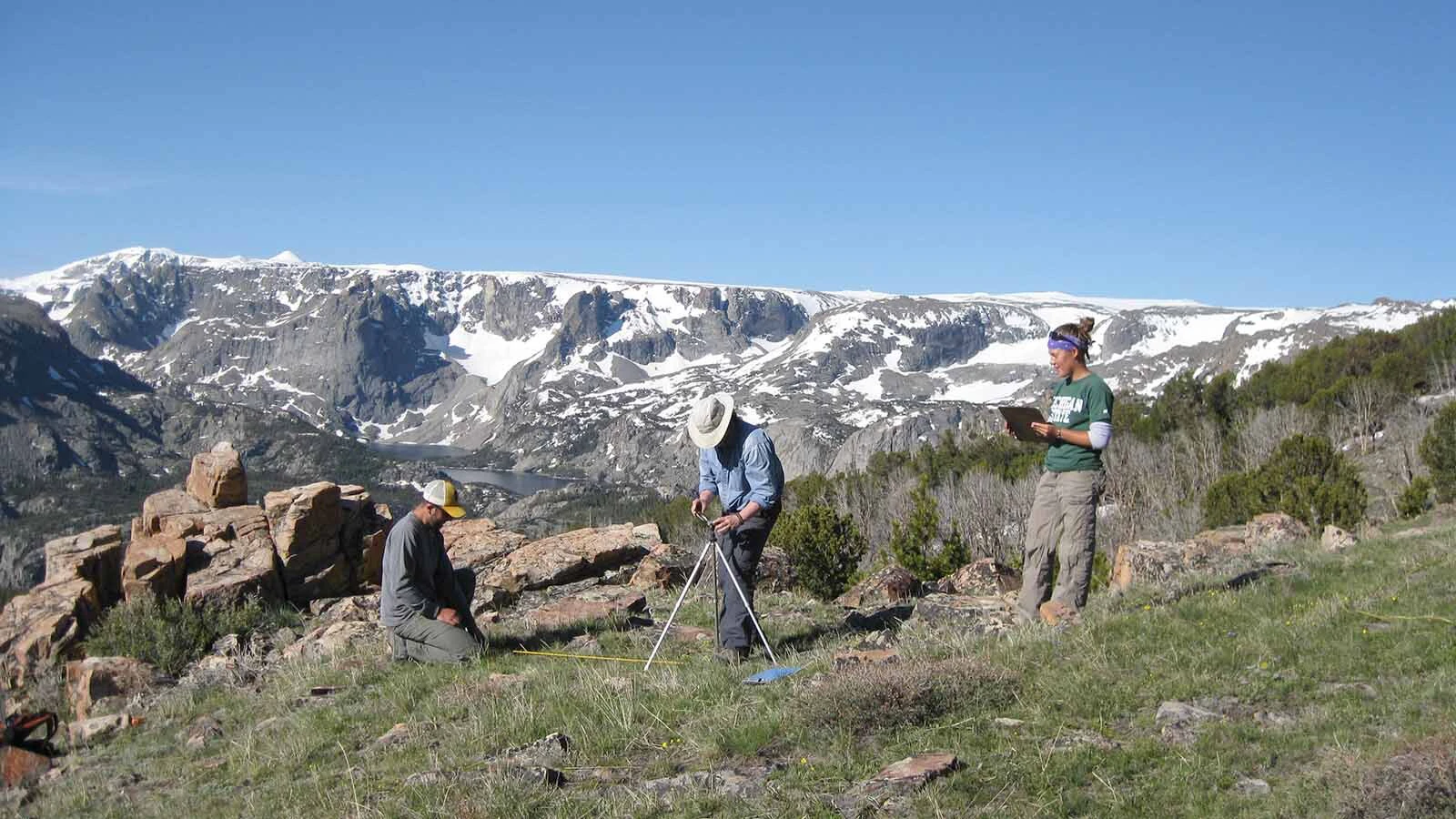
Imagine stopping for lunch on a mountainside and realizing you’re standing in someone’s front yard.
Someone who lived there centuries ago.
That’s what happened to Wyoming archaeologist Richard Adams on a summer day in 2006, when he and a team of researchers were surveying in the Wind River Range south of Dubois.
They had stopped near a spring for a breather and a bite to eat when Adams noticed an unusually smooth sandstone. It was a metate, he realized, and its sandstone surface was smooth from generations of use.
“Then my collaborator Tory Taylor found a projectile point,” Adams told Cowboy State Daily. “And then Joyce Evans said, ‘Say Rich, what’s that round thing you’re standing in?’”
Adams looked down and realized he was standing in a stone circle. But it was not the usual teepee ring.
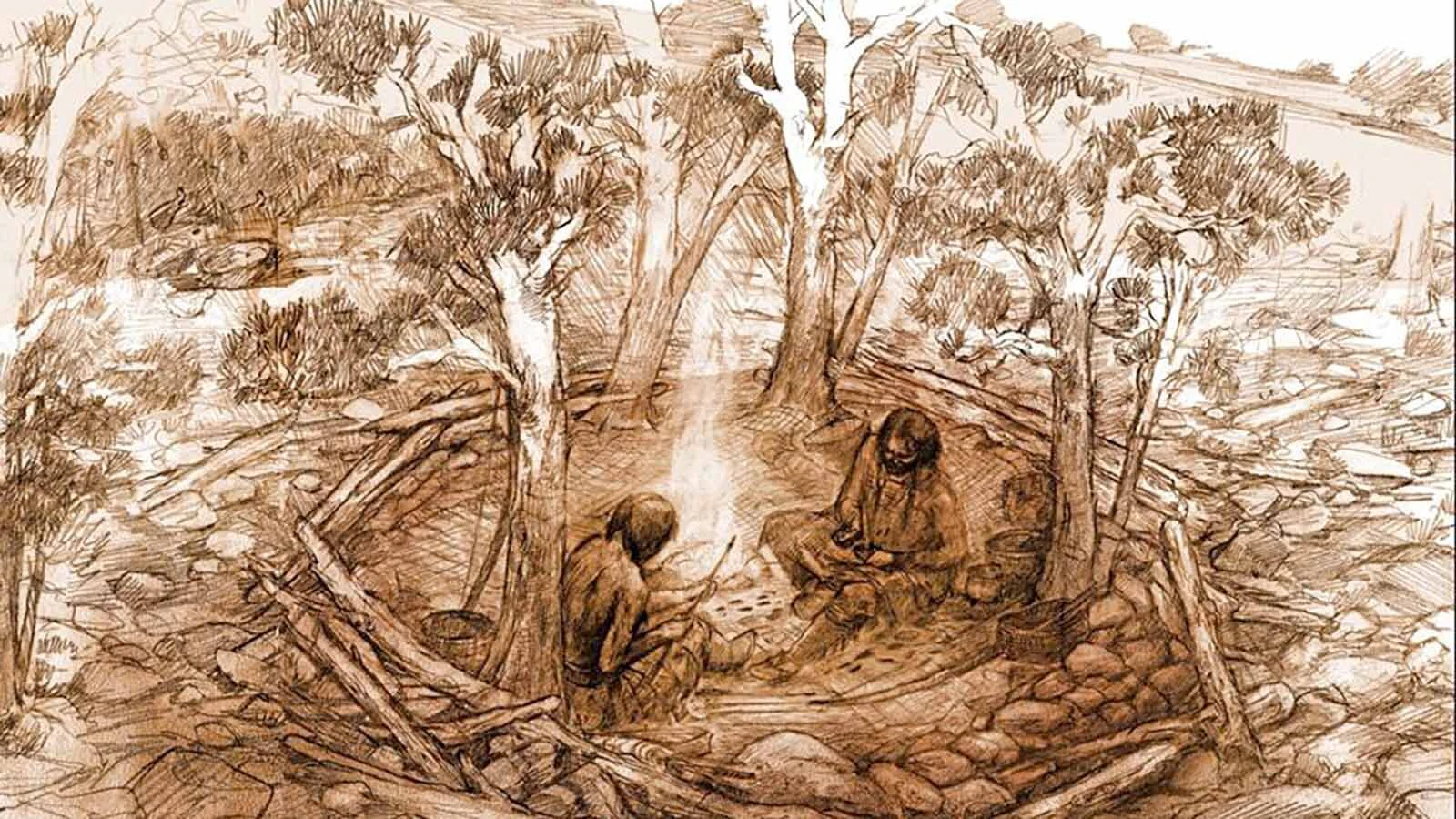
“It was a cut-and-fill lodge, one that had been dug out on the high side and filled up on the low side, and ringed with rocks and sometimes trees,” Adams said. “Sometimes those also support above-ground conical or Lincoln log structures.”
That lodge wasn’t alone either.
It had neighbors.
By the end of that day, Adams and his team found 28 cut-and-fill lodge pads.
By the end of the next day, they'd found 60.
“It was by far and away the biggest village we had discovered,” Adams said. “So, I applied for a permit with the Forest Service, and we did a little limited testing and then Utah State University got involved.”
Machu Picchu Of Wyoming
High Rise Village turned out to be a 26-acre site, which made it the largest alpine village in North America, according to a 2013 news report. Radiocarbon testing of charcoal from the lodges yielded dates as far back as 4,000 years ago.
That raises the possibility that High Rise is among North America’s oldest alpine villages, though the inhabitants could also have burned much older wood.
Although it likely was not occupied year-round, some have likened High Rise to a Wyoming version of Machu Picchu, with its thousands of untouched artifacts and semipermanent dwellings.
The site helped challenge assumptions about how ancient people were using the Rocky Mountains.
Earlier interpretations held that such high-elevation environments were too hostile for extended human occupation. Population pressure or food scarcity might have pushed people into the high country, but only for limited periods of time.
But these were semi-permanent settlements, and that suggested people were spending significantly more time in the mountains than expected. Adams interprets the villages as part of a seasonal round, with people moving among food sources as they became available.
“Well-known archaeologists have argued that the ancestors of the Shoshone were pushed up there by an influx of people into Wyoming,” Adams said. “I argue the opposite, that people were pulled into the mountains because it’s a whole lot better. Millions of people don’t flock to Wamsutter every year to see it, but they sure do go to the mountains.”
The villages Adams was finding had springs nearby. They offered an abundance of wild game, including elk and sheep, at certain times of the year. There were berries and roots to eat in the summer and pine nuts from the whitebark pines to eat in the fall.
“I’ve done experiments with students, and you can shell a cupful — although it’s hard, because they’re really tasty,” he said with a chuckle. “They’re every bit as good as the pine nuts you get at Costco.”
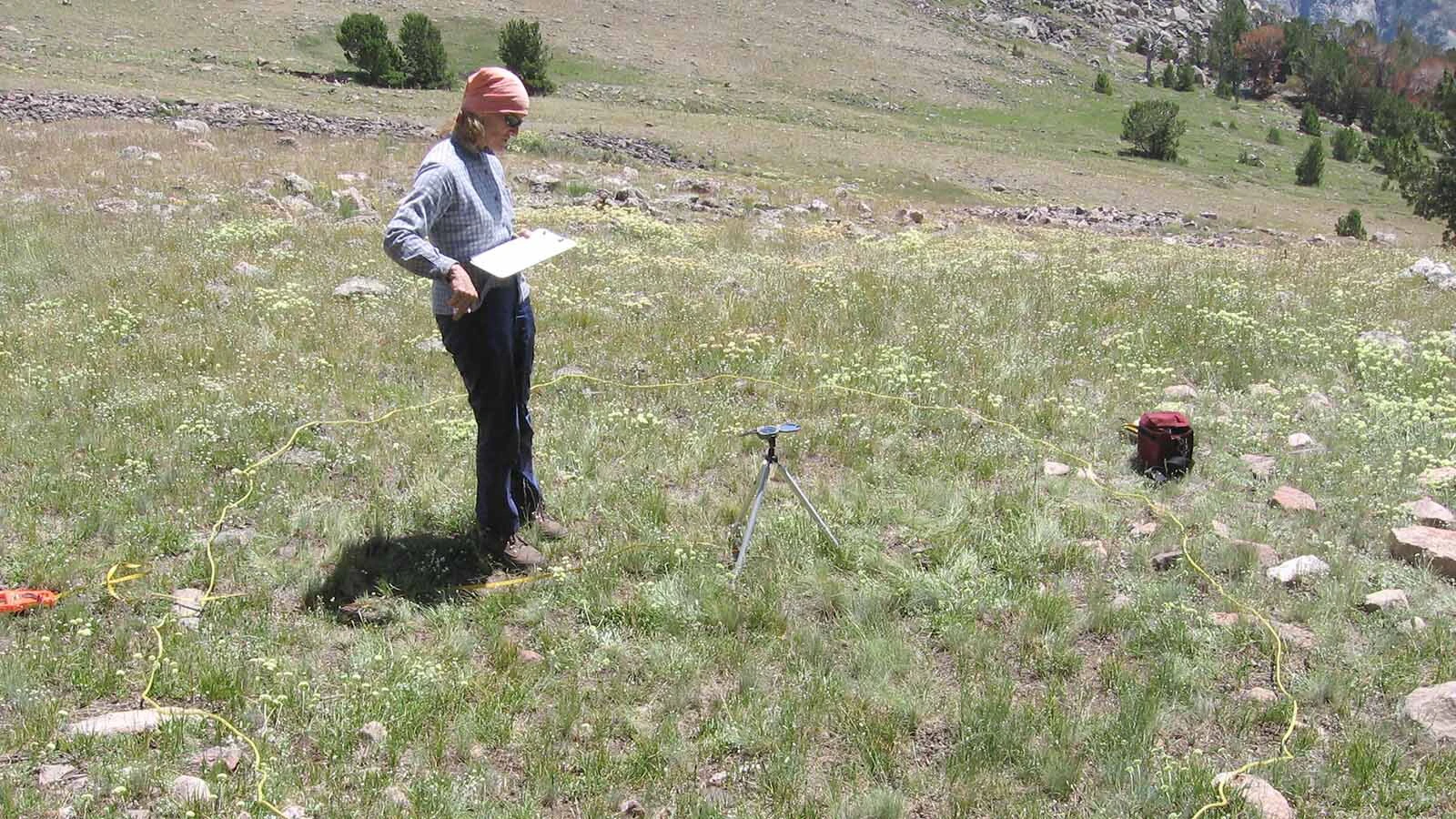
Carolyn Gillette of Dubois maps a lodge pad in 2006. (Courtesy, Richard Adams) 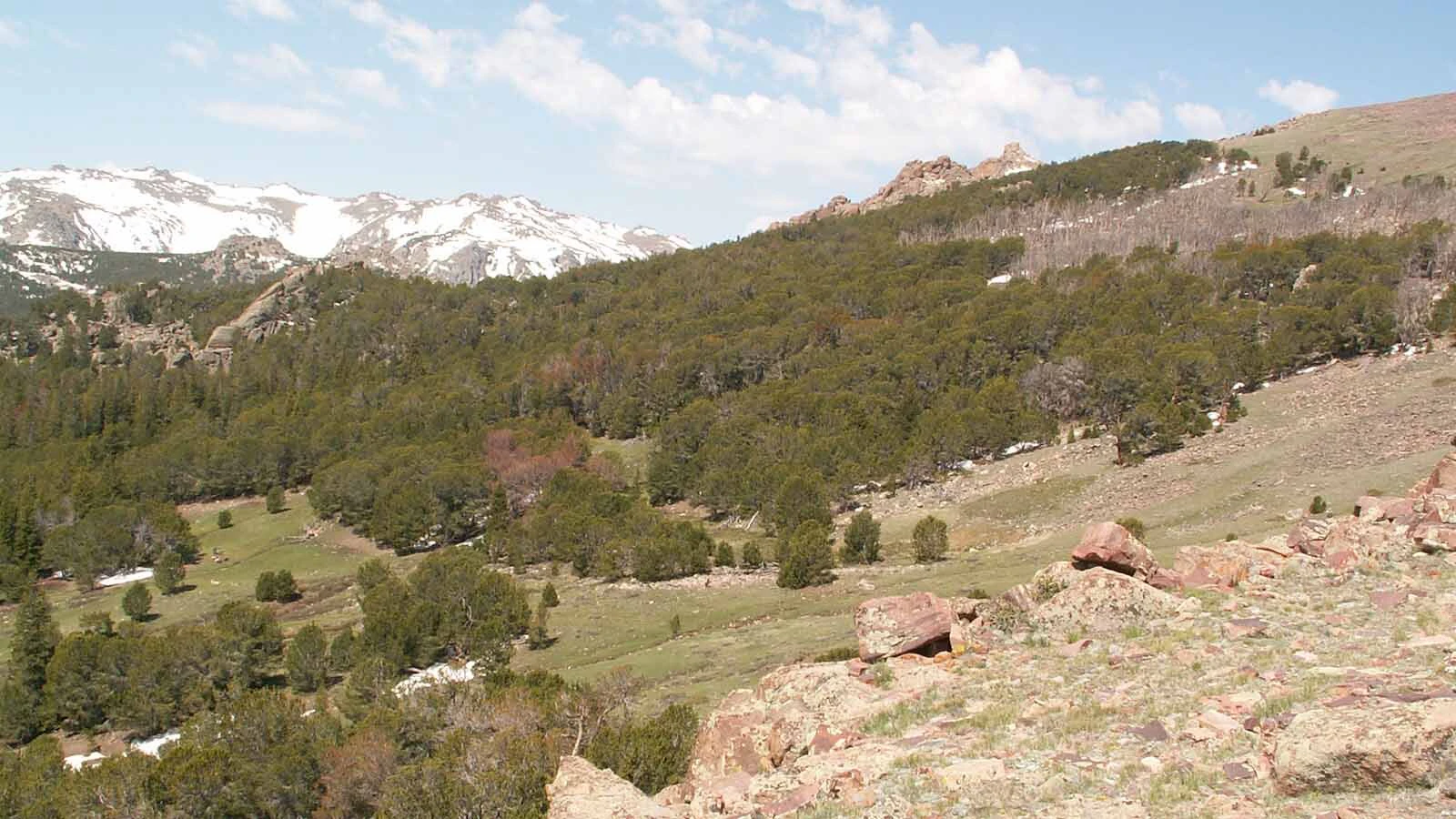
The High Rise Village sits above 11,000 feet in the Wind River Range. (Courtesy, Richard Adams) 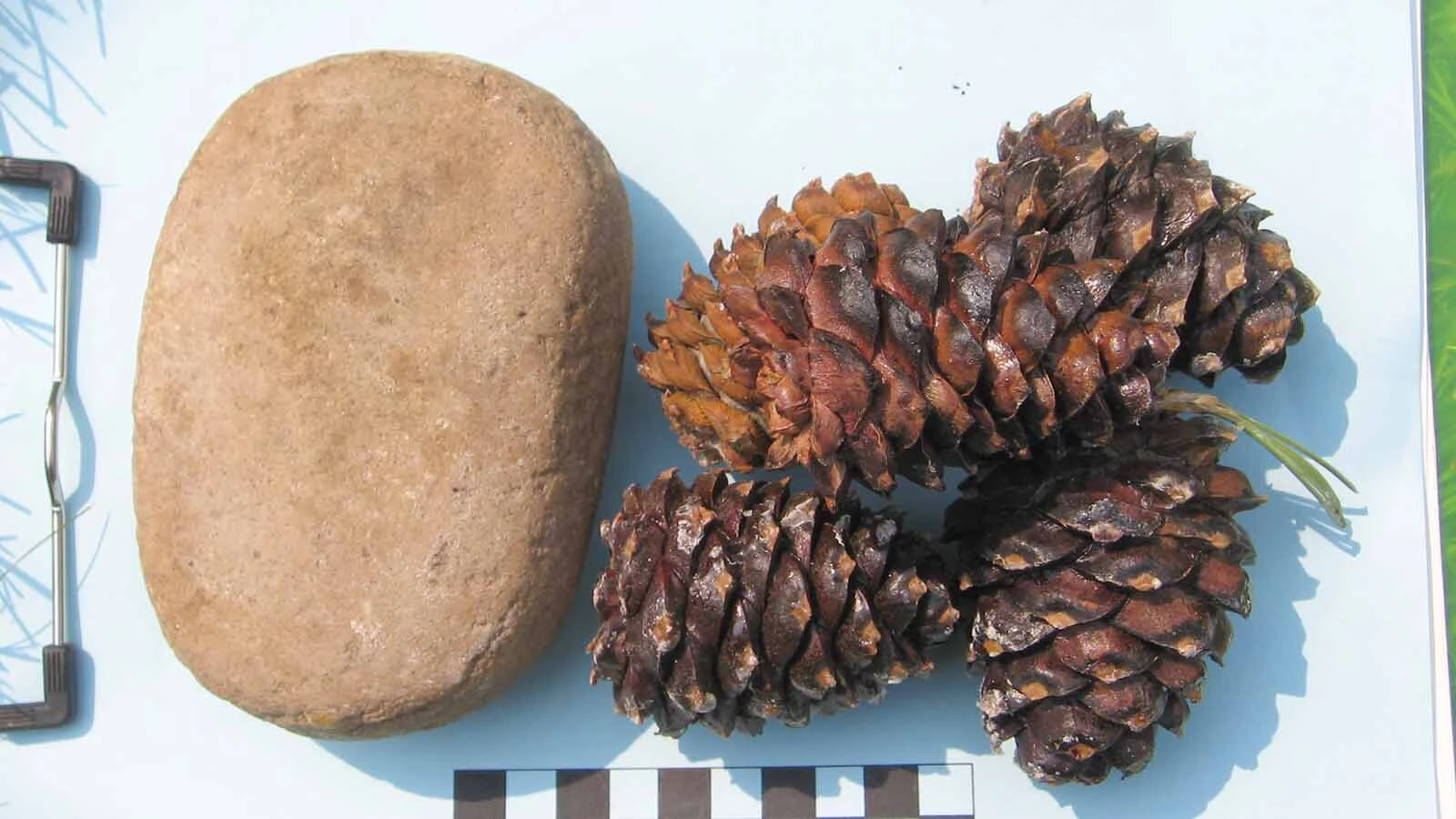
An ancient tool next to four whitebark pine cones high in the Wind River Range. (Courtesy, Richard Adams)
A Soapstone Obsession
High Rise was not the only alpine village in the Winds. To help find others, then undergraduate student Matt Stirn developed a computer model using factors such as elevation, slope, sun exposure, and vegetation. His team’s 2010 and 2011 fieldwork identified more than 50 new archaeological sites, including 13 more alpine villages similar to High Rise.
High Rise also sits less than an hour from a chert quarry for toolmaking and a natural soapstone source.
It was soapstone, not mountain villages, that brought Adams into the Winds in the first place.
Years earlier, as a teenager, he’d found a carved soapstone bowl in the Absaroka Range near Togwotee Pass. At first, it was just a cool object.
“It sat on the mantel while I smoked dope and chased girls through college,” Adams said.
Eventually, through his coursework, he learned more about soapstone, and the bowl became an obsession.
“I went, ‘Holy shit! I’ve got a soapstone bowl!’” Adams said. “‘I want to know who made it and why and what they cooked in it.’”
Adams ended up writing his master’s thesis about soapstone bowls and could never stop thinking about them — or looking for them.
Not long after meeting Taylor at an event in Dubois, Adams heard about a blue soapstone bowl the outfitter had found in the Winds, 8 to 10 miles from High Rise.
“We hit it off and made plans to go on a trip with him the next summer,” Adams said. “It was the start of a really productive relationship.”
Extreme Archaeology
High Rise gets its quirky name from the 300-foot vertical difference between its lowest and highest lodge sites.
“It’s the height of a 30-story apartment building,” Adams said. “So, you had to be pretty fit. You’re up at 10,000 to 11,000 feet and we were walking 10 miles a day at least, walking uphill all the time. So that’s why it’s High Rise.”
Adams and his team had radios that they’d use to communicate.
“Every time I’d be at the bottom, they’d radio me from the top ridge,” he said. “‘You’ve got to come up here and see what I just found.’ So, I’d climb 30 stories and then go back down again.”
Because it was a designated wilderness area, researchers had to hike in. A string of packhorses carried the heavier field equipment and supplies. All of this made the work expensive.
“I had very few grants at the time,” Adams added. “Basically, all this research I did, I paid with my Visa card.”
Because of the lack of funding, Adams opted not to disturb many of the sites, even some that he believes have significant trade items in them.
“If there’s a better, well-prepared group, they’ve got a perfect window on the transition from pedestrian to equestrian,” he said. “And then from equestrian to reservation.”
Adams hopes a better-funded team will one day return to the villages he’s left untested.
For him, High Rise isn’t part of some distant past. Twenty years after his discovery, a photograph taken the day his team found the village is still his computer’s screensaver.
The mountain village might be forgotten by most people.
But Adams still looks at it every day and wonders about a people who made soapstone bowls and ate delicious pine nuts on a mountain side 11,000 feet above sea level.
Renée Jean can be reached at renee@cowboystatedaily.com.


