

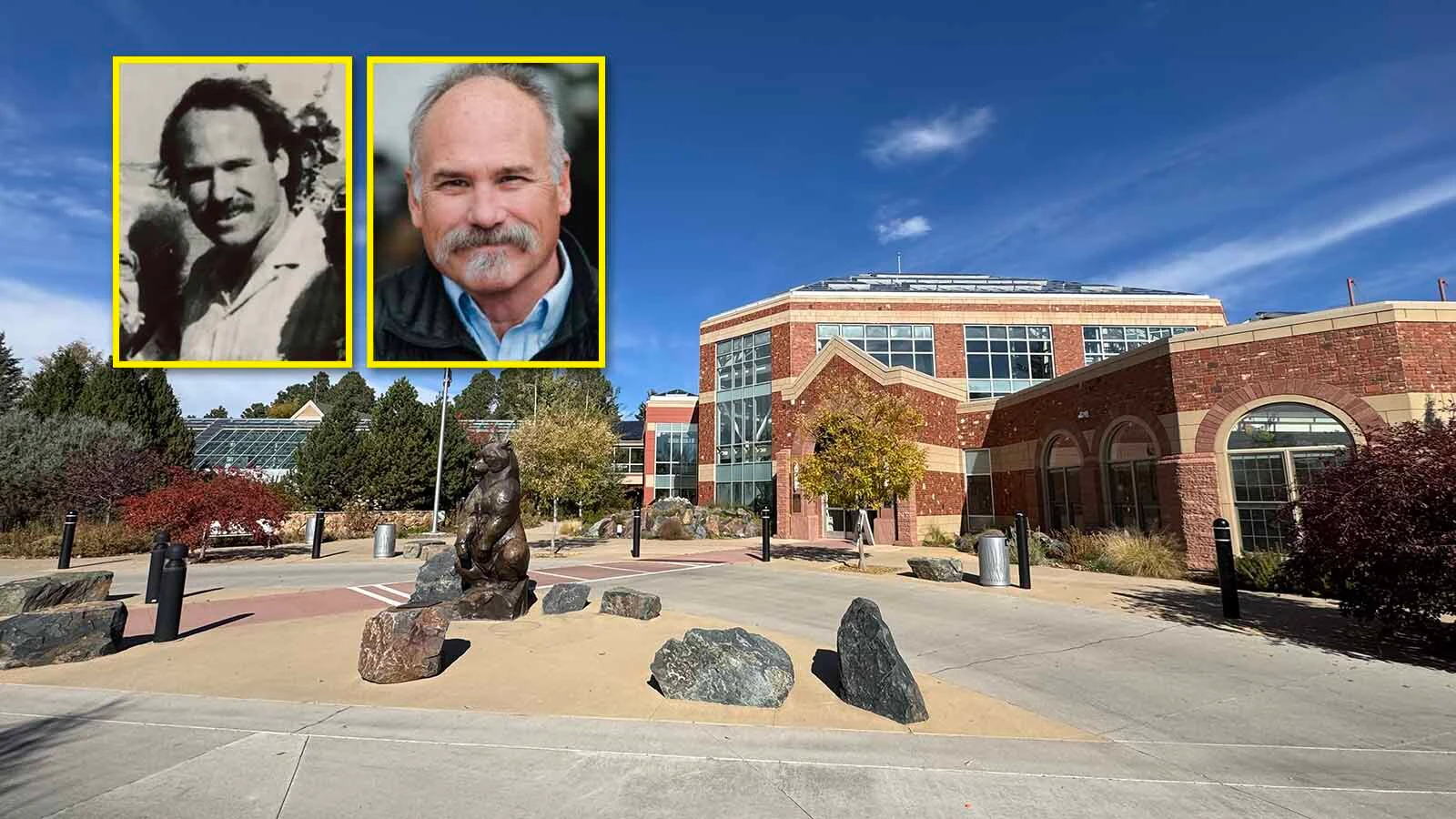
CHEYENNE — The nation's first passive solar-heated greenhouse began as a simple structure east of Cheyenne, thrived under one man's leadership of 41 years, and vaulted political headwinds to become what it is today:
An enviable community garden that's hosted half a million visitors.
The Cheyenne Botanic Gardens celebrated its 500,000th visitor last week, a little girl with twice-curled pigtails named Cecelia, who convinced her parents to ditch the playground and wander through the balmy greenhouse.
Though the garden seems suited for a city at least 10 times the size of Cheyenne, it had a humble beginning in 1977.
Dubbed the Cheyenne Community Greenhouse, it was a basic structure. Its builders were concerned about meeting their main goal of feeding seniors and helping them grow their own crops, not making the structure aesthetically pleasing.
Today, a community garden remains, but visitors to Lions Park will find so much more at what is now the Cheyenne Botanic Gardens, including a lush tropical plant collection in the three-story Shane Smith Grand Conservatory.
Paul Smith’s Children Village features a wetlands area, sheepherder wagon, tipis, a farmer’s windmill and much more.
It took a considerable investment from the community and private donors to make it happen. Voters approved money through a $16 million sixth-penny sales tax measure in 2012 to build the facility.
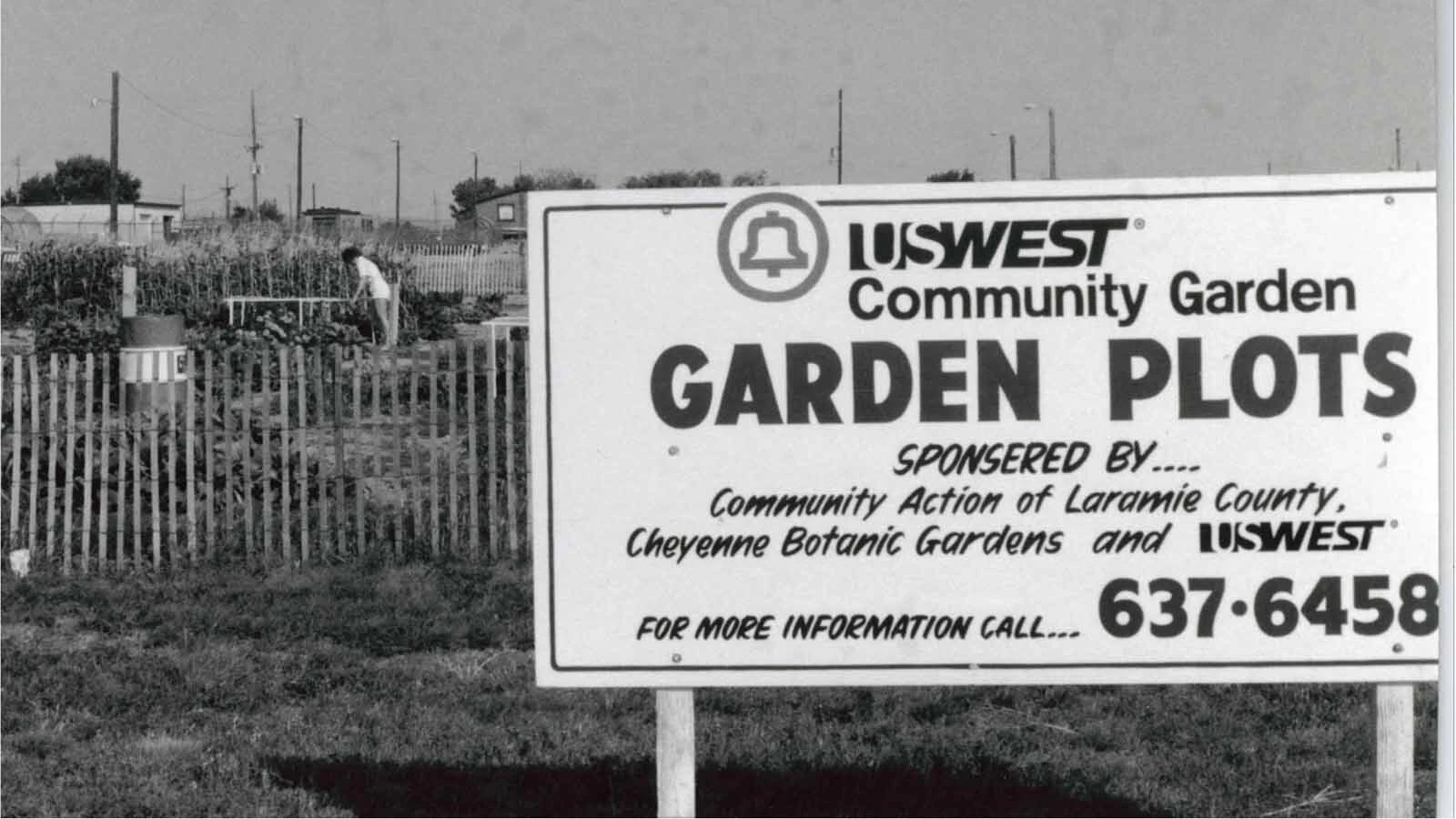
The Cheyenne Botanic Gardens have grown into a world-class development, but began nearly 50 years ago as a simple community garden with a goal of growing vegetables for seniors. (Provided by Shane Smith) 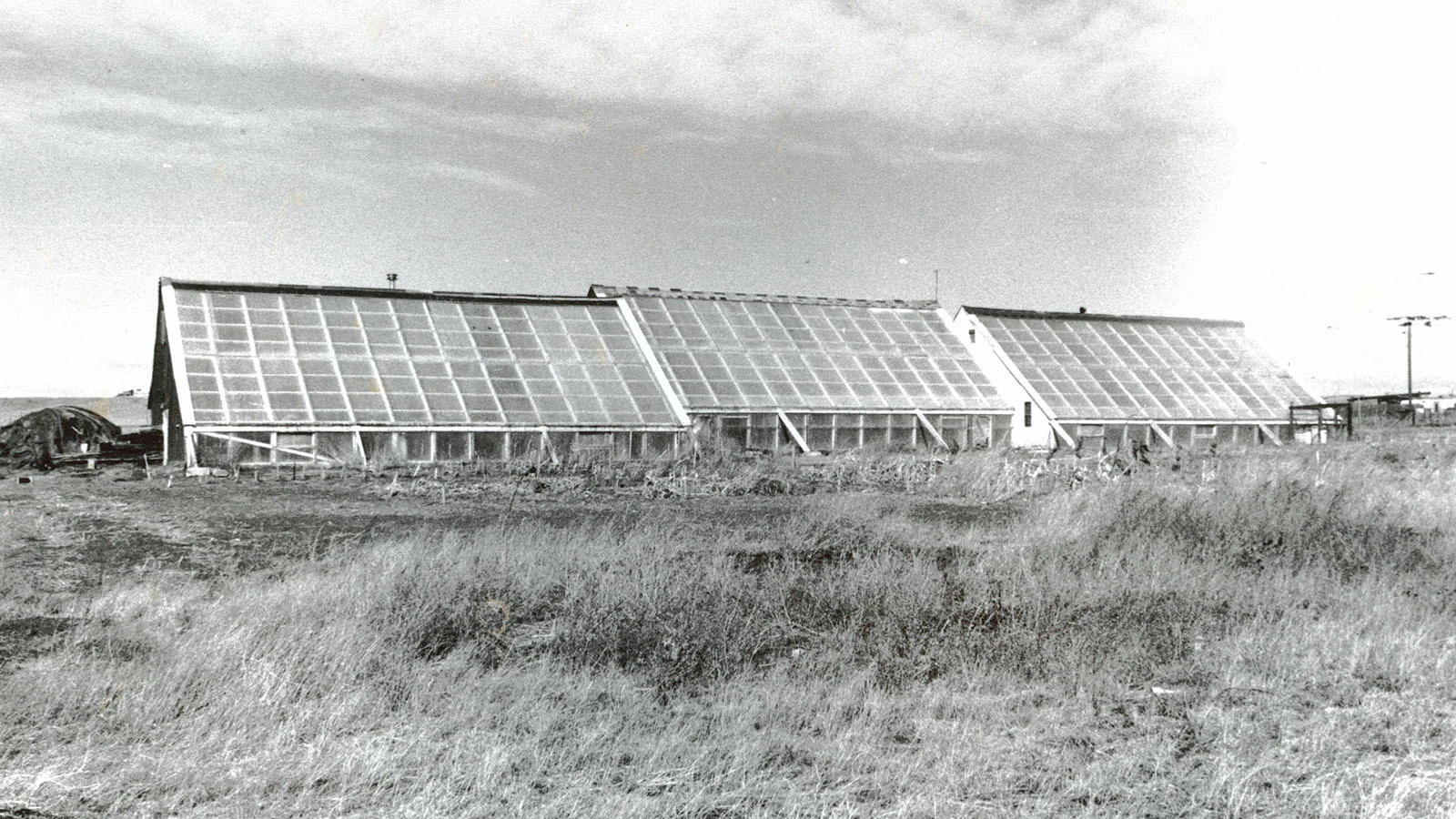
The Cheyenne Botanic Gardens have grown into a world-class development, but began nearly 50 years ago as a simple community garden with a goal of growing vegetables for seniors. (Provided by Shane Smith) 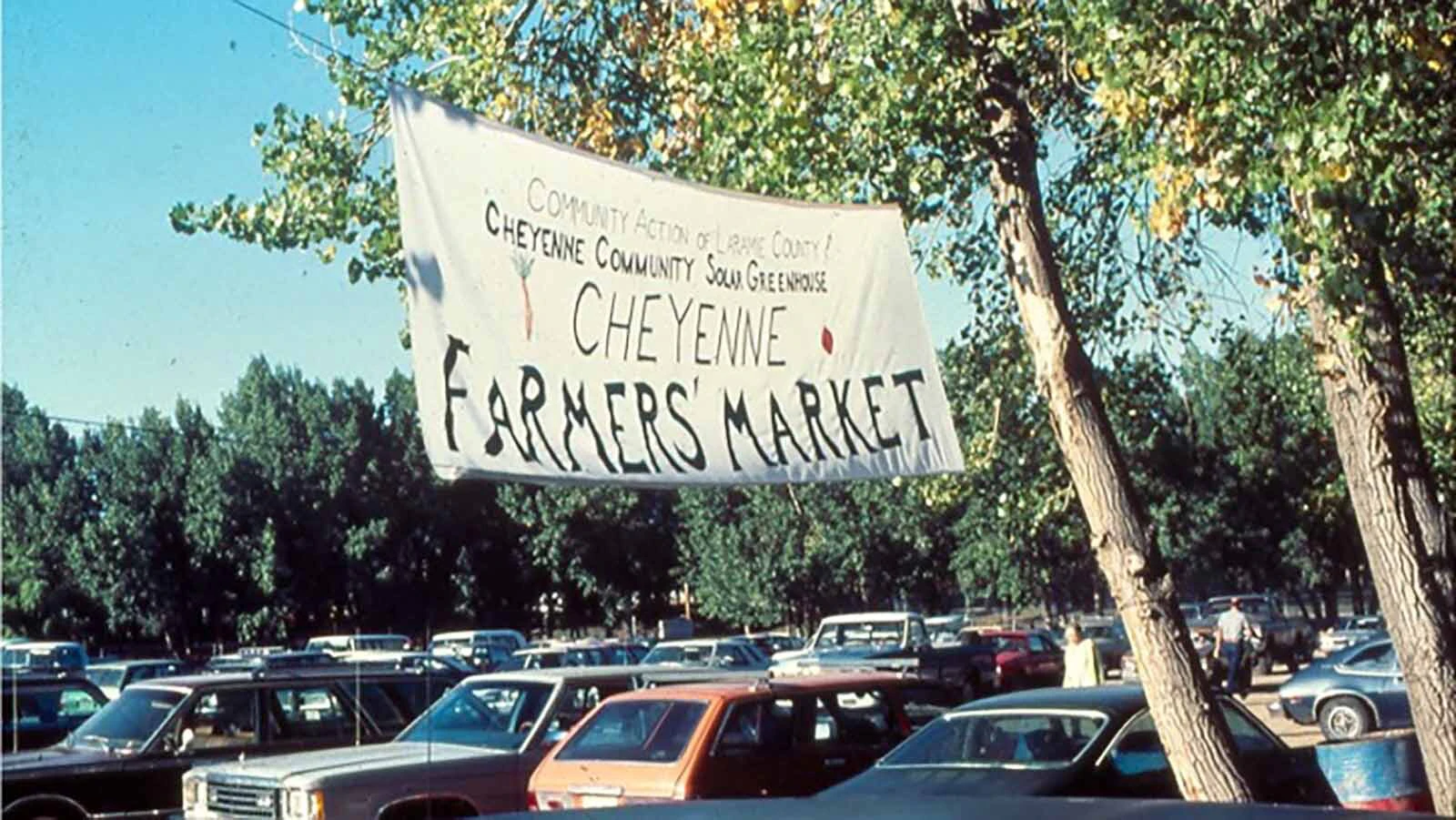
The Cheyenne Botanic Gardens have grown into a world-class development, but began nearly 50 years ago as a simple community garden with a goal of growing vegetables for seniors. (Provided by Shane Smith) 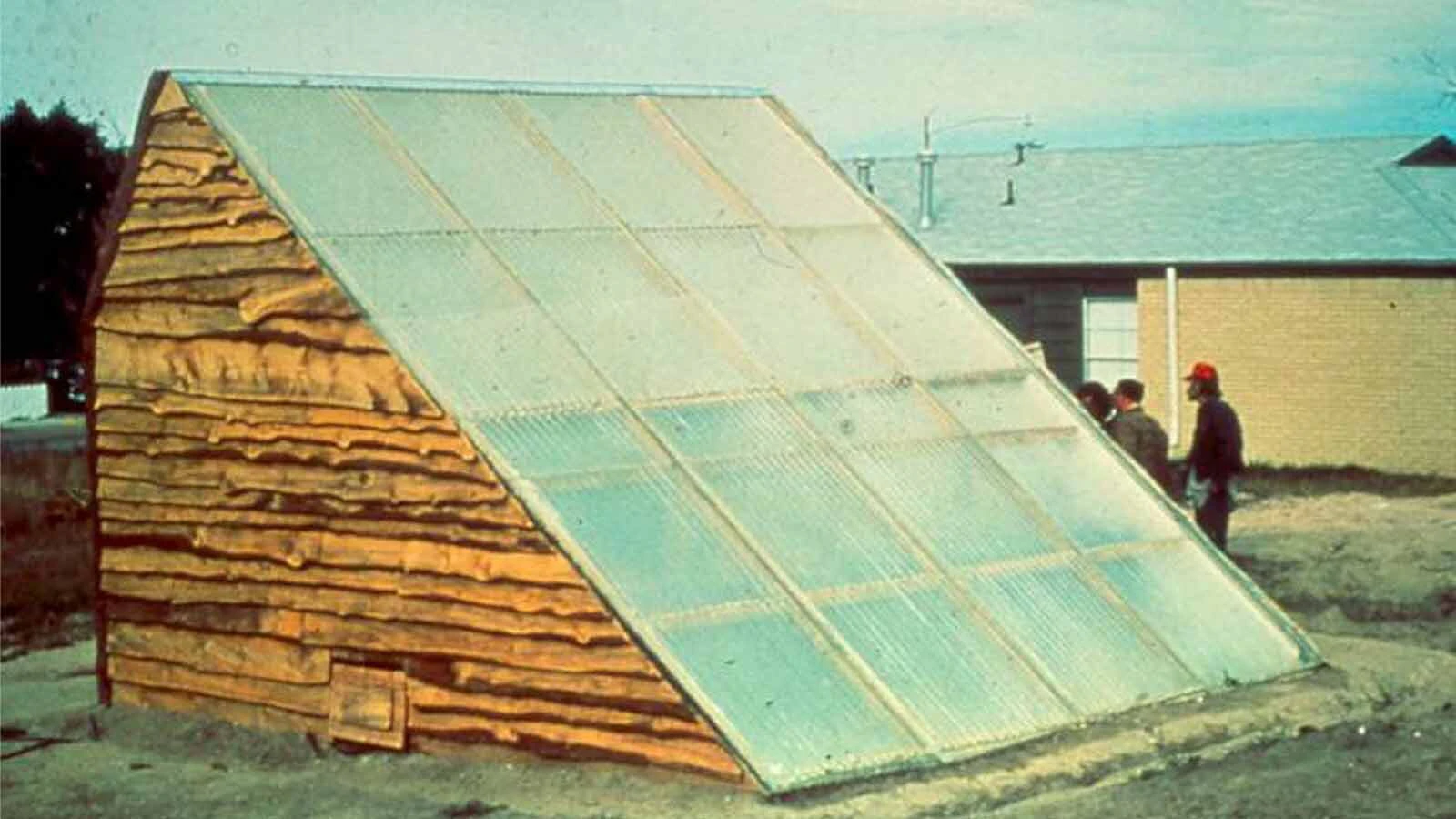
The Cheyenne Botanic Gardens have grown into a world-class development, but began nearly 50 years ago as a simple community garden with a goal of growing vegetables for seniors. (Provided by Shane Smith) 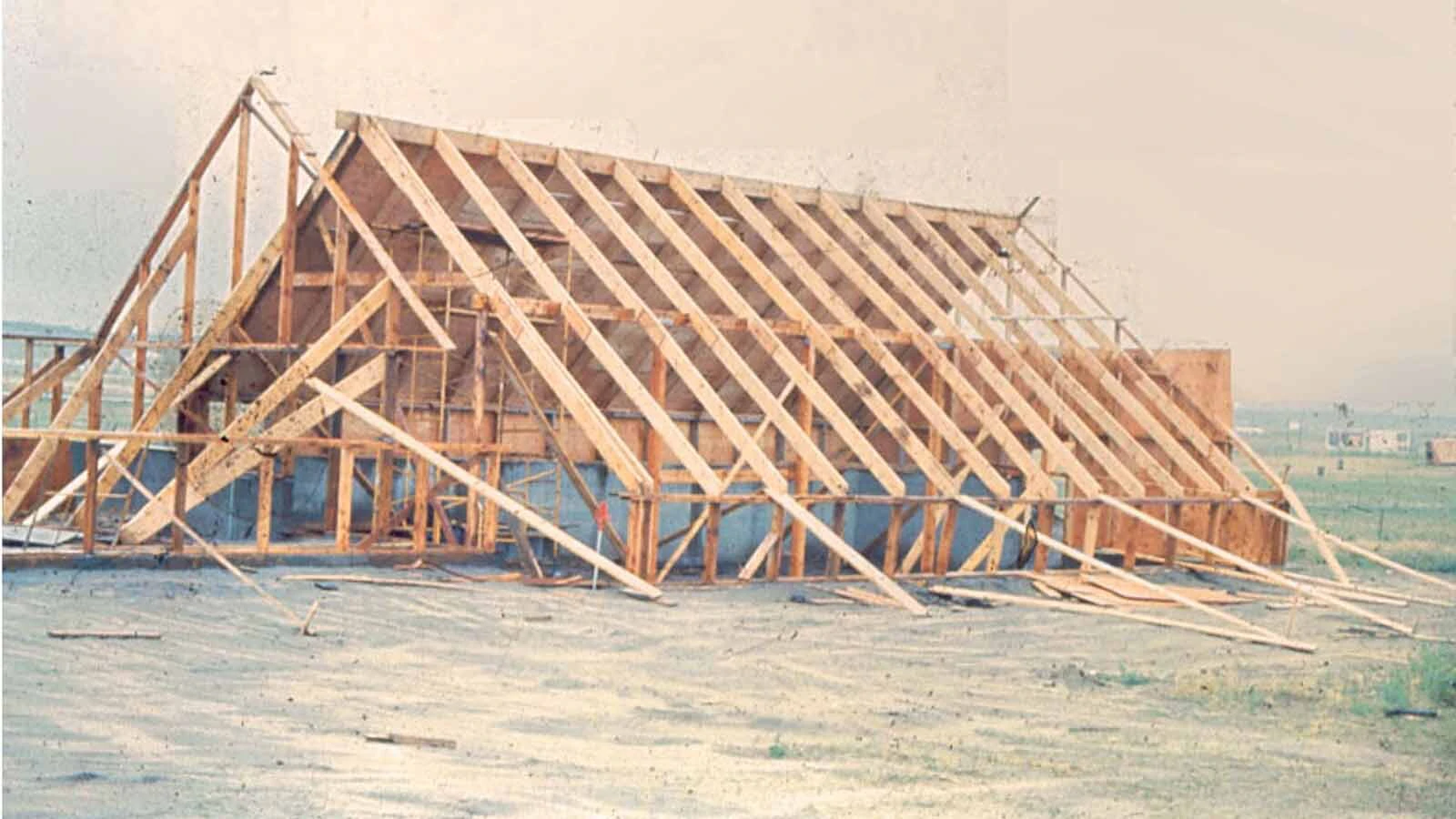
The Cheyenne Botanic Gardens have grown into a world-class development, but began nearly 50 years ago as a simple community garden with a goal of growing vegetables for seniors. (Provided by Shane Smith) 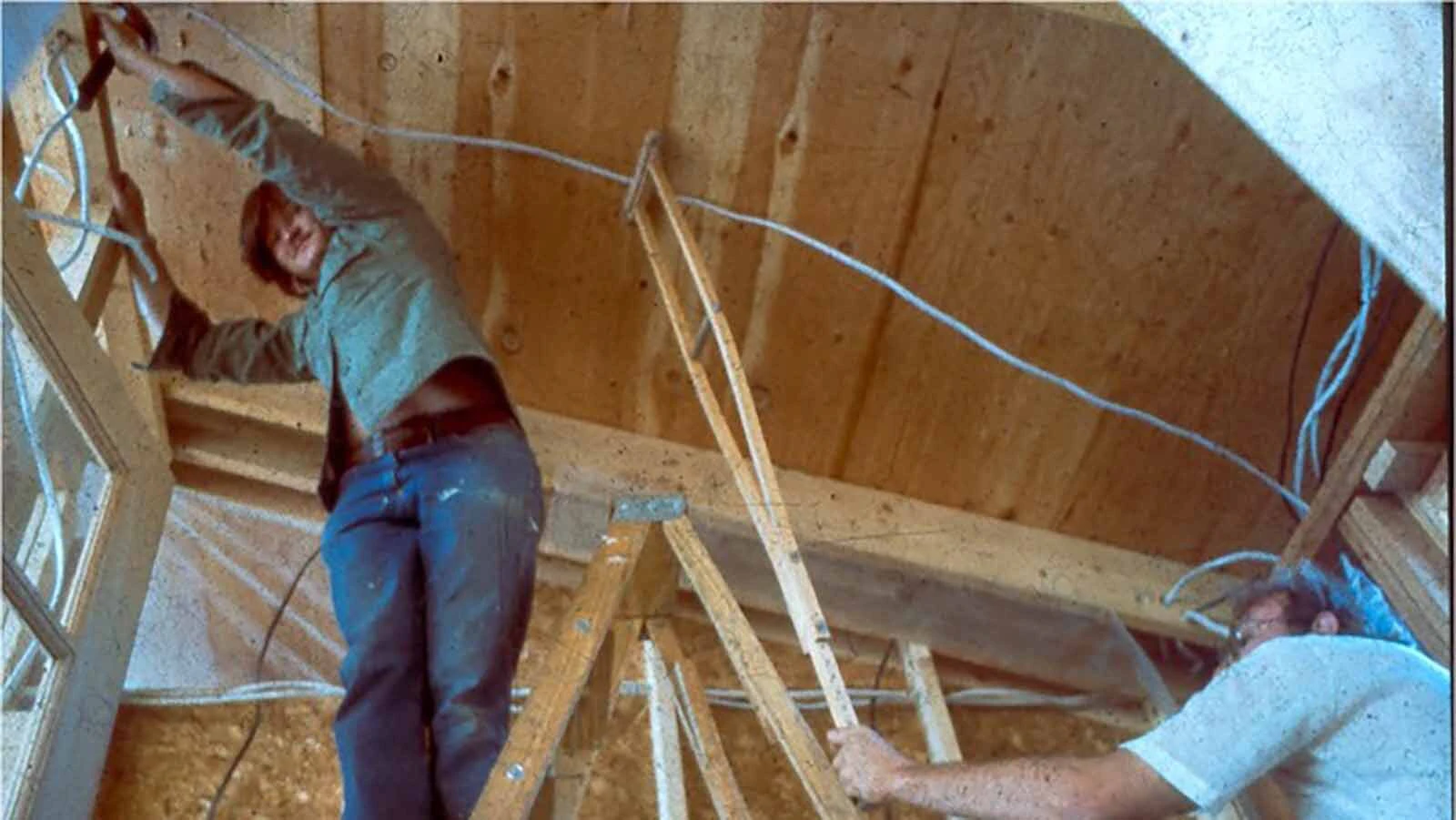
The Cheyenne Botanic Gardens have grown into a world-class development, but began nearly 50 years ago as a simple community garden with a goal of growing vegetables for seniors. (Provided by Shane Smith) 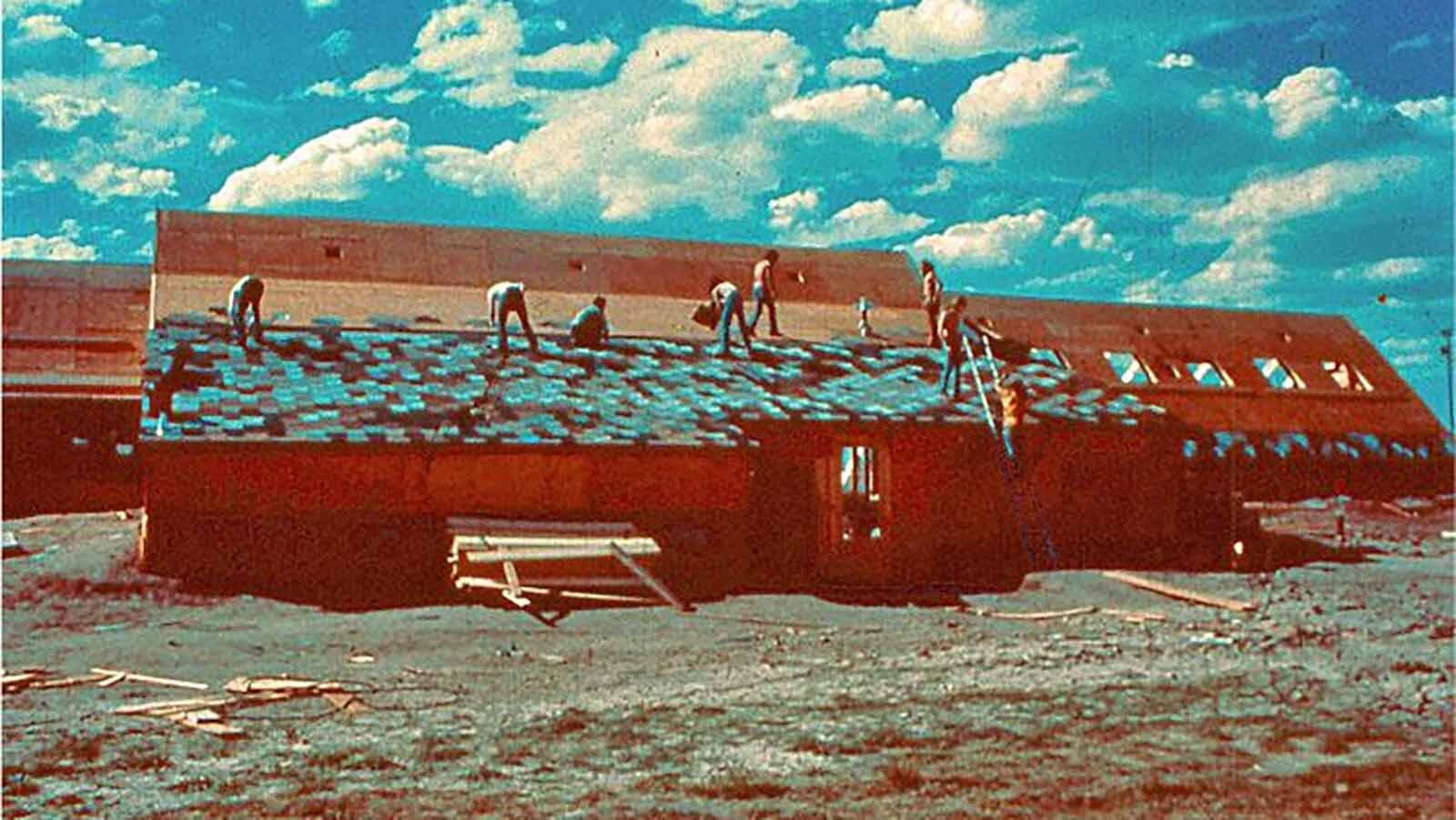
The Cheyenne Botanic Gardens have grown into a world-class development, but began nearly 50 years ago as a simple community garden with a goal of growing vegetables for seniors. (Provided by Shane Smith) 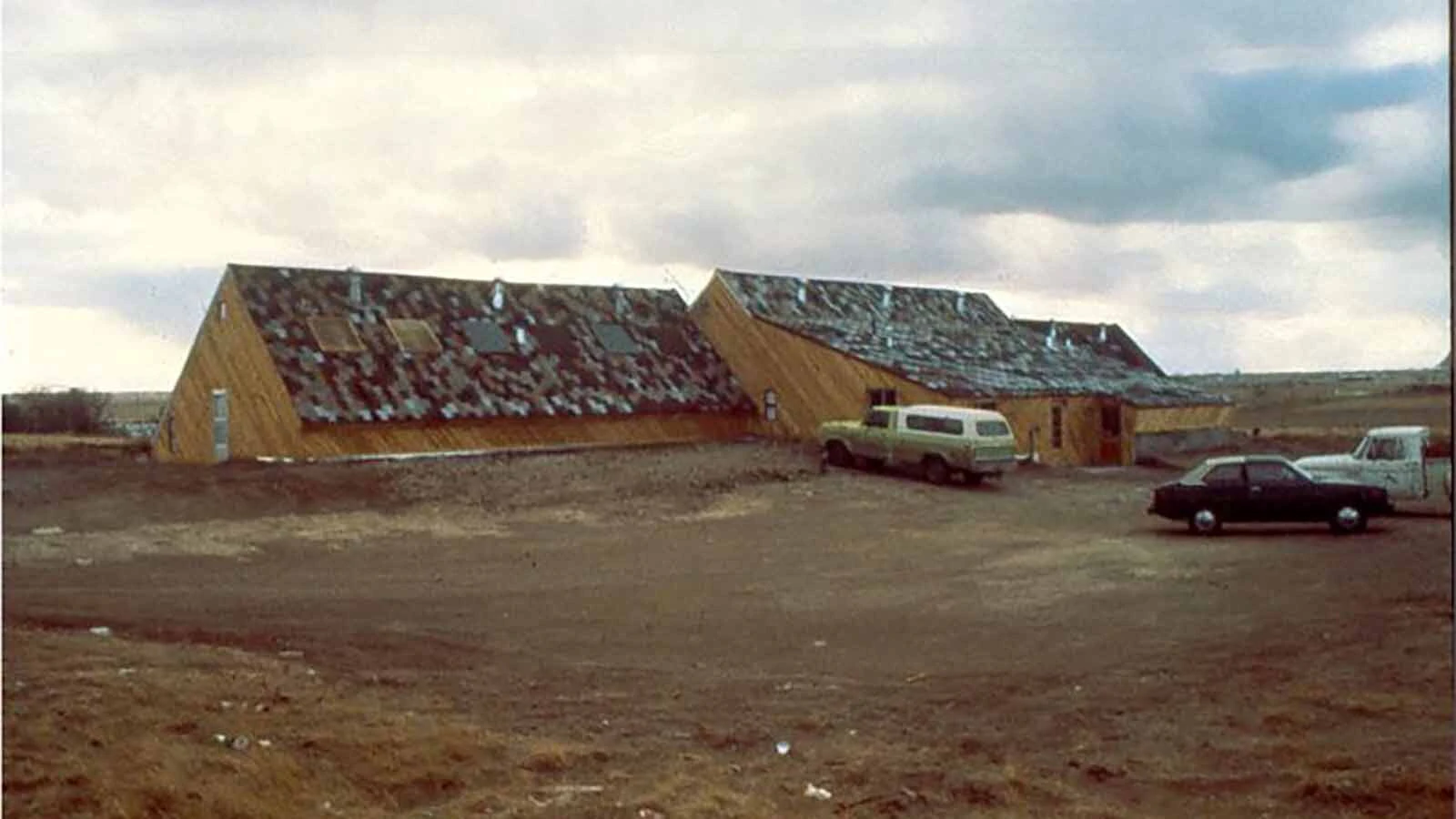
The Cheyenne Botanic Gardens have grown into a world-class development, but began nearly 50 years ago as a simple community garden with a goal of growing vegetables for seniors. (Provided by Shane Smith)
Solar Pioneers
The solar pioneers who got this project started 49 years ago were doing something impactful for the community, though they didn’t realize it at the time and it certainly didn’t happen overnight.
Before the end of the decade, the Cheyenne Community Greenhouse was falling apart, literally rotting away, according to its founding director, Shane Smith, who ran the operation from 1977 until 2018.
But Smith said they knew they had a winning formula. They took the success and trust they earned from the community, and soon had enough money in donations and grants to start building toward today's modern Cheyenne Botanic Gardens.
Today, the botanic gardens are a year-round oasis for visitors.
“On those cold wintry days you can go there, get warm, relax and pretend you’re somewhere far away,” said Cheyenne City Councilman Mark Rinne.
A walk through the grand conservatory is an opportunity to see tropical plants that can’t grow in Cheyenne’s climate.
The largest, a sago palm, more closely resembles a pine tree and originated during the Jurassic Period. Dinosaurs once snacked on the plant’s prehistoric ancestors.
Outside, on a nine-acre plot, are a labyrinth, gazebo and pond, and seven separate gardens, including one for the community to grow vegetables.
“Everyone who is familiar with the botanic gardens loves it,” Rinne said. “We have a large base of volunteers. It’s such an asset to the community and a showcase for Cheyenne, especially for a community of our size.”
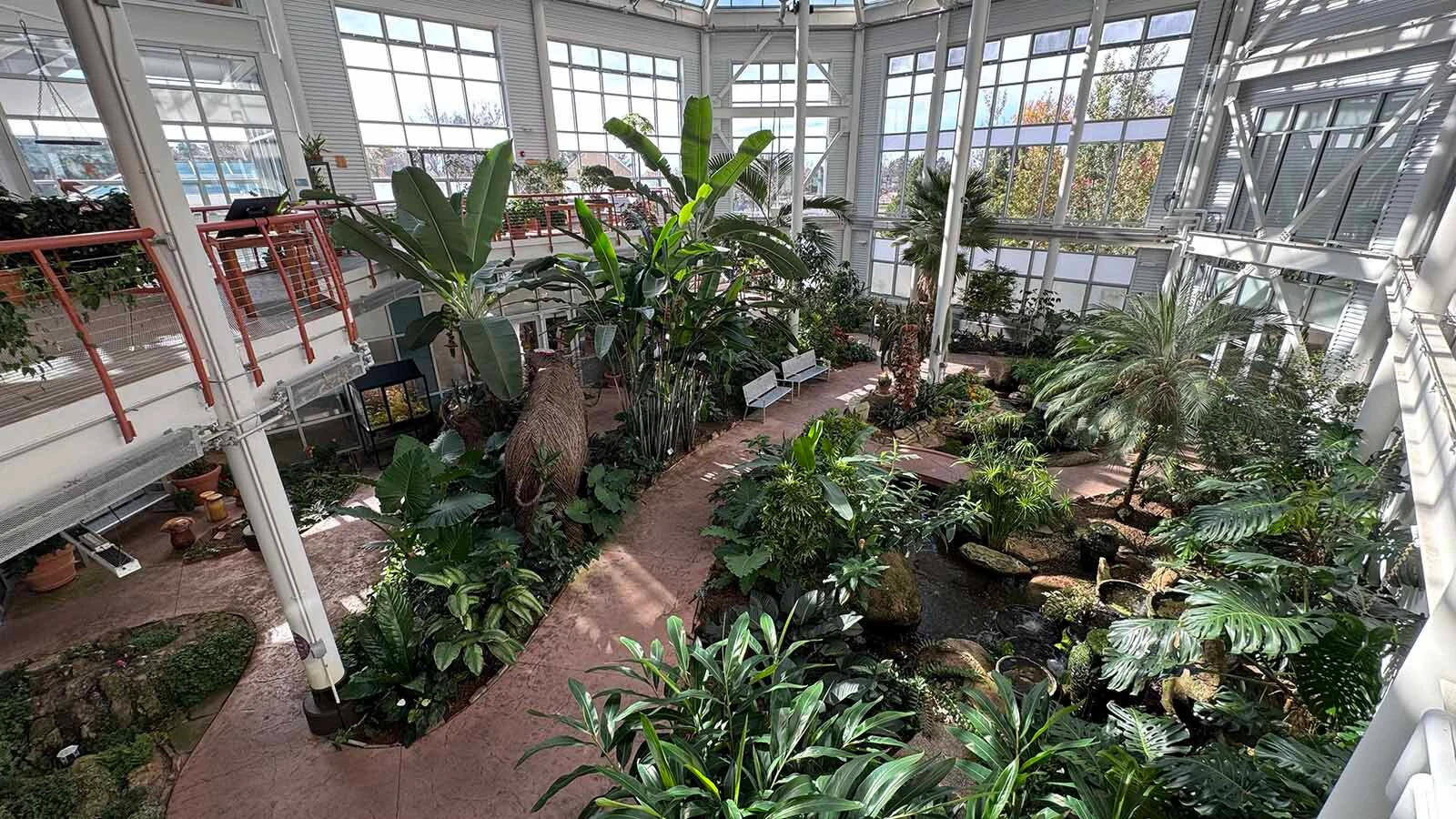
Inside the three-story Grand Observatory at the Cheyenne Botanic Gardens, named for its founder and main motivator for nearly 50 years, Shane Smith. (Greg Johnson, Cowboy State Daily) 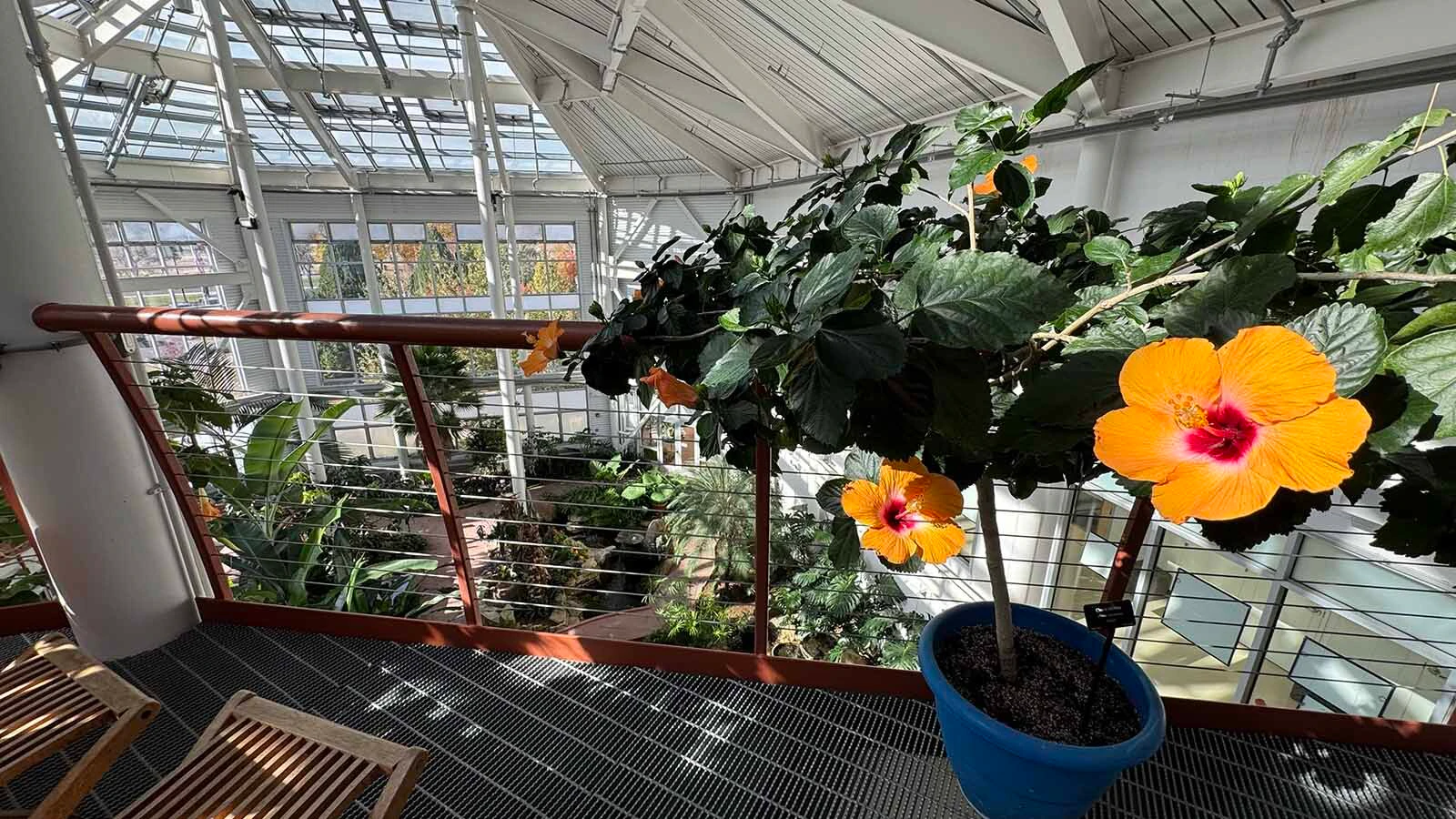
Inside the three-story Grand Observatory at the Cheyenne Botanic Gardens, named for its founder and main motivator for nearly 50 years, Shane Smith. (Greg Johnson, Cowboy State Daily) 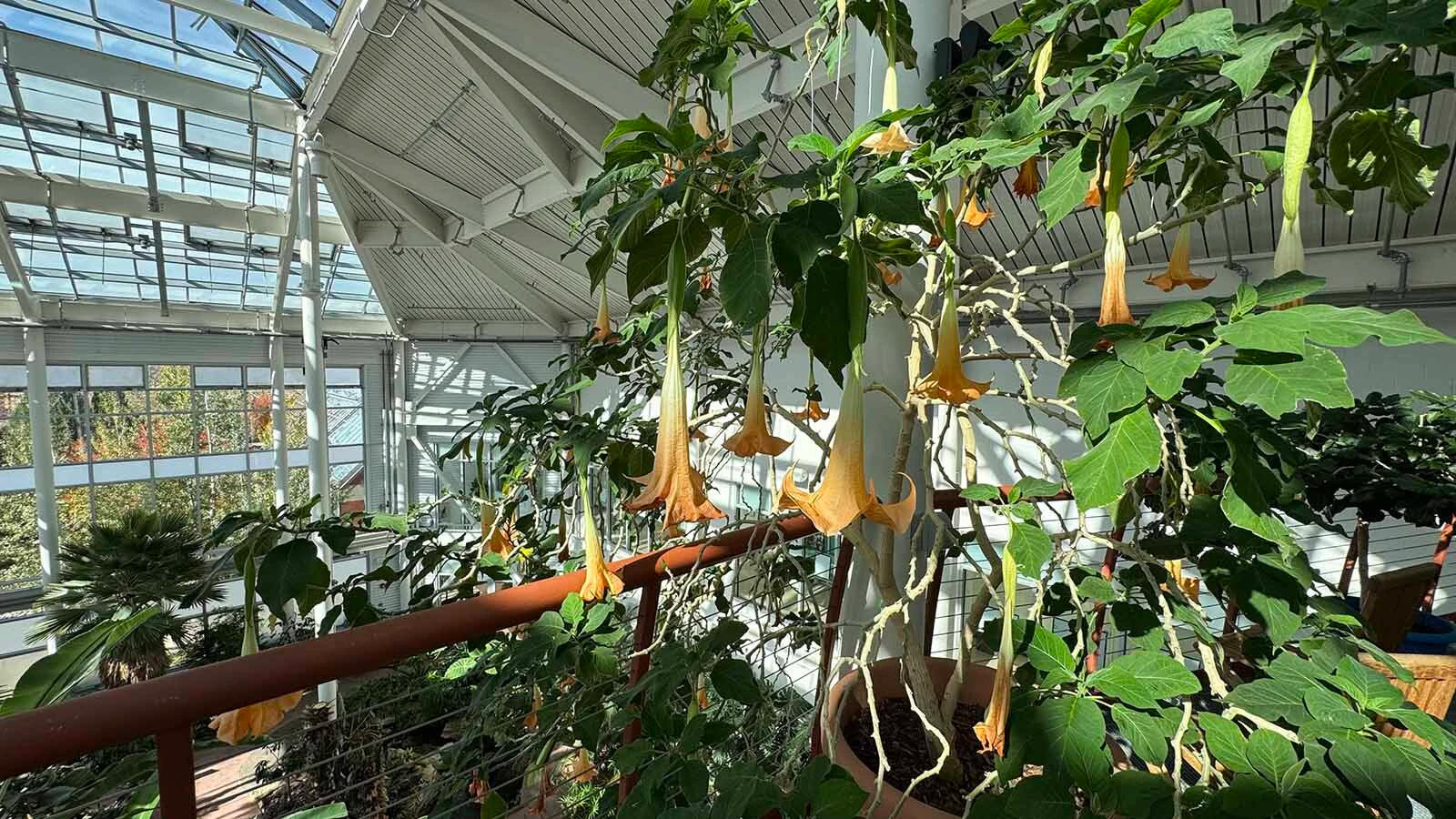
Inside the three-story Grand Observatory at the Cheyenne Botanic Gardens, named for its founder and main motivator for nearly 50 years, Shane Smith. (Greg Johnson, Cowboy State Daily) 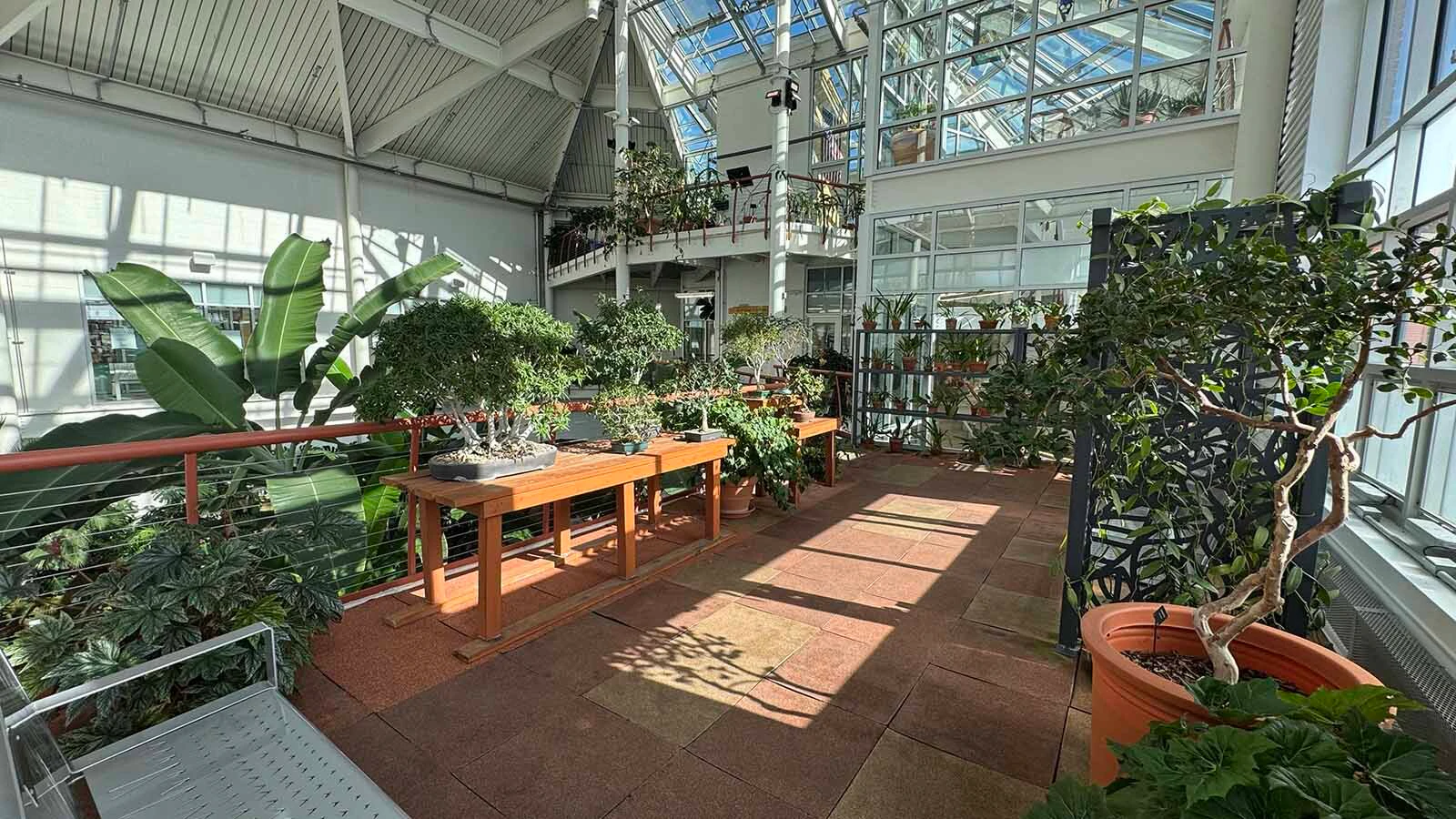
Inside the three-story Grand Observatory at the Cheyenne Botanic Gardens, named for its founder and main motivator for nearly 50 years, Shane Smith. (Greg Johnson, Cowboy State Daily) 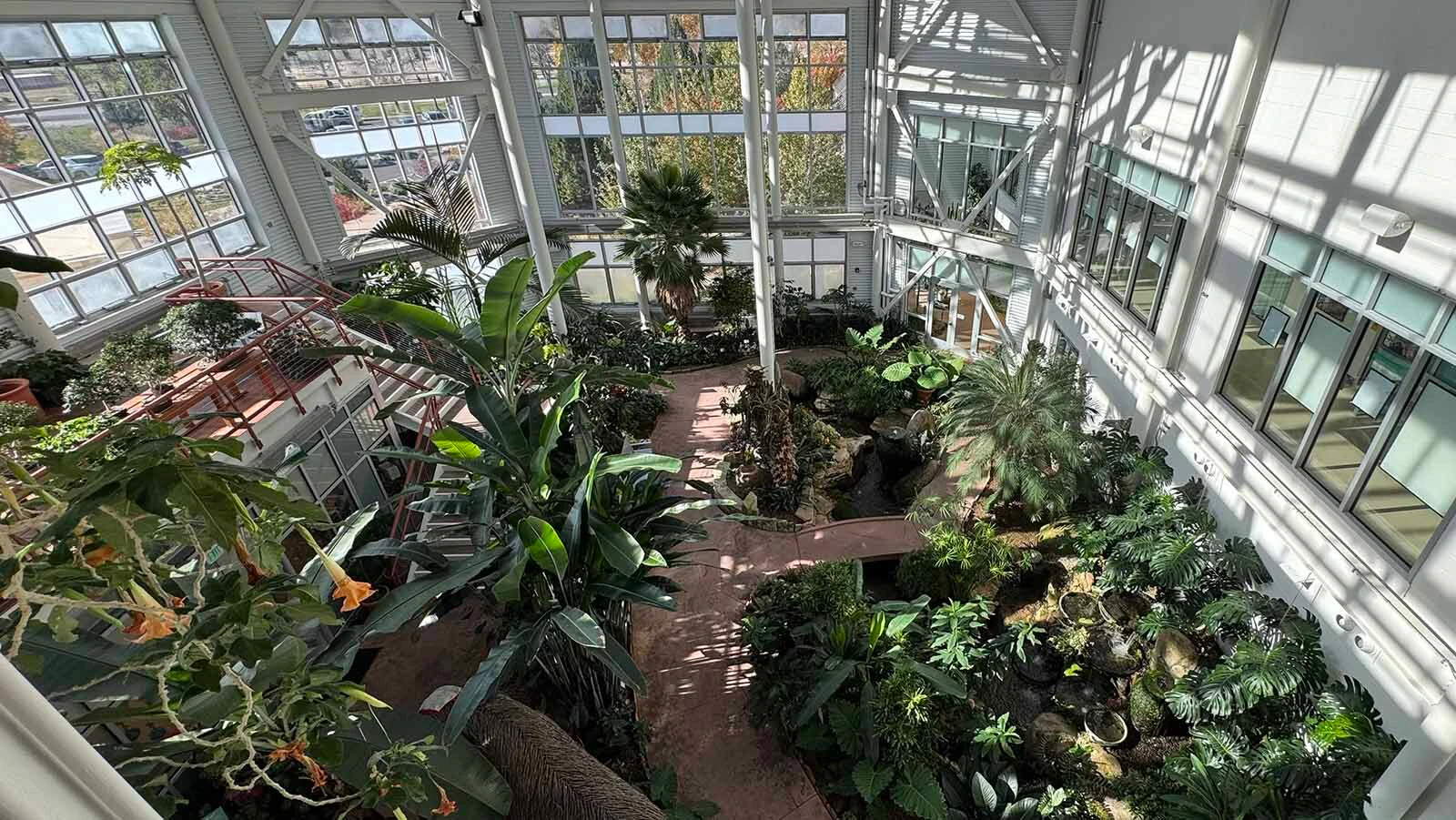
Inside the three-story Grand Observatory at the Cheyenne Botanic Gardens, named for its founder and main motivator for nearly 50 years, Shane Smith. (Greg Johnson, Cowboy State Daily) 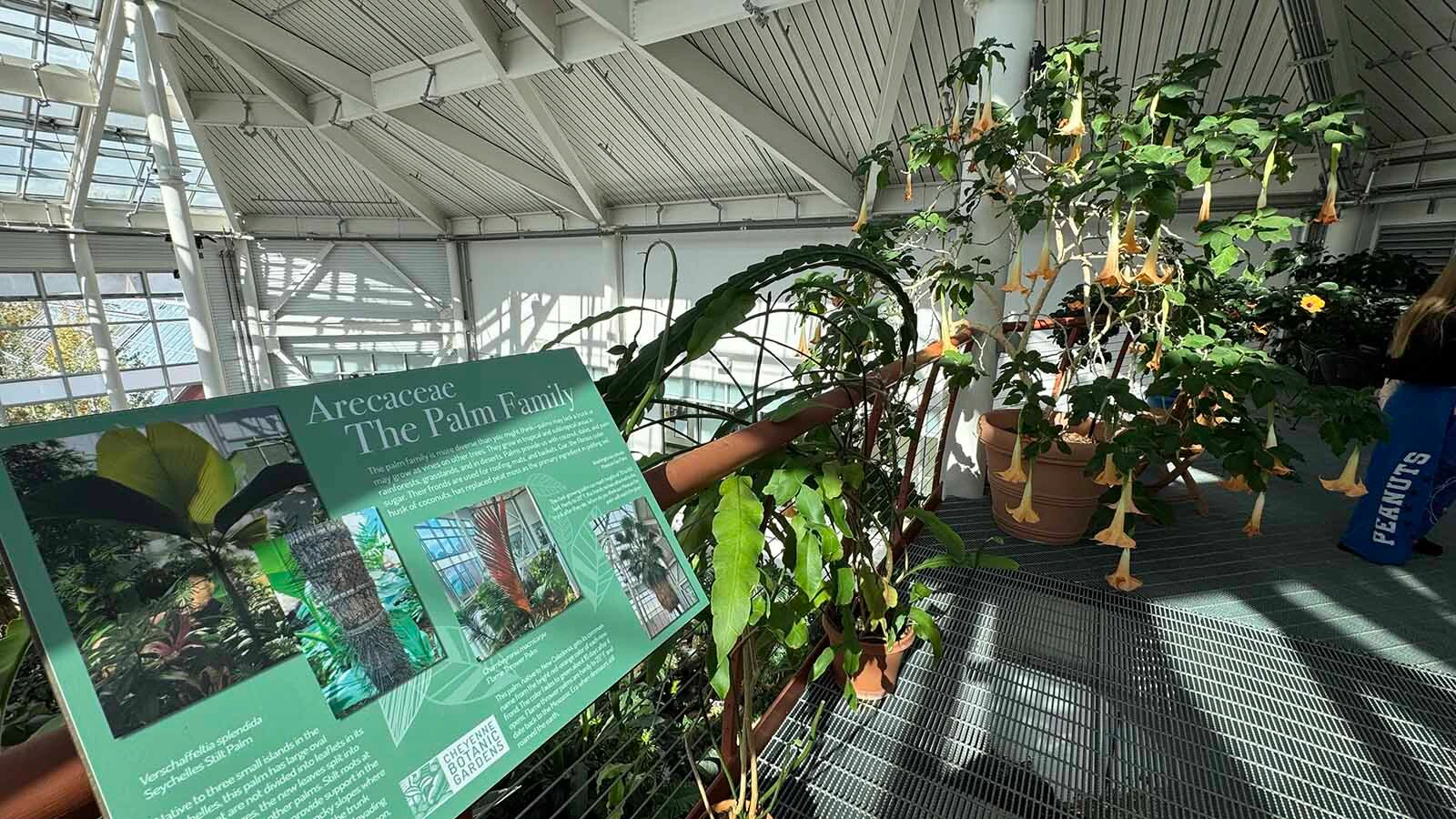
Inside the three-story Grand Observatory at the Cheyenne Botanic Gardens, named for its founder and main motivator for nearly 50 years, Shane Smith. (Greg Johnson, Cowboy State Daily) 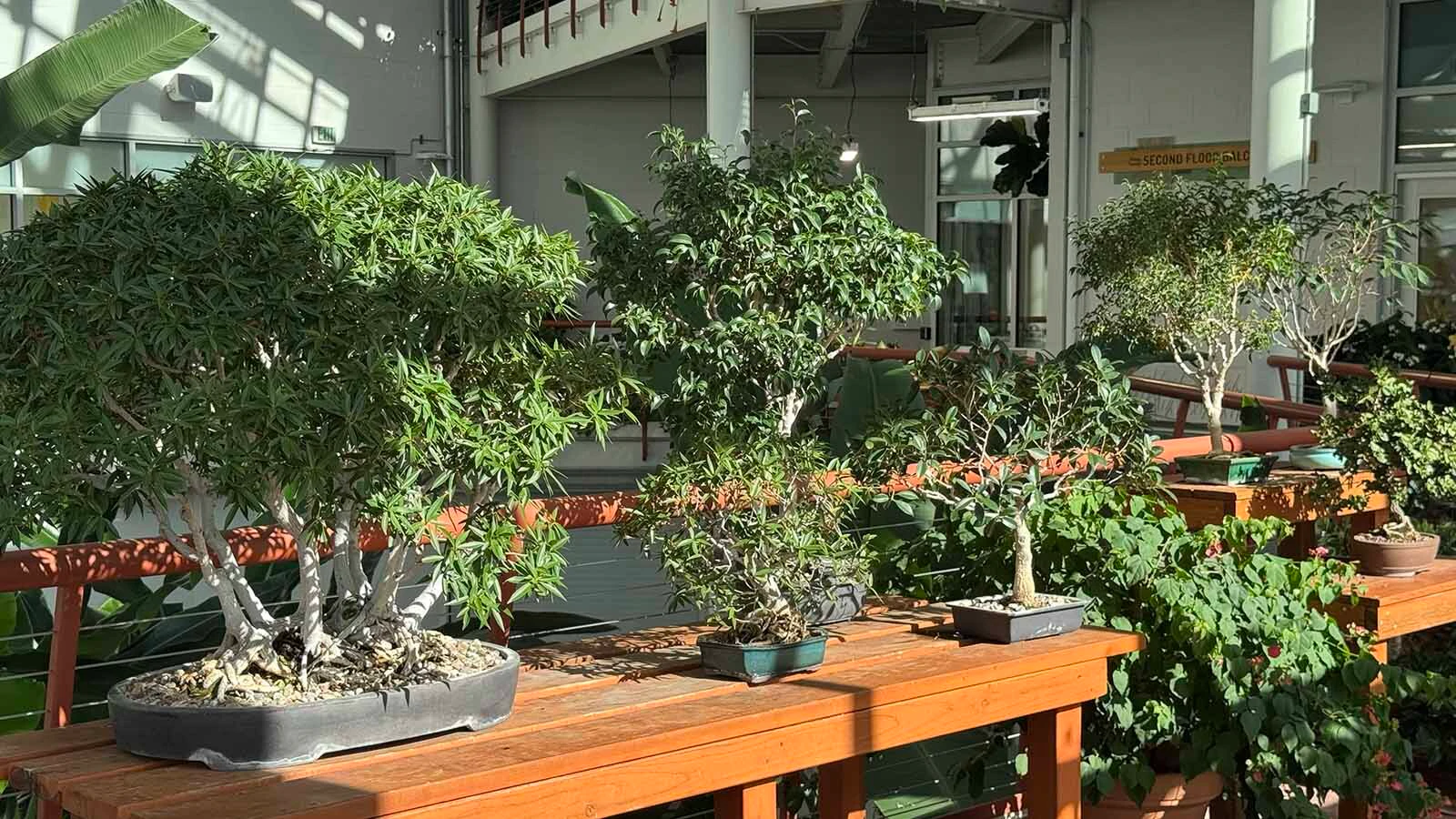
Inside the three-story Grand Observatory at the Cheyenne Botanic Gardens, named for its founder and main motivator for nearly 50 years, Shane Smith. (Greg Johnson, Cowboy State Daily) 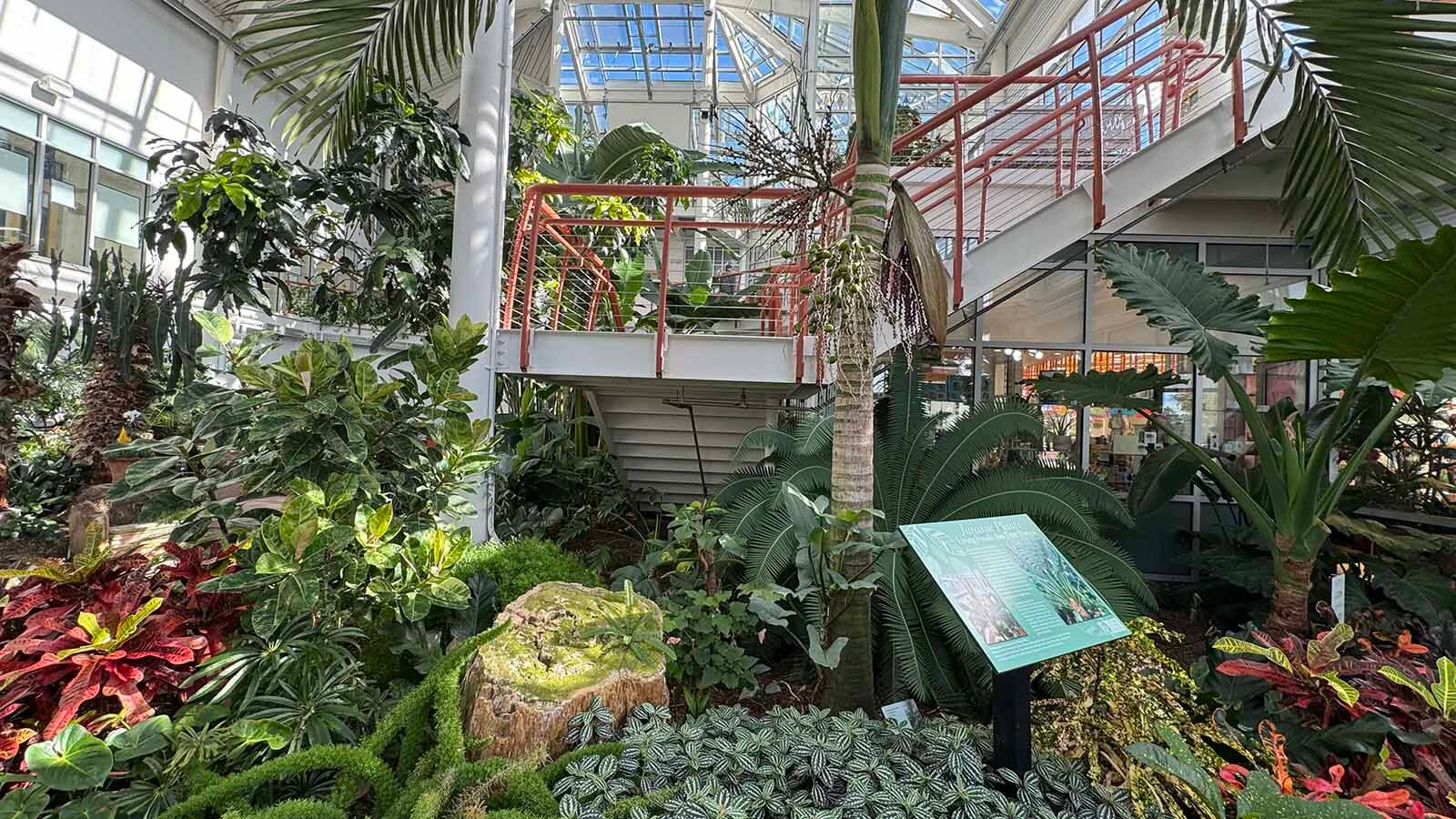
Inside the three-story Grand Observatory at the Cheyenne Botanic Gardens, named for its founder and main motivator for nearly 50 years, Shane Smith. (Greg Johnson, Cowboy State Daily) 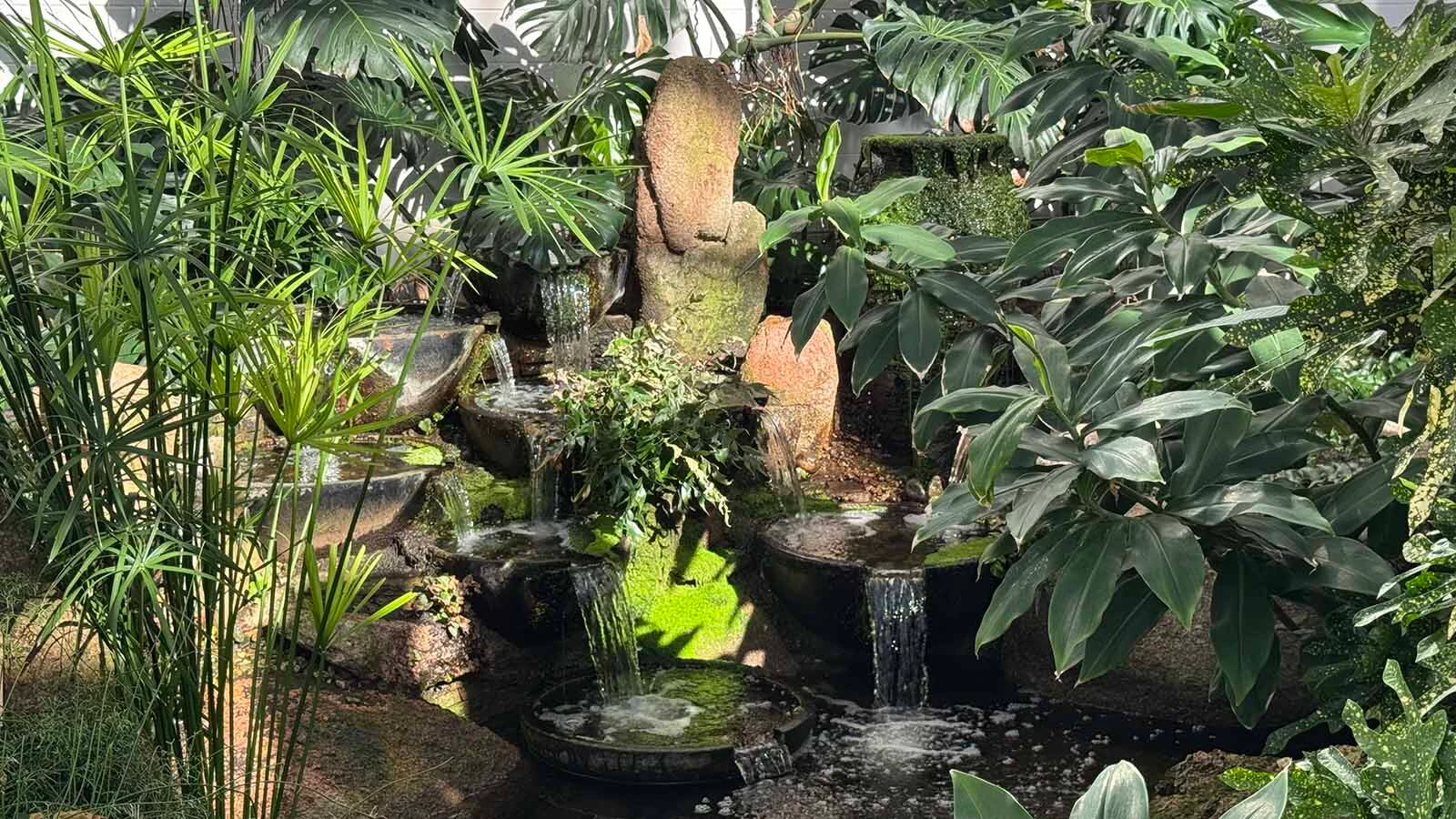
Inside the three-story Grand Observatory at the Cheyenne Botanic Gardens, named for its founder and main motivator for nearly 50 years, Shane Smith. (Greg Johnson, Cowboy State Daily) 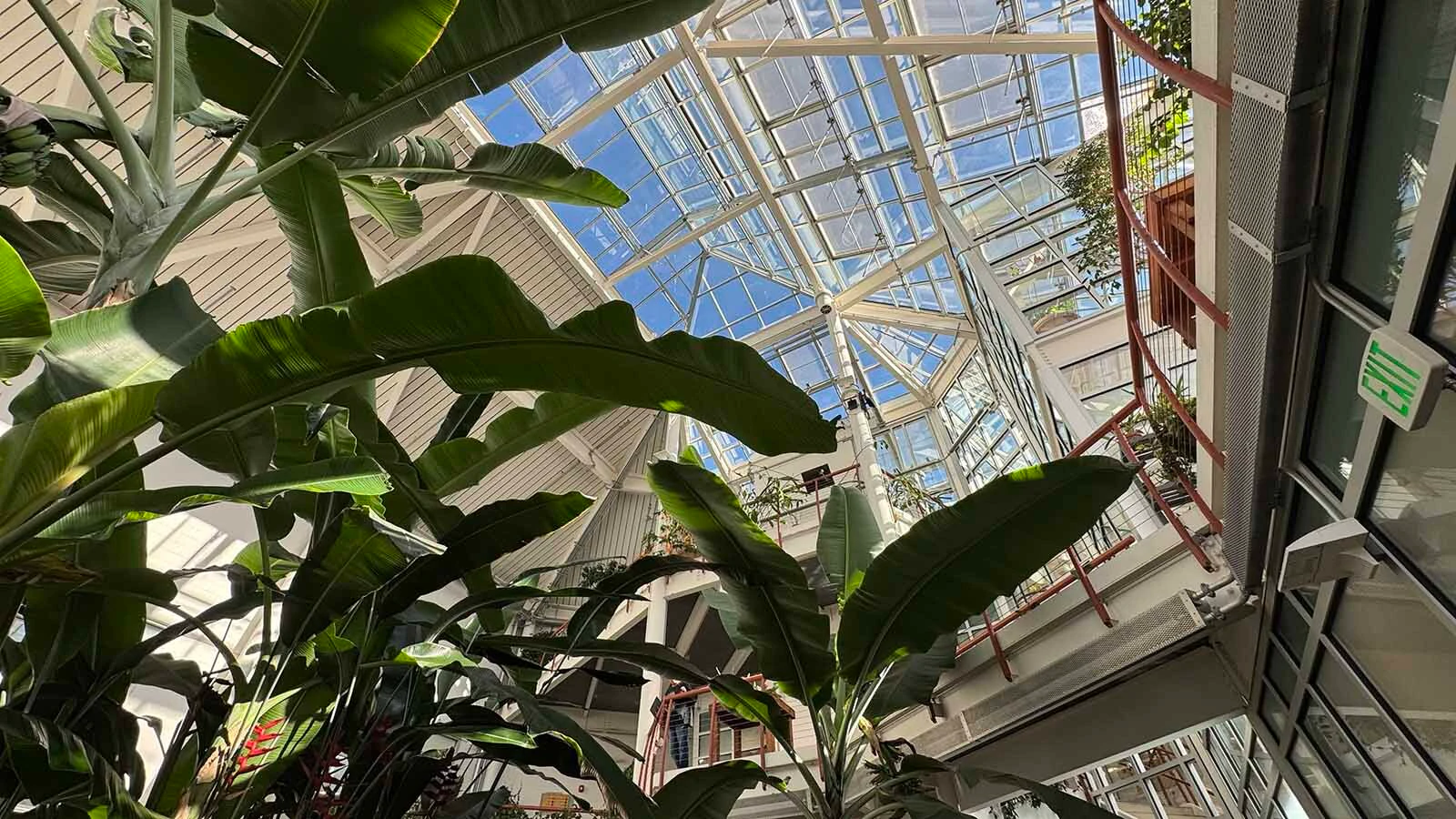
Inside the three-story Grand Observatory at the Cheyenne Botanic Gardens, named for its founder and main motivator for nearly 50 years, Shane Smith. (Greg Johnson, Cowboy State Daily)
Chasing A Turtle
Adriana McFarland, a Utah mother spending some time in Cheyenne with her young son Henry, was making her second trip to the grand conservatory.
It was Henry's first visit, who she said loves the children’s village. But the boy's excitement grew in the conservatory, where he watched fish swimming in a stream and tried to find a turtle that usually hangs out on the banks.
Henry made a few new friends who helped him with his search. They seemed equally entertained.
Lanna Donn, the botanic gardens' programming operations supervisor and an employee since 2018, said in the summer many families picnic on the lawn near the Conservatory, then tour the Children’s Village, which she said is a hit with all ages.
Many events take place at the botanic gardens, including weddings – which are typically booked months in advance – and baby showers.
Two special community events are upcoming, including Día de los Muertos (Day of the Dead), a Latin American observance, running through Nov. 7 to honor those who have passed. Families build home altars (ofrendas) decorated with photographs, personal mementos, candles, copal incense and water.
“It draws thousands of people each year,” Donn said.
The conservatory staff and volunteers go all-out to decorate for Christmas. Donn said the event is free, but tickets are distributed so the facility can keep track of how many people attend.
Seniors Are Priority
The diverse groups of people Smith intentionally recruited and brought to the Cheyenne Botanic Gardens to work as volunteers — from teens working off court fines to seniors of many ethnic backgrounds with deep ties to their churches — might have never met and formed lasting friendships if the gardens didn’t exist.
One of the tenets has always been that it’s a place for seniors to buy and grow food, particularly for those with fixed or low incomes. But Smith said no one is turned away.
“I spoke at different venues to encourage a diversity of volunteers so it wasn’t just older white people, it was everybody,” Smith said. “It was the most diverse group of seniors in Cheyenne gathered for one effort.”
He went to Black churches and Catholic services, the latter to find members of the Hispanic community.
Smith also said youth organizations and others began to ask if they could bring youngsters to volunteer. They included Youth Alternatives, Scouts, high school congressional awards programs, and Goodwill clients and workers.
“I would get calls from university psychologists saying, ‘This is like a sociological experiment. We should be studying you,’” Smith said. “But nobody ever came through with any studies.”
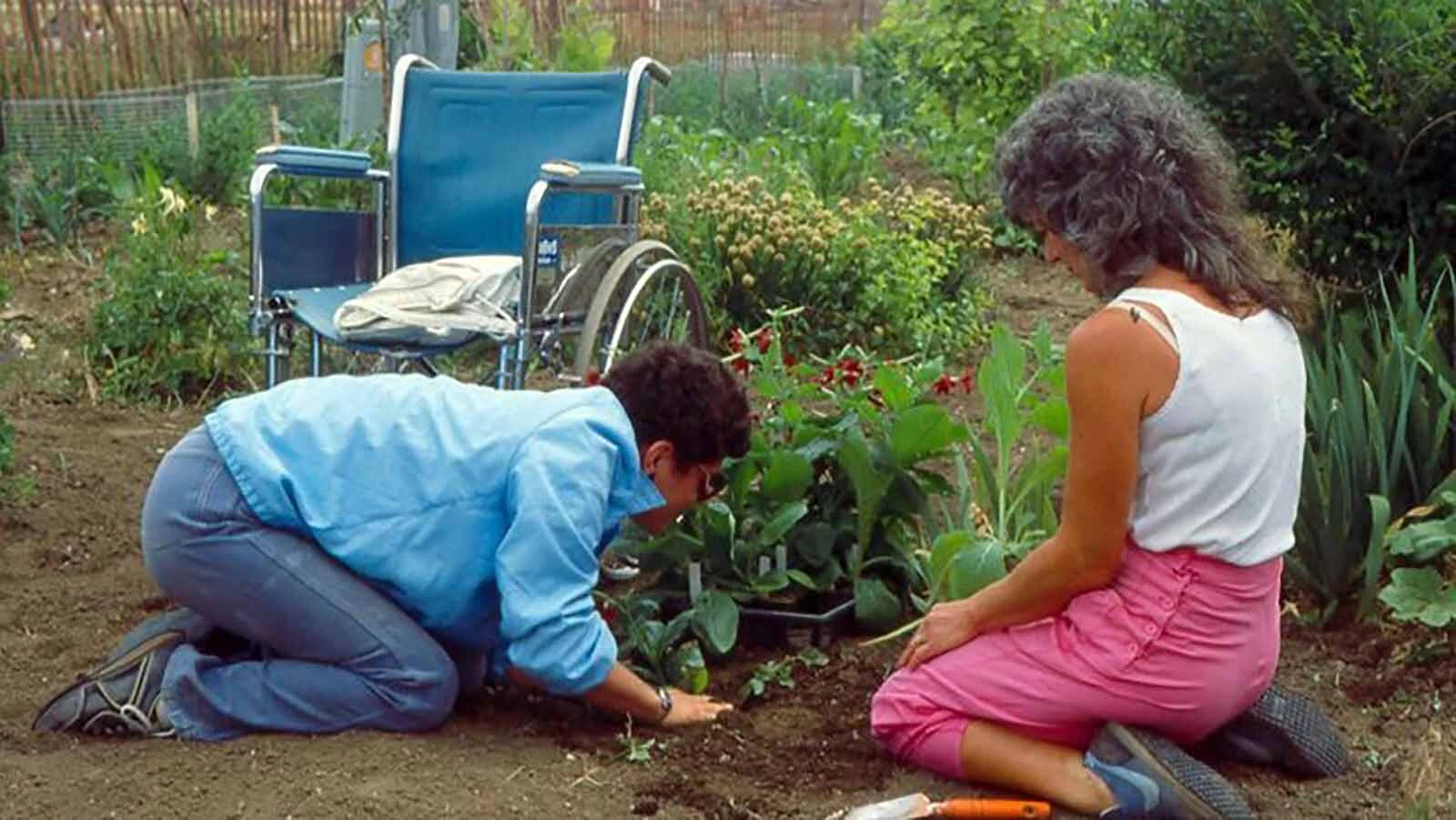
The Cheyenne Botanic Gardens have grown into a world-class development, but began nearly 50 years ago as a simple community garden with a goal of growing vegetables for seniors. (Provided by Shane Smith) 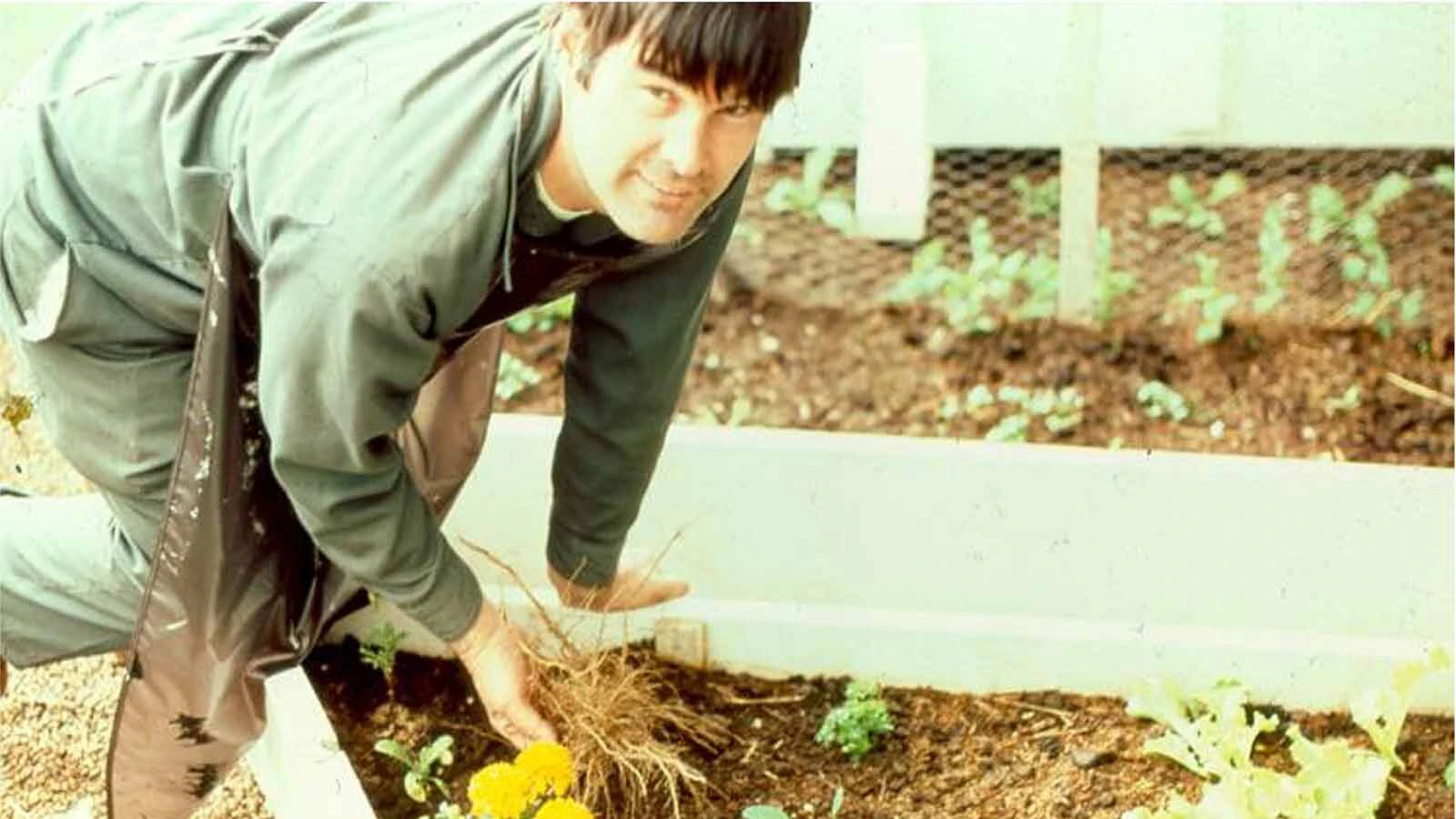
The Cheyenne Botanic Gardens have grown into a world-class development, but began nearly 50 years ago as a simple community garden with a goal of growing vegetables for seniors. (Provided by Shane Smith) 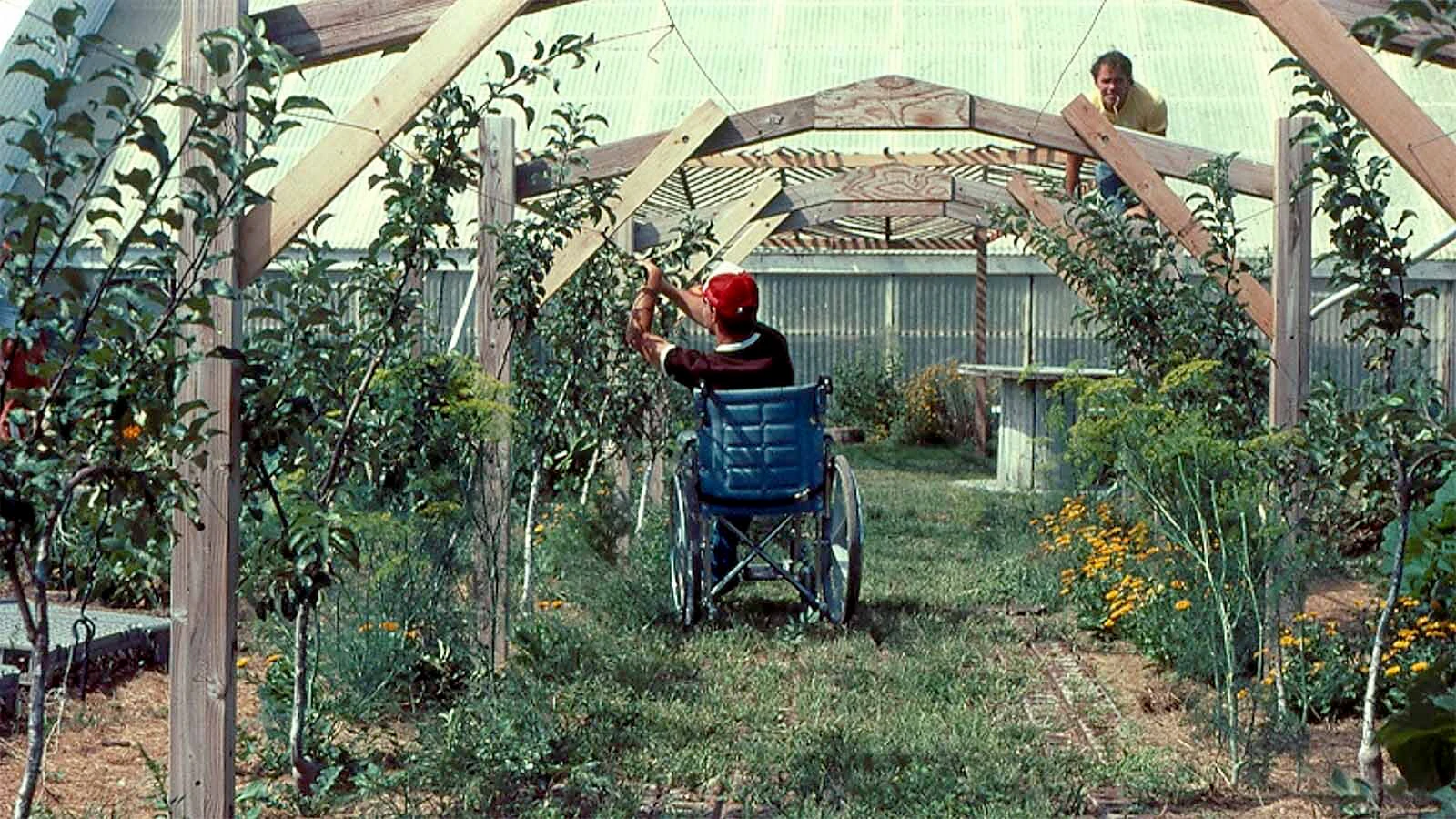
The Cheyenne Botanic Gardens have grown into a world-class development, but began nearly 50 years ago as a simple community garden with a goal of growing vegetables for seniors. (Provided by Shane Smith) 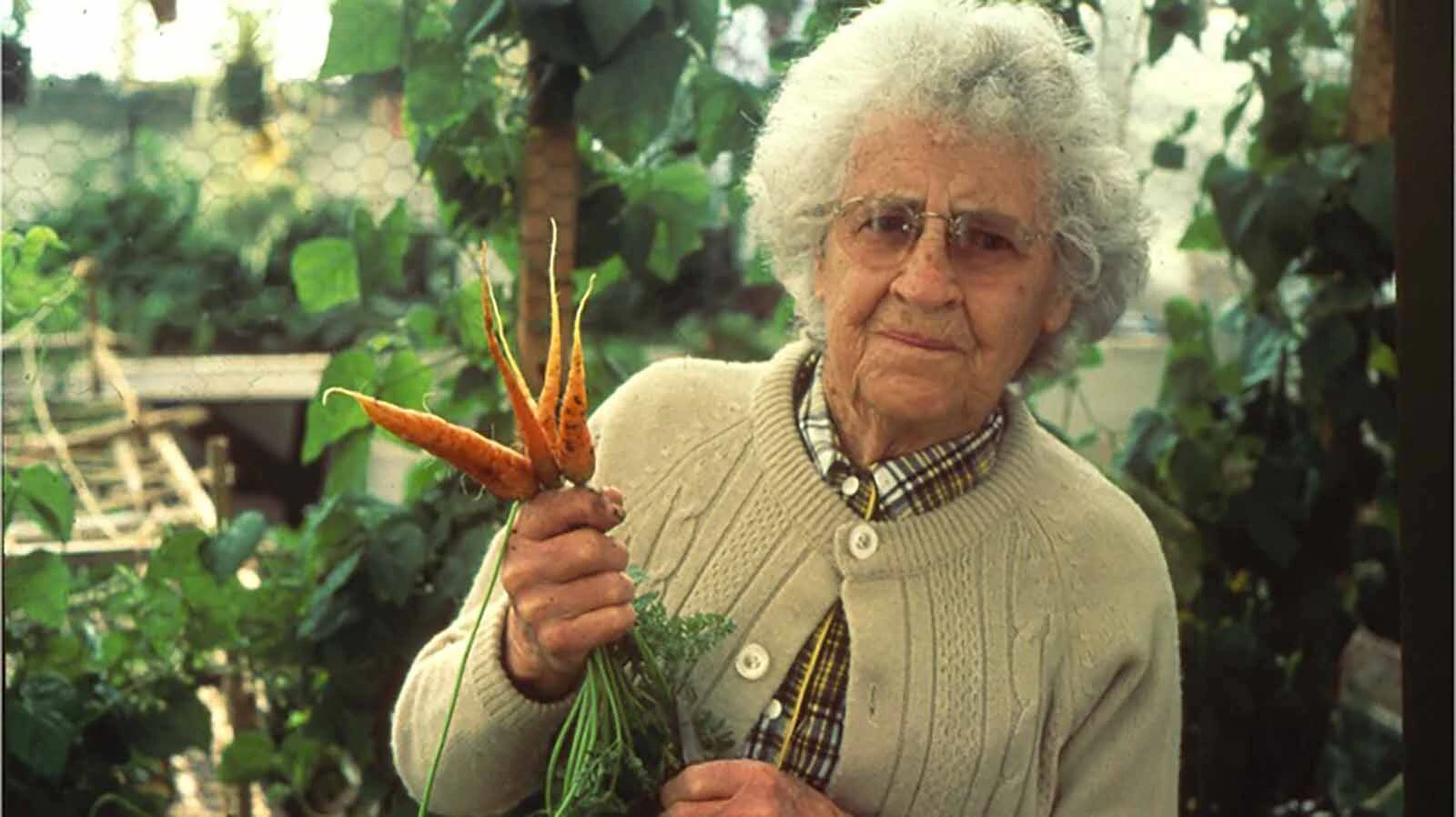
The Cheyenne Botanic Gardens have grown into a world-class development, but began nearly 50 years ago as a simple community garden with a goal of growing vegetables for seniors. (Provided by Shane Smith) 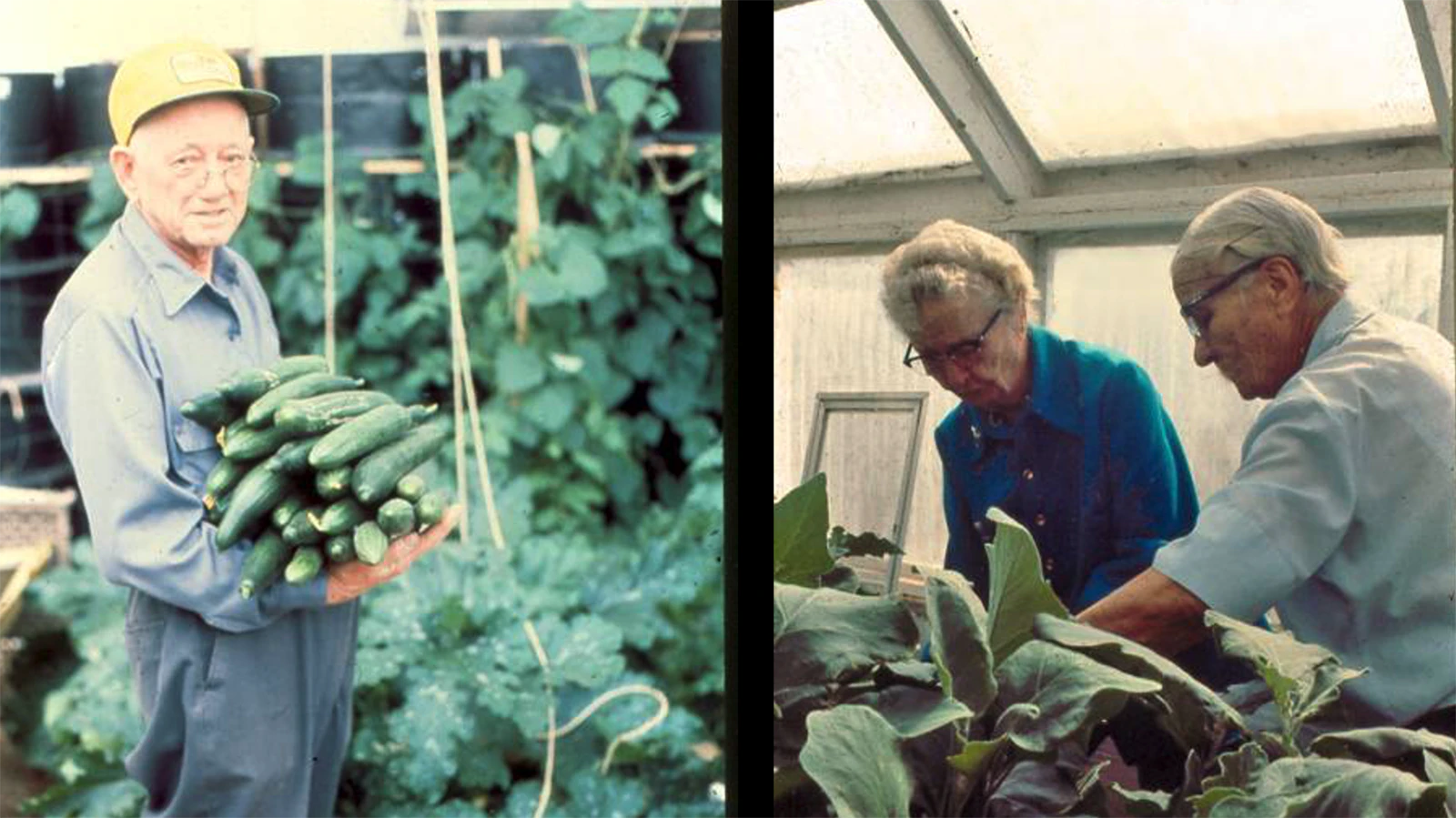
The Cheyenne Botanic Gardens have grown into a world-class development, but began nearly 50 years ago as a simple community garden with a goal of growing vegetables for seniors. (Provided by Shane Smith) 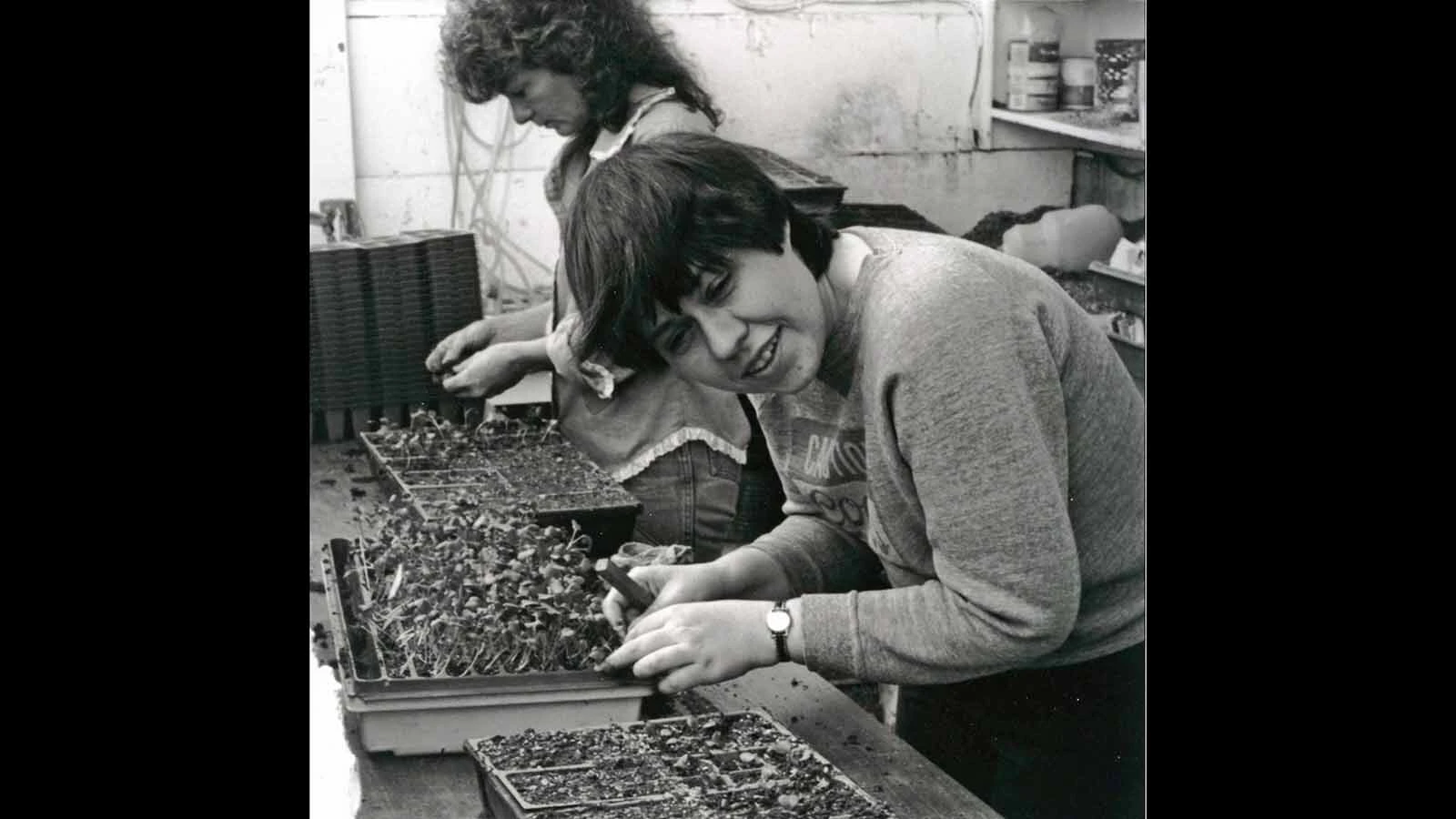
The Cheyenne Botanic Gardens have grown into a world-class development, but began nearly 50 years ago as a simple community garden with a goal of growing vegetables for seniors. (Provided by Shane Smith) 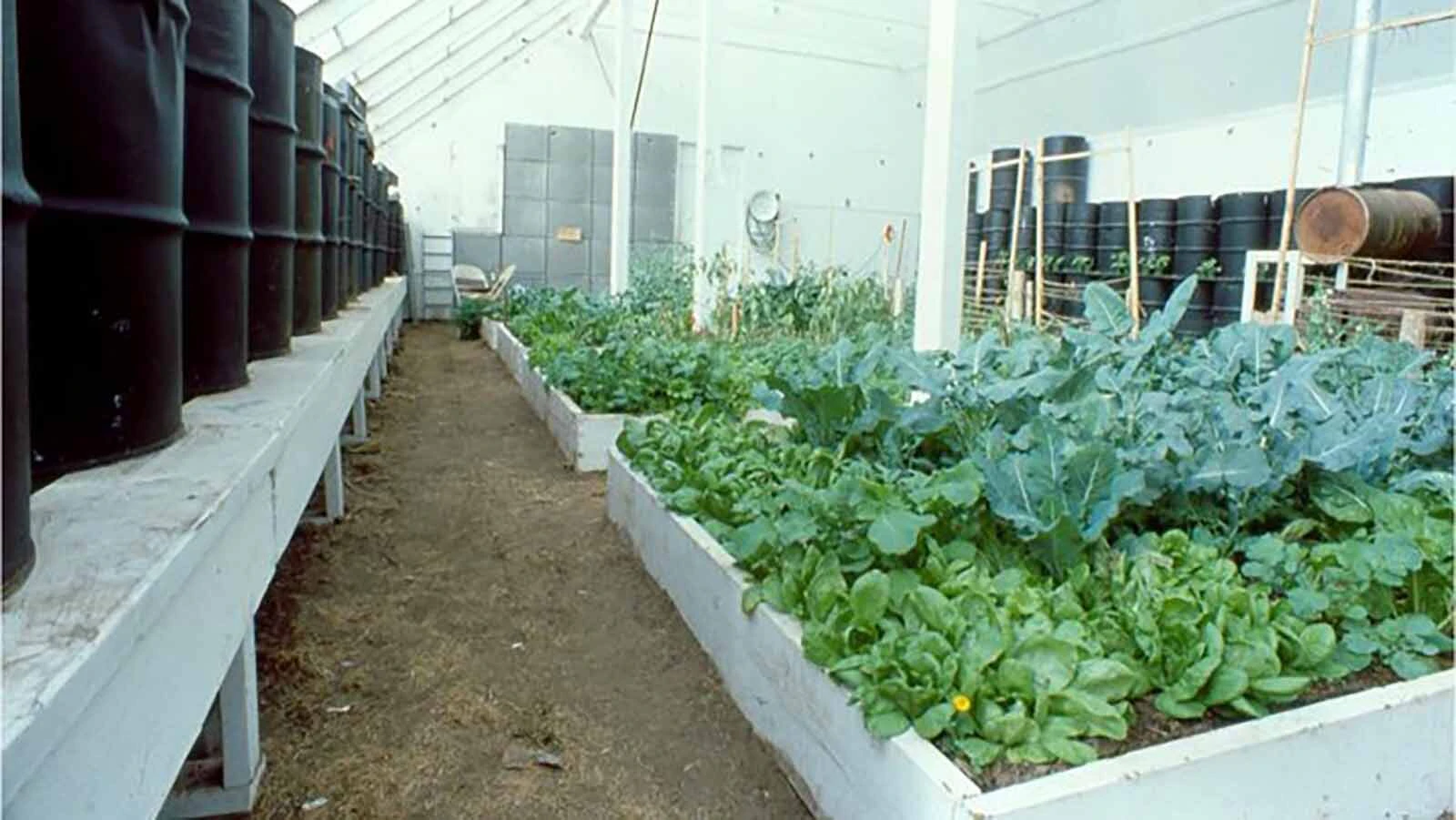
The Cheyenne Botanic Gardens have grown into a world-class development, but began nearly 50 years ago as a simple community garden with a goal of growing vegetables for seniors. (Provided by Shane Smith)
That Young Punk
In 1977, Smith was a self-described “young punk” with a degree in horticulture from Colorado State University who came to Cheyenne when he read in the Fort Collins paper that the nation’s first passive solar-heated greenhouse was being built.
After meeting the enthusiastic manager of the project, Gary Garber of Community Action of Laramie County, and touring three small community solar greenhouses, Smith was hooked.
He began driving from Colorado to Cheyenne as a volunteer on a building crew constructing a 5,000-square-foot solar greenhouse.
Smith said it was a lot of hard work, but there were also fun times, such as when the crew drank beer and held a “roofing party.” He noted that OSHA wasn’t regulating workplace safety in the same way at that time.
Fortunately, he said, no one was hurt.
Three contractors donated roofing shingles, and they all were different colors. The literally patchwork job the volunteers did, Smith said, “was truly a work of art.” It also made people driving down Whitney Road east of Cheyenne slow down to take a look.
Smith was in for a big surprise when the building was finished for the Cheyenne Community Greenhouse. They needed a director for the greenhouse, he said, and one by one the workers said they knew how to build things, not grow them.
Then it came Smith’s turn to share his background, and after he said he had a CSU horticulture degree and noted the orchards near his family’s home, consensus was he should get the director’s position.
“I asked how much it paid, and I was told “200 bucks a month,'” he said. “It was barely enough to buy food and pay rent in that day and age,” he said.
But Smith took the job. His assistant, Glenn Vosler, who was the only other paid employee, eased the housing expenses when he told his boss he had an Airstream trailer they could move to the property so Smith had a place to live.
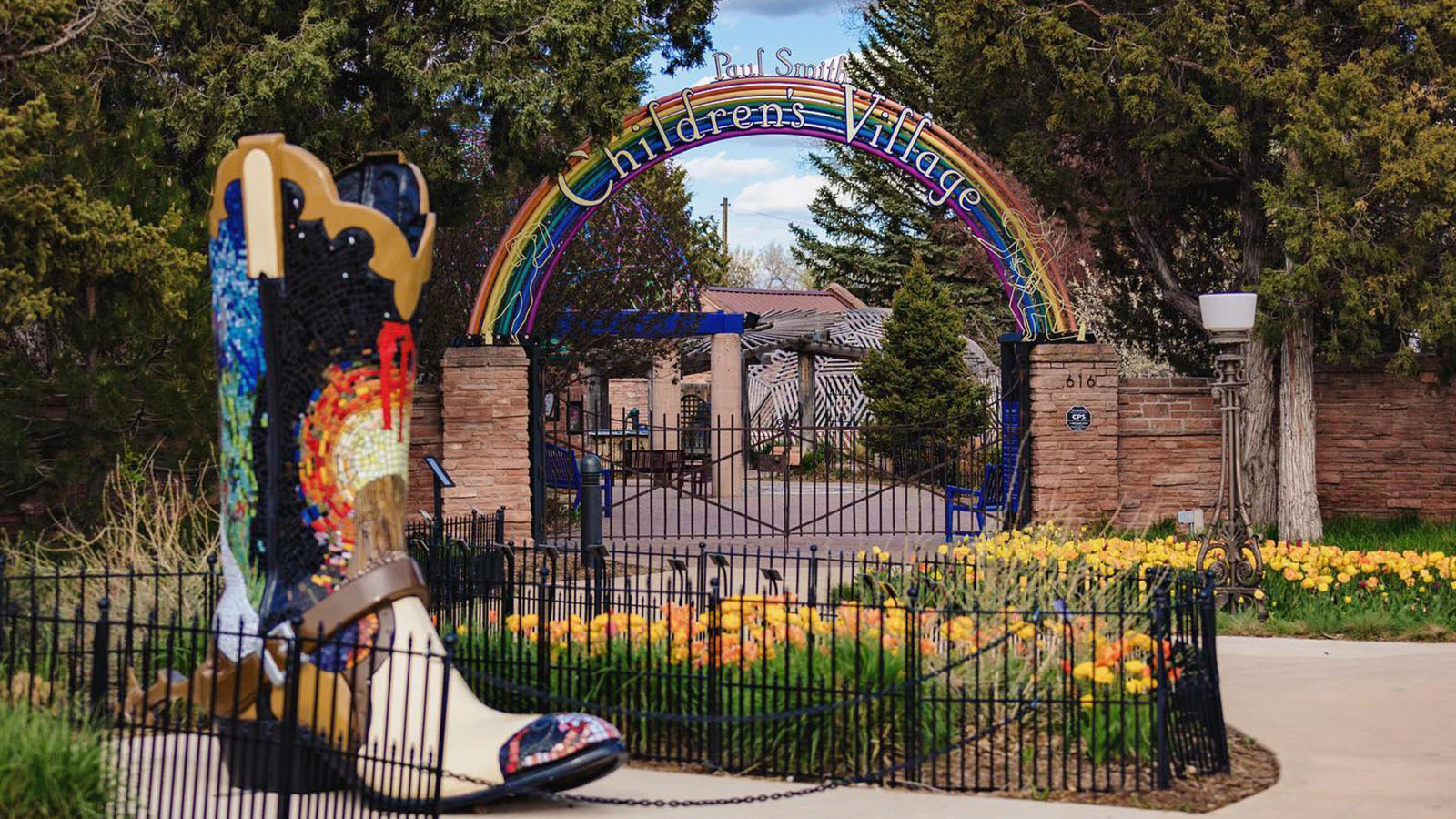
The Children's Village at the Cheyenne Botanic Gardens, which have grown into a world-class development, but began nearly 50 years ago as a simple community garden with a goal of growing vegetables for seniors. (Cheyenne Botanic Gardens via Facebook) 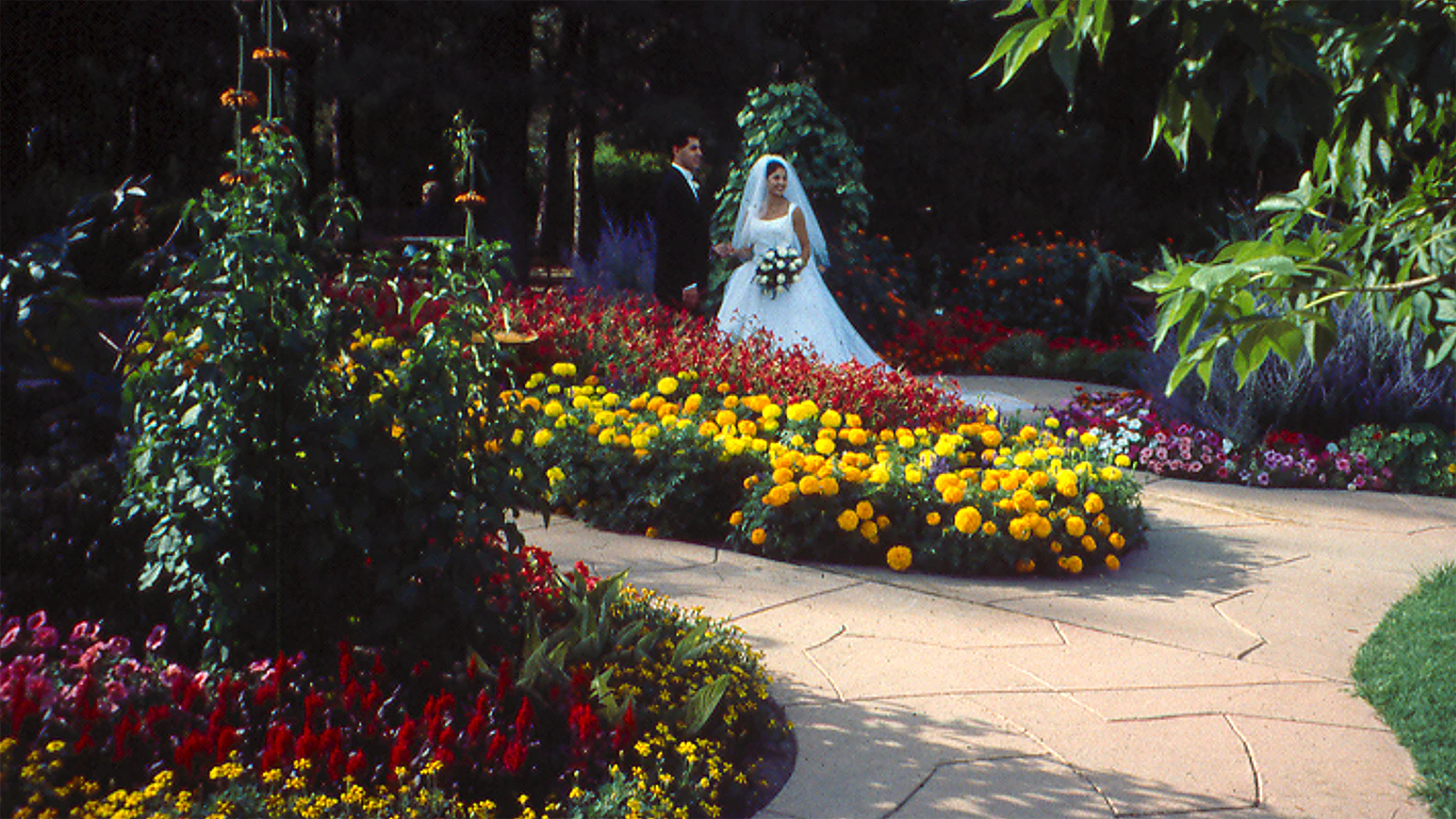
The Cheyenne Botanic Gardens have grown into a world-class development, but began nearly 50 years ago as a simple community garden with a goal of growing vegetables for seniors. Now its outside gardens are popular with couples as a backdrop for wedding photos. (Provided by Shane Smith) 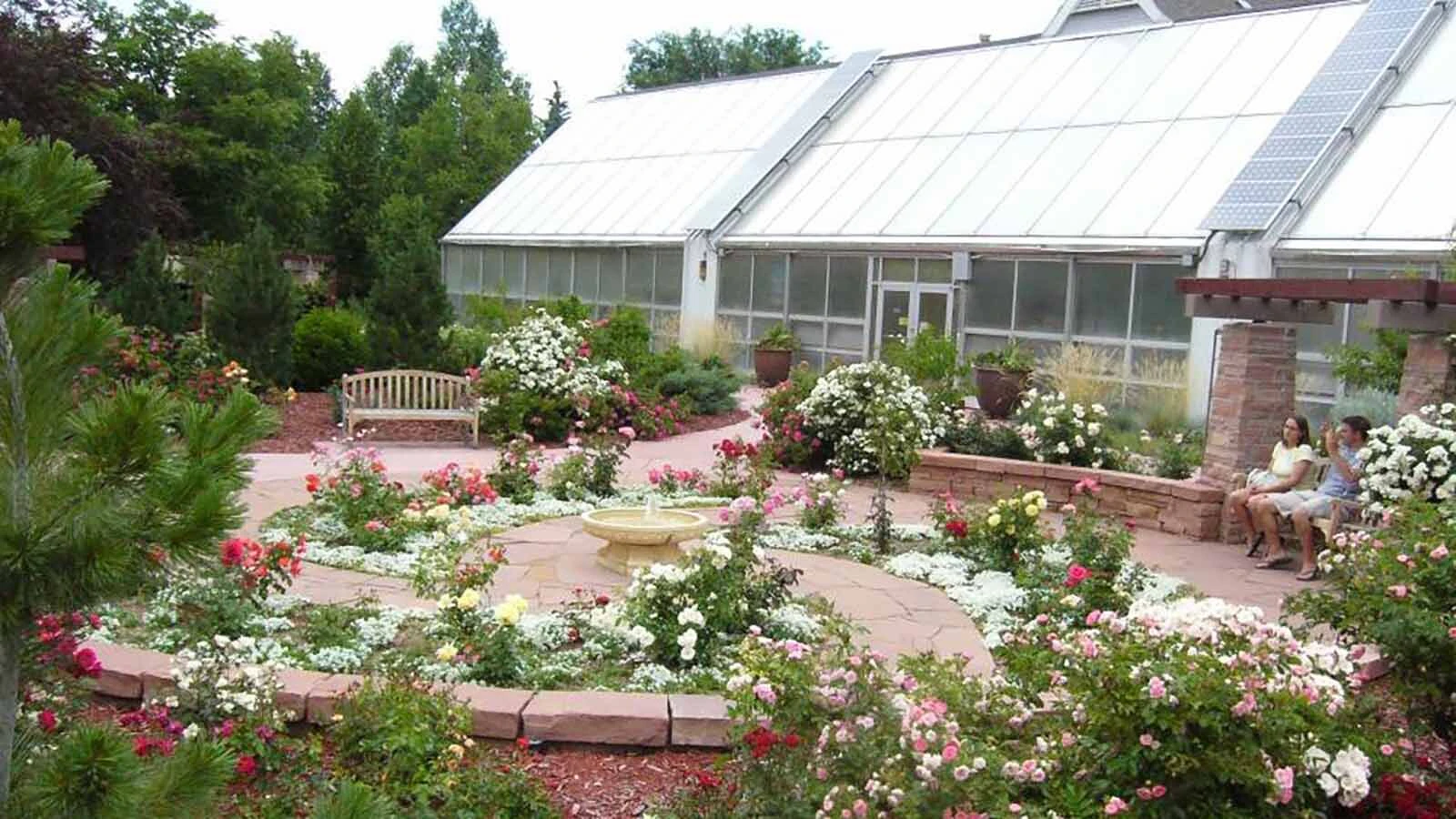
The Cheyenne Botanic Gardens have grown into a world-class development, but began nearly 50 years ago as a simple community garden with a goal of growing vegetables for seniors. (Provided by Shane Smith) 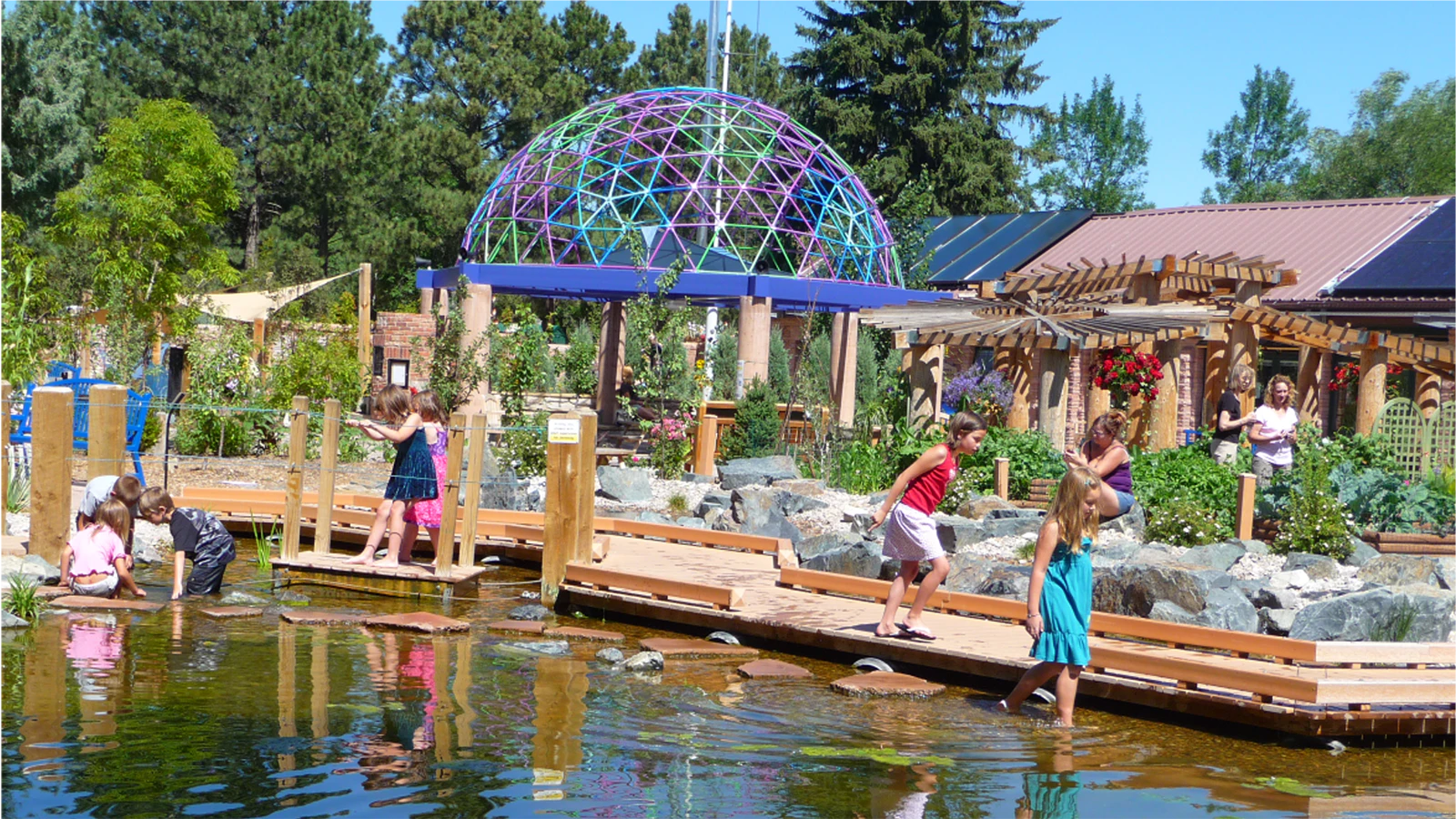
The Children's Village at the Cheyenne Botanic Gardens, which have grown into a world-class development, but began nearly 50 years ago as a simple community garden with a goal of growing vegetables for seniors. (Provided by Shane Smith) 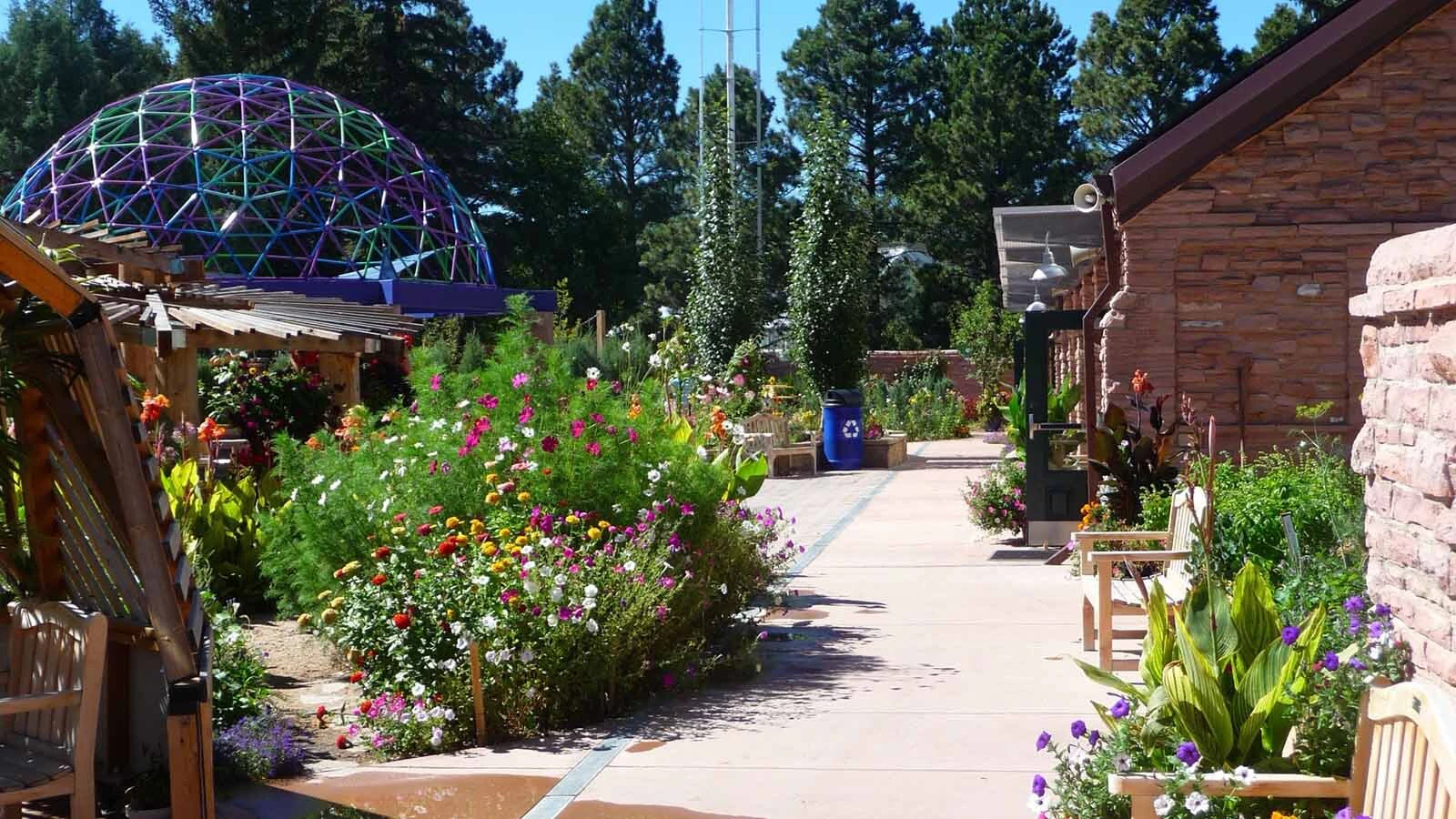
The Children's Village at the Cheyenne Botanic Gardens, which have grown into a world-class development, but began nearly 50 years ago as a simple community garden with a goal of growing vegetables for seniors. (Provided by Shane Smith) 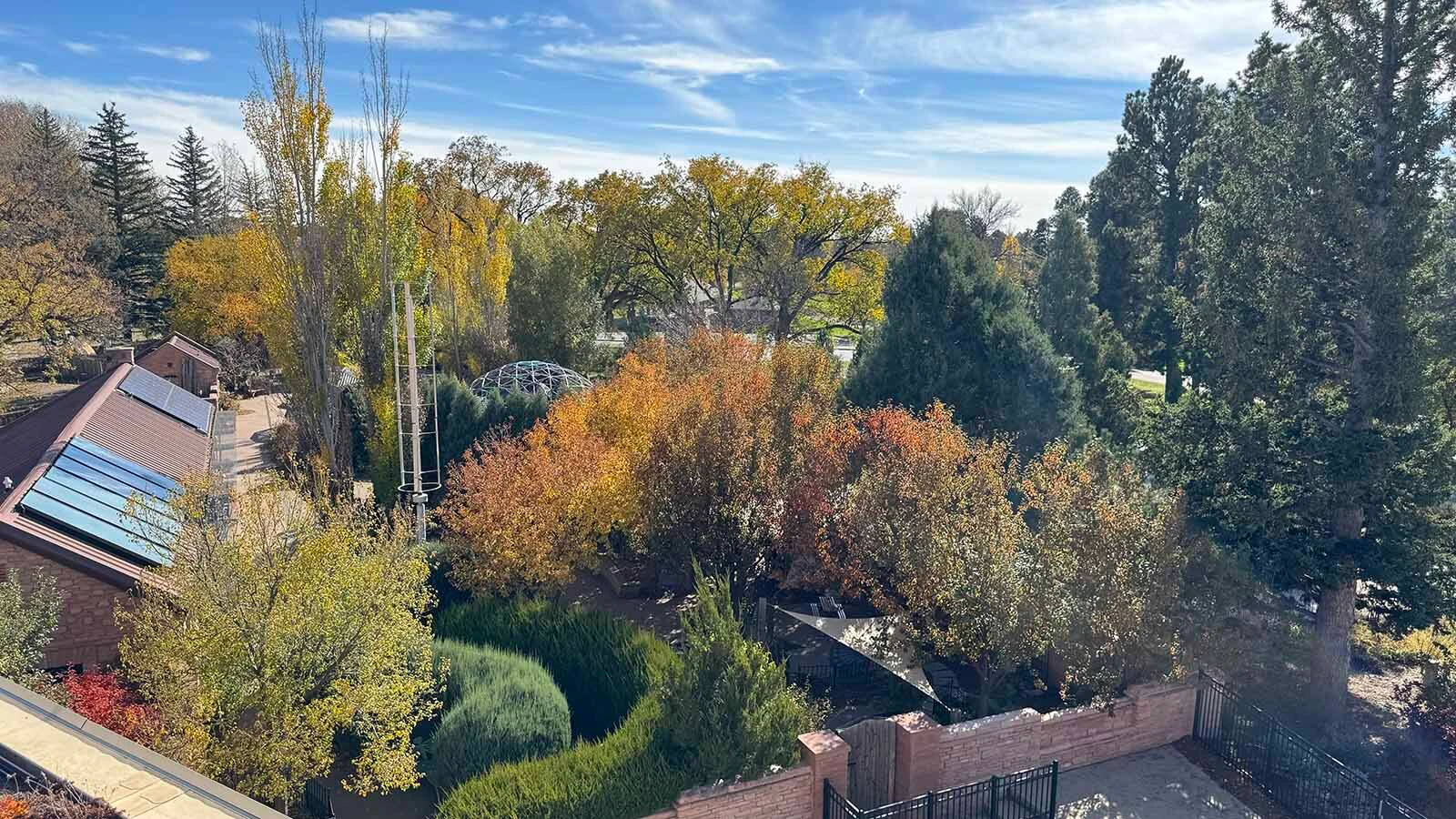
View from the third-story balcony at the Grand Observatory. (Greg Johnson, Cowboy State Daily) 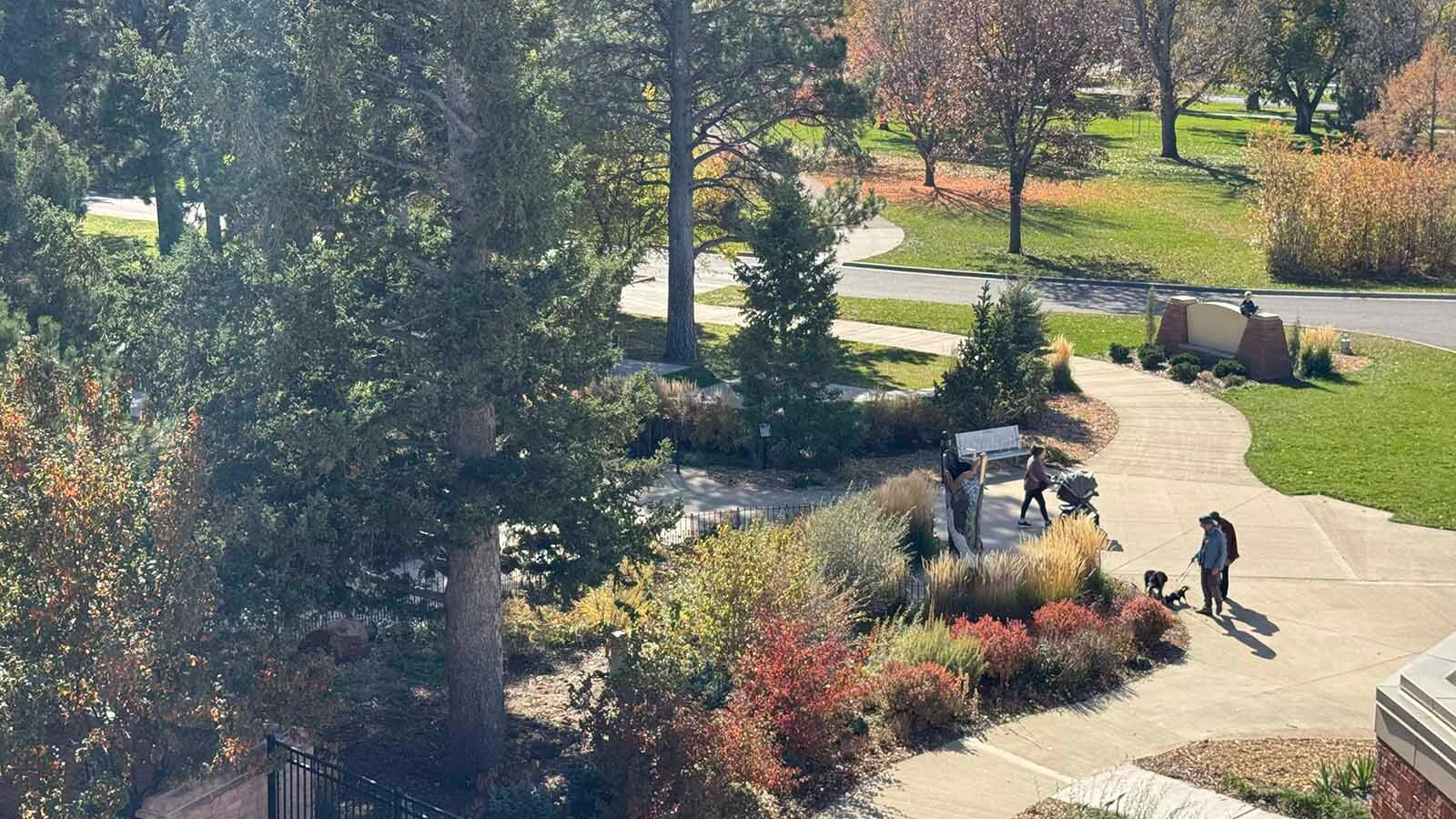
View from the third-story balcony at the Grand Observatory. (Greg Johnson, Cowboy State Daily) 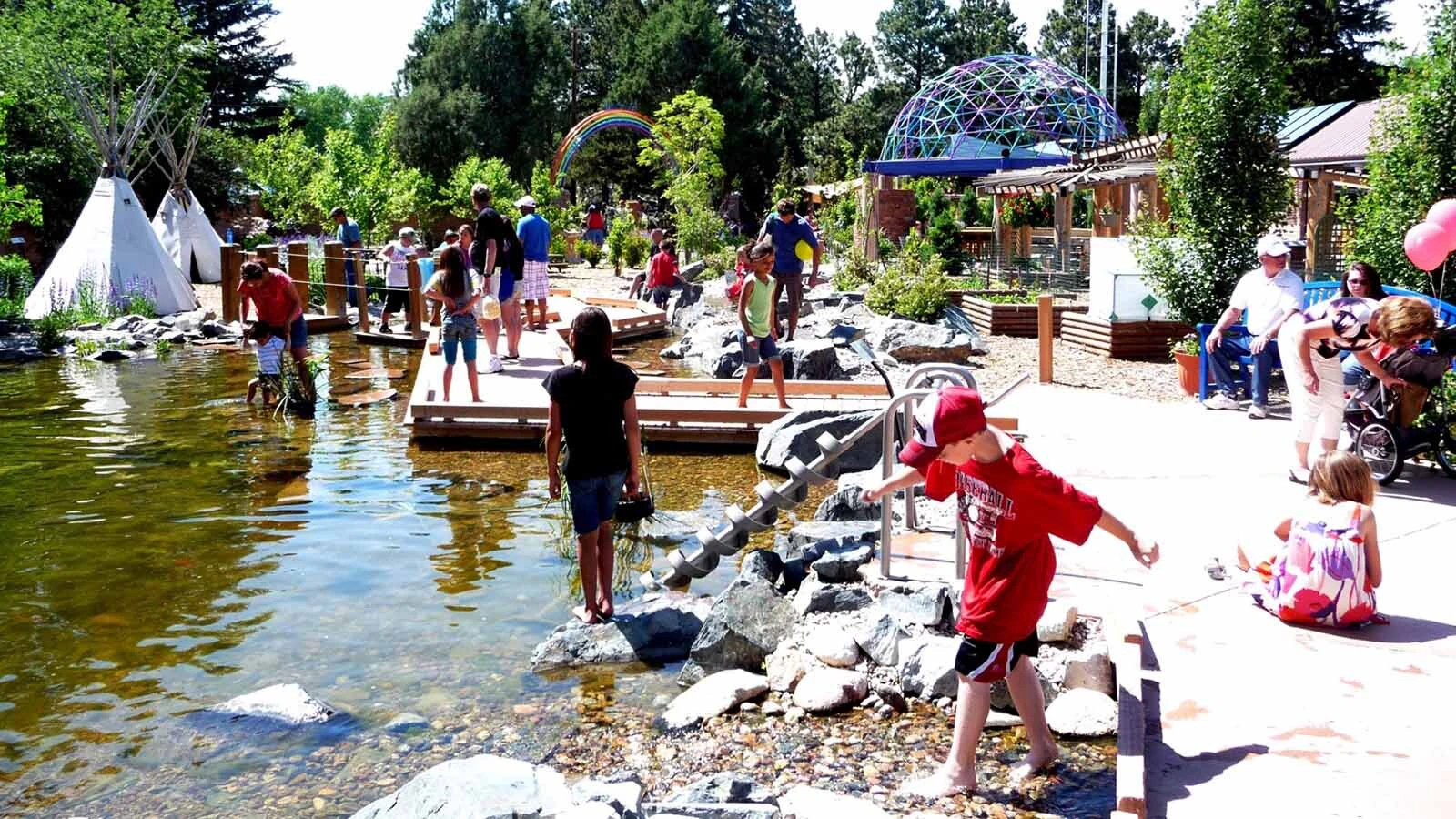
The Children's Village at the Cheyenne Botanic Gardens, which have grown into a world-class development, but began nearly 50 years ago as a simple community garden with a goal of growing vegetables for seniors. (Provided by Shane Smith) 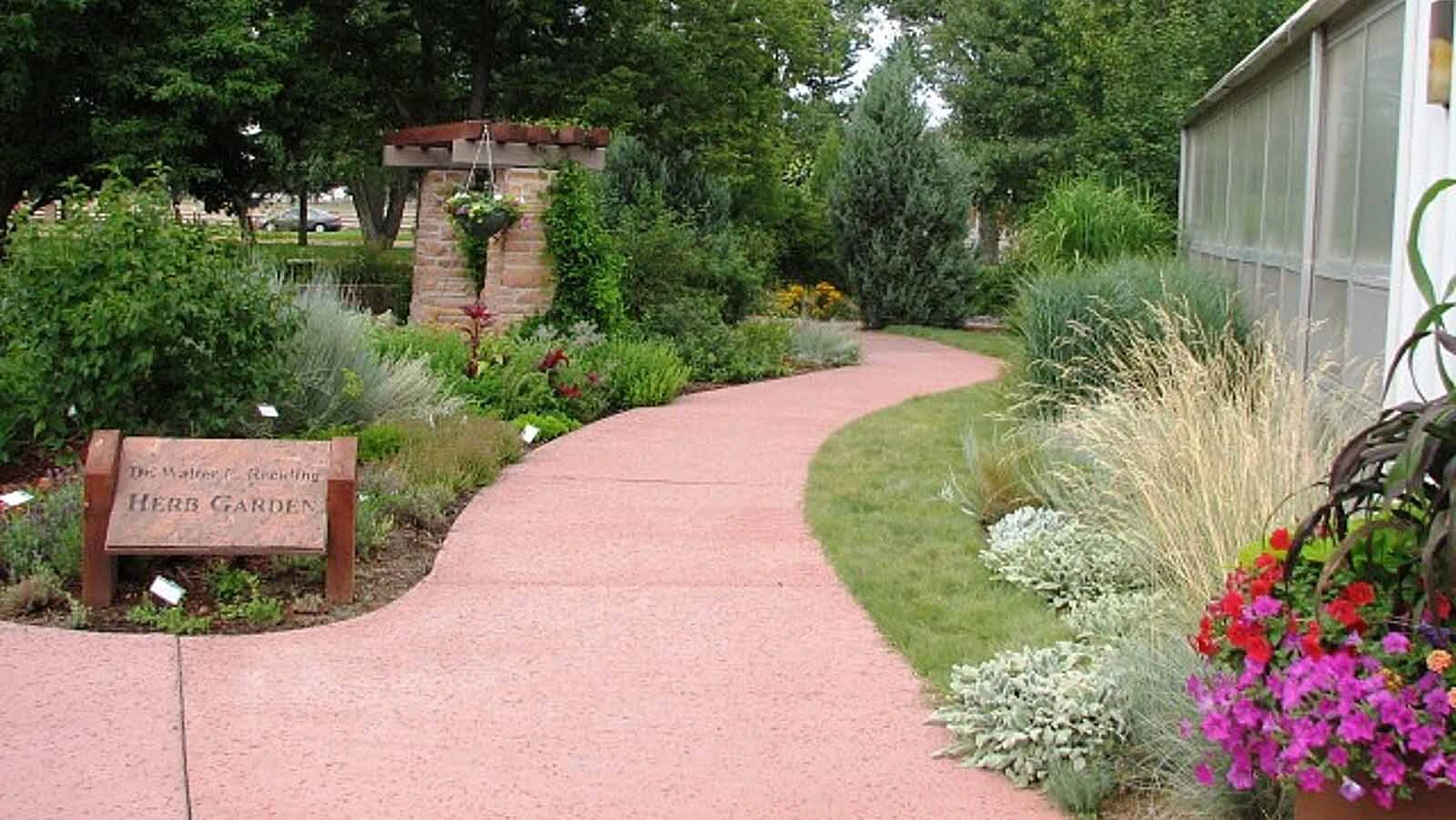
The Cheyenne Botanic Gardens have grown into a world-class development, but began nearly 50 years ago as a simple community garden with a goal of growing vegetables for seniors. (Provided by Shane Smith) 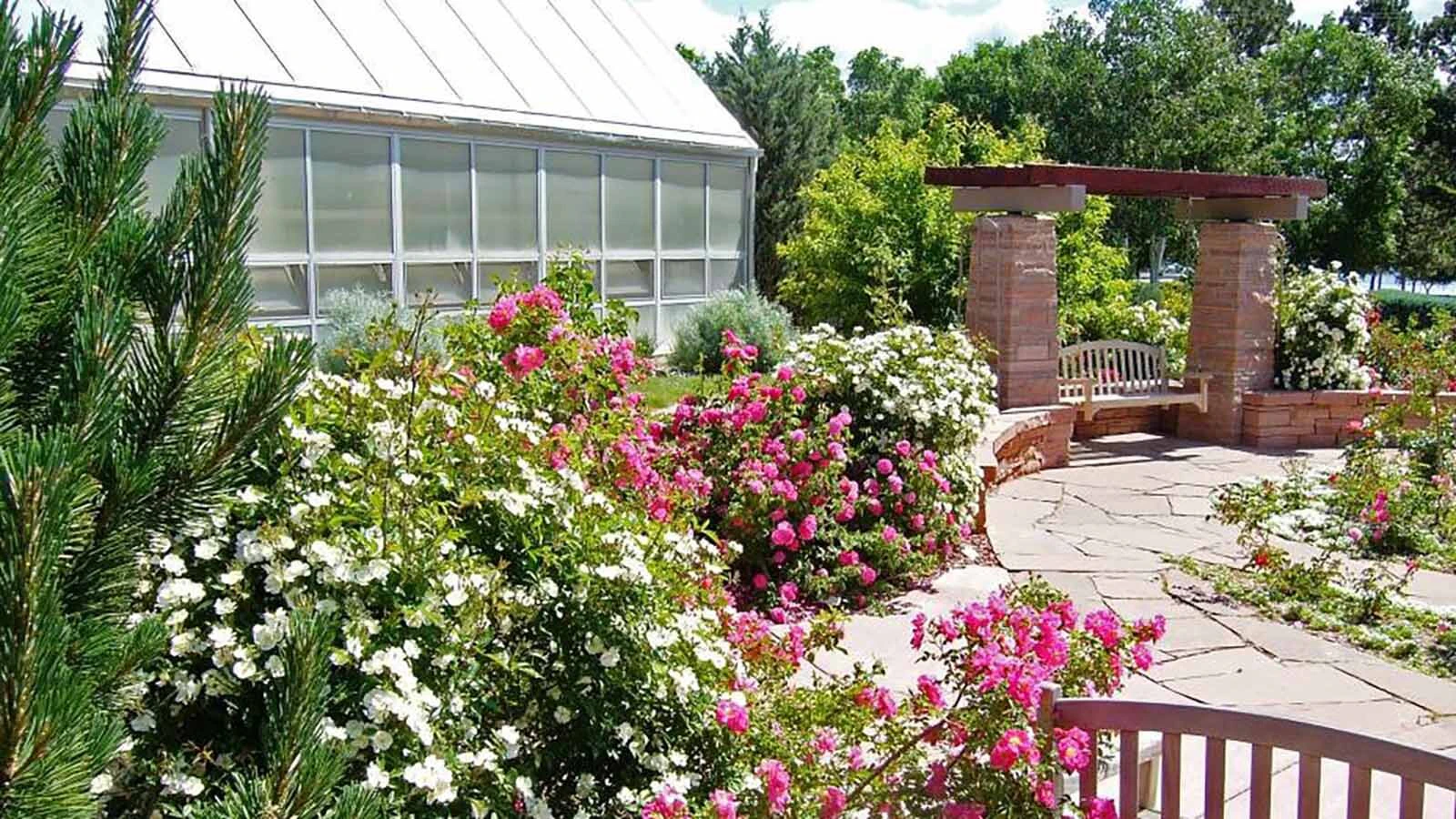
The Cheyenne Botanic Gardens have grown into a world-class development, but began nearly 50 years ago as a simple community garden with a goal of growing vegetables for seniors. (Provided by Shane Smith) 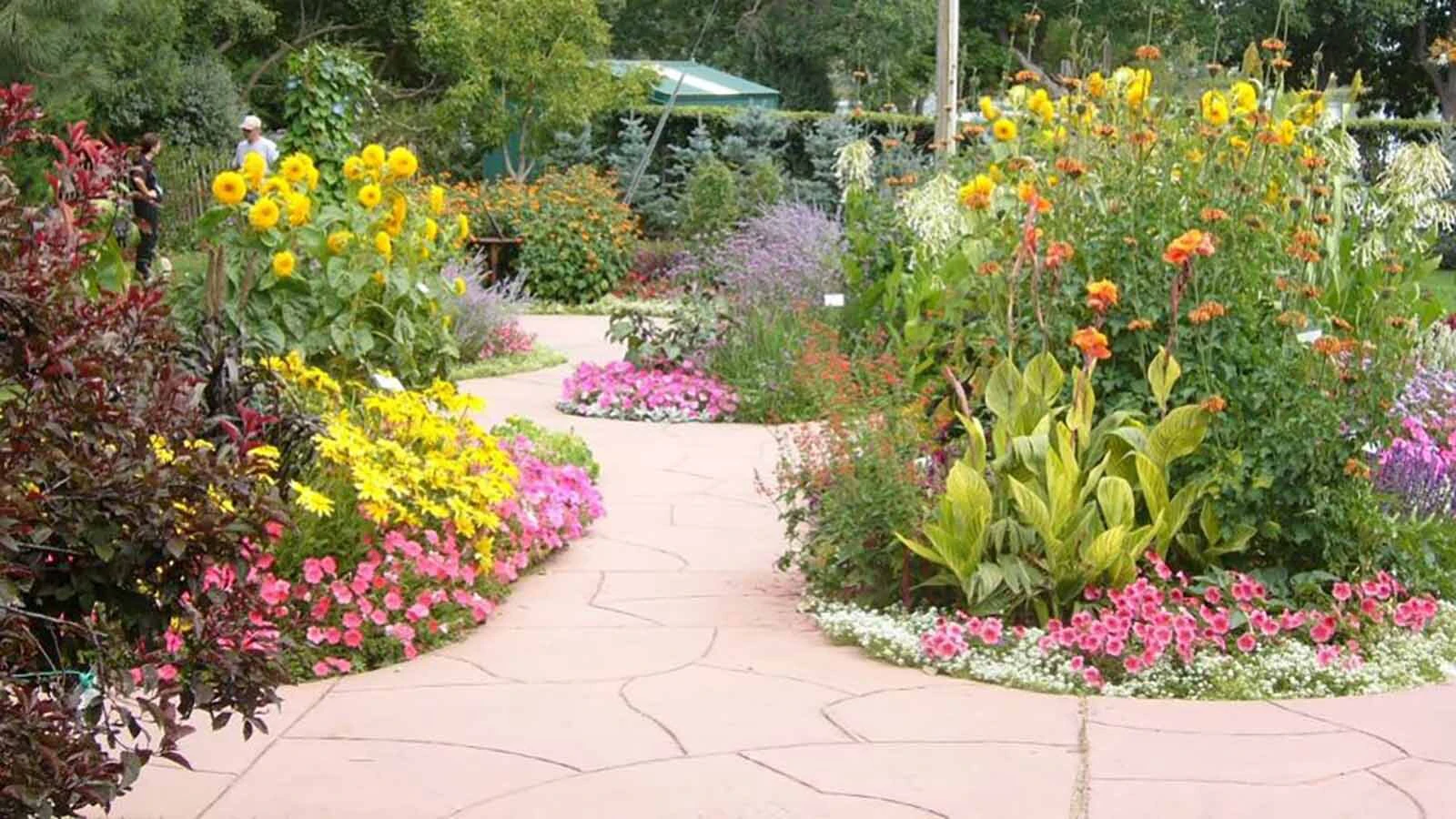
The Cheyenne Botanic Gardens have grown into a world-class development, but began nearly 50 years ago as a simple community garden with a goal of growing vegetables for seniors. (Provided by Shane Smith) 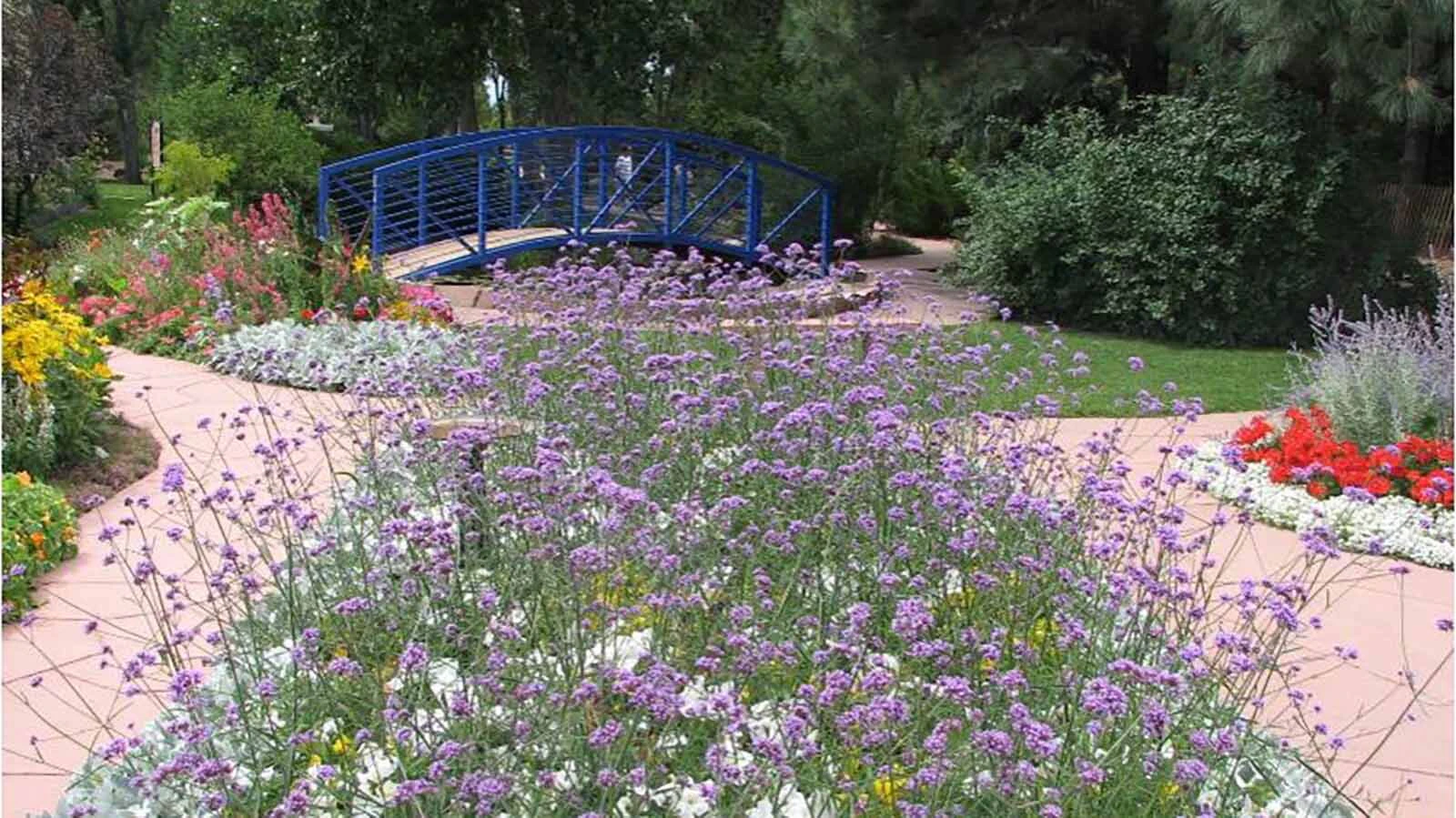
The Cheyenne Botanic Gardens have grown into a world-class development, but began nearly 50 years ago as a simple community garden with a goal of growing vegetables for seniors. (Provided by Shane Smith)
A Penchant For Politics
Smith said he’s worked with mayors and other politicians and also fought with them when the gardens’ funding was threatened. He’s been generally pleased with the results from collaborating and the keen mutual interest in getting things done.
The financial peak of that progress was a $16 million optional sales tax allocation in Laramie County that funded the new conservatory.
The botanic gardens held Cheyenne’s first farmers’ market in 1990 in Holiday Park. Smith said it was well-received, and after hosting a few more markets, he went to the city to see if it would allow them to change venues to downtown Cheyenne.
“The mayor then, Don Erickson, wasn’t too excited about it,” Smith recalled. “I brought a big diversity of my seniors, including the most outspoken ones, to the meeting, and Don quickly saw the light and said, ‘Go ahead, this is great.'”
“Great” is also the word Erickson used to describe the entire Cheyenne Botanic Gardens today. He said the earlier solar greenhouse was built during his time as the city’s mayor, from 1977 to 1989.
“While traveling back and forth to Illinois to take care of my dad when I was mayor, I stopped in Des Moines (Iowa), which had a botanic garden right by the railroad,” Erickson told Cowboy State Daily. “I thought, my God, this is something! Let’s see if we can have something like this.'”
Smith said Erickson had once told him that he could put the new facility on any city property. When he picked one out and told the mayor, Smith said, he was informed that his choice was off-limits because the city had plans for the land.
“But you told us we could put it anywhere we wanted,” Smith said.
But Erickson had something different, and much better, in mind.
“How about Lions Park?” he asked.
Smith said he was overwhelmed.
“We never thought we could get anything like the park,” he told Cowboy State Daily. “It was much better than we hoped for.”
“The botanic gardens we now have was built after I was mayor,” Erickson said. “But I think I was the spark plug (to get it done).”
Clash With Mayor
Smith said a clash with another mayor, Gary Schaffer, was much more intense but ended unexpectedly well.
“We had a donation box at the community gardens that we brought with us when we moved to Lions Park,” he said. “We had raised several thousands of dollars.”
The problem was that Schaffer, the mayor from 1989 to 1993, needed another source of money for the city, and the botanic gardens were now part of Cheyenne Parks and Recreation because they had moved to Lions Park. Smith said the mayor zeroed in on the donations the botanic gardens had collected, which he said the city promised would never be touched.
“The mayor said, ‘I can’t let you hang on to that, I’ve got some negotiations with the fire department.’ I said, ‘You can’t do that,’ and we literally started yelling at each other," Smith recalled. "The secretary had to close the door.”
Smith said he told Schaffer if the city took the donation box, he would mobilize the senior citizens at the greenhouse.
“I said they will be filmed protesting, they will be in your office, and they will be writing letters to the editor. It will not go well for you,” Smith said.
He said Schaffer instantly got it: Older people vote.
“He said, just spend the money. Start a damn foundation,’” Smith said. “I was so happy. Erickson had never wanted us to start a nonprofit foundation to raise funds and now we could. I just said, ‘Thanks Gary!’ and got out of there.
“By the end of the day I was forming the foundation and recruiting some great board members,” he added.
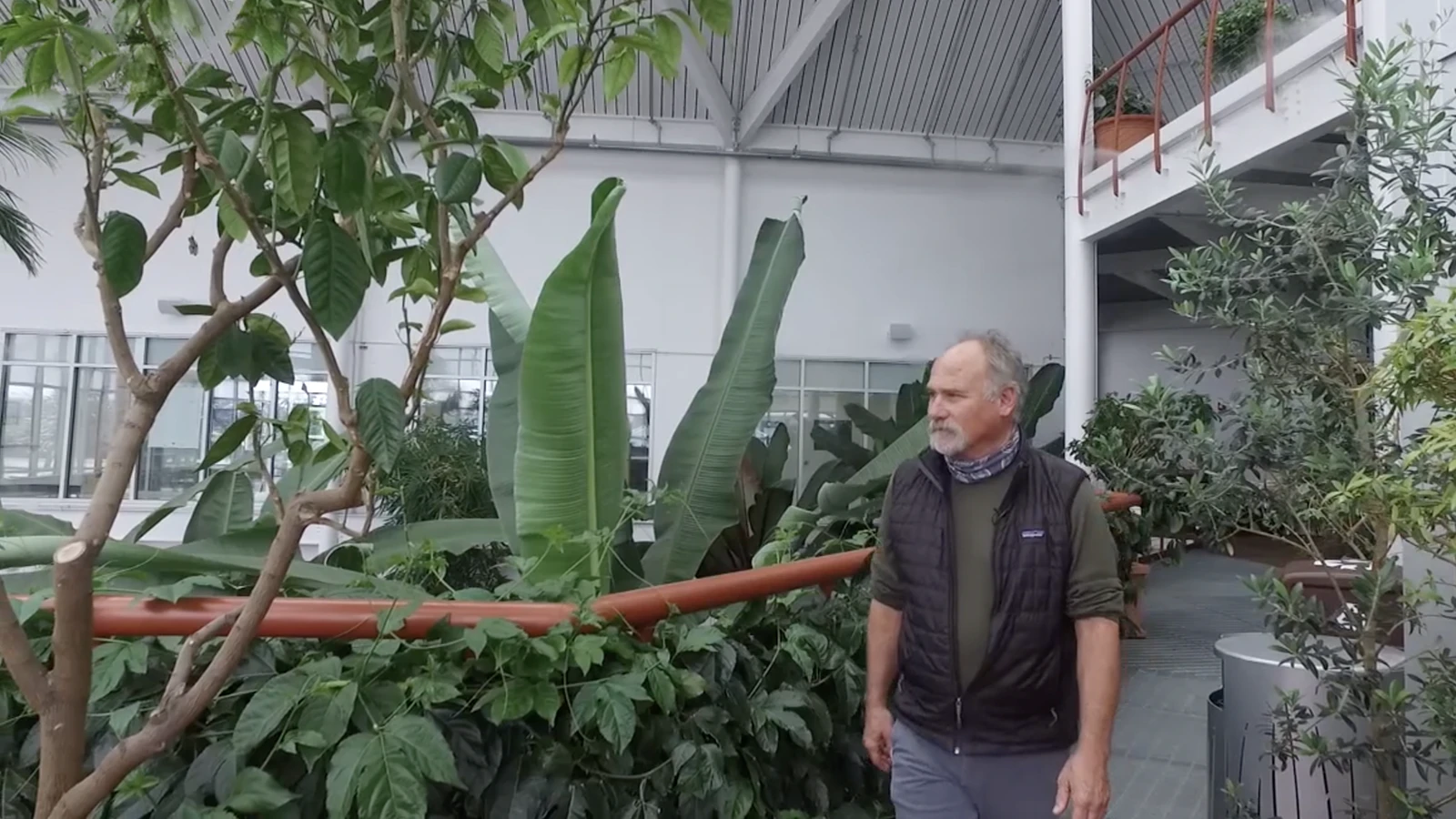
For nearly 50 years, Shane Smith has provided the drive and vision for what has become the Cheyenne Botanic Gardens, a world-class feature that would be a jewel in a city 10 times the size of Cheyenne. (CSD File) 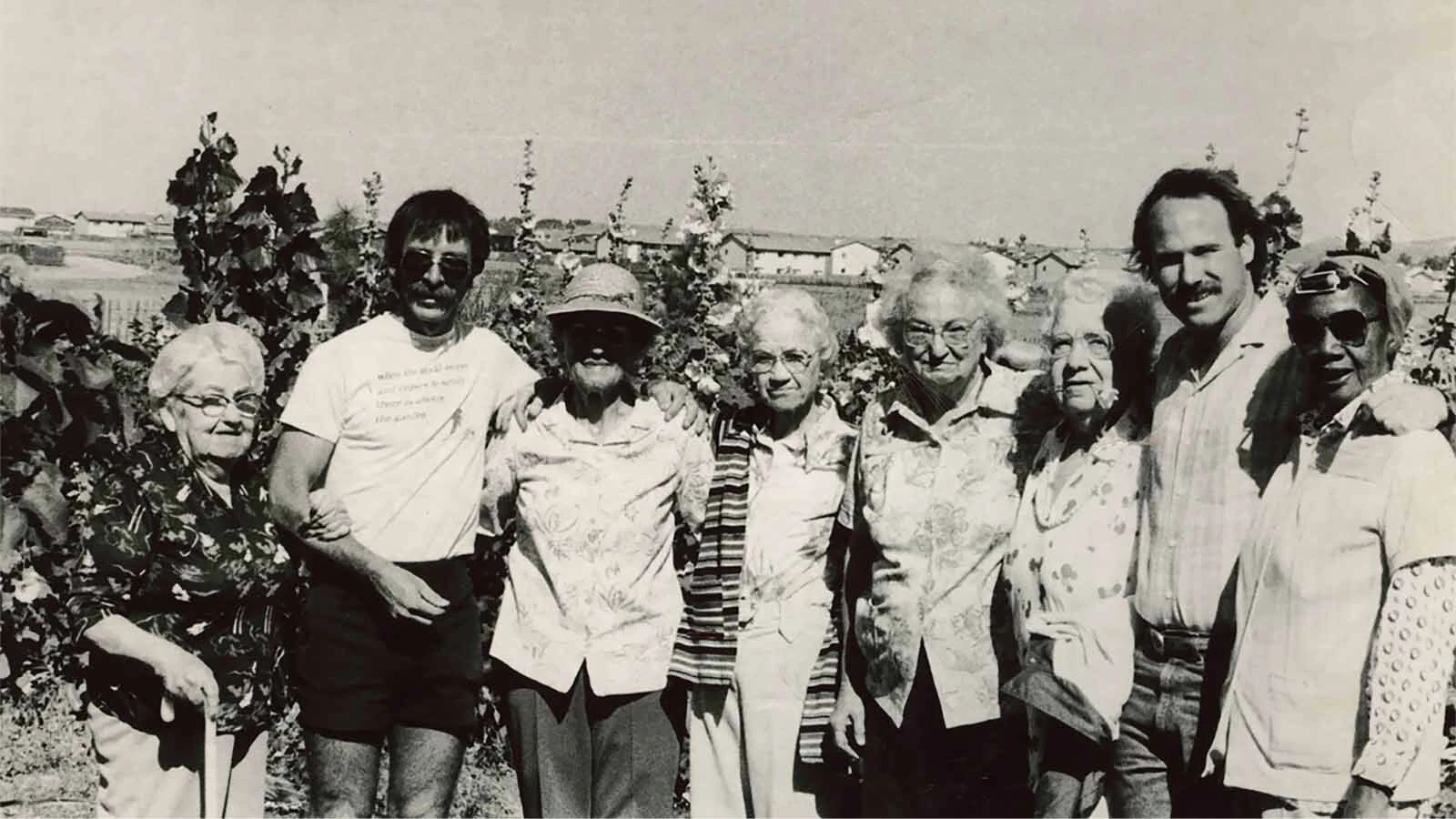
For nearly 50 years, Shane Smith, second from right, has provided the drive and vision for what has become the Cheyenne Botanic Gardens, a world-class feature that would be a jewel in a city 10 times the size of Cheyenne. (Provided by Shane Smith) 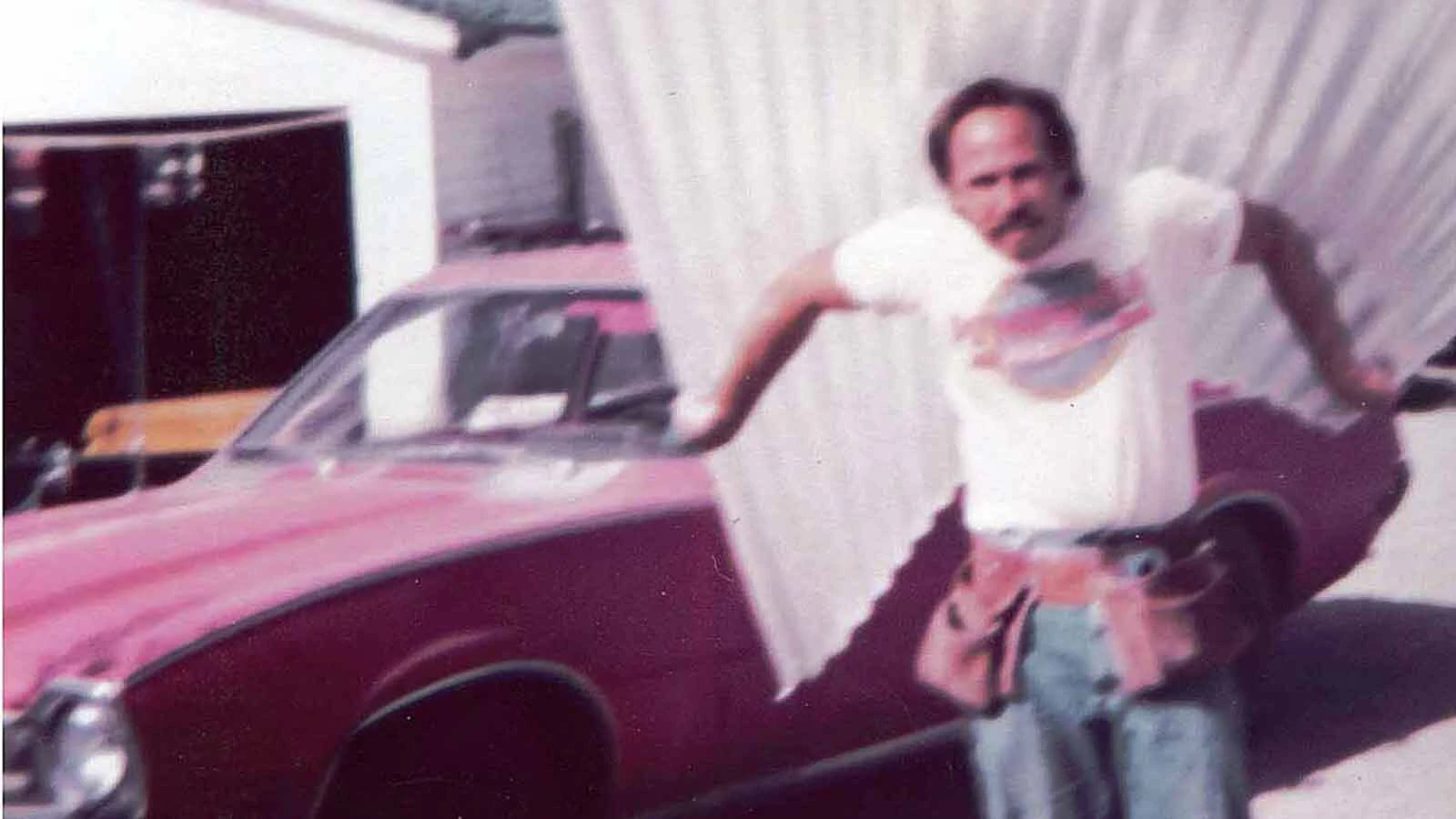
The Cheyenne Botanic Gardens have grown into a world-class development, but began nearly 50 years ago as a simple community garden with a goal of growing vegetables for seniors. Through all those decades has been Shane Smith, who provided the drive and vision for what the gardens was and evolved into. (Provided by Shane Smith) 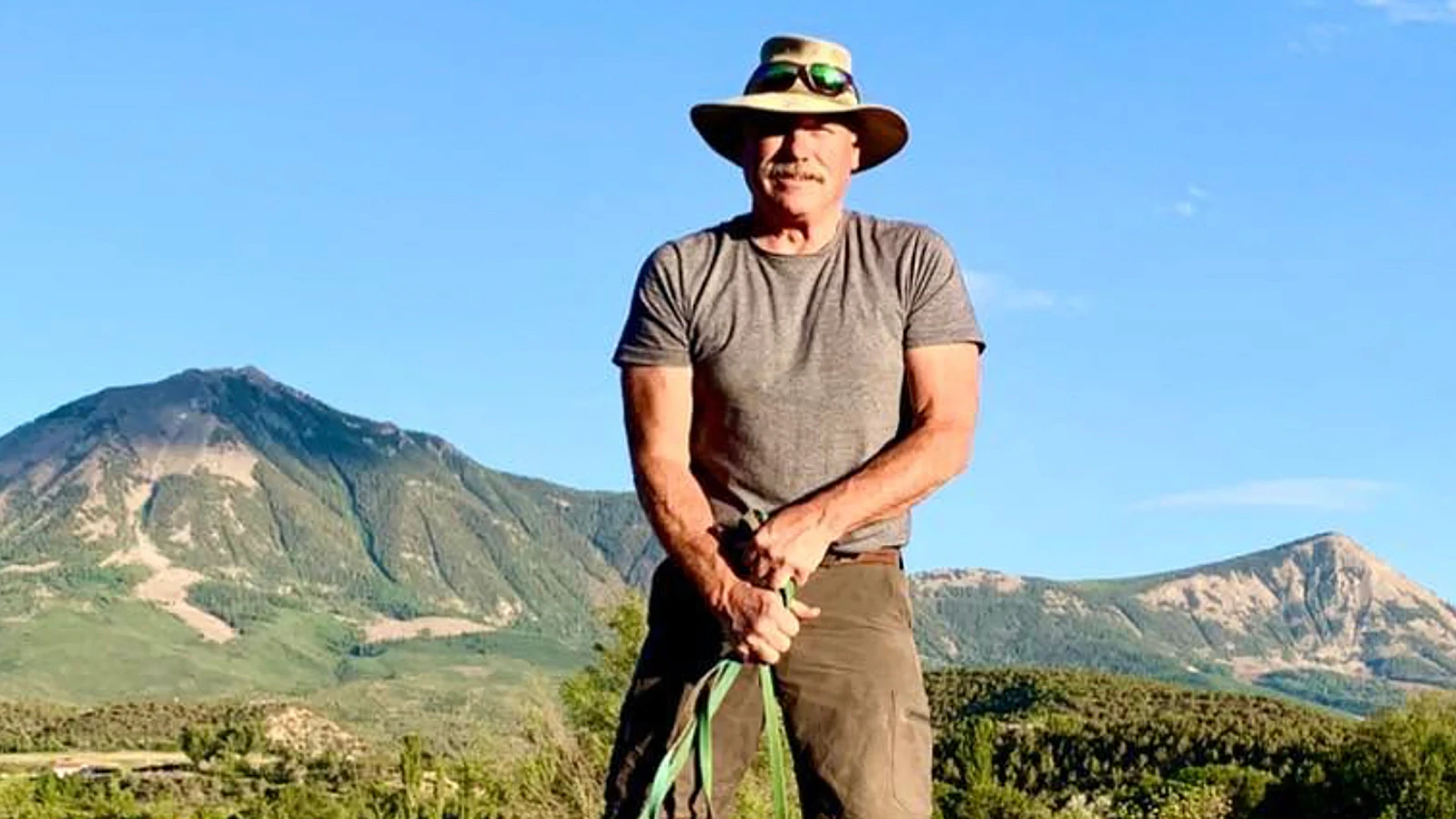
For nearly 50 years, Shane Smith has provided the drive and vision for what has become the Cheyenne Botanic Gardens, a world-class feature that would be a jewel in a city 10 times the size of Cheyenne. (Courtesy Photo) 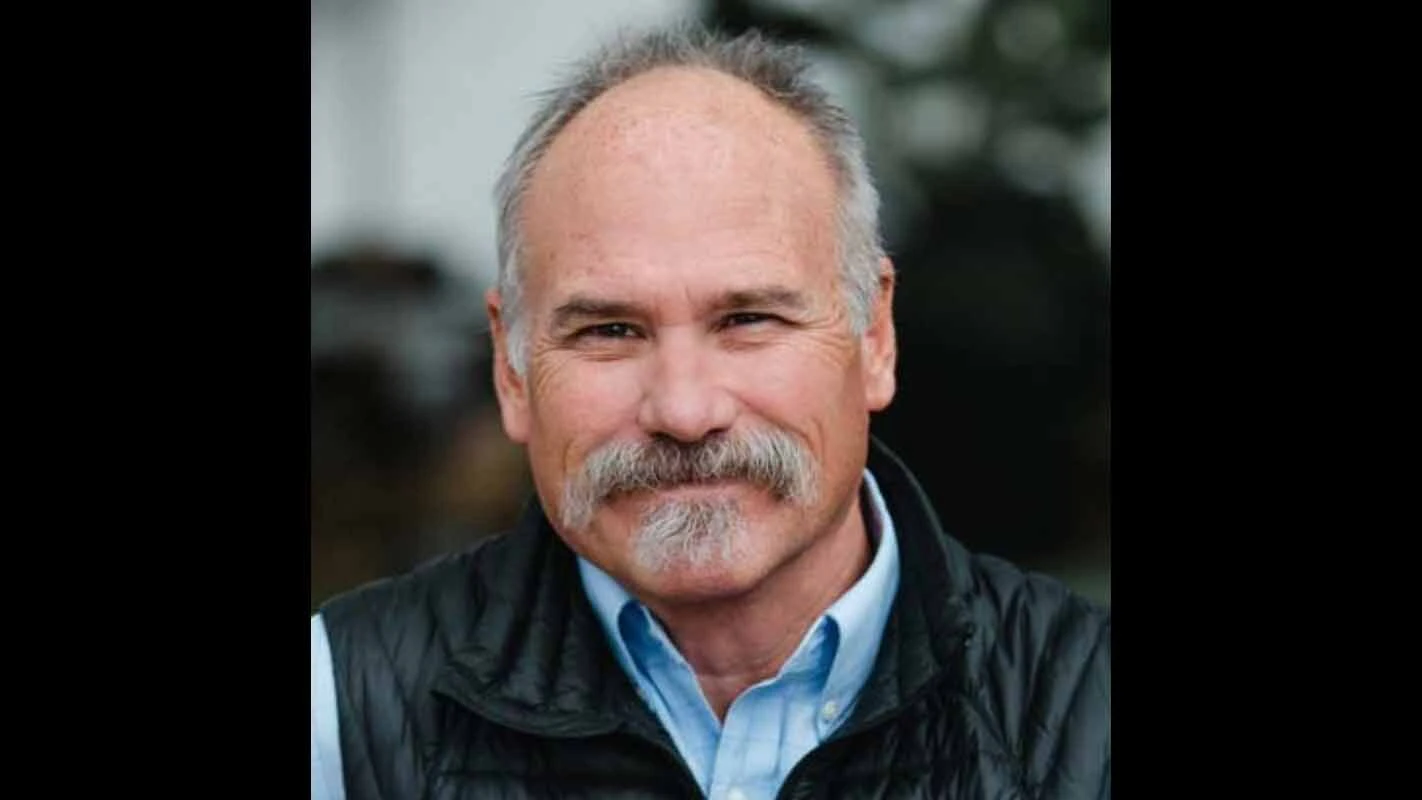
For nearly 50 years, Shane Smith has provided the drive and vision for what has become the Cheyenne Botanic Gardens, a world-class feature that would be a jewel in a city 10 times the size of Cheyenne. (Courtesy Photo) 
Inside the three-story Grand Observatory at the Cheyenne Botanic Gardens, named for its founder and main motivator for nearly 50 years, Shane Smith. (Greg Johnson, Cowboy State Daily) 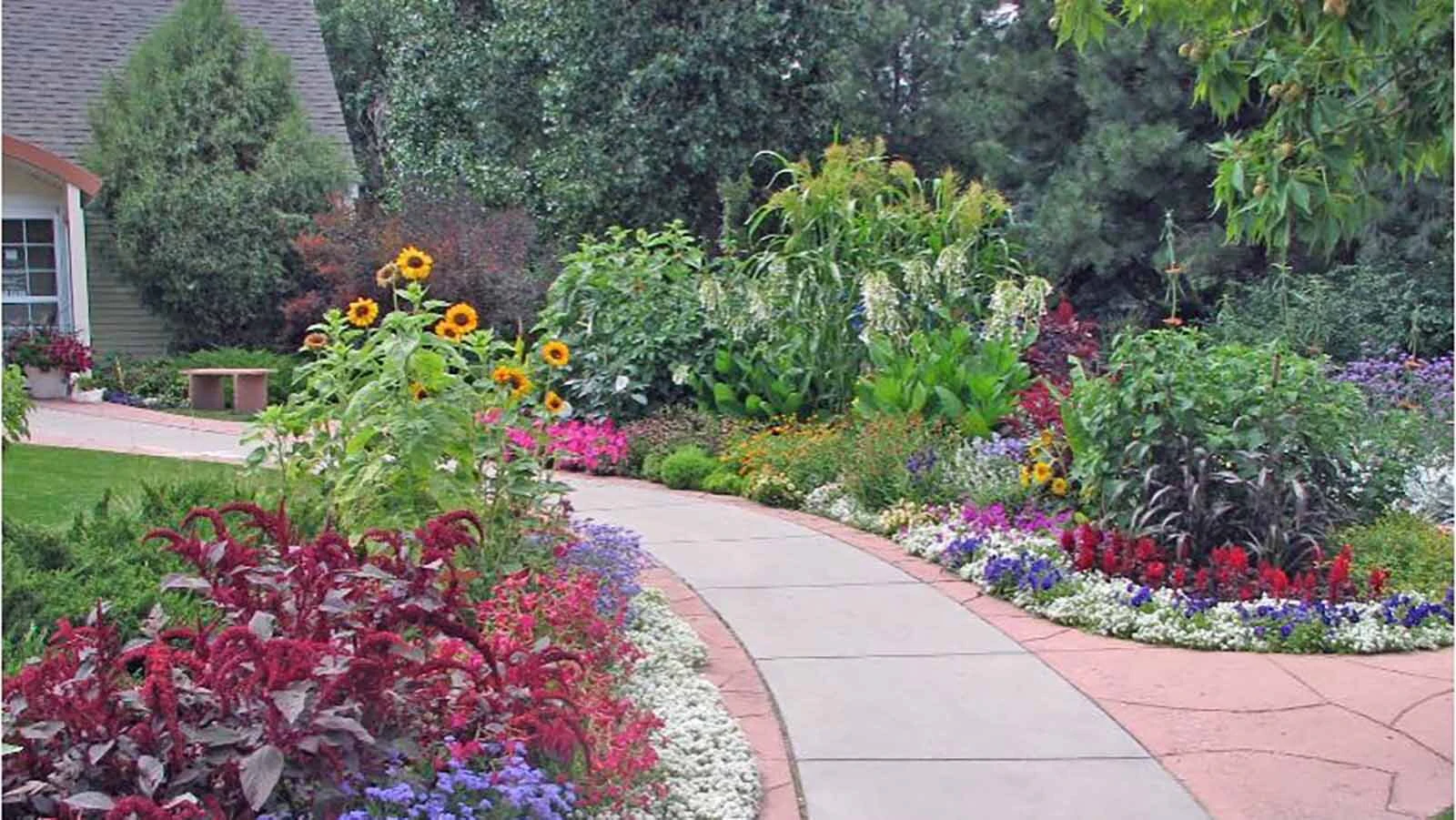
The Cheyenne Botanic Gardens have grown into a world-class development, but began nearly 50 years ago as a simple community garden with a goal of growing vegetables for seniors. (Provided by Shane Smith) 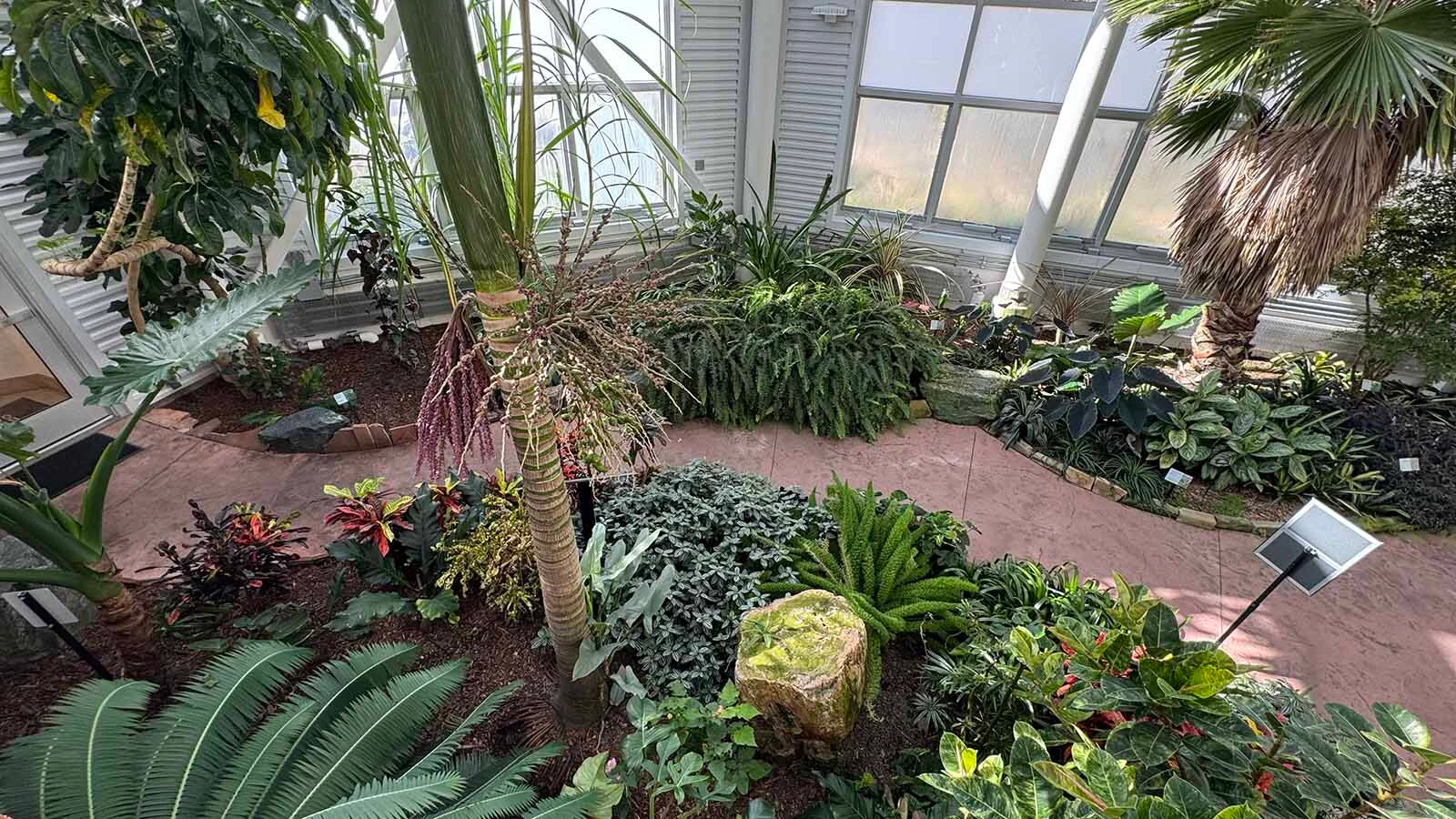
Inside the three-story Grand Observatory at the Cheyenne Botanic Gardens, named for its founder and main motivator for nearly 50 years, Shane Smith. (Greg Johnson, Cowboy State Daily) 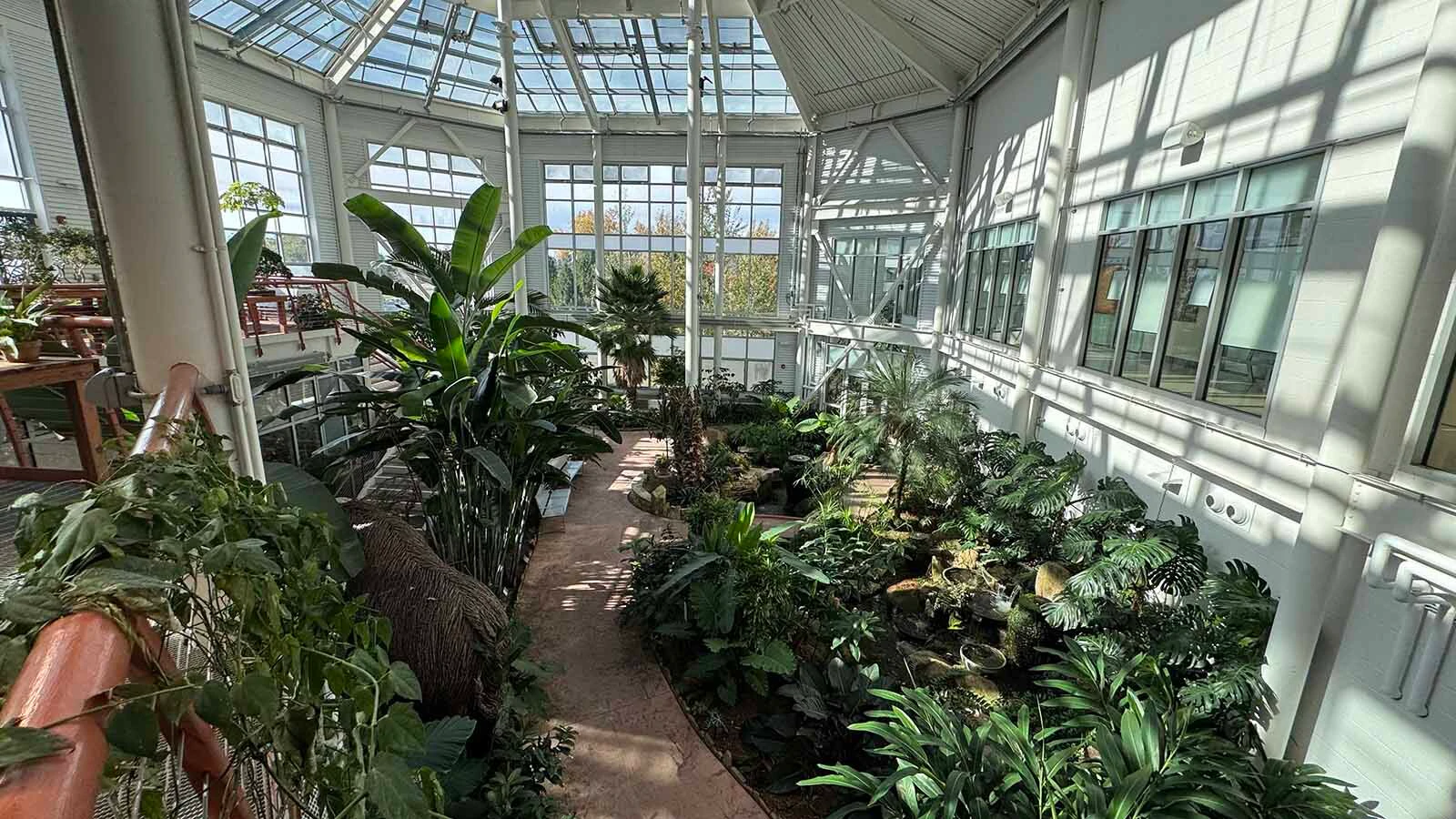
Inside the three-story Grand Observatory at the Cheyenne Botanic Gardens, named for its founder and main motivator for nearly 50 years, Shane Smith. (Greg Johnson, Cowboy State Daily) 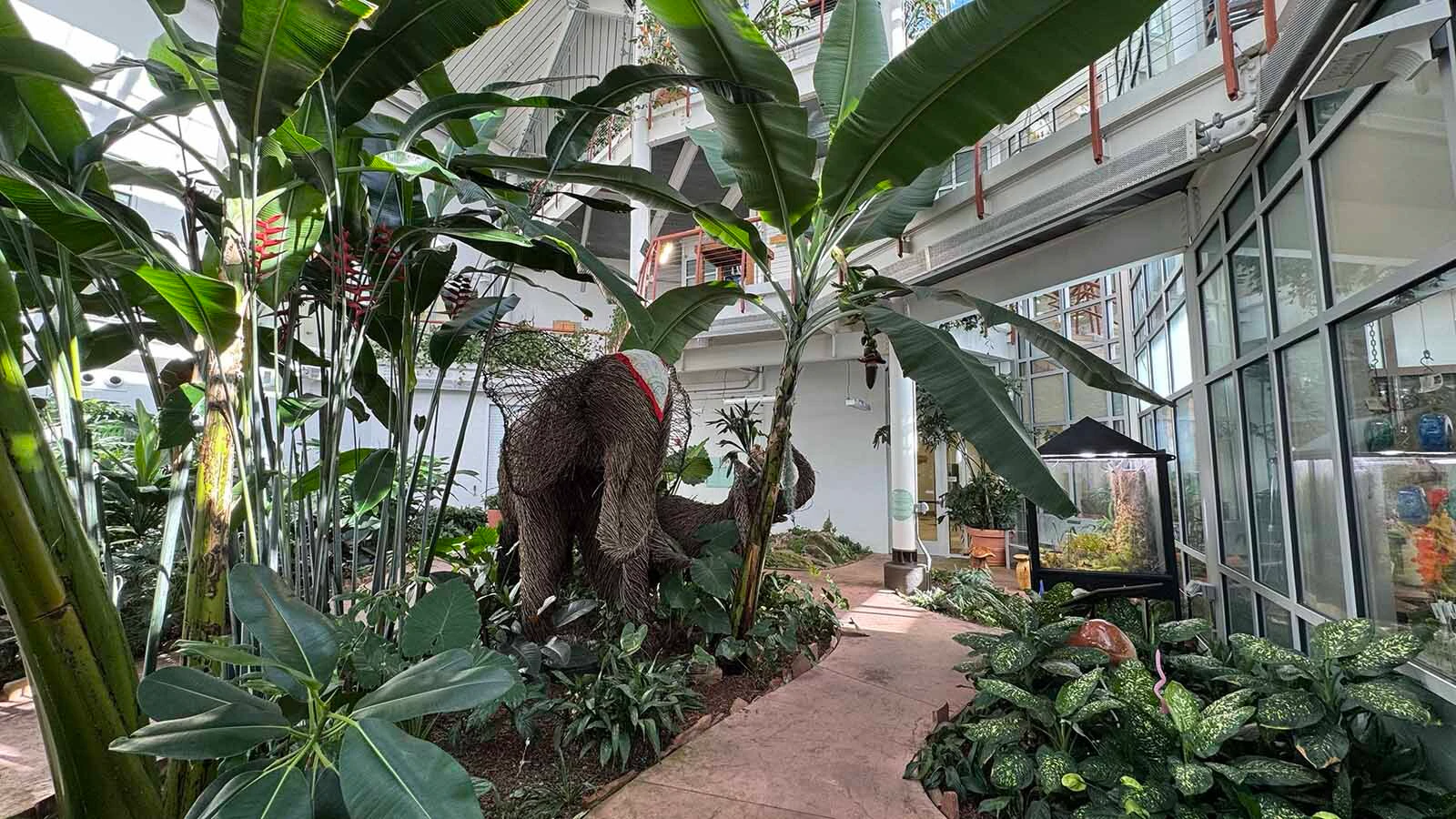
Inside the three-story Grand Observatory at the Cheyenne Botanic Gardens, named for its founder and main motivator for nearly 50 years, Shane Smith. (Greg Johnson, Cowboy State Daily) 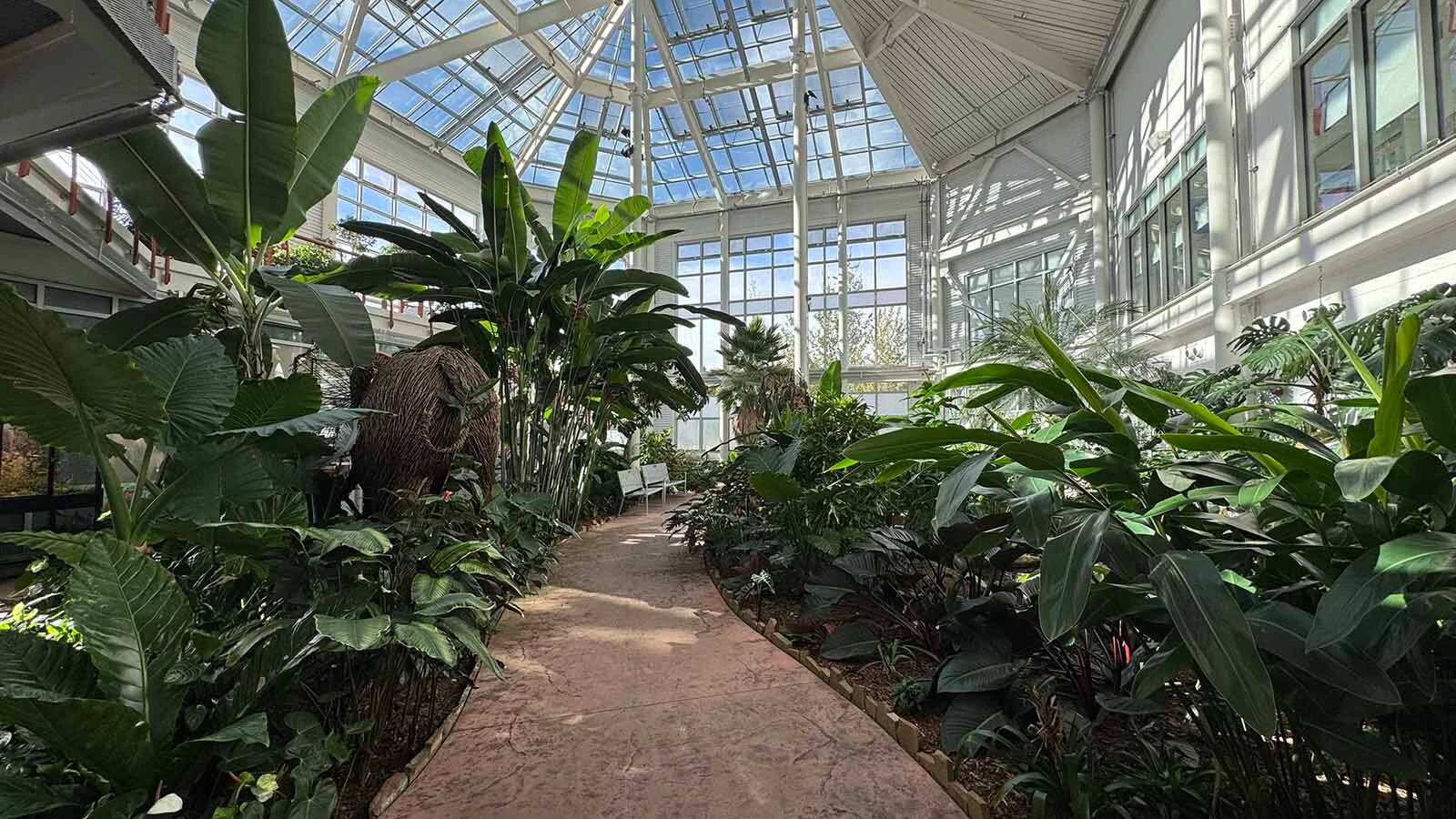
Inside the three-story Grand Observatory at the Cheyenne Botanic Gardens, named for its founder and main motivator for nearly 50 years, Shane Smith. (Greg Johnson, Cowboy State Daily)
Harvard Fellowship
How did Smith get so savvy in politics? He said plenty of people are more adept than him on the botanic gardens board, but he did sign up for Harvard’s Kennedy School of Government when he was offered a fellowship from the college for 1989-90. He took classes in leadership, politics and the press.
Those skills came in handy when the botanic gardens took on its biggest challenge in 2012: Convince Laramie County voters to pass the $16 million sixth-penny sales tax measure for the renovation and expansion of the facility, including a new conservatory.
They won.
“People believed in us from those early days,” Smith said.
Said Rinne: “Shane was great for getting the most of what he has. I think that's part of why he was so successful with the city. He knew with the funding he received, between his connections and the volunteers, how to maximize what he got.
“He always delivered on all of his promises,” added Rinne, who worked to promote the sixth penny sales tax for the botanic gardens.
That extra cent from the sales tax was a huge victory.
Then, in 2013, the world crashed down on the whole project.
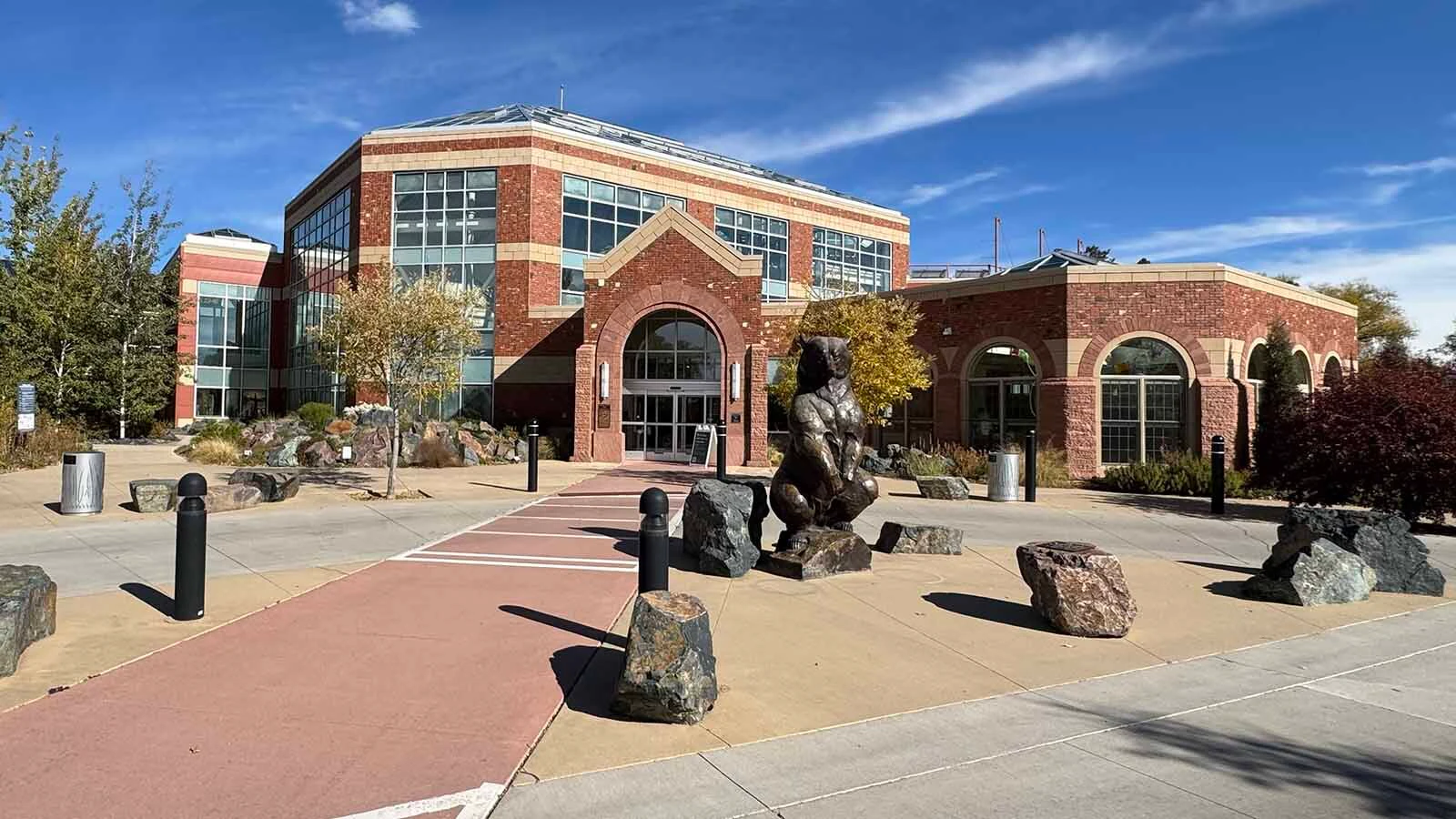
The three-story Grand Observatory at the Cheyenne Botanic Gardens was built next to the original community greenhouses. Over the past five decades, the footprint has grown to include outside walking gardens and a Children's Village. (Greg Johnson, Cowboy State Daily) 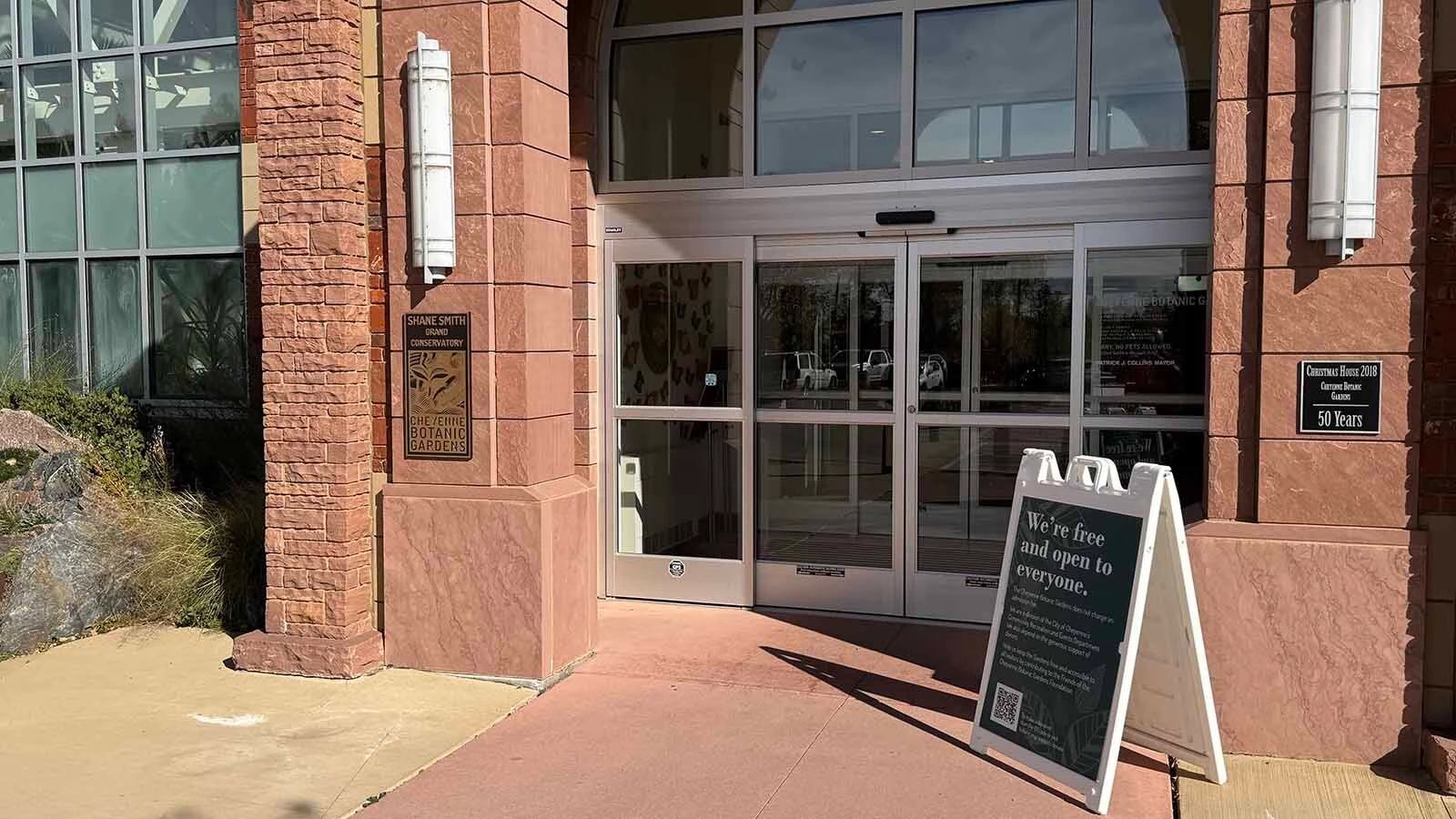
The three-story Grand Observatory at the Cheyenne Botanic Gardens was built next to the original community greenhouses. Over the past five decades, the footprint has grown to include outside walking gardens and a Children's Village. (Greg Johnson, Cowboy State Daily) 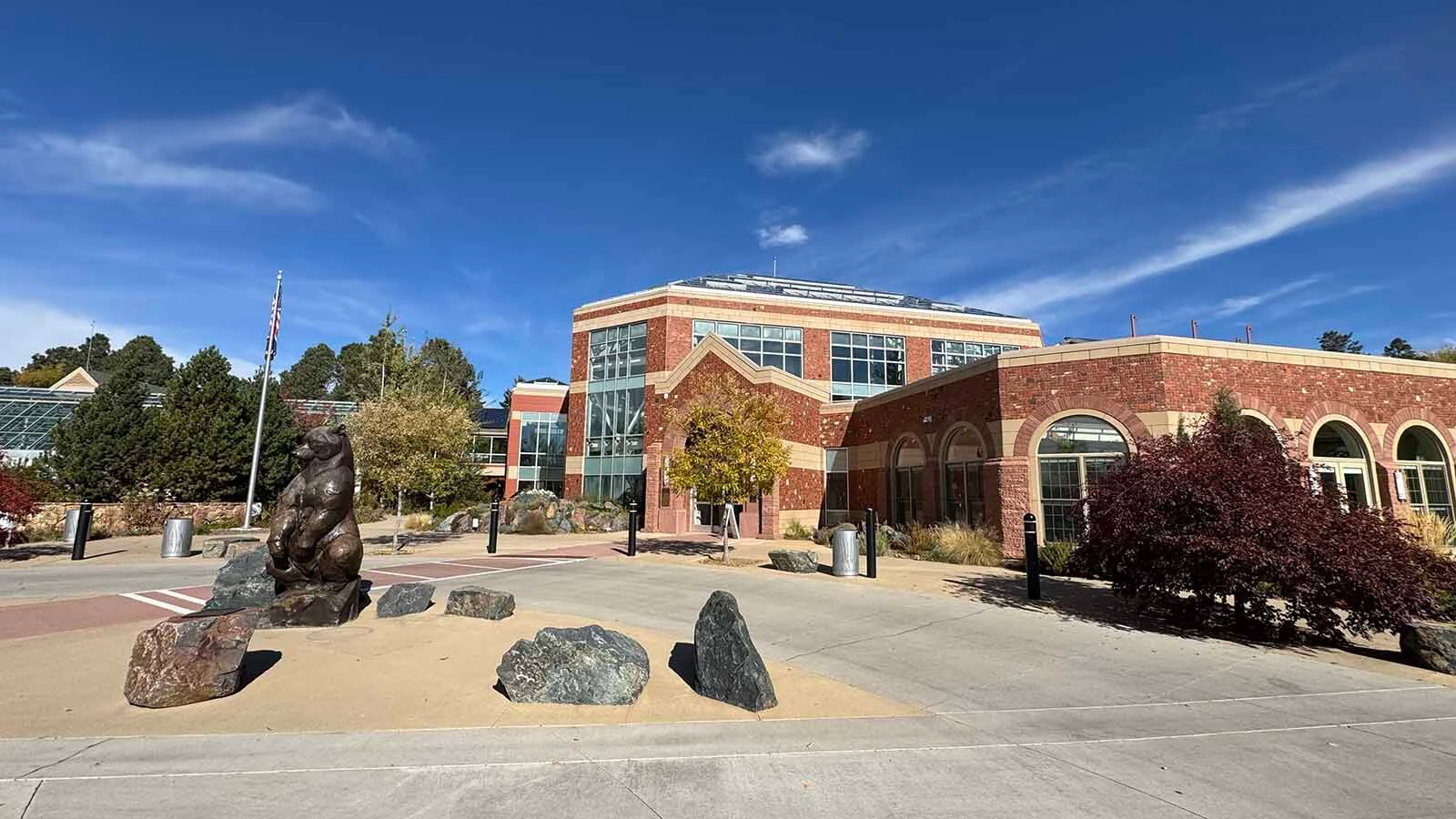
The three-story Grand Observatory at the Cheyenne Botanic Gardens was built next to the original community greenhouses. Over the past five decades, the footprint has grown to include outside walking gardens and a Children's Village. (Greg Johnson, Cowboy State Daily) 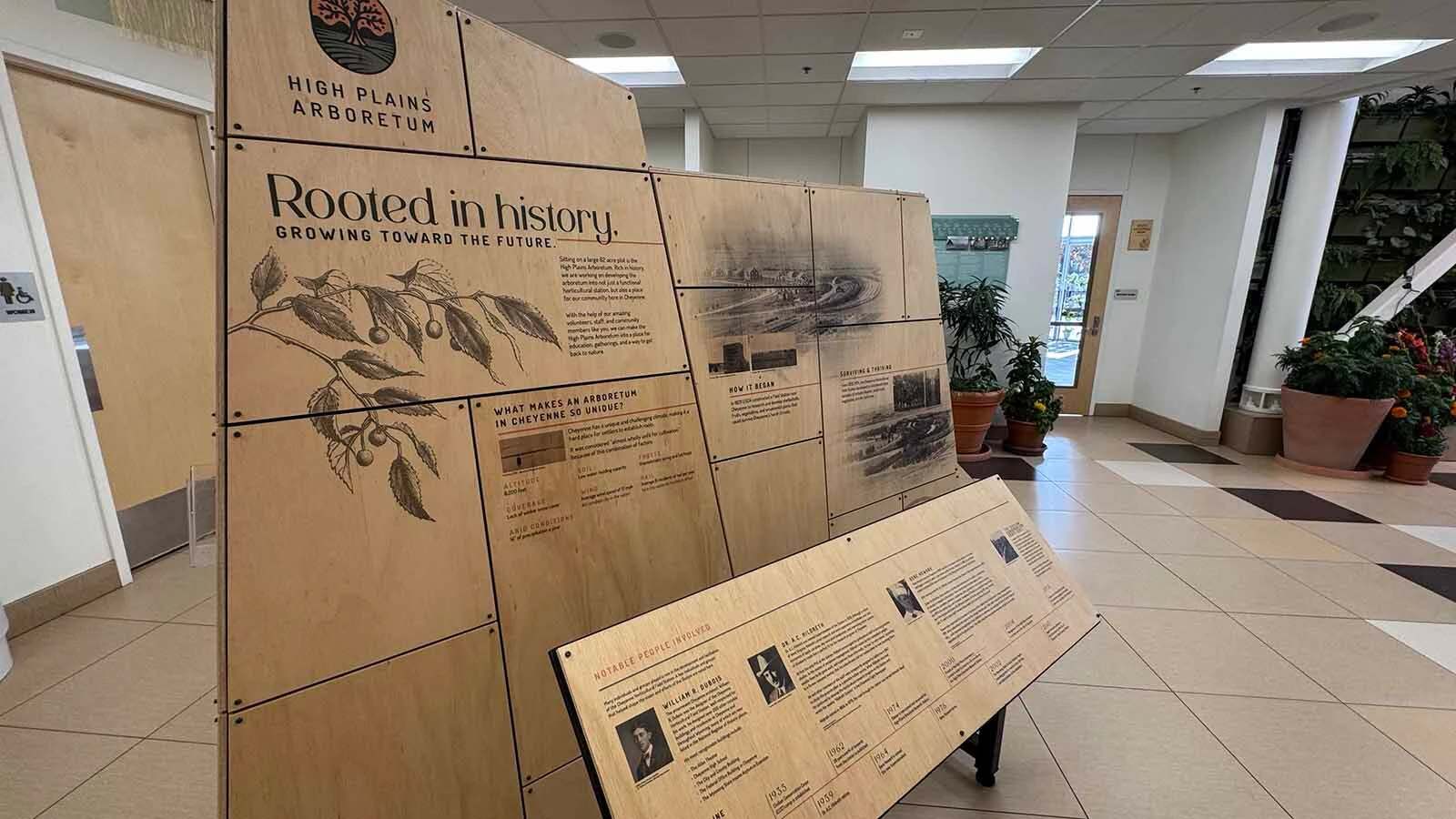
Inside the three-story Grand Observatory at the Cheyenne Botanic Gardens, named for its founder and main motivator for nearly 50 years, Shane Smith. (Greg Johnson, Cowboy State Daily) 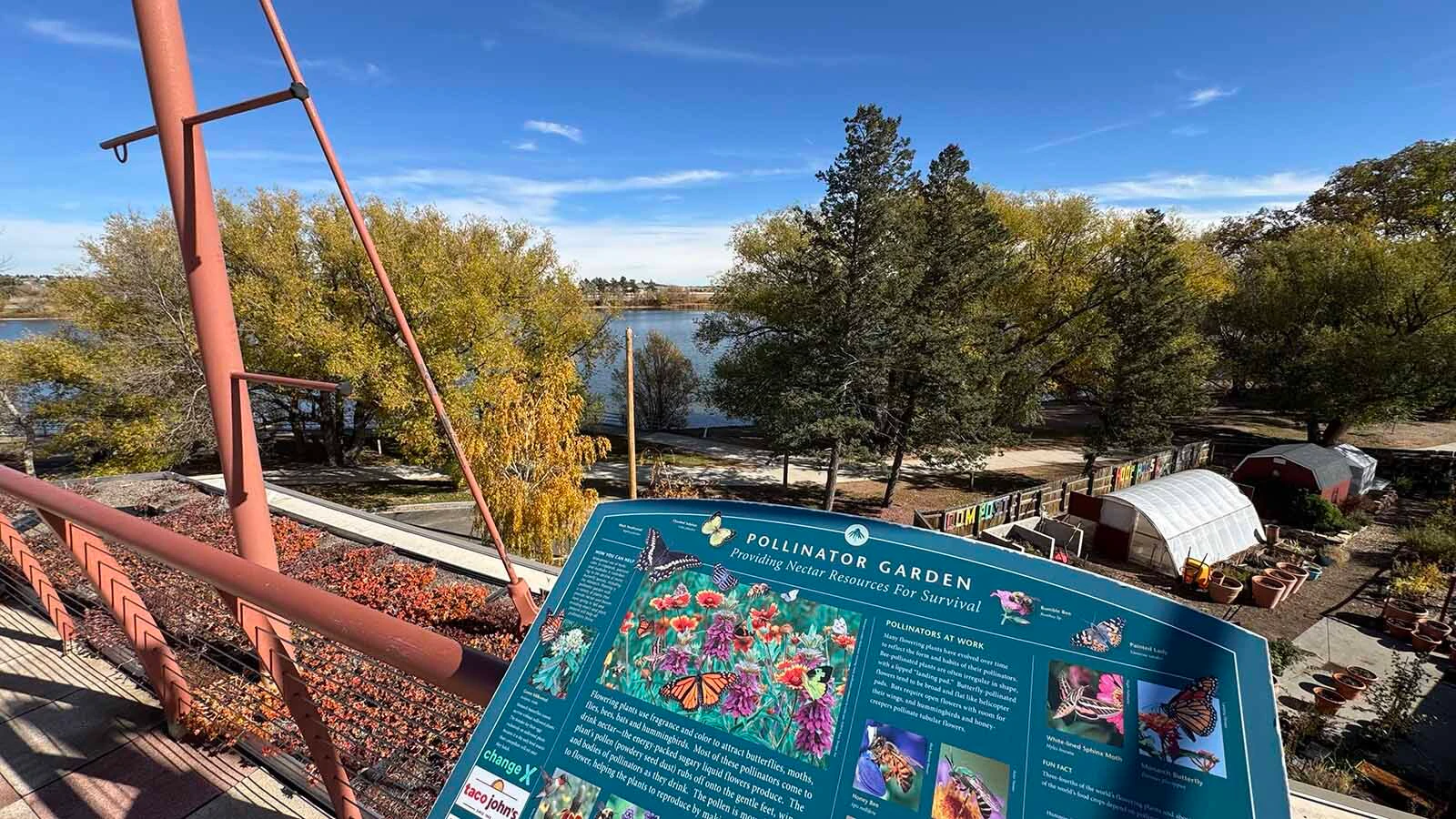
View from the third-story balcony at the Grand Observatory. (Greg Johnson, Cowboy State Daily) 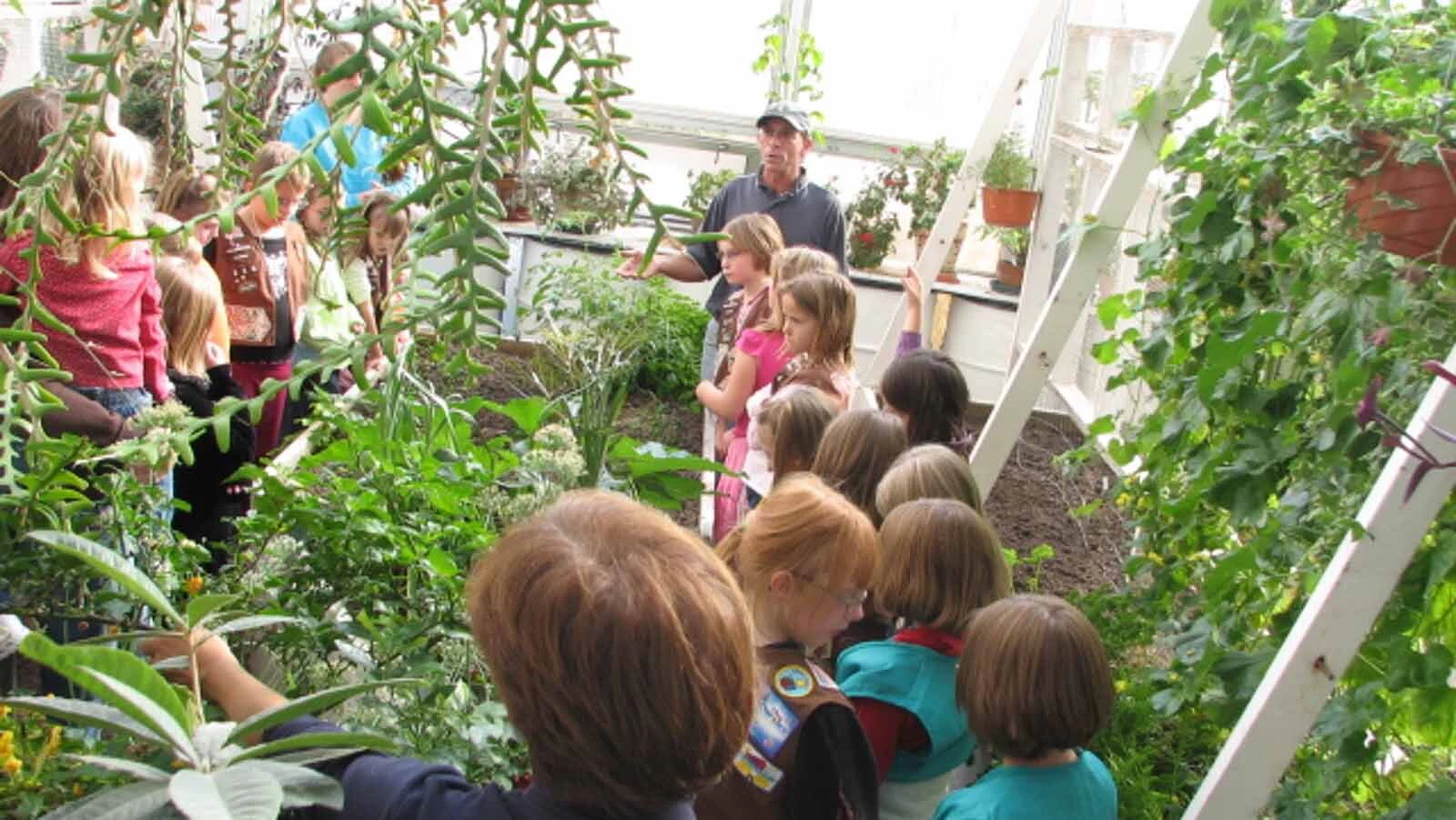
The Cheyenne Botanic Gardens have grown into a world-class development, but began nearly 50 years ago as a simple community garden with a goal of growing vegetables for seniors. (Provided by Shane Smith) 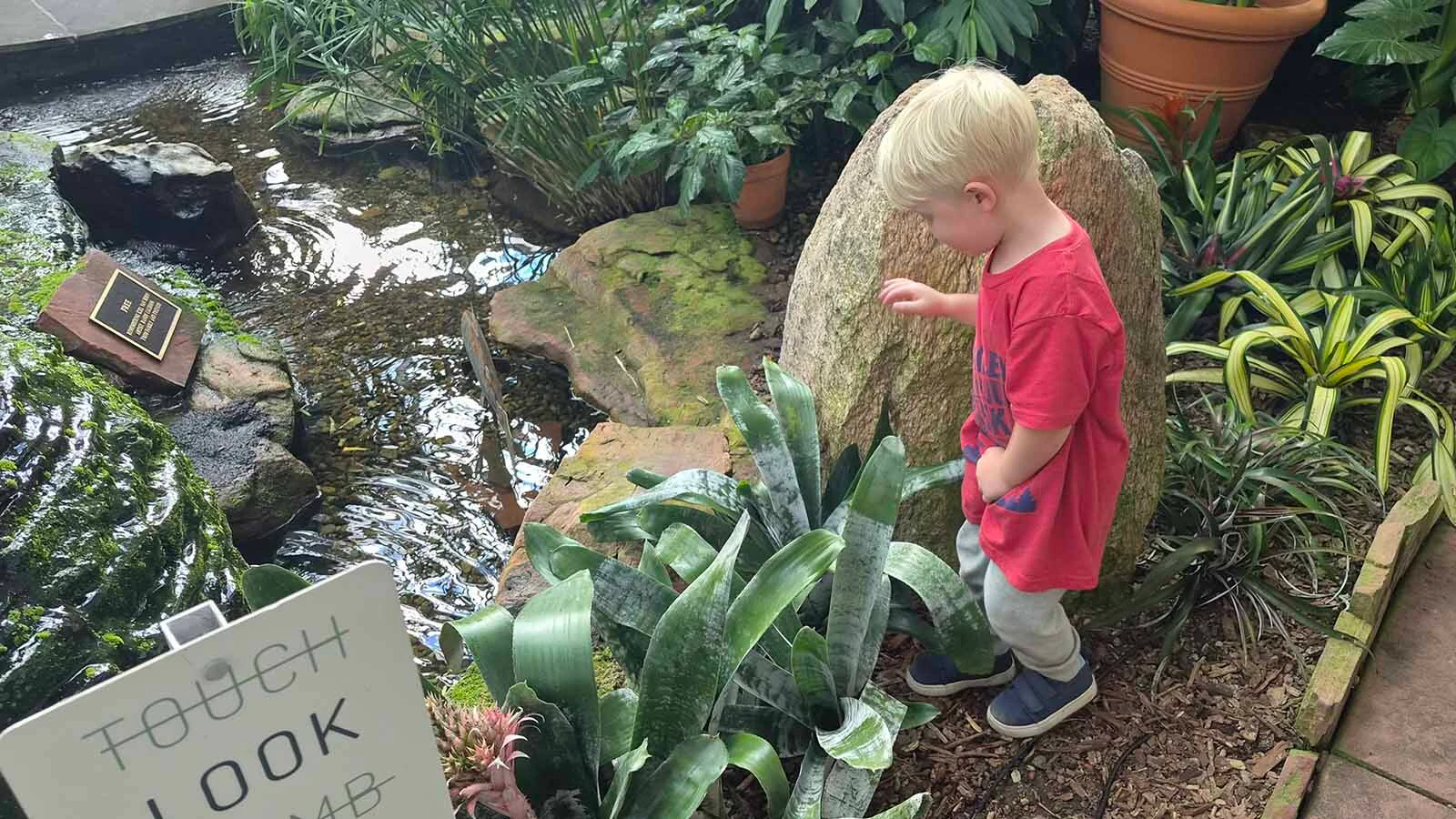
Henry McFarland lives in Utah but he was happy to make his first trip to the Cheyenne Botanical Gardens on Tuesday. He wanted to find a turtle that is normally on the banks of an indoor stream. (Kerry Drake for Cowboy State Daily)
Worst Day Of His Life
“We found out when we went to bid that we were basically short $4 million,” Smith said. “It was awful. My architect was telling me we were going to have to lop off large chunks of that building.”
“I was just devastated. I’d been promising the whole town, ‘This is what it’s going to look like, it’ll be great,’” he said. “It was probably the worst day of my life.”
But the leaders of the botanic gardens regrouped and re-bid the contract, giving the contractor the option to make wholesale changes to the design to bring the project within budget.
Then Smith and the board went to work to raise more money.
“I said I thought we could raise enough if we could get the city council to let us sell naming rights to (sections of the gardens). It was a big fight, but they eventually let us do it. That got us a million-plus.”
A contractor donated another $1 million in in-kind services. With other donations, the total came to about $3 million.
Smith seemed relieved just telling this part of the story. “It was probably the biggest day of my life to cut the ribbon on that building,” he said.
He is also proud of the community’s effort to get the tax passed and the botanic gardens additions completed.
“You don’t see any place like this in cities under a half-million or a million population,” Smith said.
The director said he tried to sell the naming rights to the new conservatory during the final push for construction, but talks fell through.
Smith retired in 2018. But a year later the Cheyenne City Council surprised him: They decided to name the huge building after him.
The Shane Smith Grand Conservatory.
People said it had a nice ring to it.
Donor Jack Speight said at the ceremony that Smith had been “dedicated to the Cheyenne Botanic Gardens to a fault.”
Letters to the editor praised the decision, and called it a well-deserved recognition for what one writer described as “building one of Cheyenne’s utmost gems through his hard work and vision.”
Smith’s speech was tinged with humility.
“It’s a wonderful honor," he said. "I accept it on behalf of so many people who have helped me over the years.”
Kerry Drake can be reached at: Kerry.Drake33@gmail.com


