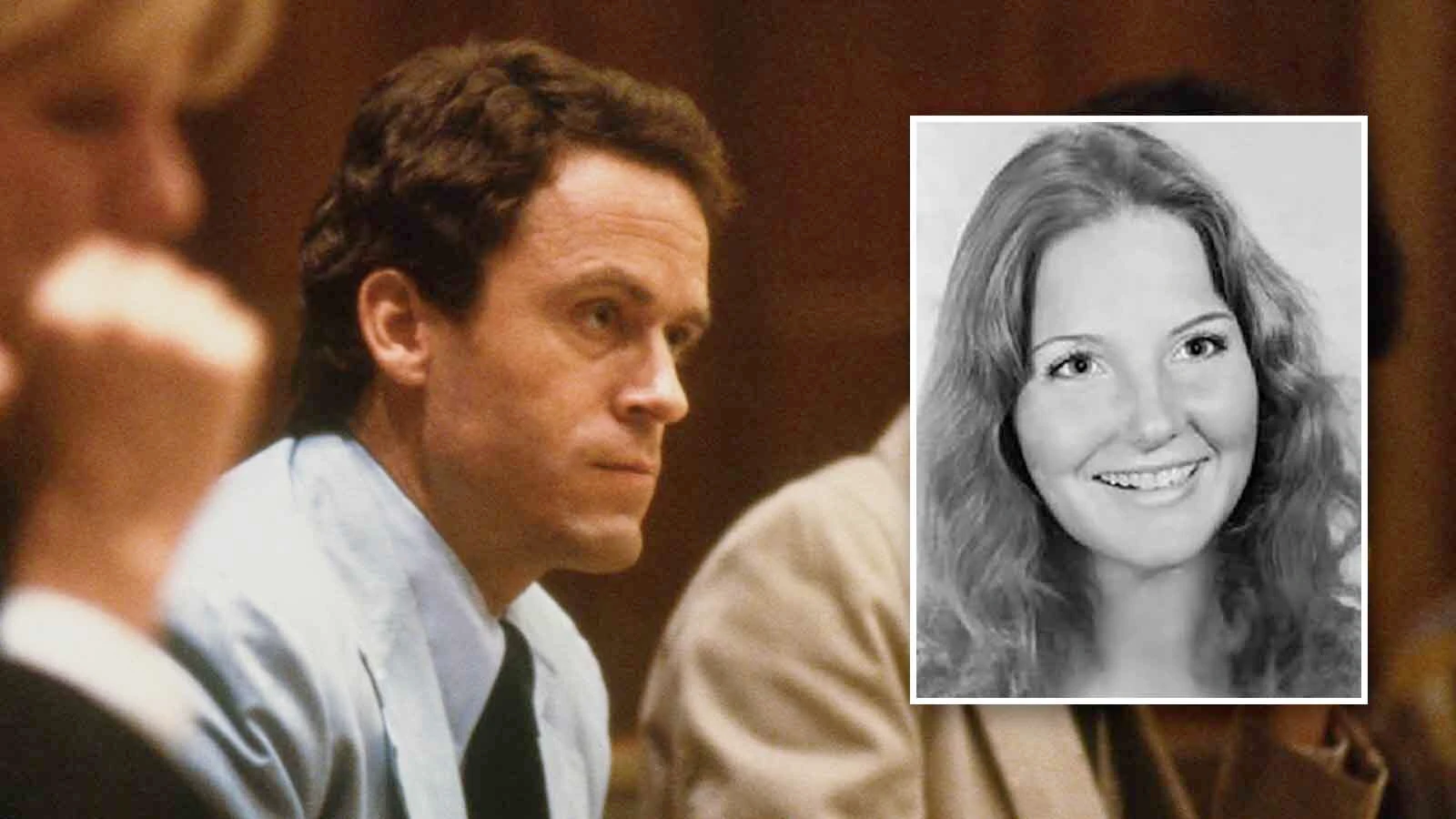
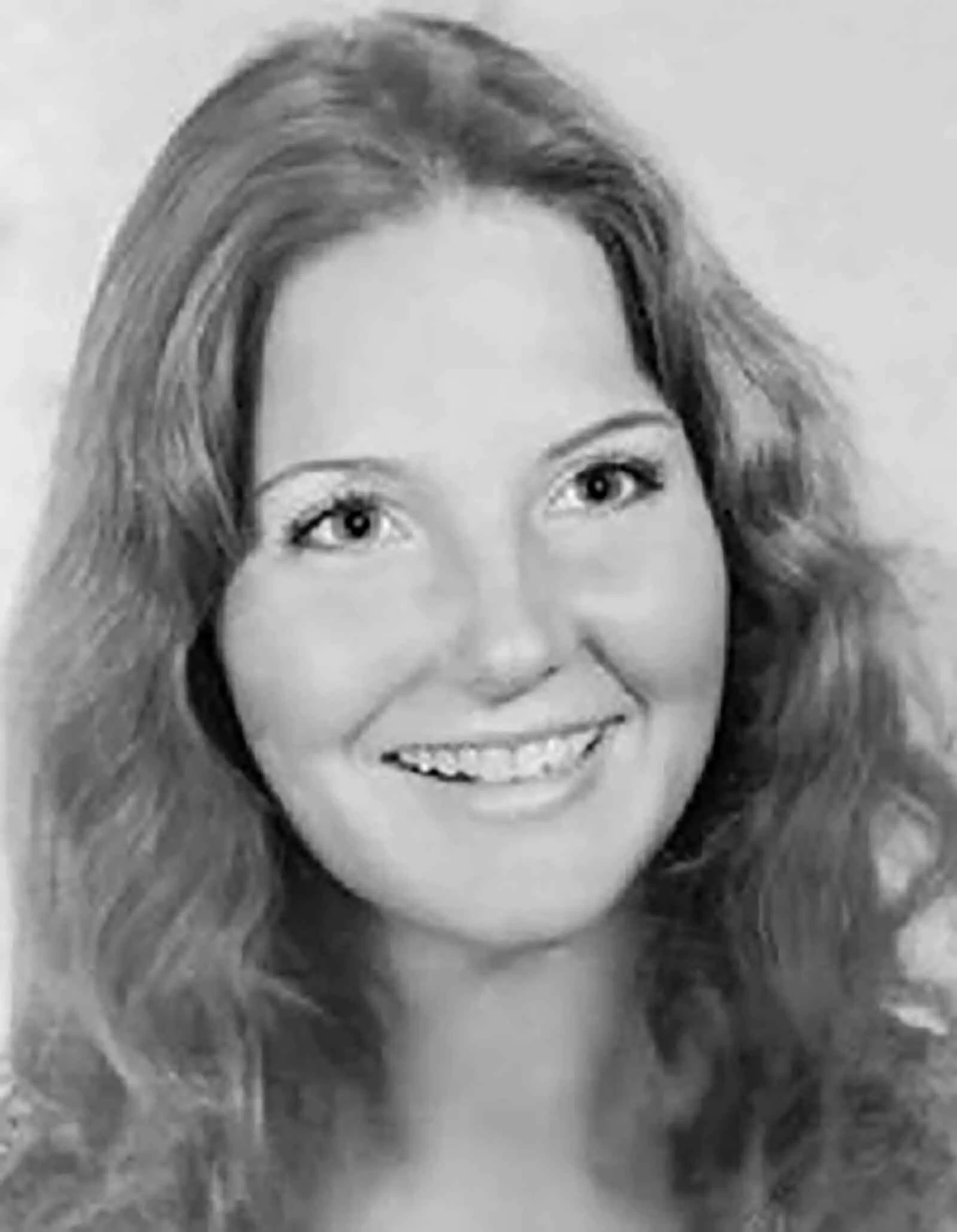
More than 50 years after a 17-year-old girl disappeared and was later found dead, Utah officials confirmed Tuesday that she’s been conclusively linked to notorious serial killer Ted Bundy.
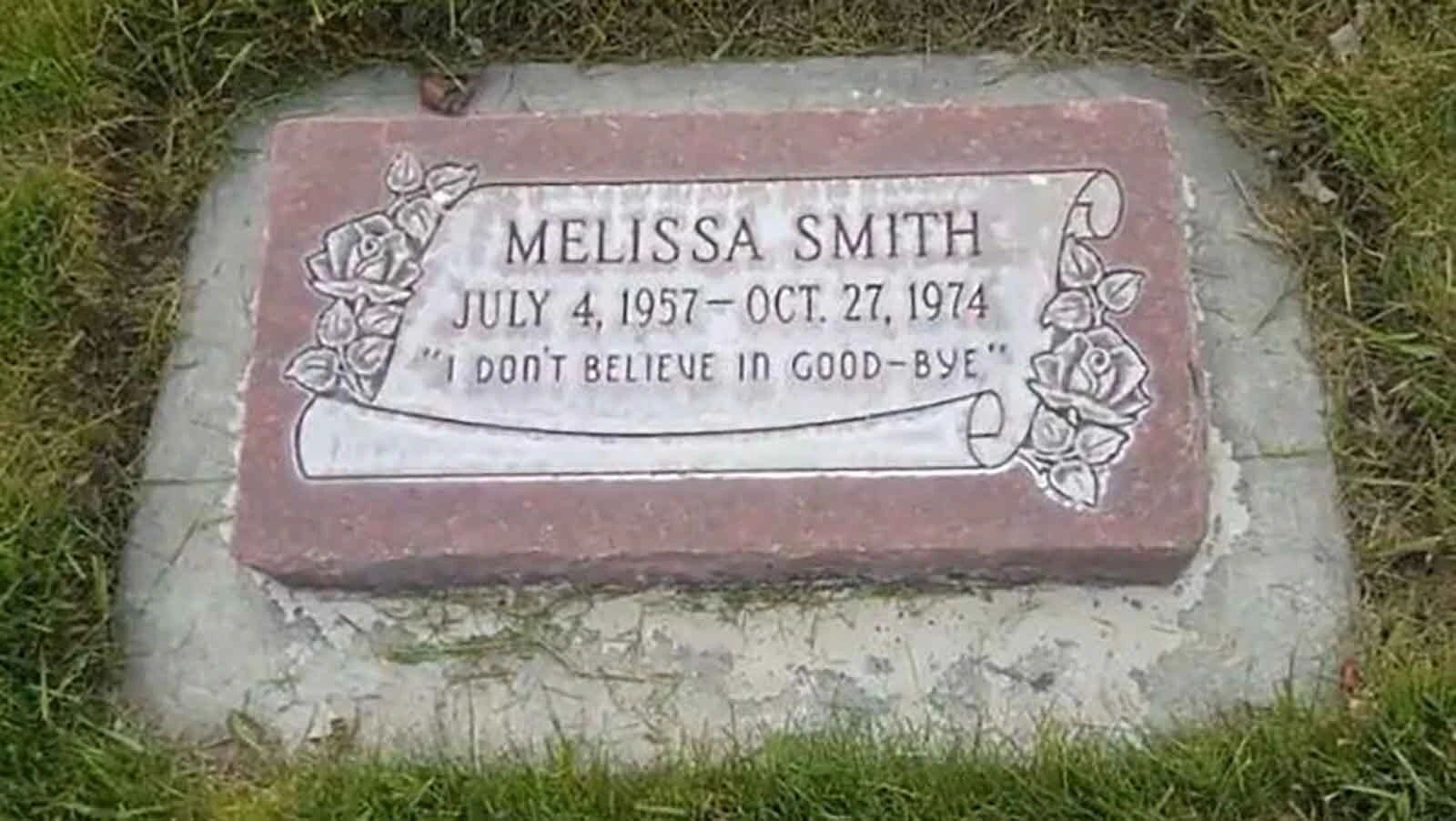
At a joint press conference, the Summit County Sheriff’s and Attorney’s Offices announced that DNA evidence definitively connects Bundy to the 1974 murder of Melissa Smith.
Smith, the daughter of then Midvale Police Chief Louis Smith, vanished on Oct. 18, 1974, after leaving a local pizza restaurant where she had been visiting a friend.
Her body was discovered more than a week later near Toll Canyon in Summit Park, and an autopsy revealed she had been sexually assaulted, brutally beaten, and strangled.
Tuesday’s announcement comes on the 52nd anniversary of the day Smith’s nude body was discovered on Oct. 27, 1974.
The closure of Smith’s case was made possible following breakthrough DNA genotyping technology employed by the Utah County Sheriff’s Office in April that allowed authorities to reconstruct a complete genetic profile for Bundy linking him to the 1974 killing of another Utah 17-year-old, Laura Ann Aime.
The technology, which was acquired by the Utah State Crime Lab in 2023, allows investigators to reconstruct full DNA profiles from small, age-degraded or mixed samples.
Prior to this advanced DNA technology, authorities had only a partial profile of Bundy, which along with his confessions of up to 30 victims including Aime and Smith, wasn’t enough to definitively close their cases.
Utah County Sheriff Kacey Bates led the press conference, announcing that the investigation is officially closed.
Summit County Attorney Margaret Olson further stated that the DNA and other corroborating evidence, including pattern, motive, means and opportunity, point squarely to Bundy.
"Although Ted Bundy is no longer alive to face prosecution, advances in forensic science and the continued dedication of law enforcement professionals have helped provide answers in a case that has remained unsolved for over 50 years," Bates said.
"Most importantly, we remember Melissa Ann Smith and the somber significance of finally bringing this investigation to a close,” the sheriff added.
Smith’s family has been notified and expressed relief at the discovery but declined to appear at the press conference to avoid media attention, said Skyler Talbot, public information officer with the Summit County Sheriff’s Office.
More Victims
Though dead for more than four or more decades, the number of confirmed Bundy victims is likely to rise following this discovery.
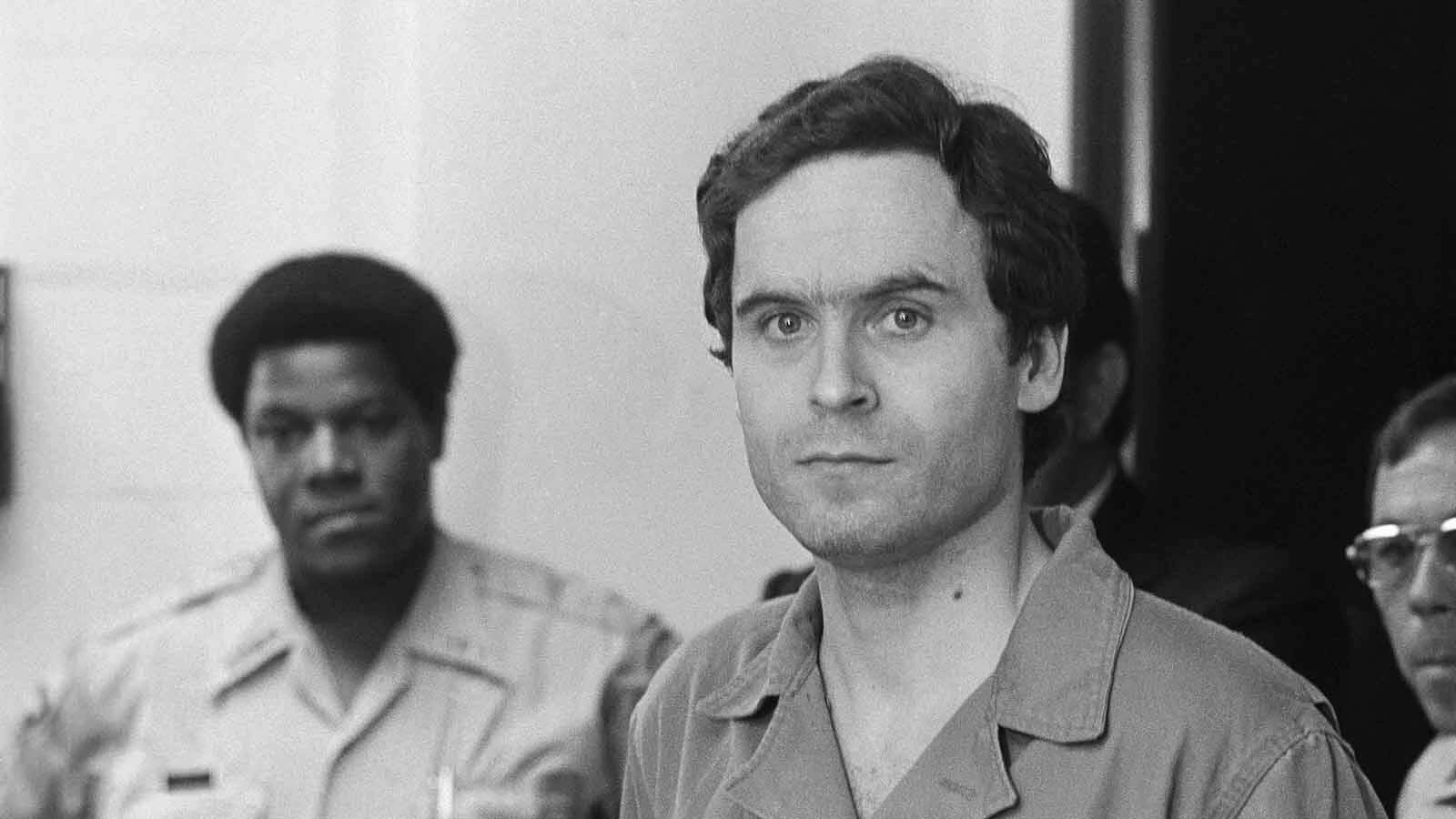
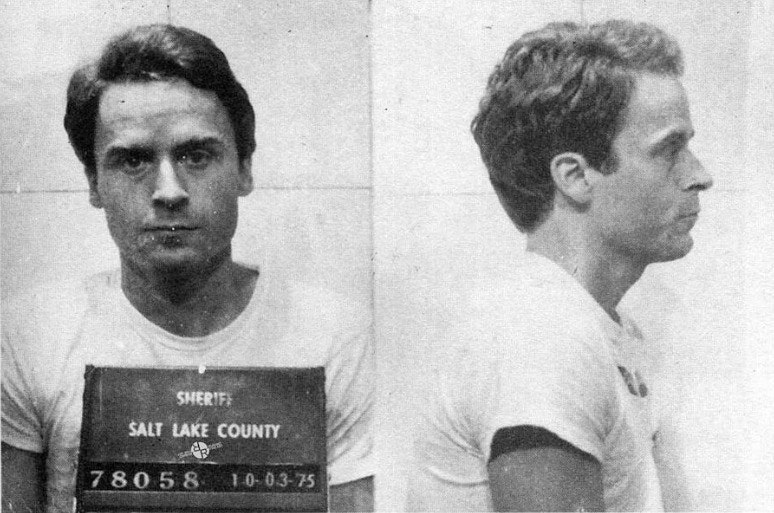
Bundy is believed to have murdered at least 30 young women between 1974 and 1978 across seven states — including Utah, Colorado and Idaho — and was eventually caught in Florida after killing a 12-year-old girl.
He was convicted of three counts of first-degree murder and other charges, sentenced to death, and executed in January 1989.
It’s not clear how early Bundy began killing his victims, though by the time he moved to Utah in 1974, investigators in Washington state had begun looking into the disappearances of several young women from where he previously had lived.
Smith and Aime are thought to have been Bundy’s first two victims killed in Utah, along with 16-year-old cheerleader Nancy Wilcox, whose body has never been recovered, as well as 17-year-old Debra Kent, who was abducted from a high school auditorium parking lot in Bountiful, Utah, in November 1974.

(newspapers.com) 
(newspapers.com) 
(newspapers.com) 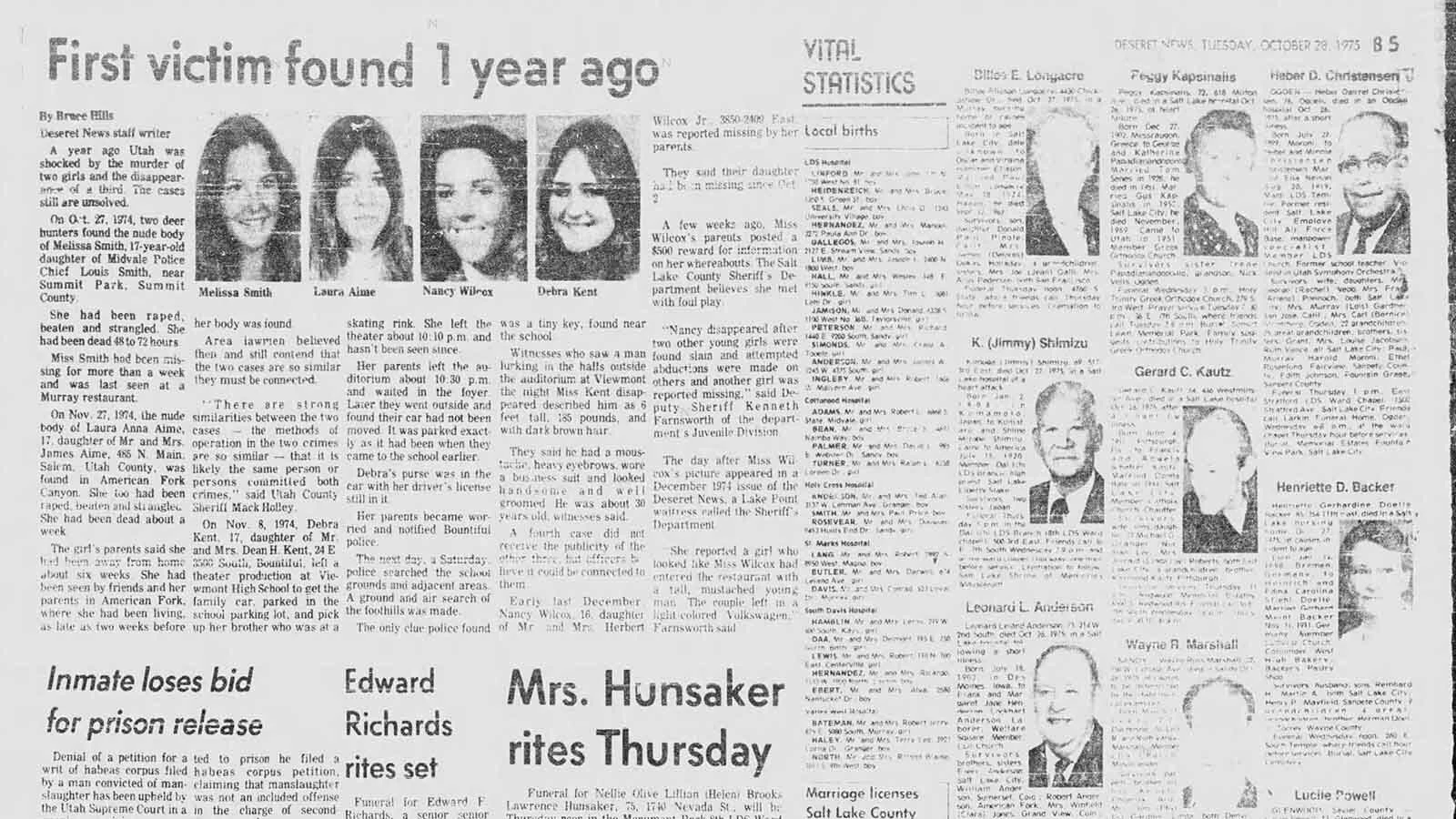
(newspapers.com) 
(newspapers.com)
‘May She Rest In Peace’
Utah private investigator Jason Jensen was encouraged to hear that another Bundy victim had been positively identified.
He’d set out two summers ago to do a search for four missing Bundy victims thought to be buried in the Utah and Colorado with no luck and plans to try again next summer.
“I’m glad to see these old cases still get attention,” Jensen said. “Some of them were presumed Bundy cases and left to remain unsolved because he was executed.”
The DNA profile will also help to both positively ID Bundy victims and clear him of other cases incorrectly attributed to Bundy, Jensen said.
“This Melissa Anne Smith case deserved to be formally closed attributed to Bundy since he confessed to it and the forensic evidence confirmed it,” Jensen said. “May she now rest in peace.”
Sheriff Bates on Tuesday specifically credited former Summit Count Sheriff Detective Alan Siddoway — who according to his obituary died of pancreatic earlier this month on Oct. 11 just weeks before the official announcement — for his doggedness in solving Smith’s case.
Siddoway worked with authorities from the Salt Lake and Utah County Sheriff's Offices to parse through case reports and evidence dating back 50 years, helping to tie the cases together.
In coordination with the Utah State Crime Lab, investigators from these agencies gathered biological samples from Smith and Aime that were compared and matched to Bundy’s Y-STR profile — a distinct genetic marker passed through the paternal line.
Unlike standard nuclear DNA, this Y-chromosome data is not part of CODIS, the national criminal DNA database operated by the FBI.
Salt Lake County Sheriff Rosie Rivera highlighted the critical need to preserve evidence, citing how advancements in forensic technology continue to provide new methods to solve previously cold cases.
Investigators said they continue to pursue leads regarding Bundy’s potential connection to other homicides, including Nancy Wilcox, a 16-year-old girl from Holladay, Utah, believed to have been killed by him in October 1974.
Still No Bundy Victims In Wyoming
Wyoming has not yet been identified among the states where Ted Bundy confessed to his killings.
Ryan Cox, commander at the Wyoming Division of Criminal Investigation and head of the state’s cold case unit, previously told Cowboy State Daily that he isn’t dismissing the possibility.
However, to his knowledge, there are no known investigations into Bundy relating to Wyoming, Cox said in an email Monday afternoon.
Currently, it’s unknown how many open cases there are throughout the state.
DCI’s cold case database is still incomplete, though will likely continue to expand following legislation passed by the state in March 2024, called the Cold Case Database and Investigations Act.
That law made it mandatory for all law enforcement agencies to report to DCI all unsolved homicides and felony sexual offenses two years or older, dating back to January 1972.
Four Wyoming Cold Cases
There are now four unsolved cases on the DCI Cold Case database between 1974 and 1978, the years Bundy is known to have killed victims, with three of those involving females.
This includes the murder of a 10-year-old girl who disappeared in Rawlins on Aug. 24, 1974, and whose body was found about eight months later.
Though not named, presumably this entry refers to Jayleen Dawn Banker, whose body was found eight months later deceased from a blow to her head.
The other homicide listed in the database is Doris Kay Holmes, who was discovered dead of a ligature strangulation in her apartment in Sheridan on July 1, 1975.
In addition to Holmes, an unknown female was also sexually assaulted in a desert region of Green River on Sept. 30, 1977, with no additional details provided in the database.
Cox said in an earlier interview that though evidence in many cold cases has already undergone DNA analysis, the agency is “constantly evaluating evidence in cases for potential DNA.”
Contact Jen Kocher at jen@cowboystatedaily.com
Jen Kocher can be reached at jen@cowboystatedaily.com.