

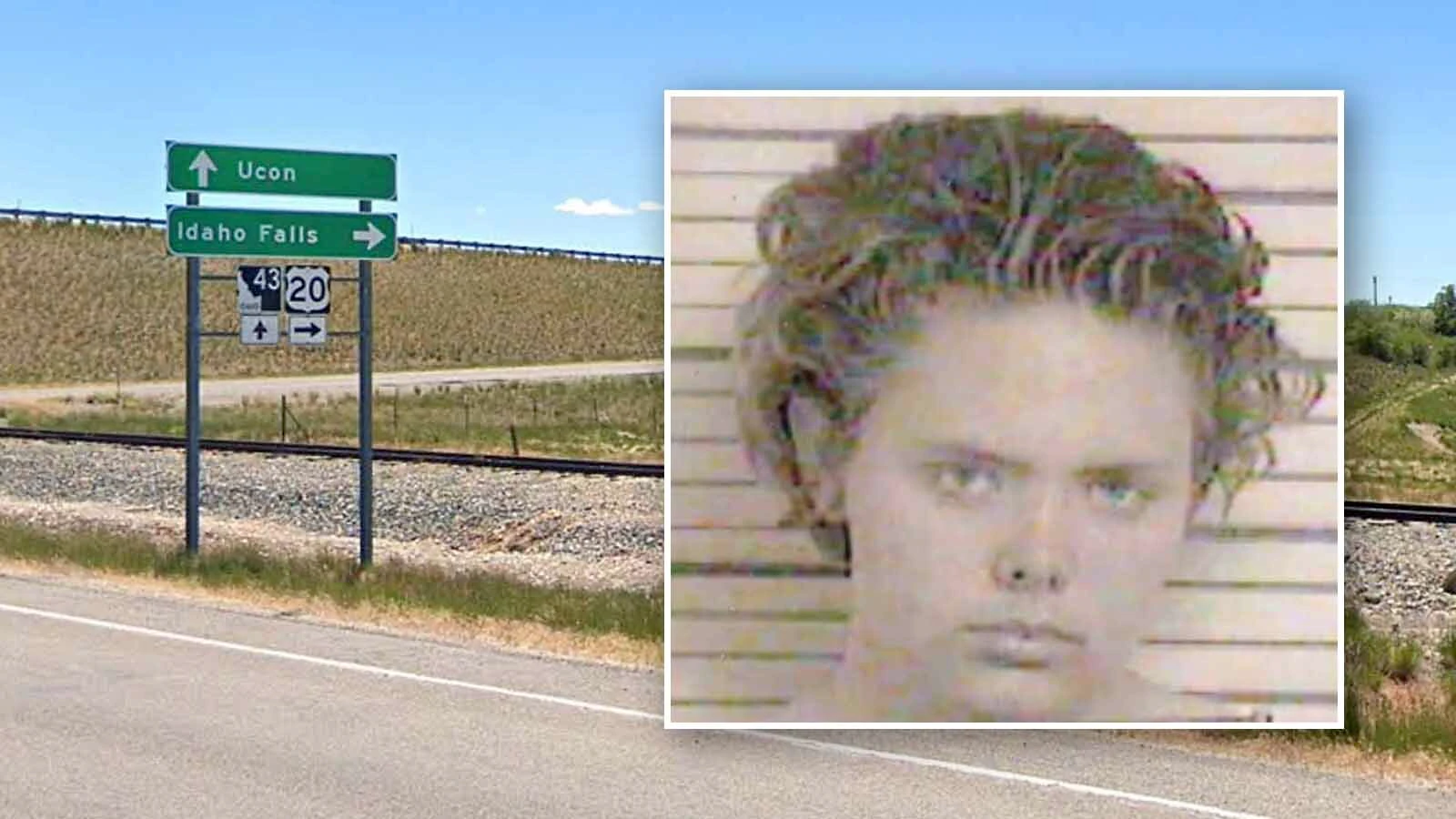
Tonya Teske was a free-spirited teenager who embraced life on the open road, choosing freedom and adventure over convention.
She regularly hopped rides with long-haul truckers, stopping from time to time at her family’s home in Shoshoni and traveling wherever the roads led.
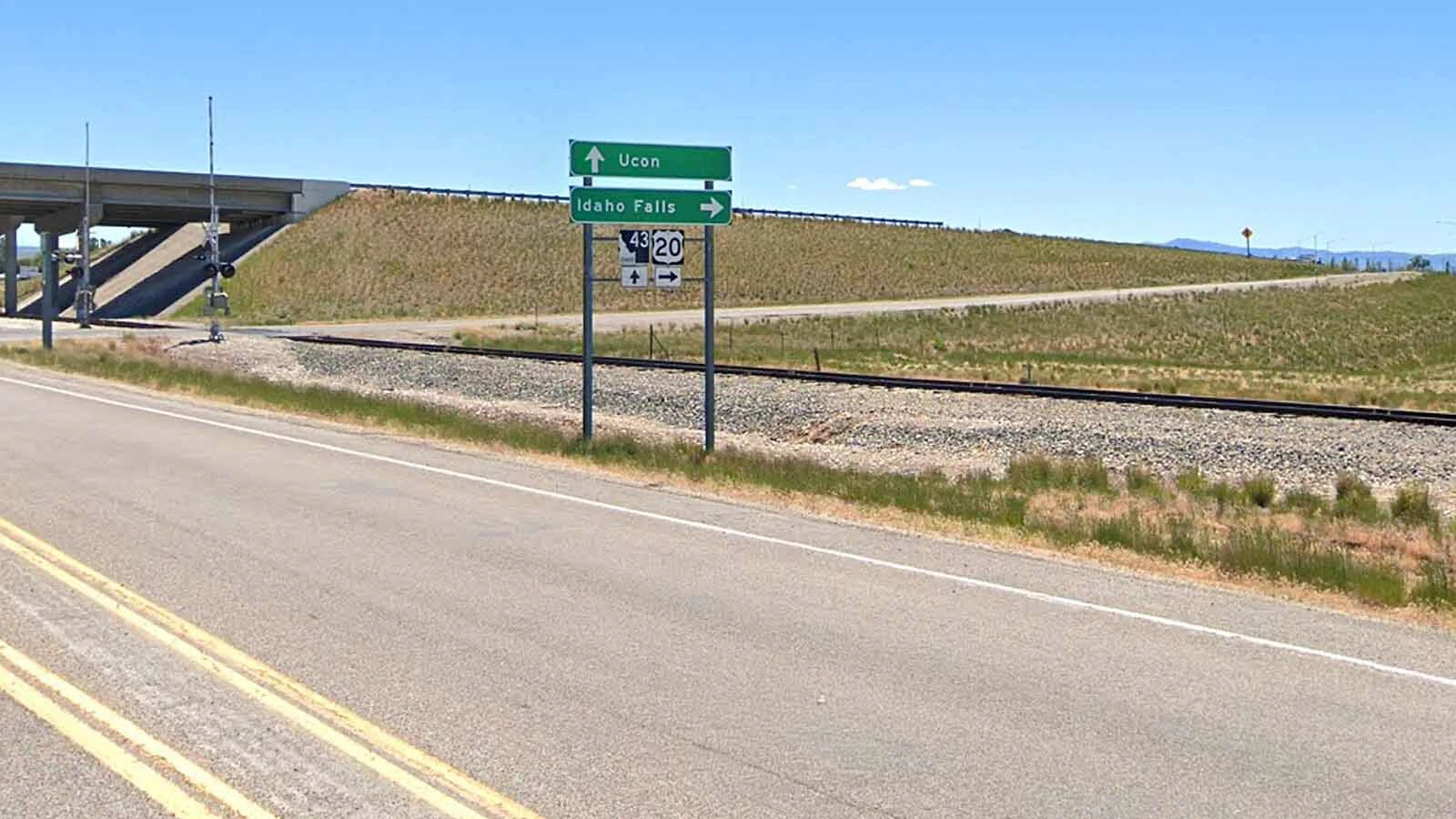
That freedom ended on Aug. 15, 1997, when a trucker and his wife spotted her nude body in the tall grass beside the southbound on-ramp of U.S. Highway 20 just outside Idaho Falls.
She was just 18 years old.
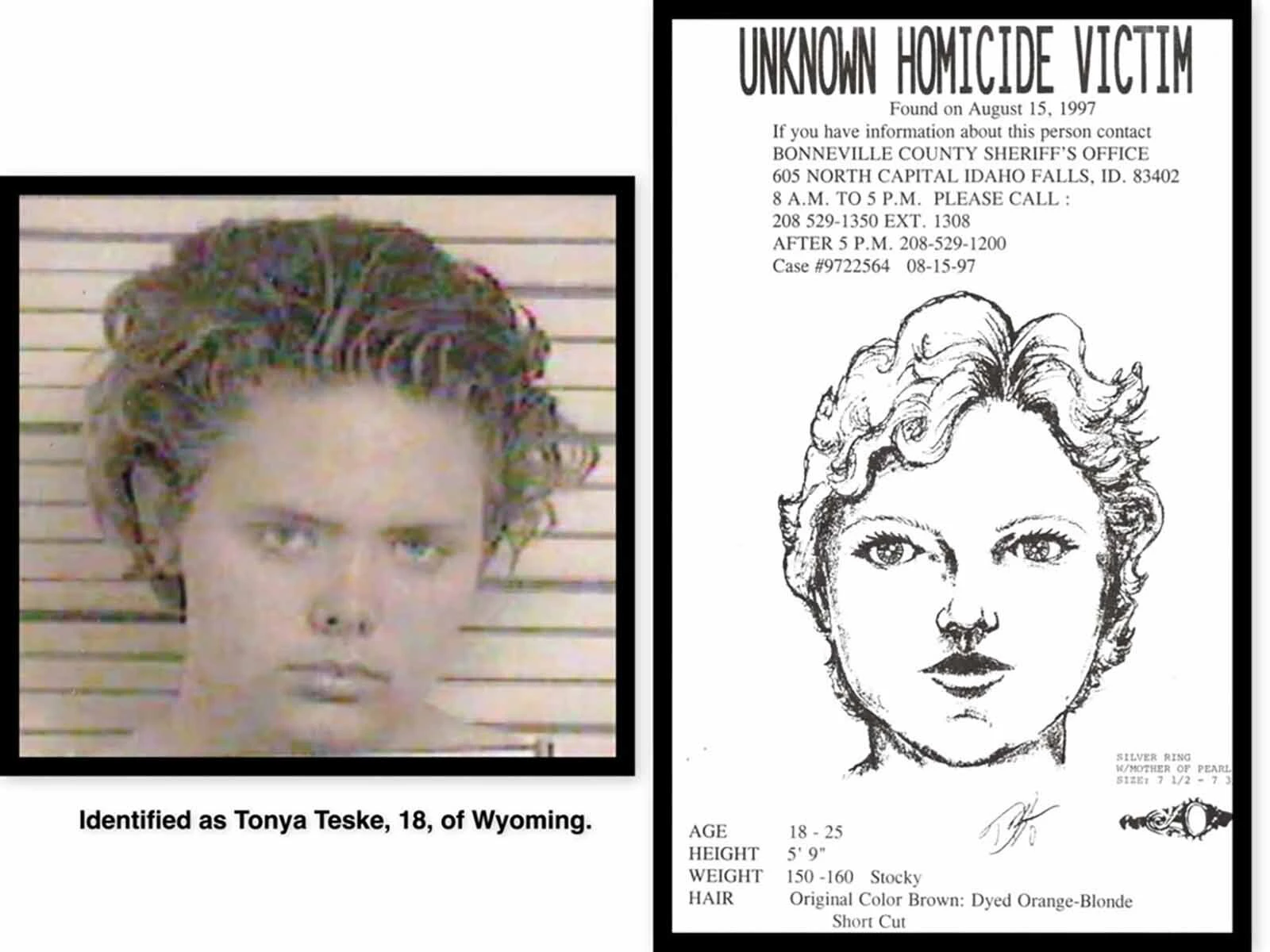
With no identification on her body, except a silver mother-of-pearl ring on her finger and her distinctly dyed yellow-orange hair, investigators had little to go on.
Teske remained a Jane Doe for nine days until authorities were able to identify her and inform her family in Wyoming.
Although Teske’s face was swollen and her body bore bruises and other marks, including what appeared to be a ligature mark on her wrist, there were no obvious indications of how she had died.
Her death was ultimately ruled a homicide by undetermined means.
For the nearly three decades since, investigators have pursued leads and people of interest, among them the last knownperson to see her alive.
Still, the case remains cold, yielding no substantial breaks and scarce evidence.
Even so, Bonneville County Sheriff’s Office investigators believe someone has information that could help solve Teske’s murder.
They hope the right person will come forward with the details needed to finally bring her killer to justice, said Det. Prescott Sagers, the lead investigator on the case.
“We would like whatever help we can get to finally give Tonya’s story the closure it deserves,” he told Cowboy State Daily.
Crystal Douglas, who runs the volunteer Idaho Cold Cases Facebook group, is also not giving up on finding answers. She’s tracked Teske’s case for years, and like Sagers, remains convinced the truth can still be found.
Over time, Douglas said that she’s been in touch with the family who — despite years of fading hope — continue to seek answers.
‘She Just Wanted To Get Out Of Town’
Teske was last seen alive at the now-closed Bairs Truck Stop in Belgrade, Montana, just after 6:30 p.m. on Wednesday, Aug. 13, 1997.
Two days later, her body was found.
Montana law enforcement had been called to the scene after truckers reported over CB radio that a young woman was offering sexual favors. The Idaho Falls Post Register reported at the time that woman was Teske.
When Gallatin County deputies questioned the woman, she claimed she’d only been joking, and no one came forward to say she had actually solicited them.
They released her, though she was wanted in Utah on a non-extraditable warrant for forging a $50 check to Pizza Hut.
Teske’s last sighting by family was five days prior on Aug. 10, when she visited her mother, Katherine, in Shoshoni.
Her mother would later tell investigators that Teske mentioned going to Denver to see a boyfriend, according to an October 1997 report by the Idaho Falls Post Register.
She was able to describe what Teske had been wearing — cutoff shorts, a T-shirt, and lace-up shoes — and that she was traveling with a large green suitcase and brown shoulder bag.
Her mother, knowing Teske’s period was due, had given her some sanitary pads and other supplies to take with her, Sagers confirmed.
Teske had also visited with her friend Nichole Templin, who initially said she didn’t recognize her, according to the same news article.
During this conversation, Templin said she noticed bruises on Teske’s back that Teske claimed were from a car accident, though there was no corresponding police report that matched her story.
Templin said Teske left town in a truck with four men, all in their early to mid-50s, headed toward Casper.
“She just wanted to get out of town,” Templin said.
Lots Of Questions Remain
Whoever killed Teske took pains to leave no evidence behind, Detective Sagers said.
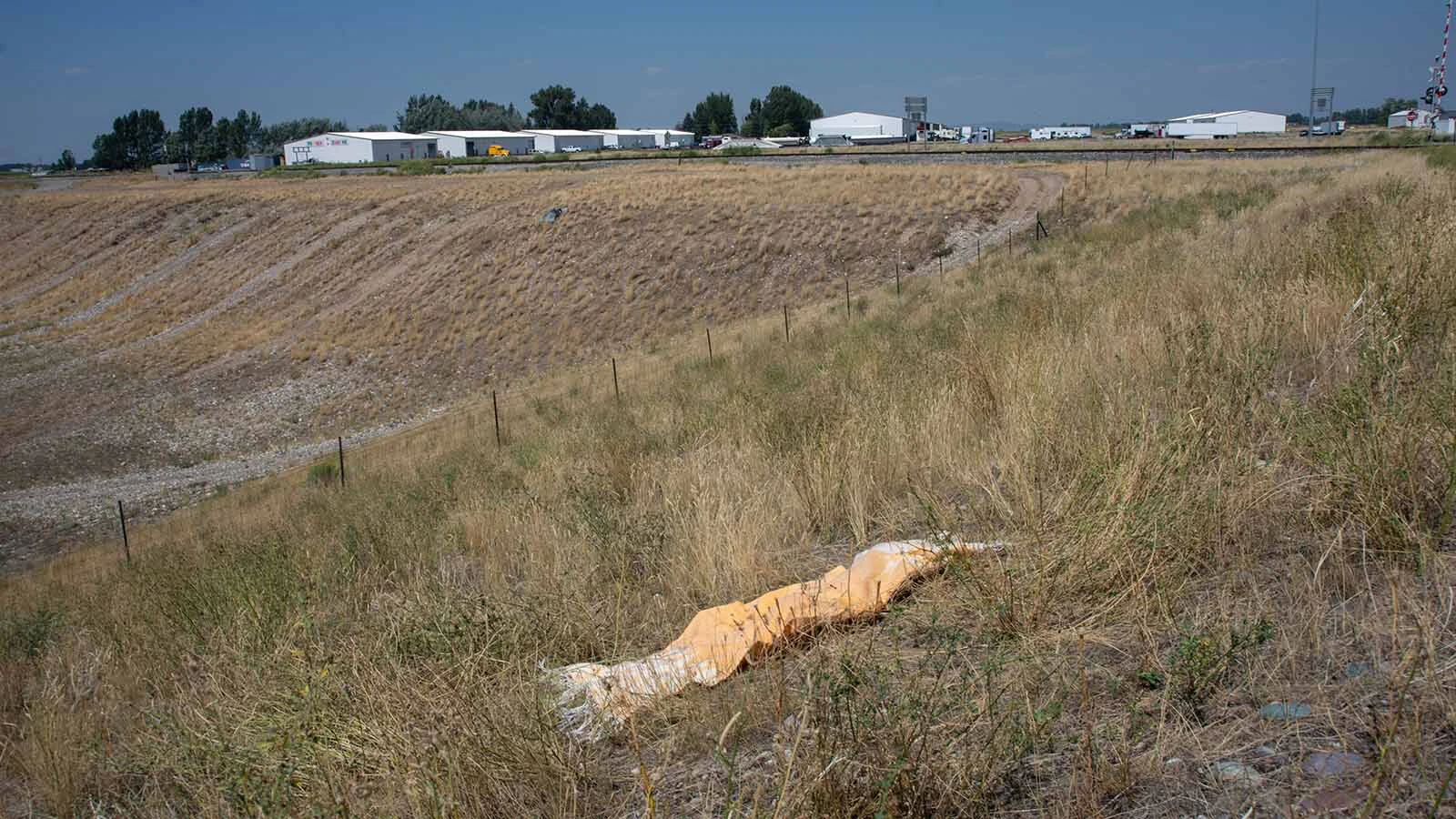
Her body appeared to have been dumped by the side of the highway and rolled down the hill to where she came to her final resting place.
There was nothing at the site apart from some trash and shoelaces up the hill on the gravel shoulder that may have resulted in the ligature-like marks on her right wrist.
An autopsy revealed that the young Wyoming woman had blunt force trauma to the back of her head but not hard enough to fracture her skull, so was likely not what killed her.
The hyoid bone in her neck was also still intact, so the medical examiner also ruled out strangulation.
Without an obvious cause, her death was ruled undetermined.
There also were no clear signs of sexual assault, though an examination was done that came back undetermined. Biological samples were taken from her body that did not result in a DNA male profile, Sagers said.
Likewise, materials from her underneath her nails were also collected but also did not yield suspect DNA.
Teske’s toxicology report came back clean with no discernible presence of drugs or alcohol.
DNA swabs were also taken from her breasts, one of which yielded three partial DNA profiles: Teske’s, one male’s, and one unknown.
Most notable to Sagers and others, however, was the uneven decay of Teske’s body. Her head and left arm appeared to be significantly more decomposed than the rest of her body.
Analysis by Idaho State University later revealed that the majority of her remains were four to five hours post-mortem, while the head and left arm appeared closer to 40.
The undigested food in her stomach supported the shorter time estimate.

A story about Tonya Teske in the Aug. 28, 1997, edition of the Casper Star-Tribune. (newspapers.com) 
A story about Tonya Teske in the April 22, 1998, edition of the Times-News of Twin Falls, Idaho. (newspapers.com) 
A story about Tonya Teske in the Aug. 28, 2997, edition of the Coeur d'Alene Press. (newspapers.com) 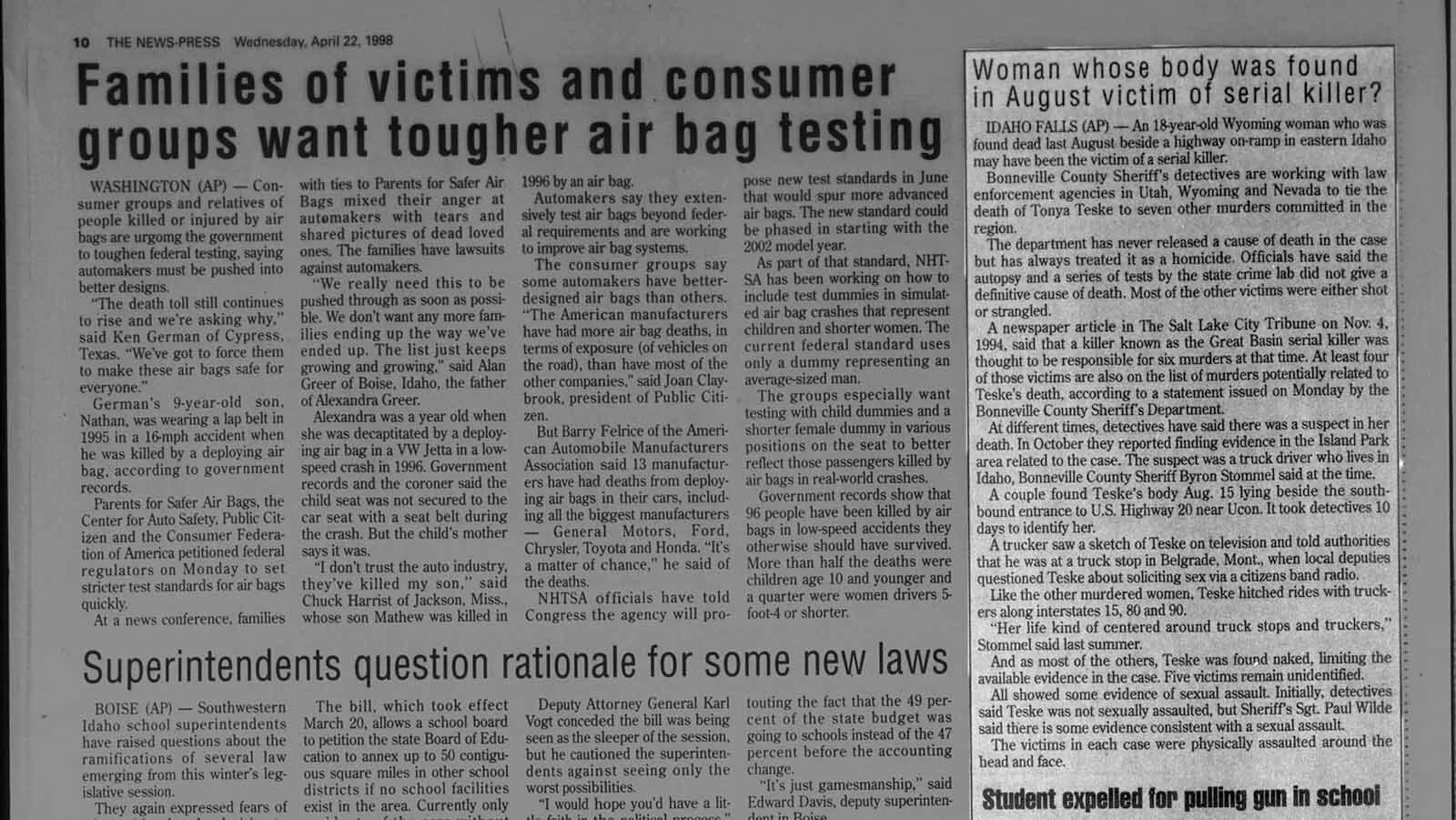
A story about Tonya Teske in the April 22, 1998, edition of the Shoshoni News-Press. (newspapers.com) 
A story about Tonya Teske in a June 1998 edition of the Casper Star-Tribune. (newspapers.com)
A Suspect Emerges
As investigators attempted to identify Teske, they zeroed in on a prime suspect: David Lord, a long-haul trucker who said he gave Teske a ride on the night she was last seen alive in Montana.
It was Lord, in fact, who recognized Teske’s “Jane Doe” poster at a port of entry station near Idaho Falls and reported it to the inspector.
He casually mentioned that he’d recognized Teske from a Montana truck stop — a tip he never relayed to the Bonneville County Sheriff’s Office, though the inspector did.
When investigators tracked Lord down, he provided them with her name, enabling her mother to positively ID her.
Lord told investigators that Teske often hitchhiked from truck stops and that he had given her a ride on the night in Belgrade when he saw she was being questioned by authorities about the alleged solicitation.
Lord claimed he had done the deputies a favor by removing her from the area at their request — a claim the deputies later denied, insisting they had never asked for his help.
Took Off With Another Driver
Lord told authorities he’d taken Teske to the Cinnamon Lodge, roughly 100 miles south of Belgrade outside of Big Sky, Montana, where he stopped for the night because he was tired.
Teske, however, was determined to press on, so he allowed her to use his CB radio to arrange a ride with another driver. He insisted there had been no physical contact between the two of them that night.
Instead, Lord said Teske left carrying her green suitcase and brown shoulder bag and got into an unidentified semitruck, though he could provide no details — not the truck’s color, license plate, or cargo.
When asked point-blank if he’d killed her, he repeatedly denied it, Sagers said.
Sagers verified Teske typically called drivers for rides over the CB.
Investigators interviewed multiple truckers who said they regularly provided her transportation upon request. She was well liked within that community, he said, and some drivers went out of their way to collect her when she called.
Still, for that particular evening, no proof emerged that Teske ever got into another truck.
‘Incredibly Suspicious’
Douglas, of the Idaho Cold Cases group, finds Lord’s explanation incredibly suspicious.
“I think that's just too convenient, but he's held onto that story all the way,” she told Cowboy State Daily.
A review of Lord’s logbooks showed inconsistencies in his recorded timestamps, though these irregularities fell far short of being able to implicate him in Teske’s murder, according to Sagers.
A background check on Lord further showed nothing violent in his criminal history, though subsequent interviews with Lord’s former girlfriends indicated he did have a violent streak, Sagers said.
Detectives took his fingerprints and collected the bedding from his truck, which would later prove to be an inconclusive match to the partial suspect DNA profiles lifted from Teske’s body.
Great Basin Murders
The investigation into Teske’s murder shifted in the spring of 1998 when federal and local authorities connected a series of killings spanning from 1983 to 1997 across Wyoming, Utah, Nevada, and Idaho.
The victims — some found nude and deliberately positioned — all had been sexually assaulted and discarded along interstate highways.
The killings were dubbed the “Great Basin Murders,” named from the geographic region in which the bodies were found.
The working theory at the time was that the murders were likely the work of one serial killer, though over time as cases were closed it became clear the deaths were not linked.
The first likely victim was 23-year-old Janelle Johnson, killed while hitchhiking back to Riverton from a modeling agency interview in Denver in February 1983.
Her case remains unsolved, though advances in DNA analysis offer new hope.
Another was Lisa Marie Kimmel — known as “Lil Miss” from her Montana license plate — who was abducted in March 1988 driving home to Billings from Colorado.
Her body was recovered a week later from the North Platte River.
Infamous Wyoming murderer Dale Wayne Eaton was identified through DNA and arrested in 2004, and Kimmel’s car was found buried on his property in Moneta.
The list also includes Cindi Arleen Estrada and Irene Vasquez.
Both women remained unidentified until July 2025, when forensic genetic genealogy provided their names.
They had been murdered in the spring of 1992 and dumped along Wyoming highways. More than three decades later, their killer was named as Clark Perry Baldwin — already convicted of murdering a woman in Tennessee.
He died in custody before extradition to Wyoming could take place.
At the time, the theory was so predominant that corresponding law enforcement agencies in those states called a joint meeting in Salt Lake City in June 1998, though Sagers said the Idaho investigators returned believing that Teske’s murder was not connected given the discrepancies in timelines and causes of deaths.
Instead, they thought whoever killed Teske and dumped her body was much closer to home.
Clothing Piles
Lord remained the detectives’ prime suspect, and that fall in 1997, he again inserted himself into the investigation by phoning in a tip about discarded clothing found near Brigham City, Utah — a location along his regular delivery route that he claimed to have heard about over his CB radio.
Idaho investigators traveled to the site, photographed the garments, and sent the images to Teske’s mother, Katherine, who confirmed some of the items belonged to her daughter.
Two years later in August 1999, more clothing would be found by tourists near Targhee Pass along the Montana-Idaho state line. These included a shirt, a Barney plush toy, a watch, and underwear with a menstrual pad.
Again, the items were photographed and sent to Teske’s mother who identified them as her daughter’s, noting a torn collar on the shirt and the stuffed animal she always carried.
Both dump sites lay along routes Lord frequently drove for his trucking job, though the roads were also well-traveled by others.
However, apart from her mother’s identification, so far there’s been no definitive proof the items belonged to Teske, Sagers said.
“We sent several of those items from those dump sites to the lab, and unfortunately, none of those items that we sent came back as positive for Tonya’s DNA,” Sagers said.
He clarified that the absence of a DNA match does not prove the items weren’t hers, explaining he couldn’t verify how thoroughly the evidence had been sampled or what protocols the lab followed at that time.
The only definitive statement he could make was that there has been no direct genetic confirmation linking them to Teske at this point.
Shotgun Village
Investigators continued to interview Lord’s friends and fellow truckers, one of whom said that Lord had a tendency to pick up female hitchhikers and take them to a family property in Shotgun Village, a recreational community in Island Park about 20 miles from the west entrance of Yellowstone National Park where a lot of people have vacation cabins.
When detectives showed Teske’s photo to people in the community after her body was found, some said they did recall seeing her in August.
In fact, they were led to a vacant apartment above a local store where a window had been left open.
Inside, they found hair curlers, a hair dryer, tampon wrappers of the same brand her mother said Teske had as well as some Cambridge Light 100 cigarettes, the brand that Teske was known to smoke.
However, there were no signs of struggle inside the apartment or evidence that a crime had happened.
During the search of the area, investigators also located a vacant cabin with an open window, indicating a possible break-in.
The property was in the same vicinity as the cabin belonging to Lord’s uncle. Contacted later, the owner verified there had been previous intrusions that summer; a faucet was found running, and the hot tub had been drained and only partly refilled.
Inside, detectives thought they noted a faint, sickly-sweet odor suggestive of decomposition of a human body, but the scene showed no obvious signs of struggle or theft.
A cadaver dog was brought in, and hair samples were collected from the hot tub drain along with other trace evidence.
The outcome of those tests remains unclear, however, as the related documents are absent from the case file, Sagers explained.
Evidence Destroyed
In 2008, departmental leadership deemed Teske’s evidence too voluminous for storage and ordered some of it destroyed, which included her clothing and the cigarette butts recovered from the apartment.
This was before Sagers joined the sheriff’s office and took over Teske’s case in 2021.
But some evidence survives, he said, including slides from the sexual assault examination, material from underneath her fingernails, several cups found near clothing in Utah, the Barney doll, and a handful of other articles.
That the other evidence had been destroyed was a devastating realization, Sagers said, but he’s working with what they’ve still got.
He personally believes the cabin — and its hot tub — played a role in her murder.
Hot Tub Theory
He’s intrigued by the hot tub. Given the August heat, could it have been repurposed as an ice bath to preserve Teske’s body?
That would account for the differential decomposition of Teske’s body if her head and right arm were exposed to air, decaying faster than the submerged torso and legs.
It would correspond with the bruising along her back, a pattern consistent with the placement of the hot tub’s water jets.
It would also explain why there was no male DNA under her fingernails because that may have been diluted under the water.
However, Sagers conceded that he might be “grasping at straws” in the absence of any real evidence.
Still, he’d never seen decomposition this uneven before, not in the field or in any case studies he’s read.
New Suspects Emerge
In the autumn of 1999, two years after the murder, the investigation turned toward two new persons of interest: Franklin Janes and Douglas Shumate, construction workers who were on a job together in the Shotgun Village area the August that Teske was killed.
The lead came from Janes’ ex-wife who reported suspicious behavior — specifically, a denim jacket plastered with cartoon characters that Janes had given her that summer, and later re-gifted to Shumate’s wife when she didn’t wear it.
She later contacted the FBI, suggesting it might have belonged to Teske.
Though her reason for making the connection remains unclear, Teske’s mother later identified the jacket as her daughter’s.
Along with the jacket, Janes’ ex-wife reported overhearing Janes and Shumate saying that they’d be in big trouble if the FBI ever found out about their involvement in Shotgun Village that summer.
By the time they were questioned, both men had left Idaho and denied knowing Lord or Teske or having any involvement in her murder.
Janes’ ex-wife also could not recall ever meeting Lord, but when she asked her daughter, the daughter told investigators that she remembered Lord being at their house in September 1997.
She also recalled a big green suitcase in the back of her dad’s truck when he returned from the job that summer. She further said her dad attempted to give away clothes that he said had been in that suitcase.
However, other than the reports from Janes’ family members, there’s no direct evidence linking either man to the crime, Sagers said, though they remain on his list as persons of interest.
Both men, along with Lord, provided DNA in the late 1990s or early 2000s, Sagers said, but none matched partial male profile lifted from Teske’s breast swab.
Lord and Janes were again questioned by a volunteer investigator on their cold case team within the last two years, Sagers added, and their stories have not changed.
“They didn’t tell us anything they didn’t say 25 years ago when they were interviewed back then,” he said. “All we have to rely on is what they’re willing to tell us at this point in time.”
To his knowledge, Shumate has not been reinterviewed since his initial contact in 1999.
Need People To Come Forward
At this point, not enough of Teske’s original DNA remains to re-test, Sagers said, though he maintains that future technological progress could still crack the case open.
So could anyone out there who might still have key information, he said.
He conceded the intense focus on Lord might have caused investigators at the time to miss another potential perpetrator.
He called on truckers and regular commuters along that stretch of U.S. Highway 20, as well as anyone present in Shotgun Village or Island Park during the timeframe in question, to share any details — no matter how minor — about the break-ins or Teske’s killing.
He added that Teske’s hair — a bright, unusual shade between yellow and orange — might help trigger people’s memories because it was such a distinct color.
“We’re looking for anyone who was driving that section of highway during August 1997 who may have seen her getting dropped off on the side of the road or something suspicious on the side of the highway,” he said.
“I know it’s a lot to ask someone to remember from 30 years ago, but those recollections would be extremely helpful,” he added.

Deserves Justice
Teske deserves justice, Douglas agreed, and she continues to advocate for her murder to be solved.
“She’s not forgotten,” Douglas said, noting that other strangers have taken an interest in Teske’s unsolved murder over the years.
This includes Idaho artist Lily Martina Lee, who made handwoven burial shrouds for each of the Great Basin Murder victims in 2021 and photographed them at the sites where their bodies were discovered.
Teske’s is a homage to her unique yellow-orange hair color.
Attempts by Cowboy State Daily to contact Teske’s mother using publicly listed phone numbers were unsuccessful as the lines were no longer in operation.
A cousin of Teske’s, who uses the online handle Kelly Sue on Reddit, posted in a thread about her case, recalling Teske as a fiercely independent and artistic teenager.
After Teske moved out at age 16, their contact became infrequent, maintained only through occasional calls or letters given her life on the road.
“It breaks my heart that she died alone, and probably scared,” she wrote. “All she wanted was to be loved and have a family.”
Anyone with information is asked to call the Bonneville County Sheriff’s Office at 208-529-1200 or 208-529-1375.
Tips can also be submitted to the FBI at 1-800-225-5324 or through the FBI’s Electronic Tip Form.
Contact Jen Kocher at jen@cowboystatedaily.com
Jen Kocher can be reached at jen@cowboystatedaily.com.


