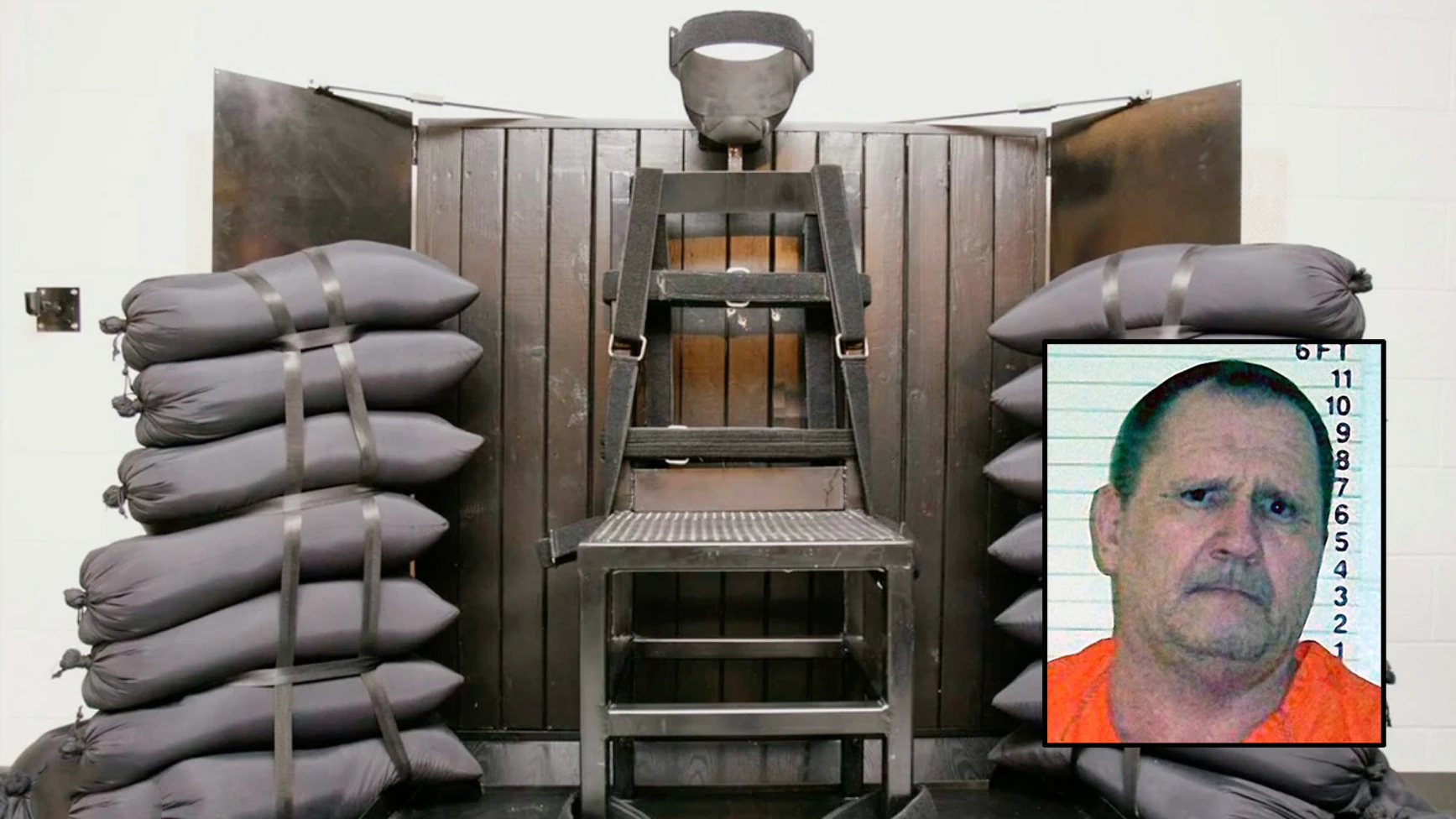
Next week Idaho will adopt the firing squad as its primary execution method due to availability and failure problems with lethal injection.
A lawmaker tried to give Wyoming a firing squad option while the state still had a convicted rapist and murderer on death row in 2014, but the bill didn’t clear the Legislature.
Wyoming law calls for executions by lethal injection. If lethal injection is found unconstitutional, the state can use a gas chamber.
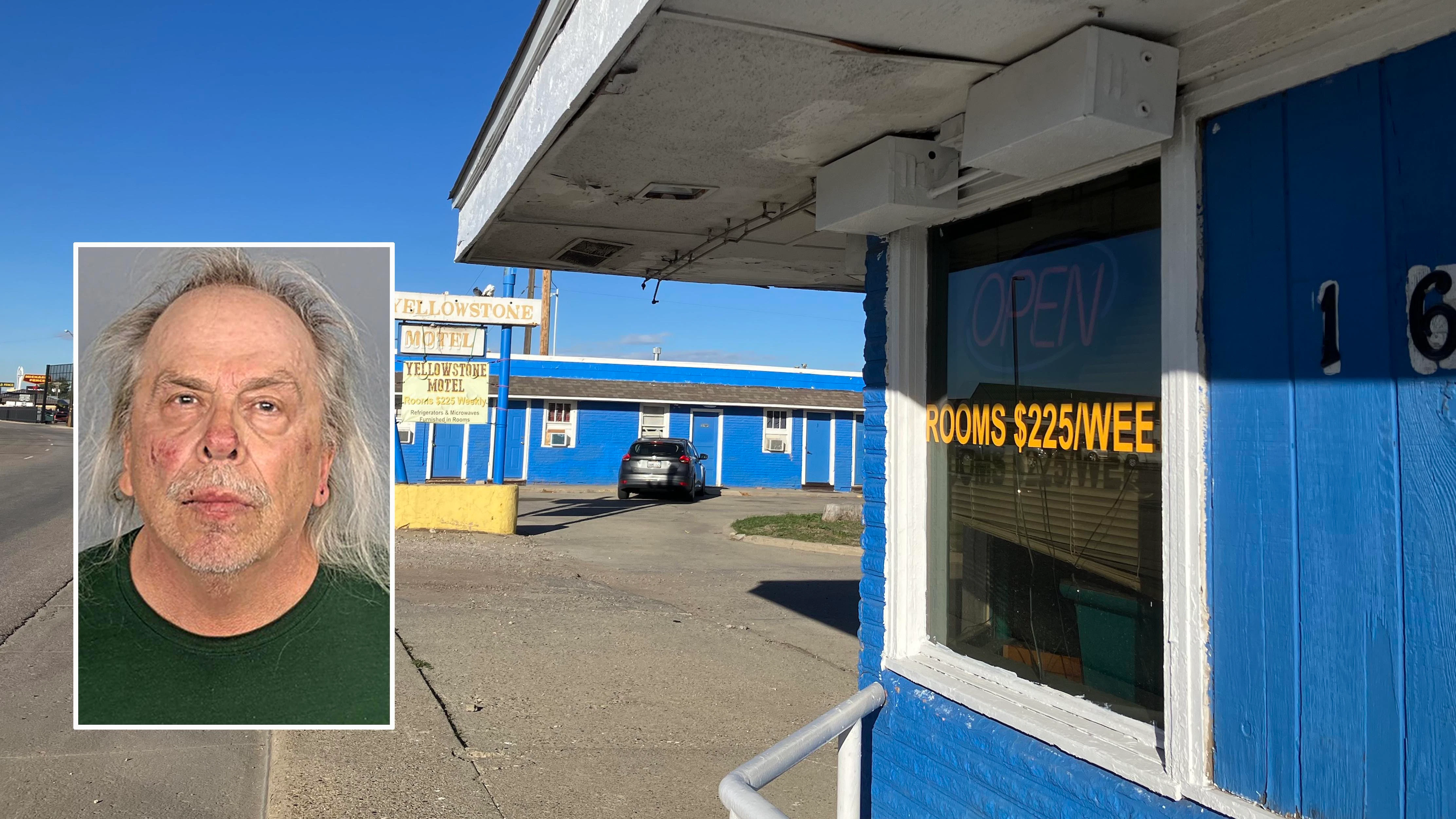
Dale Wayne Eaton, the “Li’l Miss” killer, was convicted in 2004 for kidnapping, raping and murdering Lisa Marie Kimmell 16 years earlier in Wyoming. The jury called for the death penalty.
But in 2014, while Eaton’s appeal was ongoing, many states were running short of the chemicals to perform lethal injections.
“So we may have had a problem coming up with the drugs needed for the execution,” former Sen. Bruce Burns, a Republican of Sheridan, told Cowboy State Daily in a Thursday phone interview.
It would be expensive to build a gas chamber, Burns reasoned, adding, “I always thought gas chamber the most gruesome form of execution anyway.”
Idaho is spending $1.2 million to retrofit an execution chamber for its new firing squad method, the Idaho Statesman reported.
It doesn’t have to be that expensive, Burns countered.
“I don’t know that you’d necessarily need to build a room,” he said. “Even if you did, it could just be cinderblocks.”
The Eaton case fizzled in the years that followed.
A federal district court judge overturned his death sentence in 2014 because defense lawyers hadn’t pursued a mental-health defense despite Eaton’s mental-health problems.
Prosecutors said they intended to seek the death penalty again on the re-trial, and the trial court ordered a mental evaluation. Then in his mid-70s, Eaton had suffered strokes, dementia and depression, and the trial court found him incompetent to stand trial.
Prosecutors withdrew the death penalty case in 2021 and he was re-sentenced to life in prison the next year.
Now 81, Eaton remains in Wyoming's prison system.
What Happened
Burns’ 2014 bill made national headlines and surfaced on late-night commentator Stephen Colbert’s show.
“This was back when (Colbert) played the faux conservative,” recalled Burns. “It had a picture of me with the graphic ‘thrift justice.’”
The Senate rejected the bill 17-13 on its introductory vote. In even-numbered years, non-budget bills require a two-thirds vote to clear introduction and enter the chamber.
Burns’ legislation resurfaced as a Joint Judiciary Committee bill in 2015, when it had a longer trajectory.
It cleared the Senate and House of Representatives both. The House margin was narrow: 32-28.
In Burns’ view, “the House screwed it up six ways to Sunday and it got to conference committee and it died.”
Rep. Bob Nicholas, R-Cheyenne, who remains in the House today, secured an amendment requiring Wyoming to administer a sleep drug to a convict before having him shot.
Burns said the “knockout drug” was part of the drug shortfall for lethal injections in the first place, however.
Nicholas could not be reached for comment by publication.
Burns, Nicholas and other lawmakers later attempted a compromise, saying the state would offer, rather than require, sedation. But the bill failed two conference, or negotiation committees and it died.
Look, Speaking Practically
Wyoming Department of Corrections Dan Shannon declined Thursday to speak to the moral and humaneness questions around the death penalty and different methods.
“I consider it’s my responsibility to follow the law and perform the duty as required, and I’d certainly do so,” he said. He added that as for Idaho, “whatever Idaho decides is best for them.”
But if his agency received a death warrant, it’s important to have multiple methods available, Shannon said.
“A primary, or only method, I think, can really get you tied up in court,” he noted.
More than 20 pharmaceutical companies, including Pfizer, banned the use of their medicines in lethal injections in 2016. States scrambled for substitutes. As they did, the number of botched executions spiked, Nolo.com reported.
Some states “compound” or craft the concoction themselves.
“I believe that’s not the approach,” Shannon said.
For one thing, he said, compounding lethal drugs provokes even more litigation than already surrounds the death penalty.
“In the event that we received a death warrant, I’d approach the legislators and I’d ask, one, that we leave the lethal injection and second, (they’d adopt) nitrogen hypoxia,” or gas, Shannon said.
When Burns’ bill started circulating in 2014, the DOC recommended $30,000 to adjust for the firing squad adjustments. That would be much higher now, noted Shannon, referencing Idaho’s $1.2 million price tag and inflation.
No One On Death Row
This issue is distant from Shannon in reality, however.
Wyoming has no one on death row, and hasn’t executed anyone since Mark Hopkinson’s lethal injection in 1992 – 13 years after he was convicted.
Hopkinson had ordered the torturous murder of 23-year-old Jeffrey Green, who was set to testify against him for the 1977 bombing of an attorney’s home in which three people died.
The last-minute question of whether then-Gov. Mike Sullivan should commute Hopkinson’s death sentence in 1992 harrowed the governor, he told Cowboy State Daily in an interview last May.
“You’re not faced with that kind of decision very often,” Sullivan said.
He had support from others. His priest stayed with him in his office in Cheyenne the day of Hopkinson’s execution.
The depths of contemplation Sullivan reached changed him, though he now can’t pinpoint exactly how. After people surmount decisions that serious, they become more introspective, more thoughtful, he said.
On the one hand, Sullivan knew the state he led was about to take a life. On the other hand, not even the rigid constraints of federal prison had kept Hopkinson from having Green killed.
That was Sullivan’s chief consideration when he ultimately chose not to commute the man’s death sentence, he said.
Nope
Wyoming’s former DOC director Bob Lampert told Cowboy State Daily on Thursday that he disagrees with the death penalty.
He has a lot of experience with it, he noted.
He served in Texas prisons and ran security at the Ellis One unit in Texas, which housed death row. He also worked in the Huntsville unit, where the executions unfolded, and he was part of the team involved in those executions, he said.
Lampert said he opposes the death penalty now “for a variety of reasons: one of the largest is the impact it has on the (prison) employees as well as the other inmates that get to know the condemned.”
In Idaho, the state is seeking police officers to volunteer as firing squad marksmen.
After having spoken with multiple condemned inmates just before their executions, Lampert said, none of them considered Texas’ death penalty had factored into their thinking as a deterrent. Their passions, or drug involvements, overwhelmed any such considerations, Lampert recalled.
To pursue a full death penalty case through appeals costs around $1 million, plus the lengthy time they’re incarcerated throughout, he added.
“Ultimately it’s an irreversible penalty,” said Lampert.
Lampert led Wyoming's prison system for nearly 17 years before retiring in 2023. He recalled how scarce lethal injection drugs grew during that time – a consideration that remained on his mind since he worked for a death penalty state.
In both Wyoming and Texas, “I had to decide if the position I was in – and being responsible for involvement in death penalty cases – was something that I could personally live with despite my opposition to capital punishment,” Lampert reflected. “And I was able to make that adjustment. Because it was the will of the citizens that I worked for. So I was always prepared to carry through with whatever responsibility I had.”
Clair McFarland can be reached at clair@cowboystatedaily.com.