
Truckers who drive thousands of miles a year crisscrossing some of the steepest mountain grades across Wyoming the U.S. West pray they never have to use them.
Runaway truck ramps run channels of deep gravel and sand off the side of the highway to catch semitrailers that become 40 tons of steel, rubber and momentum that can obliterate anything in their path.
“Yeah, that’s a bad deal. Having to use one of those is kind of the trucker nightmare situation driving in the mountains,” said Mike Talton, a 10-year trucker hauling liquid oxygen to the uranium mines of the Powder River Basin from Salt Lake City.
Talton was fueling up at the Love’s Travel Stop in Cheyenne this week when Cowboy State Daily caught up with him.
“I’ve never had to use one, but I always keep an eye open,” he said. “All my driving has been in the Rockies, so you know where they are, for sure. I’m glad they’re there — and hope I never have to use one.”
Talton called runaway truck ramps “the difference between getting stopped in that sand and a bunch of people getting hurt or killed.”
Matthew Abels agrees.
The Arizona-based trucker also was at Love’s taking on diesel — “don’t get me started on the price of that” — ahead of 600 miles driving north to deliver a load of frozen turkeys to Montana and Salt Lake City.
“I haven’t had to use one in 10 years, but I’m glad they’re there,” Abels said. “If you lose your brakes, especially in wintertime, that’s about your only option.”
A Terrifying Ride
Both commercial drivers said they, and just about anyone else who drives regularly through Colorado, Wyoming and Utah, have seen a dramatic viral video of a semitrailer that lost its brakes on the steep grade coming down the westbound slope of Interstate 70 just past the Eisenhower Tunnel.
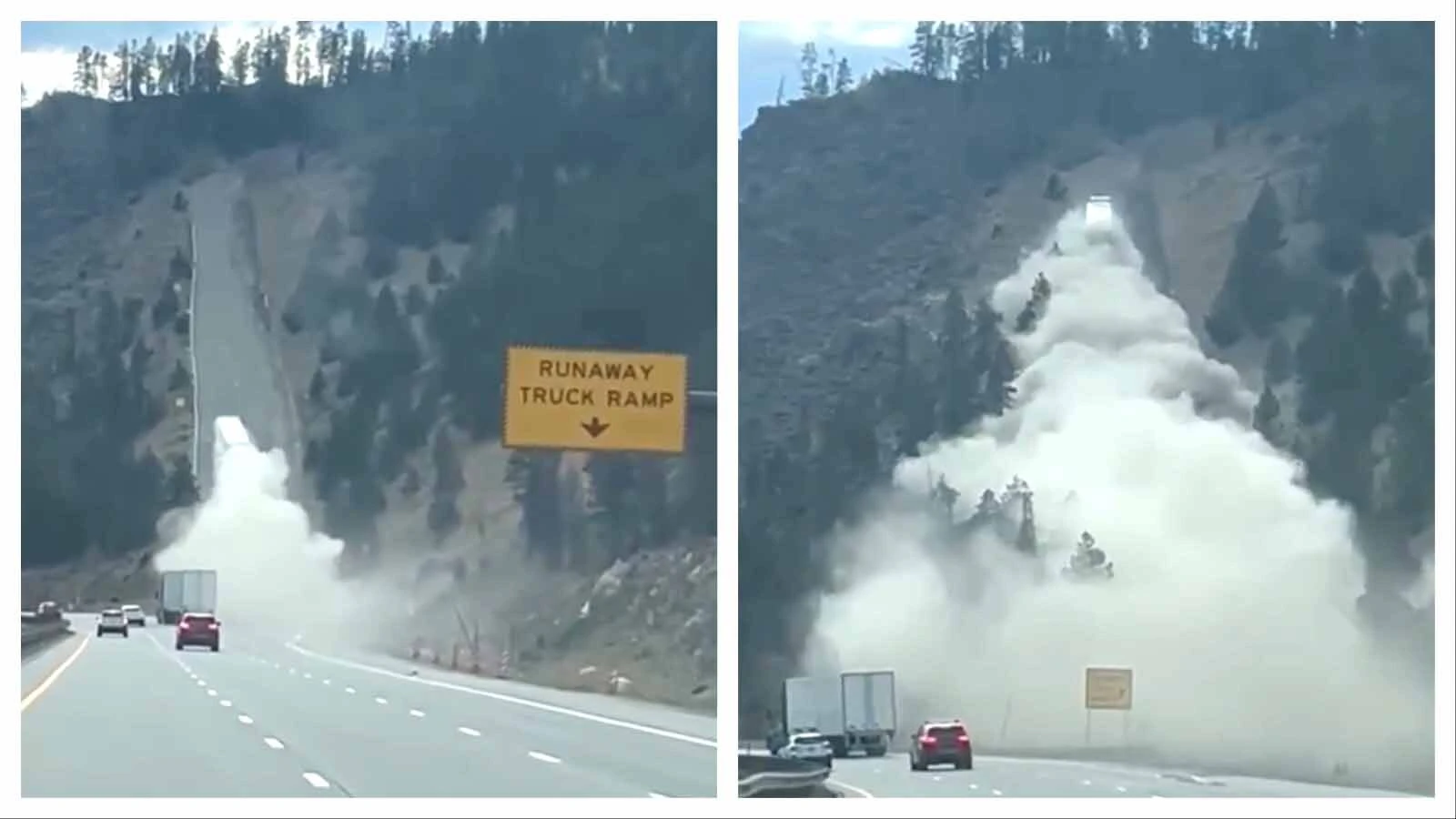
In harrowing dash cam video posted by the Colorado State Patrol last month, the truck was accelerating out of control when it steered into a runaway truck ramp.
Connor Storer was coming down Eisenhower Pass when he captured the semitruck ahead of him with his dash cam.
The brakes weren’t enough to stop it, as indicated by the small cloud of smoke at the rear of the trailer.
The driver steered the truck toward the runaway truck ramp on the right shoulder of I-70, churning up a huge cloud of dust as it careened uphill.
The semi nearly reached the crest of the ridge before losing momentum and stopping in the gravel at the top of the runaway ramp.
In a terrifying moment for everyone on Eisenhower Pass, the runaway truck ramp worked perfectly.
“Wow, that’s impressive, isn’t it?” Abels said about how the truck needed the entire runaway ramp to come to a stop. “Looks like that guy was hauling it when he hit the ramp.
“Good thing it was there and he took it.”
‘Very Dramatic’
Bob Hammond, resident engineer for the Wyoming Department of Transportation (WYDOT) in Jackson, saw the video of the runaway truck on I-70.
“It was very dramatic,” he told Cowboy State Daily. “I don’t know if anybody got hurt, but hopefully everyone is OK.”
Hammond explained that the Eisenhower Pass runaway truck ramp is a gravel arrester bed. It’s an effective piece of highway infrastructure designed to gradually reduce the speed of runaway vehicles.
“The whole purpose is to use rounded, pebble-sized gravel that tires will sink into,” he said. “As the tires and the bottom of the vehicle rub and push a bunch of rock, the friction stops the vehicle.”
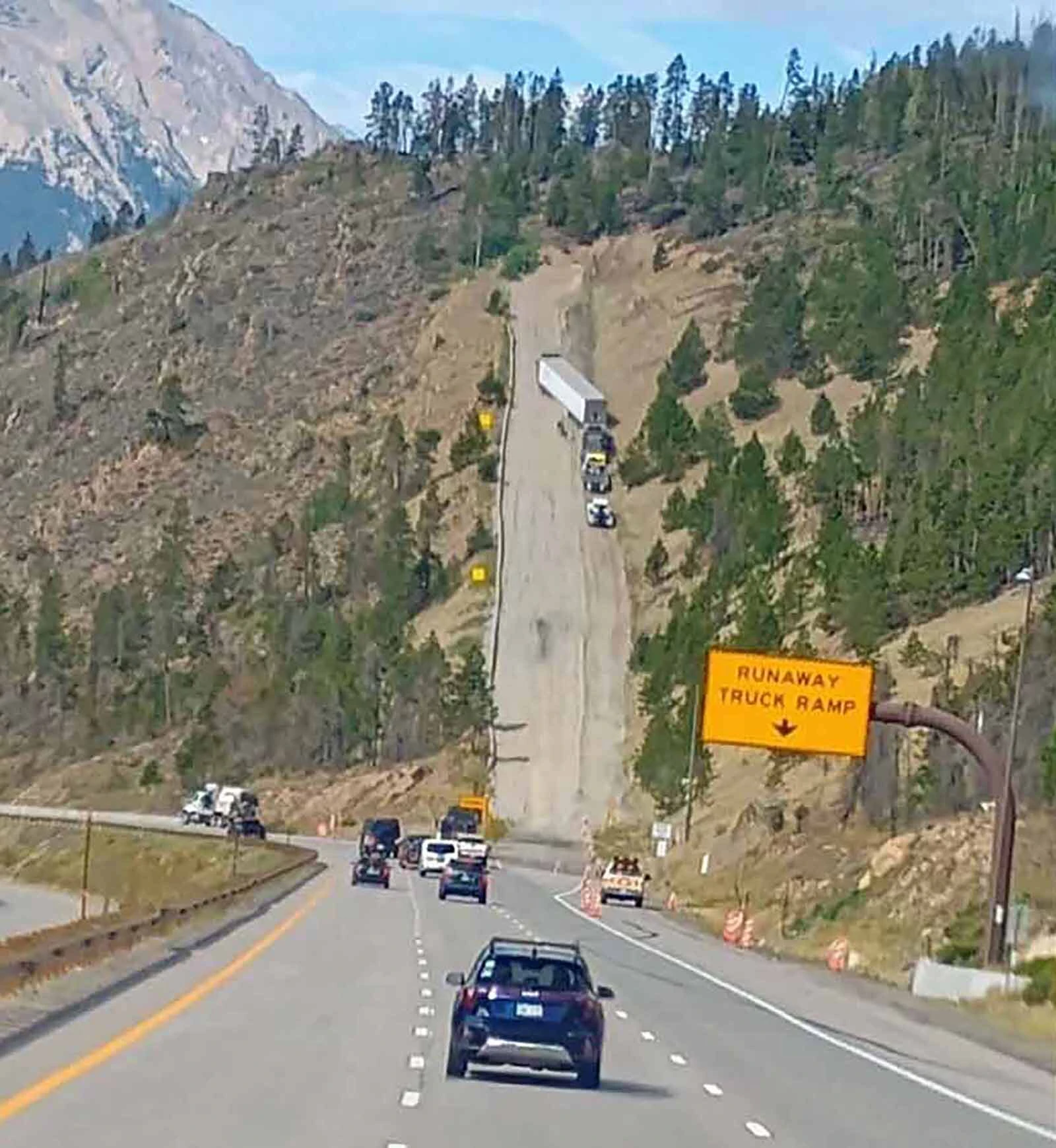
A gravel arrester bed is more than a gravel-covered road. Hammond said that most arrestors are 700 to 1,800 feet long and filled with 3 to 4 feet of rounded gravel.
Many gravel arrester beds are built uphill on mountain passes. This lets gravity slow a vehicle further so the arrester ramp doesn’t need to be as long.
A 2023 study published in the journal Transportation Research Procedia found that gravel arresters can bring a vehicle to a complete stop in as little as 150 feet, depending on weight and whether the driver is or isn't braking.
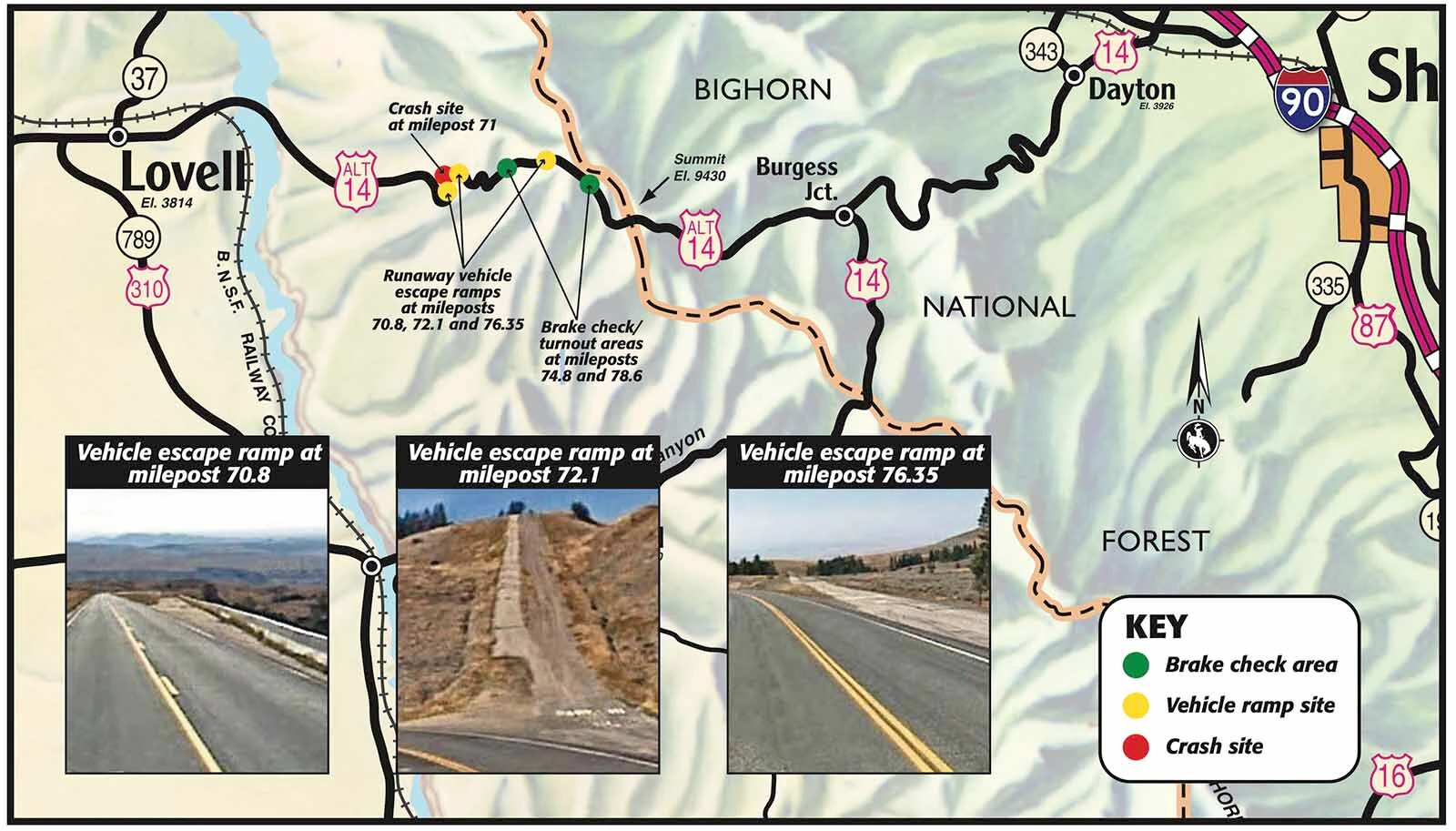
Hammond said WYDOT has several gravel arrester beds along Wyoming’s mountain passes. Despite being more than 50 years old, they remain effective and easy to maintain.
"They're very effective," he said.
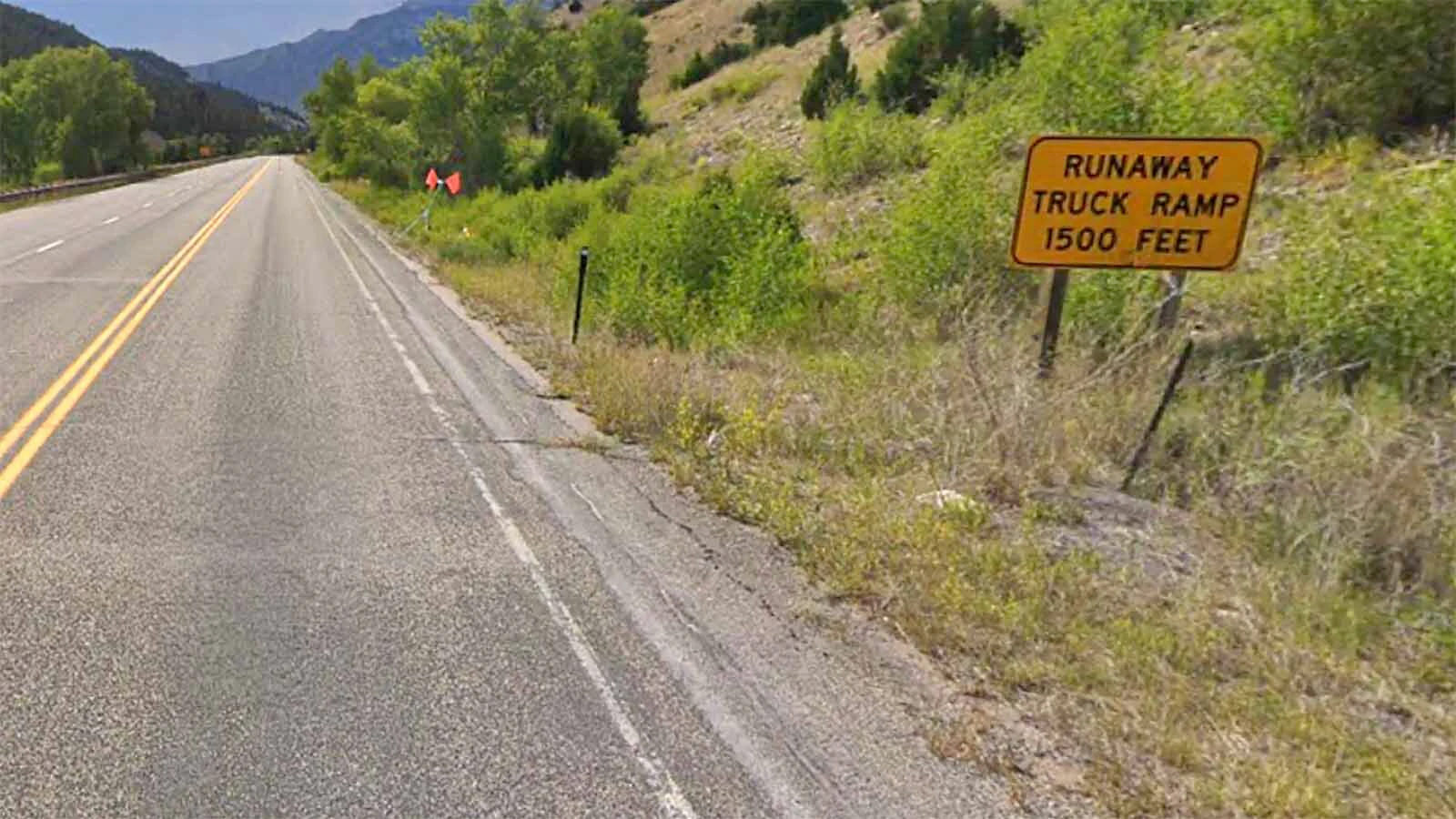
There are runaway ramps along U.S. Highway 14A between Lovell and Burgess Junction and on U.S. 14 east of Shell Falls.
Going Down
Gravel arrester beds are effective for runaway vehicles traveling uphill or downhill, according to WYDOT.
However, that orientation comes with logistical challenges that factor into their design and construction.
“For an uphill arrester, you could probably put in something that's only 700 feet long to have the truck stopped,” Hammond said. “For a truck of the same weight and speed, a downhill arrester could be as long as 1,800 feet.”
Hammond said that most gravel bed arresters are built where the ramp can “peel away” from the main highway.
That’s a safety precaution, as it not only gets the runaway vehicle away from other vehicles but also reduces the risk of rock and dust getting thrown onto the roadway.
“There's often rock that gets sprayed out of a gravel arrester as the truck sinks in,” he said. “The trucks shoot rock ahead and behind, so you don't want (the arrester) to be next to the highway.”
Finding a suitable location for a gravel arrester bed can be tricky.
A 700-foot pit of gravel adds significant weight to the landscape. If you build an arrester along an incline prone to landslides, it can worsen instability and create more problems.
Many arresters require retaining walls to be effective, which adds to the difficulty and cost of construction once an ideal spot is determined.
“You try to fit arresters in a zone where someone can see it, have time to react to it, and use it,” Hammond said. “That means you’re more limited to what the terrain is doing and what's available to you.”
Nothing But Net
Another arrester type that has become more common in recent years is the catch-net system.
Hammond said catch-net systems use between eight and 10 spools of metal ribbon that absorb a runaway vehicle's energy.
“It takes energy to pull that ribbon out of the spool,” he said. “As that ribbon is pulled out, it absorbs energy, and a series of nets can stop a vehicle.”
Catch-net systems are becoming a more common option for downhill arrester ramps. They are just as safe and effective as gravel arrestors, but don’t need to be as long.
“You can stop a vehicle in a much shorter distance than if it were in a downhill gravel arrester,” Hammond said. “A 500-foot catch-net system can accomplish what would take an 1,800-foot downhill gravel arrester.”
Hammond oversaw the construction of a downhill catch-net system on Teton Pass in 2017. Since then, it’s been used at least 10 times.
A similar catch-net system was built adjacent to the northbound lane of I-25, at a spot called "Deadman's Curve" heading into Buffalo. That system has also been used many times since its construction.

Best Of Both
Gravel arresters and catch-net systems have advantages and disadvantages. That’s why WYDOT uses both.
After they’re used, both arrester types need maintenance to stay effective.
“Gravel arresters need a piece of equipment with low ground pressure to smooth out the gravel,” Hammond said. “Every time a catch-net system is used, the nets and metal spools have to be replaced.”
WYDOT keeps two full catch-net systems in reserve. That enables the agency to install a new system within a few hours of use.
For WYDOT, building more arrester systems is an ongoing discussion. This is especially true for areas prone to more runaway vehicles.
“We have a desire to put in additional catch-net arresters in the Teton Pass area,” Hammond said. “We've promised we would do some additional review for traffic before we finalize a site for an additional arrester.”
Because catch-net systems are just as effective as gravel-bed arresters while requiring much less space, the recent arresters WYDOT has built have been catch-net systems.
“It’s a little bit easier to figure out where you put them because they're a lot shorter,” Hammond said.
There’s always the option for more gravel-bed arresters, especially in areas where there’s a risk of uphill runaways, like what happened on Colorado’s Eisenhower Pass. However, Hammond believes that could be a tall order.
“WYDOT’s gravel arresters were put in when the mountain passes were built, long before my time,” he said. “The last one built in my area was back in probably the early '70s when Teton Pass was originally built.”
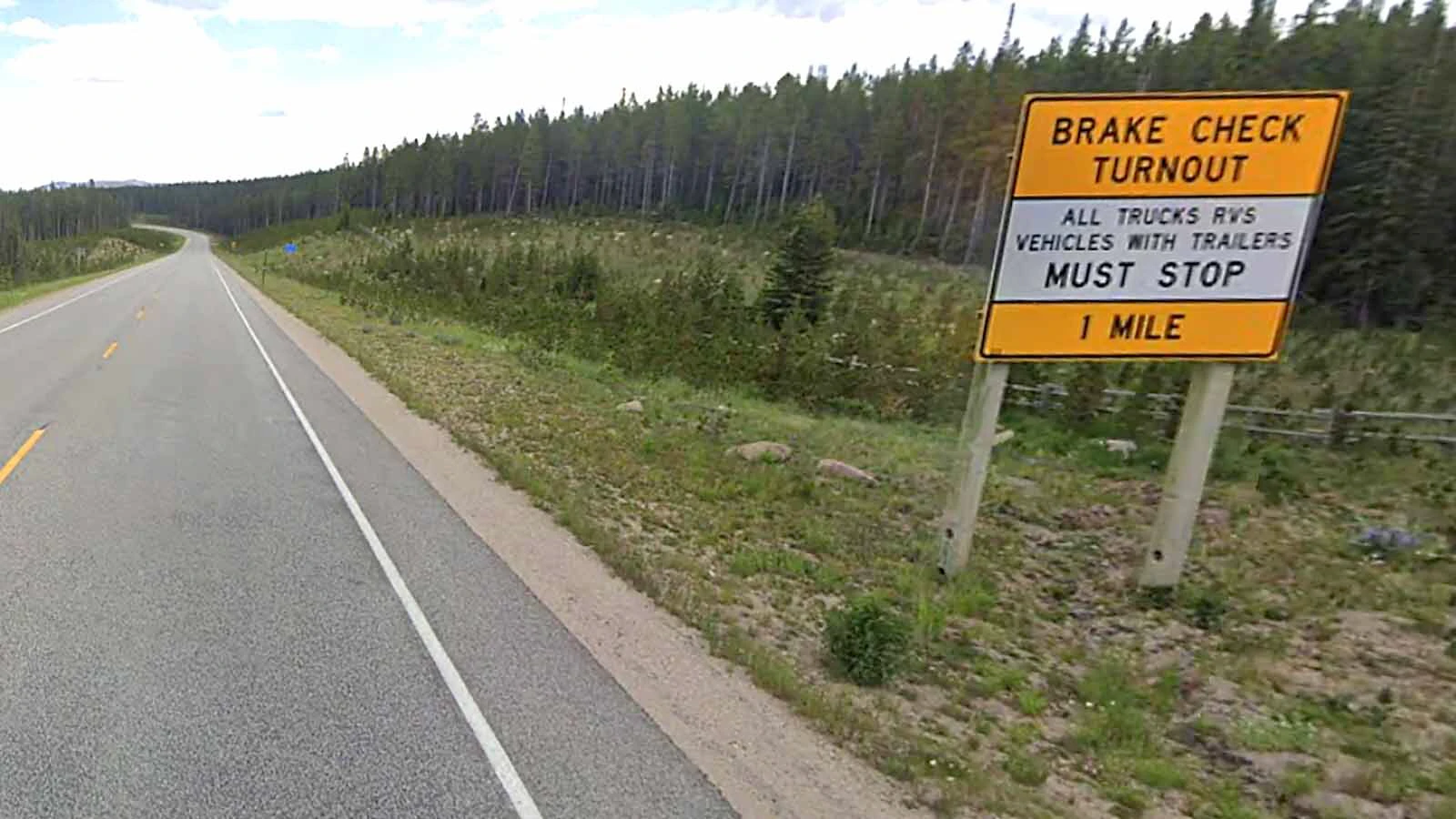
Arresters Save Lives
Wyoming’s arrester ramps aren’t just for runaway semitrucks. They’re for every driver’s benefit and safety.
“Gravel arresters and catch-net systems will work for every type of vehicle,” Hammond said. “We’ve had pickup trucks and other vehicles use them, and it’s not a problem for either. The only vehicles we don’t recommend for either arrester are motorcycles.”
For Hammond, arresters have consistently proven themselves to be life-saving tools. He’s seen it routinely on Teton Pass.
“There's a bike path that's adjacent to the highway on Teton Pass, and we’ve had vehicles that have crashed going into Wilson,” he said. “We want to make sure that we can protect drivers, oncoming traffic, and other users who are there as well.
“The catch-net system on Teton Pass has helped us do that.”
That’s why more catch-net systems and gravel-bed arresters are always options for any WYDOT project along Wyoming’s mountain passes. If there’s a risk and a need, an arrester can save lives.
“If an arrester's needed and we feel it would be effective, then we’re saving the lives of the driver and any other people on the highway,” Hammond said. “With the right system in the right location, they’re very good at what they do.”

It’s Still On The Driver
The one thing that’s universal for whatever safety solution a driver may need is using it.
The driver of a dump truck that lost its brakes on Teton Pass on July 7 passed up opportunities to stop, including a runaway vehicle escape ramp shortly before plowing through a string of vehicles, killing two people, the Wyoming Highway Patrol reported.
That driver has been charged with two misdemeanor counts of homicide by vehicle.
Talton makes a face when those types of crashes are called “accidents,” because driver error is the main cause of truckers needing to use runaway truck ramps.
And situations are made worse when they bypass a truck ramp or catch-net system when available, he said.
“You come down I-70 and you get some of those (trucks) with drum brakes that can go out, then there’s nothing you can do once your brakes are gone,” Talton said.
He added that drivers who pay attention and anticipate steep mountain grades can most of the time adjust and drive accordingly so their brakes don’t fail.
“I blame automatic transmissions for it, because people think you don’t have to pay attention to the steep grades and stuff,” Talton said. “You just think the automatic transmission will take care of it.”
Then there are those like the driver of the dump truck accused of causing that Teton Pass crash who deliberately won’t take a runaway ramp, Talton said.
“A lot of guys are scared to use the off-ramps because you have to pay for that,” he said. “You have to pay for the damage to the truck, you have to pay to have the truck removed (from the gravel).
“A lot of guys don’t want to pay for that, so it makes them not want to use it.”
Greg Johnson can be reached at greg@cowboystatedaily.com and Andrew Rossi can be reached at arossi@cowboystatedaily.com.


