
A Cheyenne woman who runs an in-home daycare was allegedly found intoxicated while caring for three young children, slurring her words and struggling with her balance, investigators say.
As Cowboy State Daily reported Monday, her first breath test registered above 0.40% blood alcohol content (BAC), while a second came back at .387 — yet she remained conscious and able to communicate with police.
Most people know 0.08% as the line where it's illegal to drive. Double that, and a person can be severely impaired.
Keep climbing and alcohol can cause unconsciousness, suppress breathing and become deadly. Statistically speaking, that 0.40% level can be deadly.
But a BAC number doesn't always match what people expect to see standing in front of them, nor does it account for the tolerance of some people to alcohol.
Cory Fluharty Meyer, a Wyoming nurse, has seen people unconscious at 0.15%.
She has also seen people over 0.50% still walking and talking.
Different For Everybody
Meyer has been a registered nurse since 2012.
Much of her bedside career has involved psychiatric and behavioral health nursing, including work in Cheyenne Regional Medical Center's inpatient behavioral health unit and emergency department.
She continues to work as a registered nurse at the Cheyenne VA Medical Center, primarily with veterans in residential treatment dealing with PTSD and substance-use issues.
Her full-time job is director of the Learning Support Center at Joyce University, a nursing and health care college.
Meyer estimates about 75% of her bedside nursing career has involved acute psychiatric or mental health care, including substance use.
She has seen a lot of drunk people, some with BACs as high as 0.50% — more than six times Wyoming's 0.08% legal driving limit.
“You could tell they were impaired,” she said, “but you would not necessarily have known that high of a level.”
She's also seen the opposite.
For someone who doesn't drink regularly, Meyer said, a dramatically lower BAC can produce a dramatically worse outward reaction.
She's seen patients brought into an emergency room unconscious with a BAC around 0.15%.
“When I see someone who is functioning, walking, talking, making some level of sense, and they're at blood alcohol levels over .3, that almost always will indicate that there is some level of consistent and high alcohol use going on,” Meyer said. “This is not the occasional binge drinker.”
Former Campbell County Sheriff Byron Oedekoven has seen that phenomenon from the other side of the emergency room doors.
In nearly 40 years in law enforcement, Oedekoven told Cowboy State Daily he remembers encountering two women who registered above 0.40%.
One was driving, "and she was actually doing a pretty good job of driving,” Oedekoven said.
The second woman Oedekoven encountered above 0.40% wasn't driving, but she also was taken to a hospital.
“I saw it twice, so it does happen, but it's unusual that it happens,” he said. “It usually indicates someone is used to consuming alcohol to excess.”
Heavy Drinkers
BAC can tell the concentration of alcohol in a person's bloodstream, but not necessarily the way someone handles that amount of alcohol.
Alcohol depresses the central nervous system.
For someone who doesn't drink often, consuming a large quantity rapidly can overwhelm the brain and body. This is when they start slurring their words and falling out of their chair. Sometimes they vomit.
Others might lose consciousness or experience dangerous respiratory depression — the territory commonly associated with alcohol poisoning.
For those who frequently drink, “Their brain starts building a tolerance to it,” Meyer said.
The nervous system essentially tries to compensate for having a depressant continually present. Over time, a heavy drinker can require more alcohol to produce the same feeling of intoxication.
“It isn't that they aren't having toxicity in their body,” Meyer said. “It's absolutely doing damage to their liver, their brain, their other organs.”
Instead, the outward appearance can become deceptive.
Someone can be dangerously drunk without stumbling or giving obvious signs they've had too much to drink.
Meyer compares it to someone whose blood pressure gradually becomes abnormally high. Eventually, that elevated pressure may begin to feel normal to the person.
The damage can still be happening, but the symptoms aren't announcing it in the same way.
“They may live day to day with an alcohol level that is twice the legal limit,” Meyer said, “and no one around would be able to tell that just by how they acted, because they built that tolerance.”
Danger Zone
Ron Gordon doesn't need a BAC chart to understand how differently people can handle alcohol.
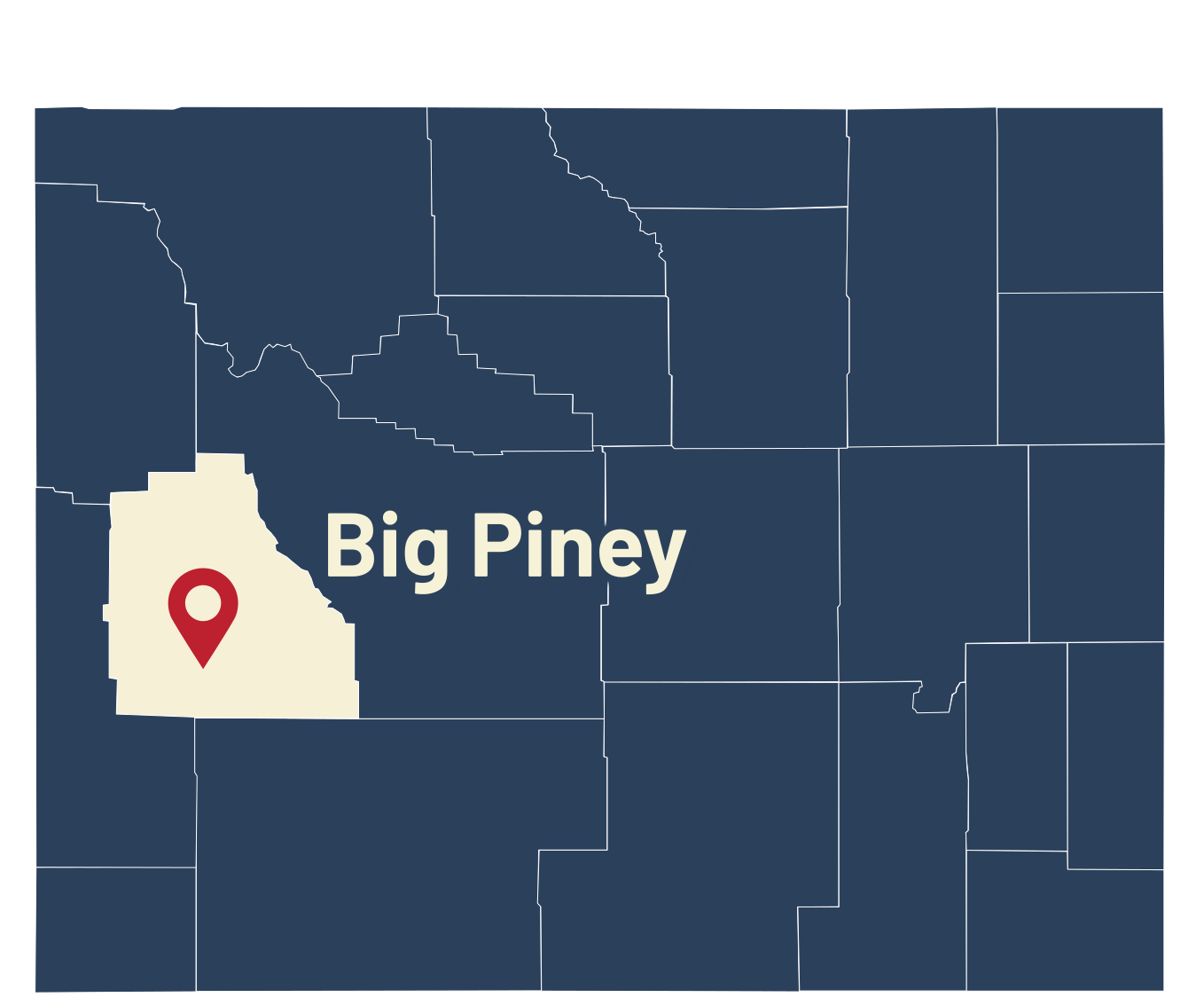
He grew up in Big Piney in the 1950s and 1960s. Gordon remembers alcohol in rural Wyoming as a casual companion to everyday life.
Beer went everywhere.
“When you had brandings, you always drank,” Gordon said. “When we went to the mountains for picnic, there was always beer.”
And at social gatherings?
“If it was before noon, it was coffee, and if it was afternoon, it was beer and whiskey,” he said.
Seeing somebody riding down the road holding a beer didn't raise any eyebrows.
“In fact, it was pretty commonplace,” he said, adding that people didn't regularly drive drunk — but they would throw their kids in the back of the station wagon and crack a few beers on their way to wherever.
Gordon has seen the frightening side, too.
As a teenager, a close family member drank what Gordon remembers as a bottle of Everclear.
The reaction was nothing like the heavy drinkers he remembers being able to consume large amounts while remaining outwardly functional.
The teenager became wildly erratic.
Gordon remembers it taking four people to restrain him so he could be put into an ambulance. He was taken to the Wyoming State Hospital in Evanston and remained there for several days.
Gordon describes it as severe alcohol poisoning.
Meyer said that kind of dramatic reaction illustrates the other end of the spectrum: someone putting far more alcohol into the body than the liver and central nervous system can handle.
That's why two people with identical BACs don't necessarily look identical.
One may be talking, another may be vomiting, and someone else might be unconscious.
At sufficiently high levels, another could die.

Lethal Drinking
For an infrequent drinker, Meyer said she would expect significant impairment at levels far below the extraordinary numbers she's encountered among chronic drinkers.
Someone who rapidly drinks enough to reach 0.15%, for example, may become unconscious or develop respiratory problems.
At around 0.40%, Meyer said, the amount could be lethal for an average person. But a person with severe tolerance may still appear functional at the same number.
That's what makes using behavior alone to judge intoxication so unreliable.
It also makes the phrase “they can really hold their liquor” less reassuring than it sounds.
Being able to drink enormous amounts without passing out may signal that the body has become accustomed to operating with alcohol continually present — and that creates another potentially deadly problem.
That comes when you take the alcohol away.
Meyer said withdrawal symptoms in chronic heavy drinkers commonly begin within roughly 24 hours of the last drink. The most dangerous period can stretch for several days, and she has seen symptoms persist for as long as a week.
“Alcohol withdrawal absolutely can be deadly for a chronic user,” she said.
It is among the substance withdrawals that can require medical detoxification.
Wyoming Drinks
The latest federal National Survey on Drug Use and Health estimates show alcohol use remains widespread in Wyoming.
SAMHSA's 2023-24 state data estimates 10.8% of Wyoming residents ages 12 and older met the criteria for alcohol use disorder during the previous year. Among Wyoming adults, the estimate was 11.57% — roughly one in nine.
And alcohol continues to show up on Wyoming highways.
WYDOT counted 622 alcohol-involved crashes in 2024: 25 fatal crashes, 226 injury crashes and 371 property-damage-only crashes.
Those crashes killed 26 people and hurt 306.
Although that's a substantial toll, it has been declining. Wyoming recorded 765 alcohol-involved crashes and 38 alcohol-related traffic fatalities in 2020.
Those numbers also put Meyer's extreme ER experiences — and a daycare provider allegedly registering above 0.40% — into perspective.
Meyer said there's another complication.
The person whose judgment is being impaired by alcohol is often the same person deciding whether they're too impaired to keep drinking, drive home or do something else they shouldn't.
“We, as humans, tend to overestimate our own capabilities,” Meyer said. “Then you add in impaired judgment, and instead of thinking, ‘Maybe I'm not fine,’ you think, ‘I'm fine.’”
Kolby Fedore can be reached at kolby@cowboystatedaily.com.


