
Wyoming is fortunate to have resources most states would envy.
Decades of mineral production, conservative budgeting and disciplined saving have built substantial reserves and permanent funds.
Their investment earnings help Wyoming maintain a low-tax environment and weather the ups and downs of an economy tied closely to natural resource development.
That success presents a temptation: If Wyoming has the money, why not use state dollars to replace local property taxes?
As legislators, we believe property tax relief is important. The Legislature has already enacted significant relief for Wyoming homeowners.
But there is an important difference between reducing taxes and simply sending the bill somewhere else.
That distinction matters as voters consider Proposition 1, which would cut residential property taxes for qualifying primary homeowners by 50 percent.
Some proponents suggest the state can simply "backfill" the resulting losses to schools, counties, cities and special districts.
There is nothing simple – or particularly conservative – about that.
First, a state backfill isn't tax relief. It is a tax shift.
Property taxes pay for local priorities.
State revenues come disproportionately from mineral production, sales taxes and earnings on savings accumulated over generations.
Replacing local property taxes with state revenue means taxpayers and industries in one part of Wyoming increasingly pay for services and taxing decisions somewhere else.
Proponents of Proposition 1 frequently cast their position as the fiscally conservative one.
But there is nothing conservative about cutting one person's tax and sending the bill to somebody else.
There is nothing conservative about separating spending decisions from the people responsible for paying for them.
And there is certainly nothing conservative about consuming state wealth accumulated by previous generations so today's taxpayers can avoid paying the full cost of today's services.
Governor Mark Gordon made essentially this point when he vetoed a property tax bill in 2024, warning against property tax relief that comes at the expense of other taxpayers and increases Wyoming's dependence on volatile mineral and sales-tax revenues.
Second, backfill weakens local accountability.
One virtue of Wyoming's property tax system is its transparency.
County commissioners, school boards and special districts make spending decisions close to home, and most mill levies are approved directly by local voters.
That creates a healthy tension: What services do we want, and what are we willing to pay for them?
State backfill breaks that connection. If Cheyenne replaces every dollar a local government loses, what incentive remains to control spending or resist additional taxation?
State backfill doesn't eliminate the cost of local government. It socializes it, turning a local obligation into a statewide one.
That isn't how Wyoming works. We are not trust funders.
We don't believe somebody else should perpetually pick up our tab.
Wyoming's tax system should reflect the same values we expect from our families and communities: local responsibility, accountability and living within our means.
A system in which local governments make spending decisions while the state treasury increasingly pays the bill undermines every one of those principles.
Finally, Wyoming's savings are not free money.
They are an inheritance built largely from finite mineral resources.
Today, investment earnings from state savings provide more than one-third of the revenue Wyoming relies upon to fund the services and obligations its citizens expect.
Using that wealth to replace local property taxes comes with a cost.
Coal, oil and natural gas will not support Wyoming's treasury forever.
If we consume more investment earnings to replace local revenues, eventually somebody must make up the difference.
That could mean higher sales taxes, greater burdens on existing industries, reduced services or spending resources intended for future generations. That is not conservative tax policy.
We should provide thoughtful tax relief, protect homeowners from being taxed out of their homes and demand efficiency from every level of government.
But we should also preserve one of Wyoming's most important principles: local decisions should carry local responsibility.
Proposition 1 moves us in the opposite direction. Voters should make their decision understanding clearly what will, and will not, happen afterward.
A vote for Proposition 1 is a vote to reduce property taxes we pay to support local services.
Voting to reduce local revenue does not come with a promise that the legislature will replace it.
Rather, local governments and local voters will have to make those hard decisions about priorities, spending and services based on the revenues available to them.
That may be a difficult conversation. But it is an honest one.
There is no such thing as a free backfill.
Sincerely,
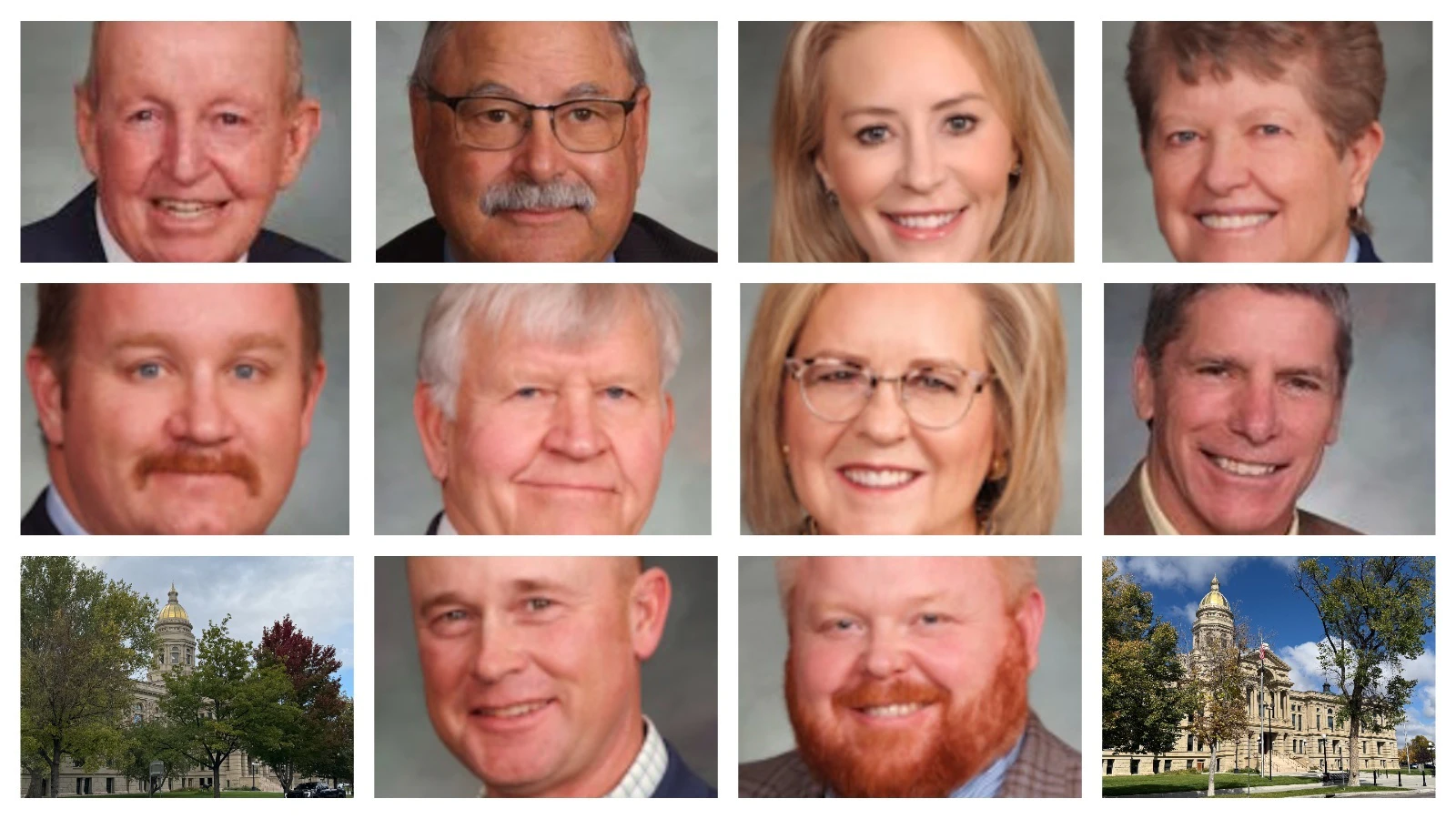
Senator Ed Cooper, Senate District 20
Senator Ogden Driskill, Senate District 1
Senator Tara Nethercott, Senate District 4
Senator Wendy Schuler, Senate District 15
Representative Andrew Byron, House District 22
Representative Lloyd Larsen, House District 54
Representative Martha Lawley, House District 27
Representative Bob Nicholas, House District 7
Representative JD Williams, House District 2
Representative Cody Wylie, House District 39


