
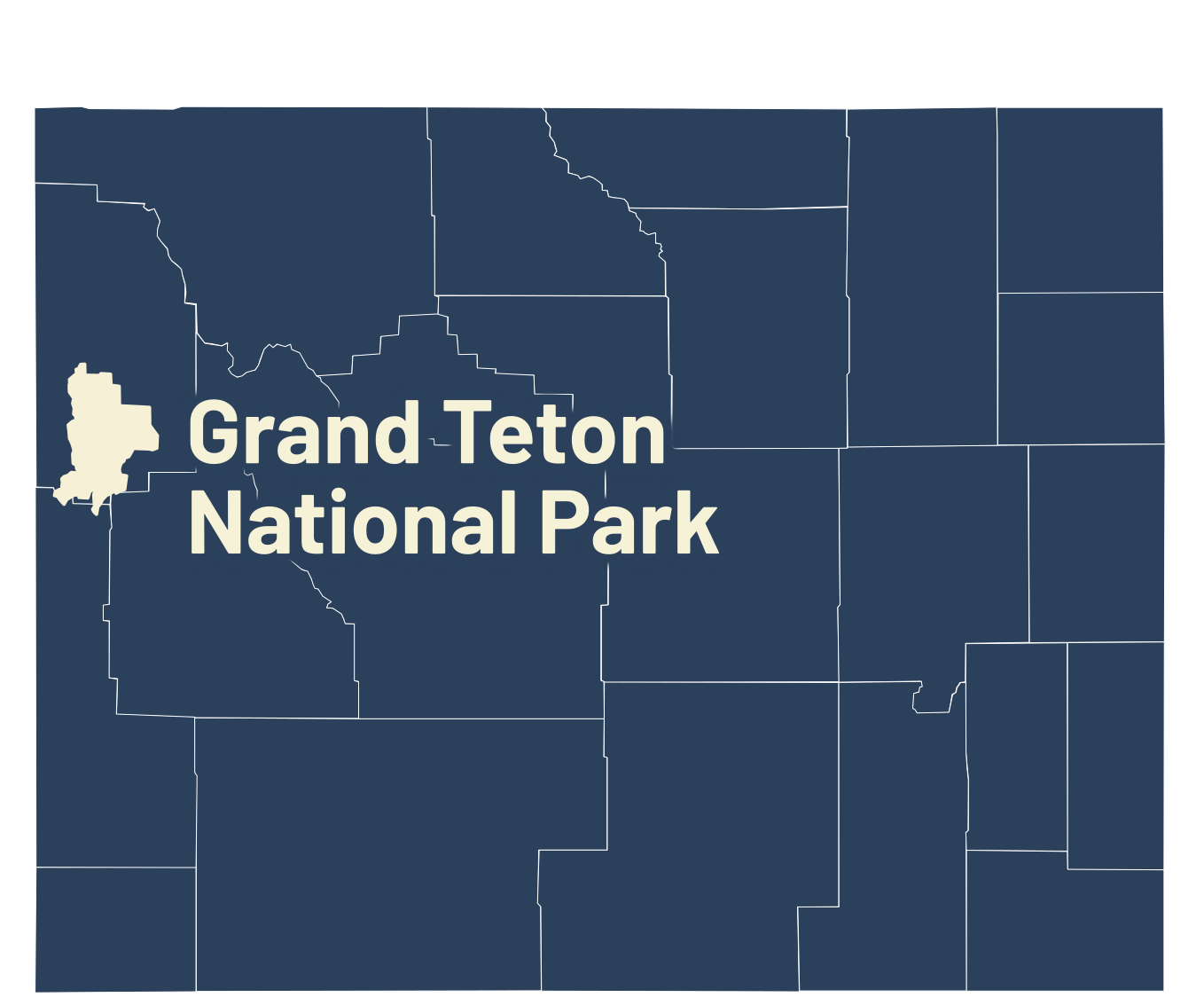
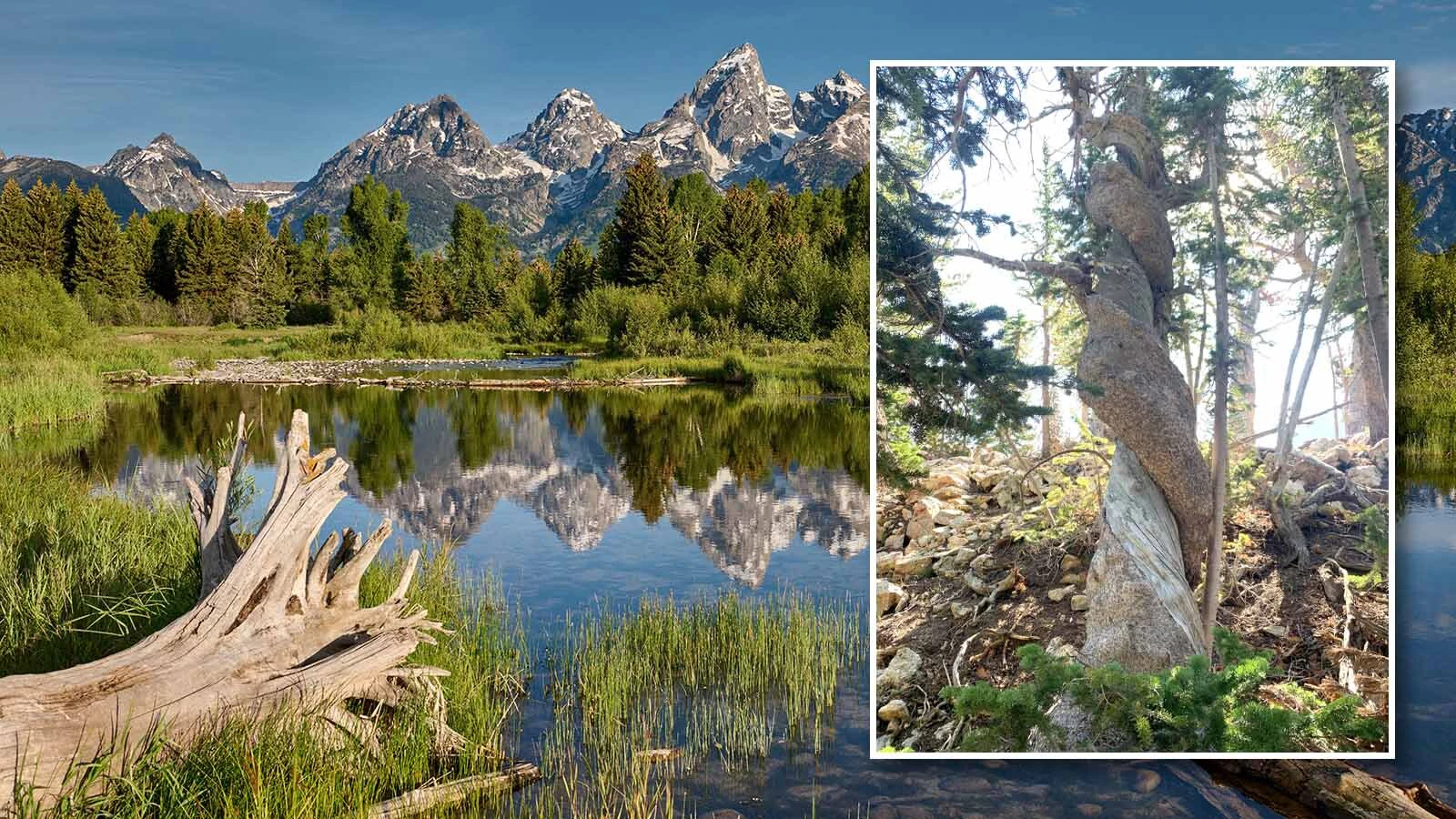
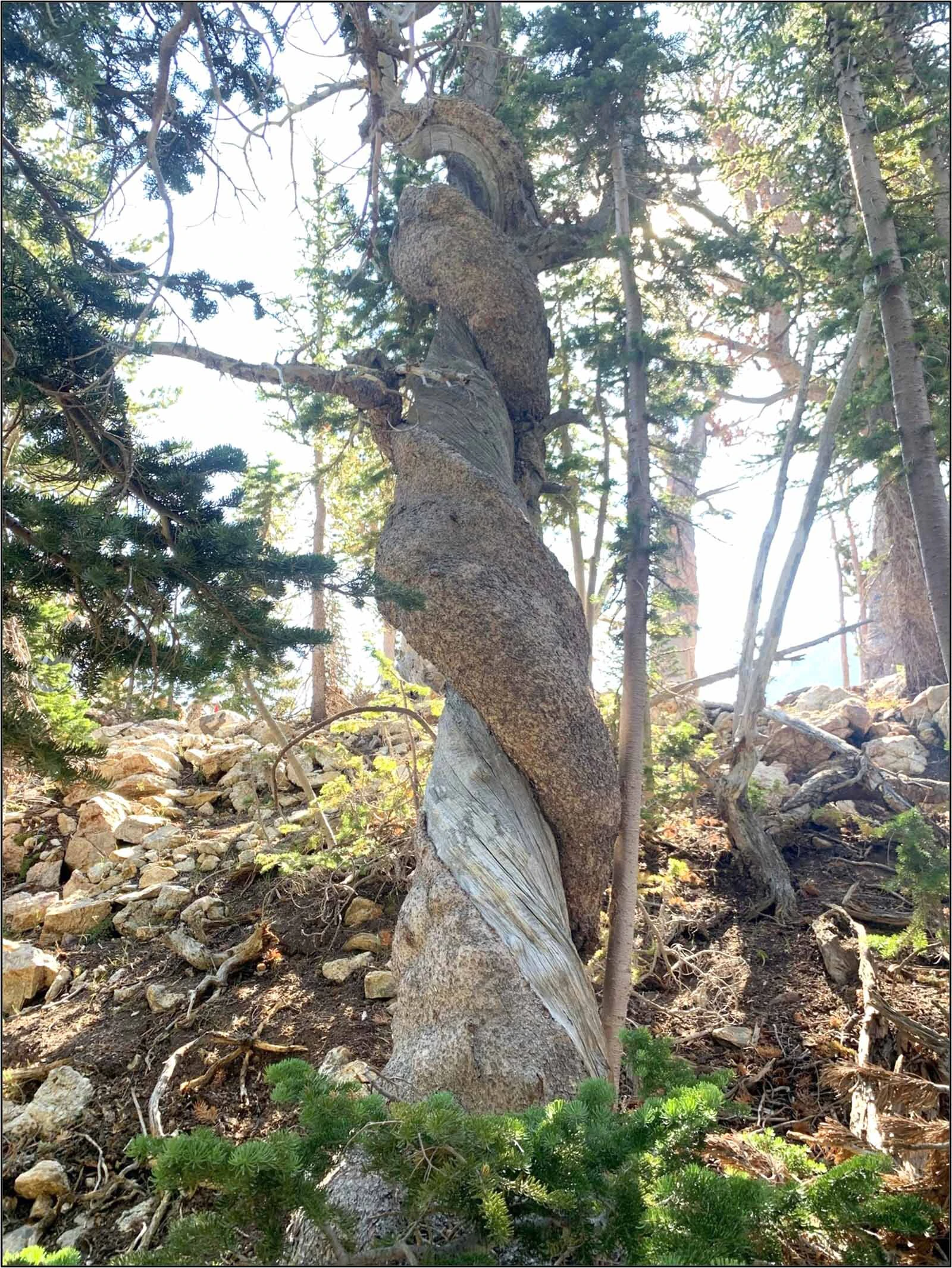
Researchers from the University of Wyoming have found the world’s oldest whitebark pine tree in Grand Teton National Park. The incredibly old tree survived on the eastern slopes of the Tetons for 1,289 years.
Sara Germain, an assistant professor in the Department of Botany at the University of Wyoming, and Ph.D. student Jared Friedman were as ecstatic as they were discouraged.
“I’m very honored and excited that we found the oldest whitebark on record, but it is unfortunately dead,” Friedman told Cowboy State Daily. “It’s definitely a double-edged sword.”
Now that they’ve found the oldest known whitebark pine, Friedman and Germain hope they can help save even older living whitebarks struggling to survive.
“Every tree has its limit, and that limit is becoming easier and easier to hit these days,” Germain said.
The Oldest Whitebark
Friedman and Germain published their findings in a new paper, “Increasingly synchronous water limitation portends resilience declines for whitebark pine,” published in the journal Dendrochronologia.
Friedman found the nearly 30-foot-tall tree among a stand of whitebark pines in Paintbrush Canyon, between Mounts St. John and Moran in the Tetons. He could immediately tell that it was dead but had died recently.
“I actually saw there were one or two brown needles dangling from the top of the tree,” he said. “It was visual evidence that this tree had just died. I really wish I could have seen it alive.”
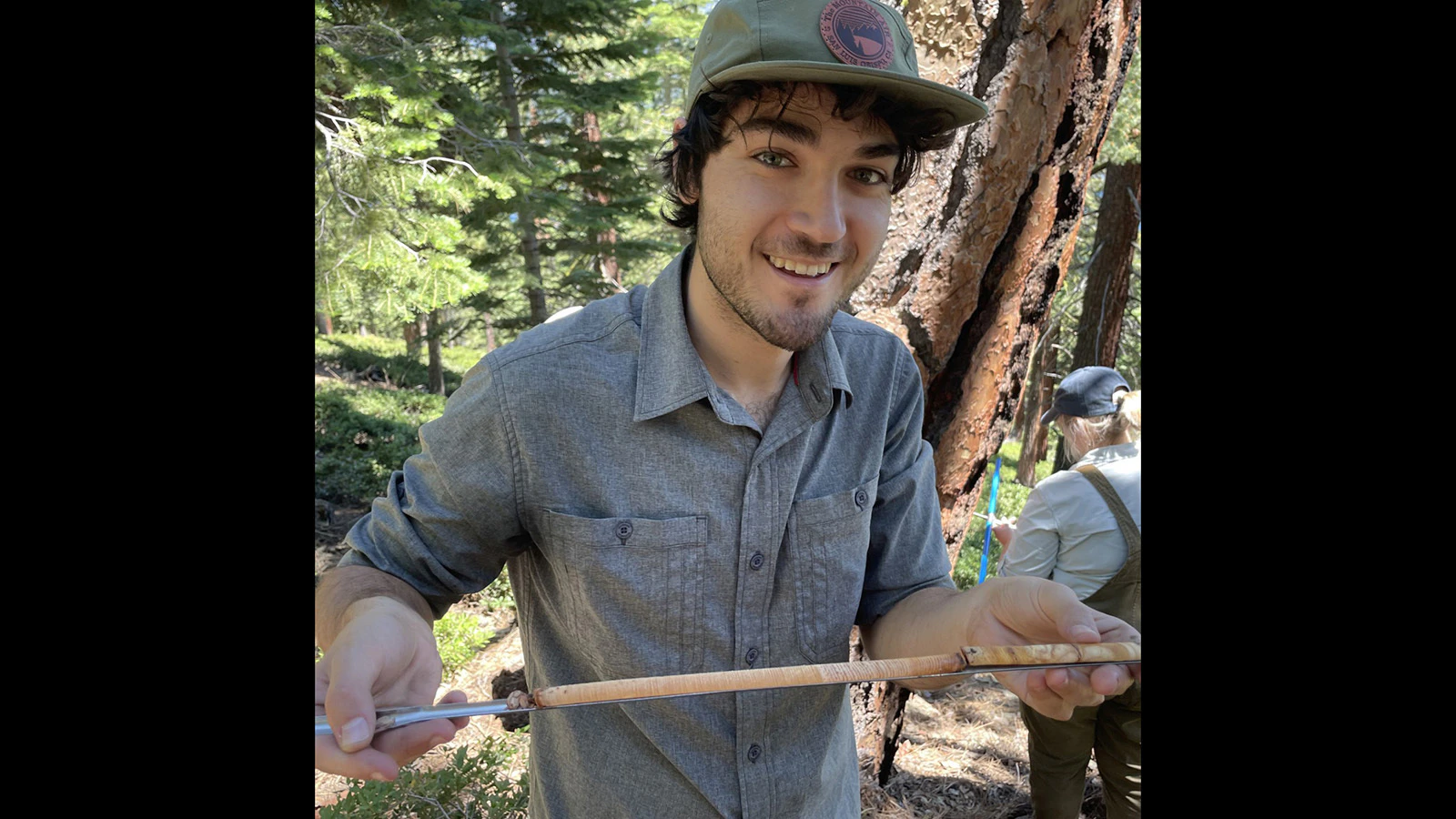
Friedman drilled a small hole into the tree to extract a core. He could use it to study the tree rings, which would, among many things, provide an approximate age.
“The current state of tree-ring science is not just counting the rings, but also measuring each individual ring’s width,” he said. “It’s like building a barcode of tree rings, looking at the variations year to year, and lining that up with climate data and other factors over time.”
Friedman counted 1,275 tree rings from the core sample. Using a model to account for the missing rings he couldn't collect, from the center of the tree, he estimated a total of 1,289 years.
That placed the tree’s lifespan from 748 to 2024 CE. This whitebark pine sprouted in Wyoming the same year that Charlemagne is believed to have been born in France.
“It was a dream-come-true finding for me,” Friedman said.
By Design
Finding the oldest-known whitebark pine was a surprise, but not an accident. Germain had specifically selected the stand of whitebarks in Paintbrush Canyon for her ongoing work.
“We have a network of permanent forest monitoring sites in the Tetons, where we're examining changes in forest health and dynamics, both across an elevational gradient and over time,” she said. “I spent the better part of two summers hiking around in the Tetons, trying to identify the perfect location for the study site.”
By visiting these sites every year, Germain and her colleagues can study what’s harming and hampering whitebark pines, a species facing serious conservation threats.
Germain immediately recognized the whitebark pines in Paintbrush Canyon were perfect.
“I chose this study site because I could tell the forest was very old, but I was also looking for primary forests that had never been logged or burned, at a high elevation,” she said. “Those trees have been around for over 1,000 years, apparently, and that can teach us a lot about how forests are changing.”
Germain expected this whitebark pine to be old, but not that old.
“I was looking for old trees, and at the same time was flabbergasted to learn that we had found the very oldest whitebark pine,” she said. “That was a really cool finding, even though it was in part by design.”
Terrible Trifecta
Whitebark pines are a critical species in the high-elevation environments of the Greater Yellowstone Ecosystem. They stabilize snowpack, provide shelter for wildlife, and their nuts are a critical food source for bears, squirrels, and the specially adapted Clark’s nutcracker.
The whitebark pine is also on the International Union for Conservation of Nature’s Red List of Threatened Species as an endangered species. Germain and Friedman are cognizant of that status.
“Whitebarks face this trifecta of threats right now that are the cause of a lot of the mortality,” Friedman said.
That trifecta is warmer climates, mountain pine beetles, and white pine blister rust.
Warmer climates mean less snow and spring runoff in the high-elevation environments where whitebark pines grow.
Mountain pine beetles are native to North America, but a warmer climate has caused a population boom. That’s led to large swaths of dead and dying trees in Grand Teton and Yellowstone national parks.
Then there’s white pine blister rust, a non-native fungal disease.
“The population boom of the mountain pine beetle is like a direct consequence of warming subalpine environments,” Germain said. “At the same time, the vulnerability of these trees to being killed by pine beetles is way higher than it's ever been in the past because of white pine blister rust.
That’s where Friedman’s tree ring research is so critical. The different-sized rings revealed how this 1,289-year-old whitebark responded to changes in climate, weather, and other stressors over time.
According to Germain, it’s not a pretty picture.
“We're seeing more stress in these trees than they've ever exhibited in the past,” she said. “Not only are things getting warmer in these subalpine environments, but the trees are feeling it, and they are not liking it.”
Not even the ancient whitebark pine could endure the current onslaught. Beetles killed it in 2024, which makes it even more interesting to Germain.
“Even the oldest whitebark pine, that's put up with all of these different stressors over its lifetime, couldn't put up with what we're throwing at it in the modern day,” she said.
Death Delights To Help The Living
Friedman and Germain learned the age of the whitebark pine because it was dead. They’d never do such an invasive procedure to a living whitebark pine.
Other dead whitebarks nearby were similarly sampled and found to be 200 to 300 years younger. Why did this tree endure for so long?
“There are a whole host of reasons that this tree could have survived longer than other trees in the stand,’ Friedman said. “Some of my current research is investigating the specific mechanism for this tree's age, relating to water resources and competition.”
Both scientists believe this tree might not be the oldest whitebark pine in the world, let alone in Paintbrush Canyon. Living whitebarks in the area could be even older.
“I wouldn't even be shocked if some of the trees in our research plot that are living are older than this one, but we don't want to put a hole in a living tree that's already facing all of these biotic threats,” Friedman said.
Understanding how these trees live and die is critical to their conservation.
Germain was surprised to see these high-elevation trees struggling because of water limitations. The finding is consistent with similar research of whitebark pines in other locations like the Sierra Nevadas.
“We would not expect whitebark trees to be facing water limitation at these really high elevations, but they are showing evidence of doing so now, and that is potentially predisposing these trees to being killed by beetles,” she said. “It’s quite an unexpected finding.”
The 1,289-year-old whitebark will continue revealing secrets to the future success of the species.
Friedman said he’ll be doing chemical analyses of the tree’s wood, looking for stable isotopes and cellular variation as evidence of how the tree survived and adapted over time.
“You're going back in time with tree rings,” he said. “You can build these really long records of climate and how it fluctuated, and you can use those to model how trees will respond going forward.”
Organizations such as the National Park Service and the White Bark Pine Ecosystem Foundation are taking measures to make whitebark pines more resilient. Scientists have cultivated seeds with genomes resistant to white pine blister rust, and they can coat living trees with pheromones that deter beetles.
Still, whitebark pines grow slowly, and water limitations in the mountains are beyond any organization's control. Even if they can replace the ancient, mature trees, Germain wants to keep as many of the ancient ones alive.
“Managers are doing an excellent job preventing mortality and restoring forests that have died off, but protecting these old trees from dying is one of the most important things we can do right now,” she said. “They might hold secrets to regenerate the forests of the future, so keeping those around is really important.”
Ancient Beings
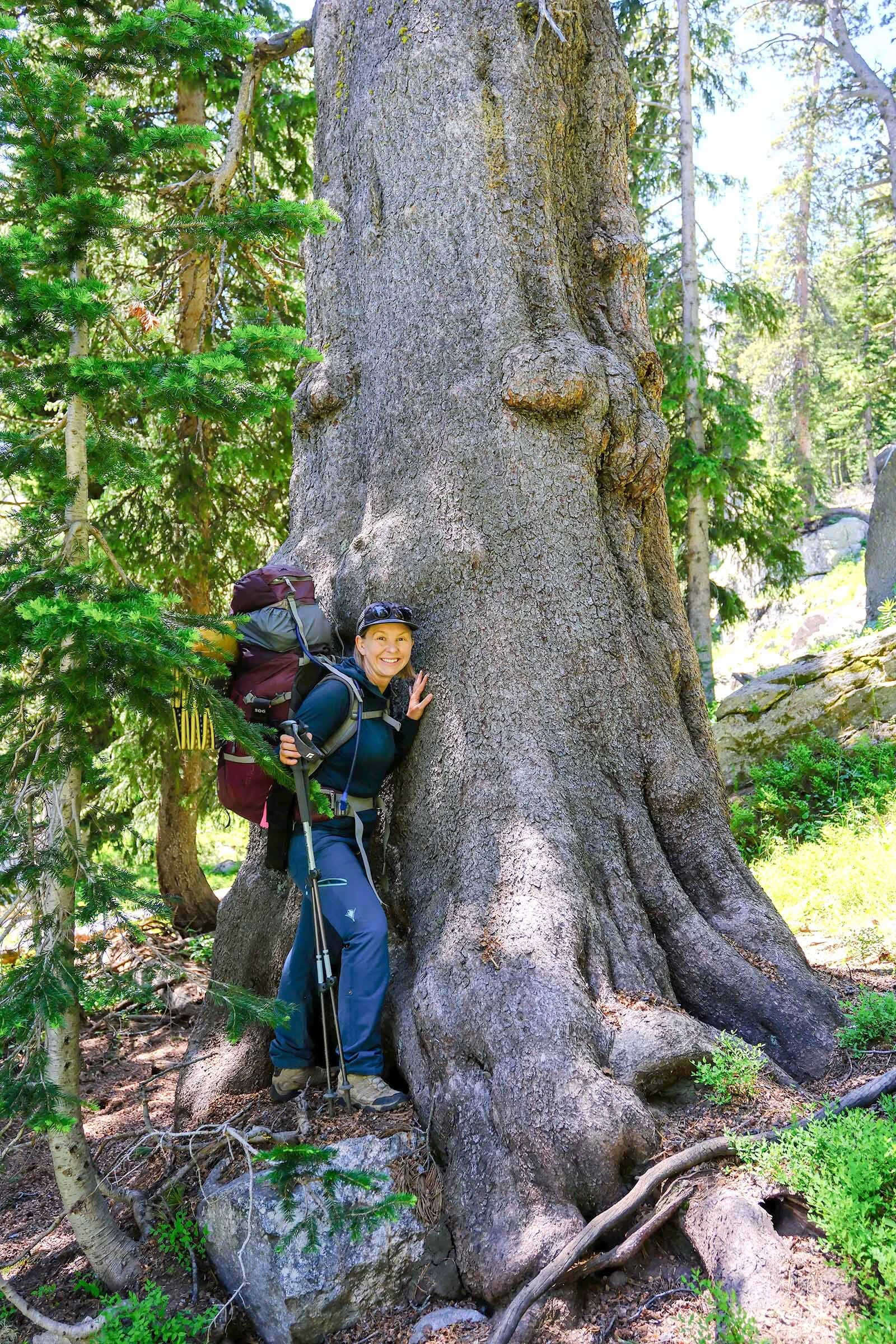
Friedman and Germain will return to Paintbrush Canyon to continue their research on whitebark pines. For that reason, they hope the location of the world’s oldest whitebark pine won’t get out.
“Ideally, we don't want people going to the site,” Friedman said. “It's an active area of research, and there are a lot of living trees there, so that extra disturbance is not ideal.”
That’s not to mention the jokes they’ve heard about the tree being cut down to build the temporary baseball stadium Major League Baseball briefly considered in Grand Teton National Park.
Both Friedman and Germain are excited about the world’s reaction to their 1,289-year-old whitebark pine. They hope that will cajole others to recognizing the importance of these trees, the threats they face, and the efforts being taken to save whitebark pine from extinction.
Germain said she remains optimistic despite the serious challenges revealed by this research. If whitebark pines disappear, their loss will be felt.
“Human beings are reliant on other species, including, and especially, these high-elevation trees,” she said. “These trees are the reason we have clean water. They are the reason we have clean air. As these forests are declining, it's impacting us in a meaningful way.”
Finding the world’s oldest whitebark pine will be a career highlight, but it was also a moment for contemplation. Germain and Friedman hope their discovery will enhance the world’s understanding of humanity’s intimate connection to the natural world.
“When you're hiking around Grand Teton, you're in the presence of ancient beings who have existed long before this country was even a country. Before the park was ever a park. That can remind people of the awe and wonder that surround us in the world,” Germain said.
Andrew Rossi can be reached at arossi@cowboystatedaily.com.


