
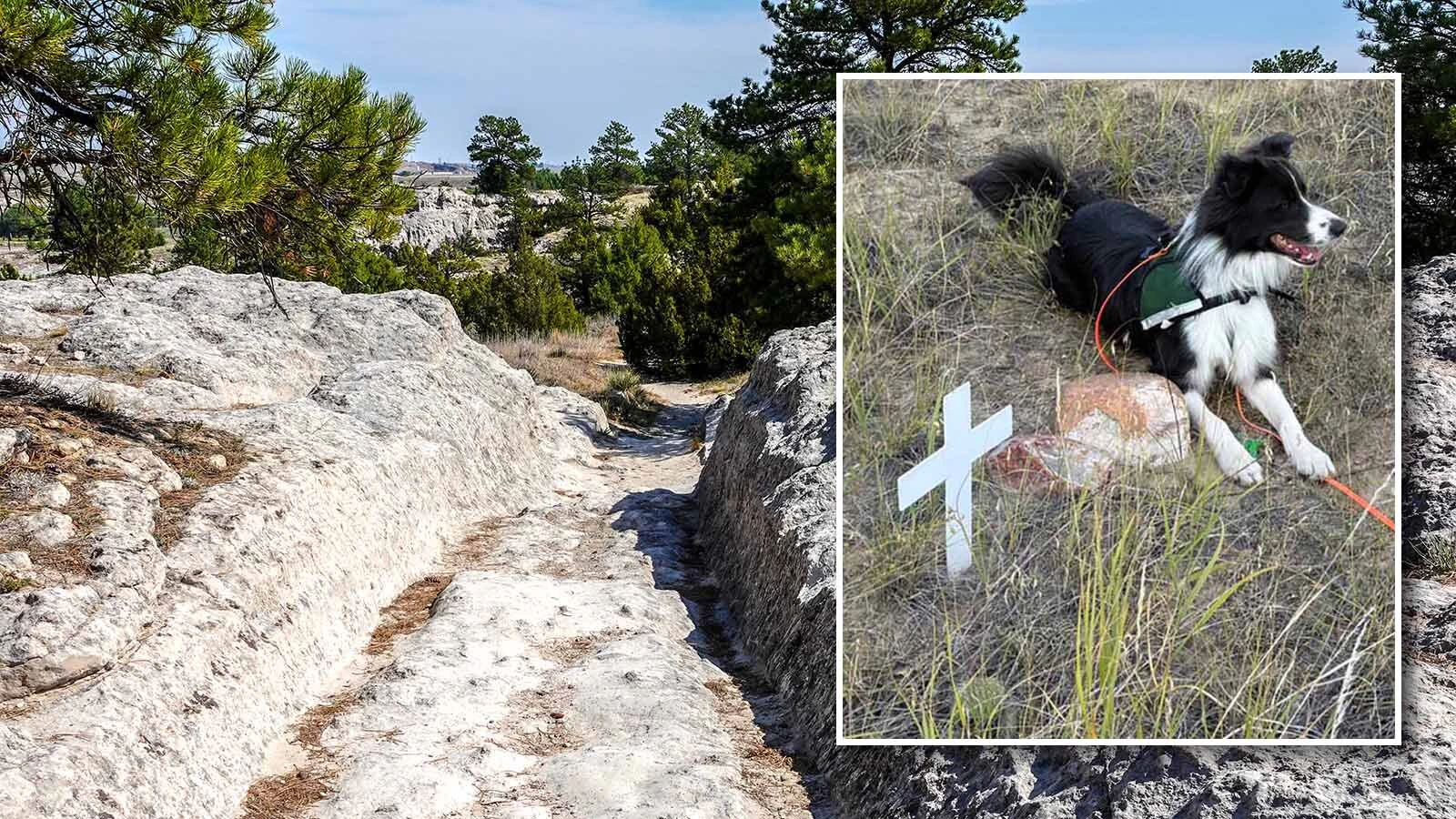
Seventeen-year-old Louise Lithgow was wasting away from consumption when her parents decided to move to California in 1853. The family’s fervent hope was that a better climate would help cure their daughter’s tuberculosis and save her life.
Instead, Lithgow’s condition worsened.
She died along the way, and was buried in Wyoming on the north side of the Platte River “a few rods from the bridge,” which was called the Reshaw Bridge. It was not far from present-day Evansville, near Casper.
“Poor girl!” a cousin named Lorena Hays wrote in her diary on June 21, 1853.
“She hoped to get to California before she should die, but it was her lot to lie alone on these sandy plains," Hays wrote. "This morning, a grave was dug on the opposite side of the river where we followed her to her lonely resting place.”
Lithgow’s last words were, “Oh Pa, what does hurt me so?” Hays wrote, adding, “Her pain only lasted a moment for she ceased to breathe. We cross the river in the morning.”
During the funeral, an “evergreen from the mountain and sweetbriar seed brought from her faraway home were planted.”
As Hays crossed the North Platte on June 23, she had one last glimpse of her cousin’s grave.
“We had to leave her lonely resting place, where no friend will ever be near to look upon her grave, perhaps again,” she wrote.
The Oregon Trail has been called America’s longest graveyard. Along it are stories like Lithgow’s — people hoping for a better life, but who died before reaching the West they had imagined.
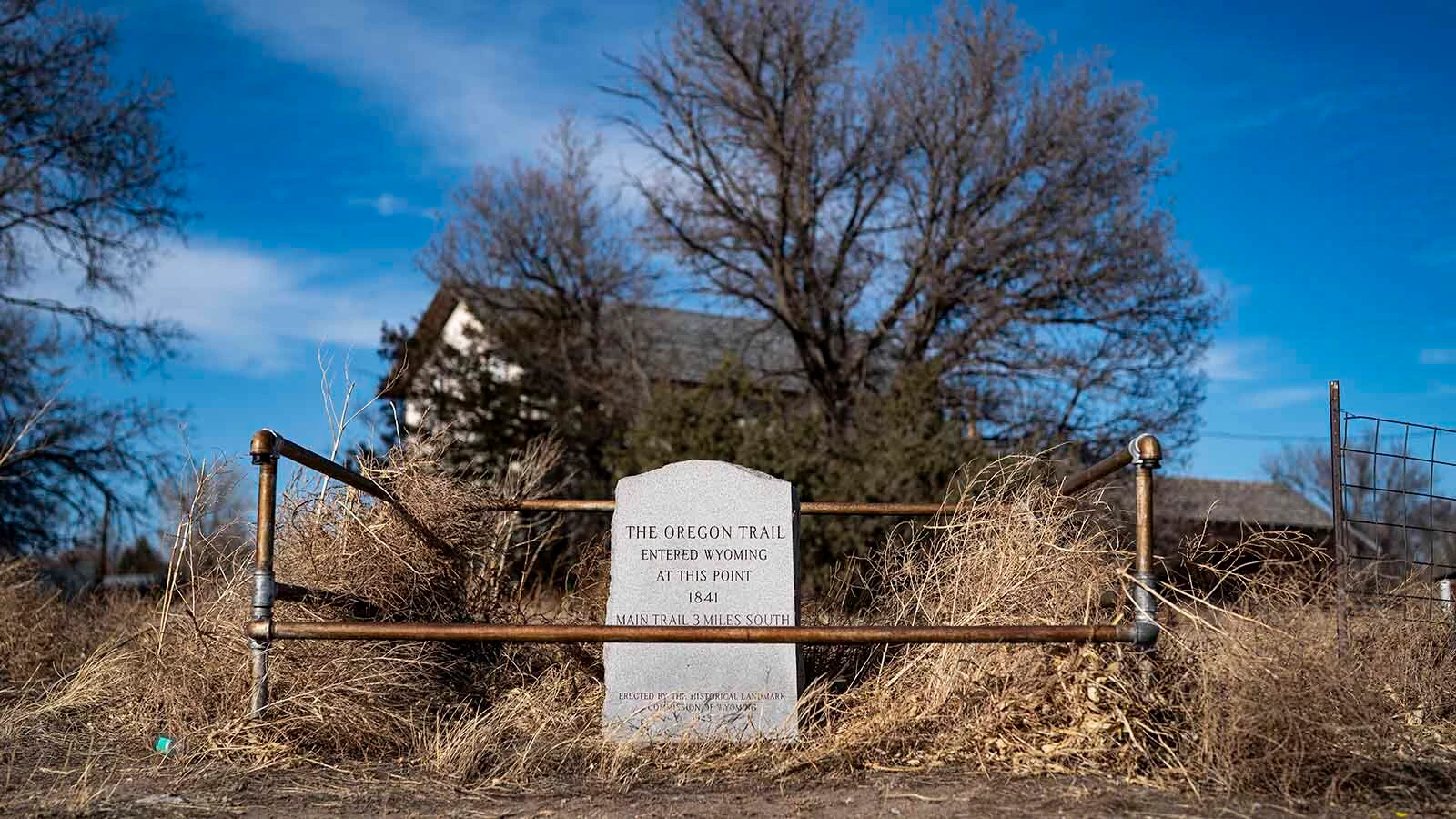
Some were buried with care, marked with a tree and sweetbriar or boards cut from wagons or piles of stones and inscriptions. But many of those markers did not survive Wyoming weather, time and development.
Lithgow’s spruce, planted in sandy soil, likely did not survive long, Wyoming trail historian Randy Brown told Cowboy State Daily. But Brown said a cadaver dog team from California helped identify the likely location of her grave more than 170 years later.
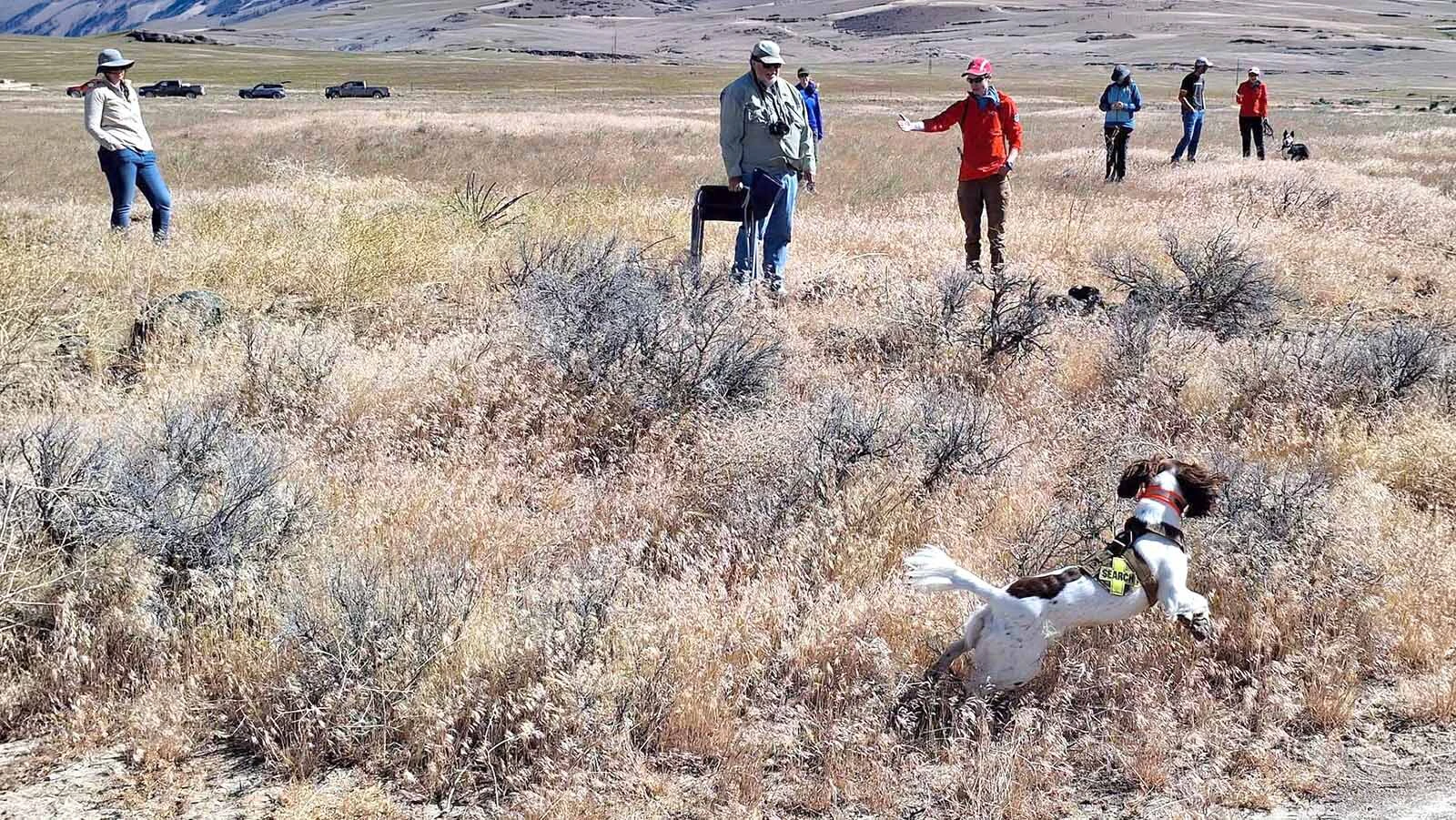
Brown has worked several times with handler John Grebenkemper and his border collies, including at known and suspected Oregon Trail grave sites in Wyoming.
“I’ve been out several times with him,” Brown said. “He uses border collies and they’re real good at finding them.”
In Lithgow’s case, Brown said the location where the dog alerted fit Hays’ diary description.
Constant Battle For Preservation
A dog’s alert alone does not prove that an intact grave remains beneath the ground, Brown said.
But it’s another piece of evidence in a chain that he assembles using historical records and the detailed accounts, like that written by Hays in her diary.
Most Oregon Trail graves weren’t meant to become mysteries.
They were the best families could do in a place 500 miles or more from home.
A board cut from a wagon, a few stones gathered from the prairie — or whatever other marker grief-stricken relatives could manage before continuing west.
Brown has spent nearly five decades tracing Oregon Trail ruts, inscriptions and graves across Wyoming.
His work is part historical detective story and part preservation, as surviving trail sites face new pressure from pipelines, transmission lines and roads.
“It’s a constant battle for preservation,” Brown said. “Between pipelines and power lines and new roads, that sort of thing. It’s just constant. Something’s always going on.”
A few days before speaking with Cowboy State Daily, Brown had received a letter from a company planning a new high-voltage transmission line crossing the Oregon Trail.
“I have to write them back about that, because they didn’t specify exactly where they thought it would cross the trail,” Brown said. “That makes a big difference.”
Brown has helped redirect infrastructure projects that might have disturbed trail remains, sometimes after a project was already in motion.
“An archaeologist out there saw one of my trail markers and said, ‘Oops!’ And they rerouted the way they were going to go after seeing the trail markers,” Brown said. “That was out of Glendale.”
A retired elementary education teacher, Brown has been chasing trail history since moving to Wyoming in 1978, starting with the Bozeman Trail.
He started tracking the Oregon Trail in the 1980s, and has been doing so ever since.
“It’s a field where I can do original work,” Brown said. “There are still things left to see.”
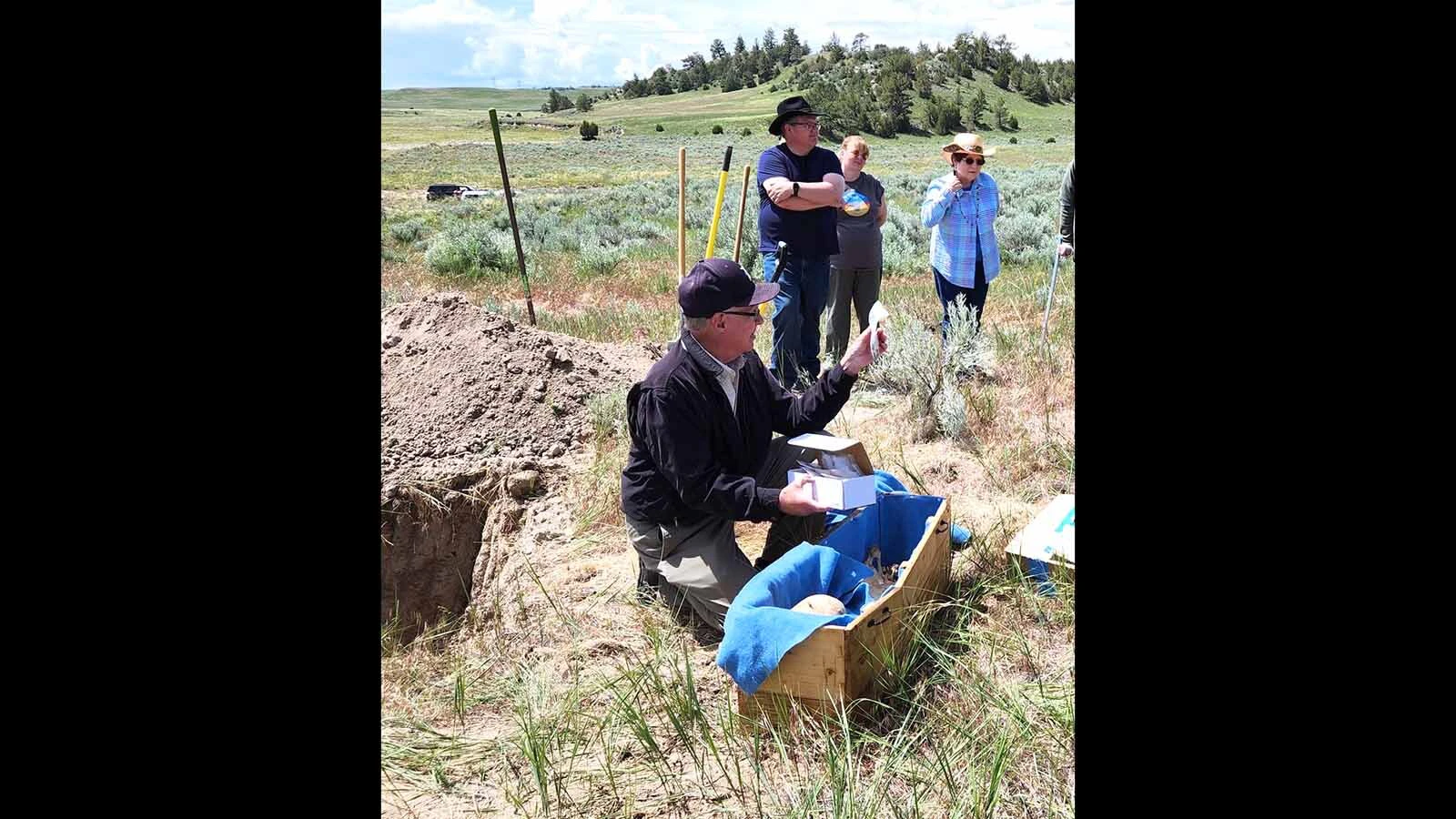
Randy Brown works at a pioneer grave site along the Oregon Trail in Wyoming. (Randy Brown) 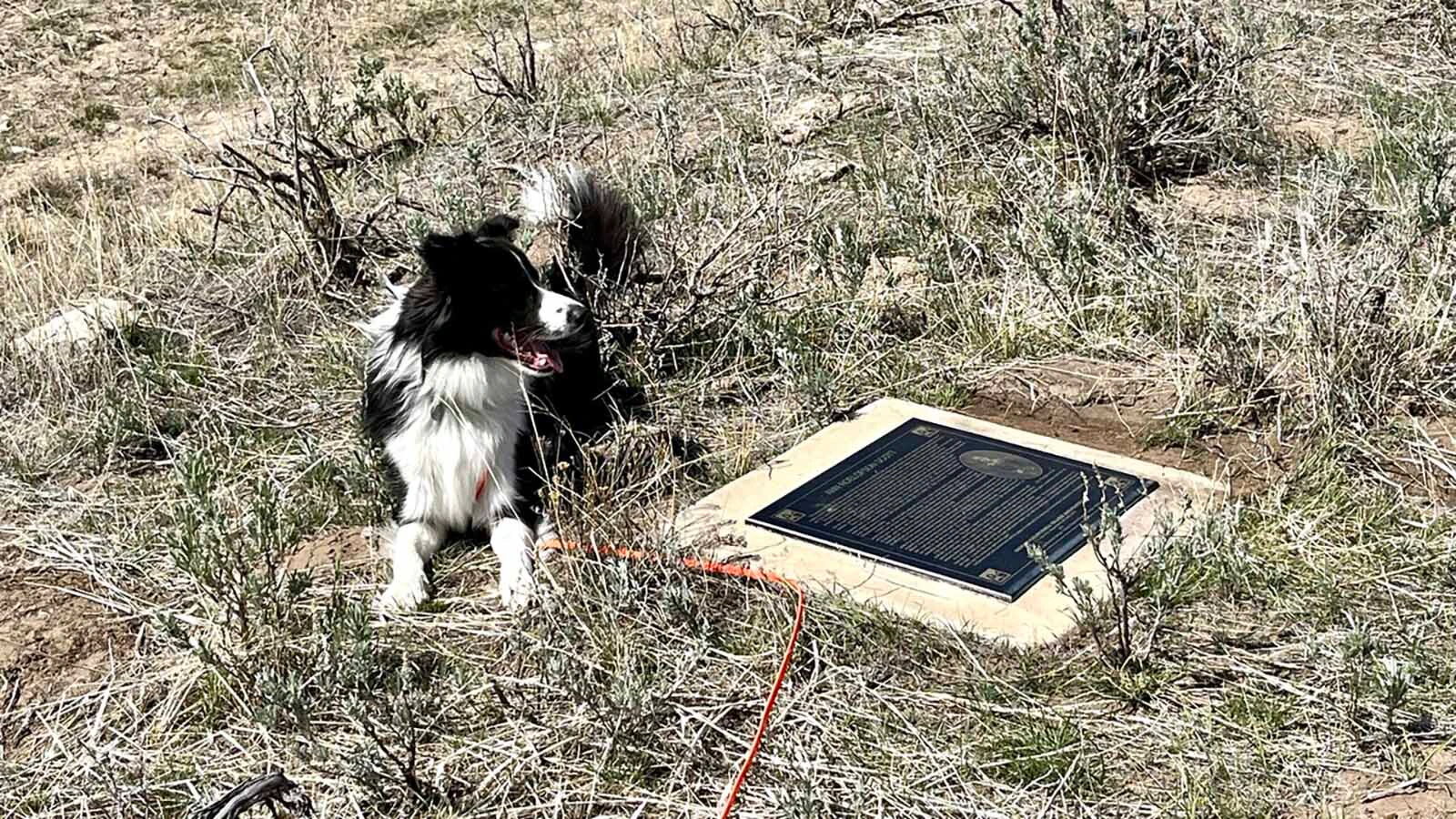
Kylee is a cadaver dog. She lies down on the ground where the scent from a pioneer grave seemed strongest along the Oregon Trail in Wyoming. (Randy Brown) 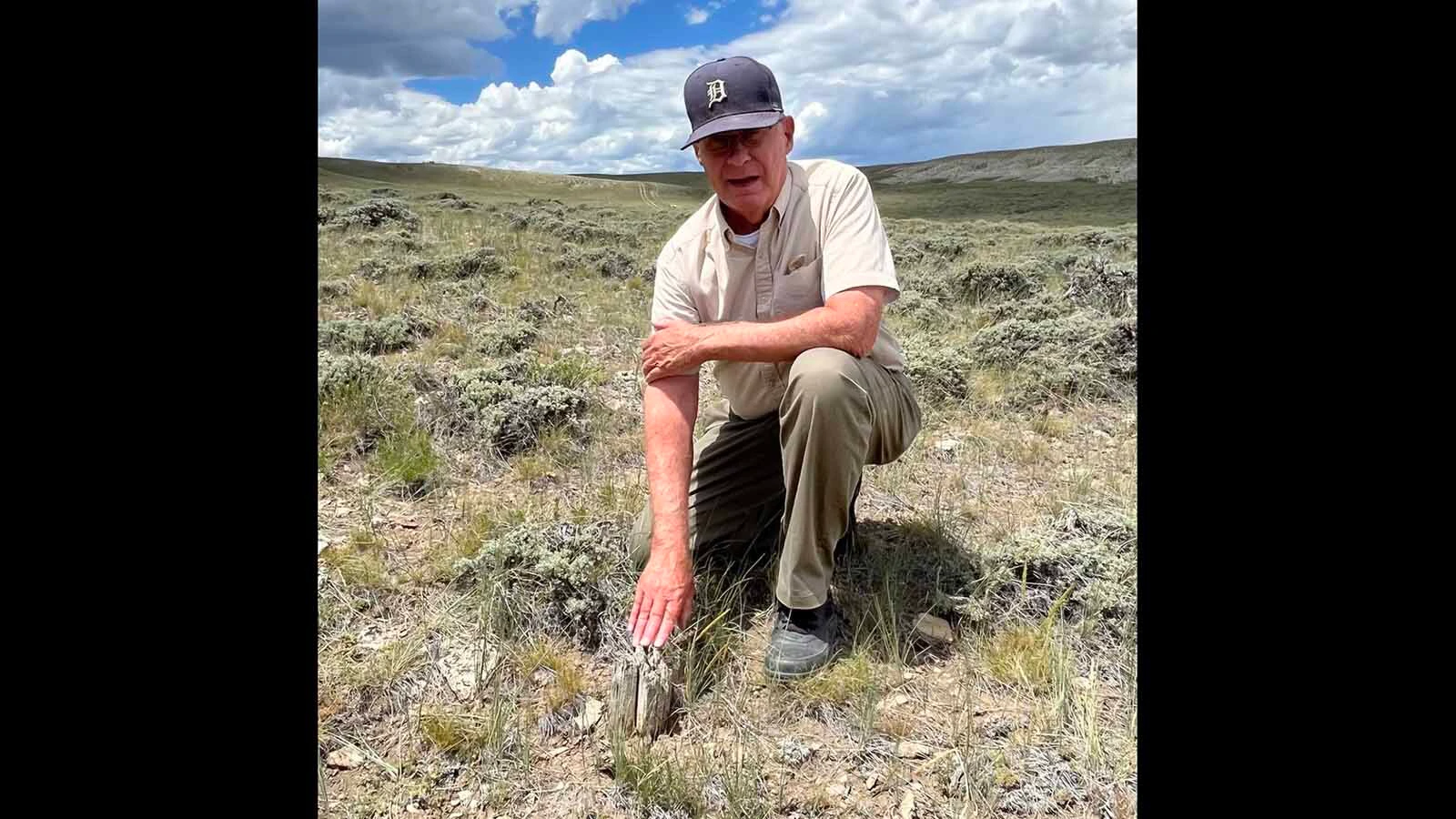
Randy Brown is a retired elementary education teacher who has been chasing pioneer graves along the Oregon Trail the last 50 years. (Randy Brown) 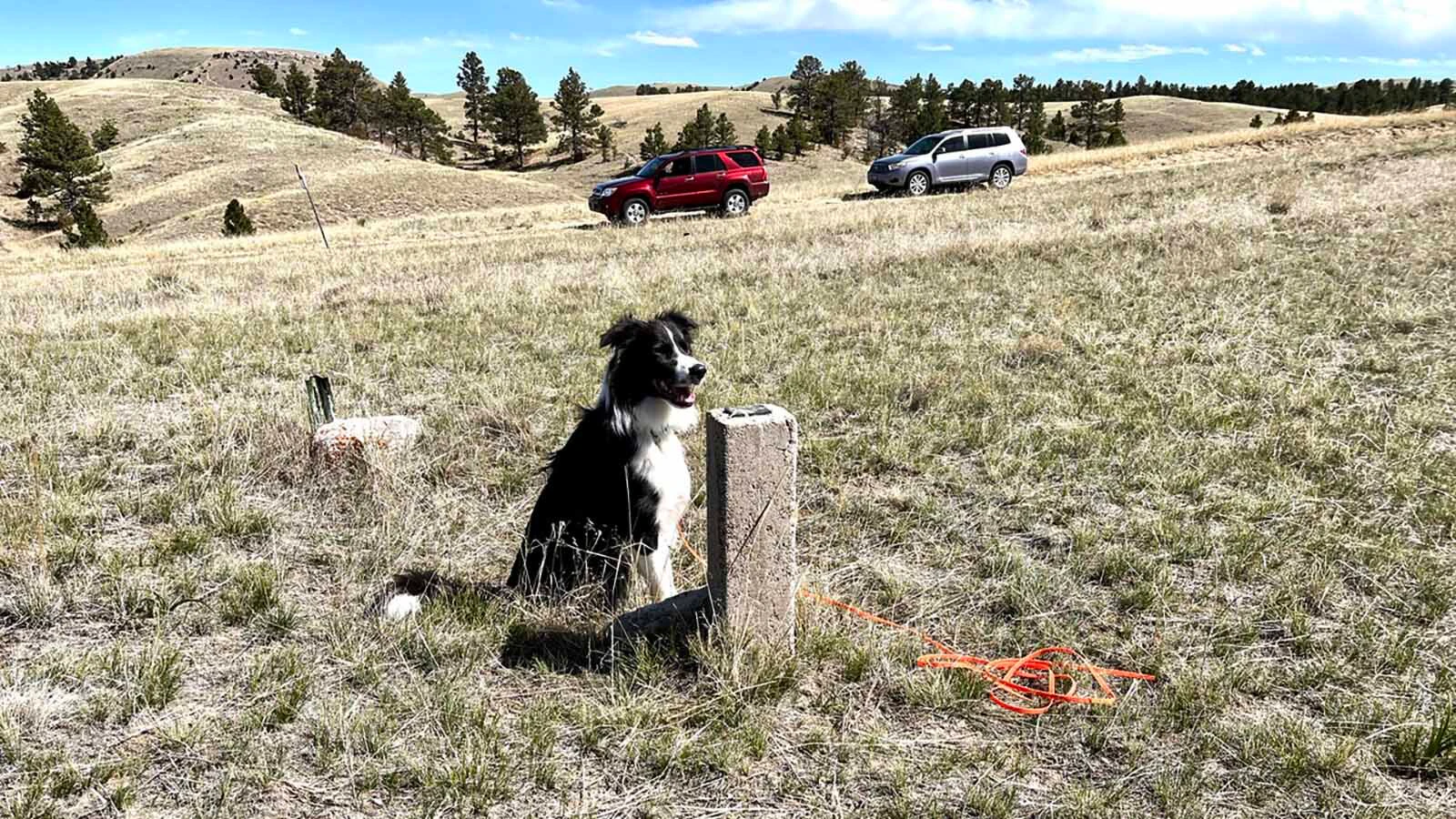
Kylee is a border collie cadaver dog that's been helping Wyoming historians identify pioneer graves along the Oregon Trail. (Randy Brown)
What The Dogs Are Smelling
One common misconception people have about cadaver dogs finding historical burial sites is that old bones have to be present.
That’s not necessarily the case, according to Jerry Eichhorst, who is president of the Idaho chapter of the Oregon-California Trails Association.
He has worked with cadaver dog teams at a number of sites across Idaho to document as many pioneer grave sites as possible.
“Decomposition releases chemicals called volatile organic compounds, and these VOCs are a combination of up to 500 different chemicals,” Eichhorst told Cowboy State Daily. “The chemicals in a human VOC are different than those in a dog or a cat or a deer or anything else. We humans are all the same, though. There’s no difference between a European American versus a Native American.”
As a body decomposes, the VOCs migrate into the ground and become bound with the soil. Once trapped, the chemicals break down slowly because they’re shielded from oxygen, sunlight, and weather.
“A dog’s sense of smell is 100,000 times better than a human’s,” Eichhorst said. “And so they can be trained to recognize that specific combination of human VOCs and ignore everything else.”
Dogs can detect scents that are as little as one part per trillion — the equivalent of a single drop of a liquid in 20 Olympic-sized swimming pools worth of water.
Ground-Penetrating Radar
The Oregon Trail’s grave sites are roughly 170 years old now, Eichhorst added, but the dogs’ noses are sensitive enough to detect American Indian burial sites that go back thousands of years.
“They’re used a lot in areas we’re going to develop,” he said. “I think in California, they have to do a search to make sure there’s no Native American remains in an area where they’re going to build.”
Eichhorst has five teams he’s working with that have been focusing on places like City of Rocks in southern Idaho.
“I found two graves just visually, and then the dogs confirmed those,” Eichhorst said. “And the dog handlers found two or three more graves out in the area.”
In some cases, researchers use ground-penetrating radar to look for subsurface voids consistent with possible burial locations. Eichhorst also documents rocks carved with initials or dates and compares those clues with diary entries.
Potential grave sites are recorded with GPS coordinates that are available to researchers and land managers but not released to the general public.
The reason for that is to discourage looting, Eichhorst said, while still making sure someone can find where the graves are if a place begins to develop.
In Northern California, trail researcher David Freeman has helped investigate Lassen Ranch, where unusual rock arrangements first suggested graves beneath a landscape covered in volcanic stone.
Cadaver dogs later alerted them at many of the locations, according to the Oregon-California Trails Association.
Researchers have so far identified at least 23 suspected burials there, though they have not determined the graves' exact era. They could be from the Gold Rush era, or they might be earlier, Indigenous burials.
Useful Tool, But Not Final Proof
Spencer Pelton, a Wyoming archaeologist who has participated in forensic investigations that used cadaver dogs, said the dogs can be highly useful in recent death cases. But he personally has not used them in historical-grave research, and wants to see more independent archaeological confirmation of their alerts at sites that are more than a century old.
“I’ve never actually seen it proven,” Pelton told Cowboy State Daily. “I’ve never seen an instance where dogs got a hit on one of these old graves, and then archaeologists have done it and actually made sure that there’s a human body there.”
Pelton said he knows of attempts to use cadaver dogs in Wyoming, including a search for a possible mass grave from the 1865 Battle of Red Buttes near Casper. The dogs reportedly alerted at some locations, but the suspected grave site wasn’t excavated or otherwise conclusively identified.
Pelton added that doesn’t mean the dogs aren’t useful, but he’d like to accompany a historical cadaver-dog search himself, as well as better understand what the animal is detecting and see it confirmed through archaeology or other independent evidence.
“A dog smells something, you excavate, and there’s a body there,” he said. “That’s all I want to see.”
Bones Don’t Have To Be There
That uncertainty is why dog alerts are compared with diaries, terrain, inscriptions, and other evidence, rather than treated as proof on their own.
Eichhorst said a cadaver dog’s alert does not always lead researchers to an intact grave. Dogs can alert at places where human decomposition-related compounds remain in the soil even if the human remains were removed long ago.
He spent years trying to find a common grave connected to an 1850s wagon-train massacre in Idaho, where travelers reportedly found a burned wagon and human remains.
But the remains were gathered and moved into a single grave years after their deaths.
Eichhorst said the dogs still alert at the location of the burned wagon, though, even though the bones are no longer there.
For Louise Lithgow, the trail left an unusually rich record, one that included a cousin’s diary, a named bridge crossing, a grave on the far side of the North Platte, and the remembered planting of a mountain evergreen and sweetbriar seed.
The tree and the sweetbriar are gone. But the diary, Brown’s research and a cadaver dog’s alert have helped preserve the story of a 17-year-old girl whose family had to leave her behind on the road to California.
“There’s so many great stories,” Brown said. “There’s thousands of diaries written by the immigrants themselves.”
That’s what has kept Brown chasing the Oregon Trail for nearly 50 years. He knows that somewhere along the route there’s one more person’s story waiting to be found.
Renée Jean can be reached at renee@cowboystatedaily.com.


