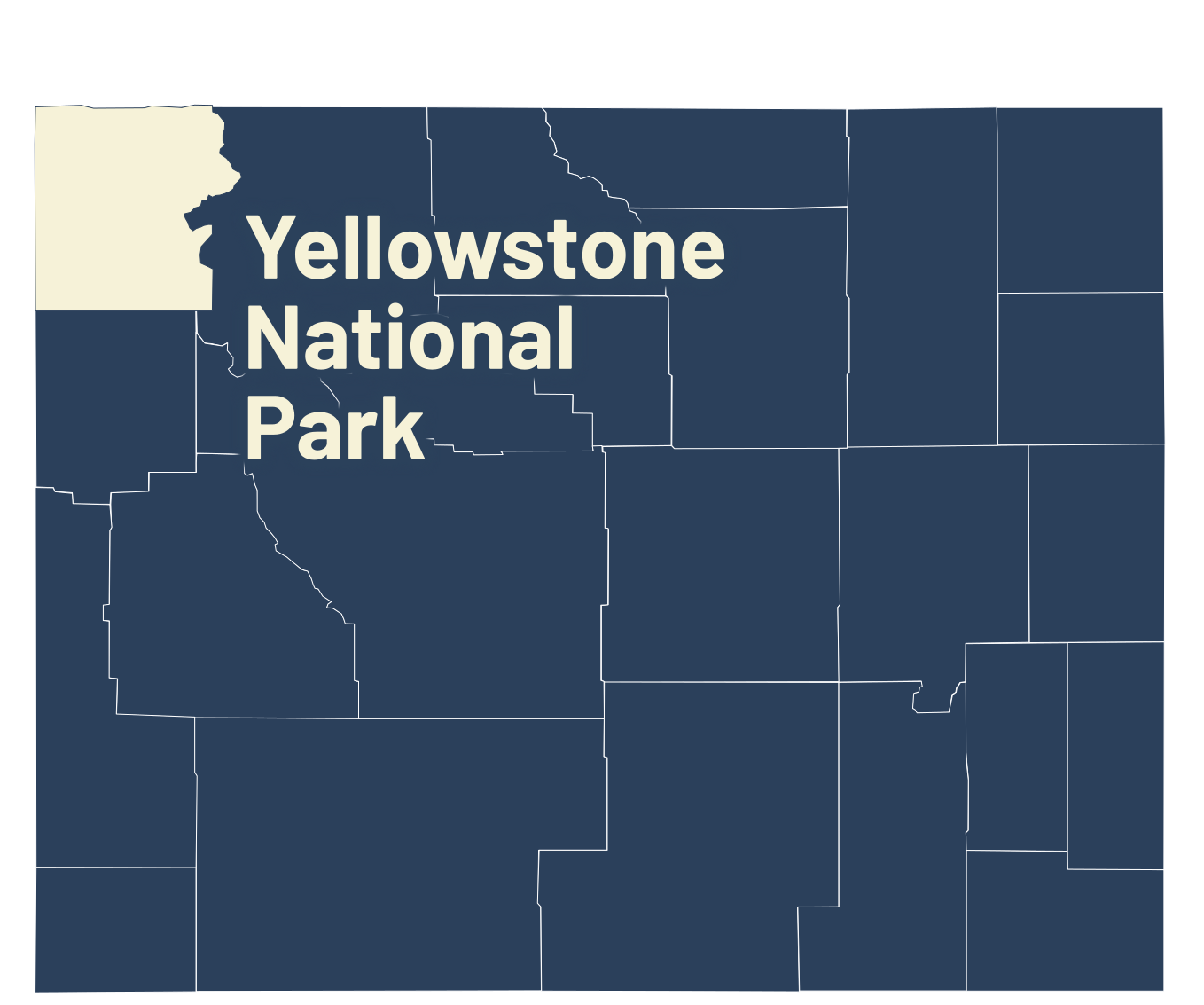
Visitors in Yellowstone National Park are concerned about what’s ailing what's become known as “the spinning bison” in Hayden Valley.
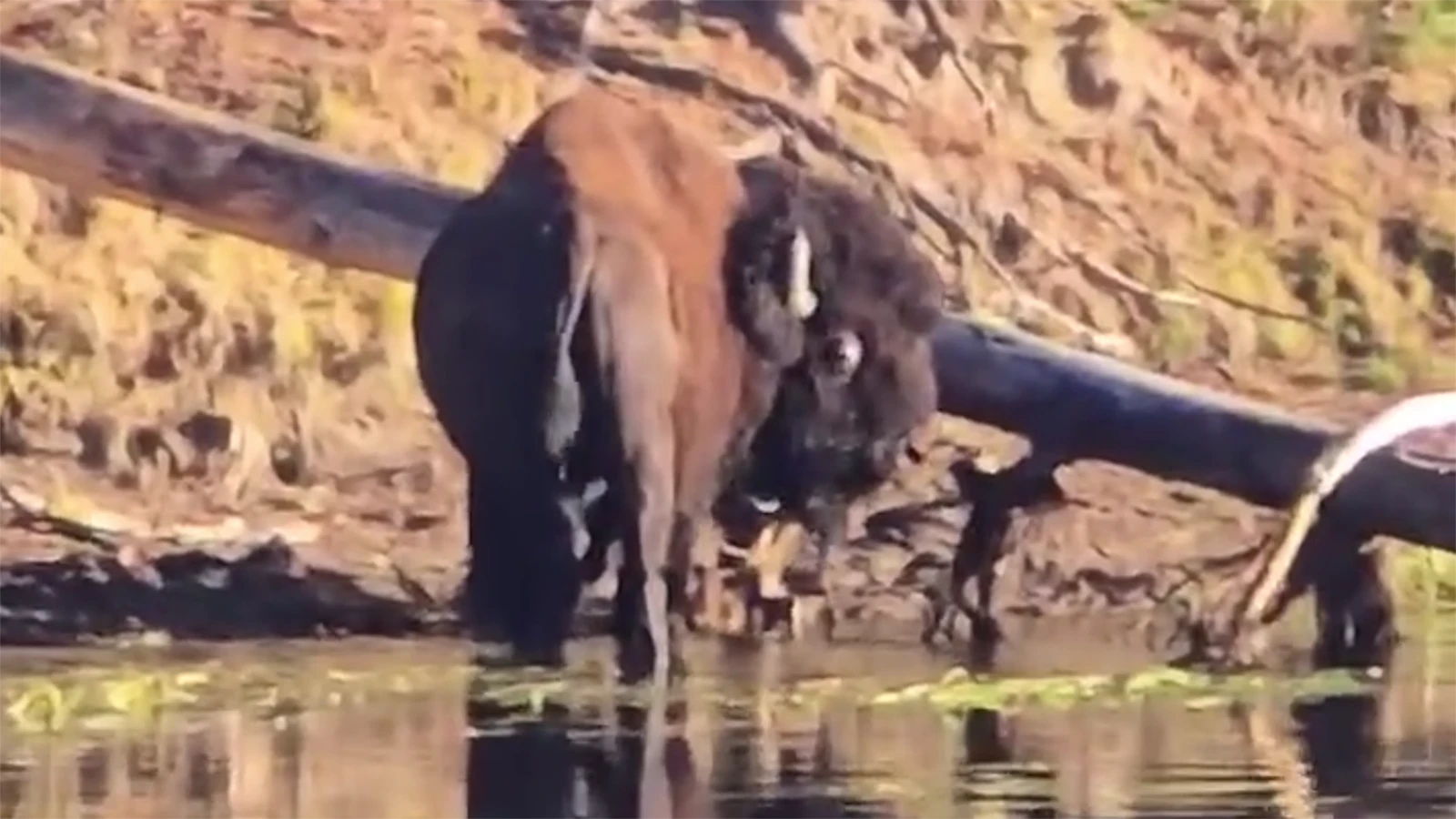
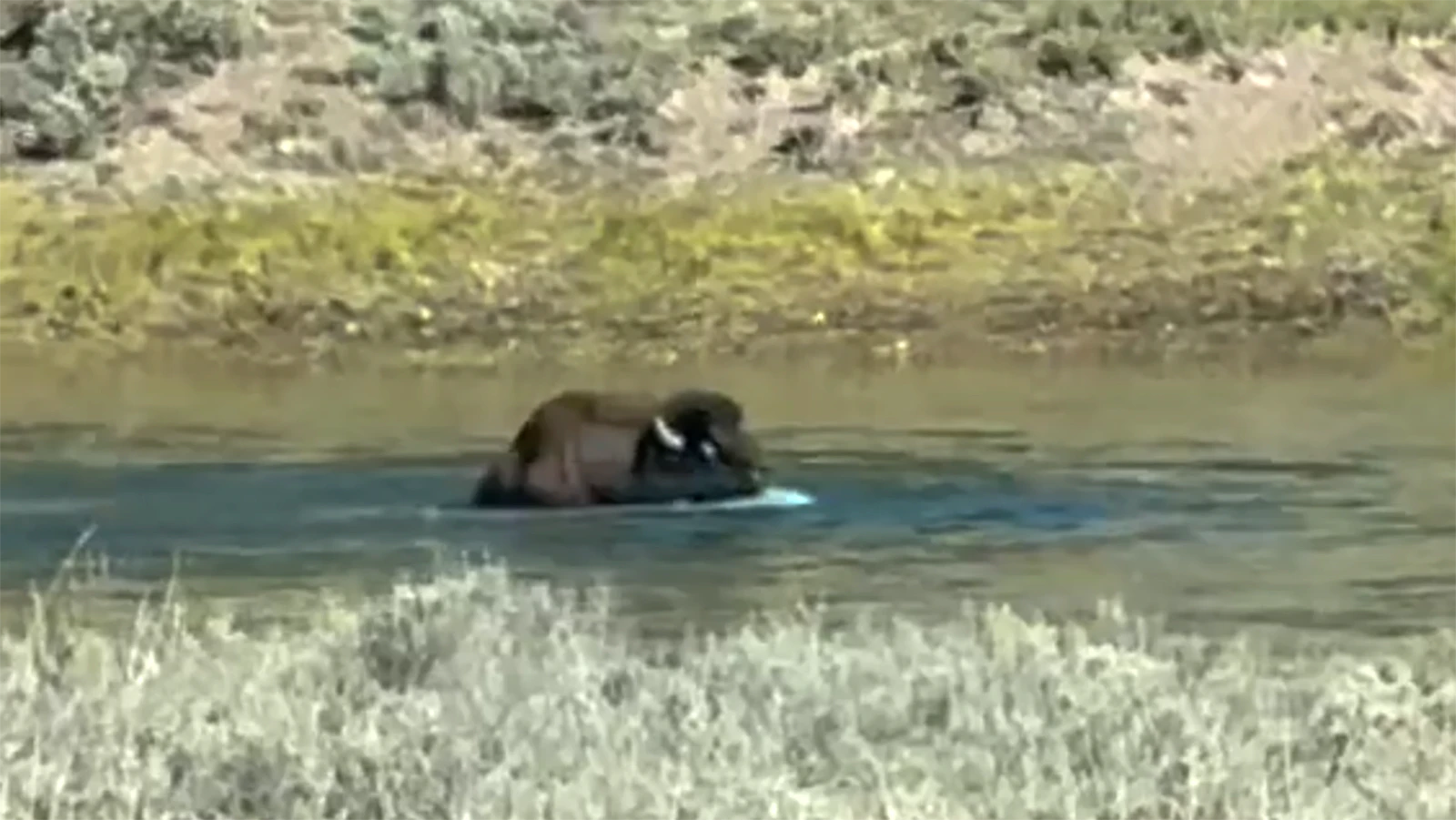
Jennifer Tunjum of Three Forks, Montana, visited Yellowstone with family on Sept. 15 and saw the bison. The massive bull was in the middle of a pond, spinning endlessly.
“At first, we thought he was playing in the river, but he kept constantly circling,” she said. “After a few minutes, you didn’t want to stand there and watch it. It was kind of sad.”
Tunjum left, but the bison kept circling. Dozens of other people observed the same bison in the same spot, exhibiting the same behavior.
The strange spinning bison stuck with Tunjum long after she left the park.
“I wanted to know if he left the water or not,” she said. “It’d be great if he walked out just fine, but I had my doubts about that, honestly.”
The bison did leave the water, but the spinning hasn’t stopped.
Going In Circles
Wildlife photographer Tammy Neufeld was in the Hayden Valley on Wednesday when she stopped to see the circling bison, standing in the shallows of the Yellowstone River.
“I don’t know what’s going on,” she said. “I’m not sure if he's been across the river, but I've heard other people say that he was spinning in the road. He's been in the river or at the edge of the river doing this spinning in circles thing for at least a week.”
Neufeld noticed other behaviors, besides the circling, that seemed off. His tail constantly twitched, and one or both eyes appeared impaired.
“One eye is red and bulging, and the other eye looks injured as well,” she said. “I don’t know if that one eye is missing or not, but it might have been gouged out. That might explain the spinning.”
Tunjum also noticed the bison's right eye was "totally blood-red" through a pair of binoculars during her visit.
Neufeld’s assessment was the spinning bison was struggling with a serious condition, most likely a physical or neurological injury. The exact nature of that condition, however, was a mystery.
“He obviously has some pretty serious impairment,” she said. “It's either injuries from a fight, near total blindness, neurological damage, or all the above. It makes me feel bad for him.”
Diseased Or Damaged?
As the bison continues to spin and struggle, people have tried to explain its unsettling behavior.
Many have defaulted to listeriosis, a rare but usually fatal bacterial infection caused by the bacterium Listeria. Animals, particularly cattle, afflicted by listeriosis show signs of encephalitis, including blindness, facial paralysis, and circling.
Listeriosis is an infectious but not contagious disease common among domestic livestock. It’s usually acquired by eating poorly made silage.
Neufeld had her doubts about listeriosis.
“I’m not aware of that being an ongoing issue in Yellowstone,” she said.
The biggest disease of concern in the Greater Yellowstone Ecosystem is brucellosis, which bison and elk can carry. However, animals with brucellosis look outwardly healthy and have no physical or neurological symptoms like the spinning bison was showing.
Other possible explanations range from parasitic worms to malignant catarrhal fever, both of which can afflict bison.
Neufeld erred toward a simpler explanation.
“It could just be that he got a physical injury in a fight, and that could have caused a brain injury,” she said. “That’s pure speculation, but who knows?”
Bison Bouts
The bison rut in Yellowstone typically ranges from late July through August. Mid-September is late, but not too late for a bull bison to sustain a serious injury when competing with other bulls.
Bull bison tend to avoid bouts that lead to injury. Most of their confrontations are more about showmanship than strength.
“It’s usually a pushing and shoving battle that hopefully makes one or the other give up and move out of the way without getting serious injury,” said ecologist, author, and bison advocate George Wuerthner.
Wuerthner said bull bison are more than capable of injuring each other, but they’re designed not to be harmed by these interactions “from an evolutionary perspective.”
“They can break ribs and legs, but they focus their battles on the head area,” he said. “That’s why they have very thick skulls.”
Bison aren’t known to kill each other during these conflicts. But when push comes to shove, Wuerthner said he “wouldn’t be surprised” if a bull suffered a serious neurological injury from a particularly aggressive bout.
“Given some of the headbanging they do, you may do some long-term damage if you have too many of those interactions,” he said. “The more years you survive and engage in these tournament battles, the more likely you are to get an injury that's serious enough to lead to your demise.”
Do Nothing
Any number of things could have led the spinning bison into its current predicament. At the moment, he seems unlikely or unable to leave the banks of the Yellowstone River.
What is nearly certain is what the National Park Service will do about it. As tragic as the bison’s plight may be, intervention is unlikely.
“I know that the rangers are aware of this bison, but it’s probably a hands-off policy for them,” Neufeld said.
Neufeld understands the sentiment that something should be done to help the bison, even if the only option is to humanely euthanize it. However, that isn’t how Yellowstone operates.
“If they do it once, it sets a precedent that they are expected to intervene all the time,” she said. “That's just not the nature of the Park Service. It’s not the way it’s been built and meant to work.”
Wuerthner surmised the bison’s likely fate more bluntly.
“If this bison has lost his eyesight, he may well be on the short list for death this winter,” he said.
Even a strong pack of wolves would hesitate to attack bull bison. Still, the bison’s irregular behavior and increasing vulnerability won’t go unnoticed by predators.
For most visitors, the hard part will be watching this slow decline. The bison continues to struggle with a serious impairment, but one that isn’t necessarily killing it quickly.
“He looks to be in fairly good condition,” Neufeld said. “I haven't seen him eating, so I don't know if he has lost weight, but he does seem pretty healthy, agile, and dangerous, for sure.”
Andrew Rossi can be reached at arossi@cowboystatedaily.com.