Wine country in America usually evokes a mental image of a rolling, manicured hill with velvet ropes and a snobbish sommelier somewhere in California.
In Wyoming, with its high prairie wind and winters that can plunge to 30 degrees below zero, it’s more likely to elicit laughter or some sage advice — such as, “Don’t try this at home, kiddos.”
The odds are definitely not in the wine grape grower’s favor. It’s windy, it’s cold, and there’s a short-short growing season, which tightens even more at elevation.
Still, every now and then, there are ambitious souls who decide to give it a try — and succeed.
Mustang Mountain Winery near Lovell, for example, and Table Mountain Vineyards near Huntley in southeast Wyoming are among the few pioneers who not only successfully grow grapes but turned them into a profitable winery.
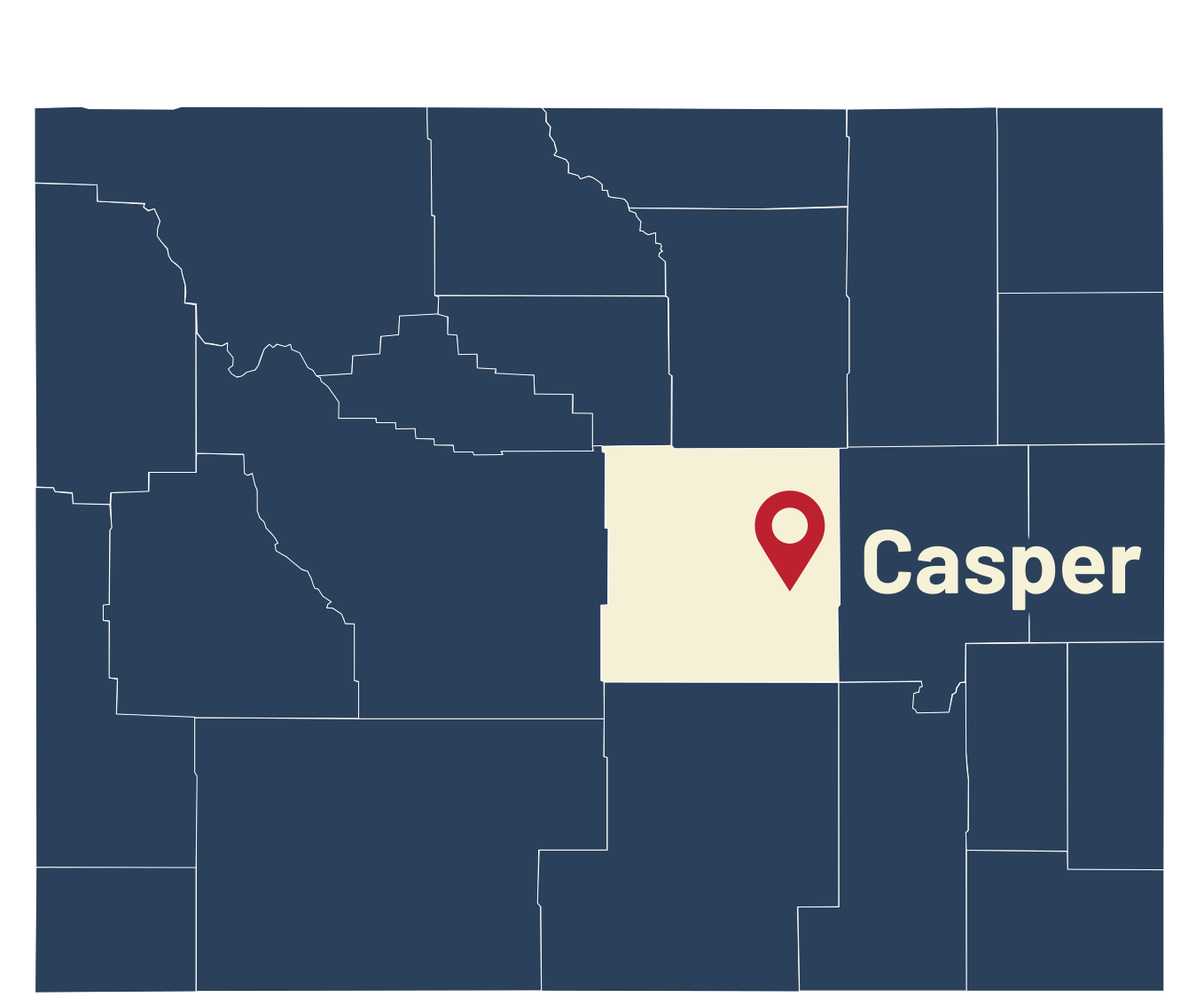
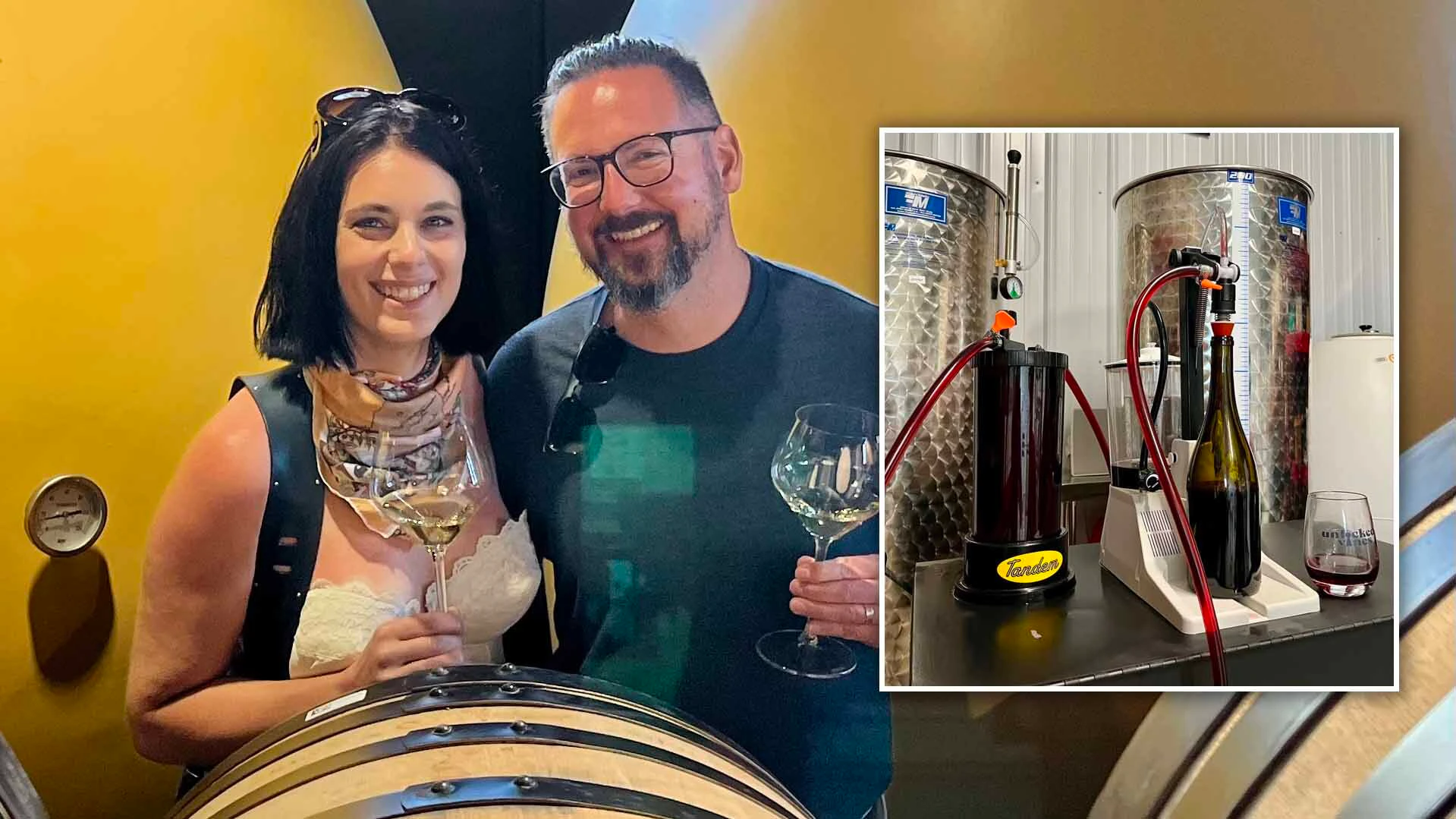
Christopher Volzke and his wife, Angie, with Unlocked Vines, are latest to join this small club with a cold-pressed winery in Casper.
Wyoming Isn't Coast Of California
It hasn’t been an easy road. Volzke has lost track of the number of times people have told him he probably wouldn’t be able to grow winery grapes in Wyoming.
But he’s a farm kid from north-central South Dakota. So, stubbornness — perseverance in polite company — comes naturally.
“I think my wife and I both consider ourselves a bit of serial hobbyists,” he said with a chuckle. “I think we like to find challenges and see if we can make things happen where otherwise maybe there hasn’t been a lot of action.”
Growing up on a fifth-generation ranch made him confident, despite what everyone told him, that he could get grapes to grow in Wyoming.
“You just have to be selective on what you’re growing,” he said. “You have to approach it in a different way than if we were on the coast of California.”
That meant amending thick clay soils as well as engineering a next-level trellis system to keep his vines healthy and intact despite Wyoming’s infamous wind.
But Wyoming Is Great For Grapes
Wyoming has some positives to offer, Volzke said. Those hot days and cool nights — a dramatic diurnal shift — protect the acidity wines need to keep them from becoming too flabby or jammy.
“It’s one of the reasons you don’t really see wine grapes in Florida,” he said.
Heat without a cool night drop isn’t conducive to making the best wines.
Wyoming’s low humidity is another gift for wine grapes.
It means Volzke doesn’t have to worry as much about classic grape diseases such as powdery mildew. That creates the possibility for minimal or even no-spray viticulture.
Of course, the big trick to growing wine grapes is choosing varieties that can survive up to minus-30 temperatures.
That’s been a multi-year process.
“For instance, a South Dakota grape that survives down to like negative-50 called Valiant makes a wonderful jam,” he said. “It doesn’t make a great wine. So just because it grows out here doesn’t mean it’s a great wine grape.”
Crimson Pearl and Frontenac
He particularly admires another cold-hardy white grape called La Crescent. It survives Wyoming winters just fine. But its early bud break means it’s vulnerable to the state’s notorious late-season snowstorms.
That severely limits its yield and, for now, has him importing that grape from Buffalo, New York, to use in their first commercially available white blend.
That’s a problem he hopes breeding programs will eventually solve.
“That’s exactly what Tom Plocher does as a private breeder,” Volzke said. “He’s trying to take things and make them suitable for different regions. There’s a whole science behind it. So that’s the reason we have Crimson Pearl even though it buds really late in the season.”
For now, he’s growing Frontenac blanc for his white wines, a newer variety developed within the last 10 years by the University of Minnesota.
“It has really nice acidity and kind of stone fruit flavors,” Volzke said. “And then the red we’re doing is from Tom Plocher as well, and that one’s called Crimson Pearl.”
The Crimson Pearl offers a bright red color and a fresh fruit flavor with medium acidity.
The Real Litmus Test
For a long time, Volzke’s winemaking hobby existed in a kind of limbo where friends insisted he could sell his wines, but the couple wasn’t sure anyone outside family and friends would feel the same.
The turning point came when they submitted a red blend to Winemaker Magazine International’s Amateur Wine Competition. It was just for fun to see how they’d do.
When the results came back, they’d earned a silver medal, much to the Volzkes’ surprise.
“It was validating for me because, yes, we’ve had a lot of friends and family and acquaintances that have tasted our wine over the years,” he said. “But you never really know if you’re getting an unbiased response. Winemaker magazine doesn’t know who we are from anyone else. So it was a good litmus test for could this product stand on its own.”
An Old-World Twist
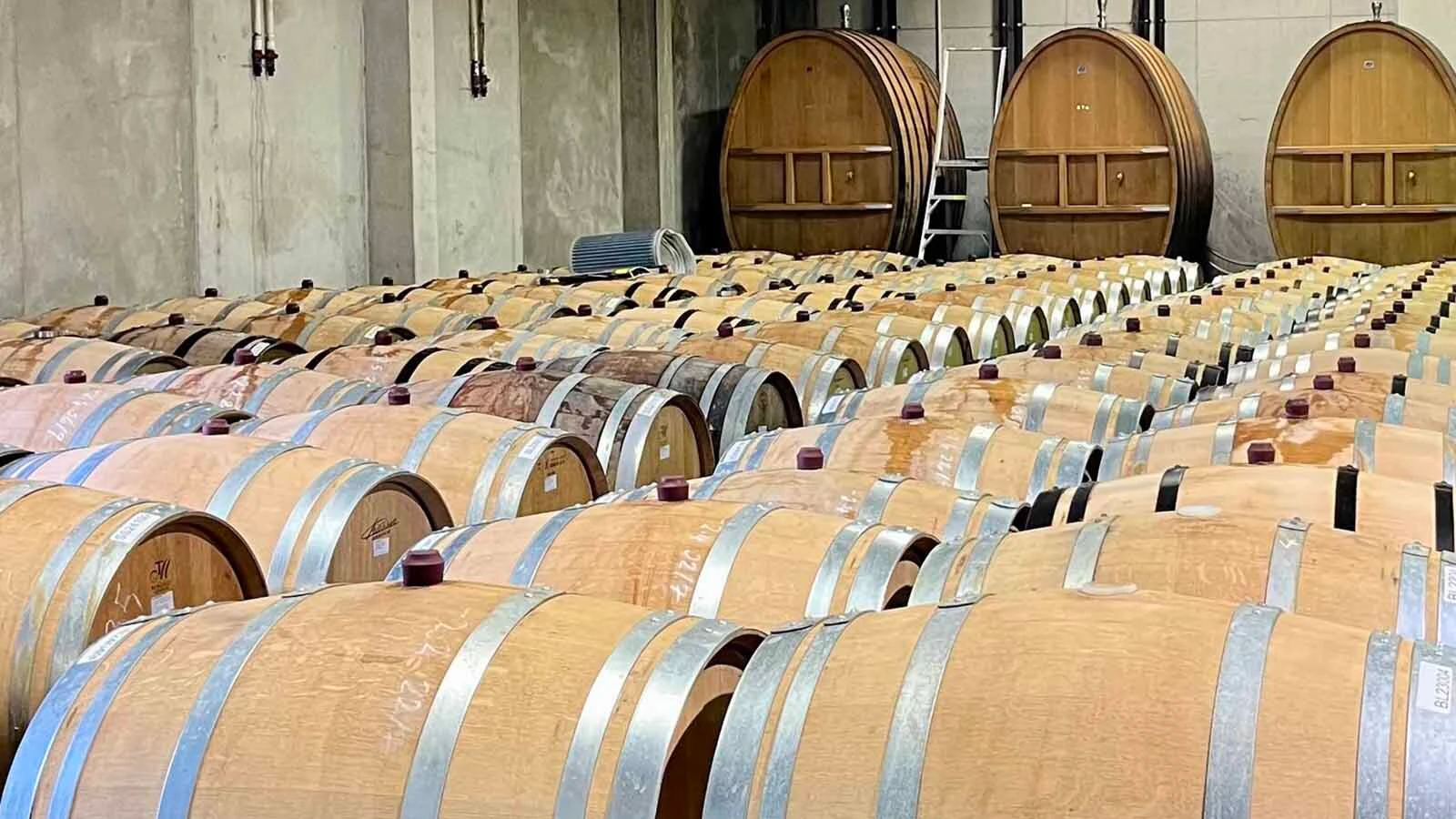
Aside from growing grapes in a state not known for being hospitable to them, what makes Unlocked Vines unusual is its fermenter.
They’ve imported a Speidel FermentEgg from Germany. They first saw egg-shaped fermenters at Tony Bish Wines in Hawke’s Bay, New Zealand. There they learned that it’s part of an old-world winemaking method.
“Wine a long time ago was made in clay pots called amphoras, and now a lot of it is just done in big drums,” Volzke explained. “When we were in New Zealand, we went to a winery that was using concrete eggs to do all their fermentation, because the shape of an egg has a golden ratio.”
The natural egg shape, it turns out, promotes natural circulation in a vat of fermenting wine.
“That way you don’t get hot spots in your fermentation process, which can cause off flavors,” Volzke said. “So when we came back, we decided we could probably use that concept.”
Rather than concrete, however, they’ve sourced a slightly more modern vessel manufactured for the winemaking industry in Germany.
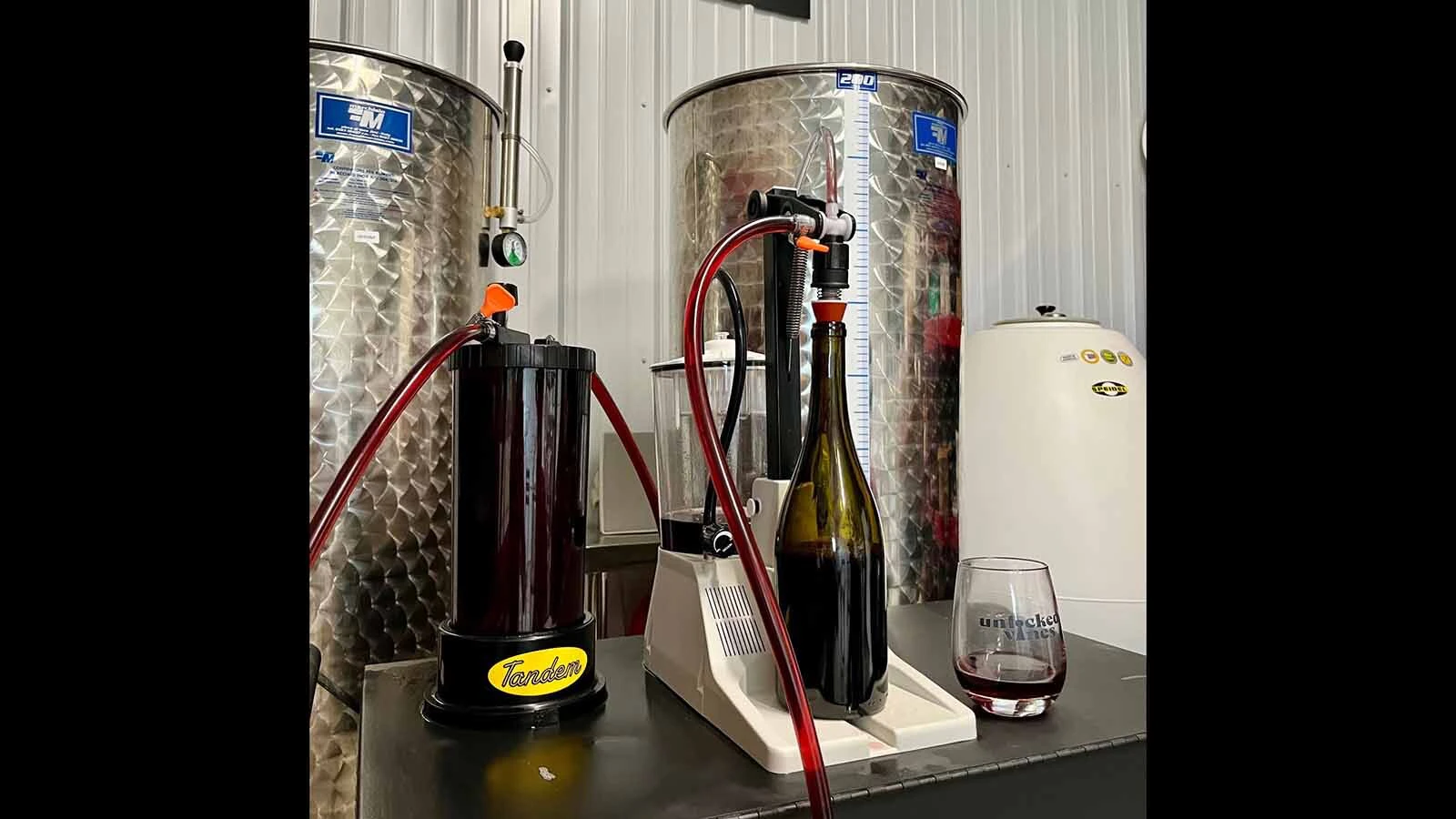
Volzke also limits the additives in his wines to keep them closer to old-world techniques.
“The FDA allows I think it’s more than 200 different additives in a bottle of wine that don’t have to be listed in the ingredient list,” Volzke said. “So sometimes, when you’re having a bottle of wine from a large commercial producer, they’re putting in additives for color. They’re adding things for flavor and tannin structure.”
Volzke wants to keep it as close to grapes and yeast for his process.
“I’d call that intervention winemaking,” he said of the heavy-additive style. “We just use a minimal amount of sulfite to make sure it’s shelf stable, but no more than we need to.”
Wine Best Paired With People
Unlocked Vines is starting at a time when overall alcohol consumption is under more scrutiny, with some prominent health guidelines saying there’s really no safe amount.
Volzke is keenly aware that people are becoming much more selective about wines and spirits, choosing fewer but better glasses when they do indulge.
He plans to keep the winery small, starting with just 600 bottles this year. He hopes to ramp that up to 1,200 next year and then around 3,000 by year three.
It’s going to stay a tiny, micro-winery with a hand-grown, hand-bottled, hand-corked product that feels accessible to regular people.
“I think wine in general, the industry puts up a lot of barriers,” he said. “Like you have to know a bunch about it, or what foods to pair it with. And honestly, I think that’s a lot of nonsense. Wine is best paired with people, not food. Like a really good bottle of wine while sitting on the patio telling stories with friends who are in town is a much more memorable experience than getting it paired with the right piece of fish.”
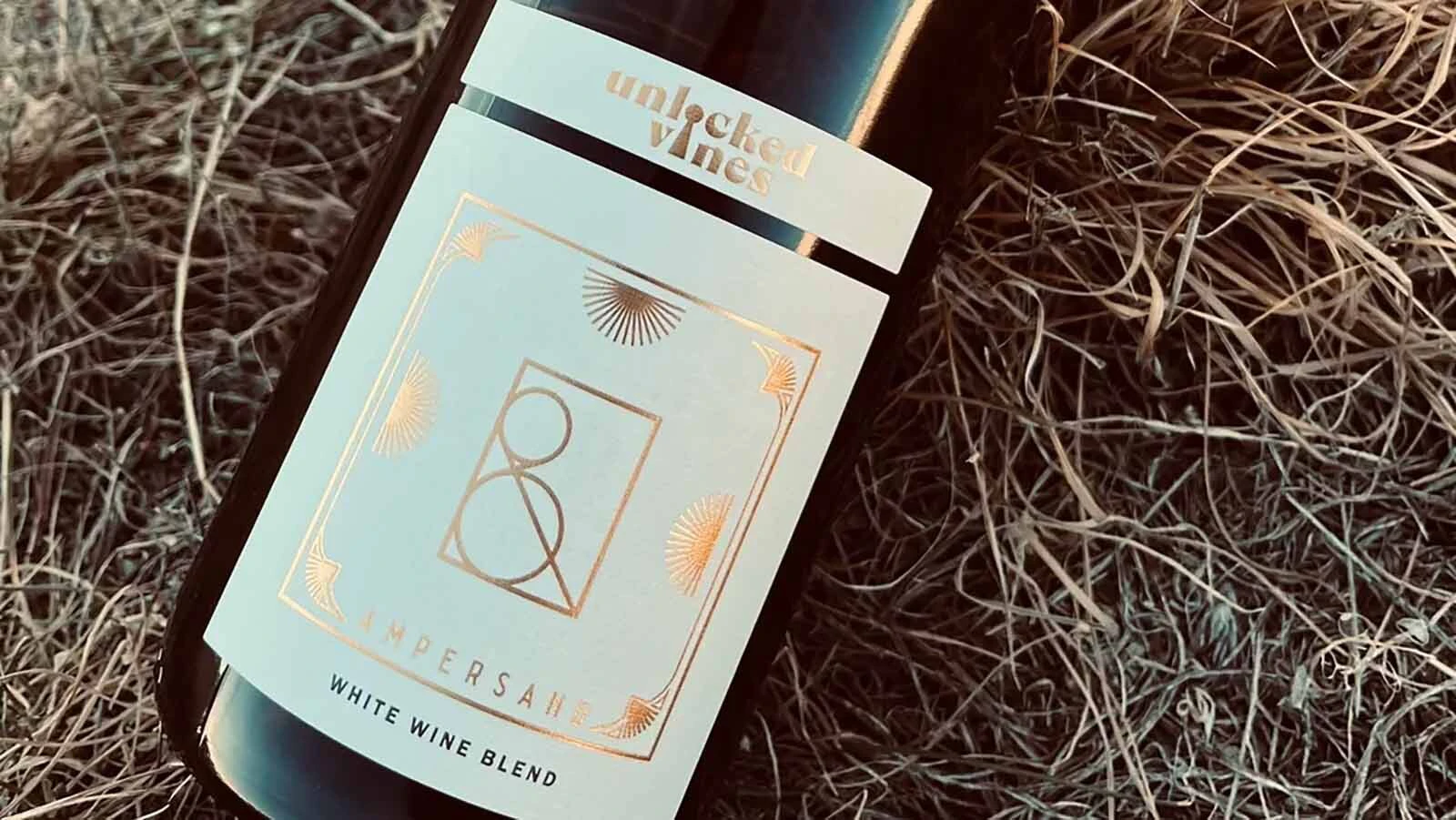
So, rather than filling every available shelf space, Unlocked Vines has started with a single Casper restaurant, Whiskey Butter, which will carry its signature Ampersand white blend.
Whiskey Butter is the kind of place Volzke believes will help them tell a good story about their winery.
Unlocked Vines has also opened an online store and is already permitted to ship to 38 states. A few bottles have landed as far away as New York City.
If someone that far away loves a Wyoming white blend because it tasted good on their porch, that will be enough validation for Volzke.
He’s been telling everyone all along that grapes will grow in Wyoming, and if they grow their way to New York tables, well he was obviously right, wasn’t he?
Renée Jean can be reached at renee@cowboystatedaily.com.