Three weeks after an eastern Wyoming irrigation district warned that irrigation water for its ranchers and farmers could disappear by early August, that prediction is becoming reality.
The Pathfinder Irrigation District announced Thursday that its main Interstate Canal will shut down Aug. 7 because of historically low water supplies, ending an already abbreviated irrigation season for farmers and ranchers across eastern Wyoming and the Nebraska Panhandle.
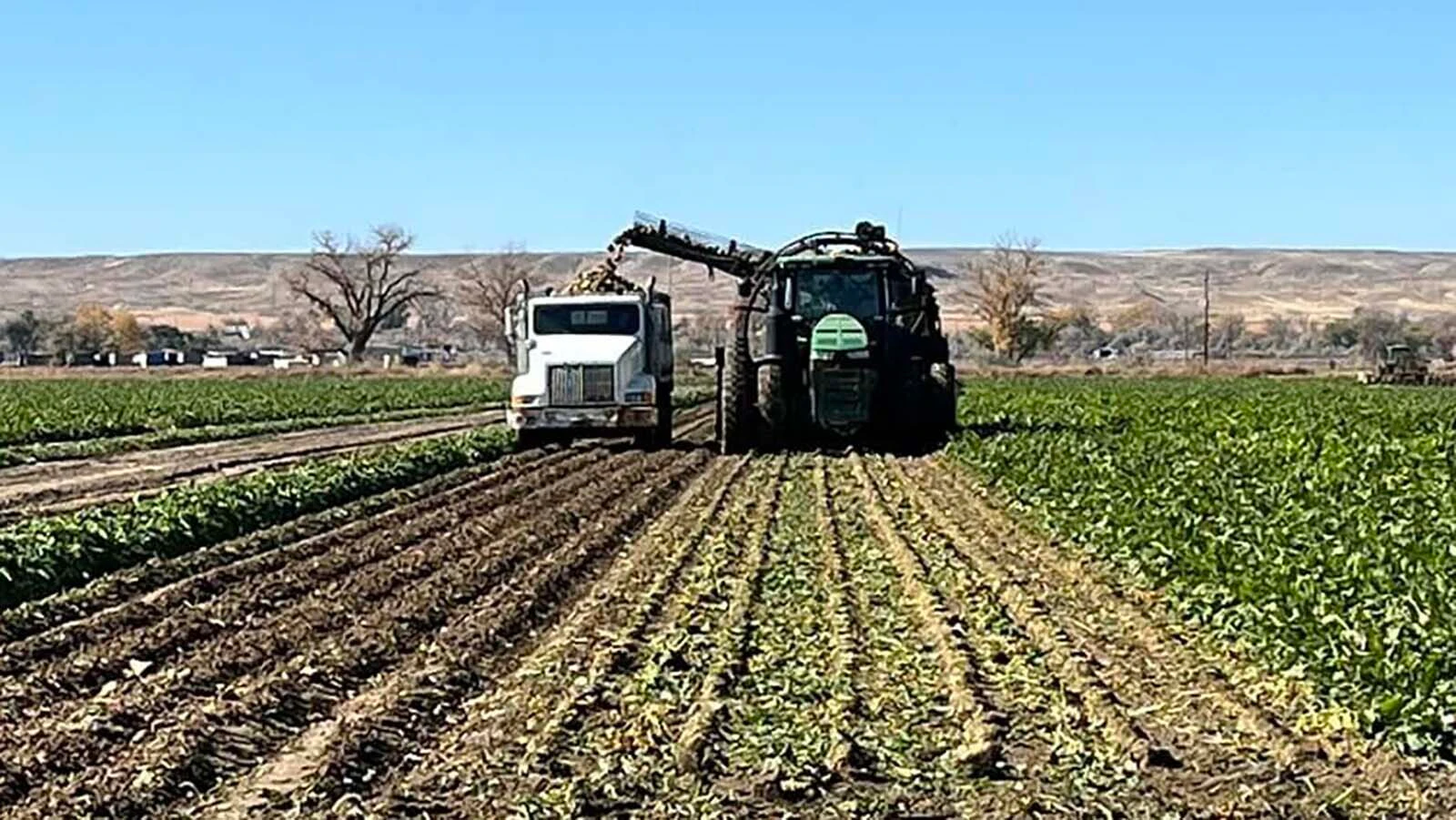
The district operates an extensive canal system that diverts water from the North Platte River at Whalen Dam, delivering irrigation to more than 100,000 acres of farmland. That water originates in Pathfinder Reservoir southwest of Casper.
For district supervisor Rick Miller, the early shutdown came sooner than even he expected.
"I tend to be conservative when I give estimates," Miller told Cowboy State Daily. "Even being conservative, I didn't think we'd be shutting it off by Aug. 7.
"Our loss has just been tremendous this year," he said.
A Season Unlike Any Other
The district has been hit by a one-two punch this year.
An exceptionally dry winter produced the worst recorded peak snowpack in the upper North Platte Basin — the source of roughly 75% of the North Platte River's water — according to George Finnegan, North Platte water scheduler and civil engineer with the Bureau of Reclamation.
Then, on June 8, a severe storm damaged multiple sections of one of Pathfinder's canals, delaying water deliveries while repairs were completed.
Instead of beginning irrigation in April as it typically does, the district didn't start delivering water until June.
Since then, every drop has counted.
"The evaporation and the seepage means we just couldn't gain anything," Miller said.
Seepage occurs when parched ground swallows the water before the water reaches intended farm or ranch land.
Compounding the problem, drought conditions have fueled vegetation growth inside canals, making it even harder to move limited water efficiently through the system.
The drought has brought weeds, Miller said, which further interferes with getting the water where it needs to go.
Drought Felt Differently Across Wyoming
Water shortages vary widely across Wyoming depending on geography, said Gail Whitman, executive director of the Wyoming Association of Irrigation Districts.
Districts west of the Continental Divide operate under different hydrologic conditions than those drawing from the North Platte system in eastern Wyoming.
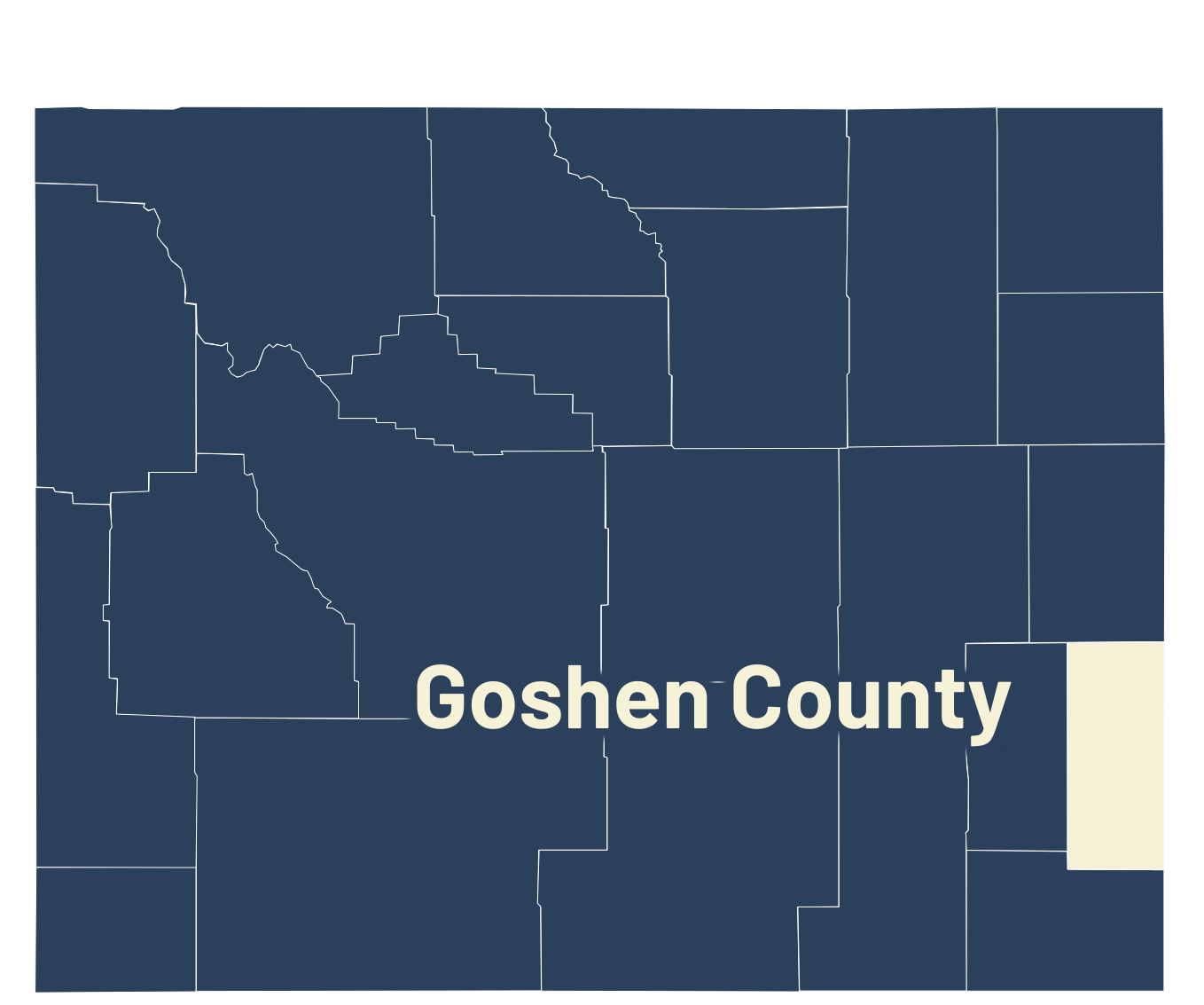
The North Platte feeds Pathfinder, Alcova and Seminoe reservoirs before supplying irrigation districts from Natrona County east to Goshen County. Each district receives a predetermined allocation from those storage reservoirs.
"Water conservation is a huge concern," Whitman said.
The Wyoming Association of Irrigation Districts, formed in 2023, now represents districts in nine counties encompassing more than 482,000 irrigated acres and over 10,000 water users.
Only Two Weeks of Water
The Wheatland Irrigation District typically enjoys a 90- to 100-day water delivery season.
This year, the season lasted two weeks, from mid-May to June 1.
“It was terrible,” district director Nathan Graves said.
The district allotted a scant .15 feet of water per acre.
“We get more from the sky than we can give, almost,” Graves said.
The delivery season was by far the worst since 2002, he said. That year, the district had just 18 days of water delivery.
Graves said producers knew months ago this would be an extraordinarily difficult year.
Some still planted corn, knowing they likely wouldn't harvest a full grain crop.
Instead, many will chop the drought-stressed corn for cattle feed.
"Yields will be way down," Graves said.
With the irrigation water soon to dry up, many farmers and ranchers will lease water from other users who aren’t planting this year, Miller said. Most who have planted also rely on supplemental wells.
Graves added that ranchers will move their stock to where the water is. Herd numbers are way down, however, due to historic drought.
Relief Came, But Not Enough
On July 11, an annual silt run provided relief.
During the silt run, water is released through reservoirs at higher flows to stir up and carry sediment downstream. As the silt settles into canal bottoms and banks, it reduces seepage losses.
This year, the silt run increased the canal’s water supply from 14 feet to 240 feet, Miller said.
“It helped tremendously this year,” he said.
Even so, the improvement wasn't enough to lengthen the irrigation season.
The Pathfinder district considered leasing additional water but decided against it.
"The amount we'd have had to lease wouldn't have been enough to finish growing a crop in Wyoming," Miller said, noting leased water also comes with a hefty price tag.
With irrigation water about to disappear, many producers are scrambling to finish the season.
Some farmers will lease water from neighbors who chose not to plant crops this year, Miller said. Others will rely on supplemental irrigation wells where available.
Reservoir Continues To Fall
The Pathfinder Reservoir, just under 24% full three weeks ago, now sits at 18.8%, according to the U.S. Bureau of Reclamation.
Despite the grim conditions, Miller praised the district's irrigators for stretching every available gallon.
"This is their livelihood," he said. "They've been so workable. They've got to be frustrated. They've done their very best."
The district echoed that sentiment in Thursday's announcement.
"Our water users have demonstrated exceptional cooperation, patience and responsible water management," the statement said.
Hoping This Year Is An Exception
Nearly all of Wyoming remains in drought after the state's fifth-driest winter since records began in 1895. About 46% of the state is currently classified in extreme drought.
“I don’t know that people could sustain another year like this,” Graves said.
The Pathfinder Irrigation District called the 2026 irrigation season one of the most difficult in its history because of the exceptionally limited water supply.
Still, district leaders are hoping the historic conditions prove temporary.
"We remain hopeful that this is a one-year event and look forward to more favorable water conditions in the future," the district said.
Kate Meadows can be reached at kate@cowboystatedaily.com.