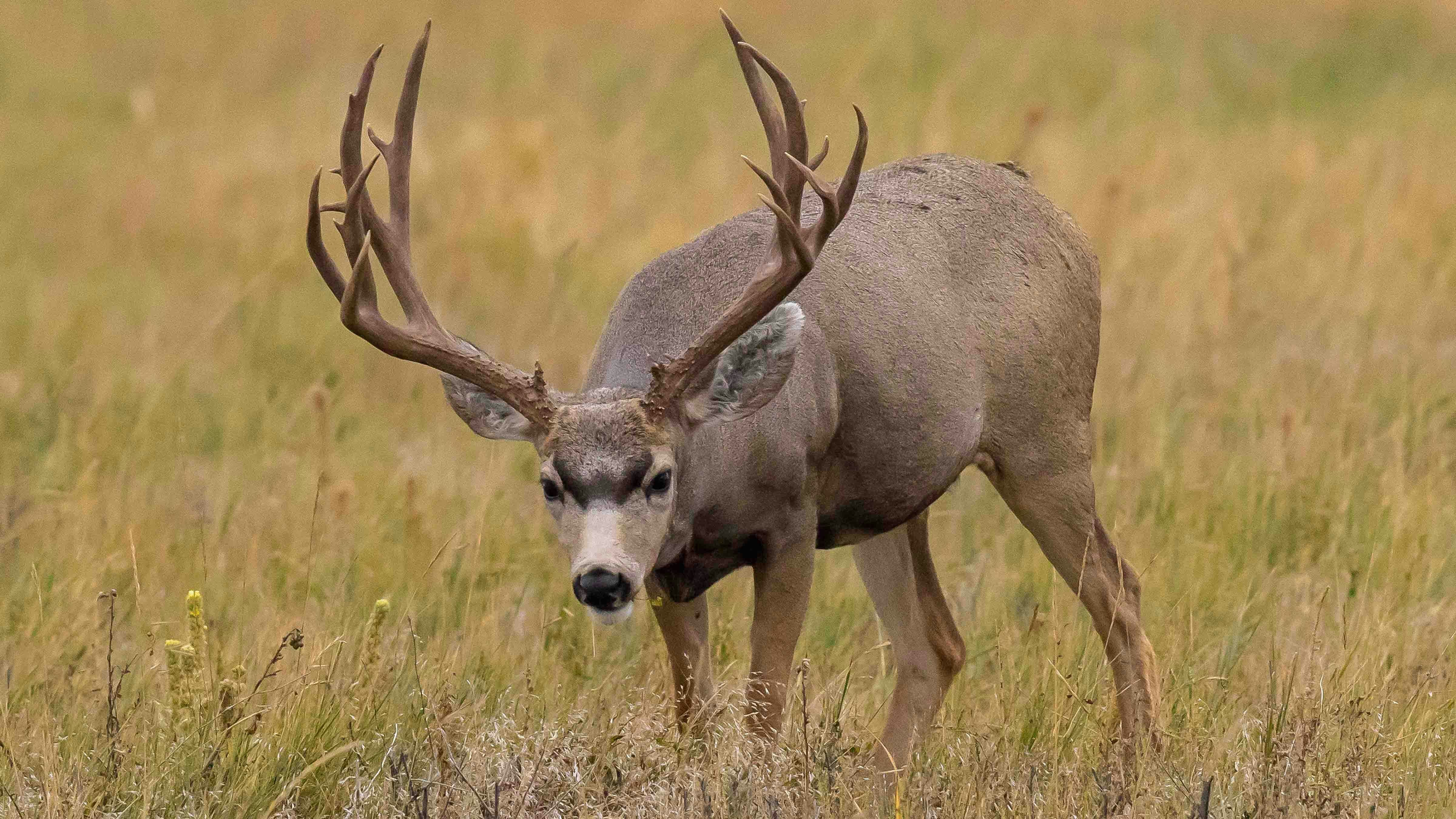
Wyoming hunters seeking next fall’s trophy bulls and bucks can start looking now. After months of explosive growth, elk and deer antlers are about as big as they’re going to get for the year.
Good nutrition is the key. With the onset of spring, bucks and bulls must first recover the body mass they lost over the winter. Then they continue eating like hogs, pumping additional nutrients into antler growth.
In peak season, typically in early summer, antlers can grow up to an inch a day.
During the process, a fuzzy substance called “velvet” covers the antlers. It looks like its namesake, but is actually skin, dense with blood vessels and covered with short, dense fur.
As summer wanes, the velvet starts to dry, and the animals rub it off on trees and brush.
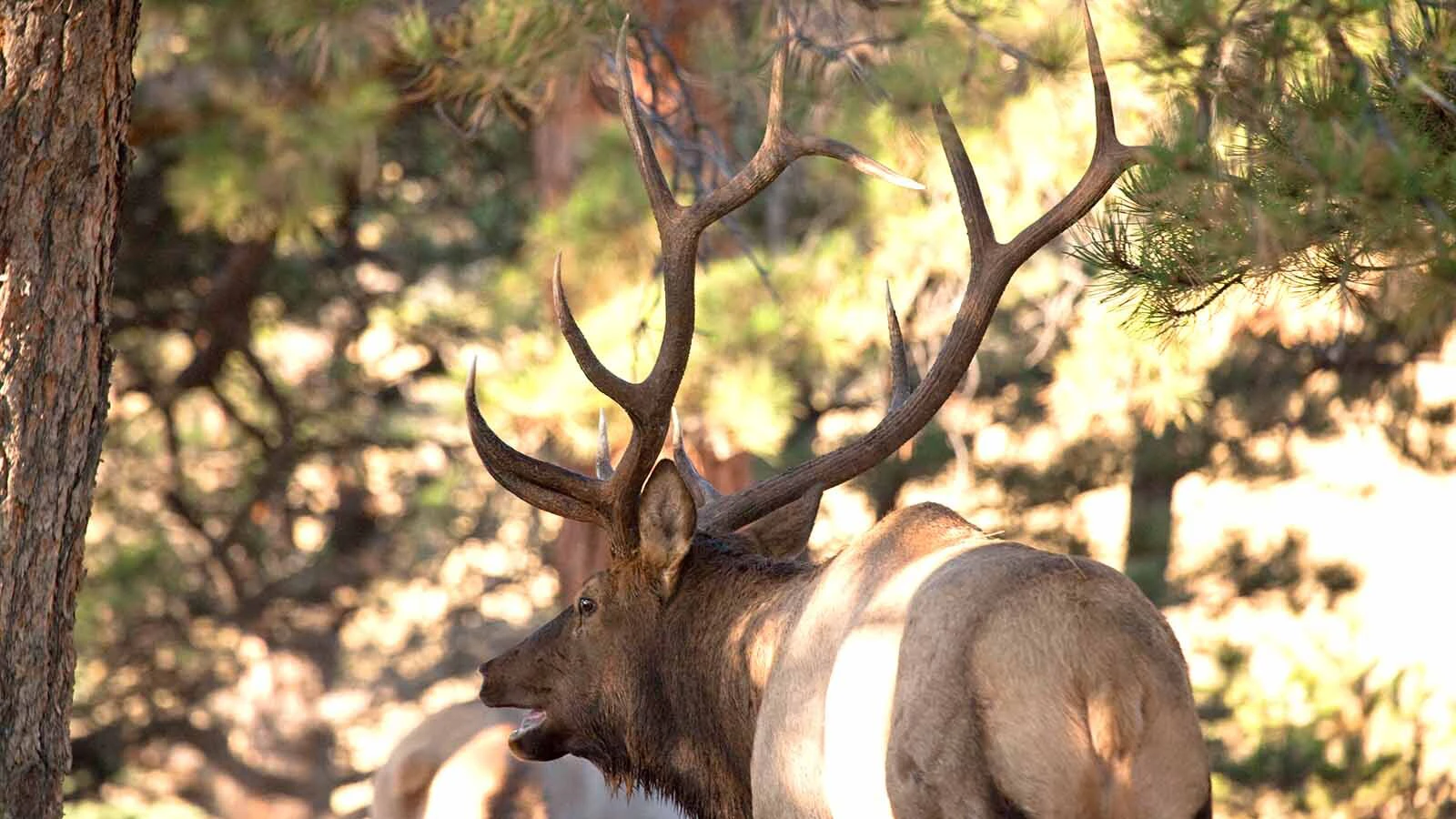
Once the velvet is rubbed off, elk emerge with a clean set of headgear, just in time for fierce, antler-clashing duels associated with the rut, or mating season.
The elk rut starts in mid-September and lasts “well into October,” retired U.S. Fish and Wildlife Service biologist Bruce Smith told Cowboy State daily.
The deer rut usually starts in late October, peaks in November and might run into December.
Cycle Starts In February
Buck and bulls go through a yearly cycle of growing, shedding and then re-growing their antlers, with each set getting larger than the previous year’s.
Large bull elk start shedding their antlers as early as February, said Smith, who was the senior biologist at the National Elk Refuge near Jackson from 1982 to 2004 and now lives in Bozeman, Montana.
Smaller bulls and spikes (male elk that have only single-tine, spike antlers) might not shed theirs until April or May, he said.
With that jump-start, larger bulls might start growing antlers by April, Smith said.
However, they’re still trying to make up for the nutritional deficit coming out of winter.
Antler growth can’t really kick into high gear until late spring or early summer, when green, nutrient-rich grasses and other plants become available, Smith said.
The cycle is similar for deer, he said.
Elk are primarily grazers (grass-eaters), while deer are browsers, relying heavily on shrubs and forbs.
After mid-July, hot dry weather settles in “like we’re having now,” Smith said.
Foliage starts to dry out and its nutritional value wanes, so antler growth slows to a stop.
Bull elk might then seek green “riparian areas and wet meadows,” which could help boost a final antler growth spurt, Smith said.
Nitrogen And Lead
What all of that means is that hunters eyeballing bulls and bucks now, in mid-July, can have get a reasonable estimation of how big they’ll be during the fall hunting seasons after the velvet comes off, Smith said.
He noted that elk habits can be driven by “nitrogen and lead.” (The latter being a reference to the lead in hunter’s bullets).
"They are attracted to nitrogen, and they’re afraid of lead,” he said.
The nitrogen, or nitrates, is the primary nutrient that is easily digestible and promotes antler growth, Smith said.
Antlers might frequently be called “bone,” which is reasonably accurate, he added.
“It’s certainly more like bone than another other particular tissue or structure that you might find in the animal’s body,” Smith said.
How Big Are They Gonna Get?
The entire region had a mild winter and early spring, which bodes well for wildlife, and antler growth, Smith said.
He lives in Montana, which also saw significant rains recently. That also helps with antler growth.
So, Smith expects at least average antler growth in Montana bull elk this year.
It might not be so great in Wyoming, which leaned toward the dry side this spring and early summer, said avid hunter Owen Miller, who lives in northeast Wyoming.
“They (antlers) grow fast from the start of the growing stage. This time of year, it looks like they’re growing faster because each tine (point) is growing,” he told Cowboy State Daily.
“A dry year, like this summer has been, also has an effect on them. With less green foliage around, and being dry, it has fewer nutrients,” he added.
“Both bucks and bulls can be smaller than the previous year, due to water shortages and fewer nutrients during drought,” he said.
Mark Heinz can be reached at mark@cowboystatedaily.com.