
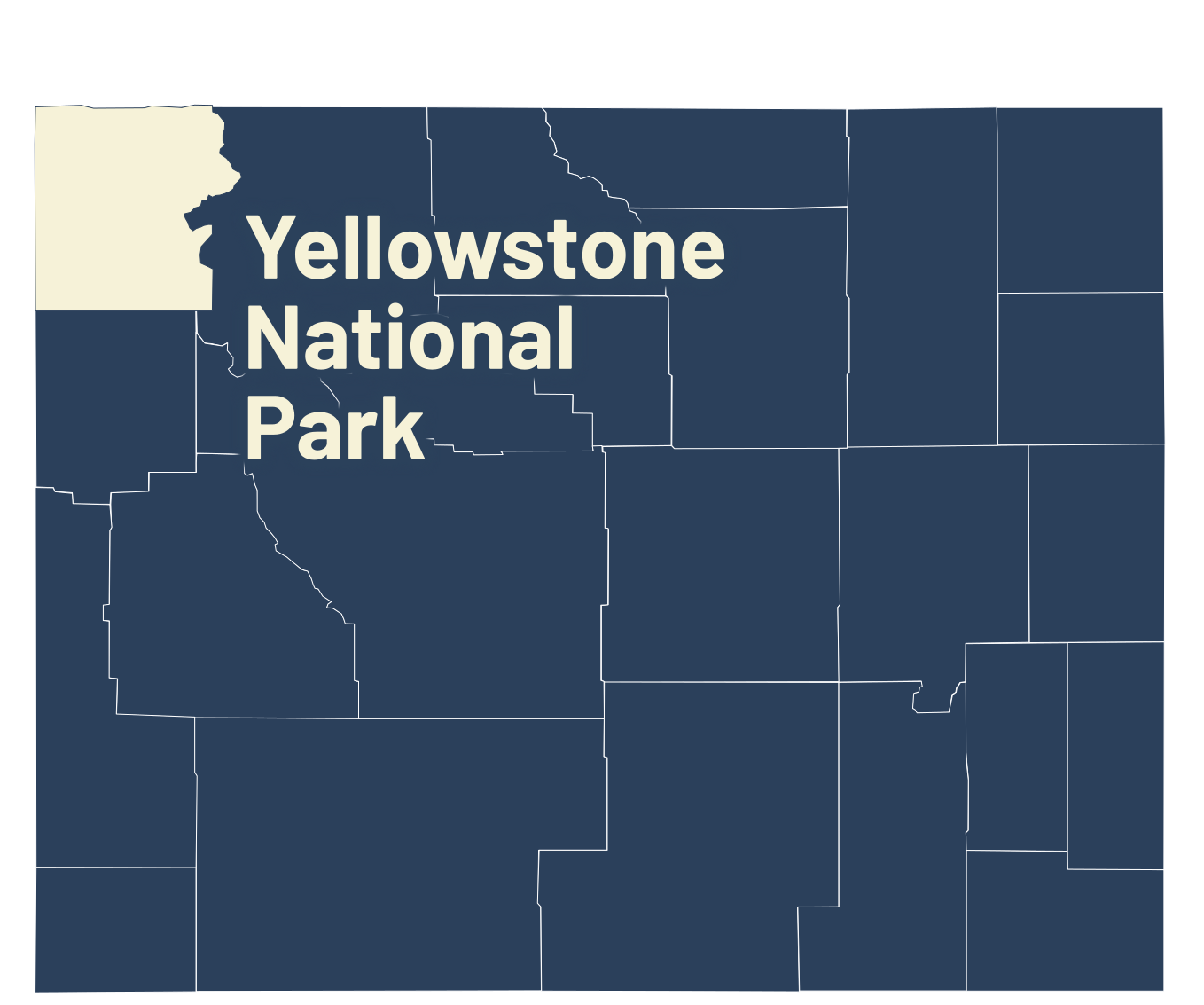
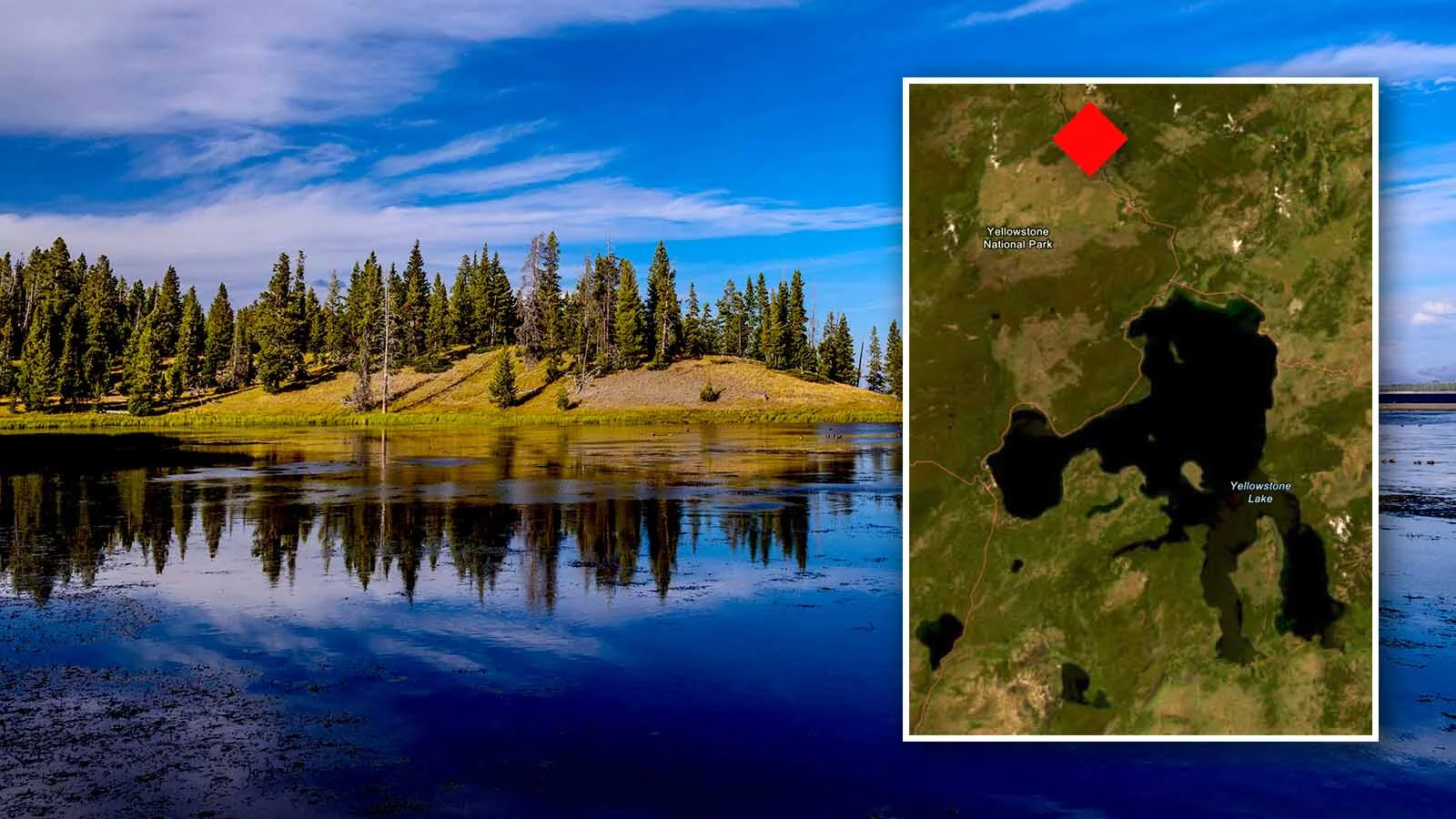
A magnitude 3.3 earthquake shook things up enough in Yellowstone National Park on Thursday morning for people as far away as 30 miles to notice.
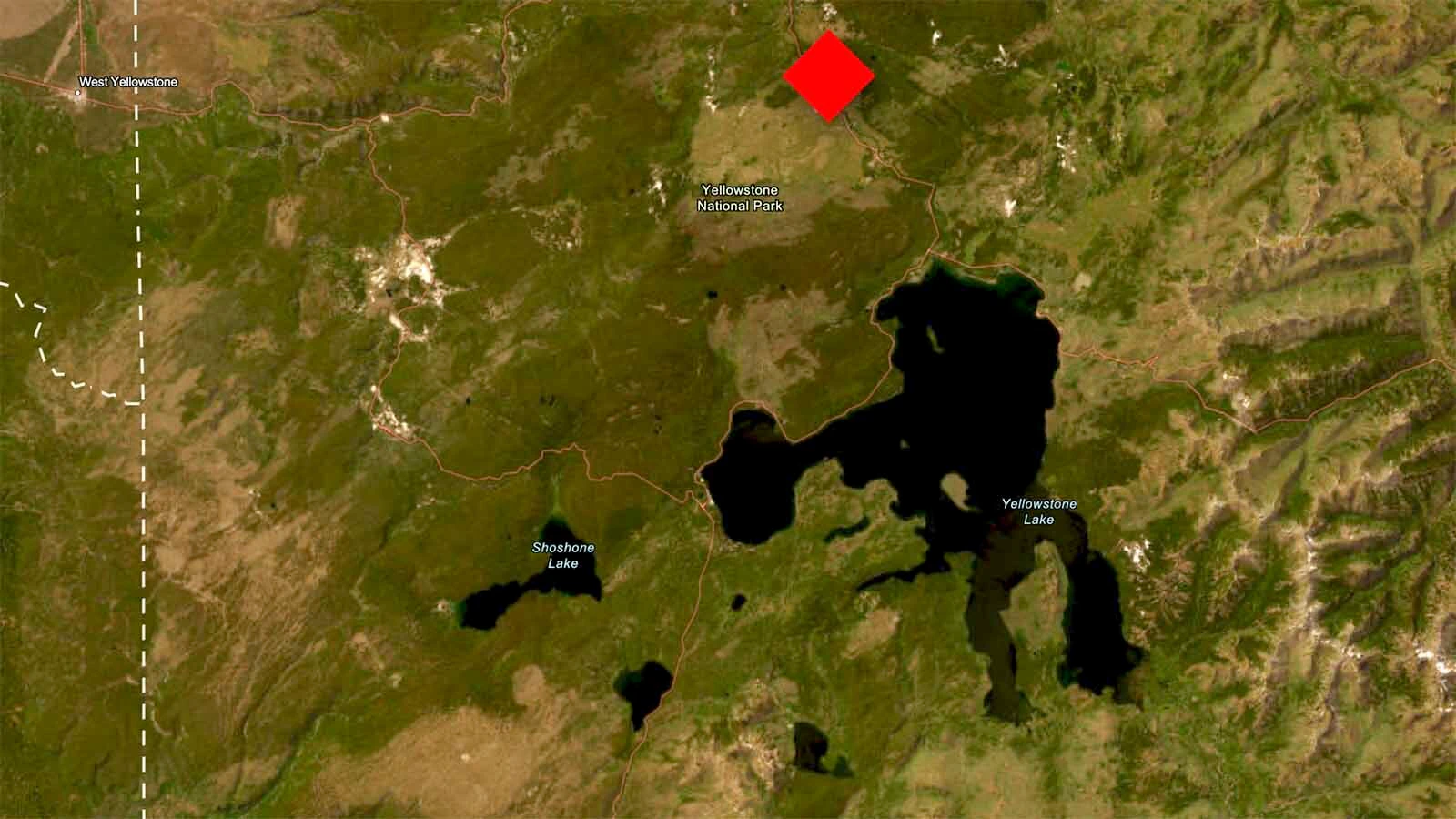
The epicenter of the 7:20 a.m. earthquake was along the Grand Loop Road, south of Canyon Junction, at a depth of 6.53 kilometers. That’s just over 4 miles beneath the surface.
According to the U.S. Geological Survey (USGS), at least 14 people reported feeling the earthquake within 30 miles of the epicenter. Its intensity was low, and there were no reports of damage.
The USGS categorized the earthquake as a III “Weak” on the Modified Mercalli intensity (MMI) scale. That means the quake’s energy would be noticeable but not much stronger than the vibrations caused by a large truck driving by.
It's not even the largest earthquake in Wyoming this week. A magnitude 3.5 earthquake was detected west of Rock Springs on Tuesday.
Epicenter Experience
Becky Benson of Mandan, North Dakota, was standing on Grizzly Hill in Yellowstone’s Hayden Valley when the earthquake occurred.
“There's a bison carcass out there,” she told Cowboy State Daily. "We were hoping to see wolves, so we were waiting for the fog to lift
Benson was looking through her spotting scope when she heard “what sounded like an explosion" that echoed through the valley.
Everything went quiet. Then, the earth under her feet began to move.
“You could see some of the water down in the Yellowstone River swaying back and forth,” she said. “When it started to slow down, you could hear the rumbling going throughout the entire valley.”
The shaking would have been enough to knock Benson over, had she not grabbed onto something to steady herself. In this case, that was her nearest friend.
After “a little more than a minute that seemed like forever,” the shaking stopped.
Within a few minutes, a Yellowstone ranger arrived at the scene. She informed Benson and the others on Grizzly Hill that they had been standing over the epicenter of the Thursday morning earthquake.
“We were all shocked at the sound of it,” Benson said. “The ranger told us that we’d heard the beginning of the earthquake.”
The USGS says that “unidentified booms” have been reported at the epicenters of several earthquakes, although there isn’t a universally accepted explanation as to why or how they happen.
Benson didn’t have being at the epicenter of an earthquake on her Yellowstone bucket list. She’s not keen to repeat the experience.
“I've never experienced anything like that, and hope to never experience that again,” she said. “I was quite shaken.”
All Shook Up
Earthquakes are a common occurrence in Yellowstone, one of the most tectonically active places in North America. According to the Yellowstone Volcano Observatory, there were 118 earthquakes detected in June alone.
Thursday morning’s magnitude 3.3 quake was Yellowstone’s largest of the year so far, but a few earthquakes of that magnitude are expected every year.
“Earthquakes that get into the magnitude 3 range are rare, but there are usually three to 10 of those in the Yellowstone area every year,” Mike Poland, scientist-in-charge of the Yellowstone Volcano Observatory, previously told Cowboy State Daily. “The vast majority of earthquakes are magnitude 2 and below.”
In 2025, there were 1,119 earthquakes located in and around Yellowstone. The largest quakes were three magnitude 3.7 events.
That was a “quiet year,” according to Poland. In an average year, there are between 1,500 and 2,500 earthquakes detected in Yellowstone.
Catching The Feels
When a magnitude 3.9 earthquake hit Yellowstone in January 2025, the largest quake in the park since 2023, it wasn’t even detected on the Raspberry Shake seismograph installed at the Wyoming Geological Survey's headquarters in Laramie.
"We were about 350 miles from the epicenter,” said geologist James Mauch. “It was a bit too far away and low in magnitude to detect in Laramie.”
According to Mauch, magnitude 3.0 earthquakes are “very typical activity for Yellowstone.”
They might be slightly stronger than the average Yellowstone earthquake, but not strong enough to be unusual, he said.
“We typically get around five ‘felt’ earthquakes every year, so this is right in line with the average,” he said.
What the earthquake doesn’t indicate is any significant change in Yellowstone’s volcanic systems. Even at a depth of 4 miles, Thursday morning’s quake was too shallow to indicate anything volcanic, which is true for most of Yellowstone’s earthquakes.
“Because there are so many faults in the region and a lot of water moving around in the subsurface, Yellowstone is a recipe for lots and lots of earthquakes,” Poland said. “There’s nothing particularly anomalous about (a magnitude 3.3 earthquake), and none of these quakes are associated with any volcanic activity.”
Andrew Rossi can be reached at arossi@cowboystatedaily.com.


